UNICEF
(UNITED NATIONS INTERNATIONAL
CHILDREN’S EMERGENCY FUND)
PRESENTED BY
HARISHANANDAKP
HISTORY
 Established on 11th December 1946 by united nations general
assembly.
 To provide emergency food and healthcare to children in countries
that had been devastated by World War 2.
 Ludwik Rajchmann a Polish bacteriologist, is regarded as the founder
of UNICEF.
 1946 focused on food to Europe.
 In 1953, UNICEF became a permanent part of the United Nations
System.
 In 1959 declaration of the rights of the children.
 In 1961 mainly focused on education to children.
 UNICEF was awarded the Nobel Peace Prize in 1965 and the Prince of
Asturias Award of Concord in 2006.
MISSION OF UNICEF
 To ensure the basic nutrition, health and education needs of children are met.
 To give children the opportunity to expand their potential.
 To create an international ethical standard of behaviour towards children.
UNICEF INDIA
 The organisation began its work in India in 1949.
 1975 - Integrated Child Development Services.
 1985 - National Mission on Immunization.
 2001 - Gujarat Earthquake.
 2004 - Tsunami relief.
 2012 – Polio Campaign.
ACHIEVEMENTS
UNICEF STRUCTURE
 Over 190 countries & territories.
 More then 200 country offices.
 Headquarters in NEW YORK.
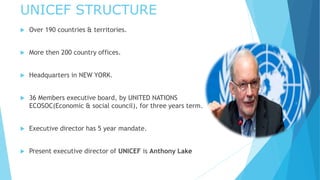
 36 Members executive board, by UNITED NATIONS
ECOSOC(Economic & social council), for three years term.
 Executive director has 5 year mandate.
 Present executive director of UNICEF is Anthony Lake
GOALS
 Eradicate extreme poverty and hunger.
 Reduce by half the proportion of people living on less than a dollar a
day.
 Reduce by half the proportion of people who suffer from hunger.
 Achieve universal primary education
 Ensure that all boys and girls complete a full course of primary
schooling
Fundraising
 Sponsorship
 Trick-or-treat
 Art in all of us
 Corporate partnership
Focus
 Health
 Children
 HIV/AIDS
 Water, sanitation and hygiene
 Nutrition
 Education
 Child protection
 Gender equality
UNICEF

UNICEF

  • 1.
    UNICEF (UNITED NATIONS INTERNATIONAL CHILDREN’SEMERGENCY FUND) PRESENTED BY HARISHANANDAKP
  • 2.
    HISTORY  Established on11th December 1946 by united nations general assembly.  To provide emergency food and healthcare to children in countries that had been devastated by World War 2.  Ludwik Rajchmann a Polish bacteriologist, is regarded as the founder of UNICEF.  1946 focused on food to Europe.  In 1953, UNICEF became a permanent part of the United Nations System.  In 1959 declaration of the rights of the children.  In 1961 mainly focused on education to children.  UNICEF was awarded the Nobel Peace Prize in 1965 and the Prince of Asturias Award of Concord in 2006.
  • 3.
    MISSION OF UNICEF To ensure the basic nutrition, health and education needs of children are met.  To give children the opportunity to expand their potential.  To create an international ethical standard of behaviour towards children. UNICEF INDIA  The organisation began its work in India in 1949.  1975 - Integrated Child Development Services.  1985 - National Mission on Immunization.  2001 - Gujarat Earthquake.  2004 - Tsunami relief.  2012 – Polio Campaign.
  • 4.
  • 5.
    UNICEF STRUCTURE  Over190 countries & territories.  More then 200 country offices.  Headquarters in NEW YORK.  36 Members executive board, by UNITED NATIONS ECOSOC(Economic & social council), for three years term.  Executive director has 5 year mandate.  Present executive director of UNICEF is Anthony Lake
  • 6.
    GOALS  Eradicate extremepoverty and hunger.  Reduce by half the proportion of people living on less than a dollar a day.  Reduce by half the proportion of people who suffer from hunger.  Achieve universal primary education  Ensure that all boys and girls complete a full course of primary schooling
  • 7.
    Fundraising  Sponsorship  Trick-or-treat Art in all of us  Corporate partnership
  • 8.
    Focus  Health  Children HIV/AIDS  Water, sanitation and hygiene  Nutrition  Education  Child protection  Gender equality