Ethical Issues In
Indian Business
Sashrika Babbar (BBA-3/5019)
INDEX
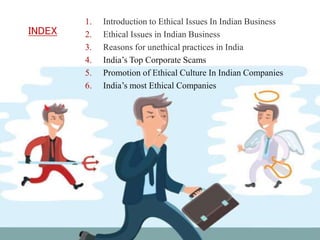
1. Introduction to Ethical Issues In Indian Business
2. Ethical Issues in Indian Business
3. Reasons for unethical practices in India
4. India’s Top Corporate Scams
5. Promotion of Ethical Culture In Indian Companies
6. India’s most Ethical Companies
1. INTRODUCTION
What do you mean by ethics?
Ethics refers to the concepts of right and wrong conduct.
Ethics can give real and practical guidance to our lives. Some Ethical values are (i.e.
honesty, trustworthiness, responsibility). Ethics is all about the choices we make.
What do you mean by Business ethics?
Business ethics are important because they add a line of defence to protect the
company, enable company growth, save money and allow people to avoid certain
legal implications.
Business ethics are the moral principles that act as guidelines for the way a business
conducts itself and its transactions. In many ways, the same guidelines that individuals
use to conduct themselves in an acceptable way – in personal and professional settings
– apply to businesses as well.
Importance of Business ethics?
2. ETHICAL ISSUES IN INDIA
1. BRIBERY
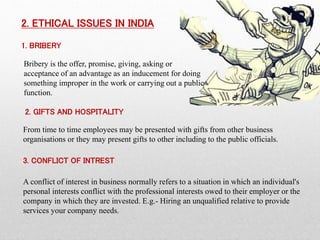
Bribery is the offer, promise, giving, asking or
acceptance of an advantage as an inducement for doing
something improper in the work or carrying out a public
function.
2. GIFTS AND HOSPITALITY
From time to time employees may be presented with gifts from other business
organisations or they may present gifts to other including to the public officials.
3. CONFLICT OF INTREST
A conflict of interest in business normally refers to a situation in which an individual's
personal interests conflict with the professional interests owed to their employer or the
company in which they are invested. E.g.- Hiring an unqualified relative to provide
services your company needs.
4. CONFIDENTIALITY AND INSIDER TRAINING
Information which employees gain during the course of their employment should not be
disclosed to anyone not employed by the company, or to an employee who does not require
the information for his/her normal work activities.
5. EMPLOYEE CONTRIBUTION TO OUTSIDE ORGANIZATIONS
An Employee may contribute lectures and articles to technical institutions and journals as
long as he/she has appropriate approval from his or her manager and does not contravene
the confidentiality section of the employee handbook or place himself/herself in a situation
where there might be a conflict between his/her interests and the company.
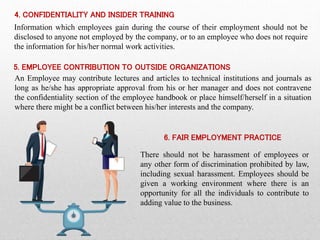
6. FAIR EMPLOYMENT PRACTICE
There should not be harassment of employees or
any other form of discrimination prohibited by law,
including sexual harassment. Employees should be
given a working environment where there is an
opportunity for all the individuals to contribute to
adding value to the business.
7. TAX EVASION
Tax evasion continues to be spreading unchecked at a personal as well as business level. A
substantial proposition of professionals, traders, small scale manufacturers and even
medium scale business avoid paying due taxes fully.
8. EMPLOYEE BEHAVIOUR &
9. WORKING CONDITIONS
Employee behaviour is defined as an employee's
reaction to a particular situation at workplace.
Employees need to behave sensibly at workplace not
only to gain appreciation and respect from others but
also to maintain a healthy work culture.
Working conditions refers to the working environment
in which one works, as influenced by factors such as
working hours, physical aspects, legal rights and
responsibilities etc. Poor working conditions can
damage employees' health and put their safety at risk.
10. POLITICAL SUPPORT
Large companies join hands with political parties who
support them in their scams. The company and the
political party are mutually dependent on each other.
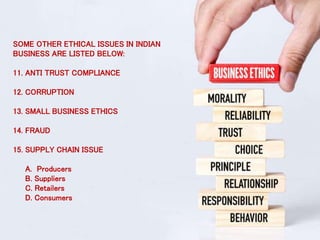
SOME OTHER ETHICAL ISSUES IN INDIAN
BUSINESS ARE LISTED BELOW:
11. ANTI TRUST COMPLIANCE
12. CORRUPTION
13. SMALL BUSINESS ETHICS
14. FRAUD
15. SUPPLY CHAIN ISSUE
A. Producers
B. Suppliers
C. Retailers
D. Consumers
3. REASONS FOR UNETHICAL PRACTICES IN INDIA/
INDIAN COMPANIES
1. REDUCING SPIRITUAL VALUES
Western countries are adopting more family values from the east and practices
like Yoga, meditation, and spirituality, the Indians are adopting more and more
incorrect things in their culture.
2. LACK OF GOVERNMENT REGULATION
Government is also to be blamed for not banning serious adult content in some
general magazines, TV channels, etc. Further India needs tough regulators for
high complaint sectors like real estate and Travel Tourism.
3. ILLITERACY
Around 50% of the population in India is still illiterate. Illiteracy results in the
degradation of the value system. India with its strong religious background has had a
good value system but the presence of few traditions like Sati, child marriage, etc has
led to the degradation of the value system in India.
4. DEFECTIVE EDUCATION SYSTEM
Formal education as is being imparted today does not give proper importance to
the building of moral and ethical aspects of human personality. It is important to
have jobs for the individuals but it is equally important to build a strong value
system in the individuals.
5. THE ROLE OF MEDIA
6. THE EFFECTS OF ECONOMIC PROGRESS ON MORAL VALUES
Lifestyles shown on television are depicted in an exaggerated manner more
colourful than reality.
The intense competition for jobs, the desire for higher salaries, and the attainment of
material comforts of life has distorted the perspective of the youth. They might use some
illegal practices to attain such comfort and luxury.
7. CONFLICTING CULTURAL INFLUENCES
Today, an average Indian faces conflicting influences of two cultures 1. Traditional and 2.
Western. This fragmentation Of Cultural identity is responsible for the delusion of India's
traditional moral and ethical values
8. VALUE PLACED ON THE SEX ON THE CHILD
9. SOCIAL ISSUES
10. INFLUENCE OF WESTEREN CULTURE
SOME OTHER REASONS FOR ETHICAL ISSUES IN INDIAN BUSINESS
ARE LISTED BELOW:
4. HOW TO PROMOTE
ETHICAL CULTURE IN INDIAN
COMPANIES?
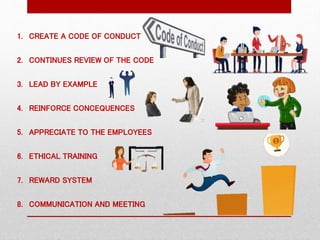
1. CREATE A CODE OF CONDUCT
2. CONTINUES REVIEW OF THE CODE
3. LEAD BY EXAMPLE
4. REINFORCE CONCEQUENCES
5. APPRECIATE TO THE EMPLOYEES
6. ETHICAL TRAINING
7. REWARD SYSTEM
8. COMMUNICATION AND MEETING
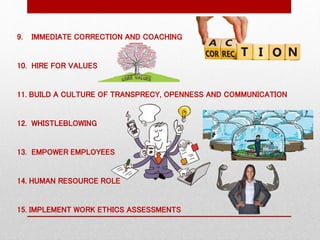
9. IMMEDIATE CORRECTION AND COACHING
10. HIRE FOR VALUES
11. BUILD A CULTURE OF TRANSPRECY, OPENNESS AND COMMUNICATION
12. WHISTLEBLOWING
13. EMPOWER EMPLOYEES
14. HUMAN RESOURCE ROLE
15. IMPLEMENT WORK ETHICS ASSESSMENTS
5. INDIA’S TOP MOST
CORPORATE SCAMS!!
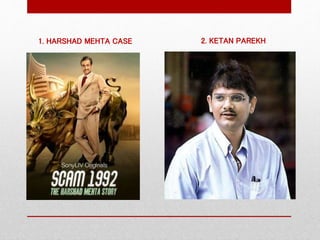
1. HARSHAD MEHTA CASE 2. KETAN PAREKH
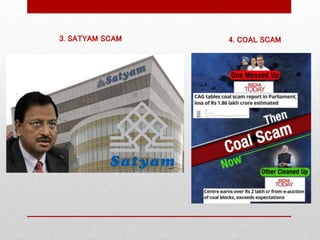
4. COAL SCAM
3. SATYAM SCAM
6. VIJAY MALLYA
5. 2G SPECTRUM SCAM
6. INDIA’S MOST ETHICAL
COMPANIES
1. TATA 2. WIPRO
THE TWO COMPANIES EXCEL IN THESE THREE AREAS:
1. Promoting ethical business standards and practices internally
2. Enabling managers and employees to make good choices
3. Shaping future industry standards by introducing tomorrow’s best prices
today.
Other than this,
These companies have adequate disclosure on both structure and communities,
whistle-blower mechanism for key stakeholders, and risk management
Framework for addressing business financial as well as sustainable risk. They
also have an employee code of conduct to ensure ethical operations and policy for
conflict of interest management.
THANKYOU

Ethical Issues in Indian Business

  • 1.
    Ethical Issues In IndianBusiness Sashrika Babbar (BBA-3/5019)
  • 2.
    INDEX 1. Introduction toEthical Issues In Indian Business 2. Ethical Issues in Indian Business 3. Reasons for unethical practices in India 4. India’s Top Corporate Scams 5. Promotion of Ethical Culture In Indian Companies 6. India’s most Ethical Companies
  • 3.
    1. INTRODUCTION What doyou mean by ethics? Ethics refers to the concepts of right and wrong conduct. Ethics can give real and practical guidance to our lives. Some Ethical values are (i.e. honesty, trustworthiness, responsibility). Ethics is all about the choices we make. What do you mean by Business ethics? Business ethics are important because they add a line of defence to protect the company, enable company growth, save money and allow people to avoid certain legal implications. Business ethics are the moral principles that act as guidelines for the way a business conducts itself and its transactions. In many ways, the same guidelines that individuals use to conduct themselves in an acceptable way – in personal and professional settings – apply to businesses as well. Importance of Business ethics?
  • 4.
    2. ETHICAL ISSUESIN INDIA 1. BRIBERY Bribery is the offer, promise, giving, asking or acceptance of an advantage as an inducement for doing something improper in the work or carrying out a public function. 2. GIFTS AND HOSPITALITY From time to time employees may be presented with gifts from other business organisations or they may present gifts to other including to the public officials. 3. CONFLICT OF INTREST A conflict of interest in business normally refers to a situation in which an individual's personal interests conflict with the professional interests owed to their employer or the company in which they are invested. E.g.- Hiring an unqualified relative to provide services your company needs.
  • 5.
    4. CONFIDENTIALITY ANDINSIDER TRAINING Information which employees gain during the course of their employment should not be disclosed to anyone not employed by the company, or to an employee who does not require the information for his/her normal work activities. 5. EMPLOYEE CONTRIBUTION TO OUTSIDE ORGANIZATIONS An Employee may contribute lectures and articles to technical institutions and journals as long as he/she has appropriate approval from his or her manager and does not contravene the confidentiality section of the employee handbook or place himself/herself in a situation where there might be a conflict between his/her interests and the company. 6. FAIR EMPLOYMENT PRACTICE There should not be harassment of employees or any other form of discrimination prohibited by law, including sexual harassment. Employees should be given a working environment where there is an opportunity for all the individuals to contribute to adding value to the business.
  • 6.
    7. TAX EVASION Taxevasion continues to be spreading unchecked at a personal as well as business level. A substantial proposition of professionals, traders, small scale manufacturers and even medium scale business avoid paying due taxes fully. 8. EMPLOYEE BEHAVIOUR & 9. WORKING CONDITIONS Employee behaviour is defined as an employee's reaction to a particular situation at workplace. Employees need to behave sensibly at workplace not only to gain appreciation and respect from others but also to maintain a healthy work culture. Working conditions refers to the working environment in which one works, as influenced by factors such as working hours, physical aspects, legal rights and responsibilities etc. Poor working conditions can damage employees' health and put their safety at risk. 10. POLITICAL SUPPORT Large companies join hands with political parties who support them in their scams. The company and the political party are mutually dependent on each other.
  • 7.
    SOME OTHER ETHICALISSUES IN INDIAN BUSINESS ARE LISTED BELOW: 11. ANTI TRUST COMPLIANCE 12. CORRUPTION 13. SMALL BUSINESS ETHICS 14. FRAUD 15. SUPPLY CHAIN ISSUE A. Producers B. Suppliers C. Retailers D. Consumers
  • 8.
    3. REASONS FORUNETHICAL PRACTICES IN INDIA/ INDIAN COMPANIES 1. REDUCING SPIRITUAL VALUES Western countries are adopting more family values from the east and practices like Yoga, meditation, and spirituality, the Indians are adopting more and more incorrect things in their culture. 2. LACK OF GOVERNMENT REGULATION Government is also to be blamed for not banning serious adult content in some general magazines, TV channels, etc. Further India needs tough regulators for high complaint sectors like real estate and Travel Tourism. 3. ILLITERACY Around 50% of the population in India is still illiterate. Illiteracy results in the degradation of the value system. India with its strong religious background has had a good value system but the presence of few traditions like Sati, child marriage, etc has led to the degradation of the value system in India.
  • 9.
    4. DEFECTIVE EDUCATIONSYSTEM Formal education as is being imparted today does not give proper importance to the building of moral and ethical aspects of human personality. It is important to have jobs for the individuals but it is equally important to build a strong value system in the individuals. 5. THE ROLE OF MEDIA 6. THE EFFECTS OF ECONOMIC PROGRESS ON MORAL VALUES Lifestyles shown on television are depicted in an exaggerated manner more colourful than reality. The intense competition for jobs, the desire for higher salaries, and the attainment of material comforts of life has distorted the perspective of the youth. They might use some illegal practices to attain such comfort and luxury. 7. CONFLICTING CULTURAL INFLUENCES Today, an average Indian faces conflicting influences of two cultures 1. Traditional and 2. Western. This fragmentation Of Cultural identity is responsible for the delusion of India's traditional moral and ethical values
  • 10.
    8. VALUE PLACEDON THE SEX ON THE CHILD 9. SOCIAL ISSUES 10. INFLUENCE OF WESTEREN CULTURE SOME OTHER REASONS FOR ETHICAL ISSUES IN INDIAN BUSINESS ARE LISTED BELOW:
  • 11.
    4. HOW TOPROMOTE ETHICAL CULTURE IN INDIAN COMPANIES?
  • 12.
    1. CREATE ACODE OF CONDUCT 2. CONTINUES REVIEW OF THE CODE 3. LEAD BY EXAMPLE 4. REINFORCE CONCEQUENCES 5. APPRECIATE TO THE EMPLOYEES 6. ETHICAL TRAINING 7. REWARD SYSTEM 8. COMMUNICATION AND MEETING
  • 13.
    9. IMMEDIATE CORRECTIONAND COACHING 10. HIRE FOR VALUES 11. BUILD A CULTURE OF TRANSPRECY, OPENNESS AND COMMUNICATION 12. WHISTLEBLOWING 13. EMPOWER EMPLOYEES 14. HUMAN RESOURCE ROLE 15. IMPLEMENT WORK ETHICS ASSESSMENTS
  • 14.
    5. INDIA’S TOPMOST CORPORATE SCAMS!!
  • 15.
    1. HARSHAD MEHTACASE 2. KETAN PAREKH
  • 16.
    4. COAL SCAM 3.SATYAM SCAM
  • 17.
    6. VIJAY MALLYA 5.2G SPECTRUM SCAM
  • 18.
    6. INDIA’S MOSTETHICAL COMPANIES 1. TATA 2. WIPRO
  • 19.
    THE TWO COMPANIESEXCEL IN THESE THREE AREAS: 1. Promoting ethical business standards and practices internally 2. Enabling managers and employees to make good choices 3. Shaping future industry standards by introducing tomorrow’s best prices today. Other than this, These companies have adequate disclosure on both structure and communities, whistle-blower mechanism for key stakeholders, and risk management Framework for addressing business financial as well as sustainable risk. They also have an employee code of conduct to ensure ethical operations and policy for conflict of interest management.
  • 20.