Introduction to POSTURE –
Better understanding to get clients from rehab
               to performance.
                                         PRESENTED BY:
                           Max MARTIN BAppSc (Hons) AEP
Creating a road map


           X
Postural Adaptation

Posture is susceptible to adaptation to the
environment it experiences.
Modern Western requirements (work and home)
highly repetitious and/or inert in nature.
Our posture adapts to these requirements.


EXAMPLE………
The IT animal!

Characterised by (?):
Kyphotic thoracic spine
Forward head posture
Shoulders rolled forward
Strong and short cervical extensors
Shortened hip flexors that act as
stabilisers
A crystal Ball?


Postural analysis can help us explain current injuries,
or predict future injuries.
Many common chronic injury presentations can be
closely linked to joint misalignment.
We have a duty of care as Health Care Providers to
consider posture in our exercise prescription.
Prescription Paradigms


Movement is a behaviour
  Developed, learned and adapted.
Faulty Posture or Movement is a SYMPTOM of
dysfunction
Stabilisers typically become hypotonic/inhibited (weak)
– ‘allowing’ faulty posture
Gross movers typically become hypertonic/facilitated
(tight) – ‘driving’ faulty posture
Why weakness?

Muscle inhibition due to pain/injury
Muscle susceptibility – eg. VMO vs VL atrophy post surgery
Muscle inactivity in chronic postures – eg. Sedentary behaviours
CNS driven protection
Why tightness?
Joint ROM can be limited by the following factors

1. Joint constraints

2. connective tissue (40%) – protective, inactivity,
   hypertonicity

3. Neurogenic constraints (voluntary and reflexive) -
   protective

4. Myogenic constraints
tightness?

        Or

gaining stability??
synergist

tightness   weakness

                       antagonist
Upper Cross Syndrome


Lower Cross Syndrome
Clinical/Practical findings

                                       synergist

tightness             weakness
Pec Minor
Levator Scapula                        antagonist
Rhomboids
                                       Serratus Anterior
 Downward                              Traps
 rotators of scaps!                      Upward rotators
                                         of scaps!
Clinical/Practical findings


                                      synergist
                                      Glute max

tightness          weakness
Hamstrings
 Hip Flexors
 • Psoas
                                      antagonist
 • Iliacus                             Glute max
 • TFL
 • Rec fem                             TrA (+core)
 Lumbar Erectors
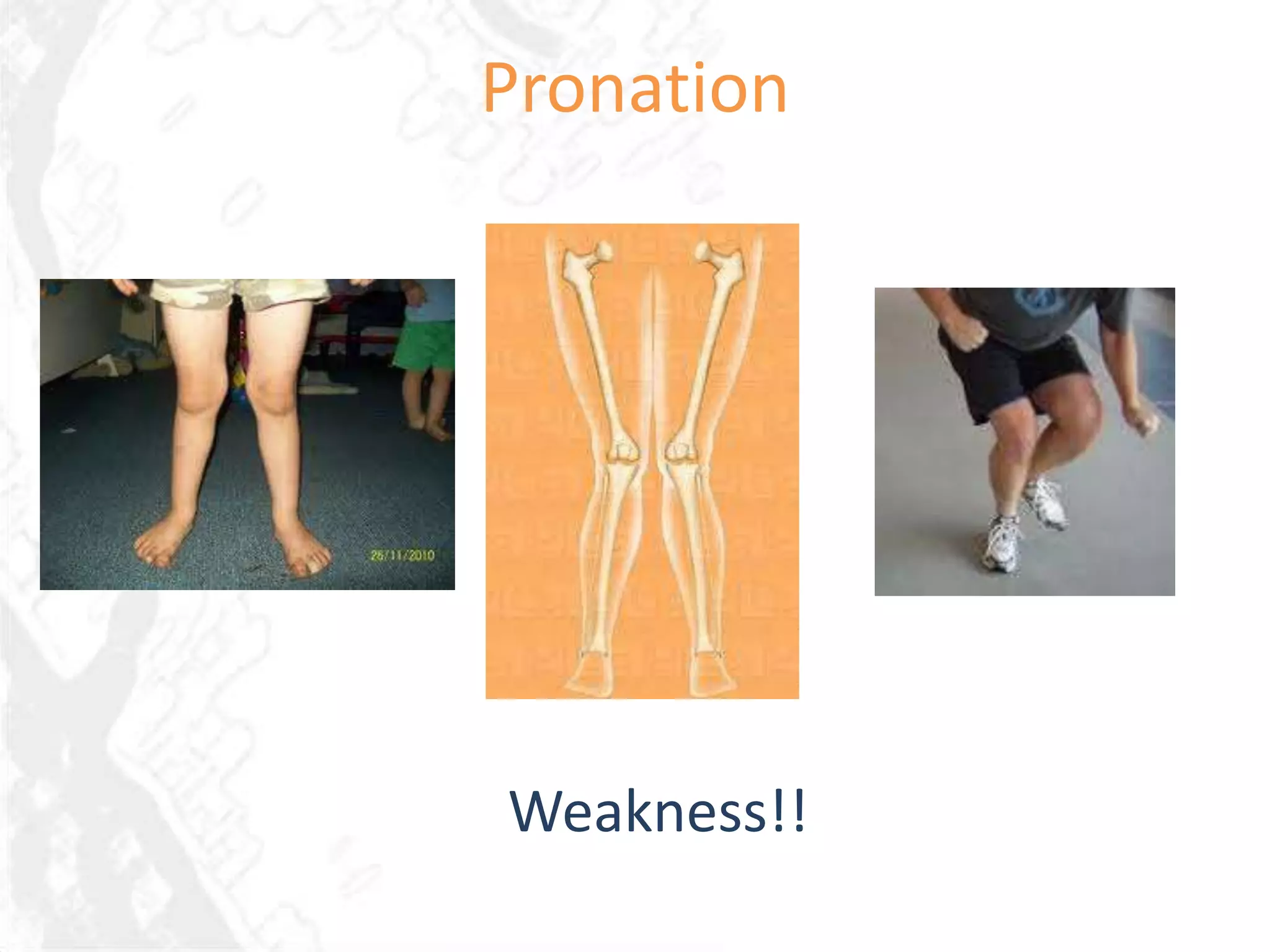
Pronation


Weakness!!
@iNformMaxMartin               Corrective Exercise Australia


                    PRESENTED BY:
              Max MARTIN BAppSc (Hons)AEP
        max@correctiveexerciseaustralia.com

Understanding posture - cExa 2011

  • 1.
    Introduction to POSTURE– Better understanding to get clients from rehab to performance. PRESENTED BY: Max MARTIN BAppSc (Hons) AEP
  • 2.
  • 3.
    Postural Adaptation Posture issusceptible to adaptation to the environment it experiences. Modern Western requirements (work and home) highly repetitious and/or inert in nature. Our posture adapts to these requirements. EXAMPLE………
  • 4.
    The IT animal! Characterisedby (?): Kyphotic thoracic spine Forward head posture Shoulders rolled forward Strong and short cervical extensors Shortened hip flexors that act as stabilisers
  • 5.
    A crystal Ball? Posturalanalysis can help us explain current injuries, or predict future injuries. Many common chronic injury presentations can be closely linked to joint misalignment. We have a duty of care as Health Care Providers to consider posture in our exercise prescription.
  • 6.
    Prescription Paradigms Movement isa behaviour Developed, learned and adapted. Faulty Posture or Movement is a SYMPTOM of dysfunction Stabilisers typically become hypotonic/inhibited (weak) – ‘allowing’ faulty posture Gross movers typically become hypertonic/facilitated (tight) – ‘driving’ faulty posture
  • 7.
    Why weakness? Muscle inhibitiondue to pain/injury Muscle susceptibility – eg. VMO vs VL atrophy post surgery Muscle inactivity in chronic postures – eg. Sedentary behaviours CNS driven protection
  • 8.
    Why tightness? Joint ROMcan be limited by the following factors 1. Joint constraints 2. connective tissue (40%) – protective, inactivity, hypertonicity 3. Neurogenic constraints (voluntary and reflexive) - protective 4. Myogenic constraints
  • 9.
    tightness? Or gaining stability??
  • 10.
    synergist tightness weakness antagonist
  • 11.
  • 12.
    Clinical/Practical findings synergist tightness weakness Pec Minor Levator Scapula antagonist Rhomboids Serratus Anterior Downward Traps rotators of scaps! Upward rotators of scaps!
  • 13.
    Clinical/Practical findings synergist Glute max tightness weakness Hamstrings Hip Flexors • Psoas antagonist • Iliacus Glute max • TFL • Rec fem TrA (+core) Lumbar Erectors
  • 14.
  • 15.
    @iNformMaxMartin Corrective Exercise Australia PRESENTED BY: Max MARTIN BAppSc (Hons)AEP max@correctiveexerciseaustralia.com