INPATIENT & COMMUNITY FORUM
Understanding Mental Health Services
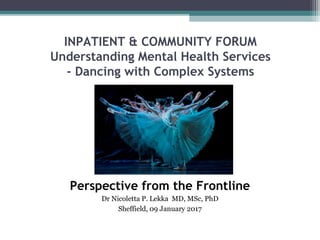
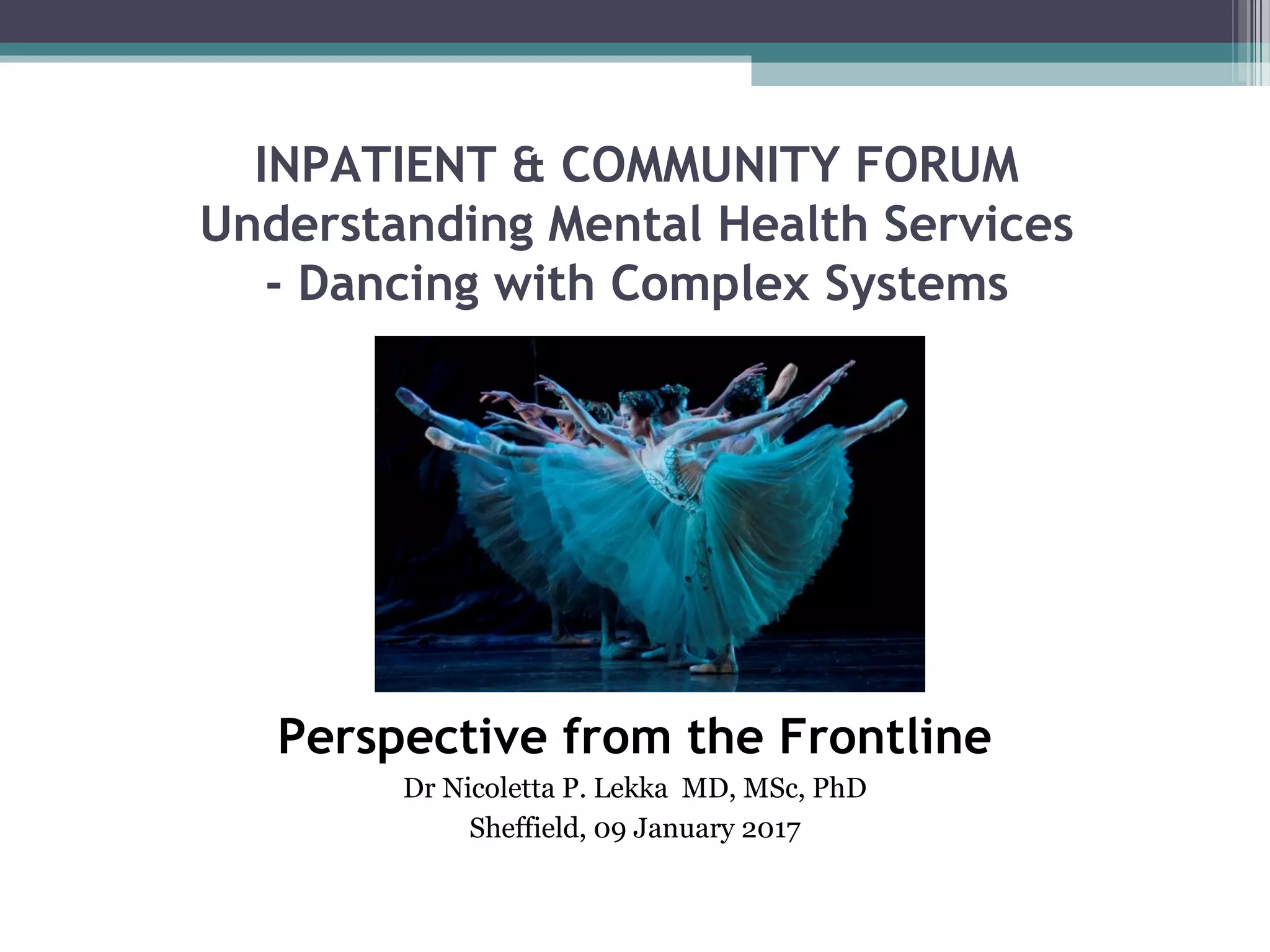
- Dancing with Complex Systems
Perspective from the Frontline
Dr Nicoletta P. Lekka MD, MSc, PhD
Sheffield, 09 January 2017
Outline
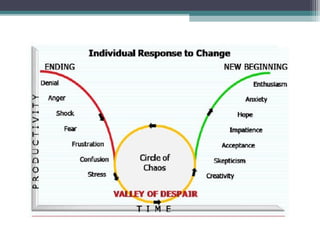
• The Valley of Change
• Engagement and Motivation
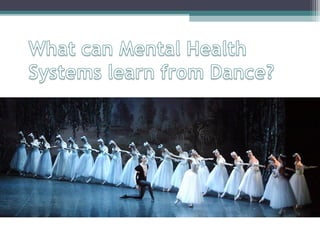
• What Mental Health Systems can learn from
Dance
Organisational Change
• “Mental health teams have to go through
frequent mandated organisational change, such
as reconfiguration programmes aiming for
fewer, smaller acute inpatient units”
(Gilburt, 2015)
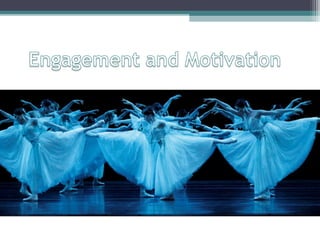
Engagement and Motivation
Work engagement: a positive, fulfilling, work-related state
of mind that is characterised by
•vigour (a high level of energy and mental resilience,
willingness to invest effort, and persistence in the face of
difficulties)
•dedication (strong involvement in work, experiencing a
sense of significance, enthusiasm and challenge)
•absorption (characterised by time passing quickly and
happily whilst immersed at work)
(Schaufeli et al., 2002; Salanova & Schaufeli, 2008)
Engagement and Motivation
• Motivation: a psychological process that
includes activation of energy, effort or
persistence, as well as the direction towards a
goal
(Salanova & Schaufeli, 2008)
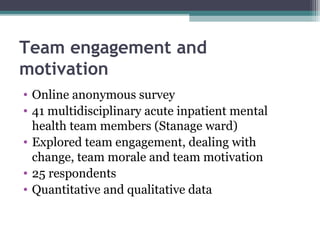
Team engagement and
motivation
• Online anonymous survey
• 41 multidisciplinary acute inpatient mental
health team members (Stanage ward)
• Explored team engagement, dealing with
change, team morale and team motivation
• 25 respondents
• Quantitative and qualitative data
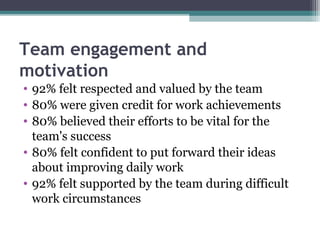
Team engagement and
motivation
• 92% felt respected and valued by the team
• 80% were given credit for work achievements
• 80% believed their efforts to be vital for the
team's success
• 80% felt confident to put forward their ideas
about improving daily work
• 92% felt supported by the team during difficult
work circumstances
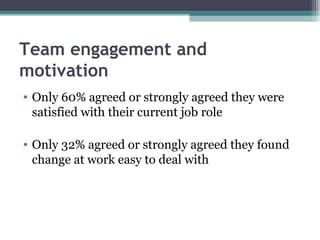
Team engagement and
motivation
• Only 60% agreed or strongly agreed they were
satisfied with their current job role
• Only 32% agreed or strongly agreed they found
change at work easy to deal with
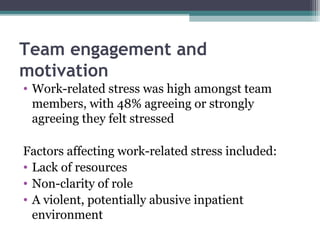
Team engagement and
motivation
• Work-related stress was high amongst team
members, with 48% agreeing or strongly
agreeing they felt stressed
Factors affecting work-related stress included:
• Lack of resources
• Non-clarity of role
• A violent, potentially abusive inpatient
environment
Team engagement and
motivation
Motivational factors highly valued by the team
included:
•Providing high-level care
•Improving patient experience
•Strong team leadership
•Working in a supportive, collaborative team
environment
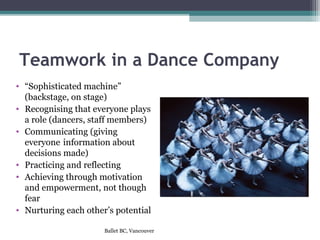
Teamwork in a Dance Company
• “Sophisticated machine”
(backstage, on stage)
• Recognising that everyone plays
a role (dancers, staff members)
• Communicating (giving
everyone information about   
decisions made)
• Practicing and reflecting
• Achieving through motivation
and empowerment, not though
fear
• Nurturing each other’s potential
Ballet BC, Vancouver
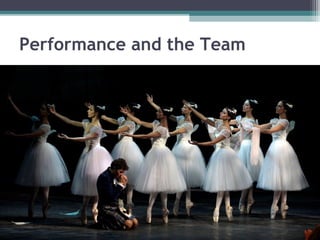
Performance and the Team
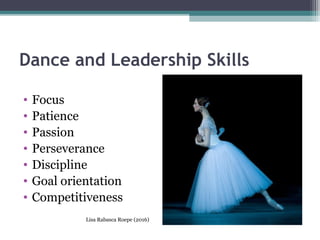
Dance and Leadership Skills
• Focus
• Patience
• Passion
• Perseverance
• Discipline
• Goal orientation
• Competitiveness
Lisa Rabasca Roepe (2016)
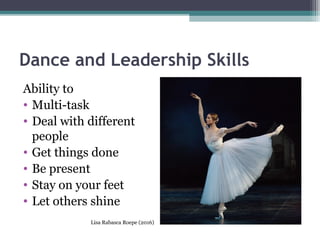
Dance and Leadership Skills
Ability to
• Multi-task
• Deal with different
people
• Get things done
• Be present
• Stay on your feet
• Let others shine
Lisa Rabasca Roepe (2016)
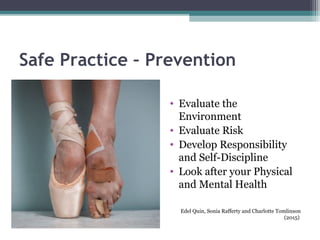
Safe Practice – Prevention
• Evaluate the
Environment
• Evaluate Risk
• Develop Responsibility
and Self-Discipline
• Look after your Physical
and Mental Health
Edel Quin, Sonia Rafferty and Charlotte Tomlinson
(2015)
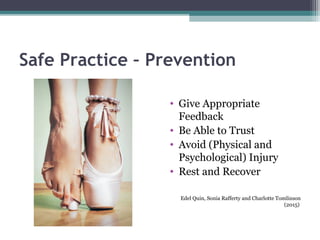
Safe Practice – Prevention
• Give Appropriate
Feedback
• Be Able to Trust
• Avoid (Physical and
Psychological) Injury
• Rest and Recover
Edel Quin, Sonia Rafferty and Charlotte Tomlinson
(2015)
Thank you!

Understanding Mental Health Services Dancing with Complex Systems

  • 1.
    INPATIENT & COMMUNITYFORUM Understanding Mental Health Services - Dancing with Complex Systems Perspective from the Frontline Dr Nicoletta P. Lekka MD, MSc, PhD Sheffield, 09 January 2017
  • 2.
    Outline • The Valleyof Change • Engagement and Motivation • What Mental Health Systems can learn from Dance
  • 4.
    Organisational Change • “Mentalhealth teams have to go through frequent mandated organisational change, such as reconfiguration programmes aiming for fewer, smaller acute inpatient units” (Gilburt, 2015)
  • 7.
    Engagement and Motivation Workengagement: a positive, fulfilling, work-related state of mind that is characterised by •vigour (a high level of energy and mental resilience, willingness to invest effort, and persistence in the face of difficulties) •dedication (strong involvement in work, experiencing a sense of significance, enthusiasm and challenge) •absorption (characterised by time passing quickly and happily whilst immersed at work) (Schaufeli et al., 2002; Salanova & Schaufeli, 2008)
  • 8.
    Engagement and Motivation •Motivation: a psychological process that includes activation of energy, effort or persistence, as well as the direction towards a goal (Salanova & Schaufeli, 2008)
  • 9.
    Team engagement and motivation •Online anonymous survey • 41 multidisciplinary acute inpatient mental health team members (Stanage ward) • Explored team engagement, dealing with change, team morale and team motivation • 25 respondents • Quantitative and qualitative data
  • 10.
    Team engagement and motivation •92% felt respected and valued by the team • 80% were given credit for work achievements • 80% believed their efforts to be vital for the team's success • 80% felt confident to put forward their ideas about improving daily work • 92% felt supported by the team during difficult work circumstances
  • 11.
    Team engagement and motivation •Only 60% agreed or strongly agreed they were satisfied with their current job role • Only 32% agreed or strongly agreed they found change at work easy to deal with
  • 12.
    Team engagement and motivation •Work-related stress was high amongst team members, with 48% agreeing or strongly agreeing they felt stressed Factors affecting work-related stress included: • Lack of resources • Non-clarity of role • A violent, potentially abusive inpatient environment
  • 13.
    Team engagement and motivation Motivationalfactors highly valued by the team included: •Providing high-level care •Improving patient experience •Strong team leadership •Working in a supportive, collaborative team environment
  • 15.
    Teamwork in aDance Company • “Sophisticated machine” (backstage, on stage) • Recognising that everyone plays a role (dancers, staff members) • Communicating (giving everyone information about    decisions made) • Practicing and reflecting • Achieving through motivation and empowerment, not though fear • Nurturing each other’s potential Ballet BC, Vancouver
  • 16.
  • 17.
    Dance and LeadershipSkills • Focus • Patience • Passion • Perseverance • Discipline • Goal orientation • Competitiveness Lisa Rabasca Roepe (2016)
  • 18.
    Dance and LeadershipSkills Ability to • Multi-task • Deal with different people • Get things done • Be present • Stay on your feet • Let others shine Lisa Rabasca Roepe (2016)
  • 19.
    Safe Practice –Prevention • Evaluate the Environment • Evaluate Risk • Develop Responsibility and Self-Discipline • Look after your Physical and Mental Health Edel Quin, Sonia Rafferty and Charlotte Tomlinson (2015)
  • 20.
    Safe Practice –Prevention • Give Appropriate Feedback • Be Able to Trust • Avoid (Physical and Psychological) Injury • Rest and Recover Edel Quin, Sonia Rafferty and Charlotte Tomlinson (2015)
  • 21.