Developments of the Seven Eyed Model 
© Bath Consultancy Group 2014 
of Supervision Webinar 
December 2014 
A division of GP Strategies 
Ltd
Your presenters… 
Professor Peter Hawkins 
Founder and Emeritus Chairman 
Bath Consultancy Group 
International Coaching Week 2014 #icw2014 
Nick Smith 
Executive Coaching Service Manager 
Bath Consultancy Group
WELCOME! 
We will be 
starting shortly. 
Whilst you are waiting, please type any 
questions that you have about the 
Seven-eyed Model 
and hit ‘Send’ 
Please type your questions 
in the Q&A box
What is coaching supervision? 
Qualitative 
Developmental 
Resourcing
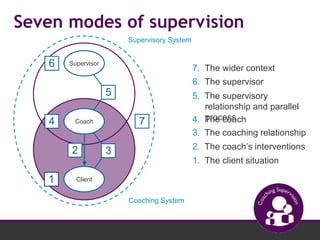
Seven modes of supervision 
7. The wider context 
6. The supervisor 
5. The supervisory 
relationship and parallel 
process 
4. The coach 
3. The coaching relationship 
1. The client situation 
6 
4 
1 
Supervisory System 
7 
Coaching System 
Supervisor 
Coach 
2 
Client 
5 
3 2. The coach’s interventions
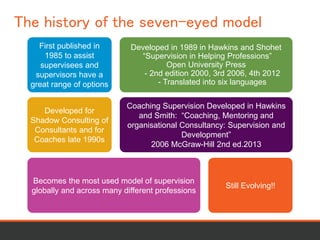
The history of the seven-eyed model 
First published in 
1985 to assist 
supervisees and 
supervisors have a 
great range of options 
Developed in 1989 in Hawkins and Shohet 
“Supervision in Helping Professions” 
Open University Press 
- 2nd edition 2000, 3rd 2006, 4th 2012 
- Translated into six languages 
First published in 1985 to assist supervisees 
and supervisors have a great range of options 
? 
Becomes the most used model of supervision 
globally and across many different professions 
Still Evolving!! 
Developed for 
Shadow Consulting of 
Consultants and for 
Coaches late 1990s 
Coaching Supervision Developed in Hawkins 
and Smith: “Coaching, Mentoring and 
organisational Consultancy: Supervision and 
Development” 
2006 McGraw-Hill 2nd ed.2013
7 
The new coaching 
context for the 
seven-eyed 
model
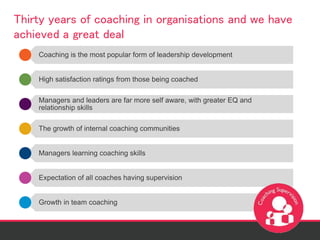
Thirty years of coaching in organisations and we have 
achieved a great deal 
Coaching is the most popular form of leadership development 
High satisfaction ratings from those being coached 
Managers and leaders are far more self aware, with greater EQ and 
relationship skills 
The growth of internal coaching communities 
Managers learning coaching skills 
Expectation of all coaches having supervision 
Growth in team coaching
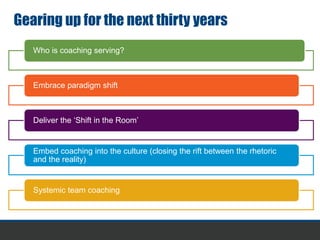
Gearing up for the next thirty years 
Who is coaching serving? 
Embrace paradigm shift 
Deliver the ‘Shift in the Room’ 
Embed coaching into the culture (closing the rift between the rhetoric 
and the reality) 
Systemic team coaching
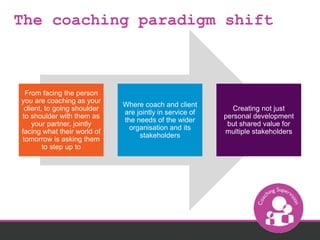
The coaching paradigm shift 
From facing the person 
you are coaching as your 
client, to going shoulder 
to shoulder with them as 
your partner, jointly 
facing what their world of 
tomorrow is asking them 
to step up to 
Where coach and client 
are jointly in service of 
the needs of the wider 
organisation and its 
stakeholders 
Creating not just 
personal development 
but shared value for 
multiple stakeholders
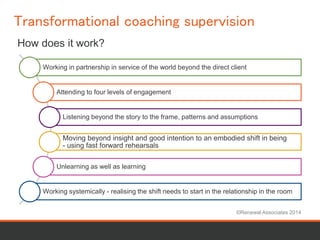
Transformational coaching supervision 
How does it work? 
Working in partnership in service of the world beyond the direct client 
©Renewal Associates 2014 
Attending to four levels of engagement 
Listening beyond the story to the frame, patterns and assumptions 
Moving beyond insight and good intention to an embodied shift in being 
- using fast forward rehearsals 
Unlearning as well as learning 
Working systemically - realising the shift needs to start in the relationship in the room
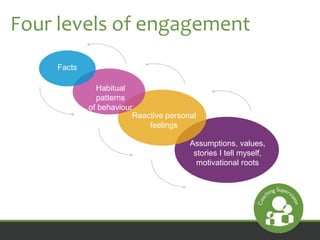
Four levels of engagement 
Habitual 
patterns 
of behaviour 
Reactive personal 
feelings 
Assumptions, values, 
stories I tell myself, 
motivational roots 
Facts
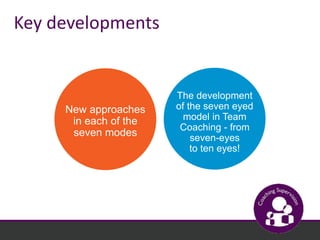
Key developments 
New approaches 
in each of the 
seven modes 
The development 
of the seven eyed 
model in Team 
Coaching - from 
seven-eyes 
to ten eyes!
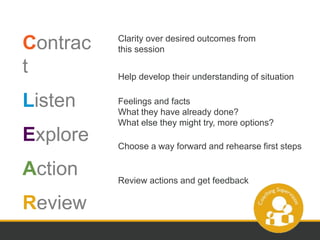
Clarity over desired outcomes from 
this session 
Help develop their understanding of situation 
Choose a way forward and rehearse first steps 
Review actions and get feedback 
Contrac 
t 
Listen 
Explore 
Action 
Review 
Feelings and facts 
What they have already done? 
What else they might try, more options?
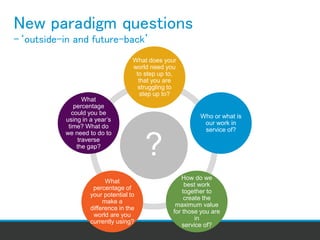
New paradigm questions 
-‘outside-in and future-back’ 
What does your 
world need you 
to step up to, 
that you are 
struggling to 
step up to? 
? 
Who or what is 
our work in 
service of? 
How do we 
best work 
together to 
create the 
maximum value 
for those you are 
in 
service of? 
percentage 
could you be 
using in a year’s 
time? What do 
we need to do to 
What 
What 
traverse 
the gap? 
percentage of 
your potential to 
make a 
difference in the 
world are you 
currently using?
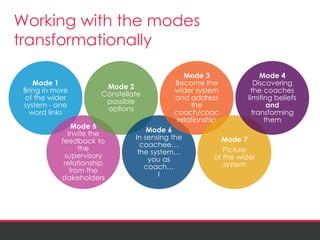
Working with the modes 
transformationally 
Mode 1 
Bring in more 
of the wider 
system - one 
word links 
Mode 2 
Constellate 
possible 
Mode 5 
Invite the 
feedback to 
the 
supervisory 
relationship 
from the 
stakeholders 
options 
Mode 6 
In sensing the 
coachee… 
the system… 
you as 
coach… 
I 
Mode 3 
Become the 
wider system 
and address 
the 
coach/coac 
relationship 
Mode 7 
Picture 
of the wider 
system 
Mode 4 
Discovering 
the coaches 
limiting beliefs 
and 
transforming 
them
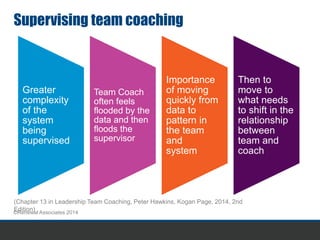
Supervising team coaching 
Greater 
complexity 
of the 
system 
being 
supervised 
Team Coach 
often feels 
flooded by the 
data and then 
floods the 
supervisor 
Importance 
of moving 
quickly from 
data to 
pattern in 
the team 
and 
system 
Then to 
move to 
what needs 
to shift in the 
relationship 
between 
team and 
coach 
(Chapter 13 in Leadership Team Coaching, Peter Hawkins, Kogan Page, 2014, 2nd 
Edition) 
©Renewal Associates 2014
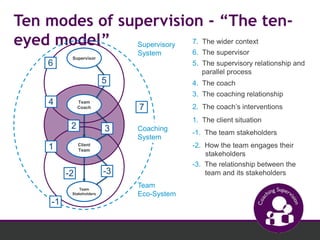
Ten modes of supervision - “The ten-eyed 
model” 
7. The wider context 
6. The supervisor 
5. The supervisory relationship and 
parallel process 
4. The coach 
3. The coaching relationship 
1. The client situation 
6 
4 
Supervisory 
System 
7 
Coaching 
System 
Supervisor 
Team 
Coach 
2 3 
Client 
Team 
5 
2. The coach’s interventions 
Team 
Stakeholders 
1 
-2 
Team 
Eco-System 
-1 
-3 
-1. The team stakeholders 
-2. How the team engages their 
stakeholders 
-3. The relationship between the 
team and its stakeholders
YOU are the future 
of Coaching 
We now want to address 
your questions and comments
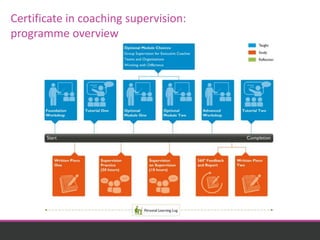
Certificate in coaching supervision: 
programme overview
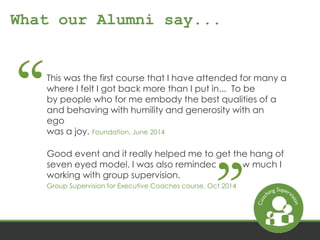
What our Alumni say... 
This was the first course that I have attended for many a 
where I felt I got back more than I put in... To be 
by people who for me embody the best qualities of a 
and behaving with humility and generosity with an 
ego 
was a joy. Foundation, June 2014 
Good event and it really helped me to get the hang of 
seven eyed model. I was also reminded of how much I 
working with group supervision. 
Group Supervision for Executive Coaches course, Oct 2014
Dates for your diaries 
20 January: 
Webinar - Supervision with the 
team and organisation in mind 
21-23 January: 
Supervision Essentials 
(Foundation) 
London, UK 
More details to follow soon
Follow us on Twitter @BCG_OD Follow us on 
LinkedIn
www.bathconsultancygroup.com 
A division of 
Peter Hawkins and Nick Smith 
Lara.dias@bathconsultancygroup.com 
Phone: 01225 520866 
© 2014 GP Strategies Limited. All rights reserved. GP Strategies, GP Strategies and logo design, BlessingWhite, Rovsing Dynamics, Asentus, Information Horizons, PMC, Sandy, Bath Consultancy Group, Academy of Training, 
Martonhouse, Via Training, Beneast Training, Ultra, RWD, Communication Consulting, Option Six, Milsom, Clutterbuck Associates, Future Perfect, PerformTech, Smallpeice Enterprises, GPiLEARN, GPCALCS, GPSteam, 
EtaPRO, VirtualPlant, Prospero Learning Solutions and Lorien Engineering Solutions Ltd are trademarks or registered trademarks of GP Strategies Corporation in the U.S. and other countries. All other trademarks are trademarks 
or registered trademarks of their respective owners. 
Proprietary to GP Strategies Limited.

The 7 eyed model of Supervision webinar December 2014

  • 1.
    Developments of theSeven Eyed Model © Bath Consultancy Group 2014 of Supervision Webinar December 2014 A division of GP Strategies Ltd
  • 2.
    Your presenters… ProfessorPeter Hawkins Founder and Emeritus Chairman Bath Consultancy Group International Coaching Week 2014 #icw2014 Nick Smith Executive Coaching Service Manager Bath Consultancy Group
  • 3.
    WELCOME! We willbe starting shortly. Whilst you are waiting, please type any questions that you have about the Seven-eyed Model and hit ‘Send’ Please type your questions in the Q&A box
  • 4.
    What is coachingsupervision? Qualitative Developmental Resourcing
  • 5.
    Seven modes ofsupervision 7. The wider context 6. The supervisor 5. The supervisory relationship and parallel process 4. The coach 3. The coaching relationship 1. The client situation 6 4 1 Supervisory System 7 Coaching System Supervisor Coach 2 Client 5 3 2. The coach’s interventions
  • 6.
    The history ofthe seven-eyed model First published in 1985 to assist supervisees and supervisors have a great range of options Developed in 1989 in Hawkins and Shohet “Supervision in Helping Professions” Open University Press - 2nd edition 2000, 3rd 2006, 4th 2012 - Translated into six languages First published in 1985 to assist supervisees and supervisors have a great range of options ? Becomes the most used model of supervision globally and across many different professions Still Evolving!! Developed for Shadow Consulting of Consultants and for Coaches late 1990s Coaching Supervision Developed in Hawkins and Smith: “Coaching, Mentoring and organisational Consultancy: Supervision and Development” 2006 McGraw-Hill 2nd ed.2013
  • 7.
    7 The newcoaching context for the seven-eyed model
  • 8.
    Thirty years ofcoaching in organisations and we have achieved a great deal Coaching is the most popular form of leadership development High satisfaction ratings from those being coached Managers and leaders are far more self aware, with greater EQ and relationship skills The growth of internal coaching communities Managers learning coaching skills Expectation of all coaches having supervision Growth in team coaching
  • 9.
    Gearing up forthe next thirty years Who is coaching serving? Embrace paradigm shift Deliver the ‘Shift in the Room’ Embed coaching into the culture (closing the rift between the rhetoric and the reality) Systemic team coaching
  • 10.
    The coaching paradigmshift From facing the person you are coaching as your client, to going shoulder to shoulder with them as your partner, jointly facing what their world of tomorrow is asking them to step up to Where coach and client are jointly in service of the needs of the wider organisation and its stakeholders Creating not just personal development but shared value for multiple stakeholders
  • 11.
    Transformational coaching supervision How does it work? Working in partnership in service of the world beyond the direct client ©Renewal Associates 2014 Attending to four levels of engagement Listening beyond the story to the frame, patterns and assumptions Moving beyond insight and good intention to an embodied shift in being - using fast forward rehearsals Unlearning as well as learning Working systemically - realising the shift needs to start in the relationship in the room
  • 12.
    Four levels ofengagement Habitual patterns of behaviour Reactive personal feelings Assumptions, values, stories I tell myself, motivational roots Facts
  • 13.
    Key developments Newapproaches in each of the seven modes The development of the seven eyed model in Team Coaching - from seven-eyes to ten eyes!
  • 14.
    Clarity over desiredoutcomes from this session Help develop their understanding of situation Choose a way forward and rehearse first steps Review actions and get feedback Contrac t Listen Explore Action Review Feelings and facts What they have already done? What else they might try, more options?
  • 15.
    New paradigm questions -‘outside-in and future-back’ What does your world need you to step up to, that you are struggling to step up to? ? Who or what is our work in service of? How do we best work together to create the maximum value for those you are in service of? percentage could you be using in a year’s time? What do we need to do to What What traverse the gap? percentage of your potential to make a difference in the world are you currently using?
  • 16.
    Working with themodes transformationally Mode 1 Bring in more of the wider system - one word links Mode 2 Constellate possible Mode 5 Invite the feedback to the supervisory relationship from the stakeholders options Mode 6 In sensing the coachee… the system… you as coach… I Mode 3 Become the wider system and address the coach/coac relationship Mode 7 Picture of the wider system Mode 4 Discovering the coaches limiting beliefs and transforming them
  • 17.
    Supervising team coaching Greater complexity of the system being supervised Team Coach often feels flooded by the data and then floods the supervisor Importance of moving quickly from data to pattern in the team and system Then to move to what needs to shift in the relationship between team and coach (Chapter 13 in Leadership Team Coaching, Peter Hawkins, Kogan Page, 2014, 2nd Edition) ©Renewal Associates 2014
  • 18.
    Ten modes ofsupervision - “The ten-eyed model” 7. The wider context 6. The supervisor 5. The supervisory relationship and parallel process 4. The coach 3. The coaching relationship 1. The client situation 6 4 Supervisory System 7 Coaching System Supervisor Team Coach 2 3 Client Team 5 2. The coach’s interventions Team Stakeholders 1 -2 Team Eco-System -1 -3 -1. The team stakeholders -2. How the team engages their stakeholders -3. The relationship between the team and its stakeholders
  • 19.
    YOU are thefuture of Coaching We now want to address your questions and comments
  • 20.
    Certificate in coachingsupervision: programme overview
  • 21.
    What our Alumnisay... This was the first course that I have attended for many a where I felt I got back more than I put in... To be by people who for me embody the best qualities of a and behaving with humility and generosity with an ego was a joy. Foundation, June 2014 Good event and it really helped me to get the hang of seven eyed model. I was also reminded of how much I working with group supervision. Group Supervision for Executive Coaches course, Oct 2014
  • 22.
    Dates for yourdiaries 20 January: Webinar - Supervision with the team and organisation in mind 21-23 January: Supervision Essentials (Foundation) London, UK More details to follow soon
  • 23.
    Follow us onTwitter @BCG_OD Follow us on LinkedIn
  • 24.
    www.bathconsultancygroup.com A divisionof Peter Hawkins and Nick Smith Lara.dias@bathconsultancygroup.com Phone: 01225 520866 © 2014 GP Strategies Limited. All rights reserved. GP Strategies, GP Strategies and logo design, BlessingWhite, Rovsing Dynamics, Asentus, Information Horizons, PMC, Sandy, Bath Consultancy Group, Academy of Training, Martonhouse, Via Training, Beneast Training, Ultra, RWD, Communication Consulting, Option Six, Milsom, Clutterbuck Associates, Future Perfect, PerformTech, Smallpeice Enterprises, GPiLEARN, GPCALCS, GPSteam, EtaPRO, VirtualPlant, Prospero Learning Solutions and Lorien Engineering Solutions Ltd are trademarks or registered trademarks of GP Strategies Corporation in the U.S. and other countries. All other trademarks are trademarks or registered trademarks of their respective owners. Proprietary to GP Strategies Limited.