UNDERSTANDING CRITICAL THINKING, CONCEPTUAL THINKING & CONCEPT DESIGN Rebecca Taylor  Spring 2010 MIU Art Institute *ALL IMAGES: THANKS TO GOOGLE, FLICKR, GETTY & ANYONE I DON’T THANK, THANK YOU.
 
CONTENTS Who are you? (the world of creativity)  What will you be? (roles & responsibilities) The value of a sketchbook (theme & getting on and doing it) What is a brief? (research and planning) A different kind of ‘brief’ (a very brief history of visual communication) Critical & Conceptual Thinking & Concept Design (the differences & similarities) A Game of Consequences Summary & Homework
WHO ARE  YOU ?
(Ref.  http://kakireka.blogspot.com/2009/12/rm200-million-creative-industry-fund.html  [2009])
WHAT WILL YOU BE?
+ EDWARD DE BONO Thinking Designer  ref. http://www.edwdebono.com/
+ MYERS & BRIGGS Personality Type Specialists  ref. http://www.myersbriggs.org/
+ MEREDITH BELBIN Team Role Theorist  ref. http://www.belbin.com/
THE VALUE  O F A  $K£T € HB OO K + to you + to Ai + to clients
THE SKETCHBOOK CHALLENGE: + Thrift Store + Sketch + Rip & Stick + Inspiration + Rubric


(Ref.  Mind Wide Open, Steven Johnson  [2005])
The Brief
 
 
A different kind of brief… … a brief history of art (the eras)
+ Prehistoric Era (30,000BC-3000BC) + Ancient Civilisation (3500-1100BC) + Classical Civilisation (800BC-337AD) + Medieval to Early Renaissance Art (400-1400) + The Renaissance (1400-1880) + “Mannerism” (1520-1600) + Renaissance in Northern Europe (1325-1600) + Baroque Art (1600-1750) + Rococo (1700-1750) + Neo-Classicism Vs Romanticism (1750-1880) + Realism (1830-1870) + Impressionism (1860-1880) + Modern Art (1880-present) + “Post-Impressionism” (1885-1920) + The Fauves & Expressionism (1890-1939) + Cubism & Futurism (1905-1939) + Surrealism (1922-1939) + Abstract Expressionism (1945-present) + Pop & Op Art (1950s-present) + Performance Art/Conceptual Art/Digital Art/Shock Art (1970s to present)
THINKING SKILLS + Critical  + Conceptual
What type of thinking skills do you think you need to apply at the beginning of the creative process?
CRITICAL THINKING Critical  thinking  is the art of  analyzing  and  evaluating   thinking  with a view to  improving  it.   (Ref. The Miniature Guide to Critical Thinking, Dr. Richard Paul & Dr. Linda Elder [2006] 4th edition  www. criticalthinking .org )
CRITICAL THINKING: THE SKILLS Clear as to the purpose at hand and the question at issue They question information, conclusions, and points of view They strive to be clear, accurate, precise, and relevant They seek to think beneath the surface, to be logical, and fair They apply these skills to their reading and writing as well as to their speaking and listening  They apply them in history, science, math, philosophy, and the arts; in professional and personal life (Ref. The Miniature Guide to Critical Thinking, Dr. Richard Paul & Dr. Linda Elder [2006] 4th edition  www.criticalthinking.org )
THE RESULT: A CRITICAL THINKER raises vital questions and problems, formulating them clearly and precisely; gathers and assesses relevant information, using abstract ideas to interpret it effectively; comes to well-reasoned conclusions and solutions, testing them against relevant criteria and standards; thinks open-mindedly within alternative systems of thought, recognizing and assessing, as need be, their assumptions, implications, and practical consequences; and communicates effectively with others in figuring out solutions to complex problems.   (Ref. The Miniature Guide to Critical Thinking, Dr. Richard Paul & Dr. Linda Elder [2006] 4th edition  www. criticalthinking .org )
CRITICAL THINKING, IS IN SHORT,  self-directed, self-disciplined, self-monitored,and self-corrective thinking.
 
CONCEPTUAL THINKING Conceptual  thinking  is a way of  organizing  and  categorizing  ideas in your mind (Ref.  (Wilson 1987)  Developing Conceptual Thinking: The concept Attainment Model http://www.jstor.org/pss/30188863)
CONCEPTUAL THINKING: THE SKILLS Unclear until the purpose is probed They question anything and everything They strive to be irrelevant but then categorize and sort ideas to become relevant They seek to think beneath the surface, to be lateral in their approach They challenge preconceived ideas, the possible and the impossible They are exude positive energy and remain open-minded They apply these skills to any problem solving situation that requires an innovative outcome
 
THE RESULT: A CONCEPTUAL THINKER raises abstract questions and indirectly related problems formulating them openly and confidently gathers and assesses relevant information, using abstract ideas to interpret other ideas effectively comes to various junctions along the journey of ‘a concept’ and openly discusses the various options available Thinks open-mindedly within alternative systems of thought, recognizing and assessing as need be, their assumptions, implications and the brief in hand communicates effectively with others in figuring out solutions to complex problems recording and documenting often quite random notes and ideas
CONCEPTUAL THINKING, IN SHORT IS, self-reflective, self-motivated, selfless and free thinking.
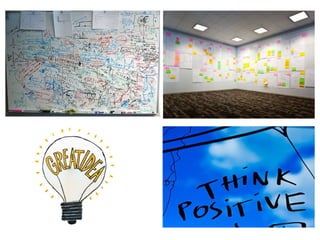
Take it to the Think Tank… BUT WAIT Why?  Who? What? Where? When?
HANG ON:  What happened to Concept Design?
CONCEPT  DESIGN
FROM ‘CONCEIVE’ 1: SOMETHING CONCEIVED IN THE MIND 2: AN ABSTRACT OR GENERIC IDEA GENERALISED FROM PARTICULAR INSTANCES http://www.merriam-webster.com/dictionary/concept FROM ‘DESIGNATE’ 1: TO CREATE, FASHION, EXECUTE OR CONSTRUCT ACCORDING TO PLAN 2: TO HAVE A PURPOSE OR INTENT 3: TO DEVISE FOR A SPECIFIC FUNCTION OR END http://www.merriam-webster.com/dictionary/design
CONCEPT DESIGN Scamps/sketches Renders Visualisation (visuals) Task: 10 mins, 10 different themes - as many sketches as possible  Listen. Wait…
THE ART OF CONCEPT DESIGN
 
+ Brief: Mobile Technology  ( http://www.textually.org/textually/archivescat_cell_phone_designs_and_concepts.htm )  + Approach:  CONCEPT DESIGN EXAMPLE Critical  Thinking Conceptual  Thinking Concept Design
 
A Game of Consequences
RECAP: Who are you? (the world of creativity)  What will you be? (roles & responsibilities) The value of a sketchbook (theme & getting on and doing it) What is a brief? (research and planning) A different kind of ‘brief’ (a very brief history of visual communication) Critical & Conceptual Thinking & Concept Design (the differences & similarities) A Game of Consequences Summary & Homework

Understanding Critical&Concept

  • 1.
    UNDERSTANDING CRITICAL THINKING,CONCEPTUAL THINKING & CONCEPT DESIGN Rebecca Taylor Spring 2010 MIU Art Institute *ALL IMAGES: THANKS TO GOOGLE, FLICKR, GETTY & ANYONE I DON’T THANK, THANK YOU.
  • 2.
  • 3.
    CONTENTS Who areyou? (the world of creativity) What will you be? (roles & responsibilities) The value of a sketchbook (theme & getting on and doing it) What is a brief? (research and planning) A different kind of ‘brief’ (a very brief history of visual communication) Critical & Conceptual Thinking & Concept Design (the differences & similarities) A Game of Consequences Summary & Homework
  • 4.
    WHO ARE YOU ?
  • 5.
  • 6.
  • 7.
    + EDWARD DEBONO Thinking Designer ref. http://www.edwdebono.com/
  • 8.
    + MYERS &BRIGGS Personality Type Specialists ref. http://www.myersbriggs.org/
  • 9.
    + MEREDITH BELBINTeam Role Theorist ref. http://www.belbin.com/
  • 10.
    THE VALUE O F A $K£T € HB OO K + to you + to Ai + to clients
  • 11.
    THE SKETCHBOOK CHALLENGE:+ Thrift Store + Sketch + Rip & Stick + Inspiration + Rubric
  • 12.
  • 13.
  • 14.
  • 15.
  • 16.
    (Ref. MindWide Open, Steven Johnson [2005])
  • 17.
  • 18.
  • 19.
  • 20.
    A different kindof brief… … a brief history of art (the eras)
  • 21.
    + Prehistoric Era(30,000BC-3000BC) + Ancient Civilisation (3500-1100BC) + Classical Civilisation (800BC-337AD) + Medieval to Early Renaissance Art (400-1400) + The Renaissance (1400-1880) + “Mannerism” (1520-1600) + Renaissance in Northern Europe (1325-1600) + Baroque Art (1600-1750) + Rococo (1700-1750) + Neo-Classicism Vs Romanticism (1750-1880) + Realism (1830-1870) + Impressionism (1860-1880) + Modern Art (1880-present) + “Post-Impressionism” (1885-1920) + The Fauves & Expressionism (1890-1939) + Cubism & Futurism (1905-1939) + Surrealism (1922-1939) + Abstract Expressionism (1945-present) + Pop & Op Art (1950s-present) + Performance Art/Conceptual Art/Digital Art/Shock Art (1970s to present)
  • 22.
    THINKING SKILLS +Critical + Conceptual
  • 23.
    What type ofthinking skills do you think you need to apply at the beginning of the creative process?
  • 24.
    CRITICAL THINKING Critical thinking is the art of analyzing and evaluating thinking with a view to improving it. (Ref. The Miniature Guide to Critical Thinking, Dr. Richard Paul & Dr. Linda Elder [2006] 4th edition www. criticalthinking .org )
  • 25.
    CRITICAL THINKING: THESKILLS Clear as to the purpose at hand and the question at issue They question information, conclusions, and points of view They strive to be clear, accurate, precise, and relevant They seek to think beneath the surface, to be logical, and fair They apply these skills to their reading and writing as well as to their speaking and listening They apply them in history, science, math, philosophy, and the arts; in professional and personal life (Ref. The Miniature Guide to Critical Thinking, Dr. Richard Paul & Dr. Linda Elder [2006] 4th edition www.criticalthinking.org )
  • 26.
    THE RESULT: ACRITICAL THINKER raises vital questions and problems, formulating them clearly and precisely; gathers and assesses relevant information, using abstract ideas to interpret it effectively; comes to well-reasoned conclusions and solutions, testing them against relevant criteria and standards; thinks open-mindedly within alternative systems of thought, recognizing and assessing, as need be, their assumptions, implications, and practical consequences; and communicates effectively with others in figuring out solutions to complex problems. (Ref. The Miniature Guide to Critical Thinking, Dr. Richard Paul & Dr. Linda Elder [2006] 4th edition www. criticalthinking .org )
  • 27.
    CRITICAL THINKING, ISIN SHORT, self-directed, self-disciplined, self-monitored,and self-corrective thinking.
  • 28.
  • 29.
    CONCEPTUAL THINKING Conceptual thinking is a way of organizing and categorizing ideas in your mind (Ref. (Wilson 1987) Developing Conceptual Thinking: The concept Attainment Model http://www.jstor.org/pss/30188863)
  • 30.
    CONCEPTUAL THINKING: THESKILLS Unclear until the purpose is probed They question anything and everything They strive to be irrelevant but then categorize and sort ideas to become relevant They seek to think beneath the surface, to be lateral in their approach They challenge preconceived ideas, the possible and the impossible They are exude positive energy and remain open-minded They apply these skills to any problem solving situation that requires an innovative outcome
  • 31.
  • 32.
    THE RESULT: ACONCEPTUAL THINKER raises abstract questions and indirectly related problems formulating them openly and confidently gathers and assesses relevant information, using abstract ideas to interpret other ideas effectively comes to various junctions along the journey of ‘a concept’ and openly discusses the various options available Thinks open-mindedly within alternative systems of thought, recognizing and assessing as need be, their assumptions, implications and the brief in hand communicates effectively with others in figuring out solutions to complex problems recording and documenting often quite random notes and ideas
  • 33.
    CONCEPTUAL THINKING, INSHORT IS, self-reflective, self-motivated, selfless and free thinking.
  • 34.
    Take it tothe Think Tank… BUT WAIT Why? Who? What? Where? When?
  • 35.
    HANG ON: What happened to Concept Design?
  • 36.
  • 37.
    FROM ‘CONCEIVE’ 1:SOMETHING CONCEIVED IN THE MIND 2: AN ABSTRACT OR GENERIC IDEA GENERALISED FROM PARTICULAR INSTANCES http://www.merriam-webster.com/dictionary/concept FROM ‘DESIGNATE’ 1: TO CREATE, FASHION, EXECUTE OR CONSTRUCT ACCORDING TO PLAN 2: TO HAVE A PURPOSE OR INTENT 3: TO DEVISE FOR A SPECIFIC FUNCTION OR END http://www.merriam-webster.com/dictionary/design
  • 38.
    CONCEPT DESIGN Scamps/sketchesRenders Visualisation (visuals) Task: 10 mins, 10 different themes - as many sketches as possible Listen. Wait…
  • 39.
    THE ART OFCONCEPT DESIGN
  • 40.
  • 41.
    + Brief: MobileTechnology ( http://www.textually.org/textually/archivescat_cell_phone_designs_and_concepts.htm ) + Approach: CONCEPT DESIGN EXAMPLE Critical Thinking Conceptual Thinking Concept Design
  • 42.
  • 43.
    A Game ofConsequences
  • 44.
    RECAP: Who areyou? (the world of creativity) What will you be? (roles & responsibilities) The value of a sketchbook (theme & getting on and doing it) What is a brief? (research and planning) A different kind of ‘brief’ (a very brief history of visual communication) Critical & Conceptual Thinking & Concept Design (the differences & similarities) A Game of Consequences Summary & Homework