26 April 2012
           OECD Conference:
    Educating for Innovative Societies

     Assessments for Skills in Thinking
             and Creativity


PROFESSOR BILL LUCAS, PROFESSOR G UY CLAXTON & D R ELLEN SPENCER
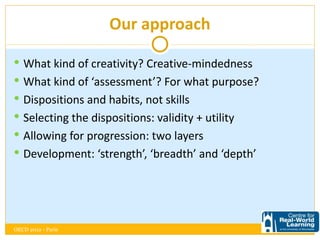
Our approach

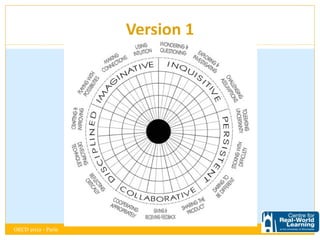
 What kind of creativity? Creative-mindedness
 What kind of ‘assessment’? For what purpose?
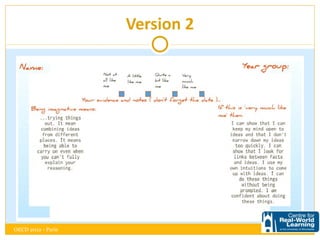
 Dispositions and habits, not skills
 Selecting the dispositions: validity + utility
 Allowing for progression: two layers
 Development: ‘strength’, ‘breadth’ and ‘depth’


OECD 2012 - Paris
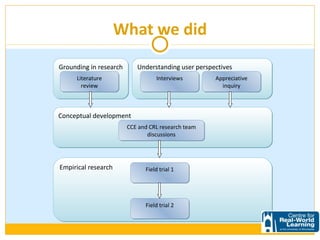
What we did
                    Grounding in research      Understanding user perspectives
                         Literature                   Interviews        Appreciative
                           review                                         inquiry


                    Conceptual development
                                            CCE and CRL research team
                                                   discussions


                    Empirical research            Field trial 1


                                                  Field trial 2


OECD 2012 - Paris
Version 1


OECD 2012 - Paris
Version 2


OECD 2012 - Paris
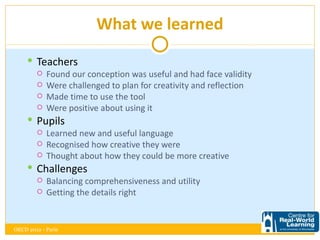
What we learned

      Teachers
        Found our conception was useful and had face validity
        Were challenged to plan for creativity and reflection
        Made time to use the tool
        Were positive about using it

      Pupils
        Learned new and useful language
        Recognised how creative they were
        Thought about how they could be more creative

      Challenges
        Balancing comprehensiveness and utility
        Getting the details right


OECD 2012 - Paris
What do we hope to achieve?

      Engage the broader research, policy and practice
          communities in further dialogue

         “We are being beaten with a rather large stick, with a Local Authority
          undergoing great change…With the new Ofsted [inspection] Framework
          looming and our old friend the 11+ [exams] ever present, it makes this
          project all the more vital in making staff reflect on how are we nurturing
          creativity and giving pupils access to their own armory of tools to ensure a
          love for learning and progress.” [Headteacher, South East England]


OECD 2012 - Paris
Thank you
  OECD background document available at:
  http://www.oecd.org/document/15/0,3746,en_21571361_49995565_49798543_1_1_1_1,00.html

  CCE literature review
  Spencer, E., Lucas, B. & Claxton, G. (2012) Progression in Creativity - Developing New Forms of Assessment: A
      literature review. Newcastle: CCE.
  Forthcoming at: http://www.creativitycultureeducation.org/category/literature-reviews

  CCE project report
  Spencer, E., Lucas, B. & Claxton, G. (2012) Progression in creativity: Developing new forms of assessment.
     Newcastle: CCE.
  Available at: http://www.creativitycultureeducation.org/progression-in-creativity-developing-new-forms-of-
     assessment


                                         Bill.Lucas@winchester.ac.uk
                                     www.winchester.ac.uk/realworldlearning
                                         www.expansiveeducation.net


OECD 2012 - Paris

Progression in Creativity: Developing New Forms of Assessment

  • 1.
    26 April 2012 OECD Conference: Educating for Innovative Societies Assessments for Skills in Thinking and Creativity PROFESSOR BILL LUCAS, PROFESSOR G UY CLAXTON & D R ELLEN SPENCER
  • 2.
    Our approach  Whatkind of creativity? Creative-mindedness  What kind of ‘assessment’? For what purpose?  Dispositions and habits, not skills  Selecting the dispositions: validity + utility  Allowing for progression: two layers  Development: ‘strength’, ‘breadth’ and ‘depth’ OECD 2012 - Paris
  • 3.
    What we did Grounding in research Understanding user perspectives Literature Interviews Appreciative review inquiry Conceptual development CCE and CRL research team discussions Empirical research Field trial 1 Field trial 2 OECD 2012 - Paris
  • 4.
  • 5.
  • 6.
    What we learned  Teachers  Found our conception was useful and had face validity  Were challenged to plan for creativity and reflection  Made time to use the tool  Were positive about using it  Pupils  Learned new and useful language  Recognised how creative they were  Thought about how they could be more creative  Challenges  Balancing comprehensiveness and utility  Getting the details right OECD 2012 - Paris
  • 7.
    What do wehope to achieve?  Engage the broader research, policy and practice communities in further dialogue  “We are being beaten with a rather large stick, with a Local Authority undergoing great change…With the new Ofsted [inspection] Framework looming and our old friend the 11+ [exams] ever present, it makes this project all the more vital in making staff reflect on how are we nurturing creativity and giving pupils access to their own armory of tools to ensure a love for learning and progress.” [Headteacher, South East England] OECD 2012 - Paris
  • 8.
    Thank you OECD background document available at: http://www.oecd.org/document/15/0,3746,en_21571361_49995565_49798543_1_1_1_1,00.html CCE literature review Spencer, E., Lucas, B. & Claxton, G. (2012) Progression in Creativity - Developing New Forms of Assessment: A literature review. Newcastle: CCE. Forthcoming at: http://www.creativitycultureeducation.org/category/literature-reviews CCE project report Spencer, E., Lucas, B. & Claxton, G. (2012) Progression in creativity: Developing new forms of assessment. Newcastle: CCE. Available at: http://www.creativitycultureeducation.org/progression-in-creativity-developing-new-forms-of- assessment Bill.Lucas@winchester.ac.uk www.winchester.ac.uk/realworldlearning www.expansiveeducation.net OECD 2012 - Paris