Diabetes In Elderly
Patients
Trina La
PharmD. Candidate
University of Georgia
College of pharmacy
Outline
 Introduction
 Study 1: Glycemic control, complications, & death
in older diabetic patients
 Study 2: Combination of oral antibiabetic agents
with basal insulin versus premixed insulin
ALONE in randomized elderly patients with Type
2 DM
 Summary of oral antidiabetic agents and insulins
 Conclusion
Introduction
 Definition
 DM is a syndrome characterized by chronic
hyperglycemia & disturbances of carbohydrate, fat &
protein metabolism, associated with an absolute or
relative deficiency in insulin secretion and/or insulin
action
 Associated problems affecting management in elderly
 Cerebral aging
 Atherosclerotic changes
 Compromised Cardio Respiratory Reserve
 Cataract
 Neuropathy
 Cerebral Vascular Disease
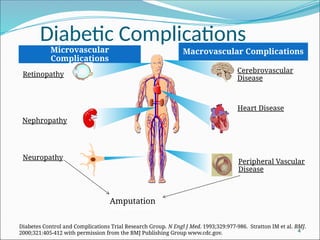
Diabetic Complications
4
Amputation
Microvascular
Complications
Neuropathy
Cerebrovascular
Disease
Peripheral Vascular
Disease
Macrovascular Complications
Retinopathy
Nephropathy
Heart Disease
Diabetes Control and Complications Trial Research Group. N Engl J Med. 1993;329:977-986. Stratton IM et al. BMJ.
2000;321:405-412 with permission from the BMJ Publishing Group www.cdc.gov.
Amputation
Glycemic Control, Complications, and Death in Older
Diabetic Patients
ELBERT HUANG, JENNIFER LIU, HOWARD
MOFFET, ET AL
Diabetes care 2011;34: 1329-1335
Funded by the institute of diabetes & digestive & kidney diseases
Background
 People aged > 60 years comprise > 40% of the type 2
diabetic population in the U.S, yet identifying the
optimal glucose control level for older patients with
diabetes remains a significant challenge
 Recommended glycemic targets
 A1C <6.5% from American Association of Clinical
Endocrinologists
 A1C <7.0% from the American Diabetes Association
 A1C < 8.0% from geriatric diabetes care guidelines for
older patients with limited life expectancy
 However, there has been limited evidence for any of
these targets of glycemic control for elderly patients
Objective
 To identify the range of glycemic levels
associated with the lowest rates of complications
& mortality in older diabetic patients
Outcomes
 Acute metabolic events
 Hospitalizations for diabetes with other coma
 Diabtes with hyperosmolarity
 Diabetes with ketoacidosis
 Uncontrolled diabetes
 Chronic microvascular event
 End-stage renal disease
 Amputation
 Severe diabetic eye disease
 Chronic cardiovascular events
 Coronary artery disease
 Congestive heart failure
 Cerebralvascular disease
 Peripheral vascular disease
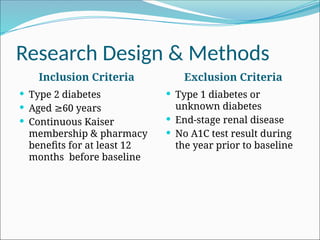
Research Design & Methods
Inclusion Criteria Exclusion Criteria
 Type 2 diabetes
 Aged 60 years
≥
 Continuous Kaiser
membership & pharmacy
benefits for at least 12
months before baseline
 Type 1 diabetes or
unknown diabetes
 End-stage renal disease
 No A1C test result during
the year prior to baseline
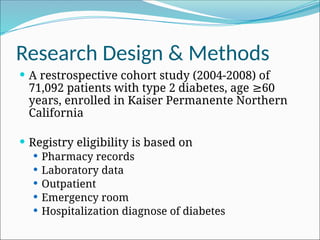
Research Design & Methods
 A restrospective cohort study (2004-2008) of
71,092 patients with type 2 diabetes, age 60
≥
years, enrolled in Kaiser Permanente Northern
California
 Registry eligibility is based on
 Pharmacy records
 Laboratory data
 Outpatient
 Emergency room
 Hospitalization diagnose of diabetes
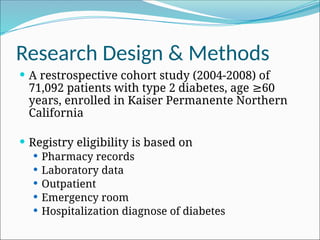
Research Design & Methods
 A restrospective cohort study (2004-2008) of
71,092 patients with type 2 diabetes, age 60
≥
years, enrolled in Kaiser Permanente Northern
California
 Registry eligibility is based on
 Pharmacy records
 Laboratory data
 Outpatient
 Emergency room
 Hospitalization diagnose of diabetes
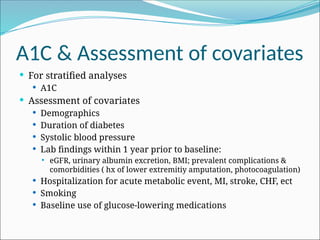
A1C & Assessment of covariates
 For stratified analyses
 A1C
 Assessment of covariates
 Demographics
 Duration of diabetes
 Systolic blood pressure
 Lab findings within 1 year prior to baseline:
 eGFR, urinary albumin excretion, BMI; prevalent complications &
comorbidities ( hx of lower extremitiy amputation, photocoagulation)
 Hospitalization for acute metabolic event, MI, stroke, CHF, ect
 Smoking
 Baseline use of glucose-lowering medications
Results
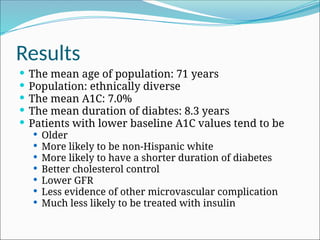
 The mean age of population: 71 years
 Population: ethnically diverse
 The mean A1C: 7.0%
 The mean duration of diabtes: 8.3 years
 Patients with lower baseline A1C values tend to be
 Older
 More likely to be non-Hispanic white
 More likely to have a shorter duration of diabetes
 Better cholesterol control
 Lower GFR
 Less evidence of other microvascular complication
 Much less likely to be treated with insulin
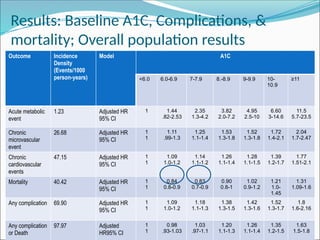
Results: Baseline A1C, Complications, &
mortality; Overall population results
Outcome Incidence
Density
(Events/1000
person-years)
Model A1C
<6.0 6.0-6.9 7-7.9 8.-8.9 9-9.9 10-
10.9
≥11
Acute metabolic
event
1.23 Adjusted HR
95% CI
1 1.44
.82-2.53
2.35
1.3-4.2
3.82
2.0-7.2
4.95
2.5-10
6.60
3-14.6
11.5
5.7-23.5
Chronic
microvascular
event
26.68 Adjusted HR
95% CI
1
1
1.11
.99-1.3
1.25
1.1-1.4
1.53
1.3-1.8
1.52
1.3-1.8
1.72
1.4-2.1
2.04
1.7-2.47
Chronic
cardiovascular
events
47.15 Adjusted HR
95% CI
1
1
1.09
1.0-1.2
1.14
1.1-1.2
1.26
1.1-1.4
1.28
1.1-1.5
1.39
1.2-1.7
1.77
1.51-2.1
Mortality 40.42 Adjusted HR
95% CI
1
1
0.84
0.8-0.9
0.83
0.7-0.9
0.90
0.8-1
1.02
0.9-1.2
1.21
1.0-
1.45
1.31
1.09-1.6
Any complication 69.90 Adjusted HR
95% CI
1
1
1.09
1.0-1.2
1.18
1.1-1.3
1.38
1.3-1.5
1.42
1.3-1.6
1.52
1.3-1.7
1.8
1.6-2.16
Any complication
or Death
97.97 Adjusted
HR95% CI
1
1
0.98
.93-1.03
1.03
.97-1.1
1.20
1.1-1.3
1.26
1.1-1.4
1.35
1.2-1.5
1.63
1.5-1.8
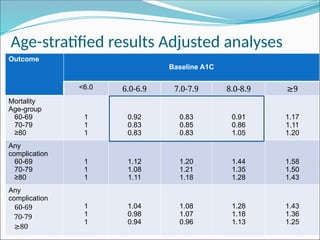
Age-stratified results Adjusted analyses
Outcome
Baseline A1C
<6.0 6.0-6.9 7.0-7.9 8.0-8.9 ≥9
Mortality
Age-group
60-69
70-79
≥80
1
1
1
0.92
0.83
0.83
0.83
0.85
0.83
0.91
0.86
1.05
1.17
1.11
1.20
Any
complication
60-69
70-79
≥80
1
1
1
1.12
1.08
1.11
1.20
1.21
1.18
1.44
1.35
1.28
1.58
1.50
1.43
Any
complication
60-69
70-79
≥80
1
1
1
1.04
0.98
0.94
1.08
1.07
0.96
1.28
1.18
1.13
1.43
1.36
1.25
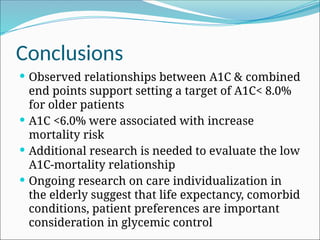
Conclusions
 Observed relationships between A1C & combined
end points support setting a target of A1C< 8.0%
for older patients
 A1C <6.0% were associated with increase
mortality risk
 Additional research is needed to evaluate the low
A1C-mortality relationship
 Ongoing research on care individualization in
the elderly suggest that life expectancy, comorbid
conditions, patient preferences are important
consideration in glycemic control
Combination of Oral Antidiabetic Agents
with Basal Insulin versus Premixed Insulin
ALONE in Randomized Elderly Patients
with Type 2 Diabetes Mellitus
Janka Hans, Plewe gerd, Busch klaus
Jags 2007;55:182-188
Funded by a research grant from sanofi-aventis
Background
 The association between poor glycemic control & the
occurrence of micro-& macrovascular complications has been
demonstrated in patients with type 1 & 2 DM
 Tight glycemic control may be associated with greater
frequency of hypoglycemic episodes; however it can have
serious clinical consequences
 Consensus opinion on how & when to initiate insulin tx in
patients with type II DM is lacking
 In older patients with type 2 DM, it is important that the
insulin regimen be easy to apply, with optimal efficacy &
safety.
 Few studies have directly compared the leading methods of
insulin initiation in this population
Objectives
 To compare initiation of insulin therapy by
adding once-daily Lantus to oral antidiabetic
agents(OAD) with premixed insulin alone
Design
 A parallel-group, open-label, randomized,
multinational clinical trial with a 1 to 4 week
screening phase & a 24-week treatment phase
 A 1:1 randomization schedule stratified by center
sequentially assigned treatment codes to eligible
patients
Inclusion & Exclusion Criteria
Inclusion Criteria Exclusion Criteria
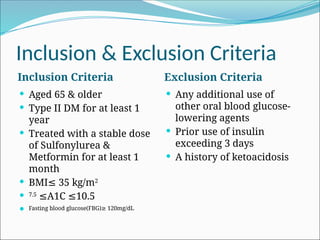
 Aged 65 & older
 Type II DM for at least 1
year
 Treated with a stable dose
of Sulfonylurea &
Metformin for at least 1
month
 BMI 35 kg/m
≤ 2
 7.5
A1C 10.5
≤ ≤
 Fasting blood glucose(FBG) 120mg/dL
≥
 Any additional use of
other oral blood glucose-
lowering agents
 Prior use of insulin
exceeding 3 days
 A history of ketoacidosis
Study Protocol & Treatment
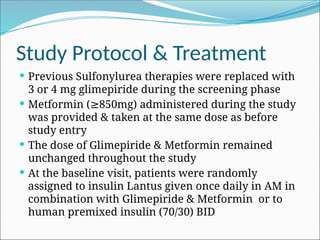
 Previous Sulfonylurea therapies were replaced with
3 or 4 mg glimepiride during the screening phase
 Metformin ( 850mg) administered during the study
≥
was provided & taken at the same dose as before
study entry
 The dose of Glimepiride & Metformin remained
unchanged throughout the study
 At the baseline visit, patients were randomly
assigned to insulin Lantus given once daily in AM in
combination with Glimepiride & Metformin or to
human premixed insulin (70/30) BID
Study Protocol & Treatment
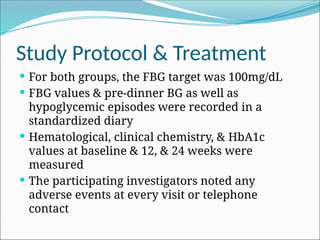
 For both groups, the FBG target was 100mg/dL
 FBG values & pre-dinner BG as well as
hypoglycemic episodes were recorded in a
standardized diary
 Hematological, clinical chemistry, & HbA1c
values at baseline & 12, & 24 weeks were
measured
 The participating investigators noted any
adverse events at every visit or telephone
contact
Efficacy & Safety Measurements
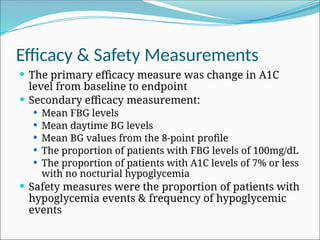
 The primary efficacy measure was change in A1C
level from baseline to endpoint
 Secondary efficacy measurement:
 Mean FBG levels
 Mean daytime BG levels
 Mean BG values from the 8-point profile
 The proportion of patients with FBG levels of 100mg/dL
 The proportion of patients with A1C levels of 7% or less
with no nocturial hypoglycemia
 Safety measures were the proportion of patients with
hypoglycemia events & frequency of hypoglycemic
events
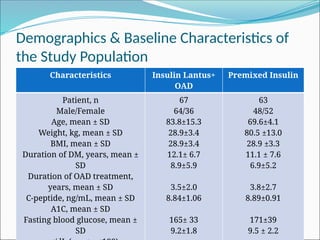
Demographics & Baseline Characteristics of
the Study Population
Characteristics Insulin Lantus+
OAD
Premixed Insulin
Patient, n
Male/Female
Age, mean ± SD
Weight, kg, mean ± SD
BMI, mean ± SD
Duration of DM, years, mean ±
SD
Duration of OAD treatment,
years, mean ± SD
C-peptide, ng/mL, mean ± SD
A1C, mean ± SD
Fasting blood glucose, mean ±
SD
67
64/36
83.8±15.3
28.9±3.4
28.9±3.4
12.1± 6.7
8.9±5.9
3.5±2.0
8.84±1.06
165± 33
9.2±1.8
63
48/52
69.6±4.1
80.5 ±13.0
28.9 ±3.3
11.1 ± 7.6
6.9±5.2
3.8±2.7
8.89±0.91
171±39
9.5 ± 2.2
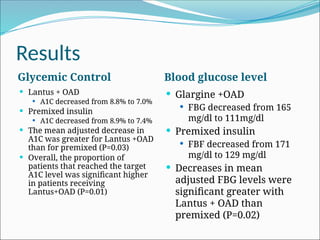
Results
Glycemic Control Blood glucose level
 Lantus + OAD
 A1C decreased from 8.8% to 7.0%
 Premixed insulin
 A1C decreased from 8.9% to 7.4%
 The mean adjusted decrease in
A1C was greater for Lantus +OAD
than for premixed (P=0.03)
 Overall, the proportion of
patients that reached the target
A1C level was significant higher
in patients receiving
Lantus+OAD (P=0.01)
 Glargine +OAD
 FBG decreased from 165
mg/dl to 111mg/dl
 Premixed insulin
 FBF decreased from 171
mg/dl to 129 mg/dl
 Decreases in mean
adjusted FBG levels were
significant greater with
Lantus + OAD than
premixed (P=0.02)
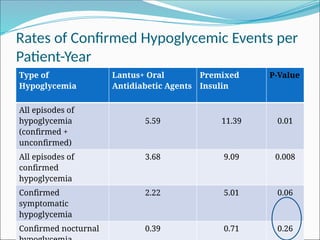
Rates of Confirmed Hypoglycemic Events per
Patient-Year
Type of
Hypoglycemia
Lantus+ Oral
Antidiabetic Agents
Premixed
Insulin
P-Value
All episodes of
hypoglycemia
(confirmed +
unconfirmed)
5.59 11.39 0.01
All episodes of
confirmed
hypoglycemia
3.68 9.09 0.008
Confirmed
symptomatic
hypoglycemia
2.22 5.01 0.06
Confirmed nocturnal 0.39 0.71 0.26
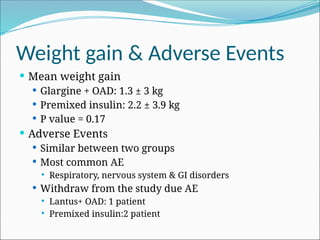
Weight gain & Adverse Events
 Mean weight gain
 Glargine + OAD: 1.3 ± 3 kg
 Premixed insulin: 2.2 ± 3.9 kg
 P value = 0.17
 Adverse Events
 Similar between two groups
 Most common AE
 Respiratory, nervous system & GI disorders
 Withdraw from the study due AE
 Lantus+ OAD: 1 patient
 Premixed insulin:2 patient
Discussion
 The results presented
 Patients aged 65 & older with type II DM poorly
controlled on oral therapy, adding a single
injection of Lantusto glimepiride & Metformin can
provide more effective glycemic control than stop
OAD & starting BID 70/30
 Lantus + OAD regimen enabled 55% of patients
to reach A1C of 7% or less without experiencing
nocturnal hypoglycemia
Some considerations
 Risk of comorbidities in elderly patients
 The possibility that patients developed
contraindications to OADs over time
 Individual assessment with tailored therapy is
still important
 Must consider the compromise between
achieving tight glycemic control & limiting the
risk of hypoglycemia in this patient populations
Conclusion
 This study demonstrated that, for elderly
patients with type II DM who are inadequately
controlled with Metformin + a sulfonylurea,
adding a Once daily injection of Lantus is a
simple method that is more effective in
improving glycemic control & less likely to cause
hypoglycemia than starting BID injection of
premixed insulin without oral agents
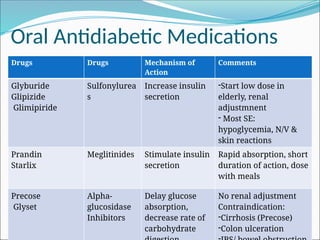
Oral Antidiabetic Medications
Drugs Drugs Mechanism of
Action
Comments
Glyburide
Glipizide
Glimipiride
Sulfonylurea
s
Increase insulin
secretion
-Start low dose in
elderly, renal
adjustmnent
- Most SE:
hypoglycemia, N/V &
skin reactions
Prandin
Starlix
Meglitinides Stimulate insulin
secretion
Rapid absorption, short
duration of action, dose
with meals
Precose
Glyset
Alpha-
glucosidase
Inhibitors
Delay glucose
absorption,
decrease rate of
carbohydrate
No renal adjustment
Contraindication:
-Cirrhosis (Precose)
-Colon ulceration
Oral Antidiabetic Medications
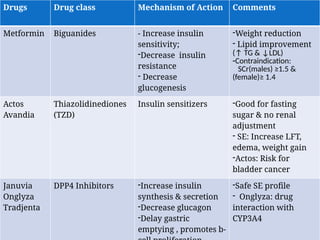
Drugs Drug class Mechanism of Action Comments
Metformin Biguanides - Increase insulin
sensitivity;
-Decrease insulin
resistance
- Decrease
glucogenesis
-Weight reduction
- Lipid improvement
(↑ TG & ↓LDL)
-Contraindication:
SCr(males) ≥1.5 &
(female)≥ 1.4
Actos
Avandia
Thiazolidinediones
(TZD)
Insulin sensitizers -Good for fasting
sugar & no renal
adjustment
- SE: Increase LFT,
edema, weight gain
-Actos: Risk for
bladder cancer
Januvia
Onglyza
Tradjenta
DPP4 Inhibitors -Increase insulin
synthesis & secretion
-Decrease glucagon
-Delay gastric
emptying , promotes b-
-Safe SE profile
- Onglyza: drug
interaction with
CYP3A4
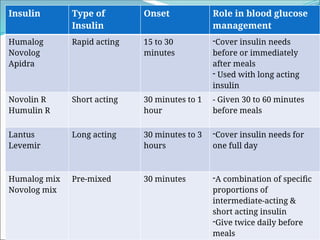
Insulin Type of
Insulin
Onset Role in blood glucose
management
Humalog
Novolog
Apidra
Rapid acting 15 to 30
minutes
-Cover insulin needs
before or immediately
after meals
- Used with long acting
insulin
Novolin R
Humulin R
Short acting 30 minutes to 1
hour
- Given 30 to 60 minutes
before meals
Lantus
Levemir
Long acting 30 minutes to 3
hours
-Cover insulin needs for
one full day
Humalog mix
Novolog mix
Pre-mixed 30 minutes -A combination of specific
proportions of
intermediate-acting &
short acting insulin
-Give twice daily before
meals
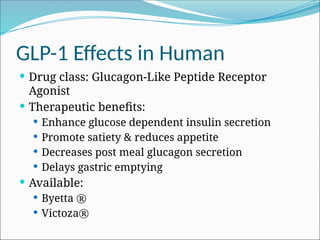
GLP-1 Effects in Human
 Drug class: Glucagon-Like Peptide Receptor
Agonist
 Therapeutic benefits:
 Enhance glucose dependent insulin secretion
 Promote satiety & reduces appetite
 Decreases post meal glucagon secretion
 Delays gastric emptying
 Available:
 Byetta ®
 Victoza®
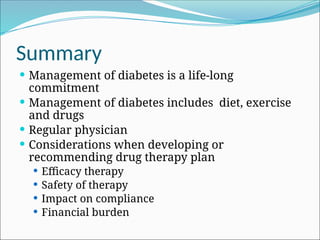
Summary
 Management of diabetes is a life-long
commitment
 Management of diabetes includes diet, exercise
and drugs
 Regular physician
 Considerations when developing or
recommending drug therapy plan
 Efficacy therapy
 Safety of therapy
 Impact on compliance
 Financial burden

1.pptx...........................................

  • 1.
    Diabetes In Elderly Patients TrinaLa PharmD. Candidate University of Georgia College of pharmacy
  • 2.
    Outline  Introduction  Study1: Glycemic control, complications, & death in older diabetic patients  Study 2: Combination of oral antibiabetic agents with basal insulin versus premixed insulin ALONE in randomized elderly patients with Type 2 DM  Summary of oral antidiabetic agents and insulins  Conclusion
  • 3.
    Introduction  Definition  DMis a syndrome characterized by chronic hyperglycemia & disturbances of carbohydrate, fat & protein metabolism, associated with an absolute or relative deficiency in insulin secretion and/or insulin action  Associated problems affecting management in elderly  Cerebral aging  Atherosclerotic changes  Compromised Cardio Respiratory Reserve  Cataract  Neuropathy  Cerebral Vascular Disease
  • 4.
    Diabetic Complications 4 Amputation Microvascular Complications Neuropathy Cerebrovascular Disease Peripheral Vascular Disease MacrovascularComplications Retinopathy Nephropathy Heart Disease Diabetes Control and Complications Trial Research Group. N Engl J Med. 1993;329:977-986. Stratton IM et al. BMJ. 2000;321:405-412 with permission from the BMJ Publishing Group www.cdc.gov. Amputation
  • 5.
    Glycemic Control, Complications,and Death in Older Diabetic Patients ELBERT HUANG, JENNIFER LIU, HOWARD MOFFET, ET AL Diabetes care 2011;34: 1329-1335 Funded by the institute of diabetes & digestive & kidney diseases
  • 6.
    Background  People aged> 60 years comprise > 40% of the type 2 diabetic population in the U.S, yet identifying the optimal glucose control level for older patients with diabetes remains a significant challenge  Recommended glycemic targets  A1C <6.5% from American Association of Clinical Endocrinologists  A1C <7.0% from the American Diabetes Association  A1C < 8.0% from geriatric diabetes care guidelines for older patients with limited life expectancy  However, there has been limited evidence for any of these targets of glycemic control for elderly patients
  • 7.
    Objective  To identifythe range of glycemic levels associated with the lowest rates of complications & mortality in older diabetic patients
  • 8.
    Outcomes  Acute metabolicevents  Hospitalizations for diabetes with other coma  Diabtes with hyperosmolarity  Diabetes with ketoacidosis  Uncontrolled diabetes  Chronic microvascular event  End-stage renal disease  Amputation  Severe diabetic eye disease  Chronic cardiovascular events  Coronary artery disease  Congestive heart failure  Cerebralvascular disease  Peripheral vascular disease
  • 9.
    Research Design &Methods Inclusion Criteria Exclusion Criteria  Type 2 diabetes  Aged 60 years ≥  Continuous Kaiser membership & pharmacy benefits for at least 12 months before baseline  Type 1 diabetes or unknown diabetes  End-stage renal disease  No A1C test result during the year prior to baseline
  • 10.
    Research Design &Methods  A restrospective cohort study (2004-2008) of 71,092 patients with type 2 diabetes, age 60 ≥ years, enrolled in Kaiser Permanente Northern California  Registry eligibility is based on  Pharmacy records  Laboratory data  Outpatient  Emergency room  Hospitalization diagnose of diabetes
  • 11.
    Research Design &Methods  A restrospective cohort study (2004-2008) of 71,092 patients with type 2 diabetes, age 60 ≥ years, enrolled in Kaiser Permanente Northern California  Registry eligibility is based on  Pharmacy records  Laboratory data  Outpatient  Emergency room  Hospitalization diagnose of diabetes
  • 12.
    A1C & Assessmentof covariates  For stratified analyses  A1C  Assessment of covariates  Demographics  Duration of diabetes  Systolic blood pressure  Lab findings within 1 year prior to baseline:  eGFR, urinary albumin excretion, BMI; prevalent complications & comorbidities ( hx of lower extremitiy amputation, photocoagulation)  Hospitalization for acute metabolic event, MI, stroke, CHF, ect  Smoking  Baseline use of glucose-lowering medications
  • 13.
    Results  The meanage of population: 71 years  Population: ethnically diverse  The mean A1C: 7.0%  The mean duration of diabtes: 8.3 years  Patients with lower baseline A1C values tend to be  Older  More likely to be non-Hispanic white  More likely to have a shorter duration of diabetes  Better cholesterol control  Lower GFR  Less evidence of other microvascular complication  Much less likely to be treated with insulin
  • 14.
    Results: Baseline A1C,Complications, & mortality; Overall population results Outcome Incidence Density (Events/1000 person-years) Model A1C <6.0 6.0-6.9 7-7.9 8.-8.9 9-9.9 10- 10.9 ≥11 Acute metabolic event 1.23 Adjusted HR 95% CI 1 1.44 .82-2.53 2.35 1.3-4.2 3.82 2.0-7.2 4.95 2.5-10 6.60 3-14.6 11.5 5.7-23.5 Chronic microvascular event 26.68 Adjusted HR 95% CI 1 1 1.11 .99-1.3 1.25 1.1-1.4 1.53 1.3-1.8 1.52 1.3-1.8 1.72 1.4-2.1 2.04 1.7-2.47 Chronic cardiovascular events 47.15 Adjusted HR 95% CI 1 1 1.09 1.0-1.2 1.14 1.1-1.2 1.26 1.1-1.4 1.28 1.1-1.5 1.39 1.2-1.7 1.77 1.51-2.1 Mortality 40.42 Adjusted HR 95% CI 1 1 0.84 0.8-0.9 0.83 0.7-0.9 0.90 0.8-1 1.02 0.9-1.2 1.21 1.0- 1.45 1.31 1.09-1.6 Any complication 69.90 Adjusted HR 95% CI 1 1 1.09 1.0-1.2 1.18 1.1-1.3 1.38 1.3-1.5 1.42 1.3-1.6 1.52 1.3-1.7 1.8 1.6-2.16 Any complication or Death 97.97 Adjusted HR95% CI 1 1 0.98 .93-1.03 1.03 .97-1.1 1.20 1.1-1.3 1.26 1.1-1.4 1.35 1.2-1.5 1.63 1.5-1.8
  • 15.
    Age-stratified results Adjustedanalyses Outcome Baseline A1C <6.0 6.0-6.9 7.0-7.9 8.0-8.9 ≥9 Mortality Age-group 60-69 70-79 ≥80 1 1 1 0.92 0.83 0.83 0.83 0.85 0.83 0.91 0.86 1.05 1.17 1.11 1.20 Any complication 60-69 70-79 ≥80 1 1 1 1.12 1.08 1.11 1.20 1.21 1.18 1.44 1.35 1.28 1.58 1.50 1.43 Any complication 60-69 70-79 ≥80 1 1 1 1.04 0.98 0.94 1.08 1.07 0.96 1.28 1.18 1.13 1.43 1.36 1.25
  • 16.
    Conclusions  Observed relationshipsbetween A1C & combined end points support setting a target of A1C< 8.0% for older patients  A1C <6.0% were associated with increase mortality risk  Additional research is needed to evaluate the low A1C-mortality relationship  Ongoing research on care individualization in the elderly suggest that life expectancy, comorbid conditions, patient preferences are important consideration in glycemic control
  • 17.
    Combination of OralAntidiabetic Agents with Basal Insulin versus Premixed Insulin ALONE in Randomized Elderly Patients with Type 2 Diabetes Mellitus Janka Hans, Plewe gerd, Busch klaus Jags 2007;55:182-188 Funded by a research grant from sanofi-aventis
  • 18.
    Background  The associationbetween poor glycemic control & the occurrence of micro-& macrovascular complications has been demonstrated in patients with type 1 & 2 DM  Tight glycemic control may be associated with greater frequency of hypoglycemic episodes; however it can have serious clinical consequences  Consensus opinion on how & when to initiate insulin tx in patients with type II DM is lacking  In older patients with type 2 DM, it is important that the insulin regimen be easy to apply, with optimal efficacy & safety.  Few studies have directly compared the leading methods of insulin initiation in this population
  • 19.
    Objectives  To compareinitiation of insulin therapy by adding once-daily Lantus to oral antidiabetic agents(OAD) with premixed insulin alone
  • 20.
    Design  A parallel-group,open-label, randomized, multinational clinical trial with a 1 to 4 week screening phase & a 24-week treatment phase  A 1:1 randomization schedule stratified by center sequentially assigned treatment codes to eligible patients
  • 21.
    Inclusion & ExclusionCriteria Inclusion Criteria Exclusion Criteria  Aged 65 & older  Type II DM for at least 1 year  Treated with a stable dose of Sulfonylurea & Metformin for at least 1 month  BMI 35 kg/m ≤ 2  7.5 A1C 10.5 ≤ ≤  Fasting blood glucose(FBG) 120mg/dL ≥  Any additional use of other oral blood glucose- lowering agents  Prior use of insulin exceeding 3 days  A history of ketoacidosis
  • 22.
    Study Protocol &Treatment  Previous Sulfonylurea therapies were replaced with 3 or 4 mg glimepiride during the screening phase  Metformin ( 850mg) administered during the study ≥ was provided & taken at the same dose as before study entry  The dose of Glimepiride & Metformin remained unchanged throughout the study  At the baseline visit, patients were randomly assigned to insulin Lantus given once daily in AM in combination with Glimepiride & Metformin or to human premixed insulin (70/30) BID
  • 23.
    Study Protocol &Treatment  For both groups, the FBG target was 100mg/dL  FBG values & pre-dinner BG as well as hypoglycemic episodes were recorded in a standardized diary  Hematological, clinical chemistry, & HbA1c values at baseline & 12, & 24 weeks were measured  The participating investigators noted any adverse events at every visit or telephone contact
  • 24.
    Efficacy & SafetyMeasurements  The primary efficacy measure was change in A1C level from baseline to endpoint  Secondary efficacy measurement:  Mean FBG levels  Mean daytime BG levels  Mean BG values from the 8-point profile  The proportion of patients with FBG levels of 100mg/dL  The proportion of patients with A1C levels of 7% or less with no nocturial hypoglycemia  Safety measures were the proportion of patients with hypoglycemia events & frequency of hypoglycemic events
  • 25.
    Demographics & BaselineCharacteristics of the Study Population Characteristics Insulin Lantus+ OAD Premixed Insulin Patient, n Male/Female Age, mean ± SD Weight, kg, mean ± SD BMI, mean ± SD Duration of DM, years, mean ± SD Duration of OAD treatment, years, mean ± SD C-peptide, ng/mL, mean ± SD A1C, mean ± SD Fasting blood glucose, mean ± SD 67 64/36 83.8±15.3 28.9±3.4 28.9±3.4 12.1± 6.7 8.9±5.9 3.5±2.0 8.84±1.06 165± 33 9.2±1.8 63 48/52 69.6±4.1 80.5 ±13.0 28.9 ±3.3 11.1 ± 7.6 6.9±5.2 3.8±2.7 8.89±0.91 171±39 9.5 ± 2.2
  • 26.
    Results Glycemic Control Bloodglucose level  Lantus + OAD  A1C decreased from 8.8% to 7.0%  Premixed insulin  A1C decreased from 8.9% to 7.4%  The mean adjusted decrease in A1C was greater for Lantus +OAD than for premixed (P=0.03)  Overall, the proportion of patients that reached the target A1C level was significant higher in patients receiving Lantus+OAD (P=0.01)  Glargine +OAD  FBG decreased from 165 mg/dl to 111mg/dl  Premixed insulin  FBF decreased from 171 mg/dl to 129 mg/dl  Decreases in mean adjusted FBG levels were significant greater with Lantus + OAD than premixed (P=0.02)
  • 27.
    Rates of ConfirmedHypoglycemic Events per Patient-Year Type of Hypoglycemia Lantus+ Oral Antidiabetic Agents Premixed Insulin P-Value All episodes of hypoglycemia (confirmed + unconfirmed) 5.59 11.39 0.01 All episodes of confirmed hypoglycemia 3.68 9.09 0.008 Confirmed symptomatic hypoglycemia 2.22 5.01 0.06 Confirmed nocturnal 0.39 0.71 0.26
  • 28.
    Weight gain &Adverse Events  Mean weight gain  Glargine + OAD: 1.3 ± 3 kg  Premixed insulin: 2.2 ± 3.9 kg  P value = 0.17  Adverse Events  Similar between two groups  Most common AE  Respiratory, nervous system & GI disorders  Withdraw from the study due AE  Lantus+ OAD: 1 patient  Premixed insulin:2 patient
  • 29.
    Discussion  The resultspresented  Patients aged 65 & older with type II DM poorly controlled on oral therapy, adding a single injection of Lantusto glimepiride & Metformin can provide more effective glycemic control than stop OAD & starting BID 70/30  Lantus + OAD regimen enabled 55% of patients to reach A1C of 7% or less without experiencing nocturnal hypoglycemia
  • 30.
    Some considerations  Riskof comorbidities in elderly patients  The possibility that patients developed contraindications to OADs over time  Individual assessment with tailored therapy is still important  Must consider the compromise between achieving tight glycemic control & limiting the risk of hypoglycemia in this patient populations
  • 31.
    Conclusion  This studydemonstrated that, for elderly patients with type II DM who are inadequately controlled with Metformin + a sulfonylurea, adding a Once daily injection of Lantus is a simple method that is more effective in improving glycemic control & less likely to cause hypoglycemia than starting BID injection of premixed insulin without oral agents
  • 32.
    Oral Antidiabetic Medications DrugsDrugs Mechanism of Action Comments Glyburide Glipizide Glimipiride Sulfonylurea s Increase insulin secretion -Start low dose in elderly, renal adjustmnent - Most SE: hypoglycemia, N/V & skin reactions Prandin Starlix Meglitinides Stimulate insulin secretion Rapid absorption, short duration of action, dose with meals Precose Glyset Alpha- glucosidase Inhibitors Delay glucose absorption, decrease rate of carbohydrate No renal adjustment Contraindication: -Cirrhosis (Precose) -Colon ulceration
  • 33.
    Oral Antidiabetic Medications DrugsDrug class Mechanism of Action Comments Metformin Biguanides - Increase insulin sensitivity; -Decrease insulin resistance - Decrease glucogenesis -Weight reduction - Lipid improvement (↑ TG & ↓LDL) -Contraindication: SCr(males) ≥1.5 & (female)≥ 1.4 Actos Avandia Thiazolidinediones (TZD) Insulin sensitizers -Good for fasting sugar & no renal adjustment - SE: Increase LFT, edema, weight gain -Actos: Risk for bladder cancer Januvia Onglyza Tradjenta DPP4 Inhibitors -Increase insulin synthesis & secretion -Decrease glucagon -Delay gastric emptying , promotes b- -Safe SE profile - Onglyza: drug interaction with CYP3A4
  • 34.
    Insulin Type of Insulin OnsetRole in blood glucose management Humalog Novolog Apidra Rapid acting 15 to 30 minutes -Cover insulin needs before or immediately after meals - Used with long acting insulin Novolin R Humulin R Short acting 30 minutes to 1 hour - Given 30 to 60 minutes before meals Lantus Levemir Long acting 30 minutes to 3 hours -Cover insulin needs for one full day Humalog mix Novolog mix Pre-mixed 30 minutes -A combination of specific proportions of intermediate-acting & short acting insulin -Give twice daily before meals
  • 35.
    GLP-1 Effects inHuman  Drug class: Glucagon-Like Peptide Receptor Agonist  Therapeutic benefits:  Enhance glucose dependent insulin secretion  Promote satiety & reduces appetite  Decreases post meal glucagon secretion  Delays gastric emptying  Available:  Byetta ®  Victoza®
  • 36.
    Summary  Management ofdiabetes is a life-long commitment  Management of diabetes includes diet, exercise and drugs  Regular physician  Considerations when developing or recommending drug therapy plan  Efficacy therapy  Safety of therapy  Impact on compliance  Financial burden

Editor's Notes

  • #2 Glycemic Control, Complications, and Death in Older Diabetic PatientsCombination of Oral Antidiabetic Agents with Basal Insulin versus Premixed Insulin ALONE in Randomized Elderly Patients with Type 2 Diabetes Mellitus
  • #3 Compromise Cardio Respiratory Reserve: Decrease in it is a part of aging process leading to decrease in exercise endurance
  • #4 Diabetes may lead to long-term complications as a result of injury to the large and small vasculature. Microvascular complications include disorders of the eye (diabetic retinopathy), kidney (nephropathy), and nervous system (neuropathy)1. Injury to the large vessels results in diseases of the cerebrovascular, cardiovascular, and peripheral vascular systems,2 leading to clinical outcomes such as stroke, heart disease, and amputations.
  • #6 Numerous epidemiological studies have found a continuous relationship between A1C levels & microvascular & cardiovascular complication
  • #8 Mortality & dates of death were captured from the California State Mortality File & Social Security Death Records
  • #12 S
  • #14 Hazard Ratio: >1 means more significant. In order to tell whether it is statistically significant, we look at 95% CI. If CI is on the right side of 1, then we say it is statistically significant Overall, as the A1C level increased, the risk of events in each categories is increased with the exception of mortality. The A1C from 6 to 8.9: the point estimate of the risk of mortality is lower comparing to the referenence (a1c<6)
  • #15 All three age groups had U-shaped mortality curves with the highest risk of death among patients with A1C levels at the extreme (A1C<6.0 & >=9) Most of the CI of the hazard ratio are on the left side of 1. Therefore, it suggested that the risk of mortality is lower when the baseline A1C level from 6.0 to 8.9
  • #21 66 sites in 10 European countries
  • #24 Hypoglycemia was considered confirmed if documented by a BG level <60 mg/dL
  • #27 From the P value we concluded that The difference between two groups of study is statistically significant for the first three types of hypoglycemia. However, the last two types of hypoglycemia, the difference is not statistically significant.
  • #29 30% of patients on premixed insulin achieved this target
  • #30 Although this study demonstrated the benefit of Glargine + OAD for elderly patients with type II DM as apart of a managed clinical trial, consideration should be made