CLINICAL CASE STUDY
PRESENTATION: ABTX
Maddison Lupul, BSc
NUTR 589 Fall 2018 - Clinical Supervised Practice
University of Alabama at Birmingham - Department of Nutritional
Sciences
AGENDA
 Case Presentation
 Clinical Course Summary
 Research Article Review
 Assessment
 Medications
 Nutritional Implications
• Post-transplant
• Nutrition Support
• Medical Hx
• Surgical Hx
 Diagnosis
 Intervention
• Plan & Recommendations
• Counselling & education
 Monitoring & Evaluation
CASE PRESENTATION
INTRODUCTION:
30yoF admitted to UABH for multivisceral Tx currently in
post-operative recovery.
PMH (prior to admission):
• Ehler’s Danlos Syndrome
• Cystic Fibrosis
• Iron-Deficiency Anemia
• Gastric dysmotility
• Pancreatectomy with autologous islet cells Tx. (2012)
• Gastrojeujenal ulcer w/ hemorrhage s/p small bowel sectioning
(2015)
• Colonic Inertia s/p subtotal Colectomy (2017)
CLINICAL COURSE SUMMARY:
• Admitted to UAB – 08/07/2018
• Subtotal Multi-visceral TX (SICU) – 08/20
• Partial stomach, partial small bowel, liver and pancreas
• Transferred to ABTX – 08/27
• Transferred back to SICU – 9/10
• Embolization of L-gastric artery
• Transferred back to ABTX - 9/24
• PICC line placement -10/18
GASTROINTESTINAL TX: 1,2
Types of Gut Tx:
• Depends on etiology of intestinal failure, organ functional status, and surgical history
• Isolated small bowel transplant
• Liver-small bowel combined transplant
• Multivisceral transplant (stomach, small bowel, pancreas and liver
Who is Candidate?
• Failure of PN resulting from hepatic failure, frequent sepsis, frequent dehydration despite IVF therapy.
• Various conditions affecting nutrient absorption
• Short bowel syndrome**, tumors, congenital mucosal disorders
• Patients with intestinal failure with poor tolerance to PN
• Frequent hospitalization, narcotic dependence
• Patient not willing to accept long term PN – younger patients.
Prevalence: ~10-20,0000 peopled in the US diagnosed with short bowel syndrome.
(Crohn’s colitis foundation) 14
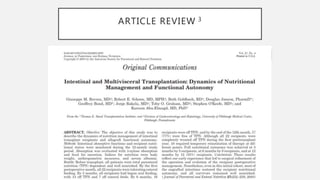
ARTICLE REVIEW 3
ASSESSMENT
Anthropometric:
• Admit BW: 79.3kg
• CBW: 69.5kg (~12% wt.
loss)
• Ht 178cm
• BMI 21.5
Clinical Findings:
• 2-5 episodes emesis
• Ileostomy 250mL
• UOP 1450mL
• Thin, pale appearance
Nutrition:
• 1960 - 2262 kcal (BEE x 1.3-1.5)
• 83 – 104 g protein (1.2-1.5g/kg)
• Fluids: ~ 1800 – 2300 mL (1mL/kcal)
• TPN: Not ordered but has PICC insertion
• PO: 40mEq potassium diet order
Labs:
• K 5.9 ↑
• LFTS ↑ (consistent w/ pain meds)
• RBC/Hct/Hgb/MCV ↓
• Glu 98
ASSESSMENT
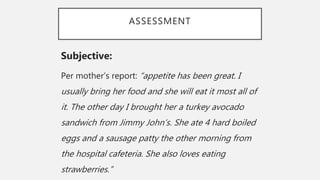
Subjective:
Per mother’s report: “appetite has been great. I
usually bring her food and she will eat it most all of
it. The other day I brought her a turkey avocado
sandwich from Jimmy John’s. She ate 4 hard boiled
eggs and a sausage patty the other morning from
the hospital cafeteria. She also loves eating
strawberries.”
NUTRITIONALLY PERTINENT MEDS
Class Drug Nutritional Implications
Prednisone4
(Glucocorticoid)
• Opposes action of insulin  Hyperglycemia
• ↑ gluconeogenesis, ↑ catabolism
• Hyperphagia, Hyperlipidemia
• Calcinuria  osteopenia/osteoporosis
Tacrolimus4
• HTN, Hyperlipidemia, Hyperkalemia
• Grapefruit juice interferes with pharmacokinetics/
pharmacodynamics
Dapsone5 • Depletion of gut flora
• Depletion of potassium, vitamin K and various B-vitamins
• Reduced bioavailability of mg and znCeftriaxone6
Iron Sucrose • Replenishment of depleted stores or blood levels associated with
deficiency
• Excess administration may lead to toxicityMagnesium
Oxide
Abx
Immuno-
SuppressionMinerals
NUTRITIONAL IMPLICATIONS
POST TRANSPLANT 4,7
Primary Objective: Prevent rejection, infection, and other complications.
Short term:
• Emphasis on healing from surgery, maintaining immunity, energy replenishment
• Potential complications from drug-nutrient interaction
• Particularly related to elevated blood glucose, hyper-catabolism and vulnerability to
infection.
• Increased energy/protein needs: BEE x 1.3-1.5/1.2-2.0 g/kg
Long term:
• Focus on immune system support.
• Immune suppressants weaned over time but still risk for rejection.
• Important to practice food safety due to compromised immune function
• Some pts are at risk for obesity and other comorbidities from medication use
• HTN, HLD, DM
• Weight maintenance or loss if needed
• 0.8-1.2g protein/kg with <30% of fat kcal
NUTRITION SUPPORT4
MEDICAL HX
Cystic Fibrosis:8
• Genetic condition characterized by excessive of phlegm production in body’s secretory
glands. Particularly in the lungs, sinuses, liver, pancreas, and GI tract.
• S/S: difficulty breathing, coughing, frequent respiratory infections, salty skin, stool abnormalities from poor
nutrient digestion, altered metabolism from decreased pancreatic function.
• SOB, infections and pancreatic insufficiency can lead to nutrition risk.
Ehler’s Danlos Syndrome: 10
• Inherited disorder characterized by weakened fabrication of body’s connective
tissues
• S/S: Joint hypermobility, stretchy and fragile skin and other tissues.
• Complications: Early onset arthritis; joint dislocations; in severe cases, rupturing
of blood vessels and other organs like the intestines.
Iron Deficiency Anemia (Microcytic, Hypochromic): 9
• ↓ RBCs, ↓Oxygen carrying capacity for cellular metabolism.
SURGICAL HX
• Risk of Organ Rejection  Most acute rejections occur within 3mos of tx
 nutrient deficiency from poor nutrient
digestion/absorption
 altered nutrient metabolism
• Cholecystectomy  Bile can have laxative effect due to being less concentrated and
draining more continuously into small bowel. 11
• Decreased nutrient uptake
• Chronic diarrhea
• Ileostomy  Accelerated transit time can lead to poor nutrient and fluid absorption.
12
• Small, frequent meals. Sip on fluids throughout the day.
 Increased gas production and discomforts from foods may decease
DIAGNOSIS
PES STATEMENTS
• Increased protein needs RT post-transplant therapy AEB
high dose administration of immunosuppressive drugs
and 12% weight loss in last 2 months.
• Excessive potassium intake RT unsupported
beliefs/attitudes about food drug interaction AEB
frequent consumption of high potassium foods
alongside high dose Tacrolimus administration and
elevated blood potassium.
INTERVENTION
PLAN & RECOMMENDATIONS
• Encourage oral intake.
• Order supplement: Ensure High Protein (160kcal, 16g protein,170mg potassium)
• Inform patient and mother on compliance to prescribed diet order.
• Outline effects of increased potassium intake with prescribed meds.
• Explain different types of foods patient can eat and should avoid.
• Consider nausea meds if emesis persists.
• Recommend therapeutic multivitamin to ensure 100% of RDIs are met.
• Consider PN if patient shows signs/symptoms of poor nutrient
absorption related to organ rejection,
• Correct electrolytes as needed. Noted ↑ potassium.
• Continue iron supplement to help correct anemia
EDUCATION & COUNSELLING 4,13
Pertinent nutrition topics:
• Post transplant diet
• No grapefruit
• Low microbial diet
• Food safety
• Eating for weight maintenance
• Consider patient’s BMI and dx of cystic fibrosis.
• Dietary minerals and/or supplementation
• Calcium, iron
• Blood sugar management.
• Provide resources for outpatient counselling if needed.
MONITORING/EVALUATION
Subjective:
• Evaluation of patient and mother’s agreement and understanding of
potassium restricted diet during hospital stay.
• Evaluation of patient’s potassium intake in one week follow up if still
admitted.
• Evaluation of patient and mother’s understanding to diet educations given
prior to discharge.
Objective:
• Monitor patient’s weight daily. Goal is to avoid weight loss.
• Monitor electrolytes. Goal is for serum potassium to decrease.
• Monitor blood glucose. Goal is for blood glucose to remain stable.
• Monitor patient for GI abnormalities.
ACKNOWLEDGEMENTS
• University of Alabama at Birmingham
Department of Nutritional Sciences
• University of Alabama at Birmingham Hospital
Department of Clinical Nutrition
• Judy Walthaw RD, LD
• Sarah Martin RD, LD, MSc
RESOURCES
1. Matarese, L. E., Costa, G. , Bond, G. , Stamos, J. , Koritsky, D. , O'Keefe, S. J. and Abu‐Elmagd, K. (2007), Therapeutic Efficacy of Intestinal and
Multivisceral Transplantation: Survival and Nutrition Outcome. Nutr Clin Pract, 22: 474-481. doi:10.1177/0115426507022005474
2. Bharadwaj S, Tandon P, Gohel TD, et al. Current status of intestinal and multivisceral transplantation. Gastroenterology Report. 2017.
doi:10.1093/gastro/gow045.
3. Rovera G, Schoen R, Goldbach B, et al. Intestinal and multivisceral transplantation: dynamics of nutritional management and functional
autonomy. Journal of Parenteral and Enteral Nutrition. 2003;27(4):252-259. doi:10.1177/0148607103027004252.
4. Mueller C. The ASPEN Adult Nutrition Support Core Curriculum. Vol Third edition. Silver Spring, MD: American Society for Parenteral and
Enteral Nutrition; 2017. http://search.ebscohost.com.ezproxy3.lhl.uab.edu/login.aspx?direct=true&db=nlebk&AN=1831579&site=ehost-
live. Accessed November 4, 2018.
5. Dapsone Drug Information. kaiserpermanente.org . https://wa.kaiserpermanente.org/kbase/topic.jhtml?docId=hn-1131009. Reviewed
March 2015.
6. Ceftriaxone Drug Information. kaiserpermanente.org . https://wa.kaiserpermanente.org/kbase/topic.jhtml?docId=hn-10000722. Reviewed
March 2015.
7. Rutledge L. Renal Disease and Transplantation. UAB Department of Nutritional Sciences Core Curriculum: Principles and Practices of
Nutrition Support . October 2018.
8. Cystic Fibrosis . MedlinePlus. https://medlineplus.gov/cysticfibrosis.html. Published August 1, 2018.
9. Rutledge L. Nutritional Anemias. UAB Department of Nutritional Sciences Core Curriculum: Principles and Practices of Nutrition Support .
September 2018.
10. Ehlers-Danlos syndrome. U.S. National Library of Medicine. https://ghr.nlm.nih.gov/condition/ehlers-danlos-syndrome. Published October
2018.
11. Cholesystectomy and Diet. Mayo Clinic. https://www.mayoclinic.org/tests-procedures/cholecystectomy/expert-answers/gallbladder-
removal-diet/faq-20057813. Published May 30, 2018.
12. Ileostomy and diet. MedlinePlus. https://medlineplus.gov/ency/patientinstructions/000070.htm. Reviewed December 2016.
13. Organ Transplant . Nutrition Care Manual. https://www.nutritioncaremanual.org/auth.cfm?p=/index.cfm?&err=NotLoggedIn. Updated
2018
QUESTIONS

UAB DI - Clinical case study presentation

  • 1.
    CLINICAL CASE STUDY PRESENTATION:ABTX Maddison Lupul, BSc NUTR 589 Fall 2018 - Clinical Supervised Practice University of Alabama at Birmingham - Department of Nutritional Sciences
  • 2.
    AGENDA  Case Presentation Clinical Course Summary  Research Article Review  Assessment  Medications  Nutritional Implications • Post-transplant • Nutrition Support • Medical Hx • Surgical Hx  Diagnosis  Intervention • Plan & Recommendations • Counselling & education  Monitoring & Evaluation
  • 3.
  • 4.
    INTRODUCTION: 30yoF admitted toUABH for multivisceral Tx currently in post-operative recovery. PMH (prior to admission): • Ehler’s Danlos Syndrome • Cystic Fibrosis • Iron-Deficiency Anemia • Gastric dysmotility • Pancreatectomy with autologous islet cells Tx. (2012) • Gastrojeujenal ulcer w/ hemorrhage s/p small bowel sectioning (2015) • Colonic Inertia s/p subtotal Colectomy (2017)
  • 5.
    CLINICAL COURSE SUMMARY: •Admitted to UAB – 08/07/2018 • Subtotal Multi-visceral TX (SICU) – 08/20 • Partial stomach, partial small bowel, liver and pancreas • Transferred to ABTX – 08/27 • Transferred back to SICU – 9/10 • Embolization of L-gastric artery • Transferred back to ABTX - 9/24 • PICC line placement -10/18
  • 6.
    GASTROINTESTINAL TX: 1,2 Typesof Gut Tx: • Depends on etiology of intestinal failure, organ functional status, and surgical history • Isolated small bowel transplant • Liver-small bowel combined transplant • Multivisceral transplant (stomach, small bowel, pancreas and liver Who is Candidate? • Failure of PN resulting from hepatic failure, frequent sepsis, frequent dehydration despite IVF therapy. • Various conditions affecting nutrient absorption • Short bowel syndrome**, tumors, congenital mucosal disorders • Patients with intestinal failure with poor tolerance to PN • Frequent hospitalization, narcotic dependence • Patient not willing to accept long term PN – younger patients. Prevalence: ~10-20,0000 peopled in the US diagnosed with short bowel syndrome. (Crohn’s colitis foundation) 14
  • 8.
  • 9.
    ASSESSMENT Anthropometric: • Admit BW:79.3kg • CBW: 69.5kg (~12% wt. loss) • Ht 178cm • BMI 21.5 Clinical Findings: • 2-5 episodes emesis • Ileostomy 250mL • UOP 1450mL • Thin, pale appearance Nutrition: • 1960 - 2262 kcal (BEE x 1.3-1.5) • 83 – 104 g protein (1.2-1.5g/kg) • Fluids: ~ 1800 – 2300 mL (1mL/kcal) • TPN: Not ordered but has PICC insertion • PO: 40mEq potassium diet order Labs: • K 5.9 ↑ • LFTS ↑ (consistent w/ pain meds) • RBC/Hct/Hgb/MCV ↓ • Glu 98
  • 10.
    ASSESSMENT Subjective: Per mother’s report:“appetite has been great. I usually bring her food and she will eat it most all of it. The other day I brought her a turkey avocado sandwich from Jimmy John’s. She ate 4 hard boiled eggs and a sausage patty the other morning from the hospital cafeteria. She also loves eating strawberries.”
  • 11.
    NUTRITIONALLY PERTINENT MEDS ClassDrug Nutritional Implications Prednisone4 (Glucocorticoid) • Opposes action of insulin  Hyperglycemia • ↑ gluconeogenesis, ↑ catabolism • Hyperphagia, Hyperlipidemia • Calcinuria  osteopenia/osteoporosis Tacrolimus4 • HTN, Hyperlipidemia, Hyperkalemia • Grapefruit juice interferes with pharmacokinetics/ pharmacodynamics Dapsone5 • Depletion of gut flora • Depletion of potassium, vitamin K and various B-vitamins • Reduced bioavailability of mg and znCeftriaxone6 Iron Sucrose • Replenishment of depleted stores or blood levels associated with deficiency • Excess administration may lead to toxicityMagnesium Oxide Abx Immuno- SuppressionMinerals
  • 12.
  • 13.
    POST TRANSPLANT 4,7 PrimaryObjective: Prevent rejection, infection, and other complications. Short term: • Emphasis on healing from surgery, maintaining immunity, energy replenishment • Potential complications from drug-nutrient interaction • Particularly related to elevated blood glucose, hyper-catabolism and vulnerability to infection. • Increased energy/protein needs: BEE x 1.3-1.5/1.2-2.0 g/kg Long term: • Focus on immune system support. • Immune suppressants weaned over time but still risk for rejection. • Important to practice food safety due to compromised immune function • Some pts are at risk for obesity and other comorbidities from medication use • HTN, HLD, DM • Weight maintenance or loss if needed • 0.8-1.2g protein/kg with <30% of fat kcal
  • 14.
  • 15.
    MEDICAL HX Cystic Fibrosis:8 •Genetic condition characterized by excessive of phlegm production in body’s secretory glands. Particularly in the lungs, sinuses, liver, pancreas, and GI tract. • S/S: difficulty breathing, coughing, frequent respiratory infections, salty skin, stool abnormalities from poor nutrient digestion, altered metabolism from decreased pancreatic function. • SOB, infections and pancreatic insufficiency can lead to nutrition risk. Ehler’s Danlos Syndrome: 10 • Inherited disorder characterized by weakened fabrication of body’s connective tissues • S/S: Joint hypermobility, stretchy and fragile skin and other tissues. • Complications: Early onset arthritis; joint dislocations; in severe cases, rupturing of blood vessels and other organs like the intestines. Iron Deficiency Anemia (Microcytic, Hypochromic): 9 • ↓ RBCs, ↓Oxygen carrying capacity for cellular metabolism.
  • 16.
    SURGICAL HX • Riskof Organ Rejection  Most acute rejections occur within 3mos of tx  nutrient deficiency from poor nutrient digestion/absorption  altered nutrient metabolism • Cholecystectomy  Bile can have laxative effect due to being less concentrated and draining more continuously into small bowel. 11 • Decreased nutrient uptake • Chronic diarrhea • Ileostomy  Accelerated transit time can lead to poor nutrient and fluid absorption. 12 • Small, frequent meals. Sip on fluids throughout the day.  Increased gas production and discomforts from foods may decease
  • 17.
  • 18.
    PES STATEMENTS • Increasedprotein needs RT post-transplant therapy AEB high dose administration of immunosuppressive drugs and 12% weight loss in last 2 months. • Excessive potassium intake RT unsupported beliefs/attitudes about food drug interaction AEB frequent consumption of high potassium foods alongside high dose Tacrolimus administration and elevated blood potassium.
  • 19.
  • 20.
    PLAN & RECOMMENDATIONS •Encourage oral intake. • Order supplement: Ensure High Protein (160kcal, 16g protein,170mg potassium) • Inform patient and mother on compliance to prescribed diet order. • Outline effects of increased potassium intake with prescribed meds. • Explain different types of foods patient can eat and should avoid. • Consider nausea meds if emesis persists. • Recommend therapeutic multivitamin to ensure 100% of RDIs are met. • Consider PN if patient shows signs/symptoms of poor nutrient absorption related to organ rejection, • Correct electrolytes as needed. Noted ↑ potassium. • Continue iron supplement to help correct anemia
  • 21.
    EDUCATION & COUNSELLING4,13 Pertinent nutrition topics: • Post transplant diet • No grapefruit • Low microbial diet • Food safety • Eating for weight maintenance • Consider patient’s BMI and dx of cystic fibrosis. • Dietary minerals and/or supplementation • Calcium, iron • Blood sugar management. • Provide resources for outpatient counselling if needed.
  • 22.
  • 23.
    Subjective: • Evaluation ofpatient and mother’s agreement and understanding of potassium restricted diet during hospital stay. • Evaluation of patient’s potassium intake in one week follow up if still admitted. • Evaluation of patient and mother’s understanding to diet educations given prior to discharge. Objective: • Monitor patient’s weight daily. Goal is to avoid weight loss. • Monitor electrolytes. Goal is for serum potassium to decrease. • Monitor blood glucose. Goal is for blood glucose to remain stable. • Monitor patient for GI abnormalities.
  • 24.
    ACKNOWLEDGEMENTS • University ofAlabama at Birmingham Department of Nutritional Sciences • University of Alabama at Birmingham Hospital Department of Clinical Nutrition • Judy Walthaw RD, LD • Sarah Martin RD, LD, MSc
  • 25.
    RESOURCES 1. Matarese, L.E., Costa, G. , Bond, G. , Stamos, J. , Koritsky, D. , O'Keefe, S. J. and Abu‐Elmagd, K. (2007), Therapeutic Efficacy of Intestinal and Multivisceral Transplantation: Survival and Nutrition Outcome. Nutr Clin Pract, 22: 474-481. doi:10.1177/0115426507022005474 2. Bharadwaj S, Tandon P, Gohel TD, et al. Current status of intestinal and multivisceral transplantation. Gastroenterology Report. 2017. doi:10.1093/gastro/gow045. 3. Rovera G, Schoen R, Goldbach B, et al. Intestinal and multivisceral transplantation: dynamics of nutritional management and functional autonomy. Journal of Parenteral and Enteral Nutrition. 2003;27(4):252-259. doi:10.1177/0148607103027004252. 4. Mueller C. The ASPEN Adult Nutrition Support Core Curriculum. Vol Third edition. Silver Spring, MD: American Society for Parenteral and Enteral Nutrition; 2017. http://search.ebscohost.com.ezproxy3.lhl.uab.edu/login.aspx?direct=true&db=nlebk&AN=1831579&site=ehost- live. Accessed November 4, 2018. 5. Dapsone Drug Information. kaiserpermanente.org . https://wa.kaiserpermanente.org/kbase/topic.jhtml?docId=hn-1131009. Reviewed March 2015. 6. Ceftriaxone Drug Information. kaiserpermanente.org . https://wa.kaiserpermanente.org/kbase/topic.jhtml?docId=hn-10000722. Reviewed March 2015. 7. Rutledge L. Renal Disease and Transplantation. UAB Department of Nutritional Sciences Core Curriculum: Principles and Practices of Nutrition Support . October 2018. 8. Cystic Fibrosis . MedlinePlus. https://medlineplus.gov/cysticfibrosis.html. Published August 1, 2018. 9. Rutledge L. Nutritional Anemias. UAB Department of Nutritional Sciences Core Curriculum: Principles and Practices of Nutrition Support . September 2018. 10. Ehlers-Danlos syndrome. U.S. National Library of Medicine. https://ghr.nlm.nih.gov/condition/ehlers-danlos-syndrome. Published October 2018. 11. Cholesystectomy and Diet. Mayo Clinic. https://www.mayoclinic.org/tests-procedures/cholecystectomy/expert-answers/gallbladder- removal-diet/faq-20057813. Published May 30, 2018. 12. Ileostomy and diet. MedlinePlus. https://medlineplus.gov/ency/patientinstructions/000070.htm. Reviewed December 2016. 13. Organ Transplant . Nutrition Care Manual. https://www.nutritioncaremanual.org/auth.cfm?p=/index.cfm?&err=NotLoggedIn. Updated 2018
  • 26.

Editor's Notes

  • #8 Graphic taken from Matarese et. al.
  • #12  Prednisone: Tacrolimus: Abx (Dapsone, Ceftriaxone) Iron Sucrose Magnesium Oxide: