Anna King
FSHN 450; Fall Semester 2014
Case Study III: Inflammatory Bowel Disease
October 5, 2014
I have not given, received, or used any unauthorized assistance on this assignment.
Anna King, 10/5/2014
What is Mr. S’s history and physical findings are consistent with the diagnosis of Crohn’s?
Mr. S’s resection of the bowel, weight loss, abdominal pain, and diarrhea are consistent
for a diagnosis of Crohn’s disease.
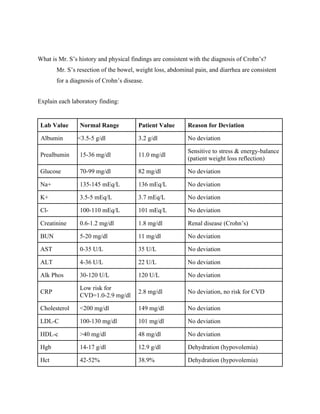
Explain each laboratory finding:
Lab Value Normal Range Patient Value Reason for Deviation
Albumin <3.5-5 g/dl 3.2 g/dl No deviation
Prealbumin 15-36 mg/dl 11.0 mg/dl
Sensitive to stress & energy-balance
(patient weight loss reflection)
Glucose 70-99 mg/dl 82 mg/dl No deviation
Na+ 135-145 mEq/L 136 mEq/L No deviation
K+ 3.5-5 mEq/L 3.7 mEq/L No deviation
Cl- 100-110 mEq/L 101 mEq/L No deviation
Creatinine 0.6-1.2 mg/dl 1.8 mg/dl Renal disease (Crohn’s)
BUN 5-20 mg/dl 11 mg/dl No deviation
AST 0-35 U/L 35 U/L No deviation
ALT 4-36 U/L 22 U/L No deviation
Alk Phos 30-120 U/L 120 U/L No deviation
CRP
Low risk for
CVD=1.0-2.9 mg/dl
2.8 mg/dl No deviation, no risk for CVD
Cholesterol <200 mg/dl 149 mg/dl No deviation
LDL-C 100-130 mg/dl 101 mg/dl No deviation
HDL-c >40 mg/dl 48 mg/dl No deviation
Hgb 14-17 g/dl 12.9 g/dl Dehydration (hypovolemia)
Hct 42-52% 38.9% Dehydration (hypovolemia)
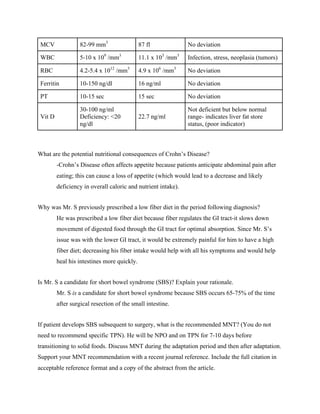
MCV 82-99 mm3
87 fl No deviation
WBC 5-10 x 109
/mm3
11.1 x 10³
/mm3
Infection, stress, neoplasia (tumors)
RBC 4.2-5.4 x 10¹²
/mm3
4.9 x 10⁶
/mm3
No deviation
Ferritin 10-150 ng/dl 16 ng/ml No deviation
PT 10-15 sec 15 sec No deviation
Vit D
30-100 ng/ml
Deficiency: <20
ng/dl
22.7 ng/ml
Not deficient but below normal
range- indicates liver fat store
status, (poor indicator)
What are the potential nutritional consequences of Crohn’s Disease?
-Crohn’s Disease often affects appetite because patients anticipate abdominal pain after
eating; this can cause a loss of appetite (which would lead to a decrease and likely
deficiency in overall caloric and nutrient intake).
Why was Mr. S previously prescribed a low fiber diet in the period following diagnosis?
He was prescribed a low fiber diet because fiber regulates the GI tract-it slows down
movement of digested food through the GI tract for optimal absorption. Since Mr. S’s
issue was with the lower GI tract, it would be extremely painful for him to have a high
fiber diet; decreasing his fiber intake would help with all his symptoms and would help
heal his intestines more quickly.
Is Mr. S a candidate for short bowel syndrome (SBS)? Explain your rationale.
Mr. S is a candidate for short bowel syndrome because SBS occurs 65-75% of the time
after surgical resection of the small intestine.
If patient develops SBS subsequent to surgery, what is the recommended MNT? (You do not
need to recommend specific TPN). He will be NPO and on TPN for 7-10 days before
transitioning to solid foods. Discuss MNT during the adaptation period and then after adaptation.
Support your MNT recommendation with a recent journal reference. Include the full citation in
acceptable reference format and a copy of the abstract from the article.
Mr. S will have some dietary changes to accommodate his malabsorbing GI tract to
ensure his condition doesn’t worsen. According to the Journal of Parenteral and Enteral
Nutrition (JPEN), “the spectrum of malabsorption ranges from intestinal insufficiency to
intestinal failure. Individualized patient strategies involving modifications of dietary
macro- and micronutrients, fluid, and pharmacologic options are required to maximize
health and quality-of-life outcomes and to minimize complications and SBS-associated
mortality” (JPEN).
He will restrict his fluid intake to meal-times, he will be lactose free, on a low fiber diet,
eating 2530-2892 Kcalories (35-40 Kcal/Kg) and at least 108 grams of protein (1.5 g
protein/Kg) a day because his system doesn’t absorb nutrients efficiently, with calcium,
magnesium, and zinc supplements. He may need to be prescribed Loperimide or narcotics
and/or somatostatin (which may increase his blood glucose levels because it is an
antisecretory agent).
Calculate Mr. S’s energy and protein requirement post-op (when he is on TPN).
Energy requirement- 2530-2892 Kcalories (35-40 Kcal/Kg/day)
Protein requirement- 108 g (1.5 g/Kg/day)
How will you adjust this requirement when he begins to eat solid food (assume SBS)? What will
you monitor to determine if this is correct?
When he begins to eat solid food, this will require adequate nutrition understanding. Mr S
will have to be aware of macro- and micronutrients he is consuming as to monitor his
overall calorie, protein, fiber, and vitamin/mineral intakes to make sure he is staying
within appropriate ranges for each.
Select one nutritional problem and write two PES statements: one in the clinical domain and one
in the behavoiral domain. For each PES statement, establish a goal and appropriate intervention.
Involuntary weight loss [NC-3.2] related to malabsorption in the small intestine as
evidence by weight loss, abdominal pain, and diarrhea. Goal: increased absorption of
nutrients. Intervention: low fiber, low fat diet with restricted fluid intake.
Food and nutrition-related knowledge deficit [NB 1.1] related to recurrence of symptoms
of IBD as evidence by SBS, diarrhea, and abdominal pain. Goal: increased knowledge of
beneficial dietary habits. Intervention: empower patient with information about condition,
provide tools to increase knowledge on how to deal with his condition.
Work Cited
B, Jeppesen P. Spectrum of Short Bowel Syndrome in Adults: Intestinal Insufficiency tp Intestinal
Failure. Journal of Parenteral and Enteral Nutrition. ProQuest, May 2014. Web. 4 Oct. 2014.
<http://serach.proquest.com/health/printviewfile?accountid=10223>

FSHN450IBMCaseStudy

  • 1.
    Anna King FSHN 450;Fall Semester 2014 Case Study III: Inflammatory Bowel Disease October 5, 2014 I have not given, received, or used any unauthorized assistance on this assignment. Anna King, 10/5/2014
  • 2.
    What is Mr.S’s history and physical findings are consistent with the diagnosis of Crohn’s? Mr. S’s resection of the bowel, weight loss, abdominal pain, and diarrhea are consistent for a diagnosis of Crohn’s disease. Explain each laboratory finding: Lab Value Normal Range Patient Value Reason for Deviation Albumin <3.5-5 g/dl 3.2 g/dl No deviation Prealbumin 15-36 mg/dl 11.0 mg/dl Sensitive to stress & energy-balance (patient weight loss reflection) Glucose 70-99 mg/dl 82 mg/dl No deviation Na+ 135-145 mEq/L 136 mEq/L No deviation K+ 3.5-5 mEq/L 3.7 mEq/L No deviation Cl- 100-110 mEq/L 101 mEq/L No deviation Creatinine 0.6-1.2 mg/dl 1.8 mg/dl Renal disease (Crohn’s) BUN 5-20 mg/dl 11 mg/dl No deviation AST 0-35 U/L 35 U/L No deviation ALT 4-36 U/L 22 U/L No deviation Alk Phos 30-120 U/L 120 U/L No deviation CRP Low risk for CVD=1.0-2.9 mg/dl 2.8 mg/dl No deviation, no risk for CVD Cholesterol <200 mg/dl 149 mg/dl No deviation LDL-C 100-130 mg/dl 101 mg/dl No deviation HDL-c >40 mg/dl 48 mg/dl No deviation Hgb 14-17 g/dl 12.9 g/dl Dehydration (hypovolemia) Hct 42-52% 38.9% Dehydration (hypovolemia)
  • 3.
    MCV 82-99 mm3 87fl No deviation WBC 5-10 x 109 /mm3 11.1 x 10³ /mm3 Infection, stress, neoplasia (tumors) RBC 4.2-5.4 x 10¹² /mm3 4.9 x 10⁶ /mm3 No deviation Ferritin 10-150 ng/dl 16 ng/ml No deviation PT 10-15 sec 15 sec No deviation Vit D 30-100 ng/ml Deficiency: <20 ng/dl 22.7 ng/ml Not deficient but below normal range- indicates liver fat store status, (poor indicator) What are the potential nutritional consequences of Crohn’s Disease? -Crohn’s Disease often affects appetite because patients anticipate abdominal pain after eating; this can cause a loss of appetite (which would lead to a decrease and likely deficiency in overall caloric and nutrient intake). Why was Mr. S previously prescribed a low fiber diet in the period following diagnosis? He was prescribed a low fiber diet because fiber regulates the GI tract-it slows down movement of digested food through the GI tract for optimal absorption. Since Mr. S’s issue was with the lower GI tract, it would be extremely painful for him to have a high fiber diet; decreasing his fiber intake would help with all his symptoms and would help heal his intestines more quickly. Is Mr. S a candidate for short bowel syndrome (SBS)? Explain your rationale. Mr. S is a candidate for short bowel syndrome because SBS occurs 65-75% of the time after surgical resection of the small intestine. If patient develops SBS subsequent to surgery, what is the recommended MNT? (You do not need to recommend specific TPN). He will be NPO and on TPN for 7-10 days before transitioning to solid foods. Discuss MNT during the adaptation period and then after adaptation. Support your MNT recommendation with a recent journal reference. Include the full citation in acceptable reference format and a copy of the abstract from the article.
  • 4.
    Mr. S willhave some dietary changes to accommodate his malabsorbing GI tract to ensure his condition doesn’t worsen. According to the Journal of Parenteral and Enteral Nutrition (JPEN), “the spectrum of malabsorption ranges from intestinal insufficiency to intestinal failure. Individualized patient strategies involving modifications of dietary macro- and micronutrients, fluid, and pharmacologic options are required to maximize health and quality-of-life outcomes and to minimize complications and SBS-associated mortality” (JPEN). He will restrict his fluid intake to meal-times, he will be lactose free, on a low fiber diet, eating 2530-2892 Kcalories (35-40 Kcal/Kg) and at least 108 grams of protein (1.5 g protein/Kg) a day because his system doesn’t absorb nutrients efficiently, with calcium, magnesium, and zinc supplements. He may need to be prescribed Loperimide or narcotics and/or somatostatin (which may increase his blood glucose levels because it is an antisecretory agent). Calculate Mr. S’s energy and protein requirement post-op (when he is on TPN). Energy requirement- 2530-2892 Kcalories (35-40 Kcal/Kg/day) Protein requirement- 108 g (1.5 g/Kg/day) How will you adjust this requirement when he begins to eat solid food (assume SBS)? What will you monitor to determine if this is correct? When he begins to eat solid food, this will require adequate nutrition understanding. Mr S will have to be aware of macro- and micronutrients he is consuming as to monitor his overall calorie, protein, fiber, and vitamin/mineral intakes to make sure he is staying within appropriate ranges for each. Select one nutritional problem and write two PES statements: one in the clinical domain and one in the behavoiral domain. For each PES statement, establish a goal and appropriate intervention. Involuntary weight loss [NC-3.2] related to malabsorption in the small intestine as evidence by weight loss, abdominal pain, and diarrhea. Goal: increased absorption of nutrients. Intervention: low fiber, low fat diet with restricted fluid intake.
  • 5.
    Food and nutrition-relatedknowledge deficit [NB 1.1] related to recurrence of symptoms of IBD as evidence by SBS, diarrhea, and abdominal pain. Goal: increased knowledge of beneficial dietary habits. Intervention: empower patient with information about condition, provide tools to increase knowledge on how to deal with his condition.
  • 6.
    Work Cited B, JeppesenP. Spectrum of Short Bowel Syndrome in Adults: Intestinal Insufficiency tp Intestinal Failure. Journal of Parenteral and Enteral Nutrition. ProQuest, May 2014. Web. 4 Oct. 2014. <http://serach.proquest.com/health/printviewfile?accountid=10223>