KARLA MEJÍA 
PAULA REINA 
LAURA CARVAJAL 
PABLO ARANGO
WHAT IS A PARAGRAPH? 
A paragraph is a group of sentences that fleshes out a single 
idea. 
In order for a paragraph to be effective, it must begin with a 
topic sentence, have sentences that support the main idea of that 
paragraph, and maintain a consistent flow. 
A GOOD PARAGRAPH HAS: 
 Unity 
 Support 
 Coherence 
 Good language 
 Variety of structures.
TYPES OF PARAGRAPHS 
 The descriptive paragraph 
 The narrative paragraph 
 The expository paragraph 
 The persuasive paragraph
THE DESCRIPTIVE 
PARAGRAPH 
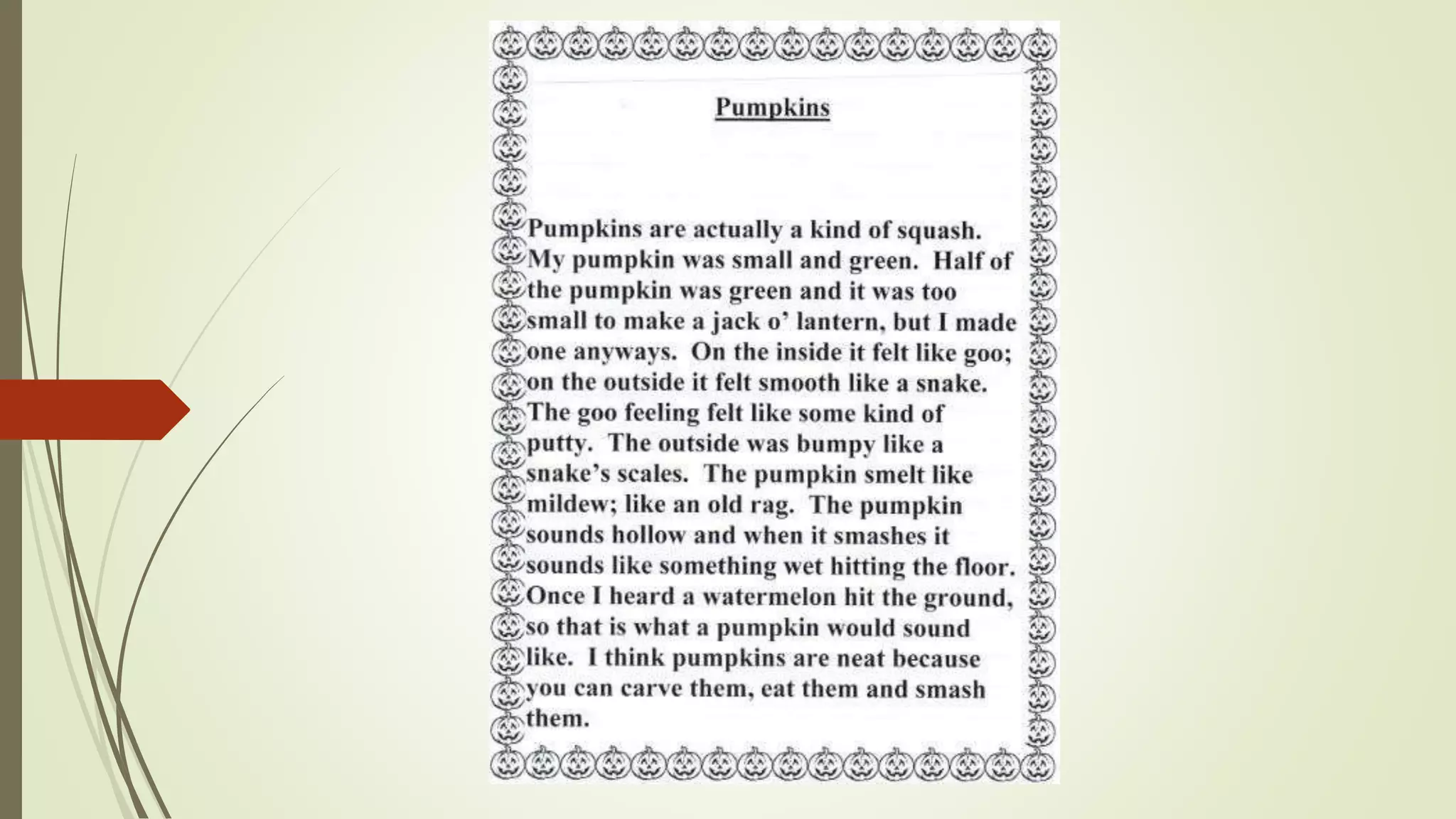
Used to describe any object, place, people or how something 
happens. 
The writer has to create words pictures, use interesting adjectives 
and set of verbs. 
It is usually composed of statements and passive sentences. 
The challenge is to make it interesting 
 Imagery 
 Sensory details; five senses 
 Smiles, metaphors
THE NARRATIVE 
PARAGRAPHS 
 Narrative paragraphs are often used to describe what a 
person does over a period of time. 
 A narrative paragraph ‘tells a story’, that is, it tells about a 
series of events that happened to the narrator. 
 It is usually told in time sequence with a definite beginning, 
middle and end.
My Most Embarrassing Moment 
The most embarrassing moment of my sophomore year was 
earned my nick name, Crash. It all started right after school 
turned on to the busiest street by the school. First I pulled up 
behind this truck at a stop sign. After a second, a fellow older 
student told me that I was really close and that I was going to hit 
the truck in front of me. At the moment I was trying to tell the 
that I was giving a ride to get back in the car because he was 
hanging out the window. Since I was distracted, I thought the 
line of traffic had started to move, but it hadn’t. In the blink of 
eye I hit the back of the truck in front of me. The devastation 
in. I was so worried that I damaged the truck, but all that I did 
scratch his bumper. Lucky for him! Then it came time to look at 
car. My car was ruined. The hood was buckled, the front end 
pushed back, and my headlights were broken. Humiliated and 
scared, I still had to drive my totaled care home. During School 
year, I never did hear the end of what had happened that day.
THE EXPOSITORY PARAGRAPH 
 When you read your textbook, the newspaper, magazine 
articles, or any other types of publications, you are reading 
expository writing. When you write answers for an essay test, 
you use the expository form. 
 In an expository paragraph, you give information. You 
explain a subject, give directions, or show how something 
happens. In expository writing, linking words like first, 
second, then, and finally are usually used to help readers 
follow the ideas. 
 This paragraph, like any other, organizes itself around three 
parts. A topic sentence allows the reader to understand what 
you are writing about. The middle part of the paragraph 
contains supporting sentences that follow one another in a 
logical sequence of steps. The concluding sentence closes 
your subject with an emphasis on the final product or process
Sarah is my best friend for many reasons. First, she is 
always helpful. After I had a baby, I was really tired, so 
she came over to hold Mathew while I took a nap. Also, 
she is a good listener. Whenever I have a problem she 
hears my worries and helps me decide what to 
do. Finally, she is funny! Sarah always tells the most 
hilarious jokes that make me laugh. All in all, I couldn’t 
ask for a better friend than Sarah.
THE PERSUASIVE 
PARAGRAPH 
Persuasive paragraph pursues to defend an idea or 
opinion to the reader. When it comes to write this kind 
of paragraph it’s important to: 
• Build arguments or give reasons. 
• Use examples, facts or analogies for better support. 
• Strong and noteworthy tone of “textual voice”. Right 
rhythm.
PERSUASIVE TEXT - 
SPEECH
OTHER TYPES OF 
PARAGRAPHS Conceptual: en estos párrafos se especifica el pensamiento de 
algún autor o la definición de un término, que será utilizado a lo 
largo de todo el texto, por lo que resulta imprescindible su 
comprensión. Estos párrafos, están presentes en textos científicos 
y técnicos. 
Chronological: en esta clase de párrafo se expresa, en el orden en 
que sucedieron, una serie de acontecimientos. 
Enumeration: este párrafo está compuesto por una serie de 
características que aluden a un mismo hecho, objeto o sujeto y una 
frase organizadora que permite comprender qué es lo que se está 
ordenando.
Comparison: en este párrafo se presentan similitudes y 
diferencias entre dos o más objetos, sucesos, o cualquier 
Cause and effect: como su nombre indica, se presentan un 
hecho y aquello que lo ha causado o bien las consecuencias que 
este pueden devenir. 
Deductive: en este la idea principal se coloca al principio que, 
para construirla se parte de una generalización para luego 
presentar casos específicos. 
Inductive: en oposición al anterior, en estos párrafos la idea 
principal se coloca al final. En estos se parte de casos específicos 
para llegar a una generalización que concluye lo que se afirmó. 
De conclusión: estos párrafos expresan el cierre de un apartado 
o un determinado tema.

T.C. Types of paragraphs

  • 1.
    KARLA MEJÍA PAULAREINA LAURA CARVAJAL PABLO ARANGO
  • 2.
    WHAT IS APARAGRAPH? A paragraph is a group of sentences that fleshes out a single idea. In order for a paragraph to be effective, it must begin with a topic sentence, have sentences that support the main idea of that paragraph, and maintain a consistent flow. A GOOD PARAGRAPH HAS:  Unity  Support  Coherence  Good language  Variety of structures.
  • 3.
    TYPES OF PARAGRAPHS  The descriptive paragraph  The narrative paragraph  The expository paragraph  The persuasive paragraph
  • 4.
    THE DESCRIPTIVE PARAGRAPH Used to describe any object, place, people or how something happens. The writer has to create words pictures, use interesting adjectives and set of verbs. It is usually composed of statements and passive sentences. The challenge is to make it interesting  Imagery  Sensory details; five senses  Smiles, metaphors
  • 6.
    THE NARRATIVE PARAGRAPHS  Narrative paragraphs are often used to describe what a person does over a period of time.  A narrative paragraph ‘tells a story’, that is, it tells about a series of events that happened to the narrator.  It is usually told in time sequence with a definite beginning, middle and end.
  • 7.
    My Most EmbarrassingMoment The most embarrassing moment of my sophomore year was earned my nick name, Crash. It all started right after school turned on to the busiest street by the school. First I pulled up behind this truck at a stop sign. After a second, a fellow older student told me that I was really close and that I was going to hit the truck in front of me. At the moment I was trying to tell the that I was giving a ride to get back in the car because he was hanging out the window. Since I was distracted, I thought the line of traffic had started to move, but it hadn’t. In the blink of eye I hit the back of the truck in front of me. The devastation in. I was so worried that I damaged the truck, but all that I did scratch his bumper. Lucky for him! Then it came time to look at car. My car was ruined. The hood was buckled, the front end pushed back, and my headlights were broken. Humiliated and scared, I still had to drive my totaled care home. During School year, I never did hear the end of what had happened that day.
  • 8.
    THE EXPOSITORY PARAGRAPH  When you read your textbook, the newspaper, magazine articles, or any other types of publications, you are reading expository writing. When you write answers for an essay test, you use the expository form.  In an expository paragraph, you give information. You explain a subject, give directions, or show how something happens. In expository writing, linking words like first, second, then, and finally are usually used to help readers follow the ideas.  This paragraph, like any other, organizes itself around three parts. A topic sentence allows the reader to understand what you are writing about. The middle part of the paragraph contains supporting sentences that follow one another in a logical sequence of steps. The concluding sentence closes your subject with an emphasis on the final product or process
  • 9.
    Sarah is mybest friend for many reasons. First, she is always helpful. After I had a baby, I was really tired, so she came over to hold Mathew while I took a nap. Also, she is a good listener. Whenever I have a problem she hears my worries and helps me decide what to do. Finally, she is funny! Sarah always tells the most hilarious jokes that make me laugh. All in all, I couldn’t ask for a better friend than Sarah.
  • 10.
    THE PERSUASIVE PARAGRAPH Persuasive paragraph pursues to defend an idea or opinion to the reader. When it comes to write this kind of paragraph it’s important to: • Build arguments or give reasons. • Use examples, facts or analogies for better support. • Strong and noteworthy tone of “textual voice”. Right rhythm.
  • 11.
  • 12.
    OTHER TYPES OF PARAGRAPHS Conceptual: en estos párrafos se especifica el pensamiento de algún autor o la definición de un término, que será utilizado a lo largo de todo el texto, por lo que resulta imprescindible su comprensión. Estos párrafos, están presentes en textos científicos y técnicos. Chronological: en esta clase de párrafo se expresa, en el orden en que sucedieron, una serie de acontecimientos. Enumeration: este párrafo está compuesto por una serie de características que aluden a un mismo hecho, objeto o sujeto y una frase organizadora que permite comprender qué es lo que se está ordenando.
  • 13.
    Comparison: en estepárrafo se presentan similitudes y diferencias entre dos o más objetos, sucesos, o cualquier Cause and effect: como su nombre indica, se presentan un hecho y aquello que lo ha causado o bien las consecuencias que este pueden devenir. Deductive: en este la idea principal se coloca al principio que, para construirla se parte de una generalización para luego presentar casos específicos. Inductive: en oposición al anterior, en estos párrafos la idea principal se coloca al final. En estos se parte de casos específicos para llegar a una generalización que concluye lo que se afirmó. De conclusión: estos párrafos expresan el cierre de un apartado o un determinado tema.