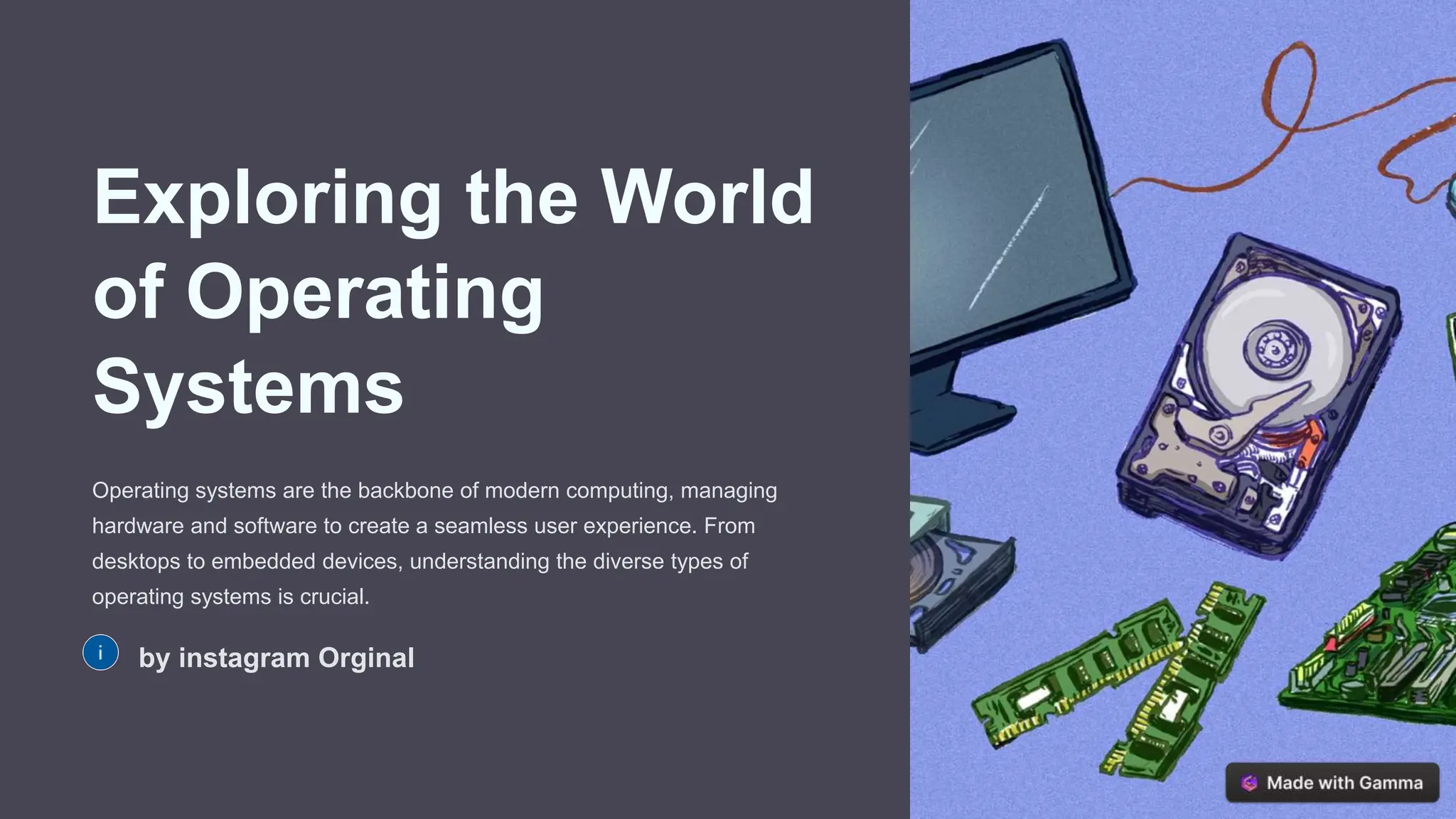
Exploring the World
of Operating
Systems
Operating systems are the backbone of modern computing, managing
hardware and software to create a seamless user experience. From
desktops to embedded devices, understanding the diverse types of
operating systems is crucial.
by instagram Orginal
Single-User Operating Systems
Personal
Computing
Designed for individual
use, with a focus on
ease of use and
personal productivity.
Examples
Microsoft Windows,
Apple macOS, and
various Linux
distributions.
Key Features
Graphical user
interface, file
management, and
application support.
Multi-User Operating Systems
Enterprise
Computing
Designed to support
multiple users and
maintain system security
and stability.
Examples
Unix, Linux, and
enterprise-level Windows
Server.
Key Features
User management,
resource sharing, and
advanced networking
capabilities.
Real-Time Operating Systems
(RTOS)
1 Time-Sensitive
Applications
Designed to respond
to events within strict
time constraints.
2 Examples
VxWorks, QNX, and
FreeRTOS.
3 Key Features
Deterministic
scheduling, low-
latency response,
and support for real-
time tasks.
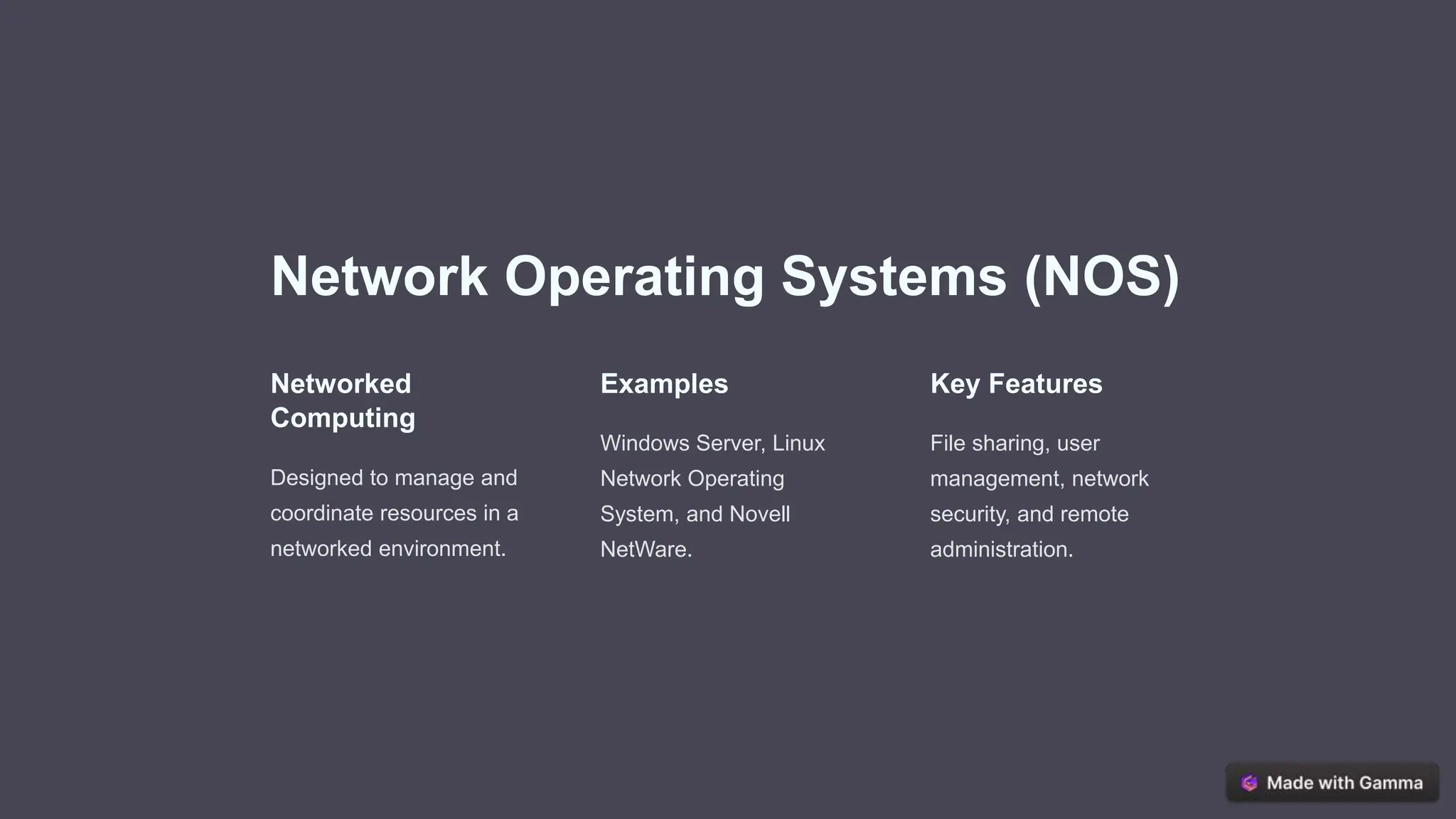
Network Operating Systems (NOS)
Networked
Computing
Designed to manage and
coordinate resources in a
networked environment.
Examples
Windows Server, Linux
Network Operating
System, and Novell
NetWare.
Key Features
File sharing, user
management, network
security, and remote
administration.
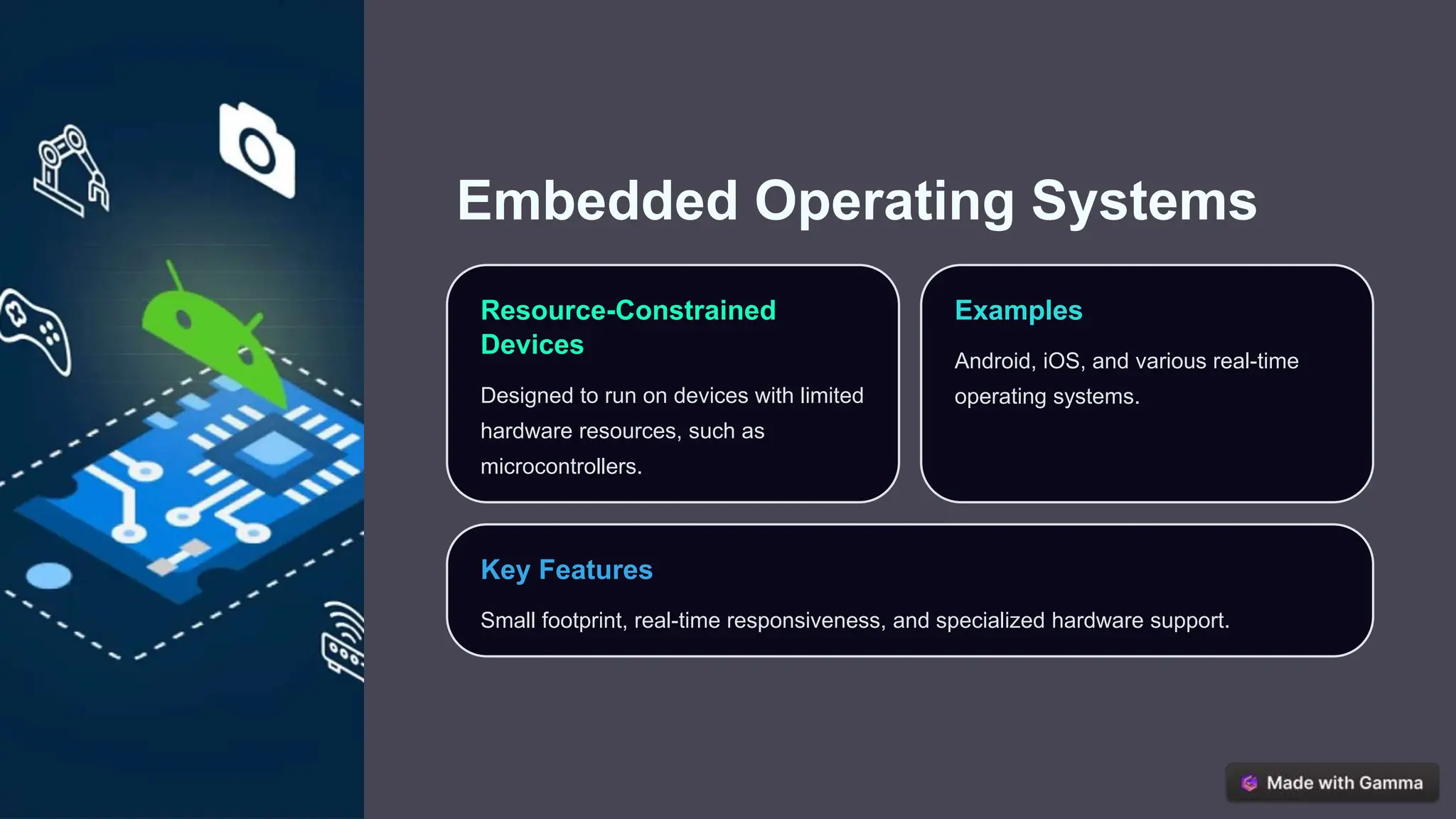
Embedded Operating Systems
Resource-Constrained
Devices
Designed to run on devices with limited
hardware resources, such as
microcontrollers.
Examples
Android, iOS, and various real-time
operating systems.
Key Features
Small footprint, real-time responsiveness, and specialized hardware support.
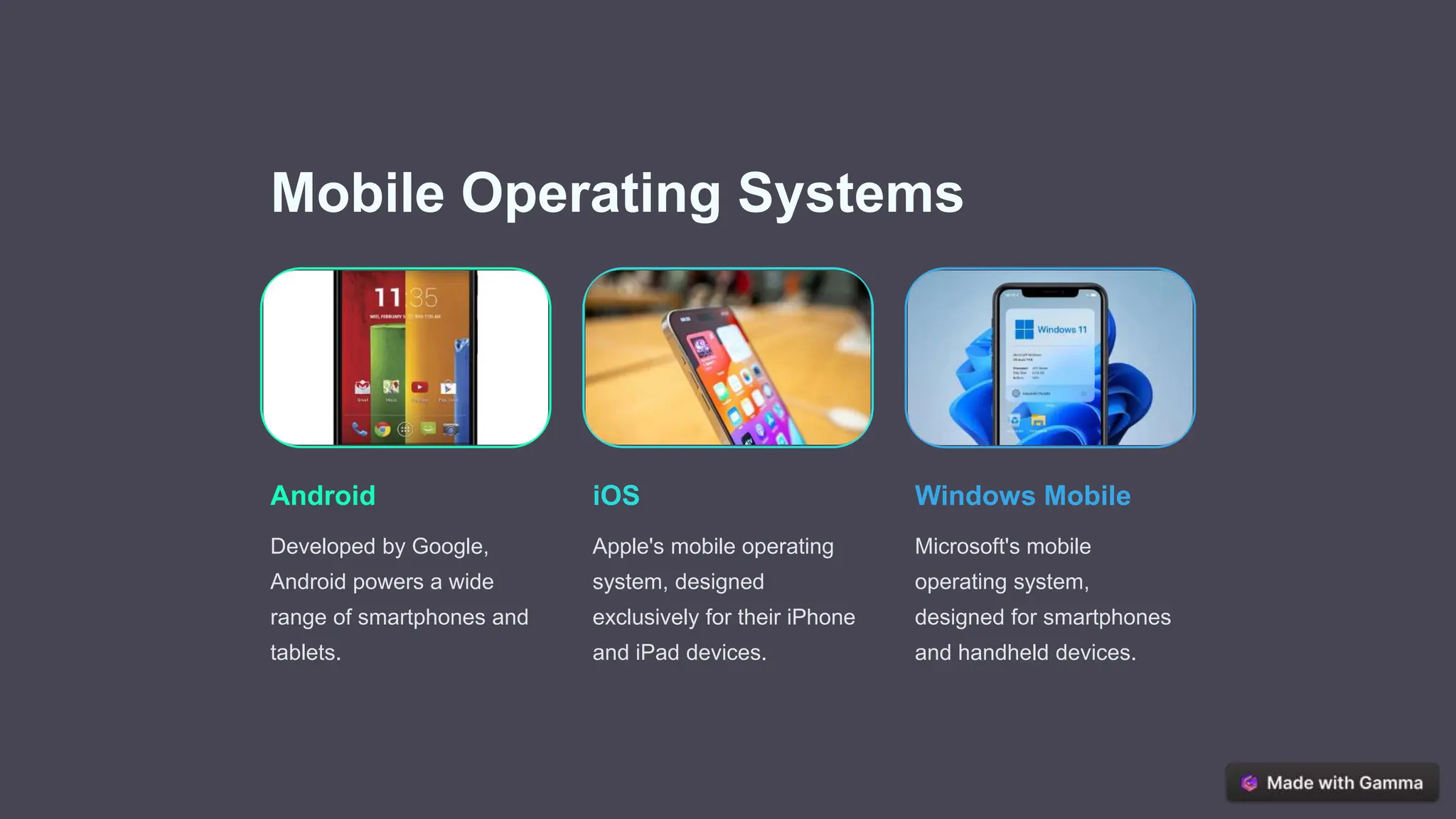
Mobile Operating Systems
Android
Developed by Google,
Android powers a wide
range of smartphones and
tablets.
iOS
Apple's mobile operating
system, designed
exclusively for their iPhone
and iPad devices.
Windows Mobile
Microsoft's mobile
operating system,
designed for smartphones
and handheld devices.
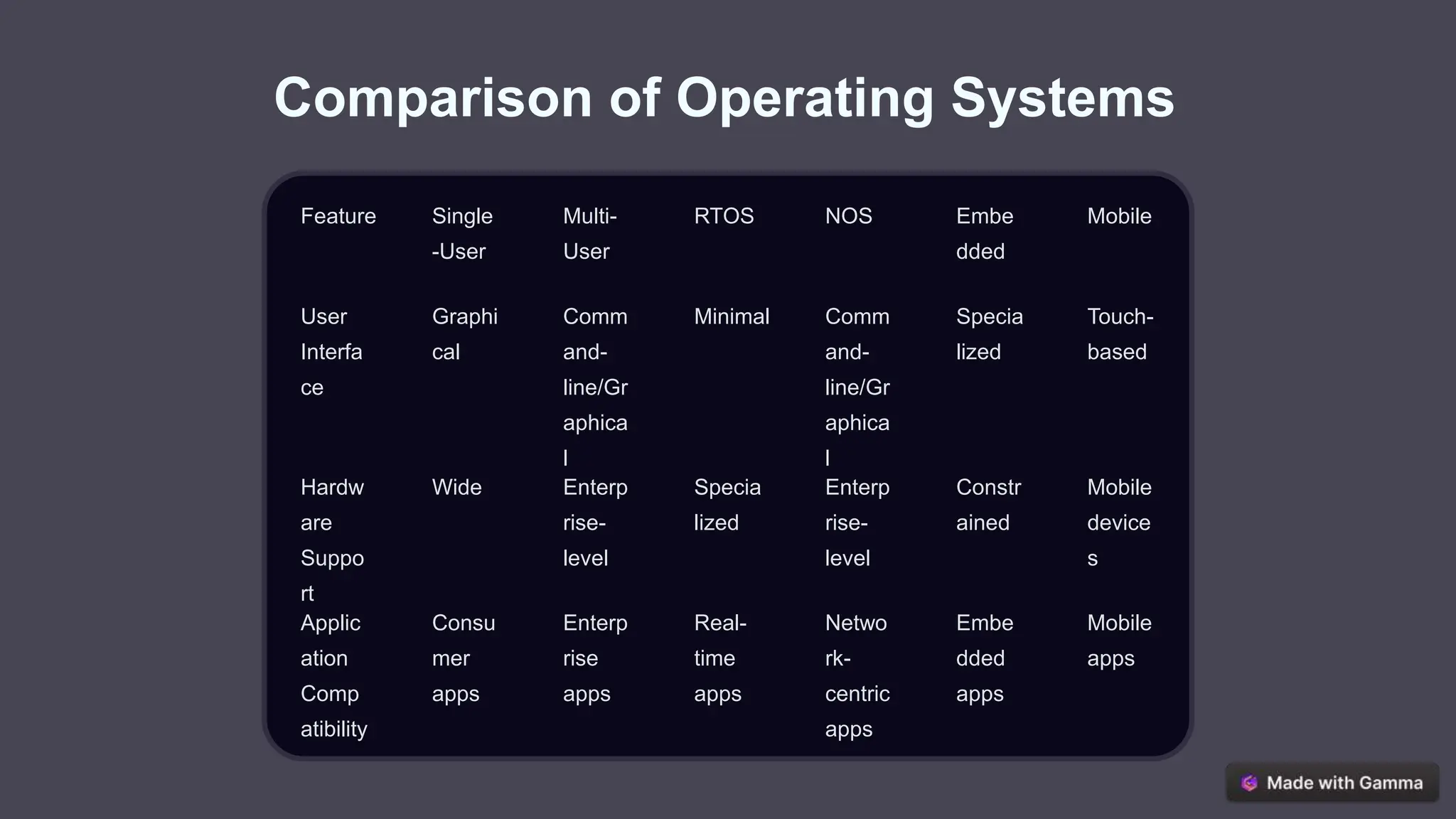
Comparison of Operating Systems
Feature Single
-User
Multi-
User
RTOS NOS Embe
dded
Mobile
User
Interfa
ce
Graphi
cal
Comm
and-
line/Gr
aphica
l
Minimal Comm
and-
line/Gr
aphica
l
Specia
lized
Touch-
based
Hardw
are
Suppo
rt
Wide Enterp
rise-
level
Specia
lized
Enterp
rise-
level
Constr
ained
Mobile
device
s
Applic
ation
Comp
atibility
Consu
mer
apps
Enterp
rise
apps
Real-
time
apps
Netwo
rk-
centric
apps
Embe
dded
apps
Mobile
apps
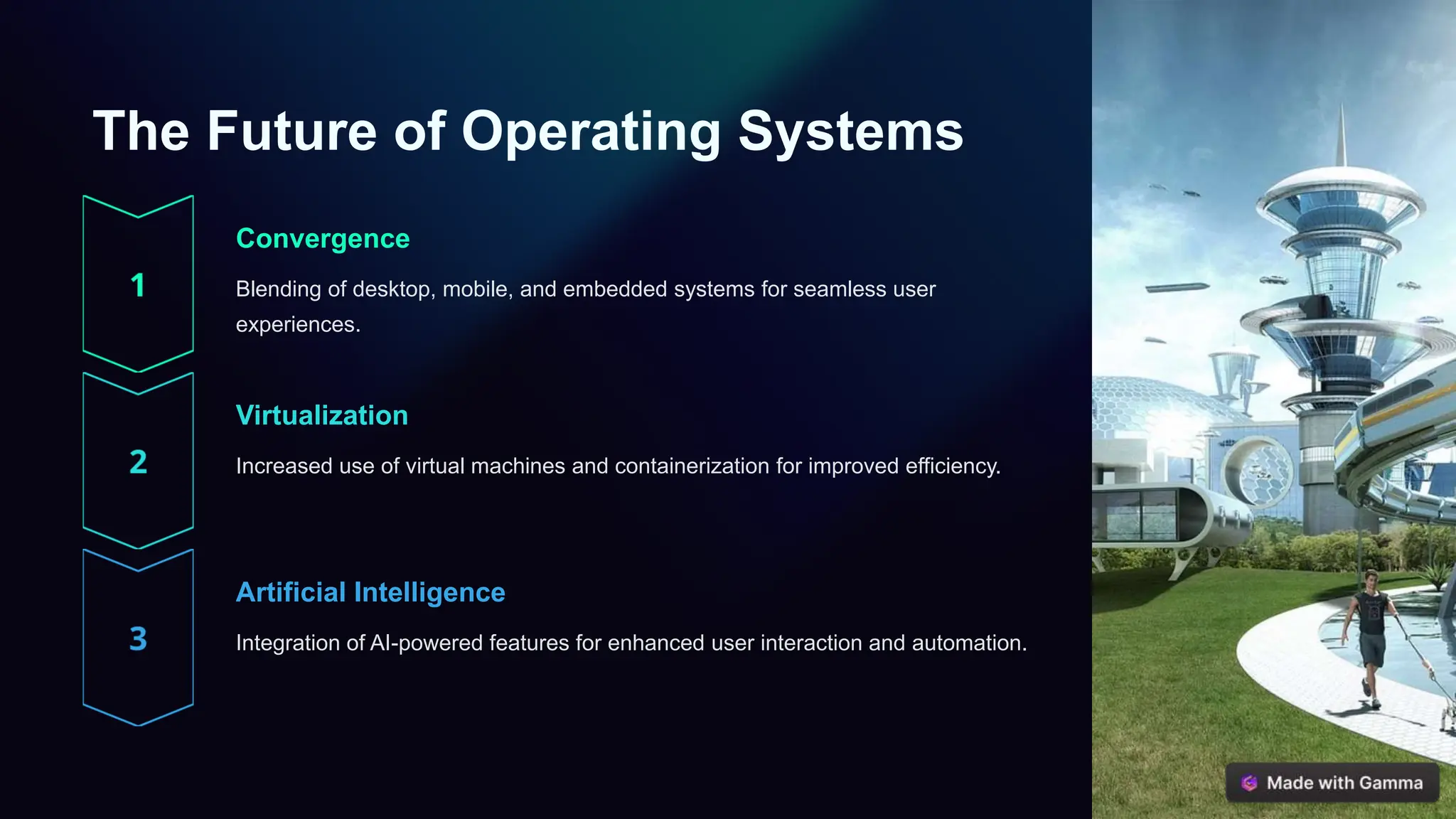
The Future of Operating Systems
Convergence
Blending of desktop, mobile, and embedded systems for seamless user
experiences.
Virtualization
Increased use of virtual machines and containerization for improved efficiency.
Artificial Intelligence
Integration of AI-powered features for enhanced user interaction and automation.

Types of operating system in operating systems (5).pptx

  • 1.
    Exploring the World ofOperating Systems Operating systems are the backbone of modern computing, managing hardware and software to create a seamless user experience. From desktops to embedded devices, understanding the diverse types of operating systems is crucial. by instagram Orginal
  • 2.
    Single-User Operating Systems Personal Computing Designedfor individual use, with a focus on ease of use and personal productivity. Examples Microsoft Windows, Apple macOS, and various Linux distributions. Key Features Graphical user interface, file management, and application support.
  • 3.
    Multi-User Operating Systems Enterprise Computing Designedto support multiple users and maintain system security and stability. Examples Unix, Linux, and enterprise-level Windows Server. Key Features User management, resource sharing, and advanced networking capabilities.
  • 4.
    Real-Time Operating Systems (RTOS) 1Time-Sensitive Applications Designed to respond to events within strict time constraints. 2 Examples VxWorks, QNX, and FreeRTOS. 3 Key Features Deterministic scheduling, low- latency response, and support for real- time tasks.
  • 5.
    Network Operating Systems(NOS) Networked Computing Designed to manage and coordinate resources in a networked environment. Examples Windows Server, Linux Network Operating System, and Novell NetWare. Key Features File sharing, user management, network security, and remote administration.
  • 6.
    Embedded Operating Systems Resource-Constrained Devices Designedto run on devices with limited hardware resources, such as microcontrollers. Examples Android, iOS, and various real-time operating systems. Key Features Small footprint, real-time responsiveness, and specialized hardware support.
  • 7.
    Mobile Operating Systems Android Developedby Google, Android powers a wide range of smartphones and tablets. iOS Apple's mobile operating system, designed exclusively for their iPhone and iPad devices. Windows Mobile Microsoft's mobile operating system, designed for smartphones and handheld devices.
  • 8.
    Comparison of OperatingSystems Feature Single -User Multi- User RTOS NOS Embe dded Mobile User Interfa ce Graphi cal Comm and- line/Gr aphica l Minimal Comm and- line/Gr aphica l Specia lized Touch- based Hardw are Suppo rt Wide Enterp rise- level Specia lized Enterp rise- level Constr ained Mobile device s Applic ation Comp atibility Consu mer apps Enterp rise apps Real- time apps Netwo rk- centric apps Embe dded apps Mobile apps
  • 9.
    The Future ofOperating Systems Convergence Blending of desktop, mobile, and embedded systems for seamless user experiences. Virtualization Increased use of virtual machines and containerization for improved efficiency. Artificial Intelligence Integration of AI-powered features for enhanced user interaction and automation.