Subject Name: MAINTENANCE, OVERHAUL &
REPAIR OF AIRCRAFT SYSTEMS
Subject Code: 15AE664
MODULE 2: DOCUMENTATION FOR MAINTENANCE
➢ Manufacturers documentation
➢ Airplane maintenance manual
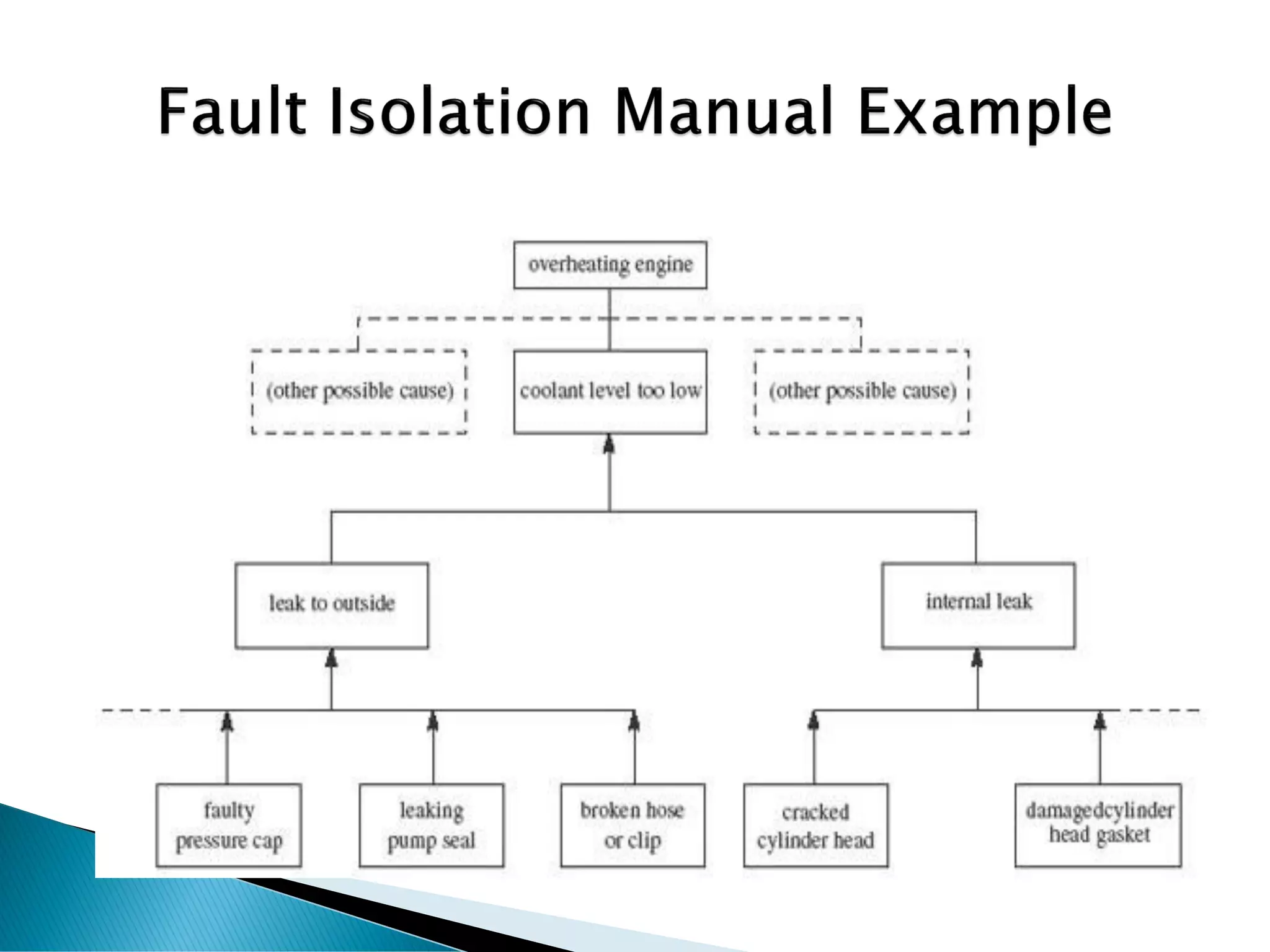
➢ Fault Isolation Manual (FIM)
➢ Illustrated parts catalogue
➢ Wiring diagram manual
➢ Master minimum equipment
➢ FAR, Advisory circulars
➢ Airworthiness directions ATA document standards
➢ Technical policies and procedure manuals(TPPM)
 Types of Documentation
It has been said that the paper documentation
required for the maintenance of a modern jet liner
would weigh about the same as the airplane itself !
Whether or not this is true, there is certainly a
considerable amount of documentation.
This section will look at three main types of
documentation –
1. Manufacturer’s Documentation
2. Regulatory Documentation
3. Airline Generated Documentation
 Here, The manufacturer provides necessary
information on safe and proper use of
equipment for the better service life .
 Mostly, Operation instructions, installation
and assembly instructions, maintenance and
repair instructions, illustrated parts catalogue
may contain in the document.
 Formal Document will have all details about aircraft
maintenance.
 This includes checks of lubricating system,
functional checks and servicing of airplane.
 Usually it excludes structural modifications and
fiber glass paneling.
 Technician signs off logbook/non-routine work
card (NRWC)
 You can do component maintenance under the
aircraft category in two cases.
i) when the AMM tells you to do so by pointing
to a relevant CMM
ii) when the maintenance of the component does
not require the unit itself to be removed from the
airframe except for the purpose of improving
technical access.
 It is the document which details the way in which
aircraft maintenance tasks on the specified
component shall be accomplished.
 The maintenance tasks contained in these
manuals do include procedures for restoring a
structural component to a serviceable state and
reworking and refinishing procedures are often
provided in CMM.
• Set of fault isolation trees
• Block diagram
• Troubleshooting
• Isolate fault
• Identify/pinpoint problems
 It will have Parts list/location of all parts.
 It gives the details of
• Assemblies
• Subassemblies
• Alternate part numbers
• Part inter-changeability
• Modifications
• Pre and post modification
 It is used only as supporting reference with the Aircraft
maintenance manual
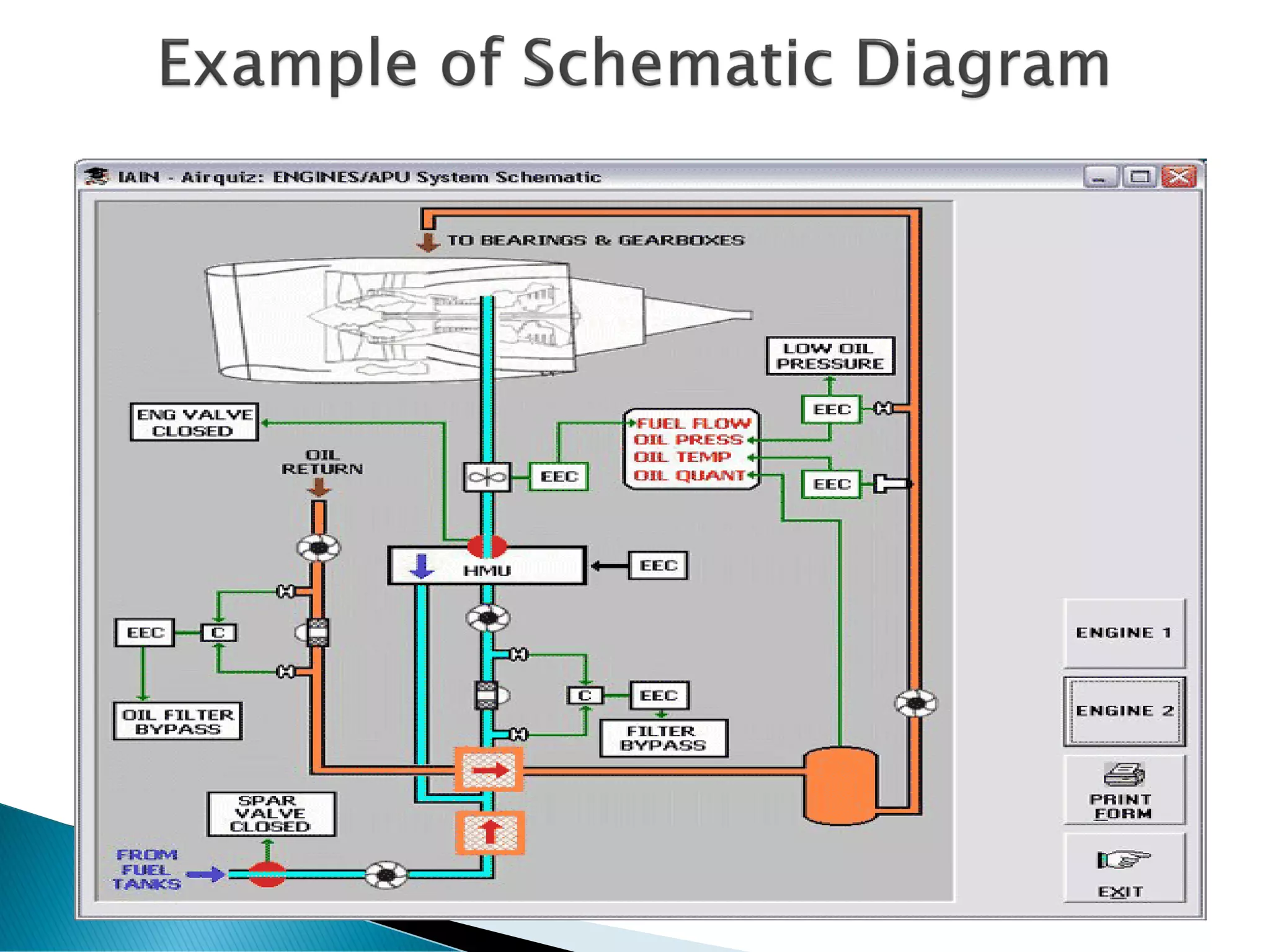
 This diagram focuses to show how the system
operates.
 It is suitable for learning and teaching and for
troubleshooting.
 Schematic Diagram of electrical and hydraulic
systems of aircraft contains the detailed
information and identifies wiring harnesses,
connectors and interfacing equipment.
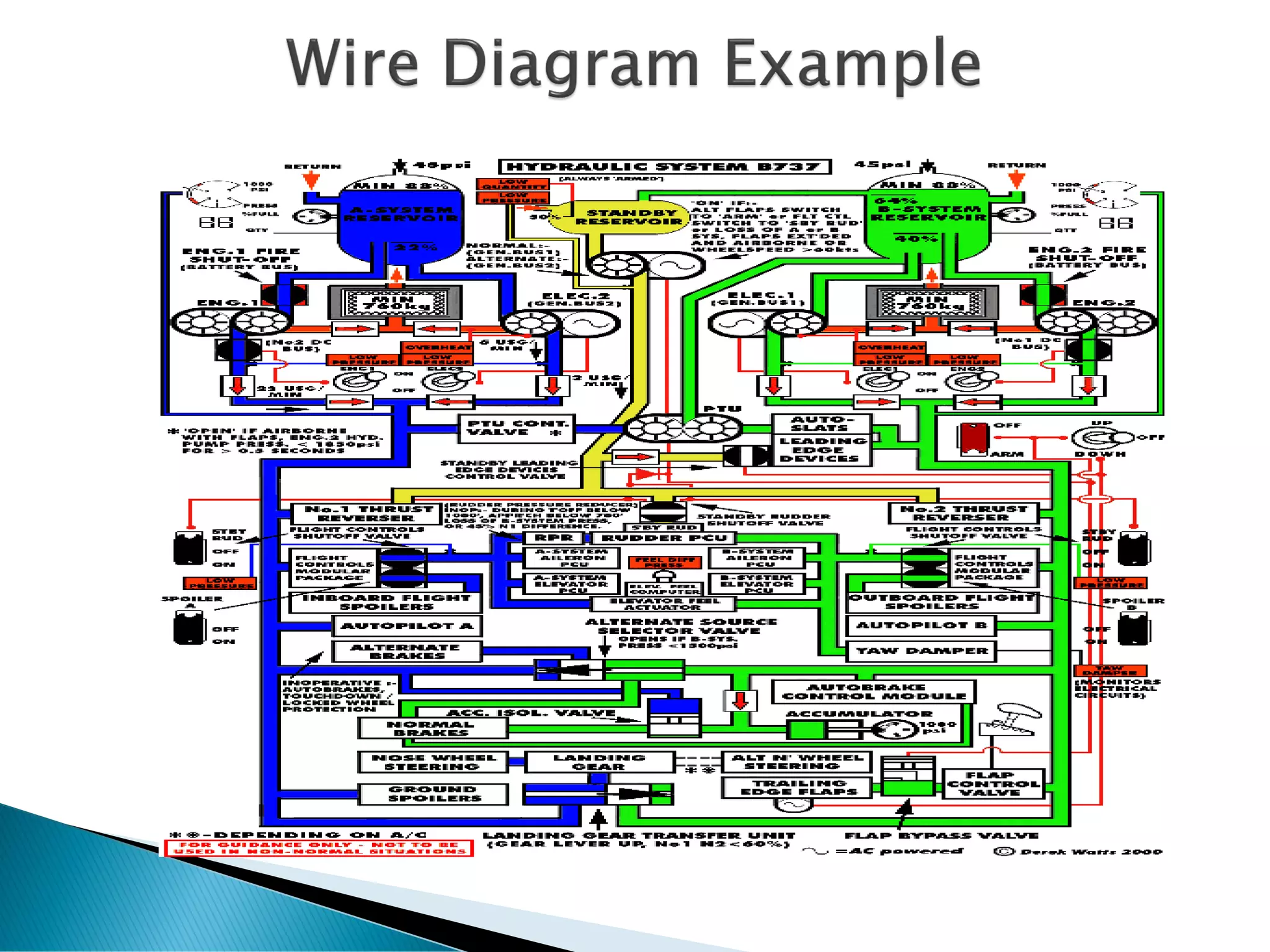
 It is Essential for troubleshooting in wiring
systems.
 It contains complete run of wiring, including cable
bundle numbers and routing, plug and connector
numbers and locations and other structural
elements through which the wiring is routed.
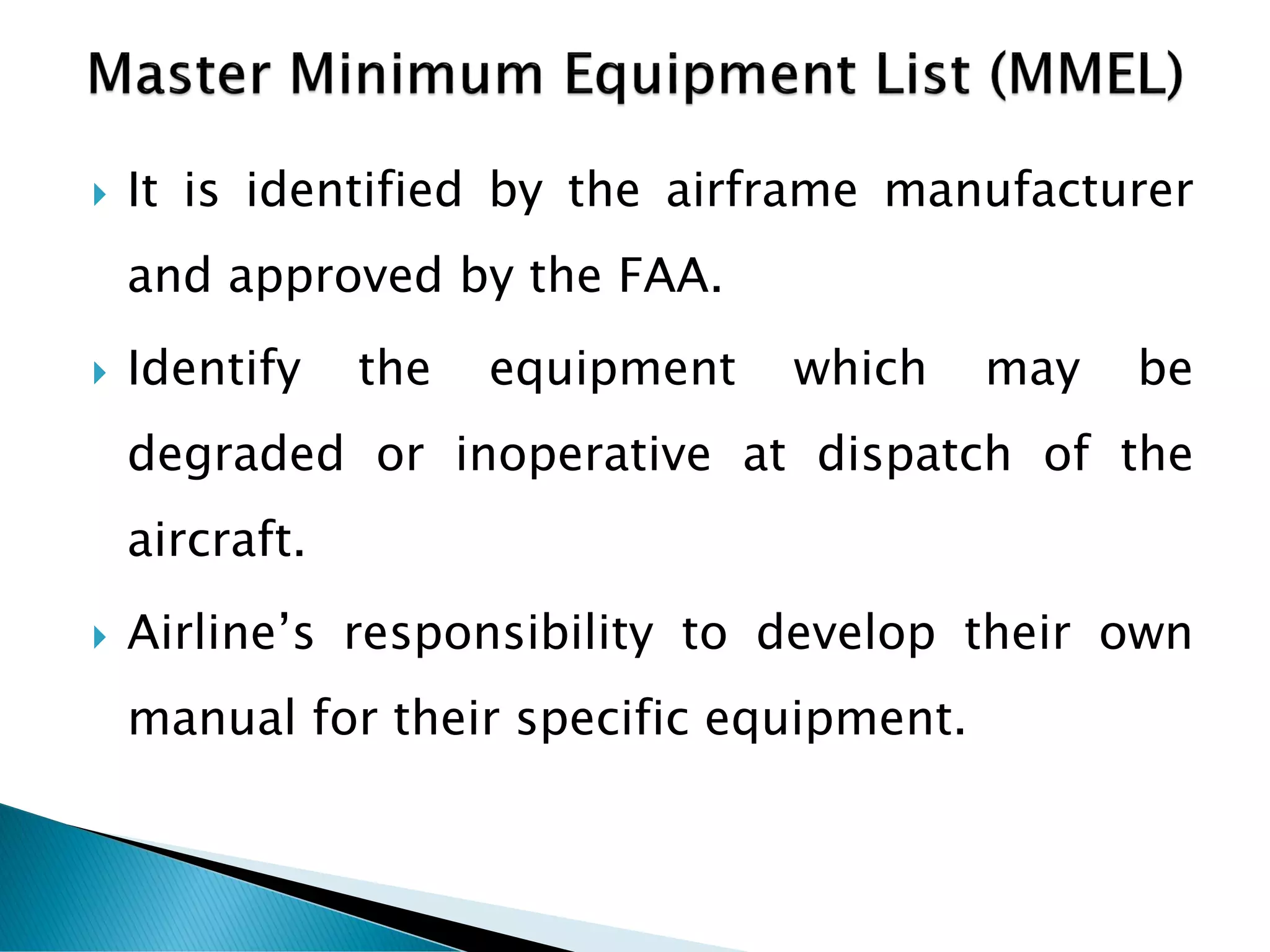
 It is identified by the airframe manufacturer
and approved by the FAA.
 Identify the equipment which may be
degraded or inoperative at dispatch of the
aircraft.
 Airline’s responsibility to develop their own
manual for their specific equipment.
 It is doing maintenance works for the equipments
in MMEL before the dispatch of the product.
 It will check
• Pull/placard circuit breakers
• Disconnect power
• Tie up loose cables for removed
equipment
 It involves the configuration of the aircraft.
 It identifies any external parts of an aircraft type which may
be missing at the commencement of a flight.
 Discovered during line checks/pre-post flights
• Panels
• Gear doors
• Flap hinge fairings
• Cargo doors
 Storage and Recovery Document (SRD)
 Structure Repair Manual (SRM)
 Maintenance Planning Data Document (MPD)
 Certification Maintenance Requirements (CMRs)
 Task Cards (TC)
 Service Bulletins
 Service Letter
 Maintenance Tip
 Federal Aviation Regulations (FAR)
 Advisory Circulars(AC)
 Airworthiness Directive (AD)
 Notice of Proposed Rule Making (NPRM)
 These are related to all aspects of aviation
including
* commercial ,private aircrafts
* airports
* Navigational Aid
* ATC
* Pilot training
• Issued by FAA
• Designed to help airline operators meet
the FAR requirements
• suggestions how to comply
• They define acceptable means, but not the
only means, of showing compliance with
airworthiness regulations.
 The airworthiness directives are very important
regulations issued by FAA to correct an unsafe
condition that exists in an
* aircraft
* aircraft engine
* Propeller
* other aircraft appliance
Typically an ADs will include-
➢ A description of the unsafe condition
➢ The corrective action required
➢ Date of compliance
➢ Info on alternative methods of compliance.
 This is issued by FAA whenever the FAA
intends to change a FAR.
 It is issued in advance of the change to give
aviation industry plenty of time to study and
comment on the proposed change.
 Operations Specification (Ops Spec)
 Technical Policies and Procedures Manual
(TPPM)
 Inspection Manual (IM)
 Quality Assurance Manual (QA)
 Written by the airlines in accordance with
strict FAA requirements.
 It details the airline’s maintenance, inspection
and operations programs.
 This documents can be prepared only by the
operators or airliners.
 Primary document for M&E operations manual
 Defines exactly how all M&E functions and
activities will be carried out
 Personnel in M&E must be trained on the
TPPM
• It Identifies
• Key personnel
• Maintenance facilities
• Describe in detail activities involving
• Maintenance
• Inspection
• Testing
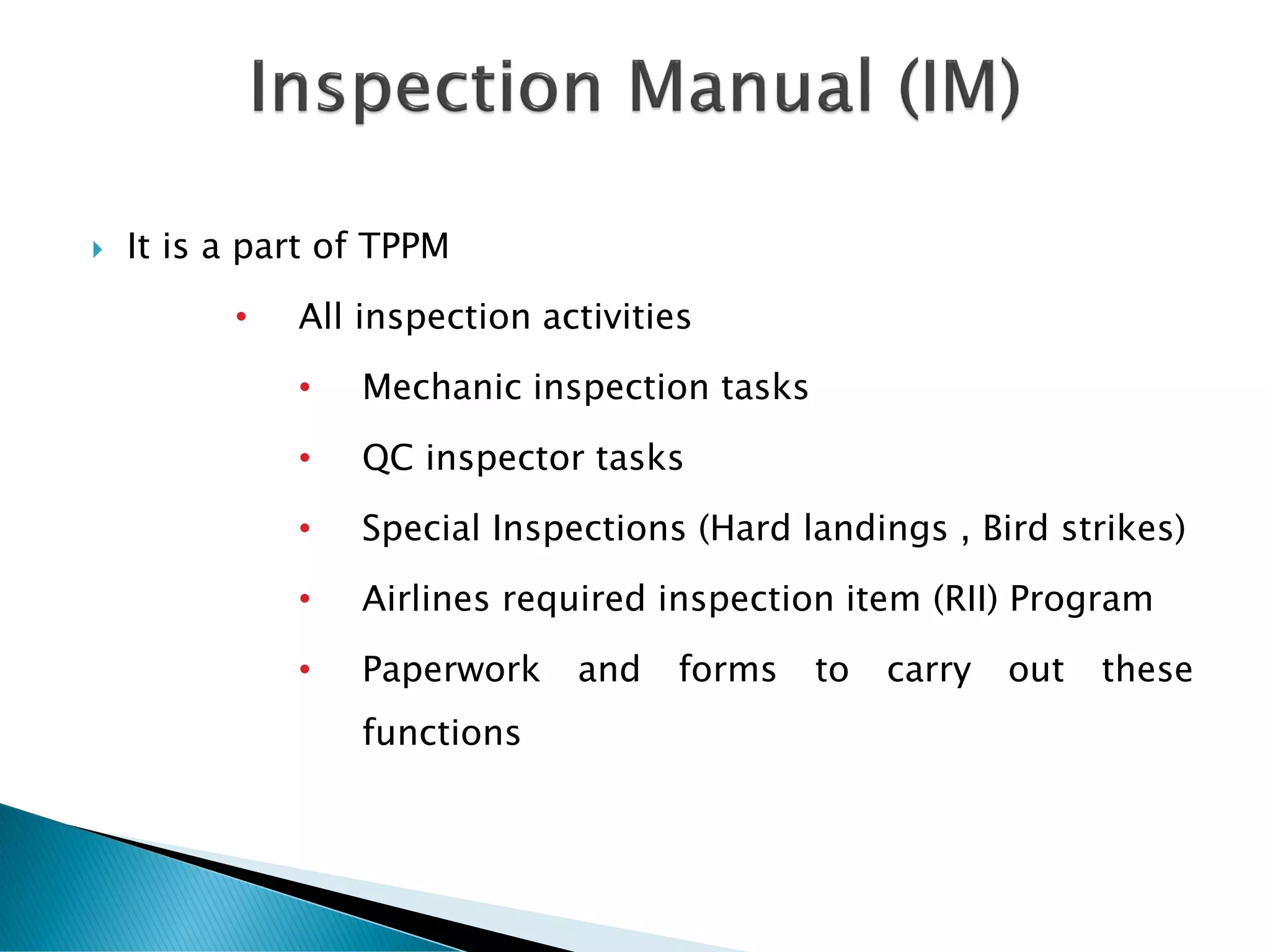
 It is a part of TPPM
• All inspection activities
• Mechanic inspection tasks
• QC inspector tasks
• Special Inspections (Hard landings , Bird strikes)
• Airlines required inspection item (RII) Program
• Paperwork and forms to carry out these
functions
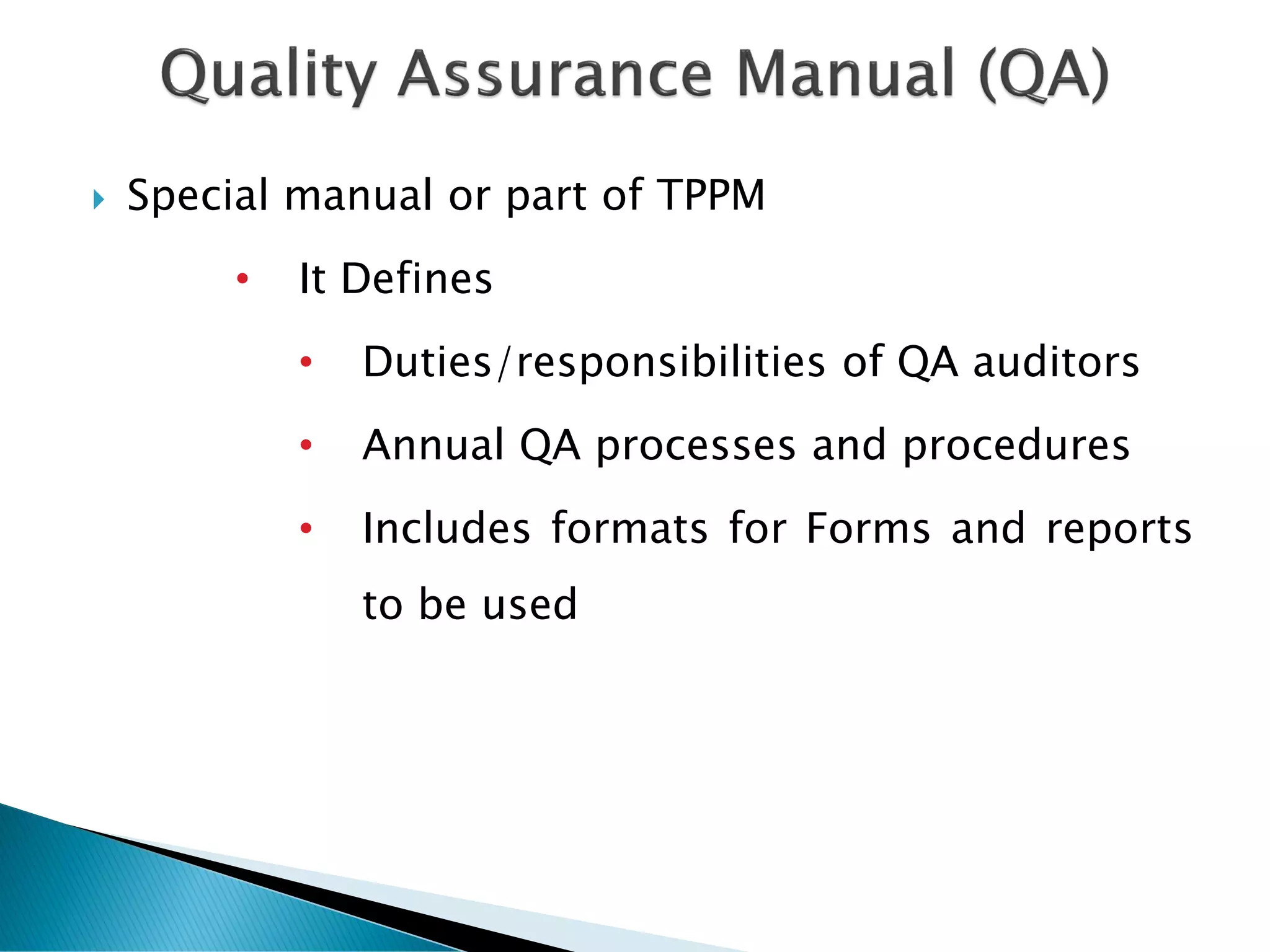
 Special manual or part of TPPM
• It Defines
• Duties/responsibilities of QA auditors
• Annual QA processes and procedures
• Includes formats for Forms and reports
to be used
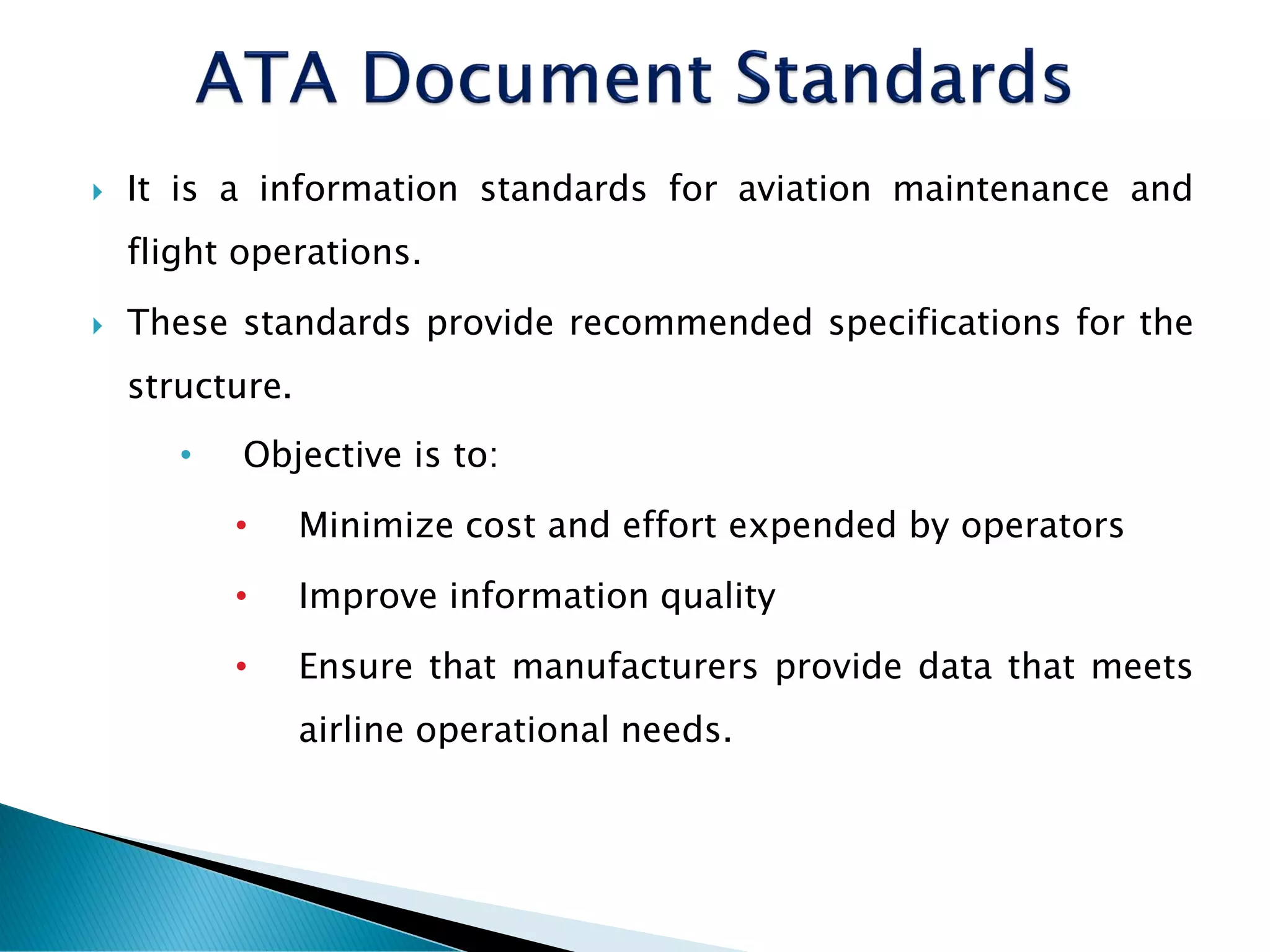
 It is a information standards for aviation maintenance and
flight operations.
 These standards provide recommended specifications for the
structure.
• Objective is to:
• Minimize cost and effort expended by operators
• Improve information quality
• Ensure that manufacturers provide data that meets
airline operational needs.
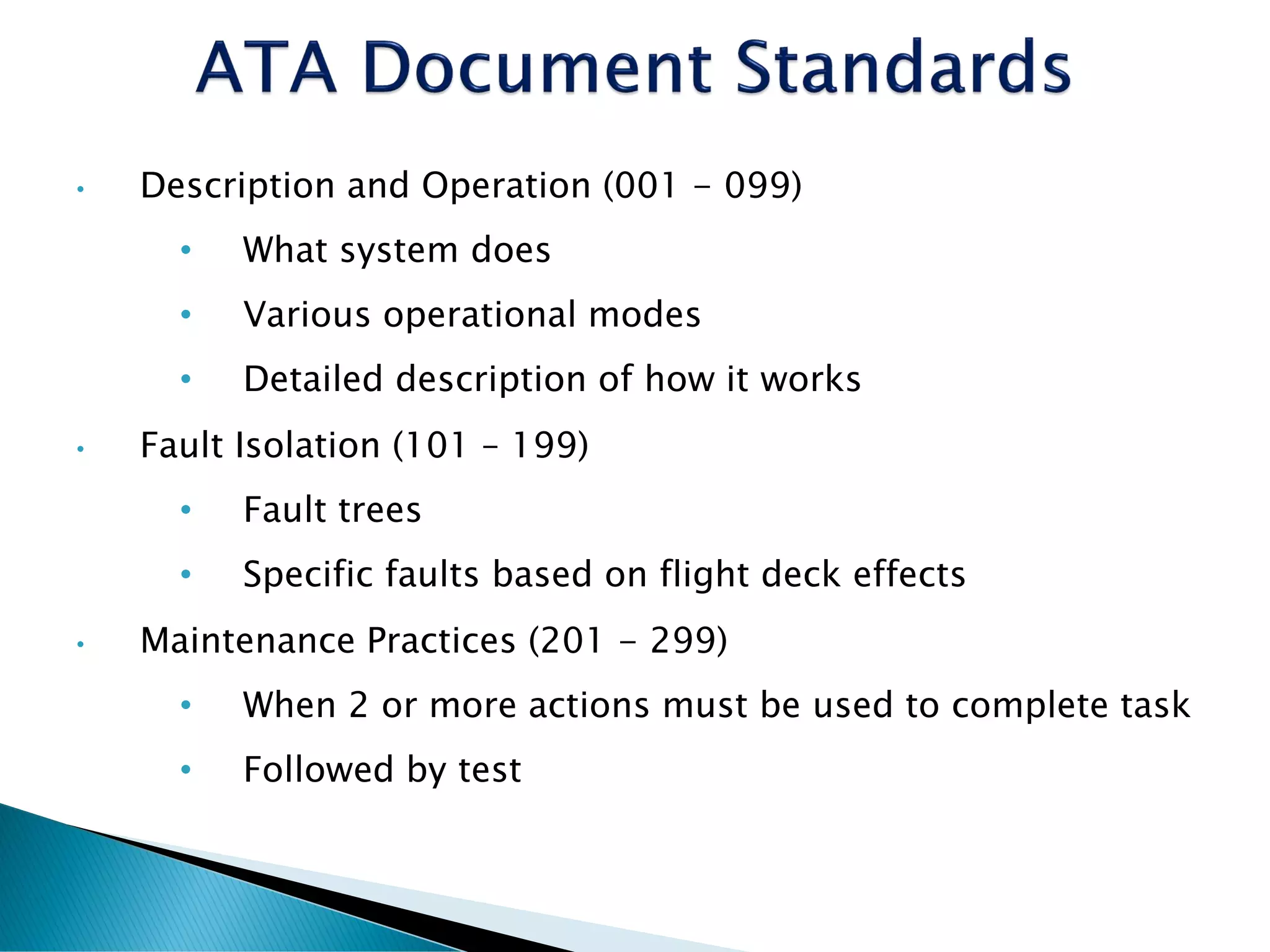
• Description and Operation (001 - 099)
• What system does
• Various operational modes
• Detailed description of how it works
• Fault Isolation (101 – 199)
• Fault trees
• Specific faults based on flight deck effects
• Maintenance Practices (201 - 299)
• When 2 or more actions must be used to complete task
• Followed by test
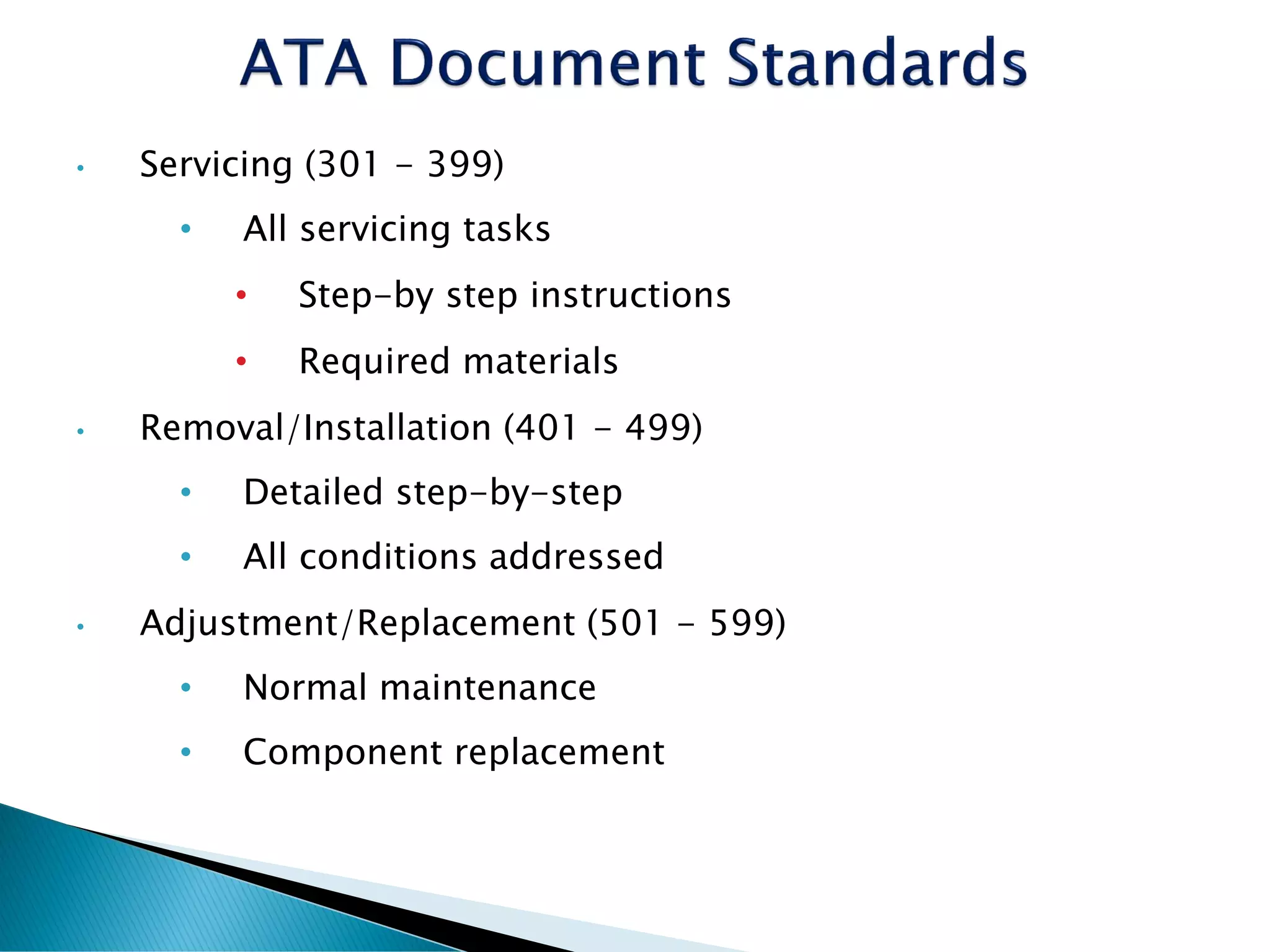
• Servicing (301 - 399)
• All servicing tasks
• Step-by step instructions
• Required materials
• Removal/Installation (401 - 499)
• Detailed step-by-step
• All conditions addressed
• Adjustment/Replacement (501 - 599)
• Normal maintenance
• Component replacement
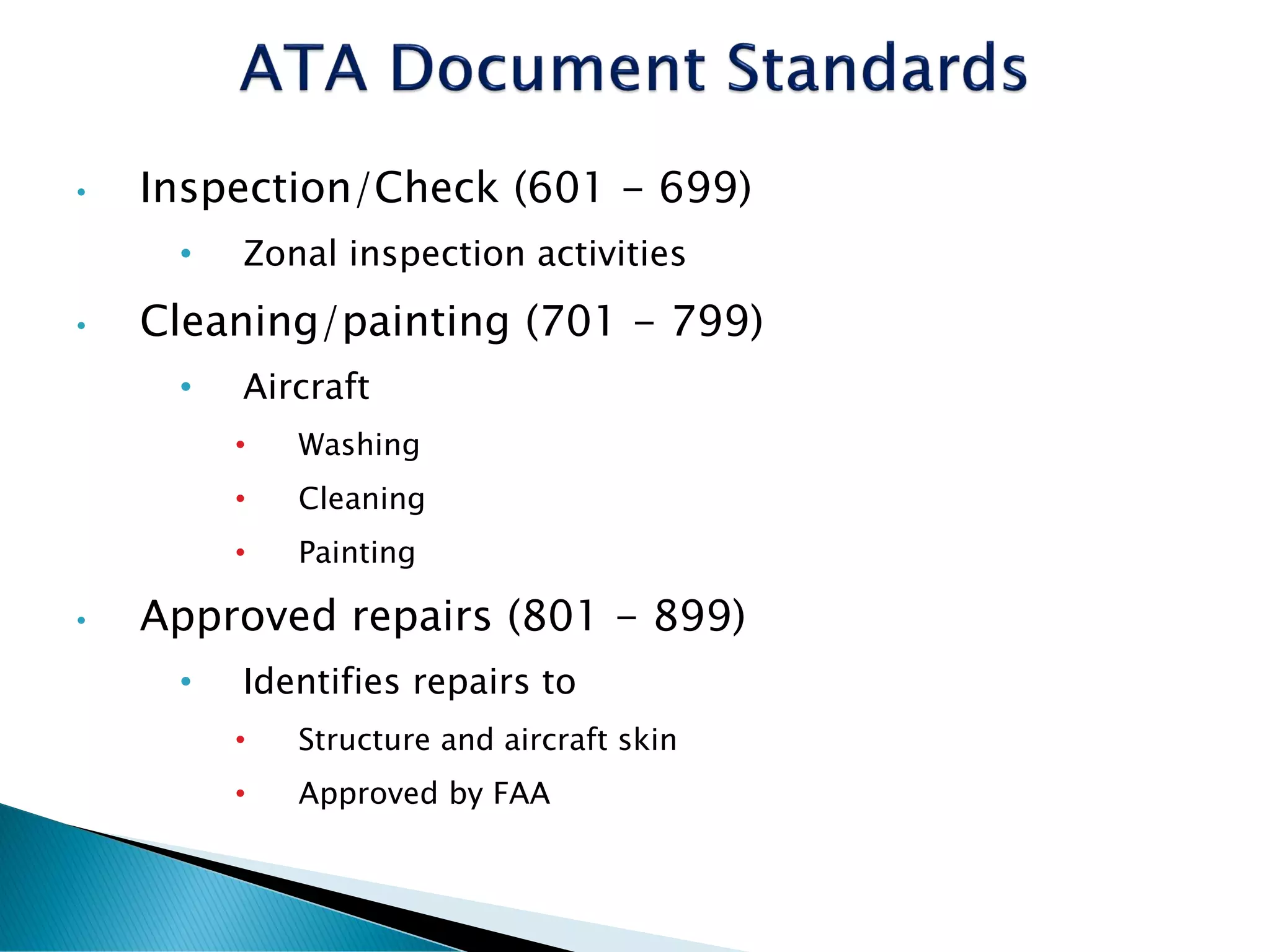
• Inspection/Check (601 - 699)
• Zonal inspection activities
• Cleaning/painting (701 - 799)
• Aircraft
• Washing
• Cleaning
• Painting
• Approved repairs (801 - 899)
• Identifies repairs to
• Structure and aircraft skin
• Approved by FAA
THANK YOU

types of documents.pdf

  • 1.
    Subject Name: MAINTENANCE,OVERHAUL & REPAIR OF AIRCRAFT SYSTEMS Subject Code: 15AE664 MODULE 2: DOCUMENTATION FOR MAINTENANCE
  • 2.
    ➢ Manufacturers documentation ➢Airplane maintenance manual ➢ Fault Isolation Manual (FIM) ➢ Illustrated parts catalogue ➢ Wiring diagram manual ➢ Master minimum equipment ➢ FAR, Advisory circulars ➢ Airworthiness directions ATA document standards ➢ Technical policies and procedure manuals(TPPM)
  • 3.
     Types ofDocumentation It has been said that the paper documentation required for the maintenance of a modern jet liner would weigh about the same as the airplane itself ! Whether or not this is true, there is certainly a considerable amount of documentation. This section will look at three main types of documentation – 1. Manufacturer’s Documentation 2. Regulatory Documentation 3. Airline Generated Documentation
  • 4.
     Here, Themanufacturer provides necessary information on safe and proper use of equipment for the better service life .  Mostly, Operation instructions, installation and assembly instructions, maintenance and repair instructions, illustrated parts catalogue may contain in the document.
  • 5.
     Formal Documentwill have all details about aircraft maintenance.  This includes checks of lubricating system, functional checks and servicing of airplane.  Usually it excludes structural modifications and fiber glass paneling.  Technician signs off logbook/non-routine work card (NRWC)
  • 6.
     You cando component maintenance under the aircraft category in two cases. i) when the AMM tells you to do so by pointing to a relevant CMM ii) when the maintenance of the component does not require the unit itself to be removed from the airframe except for the purpose of improving technical access.
  • 7.
     It isthe document which details the way in which aircraft maintenance tasks on the specified component shall be accomplished.  The maintenance tasks contained in these manuals do include procedures for restoring a structural component to a serviceable state and reworking and refinishing procedures are often provided in CMM.
  • 8.
    • Set offault isolation trees • Block diagram • Troubleshooting • Isolate fault • Identify/pinpoint problems
  • 10.
     It willhave Parts list/location of all parts.  It gives the details of • Assemblies • Subassemblies • Alternate part numbers • Part inter-changeability • Modifications • Pre and post modification  It is used only as supporting reference with the Aircraft maintenance manual
  • 11.
     This diagramfocuses to show how the system operates.  It is suitable for learning and teaching and for troubleshooting.  Schematic Diagram of electrical and hydraulic systems of aircraft contains the detailed information and identifies wiring harnesses, connectors and interfacing equipment.
  • 12.
     It isEssential for troubleshooting in wiring systems.  It contains complete run of wiring, including cable bundle numbers and routing, plug and connector numbers and locations and other structural elements through which the wiring is routed.
  • 15.
     It isidentified by the airframe manufacturer and approved by the FAA.  Identify the equipment which may be degraded or inoperative at dispatch of the aircraft.  Airline’s responsibility to develop their own manual for their specific equipment.
  • 16.
     It isdoing maintenance works for the equipments in MMEL before the dispatch of the product.  It will check • Pull/placard circuit breakers • Disconnect power • Tie up loose cables for removed equipment
  • 17.
     It involvesthe configuration of the aircraft.  It identifies any external parts of an aircraft type which may be missing at the commencement of a flight.  Discovered during line checks/pre-post flights • Panels • Gear doors • Flap hinge fairings • Cargo doors
  • 18.
     Storage andRecovery Document (SRD)  Structure Repair Manual (SRM)  Maintenance Planning Data Document (MPD)  Certification Maintenance Requirements (CMRs)  Task Cards (TC)  Service Bulletins  Service Letter  Maintenance Tip
  • 19.
     Federal AviationRegulations (FAR)  Advisory Circulars(AC)  Airworthiness Directive (AD)  Notice of Proposed Rule Making (NPRM)
  • 20.
     These arerelated to all aspects of aviation including * commercial ,private aircrafts * airports * Navigational Aid * ATC * Pilot training
  • 21.
    • Issued byFAA • Designed to help airline operators meet the FAR requirements • suggestions how to comply • They define acceptable means, but not the only means, of showing compliance with airworthiness regulations.
  • 22.
     The airworthinessdirectives are very important regulations issued by FAA to correct an unsafe condition that exists in an * aircraft * aircraft engine * Propeller * other aircraft appliance
  • 23.
    Typically an ADswill include- ➢ A description of the unsafe condition ➢ The corrective action required ➢ Date of compliance ➢ Info on alternative methods of compliance.
  • 24.
     This isissued by FAA whenever the FAA intends to change a FAR.  It is issued in advance of the change to give aviation industry plenty of time to study and comment on the proposed change.
  • 25.
     Operations Specification(Ops Spec)  Technical Policies and Procedures Manual (TPPM)  Inspection Manual (IM)  Quality Assurance Manual (QA)
  • 26.
     Written bythe airlines in accordance with strict FAA requirements.  It details the airline’s maintenance, inspection and operations programs.  This documents can be prepared only by the operators or airliners.
  • 27.
     Primary documentfor M&E operations manual  Defines exactly how all M&E functions and activities will be carried out  Personnel in M&E must be trained on the TPPM
  • 28.
    • It Identifies •Key personnel • Maintenance facilities • Describe in detail activities involving • Maintenance • Inspection • Testing
  • 29.
     It isa part of TPPM • All inspection activities • Mechanic inspection tasks • QC inspector tasks • Special Inspections (Hard landings , Bird strikes) • Airlines required inspection item (RII) Program • Paperwork and forms to carry out these functions
  • 30.
     Special manualor part of TPPM • It Defines • Duties/responsibilities of QA auditors • Annual QA processes and procedures • Includes formats for Forms and reports to be used
  • 31.
     It isa information standards for aviation maintenance and flight operations.  These standards provide recommended specifications for the structure. • Objective is to: • Minimize cost and effort expended by operators • Improve information quality • Ensure that manufacturers provide data that meets airline operational needs.
  • 32.
    • Description andOperation (001 - 099) • What system does • Various operational modes • Detailed description of how it works • Fault Isolation (101 – 199) • Fault trees • Specific faults based on flight deck effects • Maintenance Practices (201 - 299) • When 2 or more actions must be used to complete task • Followed by test
  • 33.
    • Servicing (301- 399) • All servicing tasks • Step-by step instructions • Required materials • Removal/Installation (401 - 499) • Detailed step-by-step • All conditions addressed • Adjustment/Replacement (501 - 599) • Normal maintenance • Component replacement
  • 34.
    • Inspection/Check (601- 699) • Zonal inspection activities • Cleaning/painting (701 - 799) • Aircraft • Washing • Cleaning • Painting • Approved repairs (801 - 899) • Identifies repairs to • Structure and aircraft skin • Approved by FAA
  • 35.