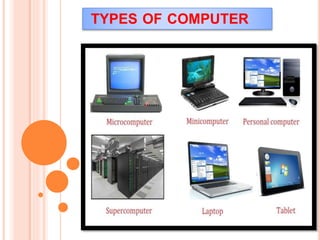
TYPES OF COMPUTER
TYPES OF COMPUTER
WITH THEIR CATEGORY
 By Size and Capacity
 By Data Handling
 By Based on Number of Microprocessors
 By Based on Number of Users
If anybody do not know that how many types of computer, so now
we are discussing about all types of computers.
There are four types of computer with their category:
BASED SIZE AND CAPACITY
 Super Computers
 Mainframe Computers
 Mini Computers
 Micro Computers
 Embedded Computers
Super computers are need more computing power, so these
types of computers use in the large companies.
Main motive of these types of computers for processing large
data with the help of multiple processor.
These types of computers are small to super and mainframe
computers, and in which used transistors and core memory.
This computer likes as personal computer, in which use other
technology such as CPU, input/output devices and storage
device etc.
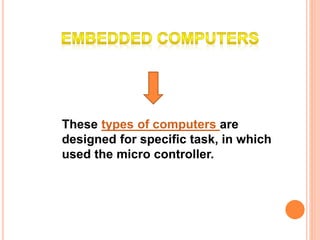
These types of computers are
designed for specific task, in which
used the micro controller.
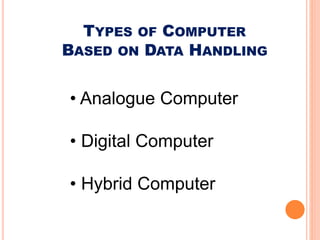
TYPES OF COMPUTER
BASED ON DATA HANDLING
• Analogue Computer
• Digital Computer
• Hybrid Computer
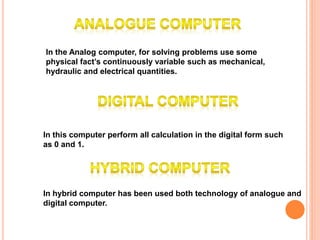
In the Analog computer, for solving problems use some
physical fact’s continuously variable such as mechanical,
hydraulic and electrical quantities.
In this computer perform all calculation in the digital form such
as 0 and 1.
In hybrid computer has been used both technology of analogue and
digital computer.
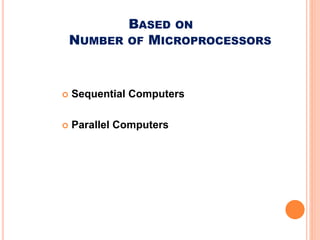
BASED ON
NUMBER OF MICROPROCESSORS
 Sequential Computers
 Parallel Computers
This computers are capable only to execute all instructions one
by one, so its speed worst.
Parallel computer allow to divide all work to each processor
equally, so its speed good compare to sequential computers.
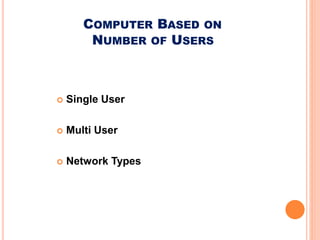
COMPUTER BASED ON
NUMBER OF USERS
 Single User
 Multi User
 Network Types
In which, perform task single user at a time.
In which, Multiple user can perform task at a time.
This is special functionality, in which all terminal are
connected by network.
Read More Visit at:
www.digitalthinkerhelp.com

Types of Computer - Digital Thinker Help

  • 1.
  • 2.
    TYPES OF COMPUTER WITHTHEIR CATEGORY  By Size and Capacity  By Data Handling  By Based on Number of Microprocessors  By Based on Number of Users If anybody do not know that how many types of computer, so now we are discussing about all types of computers. There are four types of computer with their category:
  • 3.
    BASED SIZE ANDCAPACITY  Super Computers  Mainframe Computers  Mini Computers  Micro Computers  Embedded Computers
  • 4.
    Super computers areneed more computing power, so these types of computers use in the large companies. Main motive of these types of computers for processing large data with the help of multiple processor.
  • 5.
    These types ofcomputers are small to super and mainframe computers, and in which used transistors and core memory. This computer likes as personal computer, in which use other technology such as CPU, input/output devices and storage device etc.
  • 6.
    These types ofcomputers are designed for specific task, in which used the micro controller.
  • 7.
    TYPES OF COMPUTER BASEDON DATA HANDLING • Analogue Computer • Digital Computer • Hybrid Computer
  • 8.
    In the Analogcomputer, for solving problems use some physical fact’s continuously variable such as mechanical, hydraulic and electrical quantities. In this computer perform all calculation in the digital form such as 0 and 1. In hybrid computer has been used both technology of analogue and digital computer.
  • 9.
    BASED ON NUMBER OFMICROPROCESSORS  Sequential Computers  Parallel Computers
  • 10.
    This computers arecapable only to execute all instructions one by one, so its speed worst. Parallel computer allow to divide all work to each processor equally, so its speed good compare to sequential computers.
  • 11.
    COMPUTER BASED ON NUMBEROF USERS  Single User  Multi User  Network Types
  • 12.
    In which, performtask single user at a time. In which, Multiple user can perform task at a time. This is special functionality, in which all terminal are connected by network.
  • 13.
    Read More Visitat: www.digitalthinkerhelp.com