Diabetes Mellitus
DR AHSAN KAZMI
PROFESSOR
PATHOLOGY DEPARTMENT
SAHARA MEDICAL COLLEGE, NAROWAL.
09/19/2024 08:22 AM 4
Diabetes Mellitus is not a single disease entity
but rather
 a group of metabolic disorders
 sharing the common underlying feature of
Hyperglycemia
which results from defects in
Insulin secretion
Insulin action or
most commonly both
Diabetes Mellitus
09/19/2024 08:22 AM 5
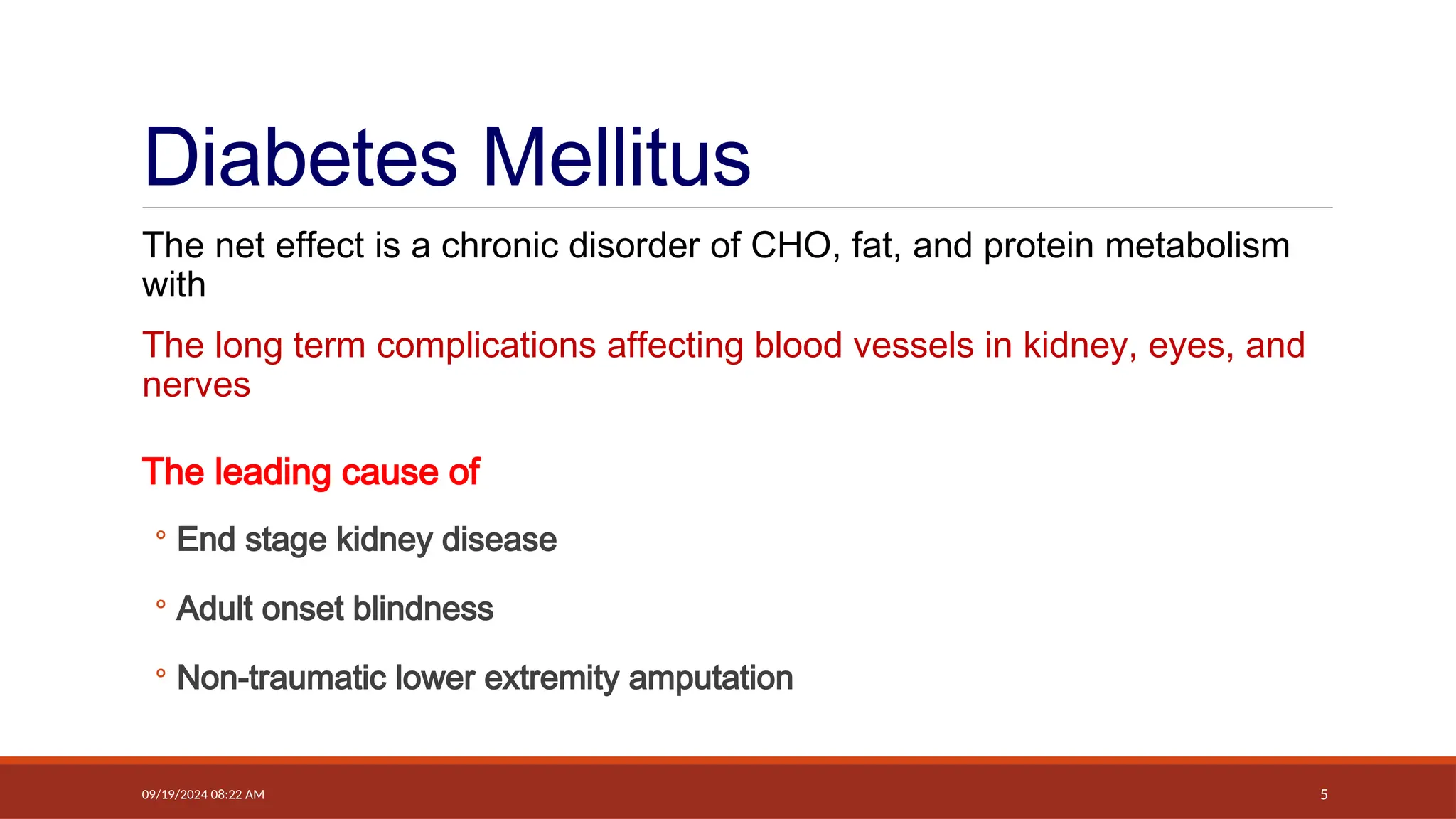
Diabetes Mellitus
The net effect is a chronic disorder of CHO, fat, and protein metabolism
with
The long term complications affecting blood vessels in kidney, eyes, and
nerves
The leading cause of
◦ End stage kidney disease
◦ Adult onset blindness
◦ Non-traumatic lower extremity amputation
09/19/2024 08:22 AM 7
Islets of Langerhans
09/19/2024 08:22 AM 8
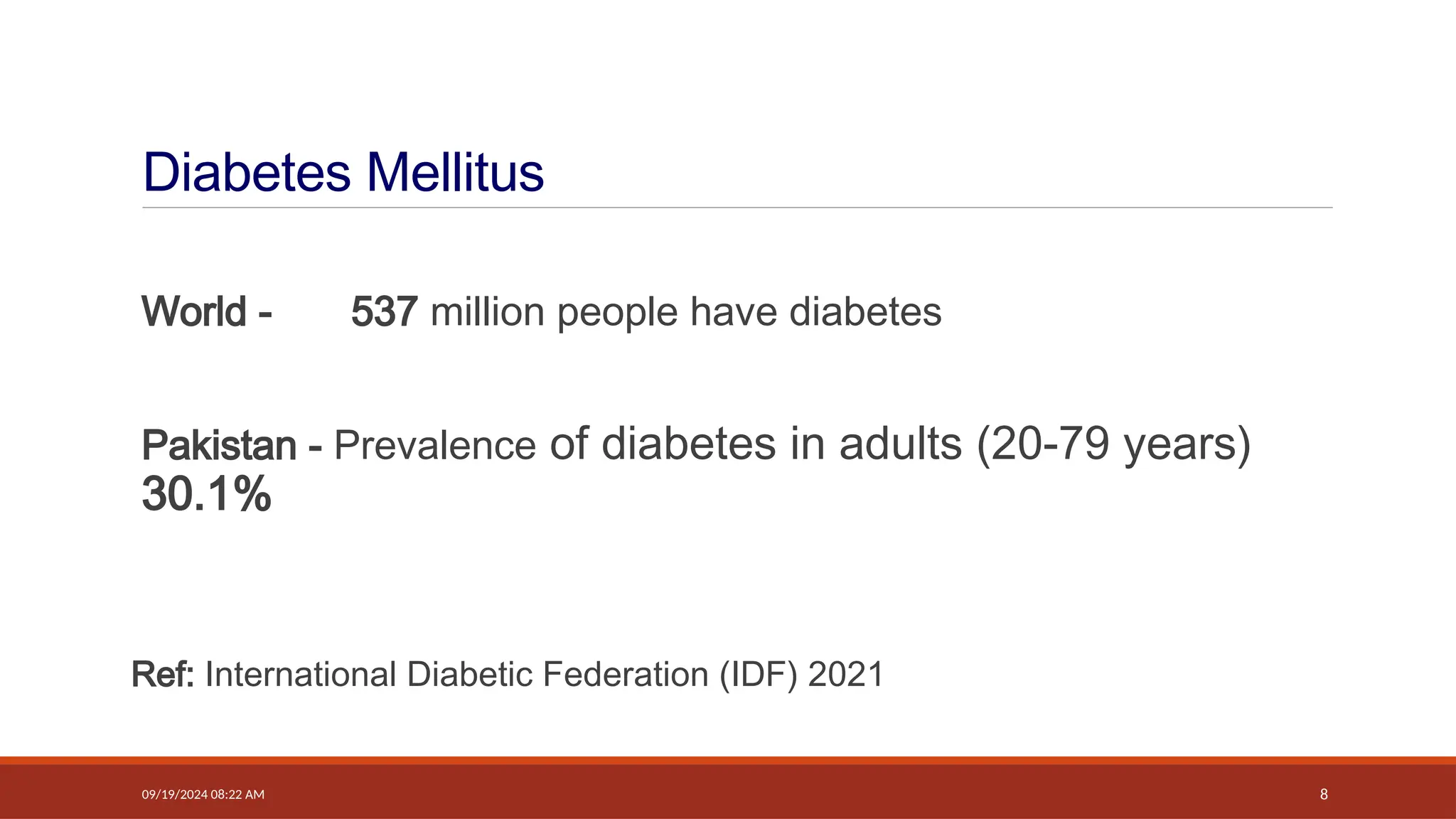
Diabetes Mellitus
World - 537 million people have diabetes
Pakistan - Prevalence of diabetes in adults (20-79 years)
30.1%
Ref: International Diabetic Federation (IDF) 2021
2021 2045
Rank
---------------------
Country or
territory
---------------------
Comparative
diabetes
prevalencei
(%)
---------------------
Rank
--------
Country or
territory
---------------
Comparative
diabetes
prevalencei
(%)
---------------------
1 Pakistan 30.8 1 Pakistan 33.6
2 French Polynesia 25.2 2 Kuwait 29.8
3 Kuwait 24.9 3 French Polynesia 28.2
4 New Caledoniaii
23.4 4 Mauritius 26.6
Rank Country or territory Number of people with
undiagnosed diabetes, (millions)
Proportion undiagnosed (%)
1 China 72.8 51.7
2 India 39.4 53.1
3 Indonesia 14.3 73.7
4 Pakistan 8.9 26.9
5 Egypt 6.8 62.0
6 Mexico 6.7 47.5
7 Bangladesh 5.7 43.5
8 Brazil 5.0 31.9
9 Japan 5.0 45.5
10 United States of America 4.0 12.5
Top 10 countries or territories for the number of adults (20–79 years) with
undiagnosed diabetes in 2021
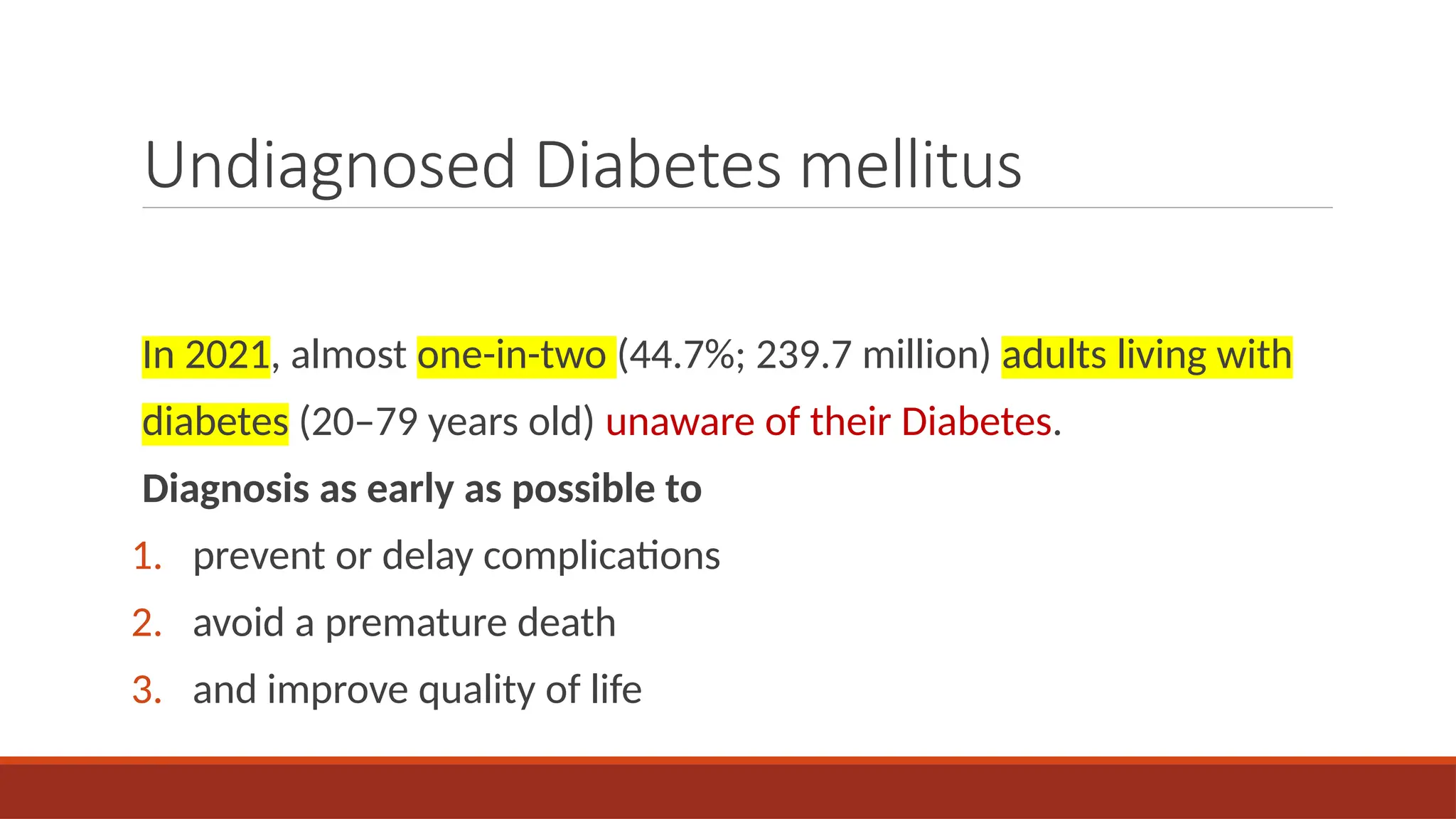
Undiagnosed Diabetes mellitus
In 2021, almost one-in-two (44.7%; 239.7 million) adults living with
diabetes (20–79 years old) unaware of their Diabetes.
Diagnosis as early as possible to
1. prevent or delay complications
2. avoid a premature death
3. and improve quality of life
A serious concern people with diabetes diagnosed later,
A. use more healthcare services
B. greater likelihood of diabetes complications,
C. Added burden on healthcare systems already under pressure
Undiagnosed Diabetes mellitus
09/19/2024 08:22 AM 13
09/19/2024 08:22 AM 14
Diagnosis of Diabetes Mellitus
• Blood glucose levels maintained in a very
narrow range, usually 70 to 120 mg/dl
• The diagnosis of Diabetes is established by
elevation of blood glucose by any one of
three criteria suggested by WHO:
09/19/2024 08:22 AM 15
Diagnosis Criteria of DM by WHO
1. A random blood glucose concentration of 200 mg/dl or
higher, with classical signs and symptoms
2. A fasting glucose concentration of 126 mg/dl, or higher
on more than one occasion, or
3. An abnormal oral glucose tolerance test (OGTT), in which
the glucose concentration is 200 mg/dl, or higher 2 hours
after a standard carbohydrate load (75 gm of glucose)
Normal Prediabetes Diabetes
mellitus
Fasting 60-95 mg/dl 96-125 mg/dl 126 mg/dl or above
Random 60-140 140-199 200 or above
Reference Ranges Of Serum Glucose
09/19/2024 08:22 AM 21
Enlist Laboratory Investigations in
Diabetes Mellitus.
1. Plasma Glucose
2. Urinary Glucose
3. Oral Glucose
Tolerance Test
(OGTT)
4. Glycosylated
Haemoglobin
5. Urinary
Microalbumin
6. Ketone bodies
7. Serum Electrolytes
8. Fructosamine
09/19/2024 08:22 AM 24
Etiologic Classification of Diabetes Mellitus
1.Type 1 Diabetes
β cell destruction, leads to absolute insulin deficiency
2. Type -2 Diabetes
Insulin resistance with relative insulin deficiency
3. Genetic Defects of β cell Function
Maturity Onset Diabetes of the young( MODY).
- It is rare variant of type -2 diabetes.
- Autosomal dominant
- Five variants (MODY - 1 to MODY - 5) have been
described
09/19/2024 08:22 AM 25
Etiologic Classification of Diabetes Mellitus …
Contd
3. Genetic Defects in Insulin Processing or
Insulin Action
- Defects in proinsulin conversion
- Insulin gene mutations
- Insulin receptor mutations
4. Exocrine Pancreatic Defects
-Chronic Pancreatitis
- Pancreatectomy
- Neoplasia
- Cystic fibrosis
- Hemochromatosis
- Fibrocalculus Pancreatopathy
09/19/2024 08:22 AM 26
5.Endocrinopathies
- Growth hormone excess (Acromegaly)
- Cushing Syndrome
- Hyperthyroidism
- Pheochromocytoma
- Glucagonoma
6. Infections
- Cytomegalovirus
- Coxsakievirus B
Etiologic Classification of Diabetes Mellitus
09/19/2024 08:22 AM 27
Etiologic Classification of Diabetes Mellitus …
Contd
7. Drugs
- Glucocorticoids
- Thyroid Hormones
- Beta – adrenergic agonists
8. Genetic Syndromes Associated with
Diabetes
- Down Syndrome
- Kleinfelter Syndrome
- Tuner Syndrome
09/19/2024 08:22 AM 30
Glucose Homeostasis
Three processes
1. Hepatic glucose production
2. Glucose uptake by peripheral tissues e.g skeletal muscle
3. Actions of insulin and counter regulatory hormones e.g glucagon
09/19/2024 08:22 AM 35
Key diagram
09/19/2024 08:22 AM 36
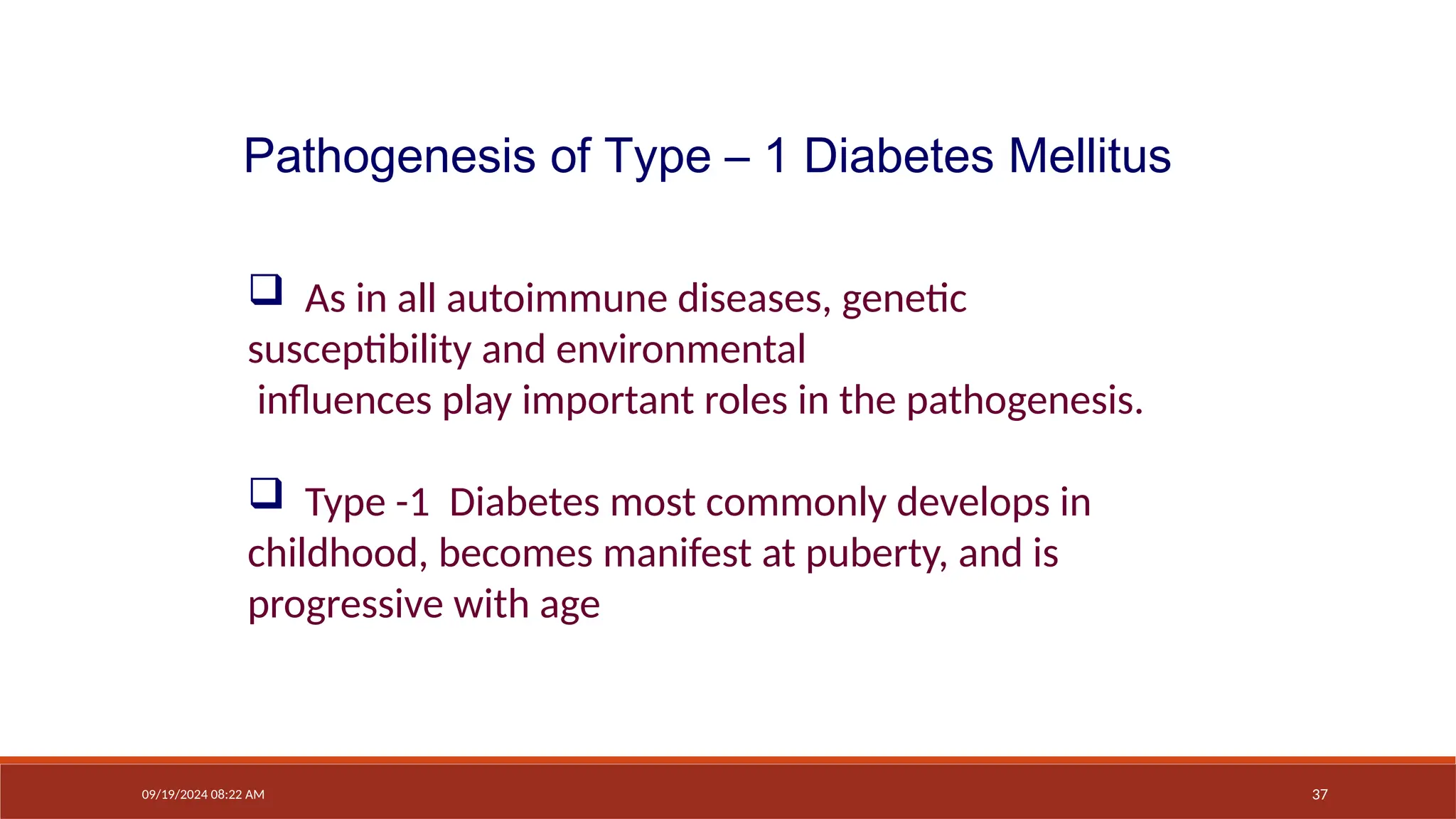
Pathogenesis of Type – 1 Diabetes Mellitus
 Type -1 diabetes is an Autoimmune disease
 Islet destruction is caused primarily by T – lymphocytes
reactive against as yet poorly defined beta cell antigens ,
resulting in a reduction of beta cell mass.
 Recent studies have implicated immunologic epitopes
on insulin hormone itself as a target antigen for
autoimmune injury
 Remains to be convincingly established
09/19/2024 08:22 AM 37
 As in all autoimmune diseases, genetic
susceptibility and environmental
influences play important roles in the pathogenesis.
 Type -1 Diabetes most commonly develops in
childhood, becomes manifest at puberty, and is
progressive with age
Pathogenesis of Type – 1 Diabetes Mellitus
09/19/2024 08:22 AM 38
Most individuals with type -1 diabetes depend on
exogenous insulin supplementation for survival,
Without insulin, they develop serious metabolic
complications such as ketoacidosis and coma
Pathogenesis of Type – 1 Diabetes Mellitus
09/19/2024 08:22 AM 39
Although the clinical onset of type -1 diabetes is abrupt, this
disease in fact results from a chronic autoimmune attack on
beta cells that usually starts many years before the disease
becomes evident.
The classic manifestations of the disease (Hyperglycemia
and Ketosis) appear late in the disease, after more than 90% of
the beta cells have been destroyed
Pathogenesis of Type – 1 Diabetes Mellitus
09/19/2024 08:22 AM 44
Pathogenesis of Type – 2 Diabetes
 While much has been learned in recent years, the
pathogenesis of type -2 diabetes remains enigmatic.
 Environmental influences
Sedentary life style
Dietary habits
Clearly have a role
09/19/2024 08:22 AM 45
Pathogenesis of Type – 2 Diabetes
Nevertheless, the genetic factors are even more important than in type -1 diabetes, with linkage
demonstrable to multiple “diabetogenic” genes.
Unlike type -1 diabetes, however, the disease is not linked to genes involved in immune
tolerance and regulation, and there is no evidence to suggest an autoimmune basis to type- 2
diabetes
09/19/2024 08:22 AM 46
Pathogenesis of Type – 2 Diabetes … Contd
The two metabolic defects that characterize type -2 diabetes are:
(1) Insulin Resistance: A decreased ability of peripheral tissues to
to respond to insulin (insulin resistance)
(2) Beta cells Dysfunction: manifested as inadequate insulin
secretion in the face of insulin resistance and hyperglycemia
In most cases, insulin resistance is the primary event and is
followed by increasing degrees of beta cell dysfunction
09/19/2024 08:22 AM 47
09/19/2024 08:22 AM 48
Pathogenesis of
type -2 Diabetes
Genetic predisposition and
environmental influences
converge to cause insulin
resistance.
Compensatory β – cell
hyperplasia can maintain
normoglycemia, but
eventually β cells secretary
dysfunction sets in , leading to
impaired glucose tolerance
and eventually frank diabetes.
09/19/2024 08:22 AM 52
Role of Insulin resistance in Type -2 Diabetes .. Cont’d
(ii) Role of free fatty Acids (FFAs):
There is an inverse correlation between fasting plasma FFAs and insulin
sensitivity
(iii) Role of Triglycerides:
Intracellular triglycerides and products of fatty acid metabolism are potent
inhibitors of insulin signaling
09/19/2024 08:22 AM 53
(iv) Role of Adipocytokines in Insulin Resistance:
Adipose tissue produce a variety of proteins and release these into
systemic circulation . These are collectively referred as
These are 11 in no. imp ones are:
a. Leptin
b. Adiponectin
c. Resistin
Changes in the levels of these Adipocytokines are associated with
Insulin resistance
Role of Insulin resistance in Type -2 Diabetes .. Contd
09/19/2024 08:22 AM 54
Obesity and Insulin
resistance
Adipocytes release a variety of
factors (free fatty acids and
Adipocytokines) that may have a
role in modulating insulin
resistance
in peripheral tissues (e.g. striated
muscle)
- Excess Free fatty acids and
Resistin
are associated with insulin
resistance
-
09/19/2024 08:22 AM 55
Obesity and Insulin resistance
- Adiponectin, whose levels are
decreased in obesity, is an Insulin
sensitizing Adipocytokines
- Leptin is also an Insulin – sensitizing
agent but it acts via central receptors
( through Hypothalamus)
- PPAR–γ (Peroxisome Proliferator –Activator Receptor)
is adipocyte nuclear receptor
which is activated by a class of
insulin – sensitizing drugs like TZDs
09/19/2024 08:22 AM 56
(v) Role of PPAR-γ and Thiazolidinediones (TZD):
• Peroxisome Proliferator –Activator Receptor
(PPAR –γ) is a nuclear receptor present in
adipocytes and play a seminal role in adipocyte
differentiation.
• The combination of PPAR–γ with antidiabetic
drugs like TZD → modulation of gene expression
in adipocytes → to reduction of insulin
resistance
Role of Insulin Resistance in Type -2 Diabetes
09/19/2024 08:22 AM 57
Role of Insulin resistance in Type -2 Diabetes .. Contd
(vi) Role of Sirtuins
• A family of proteins
• Improves glucose tolerance
• Enhances beta cell insulin secretion
• Increases production of Adiponectin
09/19/2024 08:22 AM 58
Role of Beta Cell Dysfunction in Type -2 Diabetes
Beta cell dysfunction in Diabetes encompasses Quantitative and
Qualitative defects:
Qualitative Beta Cells Dysfunction:
Defects in Insulin secretion patterns
Quantitative Beta Cells Dysfunctions:
• Manifest as decrease in beta cell mass
• Islet degeneration
• Deposition of islet amyloid
09/19/2024 08:22 AM 59
09/19/2024 08:22 AM 60
Parameter Type 1 Type 2
(Insulin dependent) (Insulin Independent)
CLINICAL
Onset <20 years Onset >30 years
Normal Weight Obesity
Markedly decreased Increased insulin (early); Normal
body insulin to decreased insulin (late)
Antibodies to islet cells No antibodies to islet cells
Ketoacidosis common Ketoacidosis rare; Nonketotic
hyperosmolar coma
Always need insulin Many may need Insulin when beta –
cells fail over a time
09/19/2024 08:22 AM 61
GENETICS
30 to 70% concordance 50% to 90% concordance in twins
in twins
Linkage to MHC class No HLA linkage
II HLA genes
Linkage to “diabetogenic” genes
09/19/2024 08:22 AM 62
Parameter Type 1 Type 2
(Insulin dependent) (Insulin Independent)
PATHOGENESIS
Autoimmune destruction of Insulin resistance
beta cells
Absolute Insulin deficiency Beta – cell dysfunction and
relative
Insulin deficiency
ISLET CELLS
Insulitis early No Insulitis
Marked atrophy and fibrosis Focal atrophy and Amyloid
deposition
Beta cell depletion Mild Beta cell depletion
09/19/2024 08:22 AM 63
Monogenetic forms of diabetes mellitus
Genes affect a person’s risk of developing
diabetes
09/19/2024 08:22 AM 64
Monogenetic forms of diabetes mellitus
The most common forms of diabetes, type 1and type 2, are polygenic.
Diabetes may result from mutations in a single gene, - monogenic forms.
The gene is inherited from a parent in most instances, but may arise from spontaneous
mutation.
09/19/2024 08:22 AM 65
Monogenetic forms of diabetes mellitus
Uncommmon
Result due to
◦ primary beta cell dysfunction
◦ Insulin receptor signaling (very rare)
Genetic defects in beta cell functioning
◦ Affect beta cell mass and/or insulin production (without beta cell loss)
◦ 1-2% of cases
◦ Autosomal dominant inheritance
◦ Early onset before 25 yrs of age/ neonatal period
◦ No obesity
◦ No beta cell auto antibodies
09/19/2024 08:22 AM 66
MODY
Mutations in at least ten genes have been shown to lead to a MODY phenotype, but three
account for more than 90% of cases in the UK.[1]
These are due to mutations in the genes
encoding the enzyme glucokinase (GCK) and the nuclear transcription factors hepatocyte
nuclear factors HNF1A and HNF4A.
Adipose tissue is unresponsive to insulin
09/19/2024 08:22 AM 67
Clinical Features of Diabetes Mellitus
Classic triad of Diabetes Mellitus:
1. Polyuria
2. Polydipsia
3. Polyphagia
09/19/2024 08:22 AM 68
 Polyuria:
Due to osmotic
diuresis
Polydipsia (Thirst):
Due to resulting loss of fluid
and electrolytes
 Weight Loss:
Due to fluid depletion and the
accelerated breakdown of fat and
muscle secondary to insulin
deficiency
Clinical Presentation of Diabetes Mellitus
09/19/2024 08:22 AM 69
Clinical Presentation of Diabetes Mellitus
Acute and Sub-acute presentations often overlap
Acute Presentation
• Young people
• 2 to 6 weeks history
• Classic triad of symptoms
09/19/2024 08:22 AM 70
Clinical Presentation of Diabetes Mellitus
 Polyphagia (Increased Appetite):
The catabolism of proteins and
fats tends to induce a negative
energy balance, which in turn leads
to increased appetite
09/19/2024 08:22 AM 71
Clinical Presentation of Diabetes Mellitus Contd
Subacute Presentation:
Clinical onset - over several months or years
particularly in older patients
Typically Thirst, Polyuria and weight loss
Patients may also complain of
lack of energy,
visual blurring
Pruritis vulvae or balanitis
(due to Candida infection )
09/19/2024 08:22 AM 72
09/19/2024 08:22 AM 73
Diabetic Metabolic Emergencies
1. Diabetic Ketoacidosis
Hyperglycemia associated with a Metabolic acidosis due to
greatly raised(>5 mmol/l) ketones levels
2. Non – Ketotic Hyperosmolar State
Uncontrolled hyperglycemia induces a hyperosmolar state in the
absence of significant ketosis
3. Lactic Acidosis
Elevated lactic acid levels induce a metabolic acidosis in diabetic
patients
Rare and associated with Biguanide therapy
09/19/2024 08:22 AM 74
Dehydration
occurs
during
ketoacidosis
as a
consequence
of two
parallel
Pathways→
Fig Kumar page 1119
09/19/2024 08:22 AM 75
Ketogenesis:
During Insulin deficiency,
lipolysis accelerates and
free fatty acids taken up
by liver cells from the
substrate for ketones
formation
(Acetoacetate,
Acetone and
β- Hydroxybutyrate)
within the mitochondria .
These ketones
pass into blood ,
producing acidosis.
09/19/2024 08:22 AM 76
Complications of Diabetes Mellitus
Situation Complication
LARGE BLOOD VESSELS Accelerated atheroma leading to:
-Myocardial Infarction
- Cerbrovascular Disease
- Ischemic limbs
- 80% of adult diabetic deaths
SMALL BLOOD VESSELS Endothelial cells and basal lamina
damage
Retinopathy ( a major cause of
blindness
- Nephropathy
09/19/2024 08:22 AM 77
Complications of Diabetes Mellitus
Situation Complication
PERIPHERAL NERVES - Neuropathy, possibly due to
disease of small vessels
(Atherosclerosis)
supplying the nerves
NEUTROPHILS -Susceptibility to infections
PREGNANCY - Pre- eclamptic Toxaemia
- Large babies
- Neonatal Hypoglycemia
SKIN - Necrobiosis lipoidica diabeticorum
- Granuloma Annulare
- Gangrene of extremities
09/19/2024 08:22 AM 78
Rasheeda bibi, 45 yrs of age, presented in OPD of ANMC
Hospital with c/o polyurea, polydypsia, and dimness of vision
O/E she had cataract and furunculosis.
Her labs showed,
Fasting plasma glucose 259 mg/dl
2 Hrs pp 395 mg/dl
HBA1c 9.4 %
S Urea 68 mg/dl
Creatinine 2.5 mg/dl
Uric acid 8.2 mg/dl
09/19/2024 08:22 AM 79
Thankyou

Diabetes Mellitus types, pathogenesis, diagnosis and complications..pptx

  • 2.
    Diabetes Mellitus DR AHSANKAZMI PROFESSOR PATHOLOGY DEPARTMENT SAHARA MEDICAL COLLEGE, NAROWAL.
  • 3.
    09/19/2024 08:22 AM4 Diabetes Mellitus is not a single disease entity but rather  a group of metabolic disorders  sharing the common underlying feature of Hyperglycemia which results from defects in Insulin secretion Insulin action or most commonly both Diabetes Mellitus
  • 4.
    09/19/2024 08:22 AM5 Diabetes Mellitus The net effect is a chronic disorder of CHO, fat, and protein metabolism with The long term complications affecting blood vessels in kidney, eyes, and nerves The leading cause of ◦ End stage kidney disease ◦ Adult onset blindness ◦ Non-traumatic lower extremity amputation
  • 6.
    09/19/2024 08:22 AM7 Islets of Langerhans
  • 7.
    09/19/2024 08:22 AM8 Diabetes Mellitus World - 537 million people have diabetes Pakistan - Prevalence of diabetes in adults (20-79 years) 30.1% Ref: International Diabetic Federation (IDF) 2021
  • 8.
    2021 2045 Rank --------------------- Country or territory --------------------- Comparative diabetes prevalencei (%) --------------------- Rank -------- Countryor territory --------------- Comparative diabetes prevalencei (%) --------------------- 1 Pakistan 30.8 1 Pakistan 33.6 2 French Polynesia 25.2 2 Kuwait 29.8 3 Kuwait 24.9 3 French Polynesia 28.2 4 New Caledoniaii 23.4 4 Mauritius 26.6
  • 9.
    Rank Country orterritory Number of people with undiagnosed diabetes, (millions) Proportion undiagnosed (%) 1 China 72.8 51.7 2 India 39.4 53.1 3 Indonesia 14.3 73.7 4 Pakistan 8.9 26.9 5 Egypt 6.8 62.0 6 Mexico 6.7 47.5 7 Bangladesh 5.7 43.5 8 Brazil 5.0 31.9 9 Japan 5.0 45.5 10 United States of America 4.0 12.5 Top 10 countries or territories for the number of adults (20–79 years) with undiagnosed diabetes in 2021
  • 10.
    Undiagnosed Diabetes mellitus In2021, almost one-in-two (44.7%; 239.7 million) adults living with diabetes (20–79 years old) unaware of their Diabetes. Diagnosis as early as possible to 1. prevent or delay complications 2. avoid a premature death 3. and improve quality of life
  • 11.
    A serious concernpeople with diabetes diagnosed later, A. use more healthcare services B. greater likelihood of diabetes complications, C. Added burden on healthcare systems already under pressure Undiagnosed Diabetes mellitus
  • 12.
  • 13.
    09/19/2024 08:22 AM14 Diagnosis of Diabetes Mellitus • Blood glucose levels maintained in a very narrow range, usually 70 to 120 mg/dl • The diagnosis of Diabetes is established by elevation of blood glucose by any one of three criteria suggested by WHO:
  • 14.
    09/19/2024 08:22 AM15 Diagnosis Criteria of DM by WHO 1. A random blood glucose concentration of 200 mg/dl or higher, with classical signs and symptoms 2. A fasting glucose concentration of 126 mg/dl, or higher on more than one occasion, or 3. An abnormal oral glucose tolerance test (OGTT), in which the glucose concentration is 200 mg/dl, or higher 2 hours after a standard carbohydrate load (75 gm of glucose)
  • 15.
    Normal Prediabetes Diabetes mellitus Fasting60-95 mg/dl 96-125 mg/dl 126 mg/dl or above Random 60-140 140-199 200 or above Reference Ranges Of Serum Glucose
  • 16.
    09/19/2024 08:22 AM21 Enlist Laboratory Investigations in Diabetes Mellitus. 1. Plasma Glucose 2. Urinary Glucose 3. Oral Glucose Tolerance Test (OGTT) 4. Glycosylated Haemoglobin 5. Urinary Microalbumin 6. Ketone bodies 7. Serum Electrolytes 8. Fructosamine
  • 17.
    09/19/2024 08:22 AM24 Etiologic Classification of Diabetes Mellitus 1.Type 1 Diabetes β cell destruction, leads to absolute insulin deficiency 2. Type -2 Diabetes Insulin resistance with relative insulin deficiency 3. Genetic Defects of β cell Function Maturity Onset Diabetes of the young( MODY). - It is rare variant of type -2 diabetes. - Autosomal dominant - Five variants (MODY - 1 to MODY - 5) have been described
  • 18.
    09/19/2024 08:22 AM25 Etiologic Classification of Diabetes Mellitus … Contd 3. Genetic Defects in Insulin Processing or Insulin Action - Defects in proinsulin conversion - Insulin gene mutations - Insulin receptor mutations 4. Exocrine Pancreatic Defects -Chronic Pancreatitis - Pancreatectomy - Neoplasia - Cystic fibrosis - Hemochromatosis - Fibrocalculus Pancreatopathy
  • 19.
    09/19/2024 08:22 AM26 5.Endocrinopathies - Growth hormone excess (Acromegaly) - Cushing Syndrome - Hyperthyroidism - Pheochromocytoma - Glucagonoma 6. Infections - Cytomegalovirus - Coxsakievirus B Etiologic Classification of Diabetes Mellitus
  • 20.
    09/19/2024 08:22 AM27 Etiologic Classification of Diabetes Mellitus … Contd 7. Drugs - Glucocorticoids - Thyroid Hormones - Beta – adrenergic agonists 8. Genetic Syndromes Associated with Diabetes - Down Syndrome - Kleinfelter Syndrome - Tuner Syndrome
  • 21.
    09/19/2024 08:22 AM30 Glucose Homeostasis Three processes 1. Hepatic glucose production 2. Glucose uptake by peripheral tissues e.g skeletal muscle 3. Actions of insulin and counter regulatory hormones e.g glucagon
  • 22.
    09/19/2024 08:22 AM35 Key diagram
  • 23.
    09/19/2024 08:22 AM36 Pathogenesis of Type – 1 Diabetes Mellitus  Type -1 diabetes is an Autoimmune disease  Islet destruction is caused primarily by T – lymphocytes reactive against as yet poorly defined beta cell antigens , resulting in a reduction of beta cell mass.  Recent studies have implicated immunologic epitopes on insulin hormone itself as a target antigen for autoimmune injury  Remains to be convincingly established
  • 24.
    09/19/2024 08:22 AM37  As in all autoimmune diseases, genetic susceptibility and environmental influences play important roles in the pathogenesis.  Type -1 Diabetes most commonly develops in childhood, becomes manifest at puberty, and is progressive with age Pathogenesis of Type – 1 Diabetes Mellitus
  • 25.
    09/19/2024 08:22 AM38 Most individuals with type -1 diabetes depend on exogenous insulin supplementation for survival, Without insulin, they develop serious metabolic complications such as ketoacidosis and coma Pathogenesis of Type – 1 Diabetes Mellitus
  • 26.
    09/19/2024 08:22 AM39 Although the clinical onset of type -1 diabetes is abrupt, this disease in fact results from a chronic autoimmune attack on beta cells that usually starts many years before the disease becomes evident. The classic manifestations of the disease (Hyperglycemia and Ketosis) appear late in the disease, after more than 90% of the beta cells have been destroyed Pathogenesis of Type – 1 Diabetes Mellitus
  • 27.
    09/19/2024 08:22 AM44 Pathogenesis of Type – 2 Diabetes  While much has been learned in recent years, the pathogenesis of type -2 diabetes remains enigmatic.  Environmental influences Sedentary life style Dietary habits Clearly have a role
  • 28.
    09/19/2024 08:22 AM45 Pathogenesis of Type – 2 Diabetes Nevertheless, the genetic factors are even more important than in type -1 diabetes, with linkage demonstrable to multiple “diabetogenic” genes. Unlike type -1 diabetes, however, the disease is not linked to genes involved in immune tolerance and regulation, and there is no evidence to suggest an autoimmune basis to type- 2 diabetes
  • 29.
    09/19/2024 08:22 AM46 Pathogenesis of Type – 2 Diabetes … Contd The two metabolic defects that characterize type -2 diabetes are: (1) Insulin Resistance: A decreased ability of peripheral tissues to to respond to insulin (insulin resistance) (2) Beta cells Dysfunction: manifested as inadequate insulin secretion in the face of insulin resistance and hyperglycemia In most cases, insulin resistance is the primary event and is followed by increasing degrees of beta cell dysfunction
  • 30.
  • 31.
    09/19/2024 08:22 AM48 Pathogenesis of type -2 Diabetes Genetic predisposition and environmental influences converge to cause insulin resistance. Compensatory β – cell hyperplasia can maintain normoglycemia, but eventually β cells secretary dysfunction sets in , leading to impaired glucose tolerance and eventually frank diabetes.
  • 32.
    09/19/2024 08:22 AM52 Role of Insulin resistance in Type -2 Diabetes .. Cont’d (ii) Role of free fatty Acids (FFAs): There is an inverse correlation between fasting plasma FFAs and insulin sensitivity (iii) Role of Triglycerides: Intracellular triglycerides and products of fatty acid metabolism are potent inhibitors of insulin signaling
  • 33.
    09/19/2024 08:22 AM53 (iv) Role of Adipocytokines in Insulin Resistance: Adipose tissue produce a variety of proteins and release these into systemic circulation . These are collectively referred as These are 11 in no. imp ones are: a. Leptin b. Adiponectin c. Resistin Changes in the levels of these Adipocytokines are associated with Insulin resistance Role of Insulin resistance in Type -2 Diabetes .. Contd
  • 34.
    09/19/2024 08:22 AM54 Obesity and Insulin resistance Adipocytes release a variety of factors (free fatty acids and Adipocytokines) that may have a role in modulating insulin resistance in peripheral tissues (e.g. striated muscle) - Excess Free fatty acids and Resistin are associated with insulin resistance -
  • 35.
    09/19/2024 08:22 AM55 Obesity and Insulin resistance - Adiponectin, whose levels are decreased in obesity, is an Insulin sensitizing Adipocytokines - Leptin is also an Insulin – sensitizing agent but it acts via central receptors ( through Hypothalamus) - PPAR–γ (Peroxisome Proliferator –Activator Receptor) is adipocyte nuclear receptor which is activated by a class of insulin – sensitizing drugs like TZDs
  • 36.
    09/19/2024 08:22 AM56 (v) Role of PPAR-γ and Thiazolidinediones (TZD): • Peroxisome Proliferator –Activator Receptor (PPAR –γ) is a nuclear receptor present in adipocytes and play a seminal role in adipocyte differentiation. • The combination of PPAR–γ with antidiabetic drugs like TZD → modulation of gene expression in adipocytes → to reduction of insulin resistance Role of Insulin Resistance in Type -2 Diabetes
  • 37.
    09/19/2024 08:22 AM57 Role of Insulin resistance in Type -2 Diabetes .. Contd (vi) Role of Sirtuins • A family of proteins • Improves glucose tolerance • Enhances beta cell insulin secretion • Increases production of Adiponectin
  • 38.
    09/19/2024 08:22 AM58 Role of Beta Cell Dysfunction in Type -2 Diabetes Beta cell dysfunction in Diabetes encompasses Quantitative and Qualitative defects: Qualitative Beta Cells Dysfunction: Defects in Insulin secretion patterns Quantitative Beta Cells Dysfunctions: • Manifest as decrease in beta cell mass • Islet degeneration • Deposition of islet amyloid
  • 39.
  • 40.
    09/19/2024 08:22 AM60 Parameter Type 1 Type 2 (Insulin dependent) (Insulin Independent) CLINICAL Onset <20 years Onset >30 years Normal Weight Obesity Markedly decreased Increased insulin (early); Normal body insulin to decreased insulin (late) Antibodies to islet cells No antibodies to islet cells Ketoacidosis common Ketoacidosis rare; Nonketotic hyperosmolar coma Always need insulin Many may need Insulin when beta – cells fail over a time
  • 41.
    09/19/2024 08:22 AM61 GENETICS 30 to 70% concordance 50% to 90% concordance in twins in twins Linkage to MHC class No HLA linkage II HLA genes Linkage to “diabetogenic” genes
  • 42.
    09/19/2024 08:22 AM62 Parameter Type 1 Type 2 (Insulin dependent) (Insulin Independent) PATHOGENESIS Autoimmune destruction of Insulin resistance beta cells Absolute Insulin deficiency Beta – cell dysfunction and relative Insulin deficiency ISLET CELLS Insulitis early No Insulitis Marked atrophy and fibrosis Focal atrophy and Amyloid deposition Beta cell depletion Mild Beta cell depletion
  • 43.
    09/19/2024 08:22 AM63 Monogenetic forms of diabetes mellitus Genes affect a person’s risk of developing diabetes
  • 44.
    09/19/2024 08:22 AM64 Monogenetic forms of diabetes mellitus The most common forms of diabetes, type 1and type 2, are polygenic. Diabetes may result from mutations in a single gene, - monogenic forms. The gene is inherited from a parent in most instances, but may arise from spontaneous mutation.
  • 45.
    09/19/2024 08:22 AM65 Monogenetic forms of diabetes mellitus Uncommmon Result due to ◦ primary beta cell dysfunction ◦ Insulin receptor signaling (very rare) Genetic defects in beta cell functioning ◦ Affect beta cell mass and/or insulin production (without beta cell loss) ◦ 1-2% of cases ◦ Autosomal dominant inheritance ◦ Early onset before 25 yrs of age/ neonatal period ◦ No obesity ◦ No beta cell auto antibodies
  • 46.
    09/19/2024 08:22 AM66 MODY Mutations in at least ten genes have been shown to lead to a MODY phenotype, but three account for more than 90% of cases in the UK.[1] These are due to mutations in the genes encoding the enzyme glucokinase (GCK) and the nuclear transcription factors hepatocyte nuclear factors HNF1A and HNF4A. Adipose tissue is unresponsive to insulin
  • 47.
    09/19/2024 08:22 AM67 Clinical Features of Diabetes Mellitus Classic triad of Diabetes Mellitus: 1. Polyuria 2. Polydipsia 3. Polyphagia
  • 48.
    09/19/2024 08:22 AM68  Polyuria: Due to osmotic diuresis Polydipsia (Thirst): Due to resulting loss of fluid and electrolytes  Weight Loss: Due to fluid depletion and the accelerated breakdown of fat and muscle secondary to insulin deficiency Clinical Presentation of Diabetes Mellitus
  • 49.
    09/19/2024 08:22 AM69 Clinical Presentation of Diabetes Mellitus Acute and Sub-acute presentations often overlap Acute Presentation • Young people • 2 to 6 weeks history • Classic triad of symptoms
  • 50.
    09/19/2024 08:22 AM70 Clinical Presentation of Diabetes Mellitus  Polyphagia (Increased Appetite): The catabolism of proteins and fats tends to induce a negative energy balance, which in turn leads to increased appetite
  • 51.
    09/19/2024 08:22 AM71 Clinical Presentation of Diabetes Mellitus Contd Subacute Presentation: Clinical onset - over several months or years particularly in older patients Typically Thirst, Polyuria and weight loss Patients may also complain of lack of energy, visual blurring Pruritis vulvae or balanitis (due to Candida infection )
  • 52.
  • 53.
    09/19/2024 08:22 AM73 Diabetic Metabolic Emergencies 1. Diabetic Ketoacidosis Hyperglycemia associated with a Metabolic acidosis due to greatly raised(>5 mmol/l) ketones levels 2. Non – Ketotic Hyperosmolar State Uncontrolled hyperglycemia induces a hyperosmolar state in the absence of significant ketosis 3. Lactic Acidosis Elevated lactic acid levels induce a metabolic acidosis in diabetic patients Rare and associated with Biguanide therapy
  • 54.
    09/19/2024 08:22 AM74 Dehydration occurs during ketoacidosis as a consequence of two parallel Pathways→ Fig Kumar page 1119
  • 55.
    09/19/2024 08:22 AM75 Ketogenesis: During Insulin deficiency, lipolysis accelerates and free fatty acids taken up by liver cells from the substrate for ketones formation (Acetoacetate, Acetone and β- Hydroxybutyrate) within the mitochondria . These ketones pass into blood , producing acidosis.
  • 56.
    09/19/2024 08:22 AM76 Complications of Diabetes Mellitus Situation Complication LARGE BLOOD VESSELS Accelerated atheroma leading to: -Myocardial Infarction - Cerbrovascular Disease - Ischemic limbs - 80% of adult diabetic deaths SMALL BLOOD VESSELS Endothelial cells and basal lamina damage Retinopathy ( a major cause of blindness - Nephropathy
  • 57.
    09/19/2024 08:22 AM77 Complications of Diabetes Mellitus Situation Complication PERIPHERAL NERVES - Neuropathy, possibly due to disease of small vessels (Atherosclerosis) supplying the nerves NEUTROPHILS -Susceptibility to infections PREGNANCY - Pre- eclamptic Toxaemia - Large babies - Neonatal Hypoglycemia SKIN - Necrobiosis lipoidica diabeticorum - Granuloma Annulare - Gangrene of extremities
  • 58.
    09/19/2024 08:22 AM78 Rasheeda bibi, 45 yrs of age, presented in OPD of ANMC Hospital with c/o polyurea, polydypsia, and dimness of vision O/E she had cataract and furunculosis. Her labs showed, Fasting plasma glucose 259 mg/dl 2 Hrs pp 395 mg/dl HBA1c 9.4 % S Urea 68 mg/dl Creatinine 2.5 mg/dl Uric acid 8.2 mg/dl
  • 59.