 Development Vision
 Goals
 Strategies
 Success Indicators
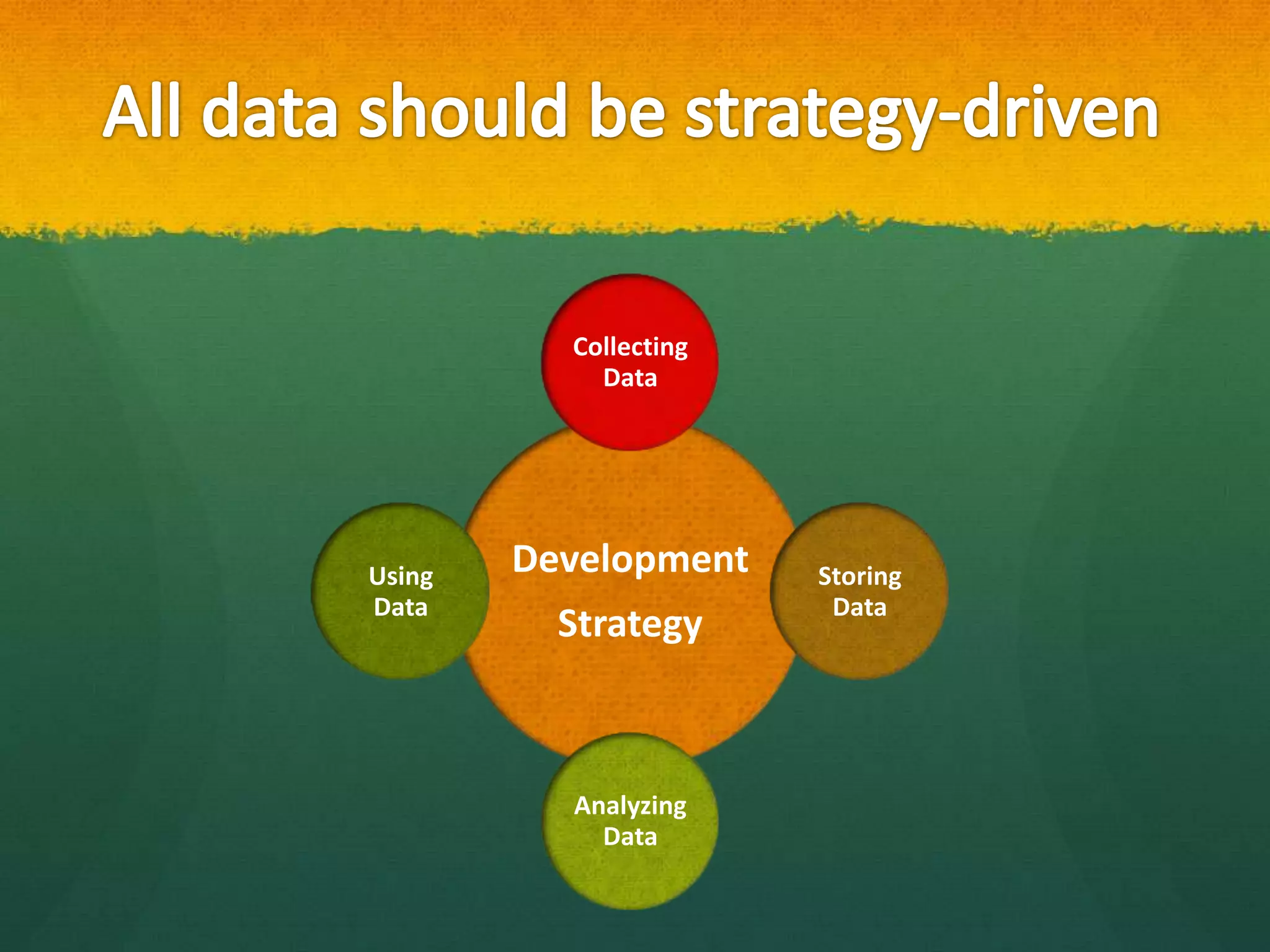
Collecting
            Data


Using   Development    Storing
Data                    Data
          Strategy


          Analyzing
            Data
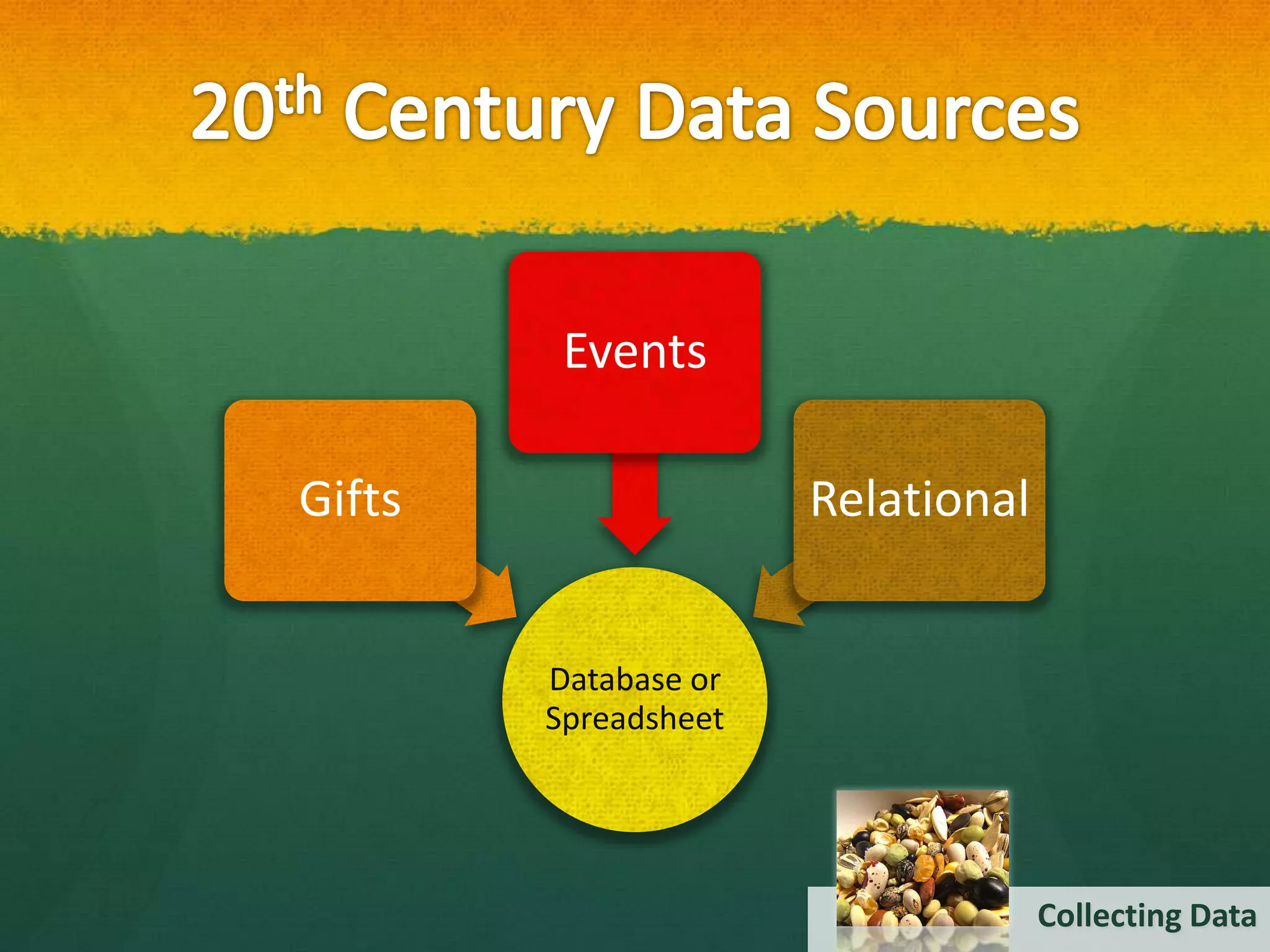
Events

Gifts                 Relational


        Database or
        Spreadsheet


                                   Collecting Data
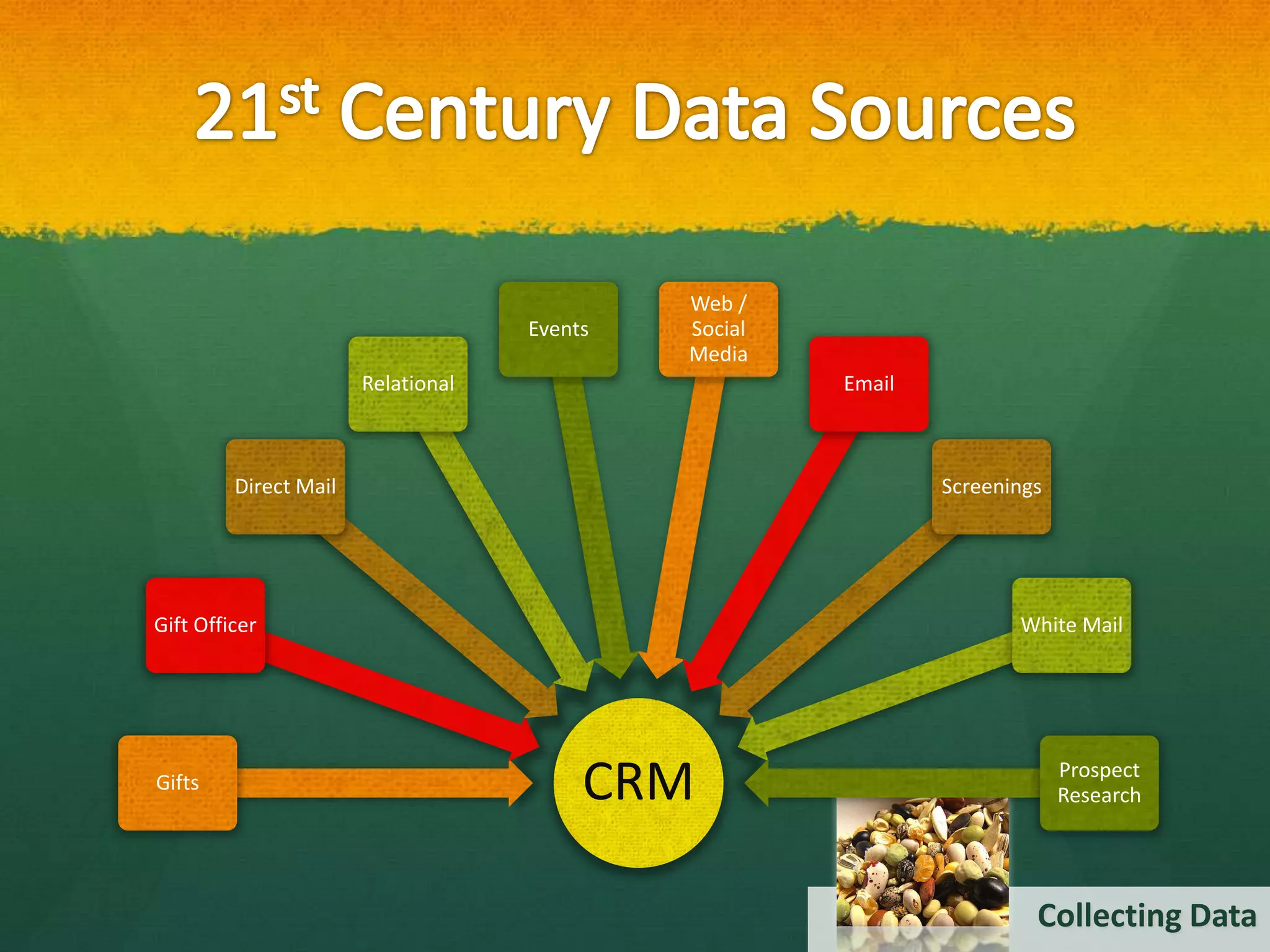
Web /
                                    Events   Social
                                             Media
                       Relational                     Email


         Direct Mail                                          Screenings


Gift Officer                                                         White Mail


Gifts                                    CRM                               Prospect
                                                                           Research


                                                                       Collecting Data
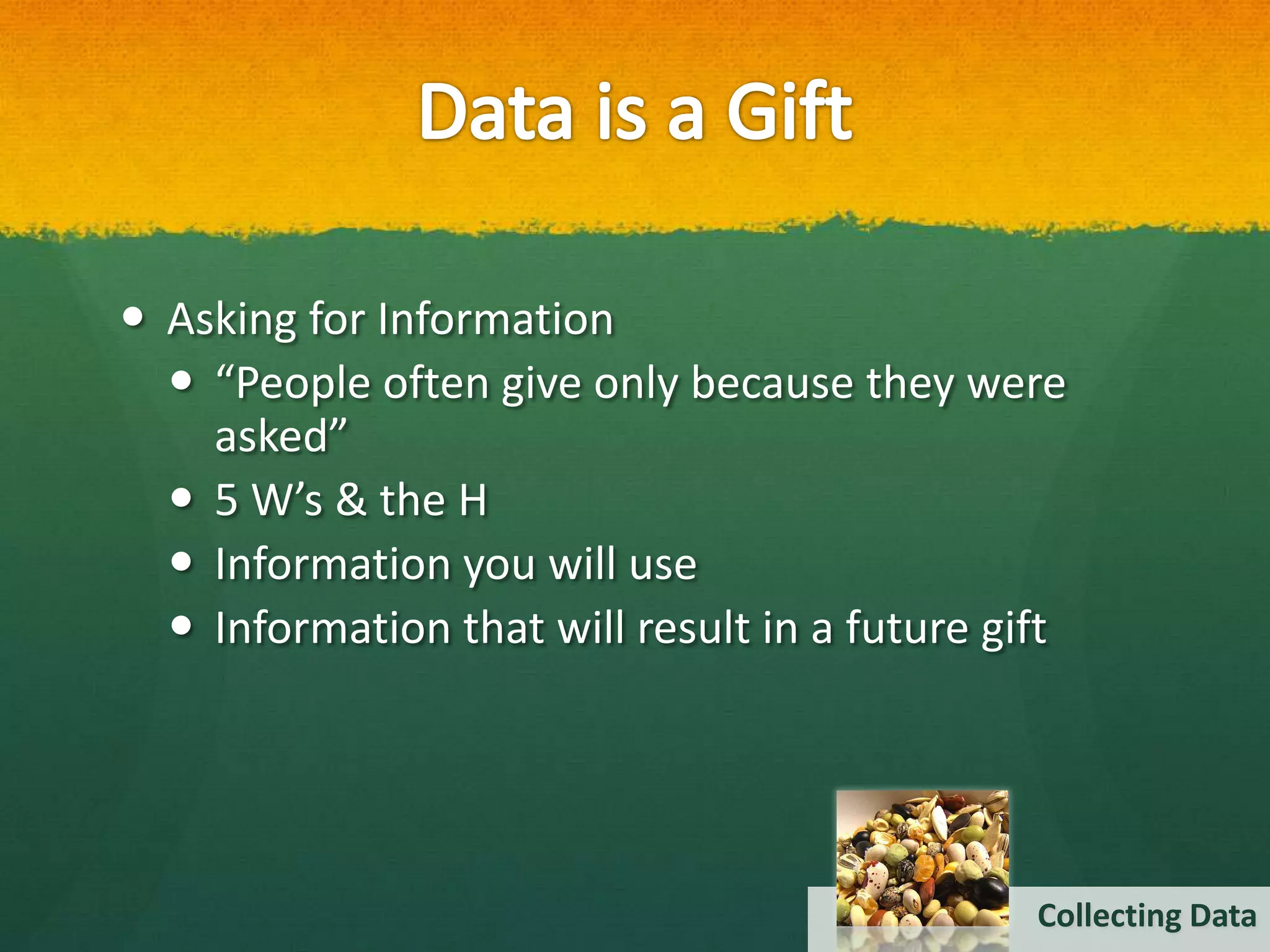
 Asking for Information
   “People often give only because they were
    asked”
   5 W’s & the H
   Information you will use
   Information that will result in a future gift


                                               Collecting Data
 Asking for Information
 Creating Streams of Data
   Identify new streams of Data
   Analytic services


                                   Collecting Data
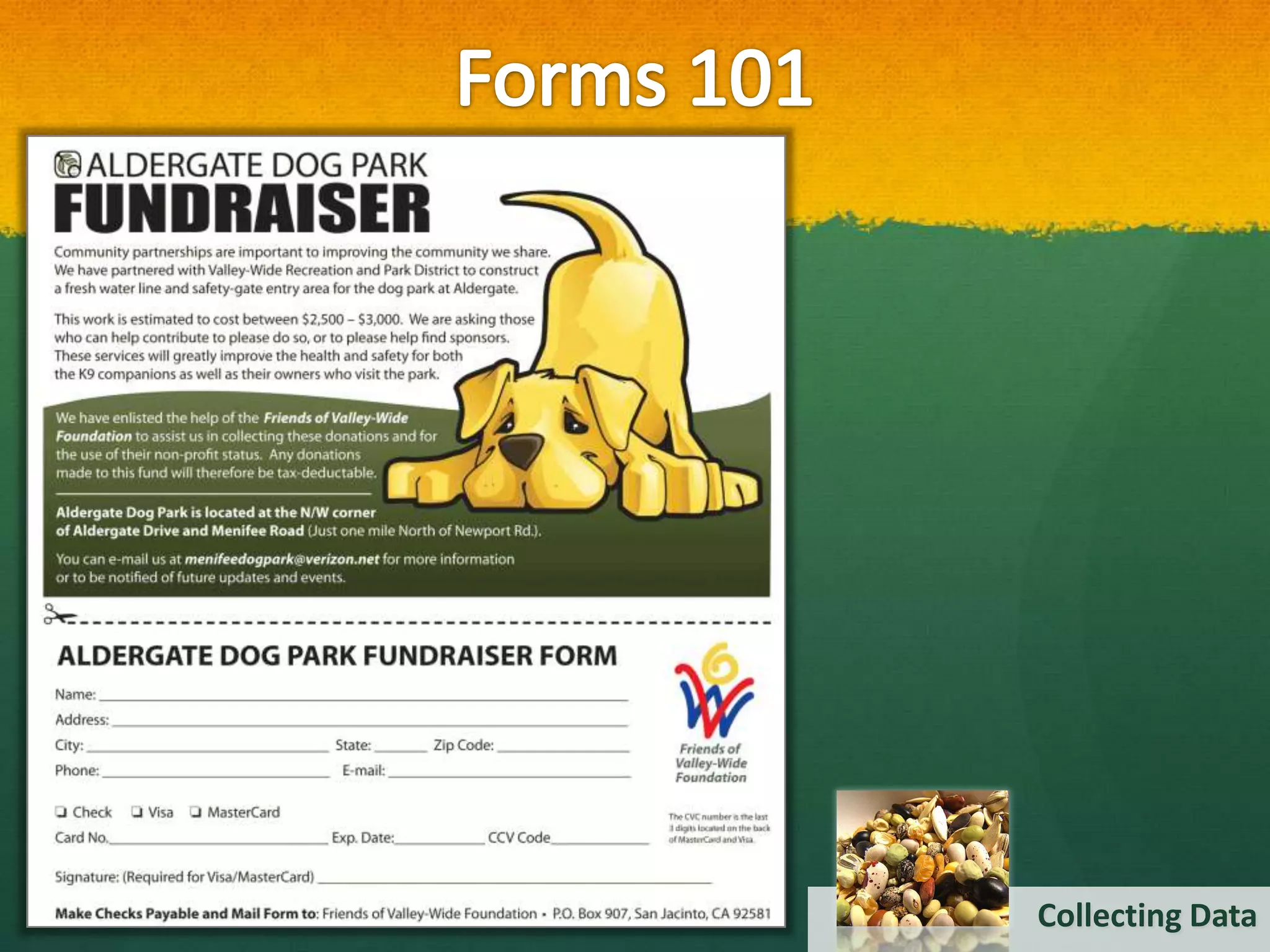
 Response Device Design Principles
   Reinforce mission through design
   Be concise and clear
   Complete the form yourself first


                                       Collecting Data
Collecting Data
Collecting Data
Collecting Data
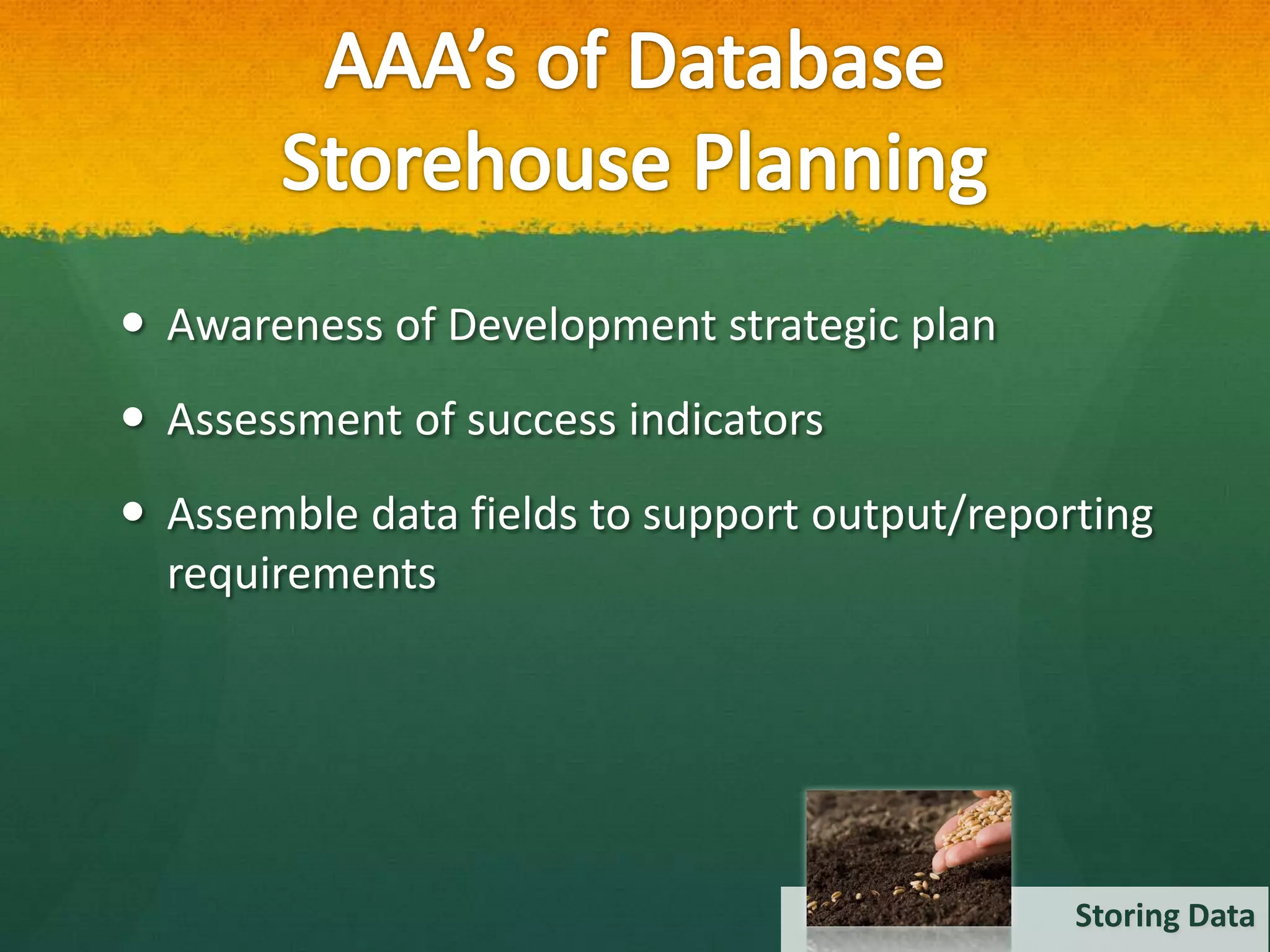
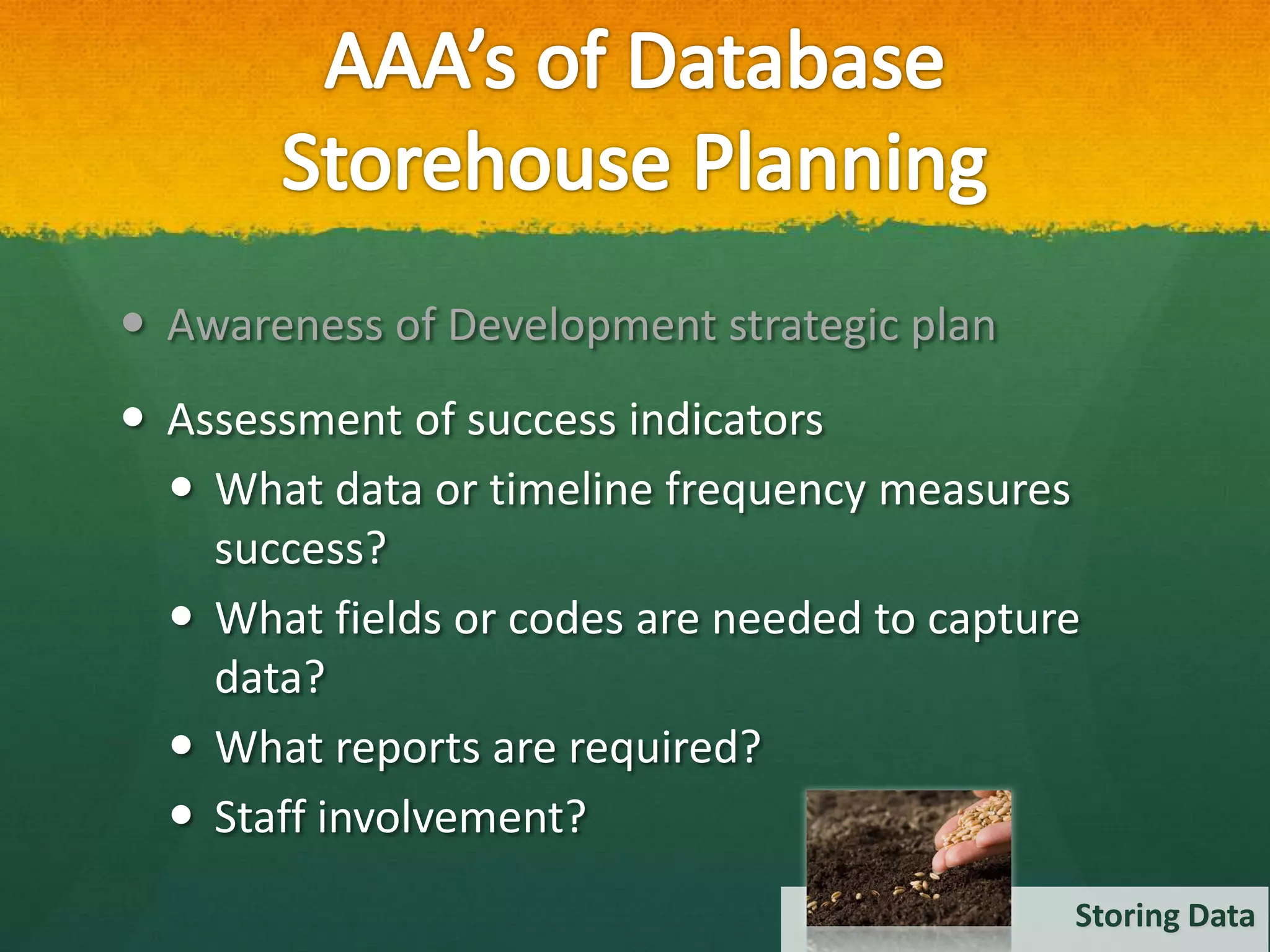
 Awareness of Development strategic plan
 Assessment of success indicators
 Assemble data fields to support output/reporting
  requirements


                                              Storing Data
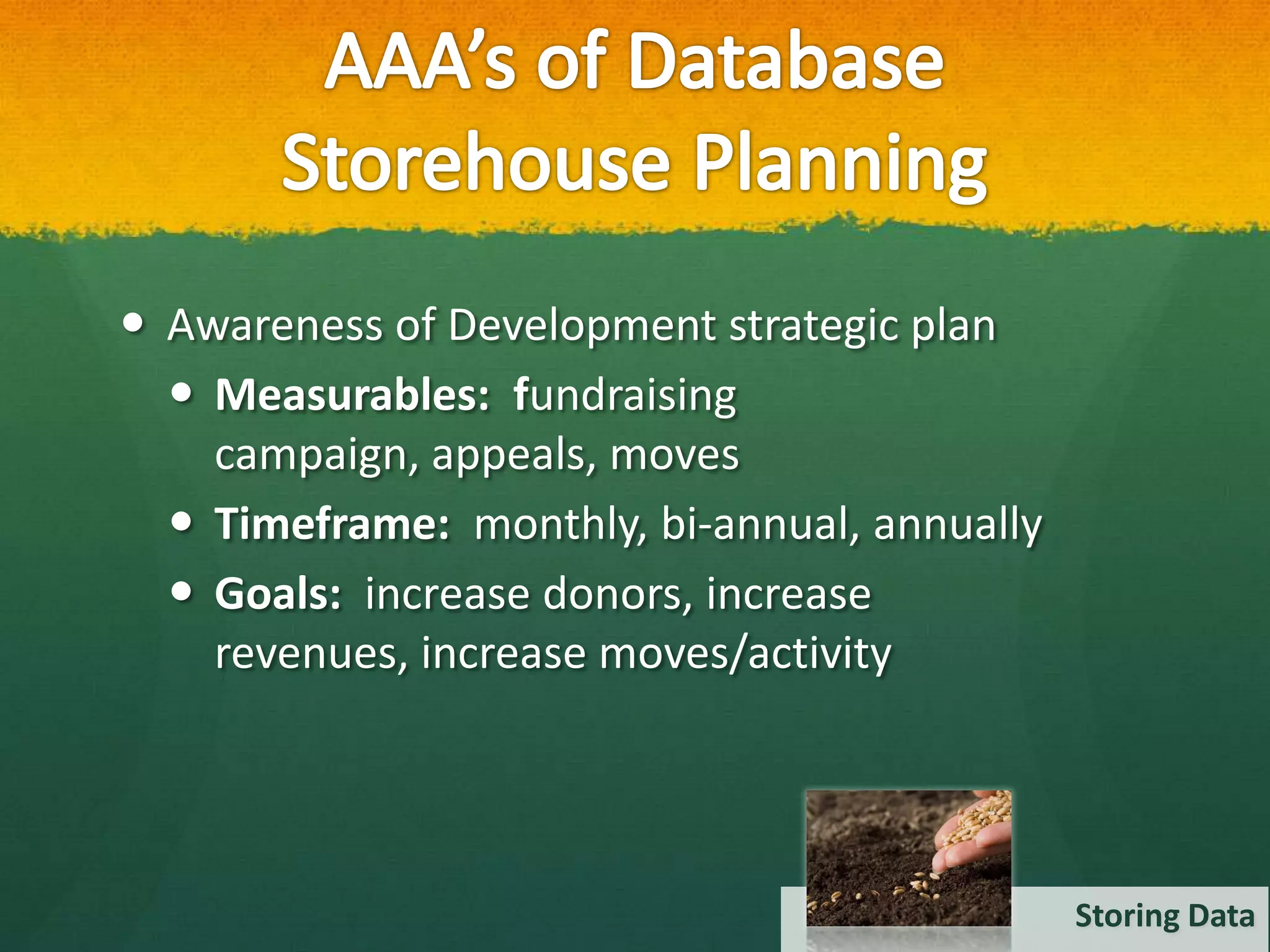
 Awareness of Development strategic plan
   Measurables: fundraising
    campaign, appeals, moves
   Timeframe: monthly, bi-annual, annually
   Goals: increase donors, increase
    revenues, increase moves/activity


                                              Storing Data
 Awareness of Development strategic plan
 Assessment of success indicators
   What data or timeline frequency measures
    success?
   What fields or codes are needed to capture
    data?
   What reports are required?
   Staff involvement?
                                             Storing Data
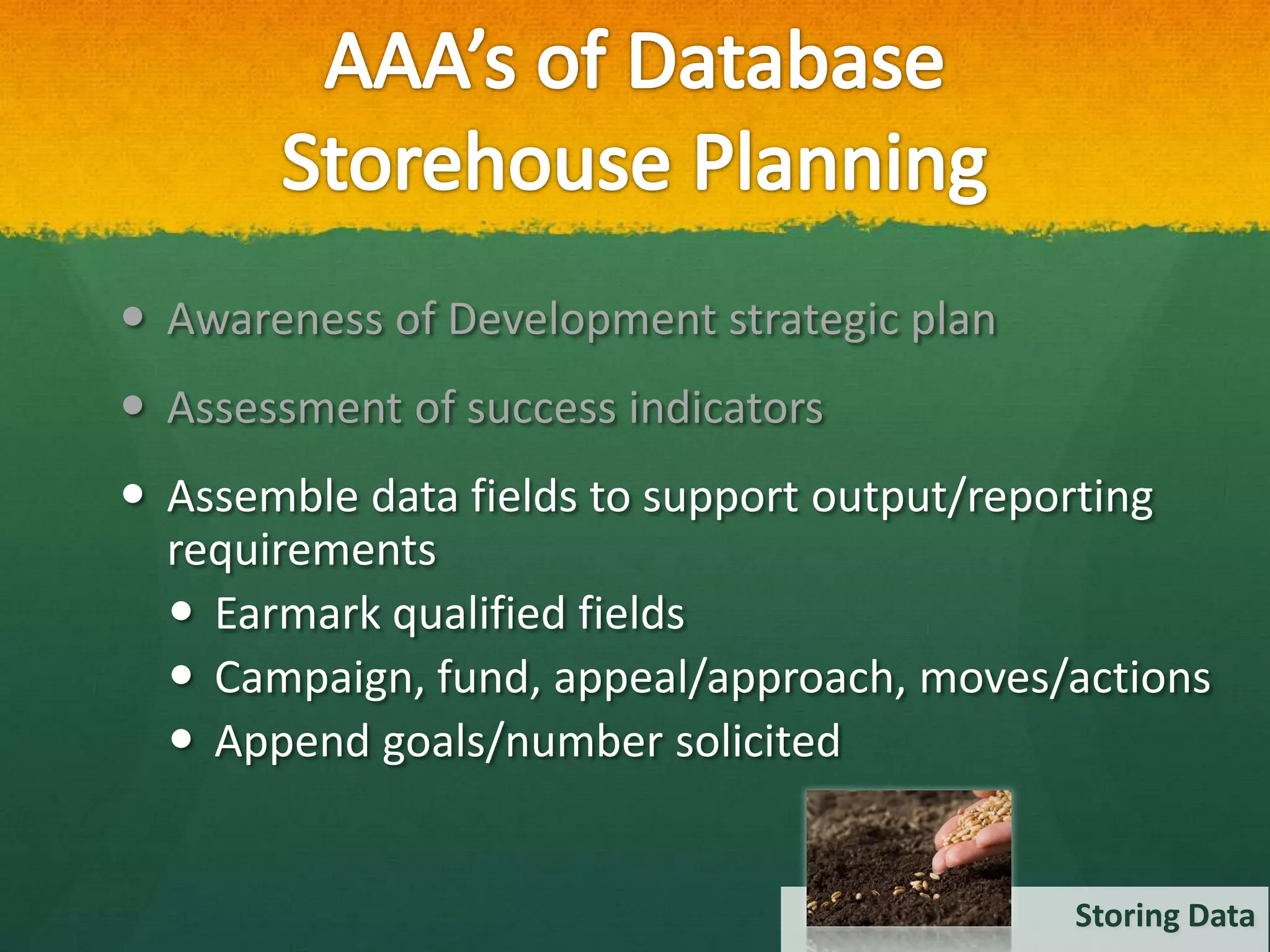
 Awareness of Development strategic plan
 Assessment of success indicators
 Assemble data fields to support output/reporting
  requirements
   Earmark qualified fields
   Campaign, fund, appeal/approach, moves/actions
   Append goals/number solicited


                                            Storing Data
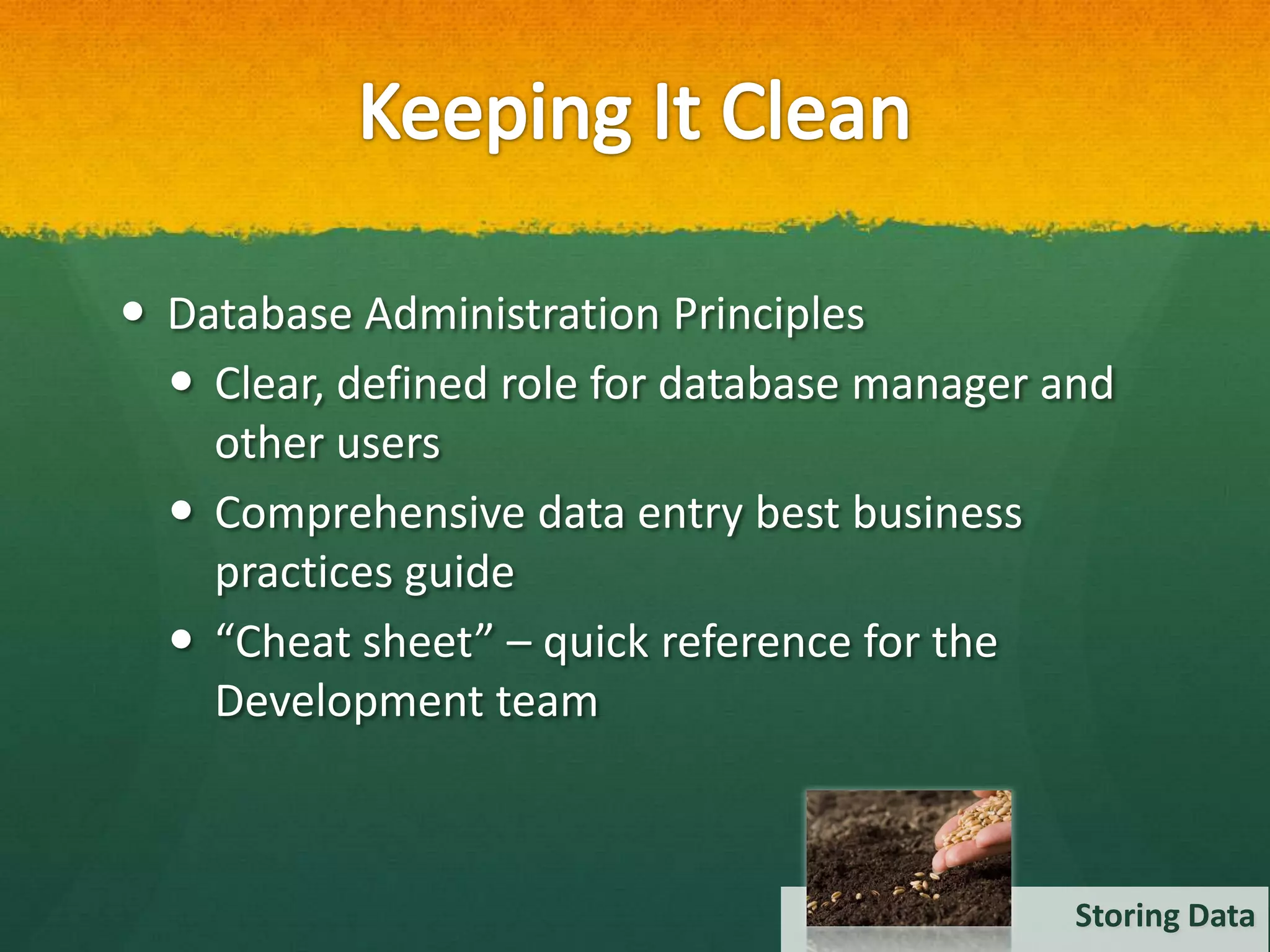
 Database Administration Principles
   Clear, defined role for database manager and
    other users
   Comprehensive data entry best business
    practices guide
   “Cheat sheet” – quick reference for the
    Development team


                                              Storing Data
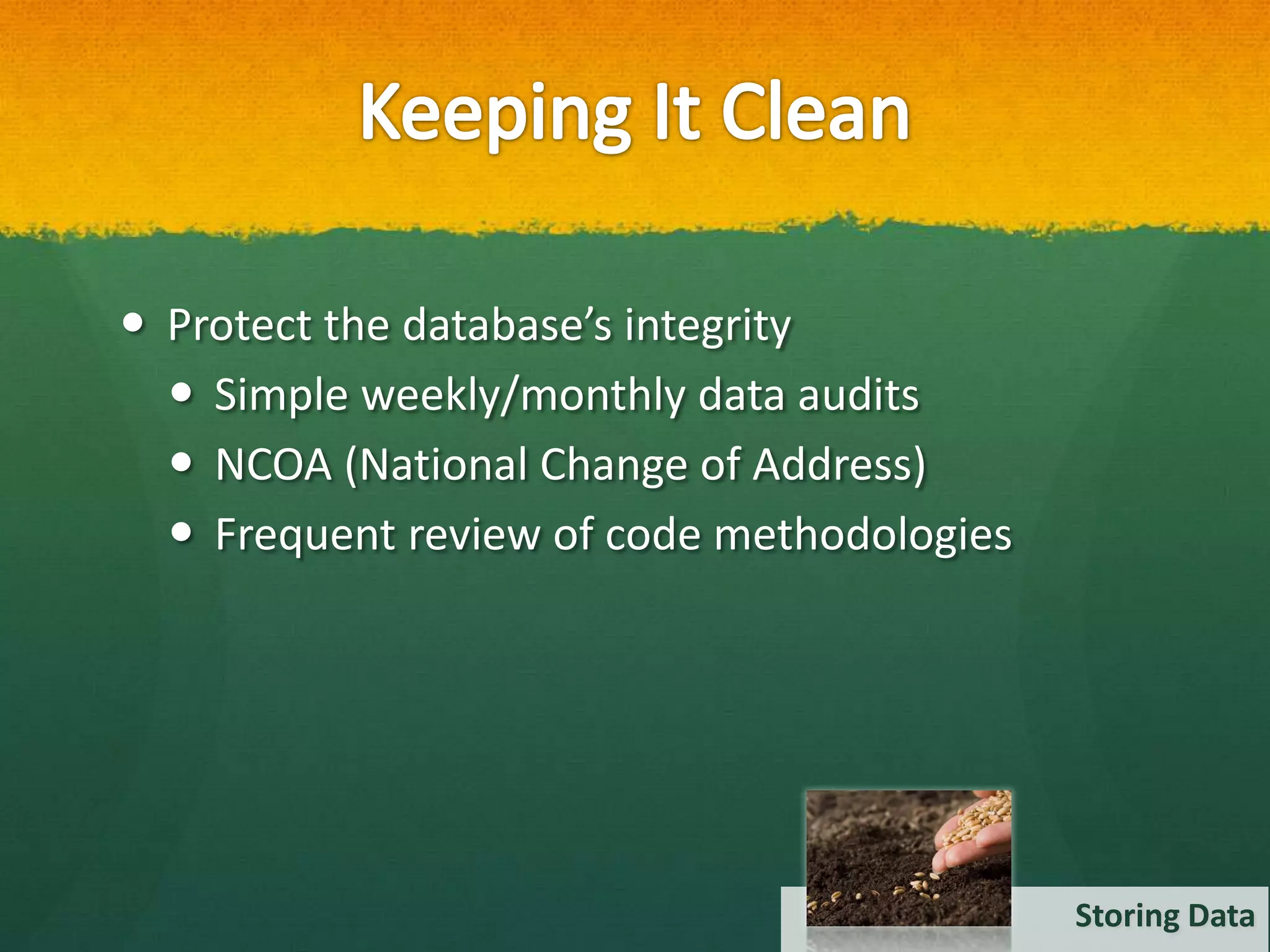
 Protect the database’s integrity
   Simple weekly/monthly data audits
   NCOA (National Change of Address)
   Frequent review of code methodologies


                                            Storing Data
 Understanding make up of your donor file
   Segments and their value


                                             Analyzing Data
 Understanding make up of your donor file
 Understanding the profiles of your donor
  constituencies
   By giving source, frequency, status, LTV


                                               Analyzing Data
 Understanding make up of your donor file
 Understanding the profiles of your donor
  constituencies
 Understanding the source of your donors
   Cost, renewal and attrition rates


                                             Analyzing Data
 Understanding health of your development
  program
   Key performance indicators, lapsed
    donors, monthly status updates


                                             Analyzing Data
 Understanding health of your development
  program
 Understanding performance of
  efforts, activities, programs
   ROI, giving by date, amount, medium


                                             Analyzing Data
 Targeting
   Who, what, when, why, and how


                                    Using Data
 Targeting
 Messaging
   Donor motivation, recognition


                                    Using Data
 Targeting
 Messaging
 Asking
   Appropriate gift ask amount


                                  Using Data
 Amanda White
  SYNC Non-Profit Consulting Group
  awhite@syncresults.com
 Mack Campbell
  On Your Mark Consulting
  mack@onyourmarkllc.com
 Dana Heter
  DirectStrategies
  dana@dirstrat.com

Turning Data into Dollars

  • 3.
     Development Vision Goals  Strategies  Success Indicators
  • 4.
    Collecting Data Using Development Storing Data Data Strategy Analyzing Data
  • 6.
    Events Gifts Relational Database or Spreadsheet Collecting Data
  • 7.
    Web / Events Social Media Relational Email Direct Mail Screenings Gift Officer White Mail Gifts CRM Prospect Research Collecting Data
  • 8.
     Asking forInformation  “People often give only because they were asked”  5 W’s & the H  Information you will use  Information that will result in a future gift Collecting Data
  • 9.
     Asking forInformation  Creating Streams of Data  Identify new streams of Data  Analytic services Collecting Data
  • 10.
     Response DeviceDesign Principles  Reinforce mission through design  Be concise and clear  Complete the form yourself first Collecting Data
  • 11.
  • 12.
  • 13.
  • 15.
     Awareness ofDevelopment strategic plan  Assessment of success indicators  Assemble data fields to support output/reporting requirements Storing Data
  • 16.
     Awareness ofDevelopment strategic plan  Measurables: fundraising campaign, appeals, moves  Timeframe: monthly, bi-annual, annually  Goals: increase donors, increase revenues, increase moves/activity Storing Data
  • 17.
     Awareness ofDevelopment strategic plan  Assessment of success indicators  What data or timeline frequency measures success?  What fields or codes are needed to capture data?  What reports are required?  Staff involvement? Storing Data
  • 18.
     Awareness ofDevelopment strategic plan  Assessment of success indicators  Assemble data fields to support output/reporting requirements  Earmark qualified fields  Campaign, fund, appeal/approach, moves/actions  Append goals/number solicited Storing Data
  • 19.
     Database AdministrationPrinciples  Clear, defined role for database manager and other users  Comprehensive data entry best business practices guide  “Cheat sheet” – quick reference for the Development team Storing Data
  • 20.
     Protect thedatabase’s integrity  Simple weekly/monthly data audits  NCOA (National Change of Address)  Frequent review of code methodologies Storing Data
  • 22.
     Understanding makeup of your donor file  Segments and their value Analyzing Data
  • 23.
     Understanding makeup of your donor file  Understanding the profiles of your donor constituencies  By giving source, frequency, status, LTV Analyzing Data
  • 24.
     Understanding makeup of your donor file  Understanding the profiles of your donor constituencies  Understanding the source of your donors  Cost, renewal and attrition rates Analyzing Data
  • 25.
     Understanding healthof your development program  Key performance indicators, lapsed donors, monthly status updates Analyzing Data
  • 26.
     Understanding healthof your development program  Understanding performance of efforts, activities, programs  ROI, giving by date, amount, medium Analyzing Data
  • 28.
     Targeting  Who, what, when, why, and how Using Data
  • 29.
     Targeting  Messaging  Donor motivation, recognition Using Data
  • 30.
     Targeting  Messaging Asking  Appropriate gift ask amount Using Data
  • 31.
     Amanda White SYNC Non-Profit Consulting Group awhite@syncresults.com  Mack Campbell On Your Mark Consulting mack@onyourmarkllc.com  Dana Heter DirectStrategies dana@dirstrat.com