Hidden Triggers: Propelling Low Income
Students into College and Careers
John Cronin, Ph.D.
Vice President of Education Research
NWEA
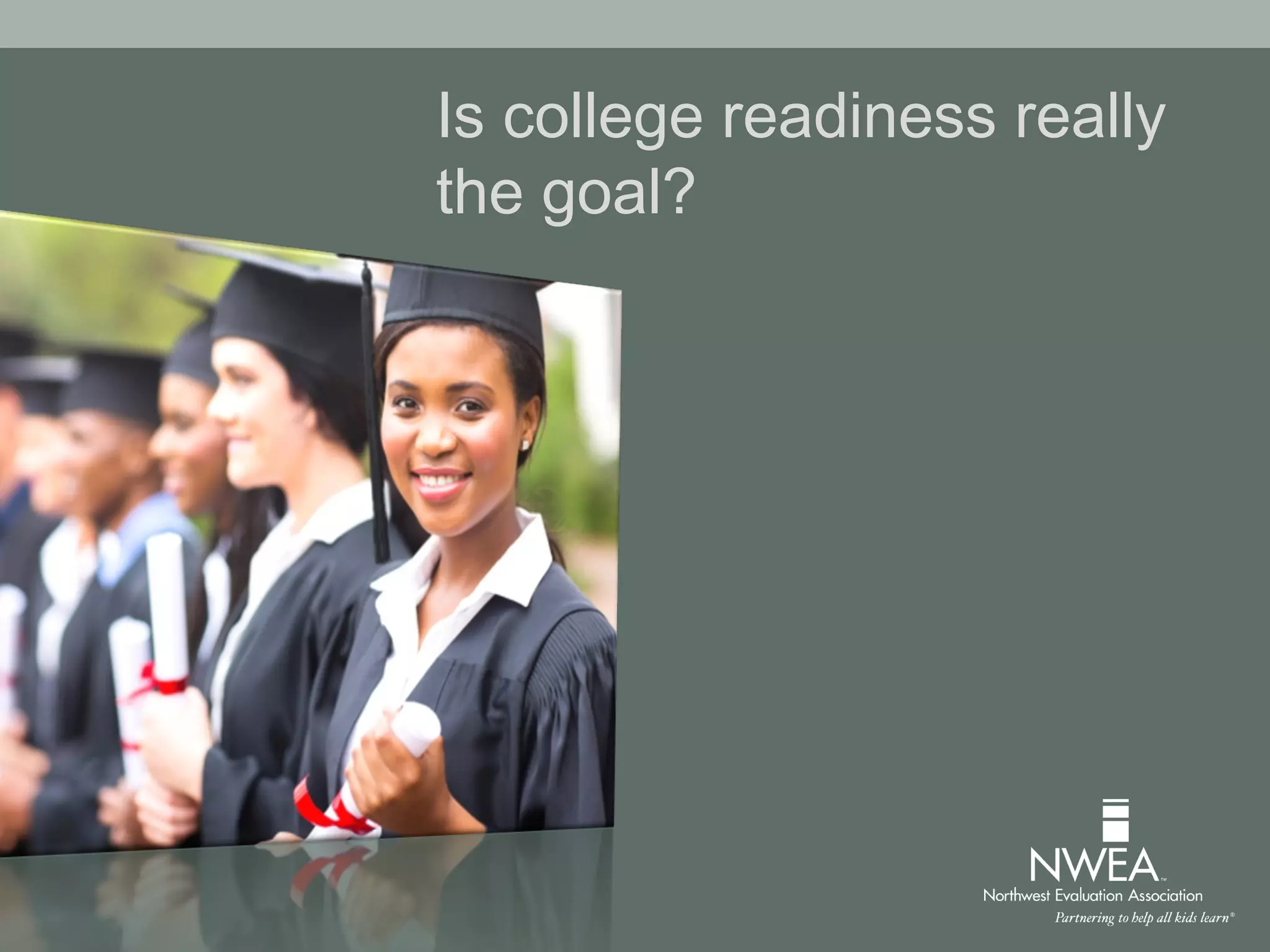
Is college readiness really
the goal?
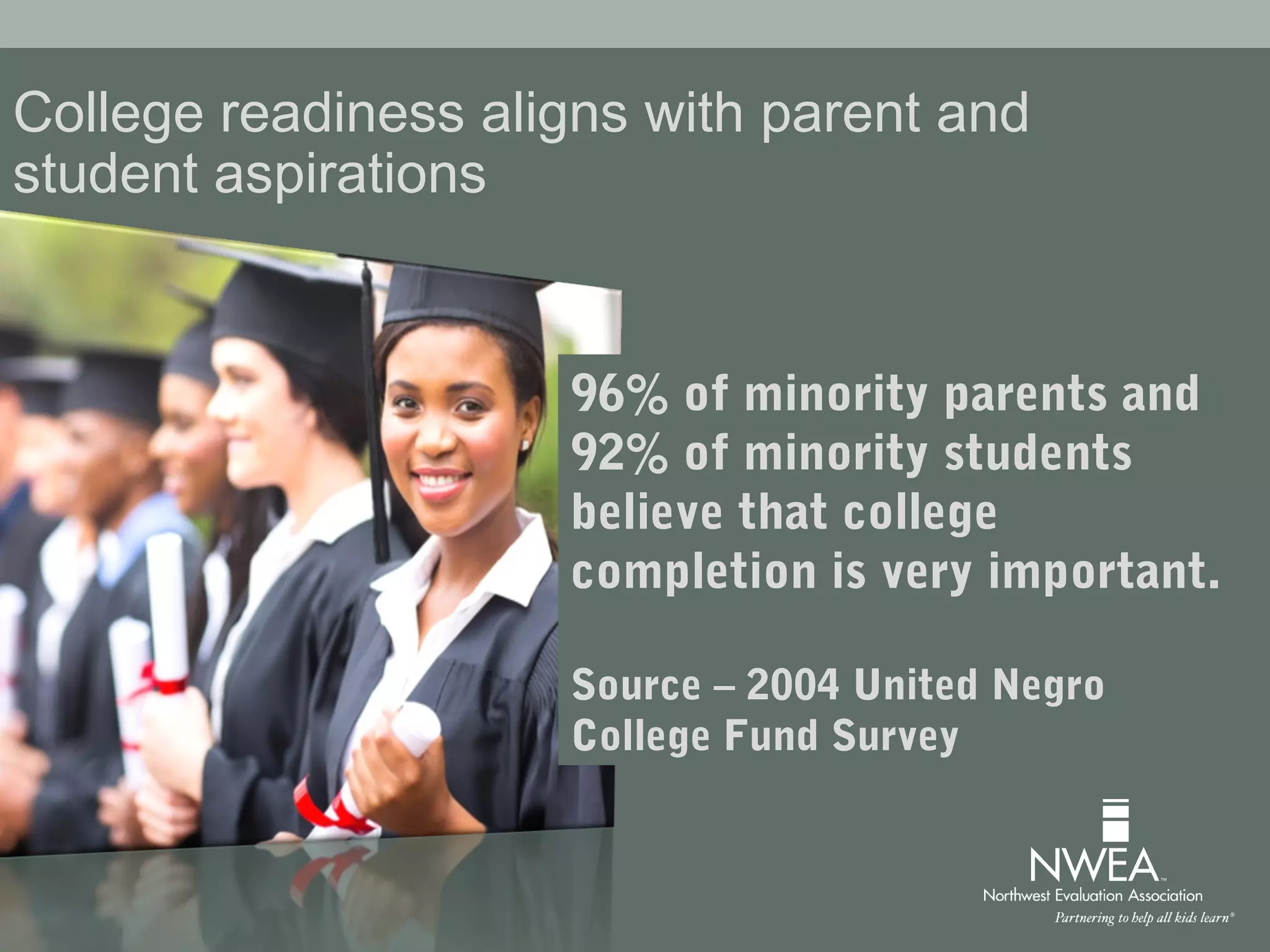
96% of minority parents and
92% of minority students
believe that college
completion is very important.
Source – 2004 United Negro
College Fund Survey
College readiness aligns with parent and
student aspirations
• College completion grew from
25% to 41% between 1980 and
2014.
• College completion rates for
traditionally disadvantaged
minorities doubled.
• The proportion of women
completing college exceeds the
proportion of men and the gap is
growing.
Who is completing college?
Percent of adults 25 to 29 who have
completed a bachelors degree 1972-2015
Source: U.S. Census (2015) – Current Population Survey retrieved from
http://www.census.gov/hhes/socdemo/education/data/cps/historical/index.html
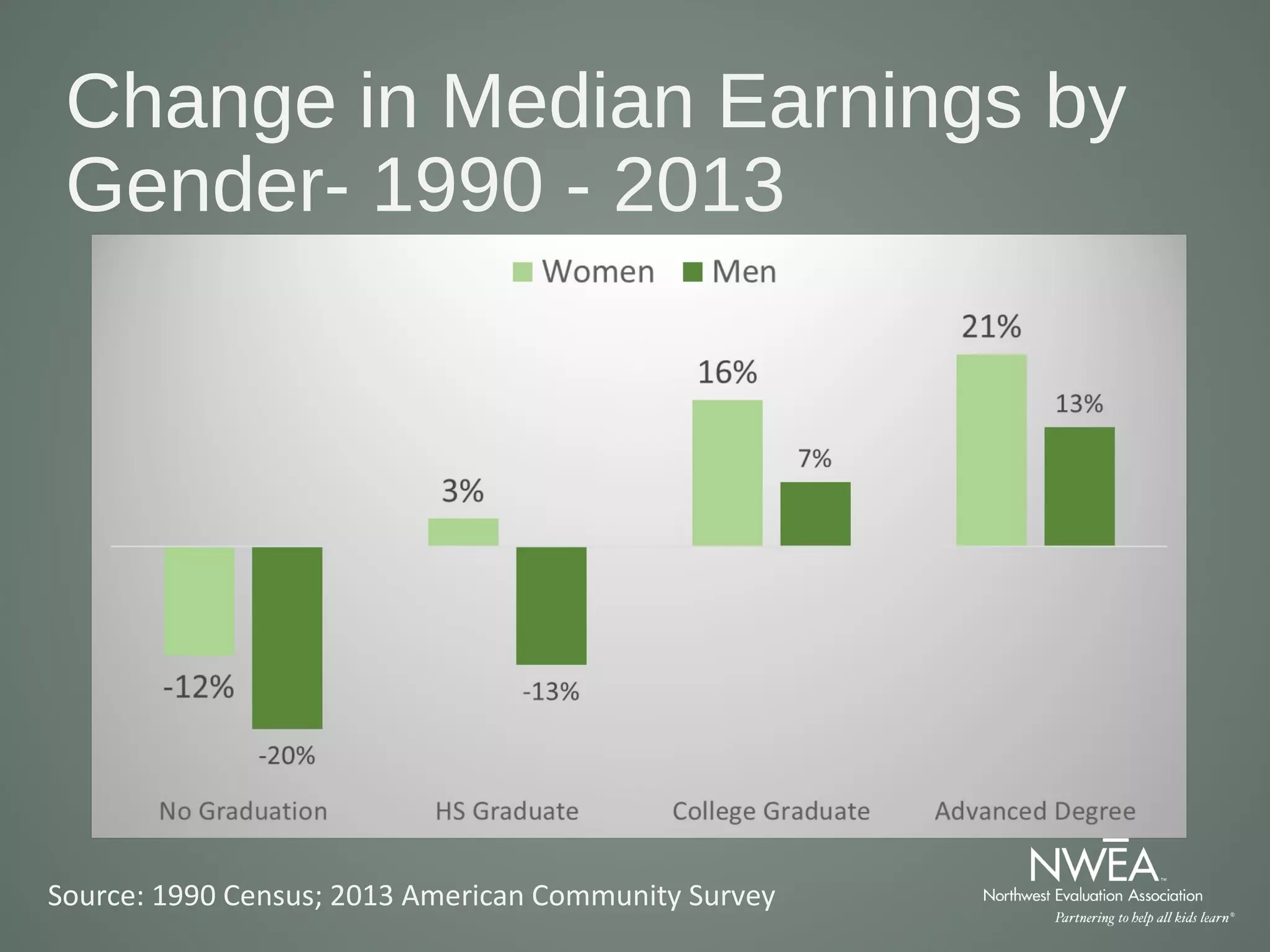
Change in Median Earnings by
Gender- 1990 - 2013
Source: 1990 Census; 2013 American Community Survey
The hidden “Triggers”
• Preparing for an upwardly mobile
career.
• Getting and keeping academics on
track.
• Maximizing the probability of
graduation (high school, career
training, college).
Preparing for an upwardly
mobile career
Kids from high income families less
often choose career focused majors
Source: Kim Weeden, National Center for Educational Statistics
Kids from high income families choose
career oriented majors less often.
The share of workers required to have a
license has increased from just over
5%
in the 1950s to nearly
30%
in 2008.
Source: 2013 Harris Interactive Poll
Source – U.S. Department of Labor, National Longitudinal Survey 1979-2010
Graph is reference from Money Matters, National Public Radio, March 19, 2014
What
car eer s
cont r i but e
t o upwar d
and
downwar d
mobi l i t y?
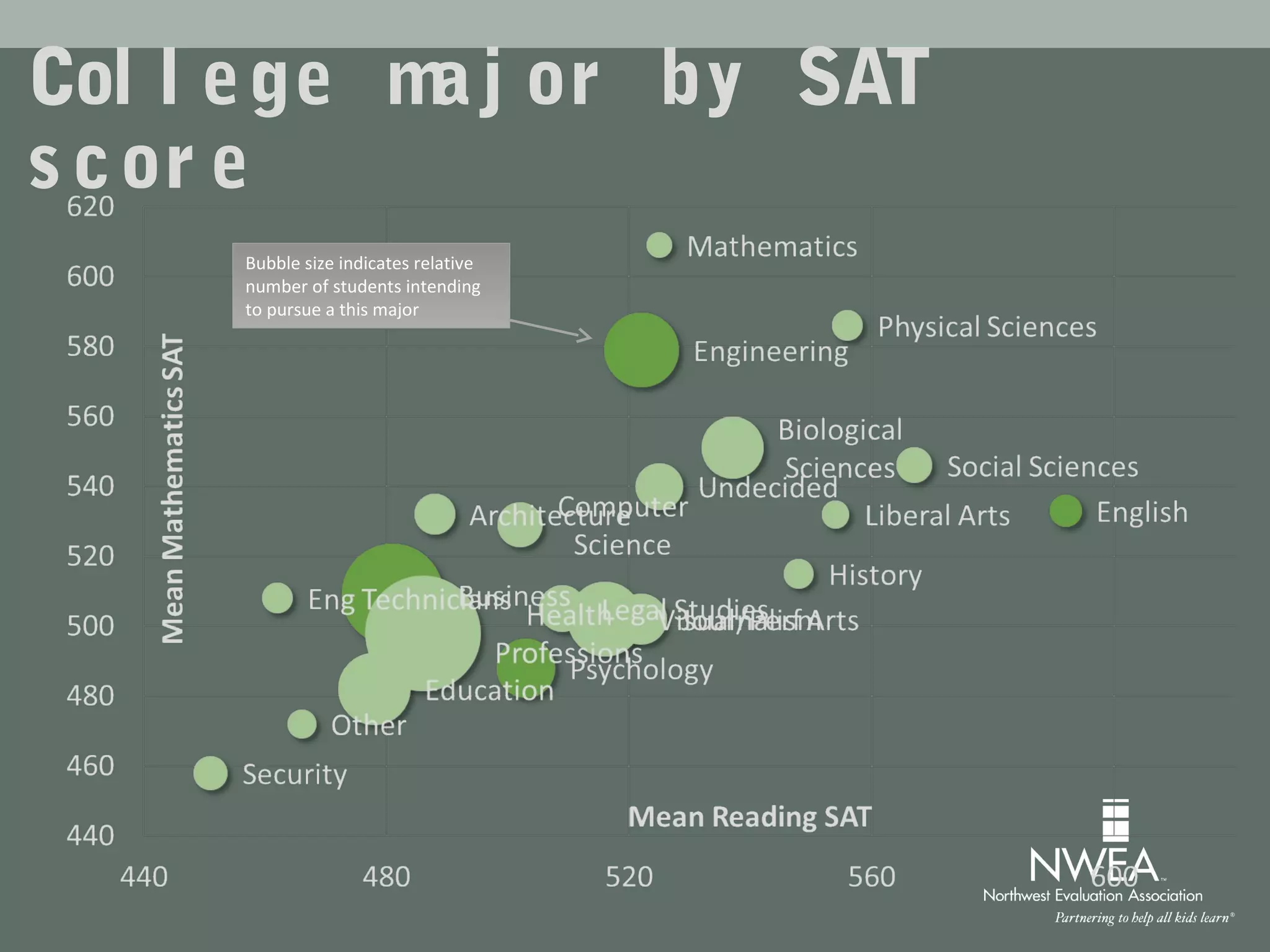
Col l ege maj or by SAT
scor e
Bubble size indicates relative
number of students intending
to pursue a this major
Being prepared
Predictive variables measure four constructs
Test scores
College
aspirations &
expectations
SES
Teacher
perceptions of
student readiness
Teachers are good at
• Assessing work habits
• Assessing general academic readiness
• Assessing attitude toward school
Teachers are good at
Dropout Prediction Teacher Model
% Correct 82 88
% Incorrect 11 12
Unsure 7
But teachers greatly under-
predict the likelihood of college
attendance
Ethnic Group Correct Incorrect Go Incorrect Not
Go
Anglo 63% 4% 18%
African
American
56% 3% 24%
Hispanic 52% 4% 23%
Native
American
50% 5% 28%
NWEA assessments
• Can help project progress toward college
readiness at earlier grades.
• Help teachers set goals and plan
instruction to get students on track.
The NWEA Col l ege Expl or er
Tool
• Projects a student’s college entrance exam range
from their reading and mathematics scores on
NWEA MAP.
• Shows the colleges in which a students score
would be competitive with the entrance exam
scores achieved by entering students.
• Provides detailed information to parents about
college costs, completion rates, financial aid,
average student debt load, and post-graduation
income that can help families more effectively
plan at earlier ages.
The NWEA Col l ege Expl or er
Tool
EPIC – Four Dimensions of college
readiness
• Post-secondary career
awareness
• Post-secondary costs
• Financial aid
• College culture
• Self-advocacy
• Admissions requirements
Adapted from EPIC – The Solution Equipping Students with the Four Keys . Retrieved from
https://www.epiconline.org/Issues/college-career-readiness/the-solution/
College readiness
should NOT be
defined by a single
test score associated
to a single cut score.
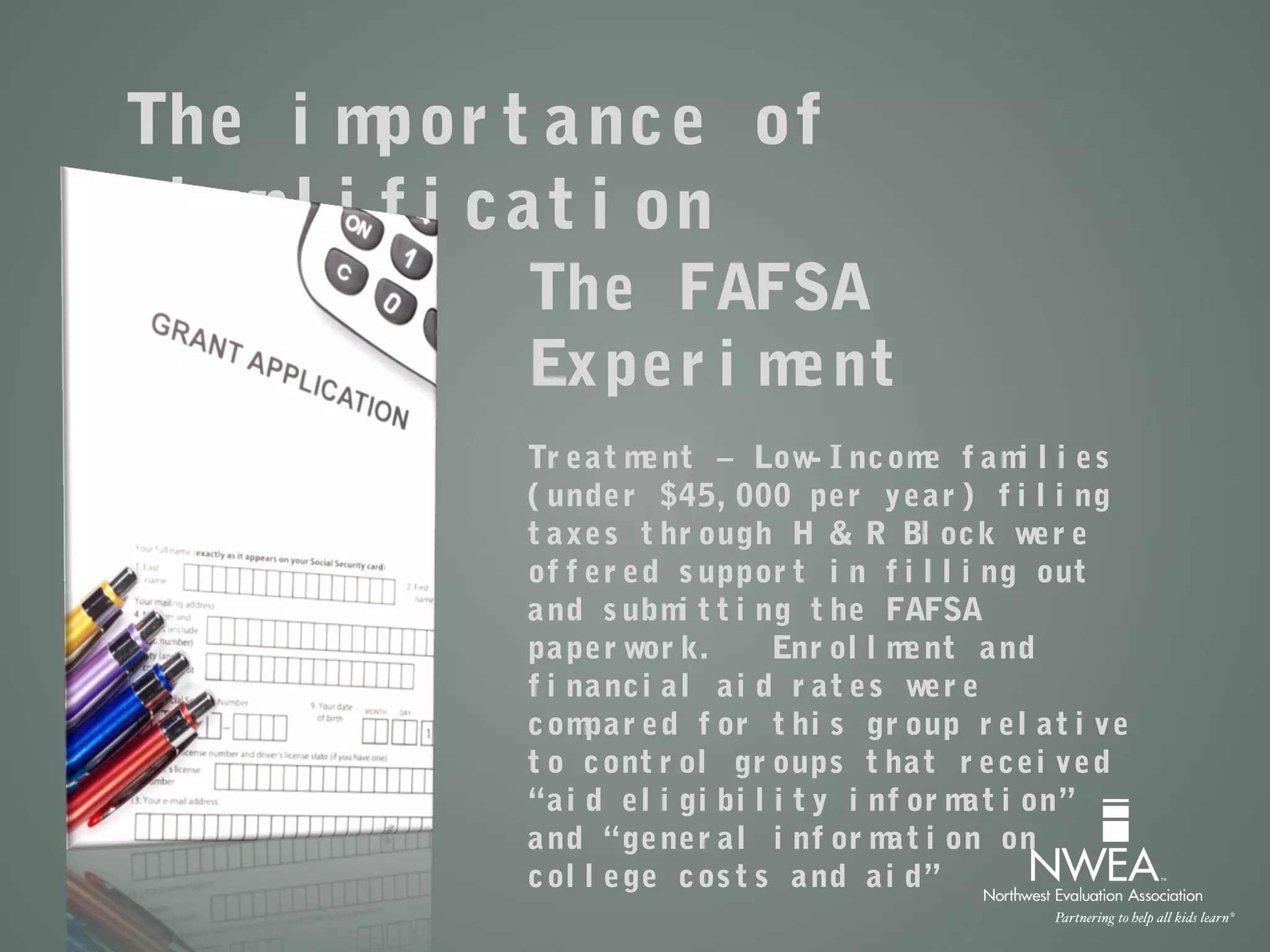
The FAFSA
Exper i ment
Tr eat ment – Low- I ncome f ami l i es
( under $45, 000 per year ) f i l i ng
t axes t hr ough H & R Bl ock wer e
of f er ed s uppor t i n f i l l i ng out
and s ubmi t t i ng t he FAFSA
paper wor k. Enr ol l ment and
f i nanci al ai d r at es wer e
compar ed f or t hi s gr oup r el at i ve
t o cont r ol gr oups t hat r ecei ved
“ai d el i gi bi l i t y i nf or mat i on”
and “gener al i nf or mat i on on
col l ege cos t s and ai d”
The i mpor t ance of
s i mpl i f i cat i on
The FAFSA Exper i ment
Res ul t s
Tr eat ment gr oup f ami l i es s howed a 25%
i ncr eas ed r at e of col l ege enr ol l ment
( 34. 8% vs . 26. 5%)
Tr eat ment gr oup f ami l i es r ecei ved Pel l
gr ant s at a 33% hi gher r at e t han cont r ol
f ami l i es ( 39. 6% vs . 29. 8%)
The i mpor t ance of
s i mpl i f i cat i on
Concl udi ng
t hought s
• The value of prediction is to help students see what is possible
and to avoid under-selecting colleges.
• Academic knowledge alone isn’t enough. Getting a complete
picture of each student is important. Getting that picture
efficiently is equally important.
• College Knowledge is important and is relatively easy to address
The link to the NWEA College Explorer
Tool is at
https://www.nwea.org/research/innovation-
leadership/research-data-galleries/mapping-the-road-to-
college/
https://public.tableau.com/profile/jfcnwea#!/vizhome/car
eerbook1/Dashboard1
Thank you!
E-mail: john.Cronin@nwea.org
Organization Website: www.nwea.org
Contact:

Triggers for college success cr

  • 1.
    Hidden Triggers: PropellingLow Income Students into College and Careers John Cronin, Ph.D. Vice President of Education Research NWEA
  • 2.
    Is college readinessreally the goal?
  • 3.
    96% of minorityparents and 92% of minority students believe that college completion is very important. Source – 2004 United Negro College Fund Survey College readiness aligns with parent and student aspirations
  • 4.
    • College completiongrew from 25% to 41% between 1980 and 2014. • College completion rates for traditionally disadvantaged minorities doubled. • The proportion of women completing college exceeds the proportion of men and the gap is growing. Who is completing college?
  • 5.
    Percent of adults25 to 29 who have completed a bachelors degree 1972-2015 Source: U.S. Census (2015) – Current Population Survey retrieved from http://www.census.gov/hhes/socdemo/education/data/cps/historical/index.html
  • 6.
    Change in MedianEarnings by Gender- 1990 - 2013 Source: 1990 Census; 2013 American Community Survey
  • 7.
    The hidden “Triggers” •Preparing for an upwardly mobile career. • Getting and keeping academics on track. • Maximizing the probability of graduation (high school, career training, college).
  • 8.
    Preparing for anupwardly mobile career
  • 9.
    Kids from highincome families less often choose career focused majors
  • 10.
    Source: Kim Weeden,National Center for Educational Statistics Kids from high income families choose career oriented majors less often.
  • 11.
    The share ofworkers required to have a license has increased from just over 5% in the 1950s to nearly 30% in 2008. Source: 2013 Harris Interactive Poll
  • 12.
    Source – U.S.Department of Labor, National Longitudinal Survey 1979-2010 Graph is reference from Money Matters, National Public Radio, March 19, 2014 What car eer s cont r i but e t o upwar d and downwar d mobi l i t y?
  • 13.
    Col l egemaj or by SAT scor e Bubble size indicates relative number of students intending to pursue a this major
  • 14.
  • 15.
    Predictive variables measurefour constructs Test scores College aspirations & expectations SES Teacher perceptions of student readiness
  • 16.
    Teachers are goodat • Assessing work habits • Assessing general academic readiness • Assessing attitude toward school
  • 17.
    Teachers are goodat Dropout Prediction Teacher Model % Correct 82 88 % Incorrect 11 12 Unsure 7
  • 18.
    But teachers greatlyunder- predict the likelihood of college attendance Ethnic Group Correct Incorrect Go Incorrect Not Go Anglo 63% 4% 18% African American 56% 3% 24% Hispanic 52% 4% 23% Native American 50% 5% 28%
  • 19.
    NWEA assessments • Canhelp project progress toward college readiness at earlier grades. • Help teachers set goals and plan instruction to get students on track.
  • 20.
    The NWEA Coll ege Expl or er Tool • Projects a student’s college entrance exam range from their reading and mathematics scores on NWEA MAP. • Shows the colleges in which a students score would be competitive with the entrance exam scores achieved by entering students. • Provides detailed information to parents about college costs, completion rates, financial aid, average student debt load, and post-graduation income that can help families more effectively plan at earlier ages.
  • 21.
    The NWEA Coll ege Expl or er Tool
  • 23.
    EPIC – FourDimensions of college readiness • Post-secondary career awareness • Post-secondary costs • Financial aid • College culture • Self-advocacy • Admissions requirements Adapted from EPIC – The Solution Equipping Students with the Four Keys . Retrieved from https://www.epiconline.org/Issues/college-career-readiness/the-solution/
  • 24.
    College readiness should NOTbe defined by a single test score associated to a single cut score.
  • 25.
    The FAFSA Exper iment Tr eat ment – Low- I ncome f ami l i es ( under $45, 000 per year ) f i l i ng t axes t hr ough H & R Bl ock wer e of f er ed s uppor t i n f i l l i ng out and s ubmi t t i ng t he FAFSA paper wor k. Enr ol l ment and f i nanci al ai d r at es wer e compar ed f or t hi s gr oup r el at i ve t o cont r ol gr oups t hat r ecei ved “ai d el i gi bi l i t y i nf or mat i on” and “gener al i nf or mat i on on col l ege cos t s and ai d” The i mpor t ance of s i mpl i f i cat i on
  • 26.
    The FAFSA Experi ment Res ul t s Tr eat ment gr oup f ami l i es s howed a 25% i ncr eas ed r at e of col l ege enr ol l ment ( 34. 8% vs . 26. 5%) Tr eat ment gr oup f ami l i es r ecei ved Pel l gr ant s at a 33% hi gher r at e t han cont r ol f ami l i es ( 39. 6% vs . 29. 8%) The i mpor t ance of s i mpl i f i cat i on
  • 27.
    Concl udi ng thought s • The value of prediction is to help students see what is possible and to avoid under-selecting colleges. • Academic knowledge alone isn’t enough. Getting a complete picture of each student is important. Getting that picture efficiently is equally important. • College Knowledge is important and is relatively easy to address
  • 28.
    The link tothe NWEA College Explorer Tool is at https://www.nwea.org/research/innovation- leadership/research-data-galleries/mapping-the-road-to- college/ https://public.tableau.com/profile/jfcnwea#!/vizhome/car eerbook1/Dashboard1
  • 29.

Editor's Notes

  • #16 Replicated decision trees over and over Found most important measures Grouped them