Trend and analysis of time
series data
By :- D. Ravi kiran
220415140021
Intorduction
• Trend analysis in the time series is the practice of collecting and
attempting to spot patterns. Various data mining techniques such as
clustering, classification, regression, etc. can be used to expose those
trends.
• Time series analysis refers to a particular collection of specialised
regression methods that illustrate trends in the data.
types
• Time series can be classified into two different types:
• stock
• Flow
• There are three types of trend analysis methods –
• geographic,
• temporal
• intuitive.
importance
• Time series analysis helps organizations understand the underlying
causes of trends or systemic patterns over time
• As the basis of the time series analysis business can predict about the
changes in economy
• The term “trend” refers to an average, long-term, smooth tendency.
• Not all increases or decreases have to occur simultaneously
components
• Its components are the
• secular trend,
• seasonal trend,
• cyclical variations,
• irregular variations.
Time series modle
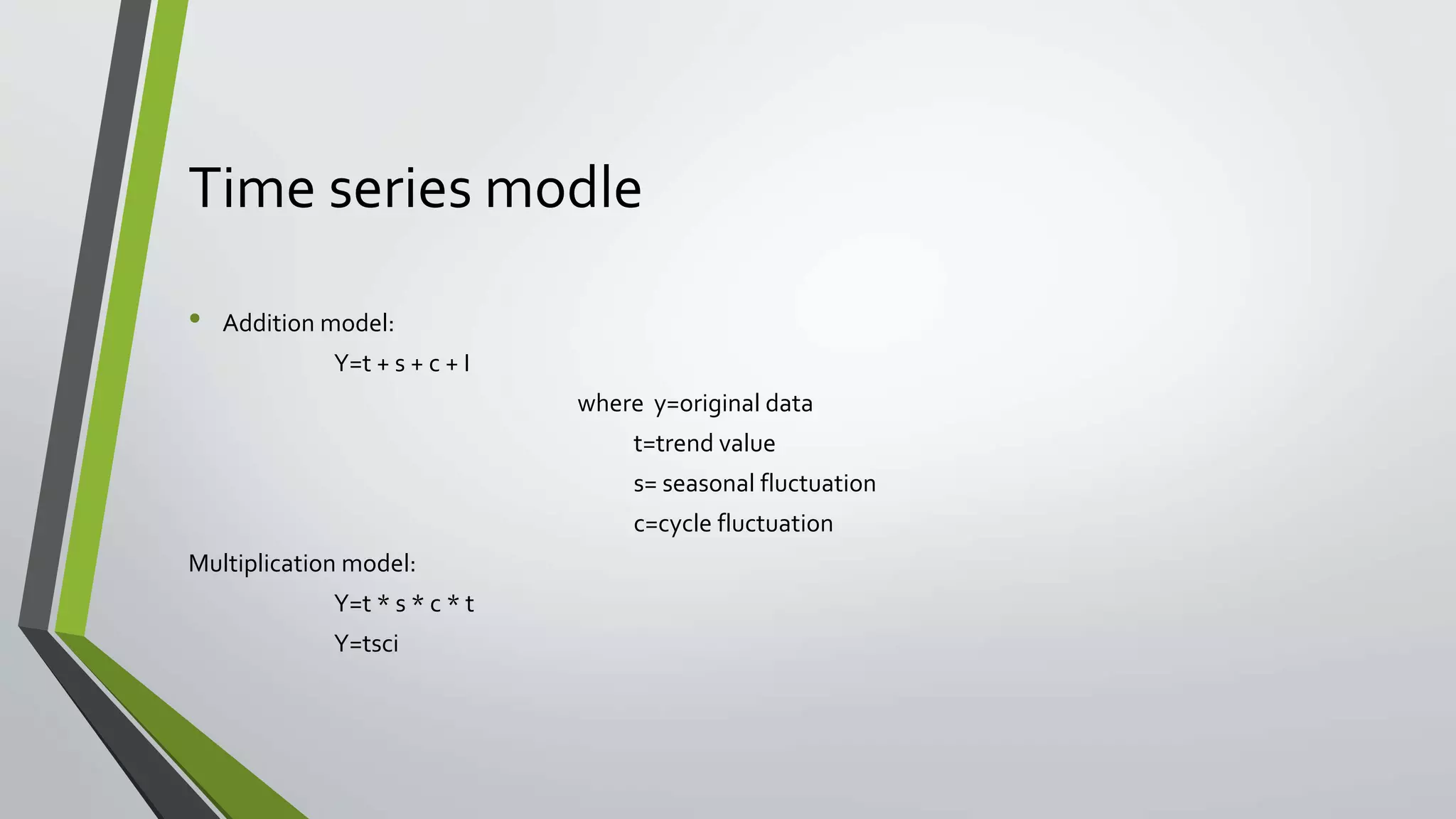
• Addition model:
Y=t + s + c + I
where y=original data
t=trend value
s= seasonal fluctuation
c=cycle fluctuation
Multiplication model:
Y=t * s * c * t
Y=tsci
Measurement of trends
• Following are the methods by which we can measure the trend.
• (i) Freehand or Graphic Method.
• (ii) Method of Semi-Averages.
• (iii) Method of Moving Averages.

TRend analysis os time series data .pptx

  • 1.
    Trend and analysisof time series data By :- D. Ravi kiran 220415140021
  • 2.
    Intorduction • Trend analysisin the time series is the practice of collecting and attempting to spot patterns. Various data mining techniques such as clustering, classification, regression, etc. can be used to expose those trends. • Time series analysis refers to a particular collection of specialised regression methods that illustrate trends in the data.
  • 3.
    types • Time seriescan be classified into two different types: • stock • Flow • There are three types of trend analysis methods – • geographic, • temporal • intuitive.
  • 4.
    importance • Time seriesanalysis helps organizations understand the underlying causes of trends or systemic patterns over time • As the basis of the time series analysis business can predict about the changes in economy • The term “trend” refers to an average, long-term, smooth tendency. • Not all increases or decreases have to occur simultaneously
  • 5.
    components • Its componentsare the • secular trend, • seasonal trend, • cyclical variations, • irregular variations.
  • 6.
    Time series modle •Addition model: Y=t + s + c + I where y=original data t=trend value s= seasonal fluctuation c=cycle fluctuation Multiplication model: Y=t * s * c * t Y=tsci
  • 7.
    Measurement of trends •Following are the methods by which we can measure the trend. • (i) Freehand or Graphic Method. • (ii) Method of Semi-Averages. • (iii) Method of Moving Averages.