

Treatment of
Hypernatremia
My Notes
By Dr Sahar Salem Sasy
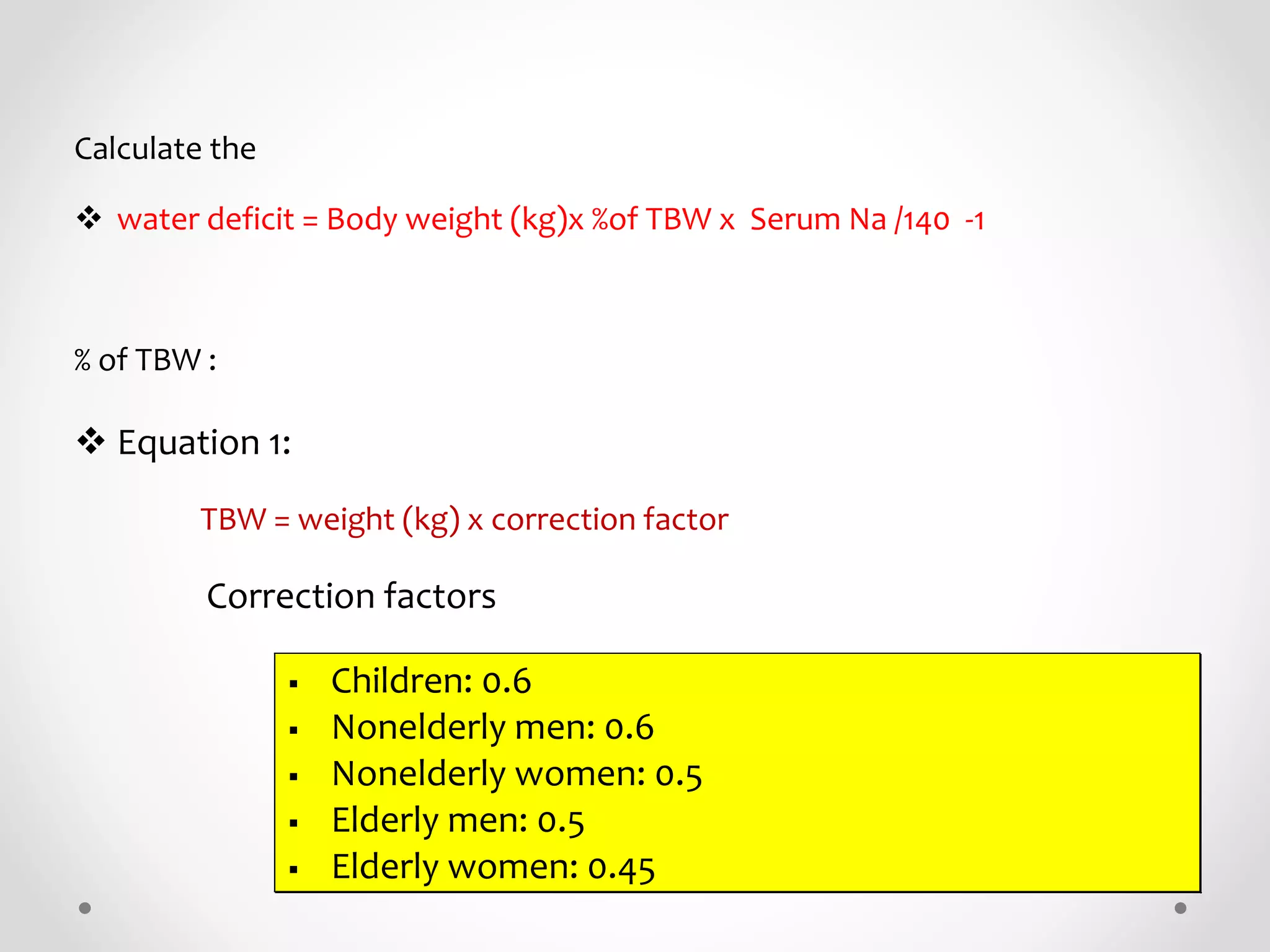
Calculate the
 water deficit = Body weight (kg)x %of TBW x Serum Na /140 -1
% of TBW :
 Equation 1:
TBW = weight (kg) x correction factor
Correction factors
 Children: 0.6
 Nonelderly men: 0.6
 Nonelderly women: 0.5
 Elderly men: 0.5
 Elderly women: 0.45
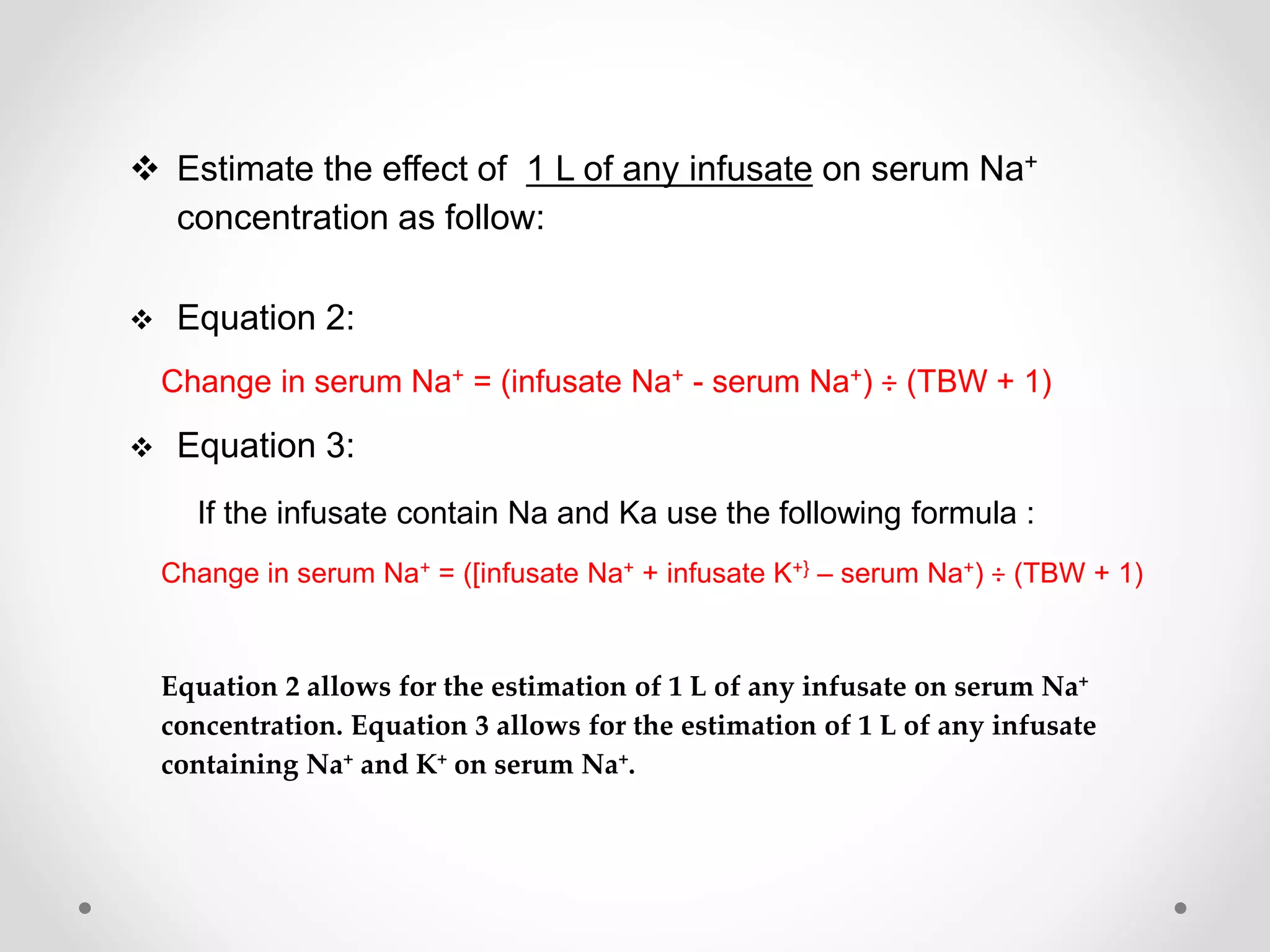
 Estimate the effect of 1 L of any infusate on serum Na+
concentration as follow:
 Equation 2:
Change in serum Na+ = (infusate Na+ - serum Na+) ÷ (TBW + 1)
 Equation 3:
If the infusate contain Na and Ka use the following formula :
Change in serum Na+ = ([infusate Na+ + infusate K+} – serum Na+) ÷ (TBW + 1)
Equation 2 allows for the estimation of 1 L of any infusate on serum Na+
concentration. Equation 3 allows for the estimation of 1 L of any infusate
containing Na+ and K+ on serum Na+.
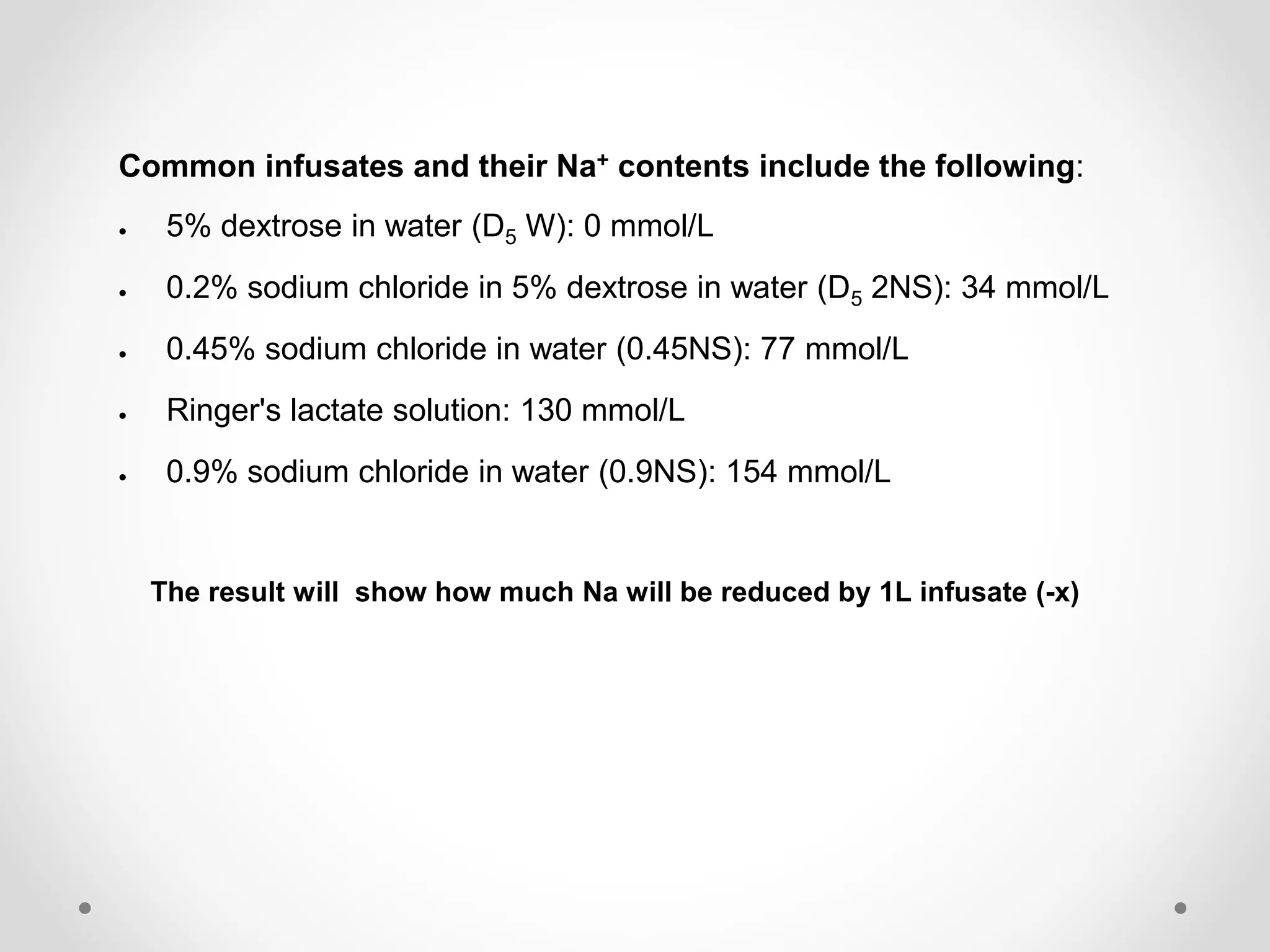
Common infusates and their Na+ contents include the following:
 5% dextrose in water (D5 W): 0 mmol/L
 0.2% sodium chloride in 5% dextrose in water (D5 2NS): 34 mmol/L
 0.45% sodium chloride in water (0.45NS): 77 mmol/L
 Ringer's lactate solution: 130 mmol/L
 0.9% sodium chloride in water (0.9NS): 154 mmol/L
The result will show how much Na will be reduced by 1L infusate (-x)
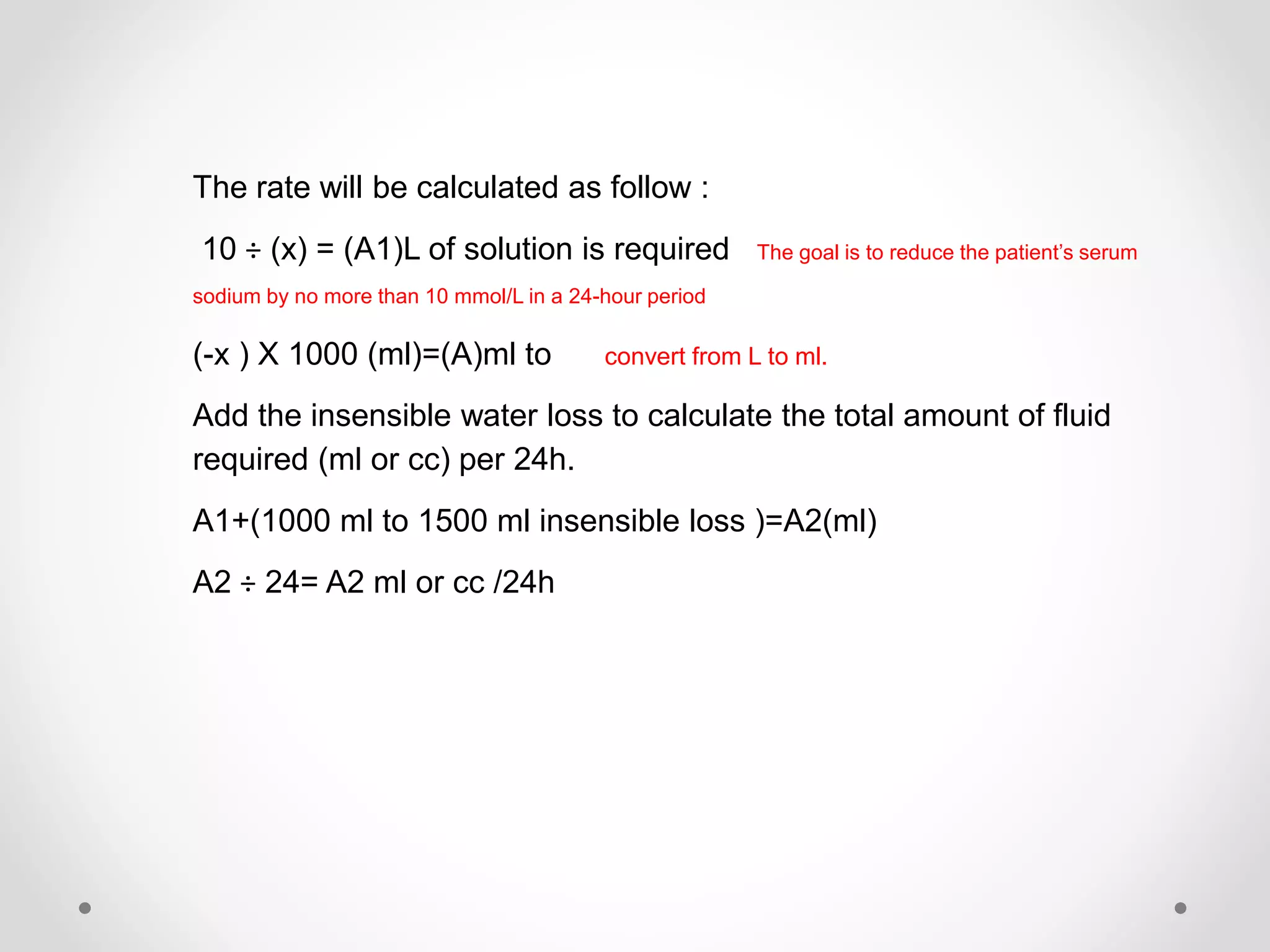
The rate will be calculated as follow :
10 ÷ (x) = (A1)L of solution is required The goal is to reduce the patient’s serum
sodium by no more than 10 mmol/L in a 24-hour period
(-x ) X 1000 (ml)=(A)ml to convert from L to ml.
Add the insensible water loss to calculate the total amount of fluid
required (ml or cc) per 24h.
A1+(1000 ml to 1500 ml insensible loss )=A2(ml)
A2 ÷ 24= A2 ml or cc /24h
All The Best

Treatment of hypernatremia

  • 1.
  • 2.
    Calculate the  waterdeficit = Body weight (kg)x %of TBW x Serum Na /140 -1 % of TBW :  Equation 1: TBW = weight (kg) x correction factor Correction factors  Children: 0.6  Nonelderly men: 0.6  Nonelderly women: 0.5  Elderly men: 0.5  Elderly women: 0.45
  • 3.
     Estimate theeffect of 1 L of any infusate on serum Na+ concentration as follow:  Equation 2: Change in serum Na+ = (infusate Na+ - serum Na+) ÷ (TBW + 1)  Equation 3: If the infusate contain Na and Ka use the following formula : Change in serum Na+ = ([infusate Na+ + infusate K+} – serum Na+) ÷ (TBW + 1) Equation 2 allows for the estimation of 1 L of any infusate on serum Na+ concentration. Equation 3 allows for the estimation of 1 L of any infusate containing Na+ and K+ on serum Na+.
  • 4.
    Common infusates andtheir Na+ contents include the following:  5% dextrose in water (D5 W): 0 mmol/L  0.2% sodium chloride in 5% dextrose in water (D5 2NS): 34 mmol/L  0.45% sodium chloride in water (0.45NS): 77 mmol/L  Ringer's lactate solution: 130 mmol/L  0.9% sodium chloride in water (0.9NS): 154 mmol/L The result will show how much Na will be reduced by 1L infusate (-x)
  • 5.
    The rate willbe calculated as follow : 10 ÷ (x) = (A1)L of solution is required The goal is to reduce the patient’s serum sodium by no more than 10 mmol/L in a 24-hour period (-x ) X 1000 (ml)=(A)ml to convert from L to ml. Add the insensible water loss to calculate the total amount of fluid required (ml or cc) per 24h. A1+(1000 ml to 1500 ml insensible loss )=A2(ml) A2 ÷ 24= A2 ml or cc /24h
  • 6.