P       A      R       T      N        E   R    S             O      R     T     H      O     P      A     E     D      I    C


 Trauma Rounds
   Case Reports from the Mass General Hospital and Brigham & Women’s Hospital
	 A Quarterly Case Study	                                                                                    Volume 3, Summer 2012


Treating Injuries from the War Zone
                                        George Dyer, MD

                                        Trevor Owen, MD
                                 In late October 2011, 22 rebels
                                 injured during the Libyan Civil
                                 War were admitted to Spauld-
                                 ing Hospital in Salem, MA.
Our Trauma team provided care to six patients with complex
nonunions, malunions, and nerve injuries. This opportunity
allowed us to apply techniques we use for more routine care to
severe wartime injuries and their sequelae. It showed us how
the careful practice of surgical principles can be effective, even
when treating devastating injuries.
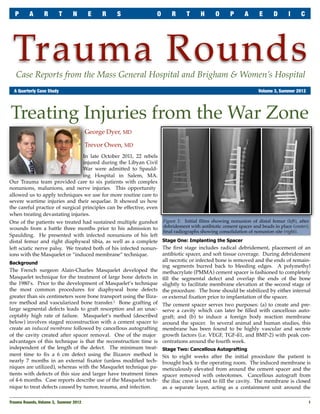
One of the patients we treated had sustained multiple gunshot Figure 1: Initial films showing nonunion of distal femur (left), after
wounds from a battle three months prior to his admission to debridement with antibiotic cement spacer and beads in place (center),
                                                                    final radiographs showing consolidation of nonunion site (right).
Spaulding. He presented with infected nonunions of his left
distal femur and right diaphyseal tibia, as well as a complete Stage One: Implanting the Spacer
left sciatic nerve palsy. We treated both of his infected nonun- The first stage includes radical debridement, placement of an
ions with the Masquelet or “induced membrane” technique.           antibiotic spacer, and soft tissue coverage. During debridement
                                                                   all necrotic or infected bone is removed and the ends of remain-
Background
                                                                   ing segments burred back to bleeding edges. A polymethyl
The French surgeon Alain-Charles Masquelet developed the methacrylate (PMMA) cement spacer is fashioned to completely
Masquelet technique for the treatment of large bone defects in fill the segmental defect and overlap the ends of the bone
the 1980’s. Prior to the development of Masquelet’s technique slightly to facilitate membrane elevation at the second stage of
the most common procedures for diaphyseal bone defects the procedure. The bone should be stabilized by either internal
greater than six centimeters were bone transport using the Iliza- or external fixation prior to implantation of the spacer.
rov method and vascularized bone transfer.1 Bone grafting of The cement spacer serves two purposes: (a) to create and pre-
large segmental defects leads to graft resorption and an unac- serve a cavity which can later be filled with cancellous auto-
ceptably high rate of failure. Masquelet’s method (described graft; and (b) to induce a foreign body reaction membrane
below) involves staged reconstruction with a cement spacer to around the spacer. In several animal and human studies, this
create an induced membrane followed by cancellous autografting membrane has been found to be highly vascular and secrete
of the cavity created after spacer removal. One of the major growth factors (i.e. VEGF, TGF-ß1, and BMP-2) with peak con-
advantages of this technique is that the reconstruction time is centrations around the fourth week.
independent of the length of the defect. The minimum treat- Stage Two: Cancellous Autografting
ment time to fix a 6 cm defect using the Ilizarov method is Six to eight weeks after the initial procedure the patient is
nearly 7 months in an external fixator (unless modified tech- brought back to the operating room. The induced membrane is
niques are utilized), whereas with the Masquelet technique pa- meticulously elevated from around the cement spacer and the
tients with defects of this size and larger have treatment times spacer removed with osteotomes. Cancellous autograft from
of 4-6 months. Case reports describe use of the Masquelet tech- the iliac crest is used to fill the cavity. The membrane is closed
nique to treat defects caused by tumor, trauma, and infection.     as a separate layer, acting as a containment unit around the

Trauma Rounds, Volume 3, Summer 2012
                                                                                                1
P   A   R   T   N   E   R   S     O   R    T    H   O    P   A      E   D    I   C       T   R   A    U   M    A       R   O    U   N    D   S

                                                                                 along the lateral aspect of the plate. Eight weeks later the
                                                                                 spacer and hardware were removed, the cavity filled with iliac
                                                                                 crest autograft expanded with cancellous allograft and an allo-
                                                                                 graft fibula for added stability. Revision locked fixation pro-
                                                                                 vided definitive stability.
                                                                                 We permitted immediate weight bearing on his tibia, but made
                                                                                 him non-weight-bearing on his femur for 4 months. The patient
                                                                                 is currently 8 months out from his first surgery and is able to
                                                                                 bear weight on both legs with the assistance of a walker with
                                                                                 minimal pain. There are no signs of recurrent infection. He
                                                                                 recently underwent Achilles tendon lengthening and posterior
                                                                                 capsule release because of an equinus contracture secondary to
                                                                                 his sciatic palsy on his left leg. The patient is currently recover-
                                                                                 ing from this surgery and making plans to return to Libya.
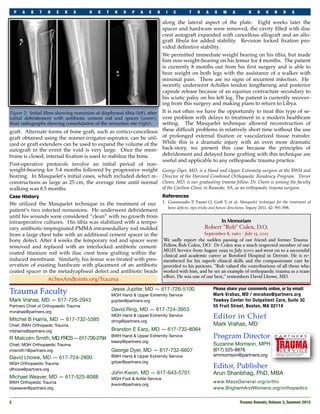
Figure 2: Initial films showing nonunion of diaphyseal tibia (left), after        It is not often we have the opportunity to treat this type of se-
initial debridement with antibiotic cement rod and spacer (center),              vere problem with delays to treatment in a modern healthcare
final radiographs showing consolidation of the nonunion site (right).             setting. The Masquelet technique allowed reconstruction of
graft. Alternate forms of bone graft, such as cortico-cancellous                 these difficult problems in relatively short time without the use
graft obtained using the reamer-irrigator-aspirator, can be util-                of prolonged external fixation or vascularized tissue transfer.
ized or graft extenders can be used to expand the volume of the                  While this is a dramatic injury with an even more dramatic
autograft in the event the void is very large. Once the mem-                     back-story, we present this case because the principles of
brane is closed, internal fixation is used to stabilize the bone.                 debridement and delayed bone grafting with this technique are
                                                                                 useful and applicable to any orthopaedic trauma practice.
Post-operative protocols involve an initial period of non-
weight-bearing for 3-4 months followed by progressive weight                     George Dyer, MD, is a Hand and Upper Extremity surgeon at the BWH and
bearing. In Masquelet’s initial cases, which included defect re-                 Director of the Harvard Combined Orthopaedic Residency Program.  Trevor
constructions as large as 25 cm, the average time until normal                   Owen, MD, is our graduating trauma fellow. Dr. Owen is joining the faculty
walking was 8.5 months.                                                          of the Carilion Clinic in Roanoke, V as an orthopaedic trauma surgeon.
                                                                                                                     A,
Case History                                                                     References
We utilized the Masquelet technique in the treatment of our 1. Giannoudis P, Faour O, Goff T, et al. Masquelet technique for the treatment of
                                                                 bone defects: tips-tricks and future directions. Injury 2011; 42: 591-598.
patient’s two infected nonunions. He underwent debridement
until his wounds were considered “clean” with no growth from
intraoperative cultures. His tibia was stabilized with a tempo-                                   In Memoriam
rary antibiotic-impregnated PMMA intramedullary rod molded                              Robert "Rob" Colen, D.O.
from a large chest tube with an additional cement spacer in the                         September 8, 1960 - July 15, 2012
bony defect. After 4 weeks the temporary rod and spacer were We sadly report the sudden passing of our friend and former Trauma
removed and replaced with an interlocked antibiotic cement- Fellow, Rob Colen, DO. Dr Colen was a much respected member of our
                                                                MGH Service from August 1999 to July 2000 and went on to a successful
coated titanium rod with iliac crest bone grafting within the clinical and academic career at Botsford Hospital in Detroit. He is re-
induced membrane. Similarly, his femur was treated with pres- membered for his superb clinical skills and the compassionate care he
ervation of existing hardware with placement of an antibiotic provided to his patients. "Rob valued the contributions of all those who
coated spacer in the metadyaphseal defect and antibiotic beads worked with him, and he set an example of orthopaedic trauma as a team
                                                                                 effort. He was one of our best," remembers David Lhowe, MD.
                     AchesAndJoints.org/Trauma
                                                    Jesse Jupiter, MD — 617-726-5100                      Please share your comments online, or by email:
Trauma Faculty                                      MGH Hand & Upper Extremity Service                    Mark Vrahas, MD / mvrahas@partners.org
Mark Vrahas, MD — 617-726-2943                      jjupiter@partners.org                                 Yawkey Center for Outpatient Care, Suite 3C
Partners Chief of Orthopaedic Trauma                                                                      55 Fruit Street, Boston, MA 02114
mvrahas@partners.org                                David Ring, MD — 617-724-3953
Mitchel B Harris, MD — 617-732-5385
                                                    MGH Hand & Upper Extremity Service                    Editor in Chief
                                                    dring@partners.org
Chief, BWH Orthopedic Trauma                                                                              Mark Vrahas, MD
mbharris@partners.org                               Brandon E Earp, MD — 617-732-8064
R Malcolm Smith, MD, FRCS — 617-726-2794 BWH Hand & Upper Extremity Service                               Program Director
                                                    bearp@partners.org
Chief, MGH Orthopaedic Trauma                                                                             Suzanne Morrison, MPH
rmsmith1@partners.org                               George Dyer, MD — 617-732-6607                        (617) 525-8876
                                                    BWH Hand & Upper Extremity Service                    smmorrison@partners.org
David Lhowe, MD — 617-724-2800
MGH Orthopaedic Trauma                              gdyer@partners.org
dlhowe@partners.org
                                                                                                          Editor, Publisher
                                                    John Kwon, MD — 617-643-5701                          Arun Shanbhag, PhD, MBA
Michael Weaver, MD — 617-525-8088                   MGH Foot & Ankle Service
BWH Orthopedic Trauma                                                                                     www.MassGeneral.org/ortho
                                                    jkwon@partners.org
mjweaver@partners.org                                                                                     www.BrighamAndWomens.org/orthopedics


2
                                                                                                                      Trauma Rounds, Volume 3, Summer 2012

Treating Injuries from the War Zone

  • 1.
    P A R T N E R S O R T H O P A E D I C Trauma Rounds Case Reports from the Mass General Hospital and Brigham & Women’s Hospital A Quarterly Case Study Volume 3, Summer 2012 Treating Injuries from the War Zone George Dyer, MD Trevor Owen, MD In late October 2011, 22 rebels injured during the Libyan Civil War were admitted to Spauld- ing Hospital in Salem, MA. Our Trauma team provided care to six patients with complex nonunions, malunions, and nerve injuries. This opportunity allowed us to apply techniques we use for more routine care to severe wartime injuries and their sequelae. It showed us how the careful practice of surgical principles can be effective, even when treating devastating injuries. One of the patients we treated had sustained multiple gunshot Figure 1: Initial films showing nonunion of distal femur (left), after wounds from a battle three months prior to his admission to debridement with antibiotic cement spacer and beads in place (center), final radiographs showing consolidation of nonunion site (right). Spaulding. He presented with infected nonunions of his left distal femur and right diaphyseal tibia, as well as a complete Stage One: Implanting the Spacer left sciatic nerve palsy. We treated both of his infected nonun- The first stage includes radical debridement, placement of an ions with the Masquelet or “induced membrane” technique. antibiotic spacer, and soft tissue coverage. During debridement all necrotic or infected bone is removed and the ends of remain- Background ing segments burred back to bleeding edges. A polymethyl The French surgeon Alain-Charles Masquelet developed the methacrylate (PMMA) cement spacer is fashioned to completely Masquelet technique for the treatment of large bone defects in fill the segmental defect and overlap the ends of the bone the 1980’s. Prior to the development of Masquelet’s technique slightly to facilitate membrane elevation at the second stage of the most common procedures for diaphyseal bone defects the procedure. The bone should be stabilized by either internal greater than six centimeters were bone transport using the Iliza- or external fixation prior to implantation of the spacer. rov method and vascularized bone transfer.1 Bone grafting of The cement spacer serves two purposes: (a) to create and pre- large segmental defects leads to graft resorption and an unac- serve a cavity which can later be filled with cancellous auto- ceptably high rate of failure. Masquelet’s method (described graft; and (b) to induce a foreign body reaction membrane below) involves staged reconstruction with a cement spacer to around the spacer. In several animal and human studies, this create an induced membrane followed by cancellous autografting membrane has been found to be highly vascular and secrete of the cavity created after spacer removal. One of the major growth factors (i.e. VEGF, TGF-ß1, and BMP-2) with peak con- advantages of this technique is that the reconstruction time is centrations around the fourth week. independent of the length of the defect. The minimum treat- Stage Two: Cancellous Autografting ment time to fix a 6 cm defect using the Ilizarov method is Six to eight weeks after the initial procedure the patient is nearly 7 months in an external fixator (unless modified tech- brought back to the operating room. The induced membrane is niques are utilized), whereas with the Masquelet technique pa- meticulously elevated from around the cement spacer and the tients with defects of this size and larger have treatment times spacer removed with osteotomes. Cancellous autograft from of 4-6 months. Case reports describe use of the Masquelet tech- the iliac crest is used to fill the cavity. The membrane is closed nique to treat defects caused by tumor, trauma, and infection. as a separate layer, acting as a containment unit around the Trauma Rounds, Volume 3, Summer 2012 1
  • 2.
    P A R T N E R S O R T H O P A E D I C T R A U M A R O U N D S along the lateral aspect of the plate. Eight weeks later the spacer and hardware were removed, the cavity filled with iliac crest autograft expanded with cancellous allograft and an allo- graft fibula for added stability. Revision locked fixation pro- vided definitive stability. We permitted immediate weight bearing on his tibia, but made him non-weight-bearing on his femur for 4 months. The patient is currently 8 months out from his first surgery and is able to bear weight on both legs with the assistance of a walker with minimal pain. There are no signs of recurrent infection. He recently underwent Achilles tendon lengthening and posterior capsule release because of an equinus contracture secondary to his sciatic palsy on his left leg. The patient is currently recover- ing from this surgery and making plans to return to Libya. Figure 2: Initial films showing nonunion of diaphyseal tibia (left), after It is not often we have the opportunity to treat this type of se- initial debridement with antibiotic cement rod and spacer (center), vere problem with delays to treatment in a modern healthcare final radiographs showing consolidation of the nonunion site (right). setting. The Masquelet technique allowed reconstruction of graft. Alternate forms of bone graft, such as cortico-cancellous these difficult problems in relatively short time without the use graft obtained using the reamer-irrigator-aspirator, can be util- of prolonged external fixation or vascularized tissue transfer. ized or graft extenders can be used to expand the volume of the While this is a dramatic injury with an even more dramatic autograft in the event the void is very large. Once the mem- back-story, we present this case because the principles of brane is closed, internal fixation is used to stabilize the bone. debridement and delayed bone grafting with this technique are useful and applicable to any orthopaedic trauma practice. Post-operative protocols involve an initial period of non- weight-bearing for 3-4 months followed by progressive weight George Dyer, MD, is a Hand and Upper Extremity surgeon at the BWH and bearing. In Masquelet’s initial cases, which included defect re- Director of the Harvard Combined Orthopaedic Residency Program.  Trevor constructions as large as 25 cm, the average time until normal Owen, MD, is our graduating trauma fellow. Dr. Owen is joining the faculty walking was 8.5 months. of the Carilion Clinic in Roanoke, V as an orthopaedic trauma surgeon. A, Case History References We utilized the Masquelet technique in the treatment of our 1. Giannoudis P, Faour O, Goff T, et al. Masquelet technique for the treatment of bone defects: tips-tricks and future directions. Injury 2011; 42: 591-598. patient’s two infected nonunions. He underwent debridement until his wounds were considered “clean” with no growth from intraoperative cultures. His tibia was stabilized with a tempo- In Memoriam rary antibiotic-impregnated PMMA intramedullary rod molded Robert "Rob" Colen, D.O. from a large chest tube with an additional cement spacer in the September 8, 1960 - July 15, 2012 bony defect. After 4 weeks the temporary rod and spacer were We sadly report the sudden passing of our friend and former Trauma removed and replaced with an interlocked antibiotic cement- Fellow, Rob Colen, DO. Dr Colen was a much respected member of our MGH Service from August 1999 to July 2000 and went on to a successful coated titanium rod with iliac crest bone grafting within the clinical and academic career at Botsford Hospital in Detroit. He is re- induced membrane. Similarly, his femur was treated with pres- membered for his superb clinical skills and the compassionate care he ervation of existing hardware with placement of an antibiotic provided to his patients. "Rob valued the contributions of all those who coated spacer in the metadyaphseal defect and antibiotic beads worked with him, and he set an example of orthopaedic trauma as a team effort. He was one of our best," remembers David Lhowe, MD. AchesAndJoints.org/Trauma Jesse Jupiter, MD — 617-726-5100 Please share your comments online, or by email: Trauma Faculty MGH Hand & Upper Extremity Service Mark Vrahas, MD / mvrahas@partners.org Mark Vrahas, MD — 617-726-2943 jjupiter@partners.org Yawkey Center for Outpatient Care, Suite 3C Partners Chief of Orthopaedic Trauma 55 Fruit Street, Boston, MA 02114 mvrahas@partners.org David Ring, MD — 617-724-3953 Mitchel B Harris, MD — 617-732-5385 MGH Hand & Upper Extremity Service Editor in Chief dring@partners.org Chief, BWH Orthopedic Trauma Mark Vrahas, MD mbharris@partners.org Brandon E Earp, MD — 617-732-8064 R Malcolm Smith, MD, FRCS — 617-726-2794 BWH Hand & Upper Extremity Service Program Director bearp@partners.org Chief, MGH Orthopaedic Trauma Suzanne Morrison, MPH rmsmith1@partners.org George Dyer, MD — 617-732-6607 (617) 525-8876 BWH Hand & Upper Extremity Service smmorrison@partners.org David Lhowe, MD — 617-724-2800 MGH Orthopaedic Trauma gdyer@partners.org dlhowe@partners.org Editor, Publisher John Kwon, MD — 617-643-5701 Arun Shanbhag, PhD, MBA Michael Weaver, MD — 617-525-8088 MGH Foot & Ankle Service BWH Orthopedic Trauma www.MassGeneral.org/ortho jkwon@partners.org mjweaver@partners.org www.BrighamAndWomens.org/orthopedics 2 Trauma Rounds, Volume 3, Summer 2012