4TH TRAUMA SYMPOSIUMMANAGEMENT OF LARYNGEAL INJURIES                                IN                   NECK      TRAUMA                          Dr. M. NaimManhas                                   E.N.T.  Specialist                     King Abdul Aziz Hospital-MakkahDr. Naim Manhas1
trauma symposium—WHY?2Dr. Naim Manhas
   trauma symposium—WHY?3Dr. Naim Manhas
   trauma symposium—WHY? 4Dr. Naim Manhas
“purpose of symposium”5Dr. Naim Manhas
6Dr. Naim Manhas
      Blunt injuries of neckBruises over the neckHematoma Surgical emphysema7Dr. Naim Manhas
Blunt injuries of neck8Dr. Naim Manhas
Laryngeal injuries9Dr. Naim Manhas
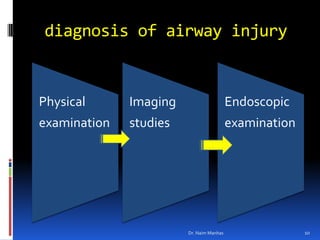
 diagnosis of airway injury 10Dr. Naim Manhas
management11Dr. Naim Manhas
       problematic12Dr. Naim Manhas
Emergency airway management13Dr. Naim Manhas
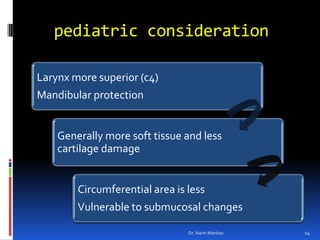
pediatric consideration14Dr. Naim Manhas
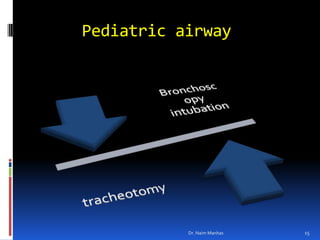
     Pediatric airway15Dr. Naim Manhas
caution16Dr. Naim Manhas
laryngeal trauma(neck-injury)Dr. Naim Manhas17
laryngeal trauma(neck-injury)Dr. Naim Manhas18
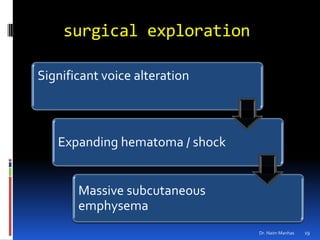
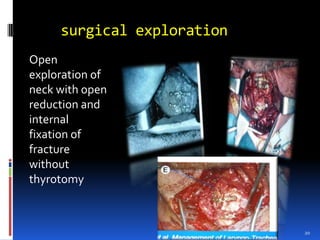
surgical exploration19Dr. Naim Manhas
surgical explorationOpen exploration of neck with open reduction and internal fixation of fracture without thyrotomyDr. Naim Manhas20
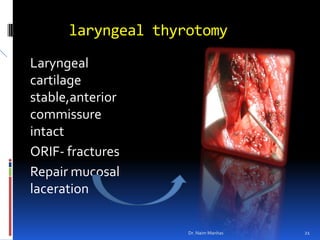
laryngeal thyrotomyLaryngeal cartilage stable,anteriorcommissure intactORIF- fracturesRepair mucosal lacerationDr. Naim Manhas21
   laryngeal thyrotomyORIF fractures, repair mucosal laceration and endolaryngeal stentLaryngeal cartilage unstable,anteriorcommissuredisrupted,massive mucosal injuriesDr. Naim Manhas22
penetrating neck injuriesNeck zonesZone -1 thoracic outletCricoid cartilage to sternal notchZone-2  centralCricoid to angle of mandibleZone-3  skull baseAngle of mandible to base of skullDr. Naim Manhas23
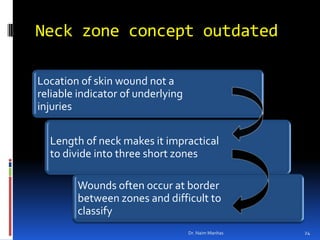
Neck zone concept outdatedDr. Naim Manhas24
Epidemiology of penetrating neck injuries40% of penetrating neck injuries do not involve important structuresStructures involved:--major vein: 15-25%-major artery: 10-15%-pharynx or esophagus: 5-15%Larynx or trachea: 4-12%Major nerves: 3-8%Dr. Naim Manhas25
Debatable issueSome surgeons have advocated mandatory exploration of all penetrating neck wounds on the basis  that  serious injury can exist in the absence of clinical findings. Others have advocated a selective approach operating only upon patients whose findings suggest a major vascular or visceral injuryDr. Naim Manhas26
   penetrating neck injuries since zone 2nd has all the vital structures and any injury  in this area needs immediate neck exploration in case patient is symptomatic.As per the studies it is difficult to make decisions regarding the exact zone for the injuries which  are on border line, as  the  area of neck is small so  the indications  for immediate surgical exploration----Dr. Naim Manhas27
Indication of immediate surgical explorationDr. Naim Manhas28
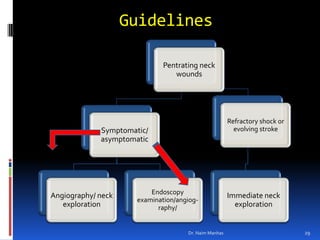
GuidelinesDr. Naim Manhas29
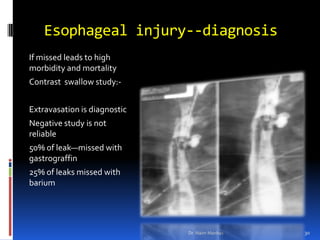
Esophageal injury--diagnosisIf missed leads to high morbidity and mortalityContrast  swallow study:-Extravasation is diagnosticNegative study is not reliable50% of leak—missed with gastrograffin25% of leaks missed with bariumDr. Naim Manhas30
RecommendationsIf gastrograffin study is negative then repeat with BariumAvoid gastrograffin in patients without gag / cough reflex or unprotected airway.( causes pneumonitis if aspirated)Endoscopy                50%  of injuries can be missed , esp. if the patient is on ventilator.Combination of contrast study with esophagoscopy reduces missed injuries to 5%Dr. Naim Manhas31
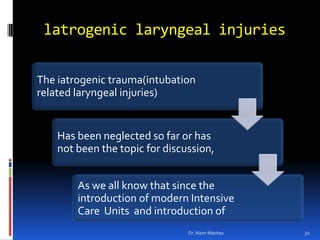
latrogenic laryngeal injuriesDr. Naim Manhas32
latrogenic laryngeal injuriesDr. Naim Manhas33
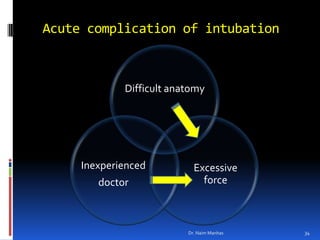
Acute complication of intubationDr. Naim Manhas34
Dr. Naim Manhas35
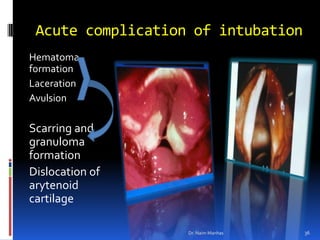
 Acute complication of intubationHematoma formationLaceration AvulsionScarring and granuloma formationDislocation of arytenoid cartilageDr. Naim Manhas36
Sequelae of prolonged intubationDr. Naim Manhas37
pathogensisDr. Naim Manhas38
pathogensisDr. Naim Manhas39
        pathogenesisDr. Naim Manhas40
Sequelae of prolonged intubationDr. Naim Manhas41
Sequelae of prolonged intubationAbduction of the vocal       cords are limited Misdiagnosed  as bilateral abductor  paralysisPeudolaryngeal paralysisDr. Naim Manhas42
Sequelae of prolonged intubationDr. Naim Manhas43
Sequelae of prolonged intubationDr. Naim Manhas44
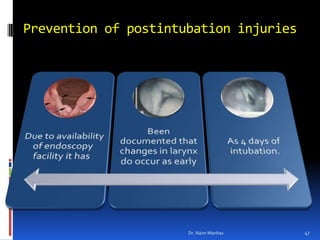
Prevention of postintubation injuries Dr. Naim Manhas45
Prevention of postintubation injuries Time of intubationMore than 10 days and less than 10 daysDr. Naim Manhas46
Prevention of postintubation injuries Dr. Naim Manhas47
Prevention of postintubation injuries Dr. Naim Manhas48
Prevention of postintubation injuries Dr. Naim Manhas49
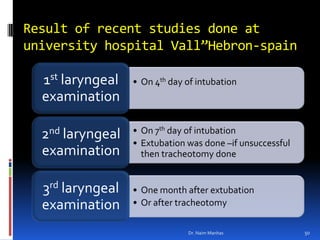
Result of recent studies done at university hospital Vall”Hebron-spainDr. Naim Manhas50
Result of serial laryngeal examinationsDr. Naim Manhas51
       conclusionIntubation injury to the larynx is relatively common and all types of injury have been reported . In patients intubated for prolonged period ,certain types of injury can be expected. The surgeon asked to evaluate a patient for intubation injury should have a clear idea of the type of injury that may be encountered as well as through knowledge of the best methods of prevention and intervention.Dr. Naim Manhas52
         conclusionIn many cases, the injury will resolve without incident, while in others the injury is irreversible. Frequently the process can be corrected with good results if the proper treatment is instituted.THANK YOU      Dr. Naim Manhas53

Trauma symp 2011