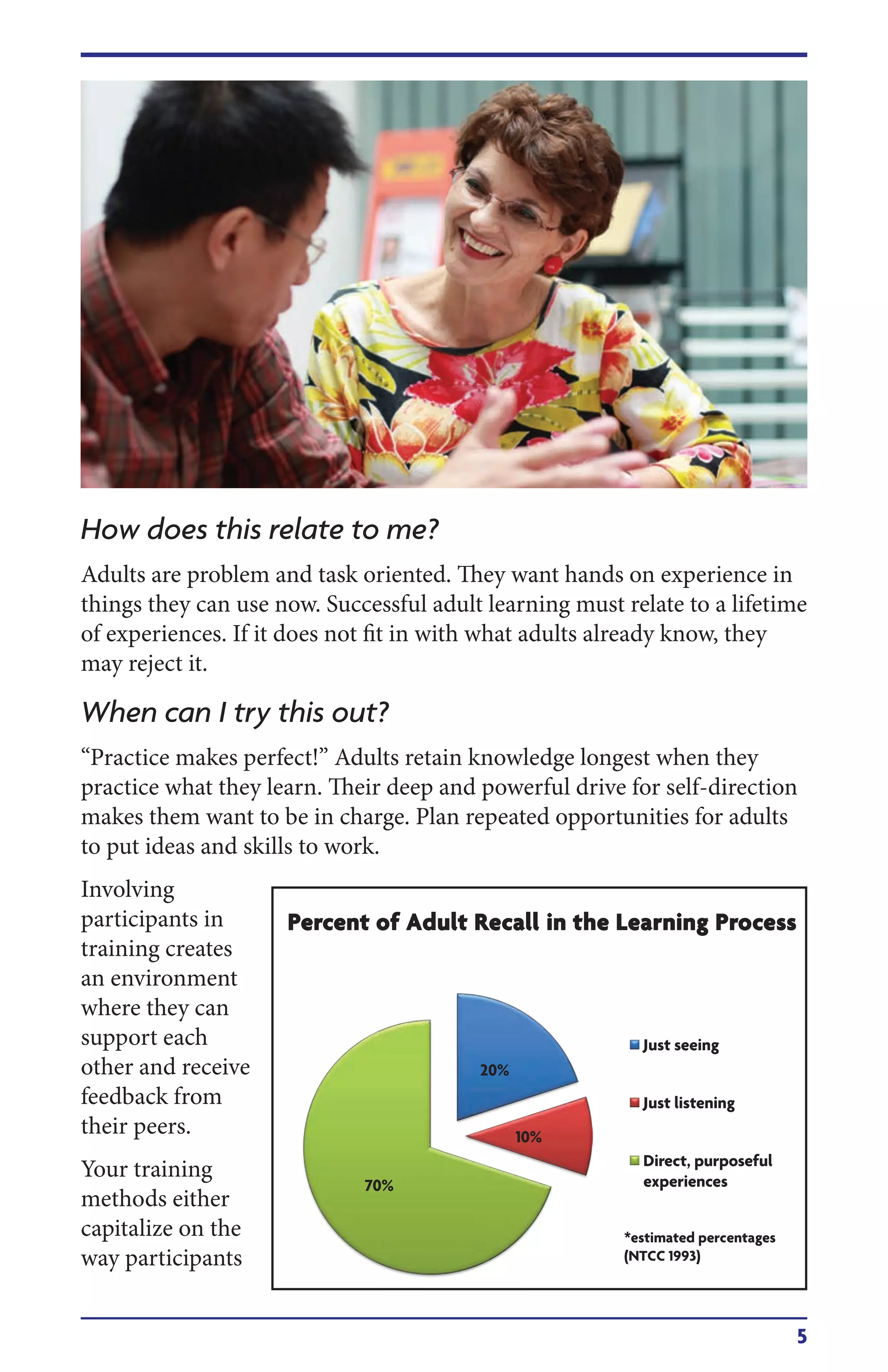
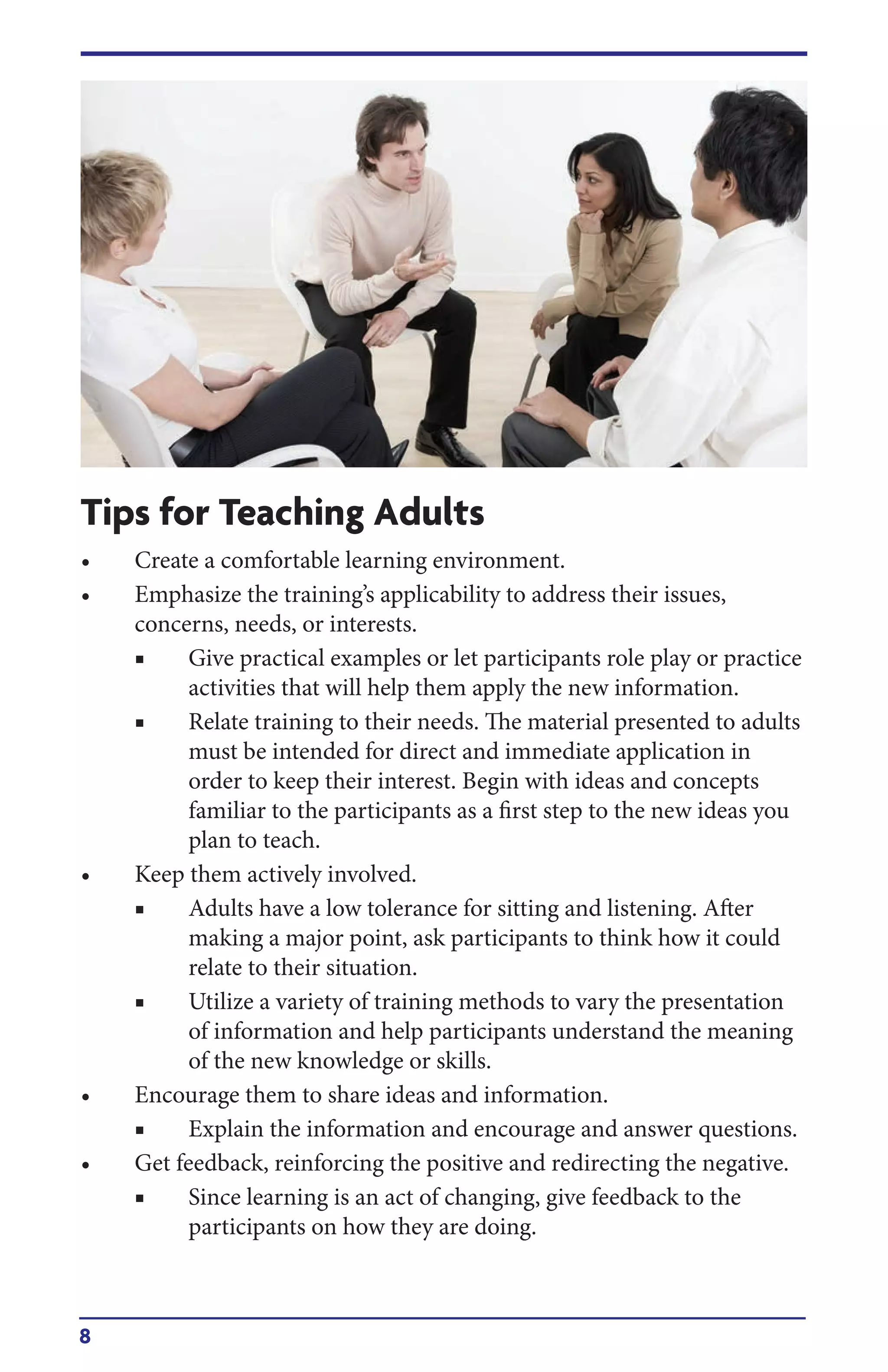
The document provides guidance on effectively teaching adults, highlighting the differences between adult and child learning, emphasizing the importance of engagement and practical applicability. It discusses various learning styles—visual, auditory, and kinesthetic—and suggests methods for trainers to create effective learning environments that respect adults' experiences and self-directedness. Key strategies include fostering motivation, utilizing diverse training methods, and allowing for peer support and practice in real-world contexts.