Welcome to Training program of SEO
1
Why does My Website Need SEO?
 The majority of web traffic is driven by the major commercial search
engines, Google, Bing, and Yahoo!. Search engines are unique in that they
provide targeted traffic—people looking for what you offer. If search engines
cannot find your site, or add your content to their databases, you miss out on
incredible opportunities to drive traffic to your site.
 Targeted visitors to a website can provide publicity, revenue, and exposure
like no other channel of marketing.
 Investing in SEO, whether through time or finances, can have an exceptional
rate of return compared to other types of marketing and promotion.
SEO Training Program
 What is SEO?
 Categories of SEO
 Eight components of On-page SEO
 Page Title
 Meta Description and Meta Data
 Headings
 Images
 Domain Info
 Moz Rank
 Google Crawl Rate
 URL Structure
 How to Improve Off-page SEO?
What is Search Engine Optimization(SEO)?
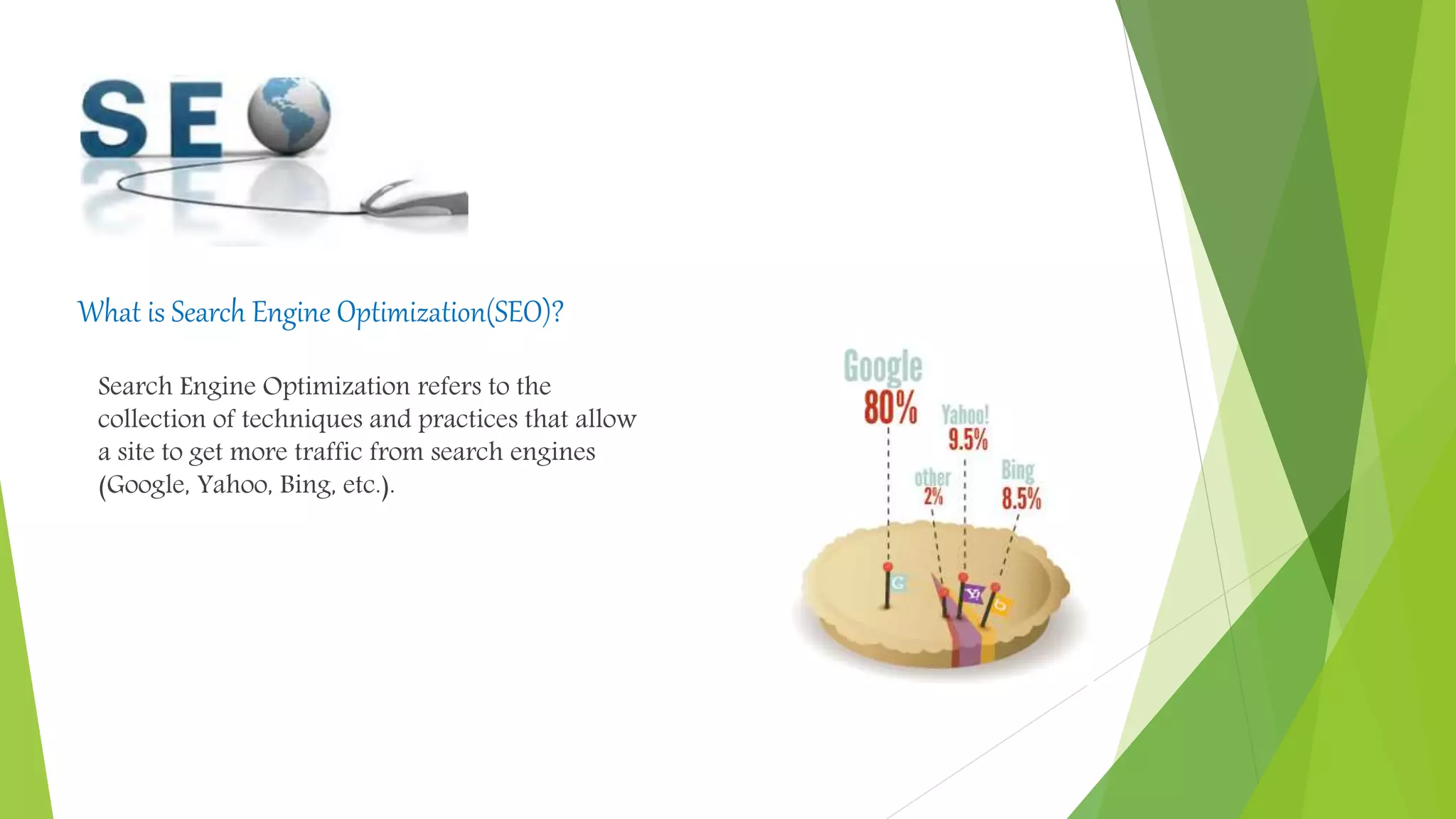
Search Engine Optimization refers to the
collection of techniques and practices that allow
a site to get more traffic from search engines
(Google, Yahoo, Bing, etc.).
Categories of SEO
 On-page SEO
 Off-page SEO
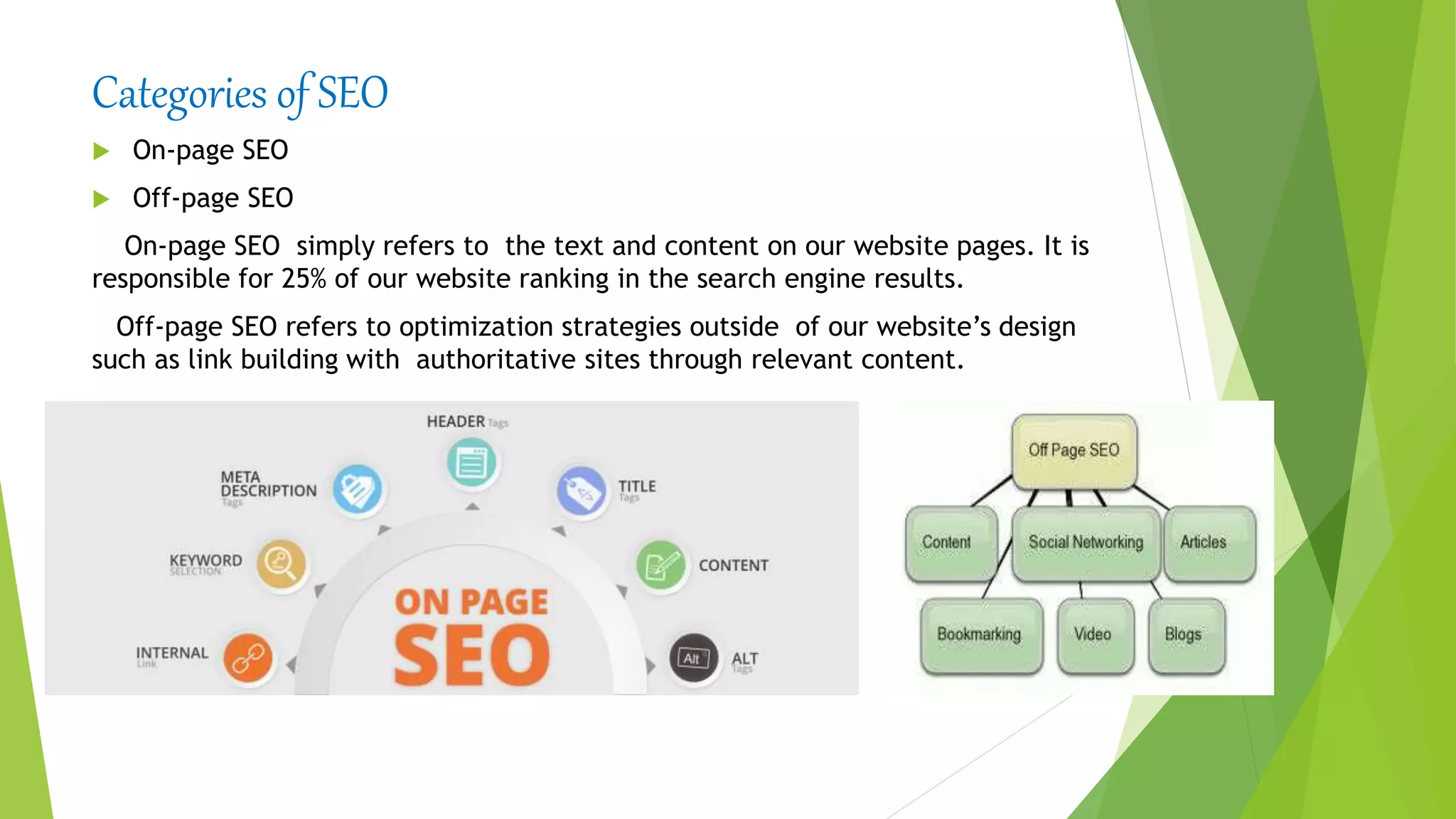
On-page SEO simply refers to the text and content on our website pages. It is
responsible for 25% of our website ranking in the search engine results.
Off-page SEO refers to optimization strategies outside of our website’s design
such as link building with authoritative sites through relevant content.
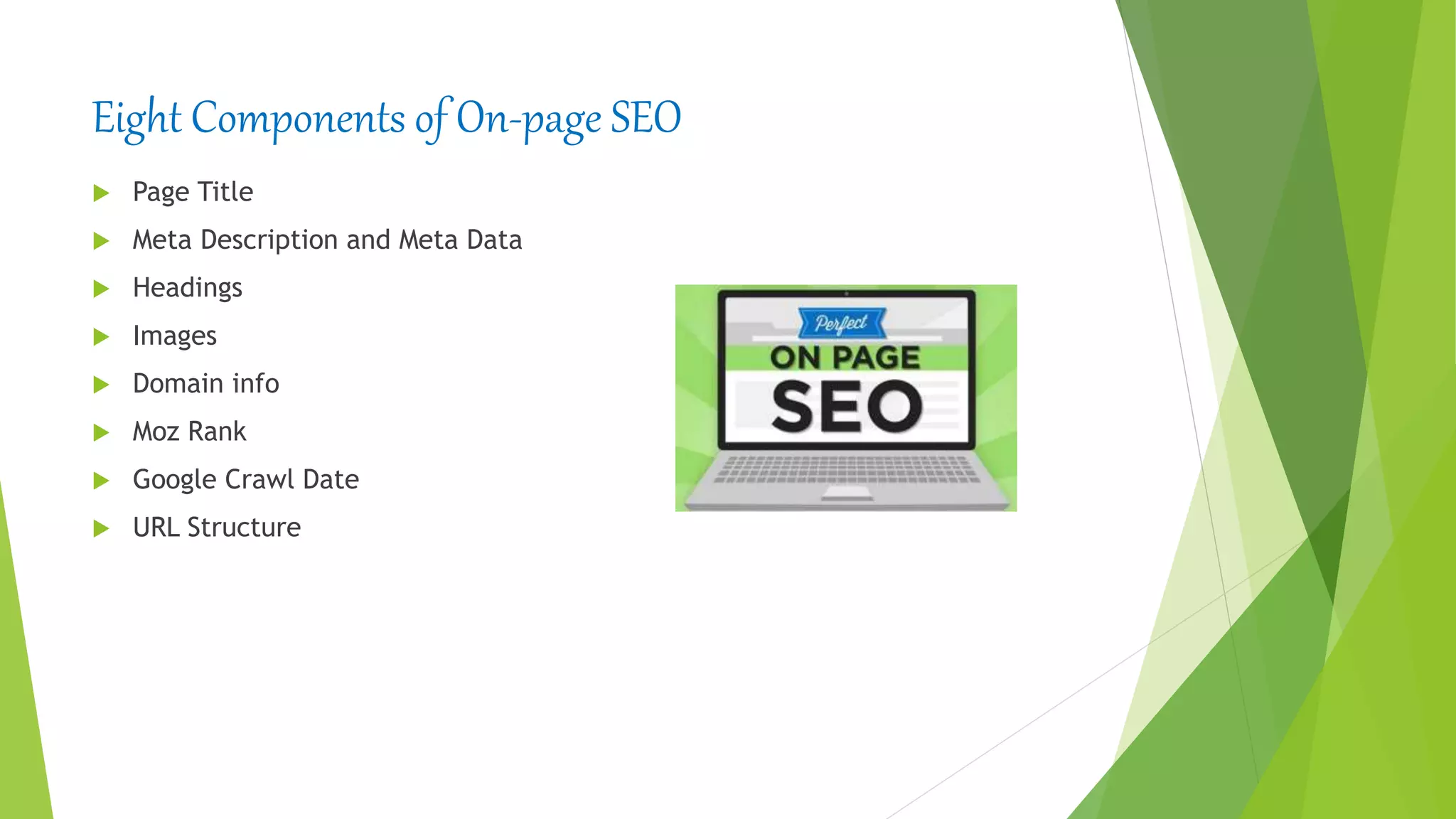
Eight Components of On-page SEO
 Page Title
 Meta Description and Meta Data
 Headings
 Images
 Domain info
 Moz Rank
 Google Crawl Date
 URL Structure
Page Title
 Page titles are the text at the top of the browser window in a web page. They
act as the title of the page, which is presented in search engine. We can find
and edit page title in our website's HTML. The text surrounded with the
<title>tag is our page's title.
Some Rules To Have Some Very Effective Title Pages
 Include keywords
 Keep it precise.
 Try to place keyword close to the beginning of the title starting from left.
 Do not include too much of numbers and characters in it.
 Include the name of our company at the end of the page title.
 Use different page titles for each page
Meta Description and Meta Data
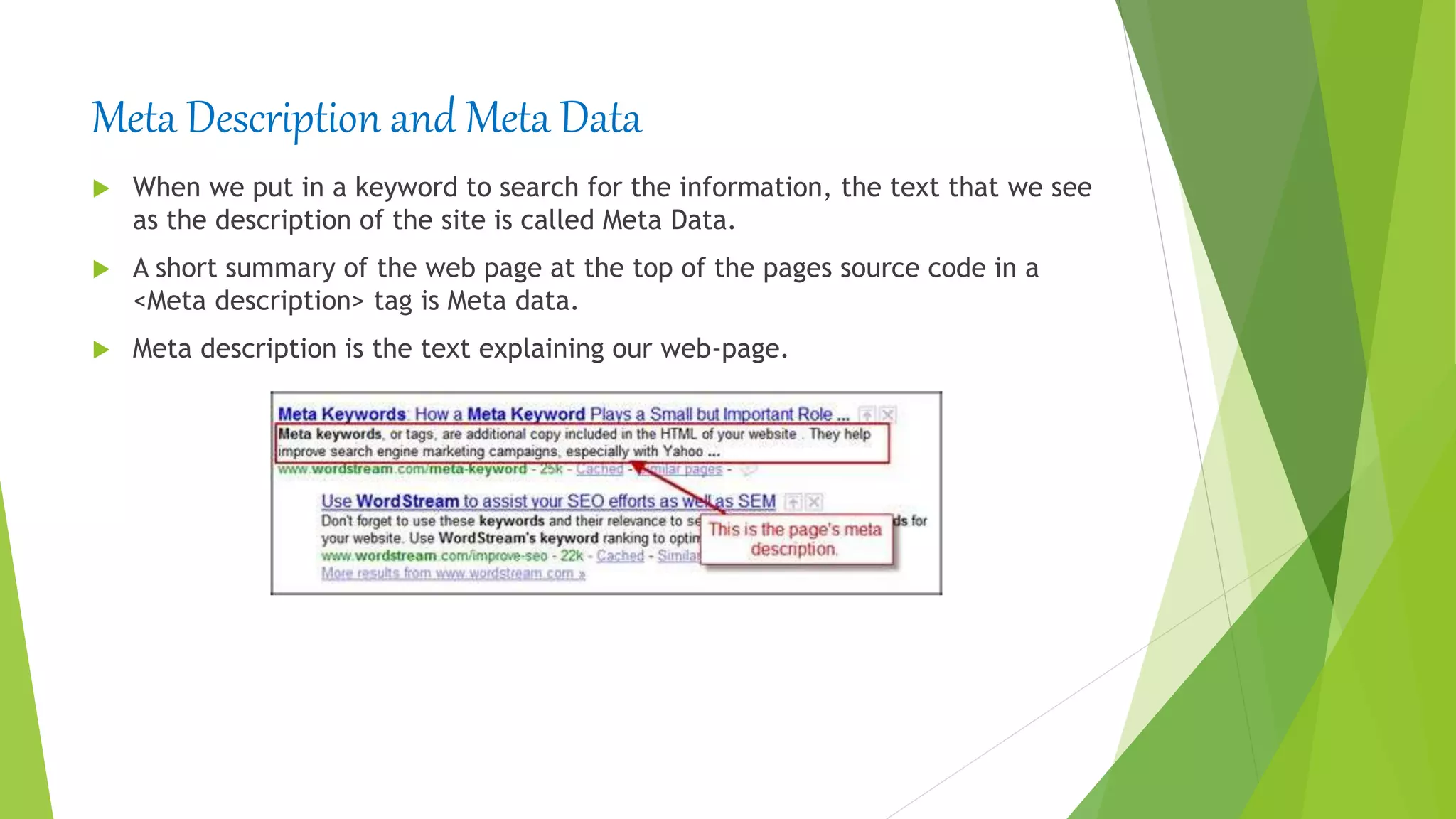
 When we put in a keyword to search for the information, the text that we see
as the description of the site is called Meta Data.
 A short summary of the web page at the top of the pages source code in a
<Meta description> tag is Meta data.
 Meta description is the text explaining our web-page.
Headings
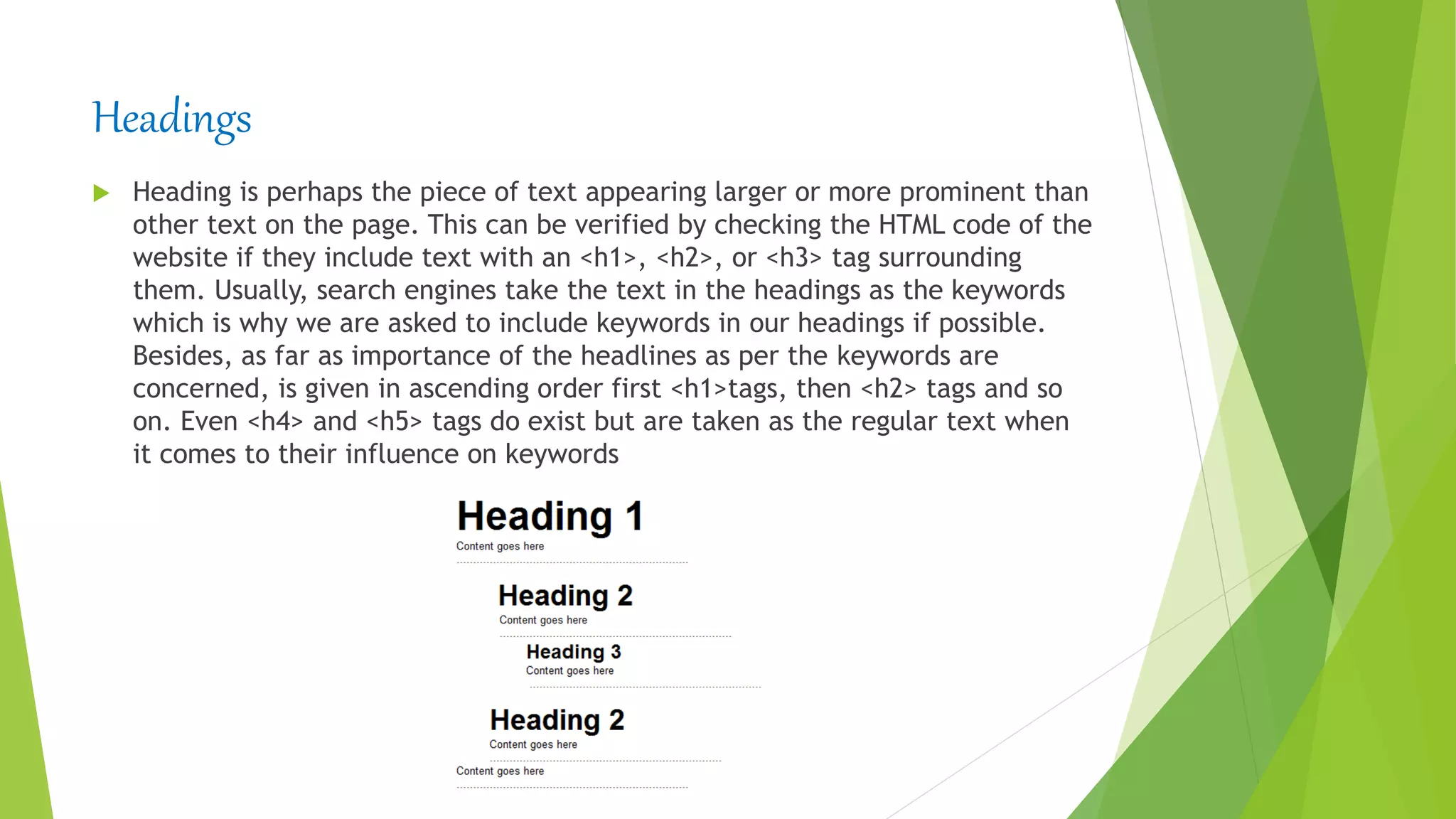
 Heading is perhaps the piece of text appearing larger or more prominent than
other text on the page. This can be verified by checking the HTML code of the
website if they include text with an <h1>, <h2>, or <h3> tag surrounding
them. Usually, search engines take the text in the headings as the keywords
which is why we are asked to include keywords in our headings if possible.
Besides, as far as importance of the headlines as per the keywords are
concerned, is given in ascending order first <h1>tags, then <h2> tags and so
on. Even <h4> and <h5> tags do exist but are taken as the regular text when
it comes to their influence on keywords
Images
Images adds to the value of our content however we should keep few things in
mind while adding a image to our content which are as follows
 Associate text with pictures as search engine read the text and not the
images.
 Images are found to be wonderful source to engage the consumer however
too much of image will slow down the loading of the web page, negatively
affecting both the consumer and search engine optimization.
Domain Info
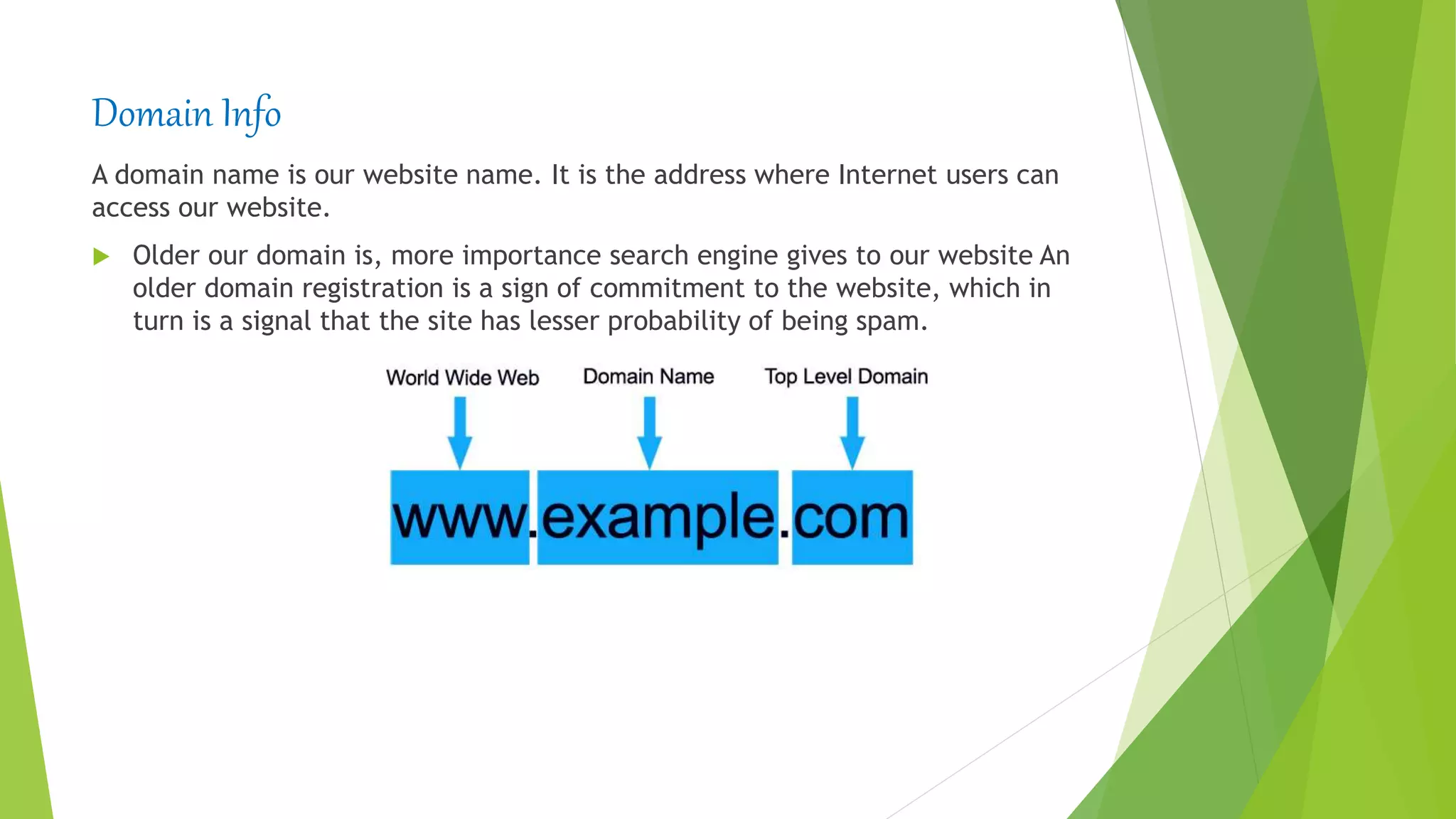
A domain name is our website name. It is the address where Internet users can
access our website.
 Older our domain is, more importance search engine gives to our website An
older domain registration is a sign of commitment to the website, which in
turn is a signal that the site has lesser probability of being spam.
Moz Rank
Moz Rank is one of the most popular and dependable metrics if we want to
measure the authority of a domain or web page. MOZ rank is an important factor
of both on-page and off-page SEO.
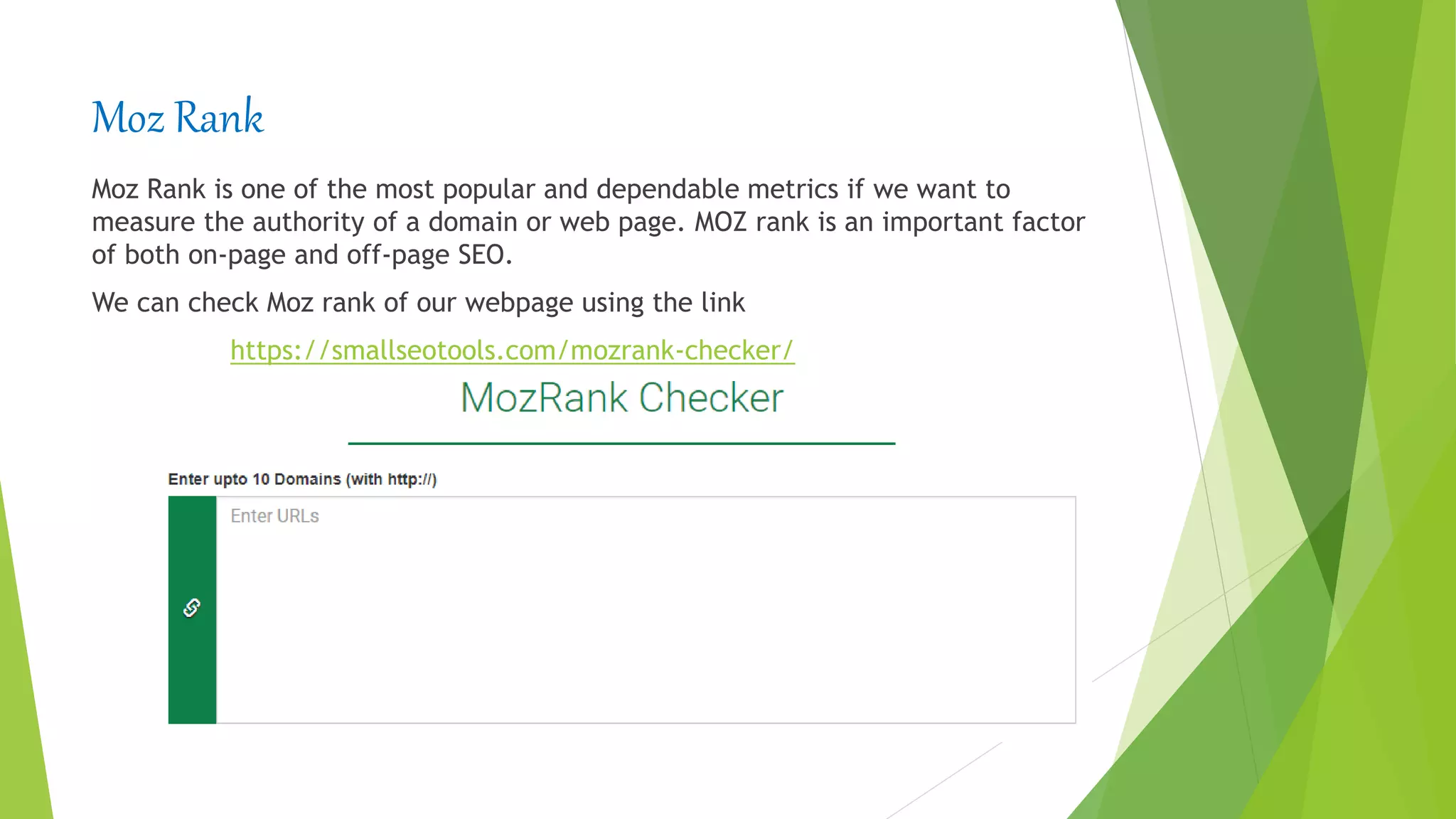
We can check Moz rank of our webpage using the link
https://smallseotools.com/mozrank-checker/
Google Crawl Updates
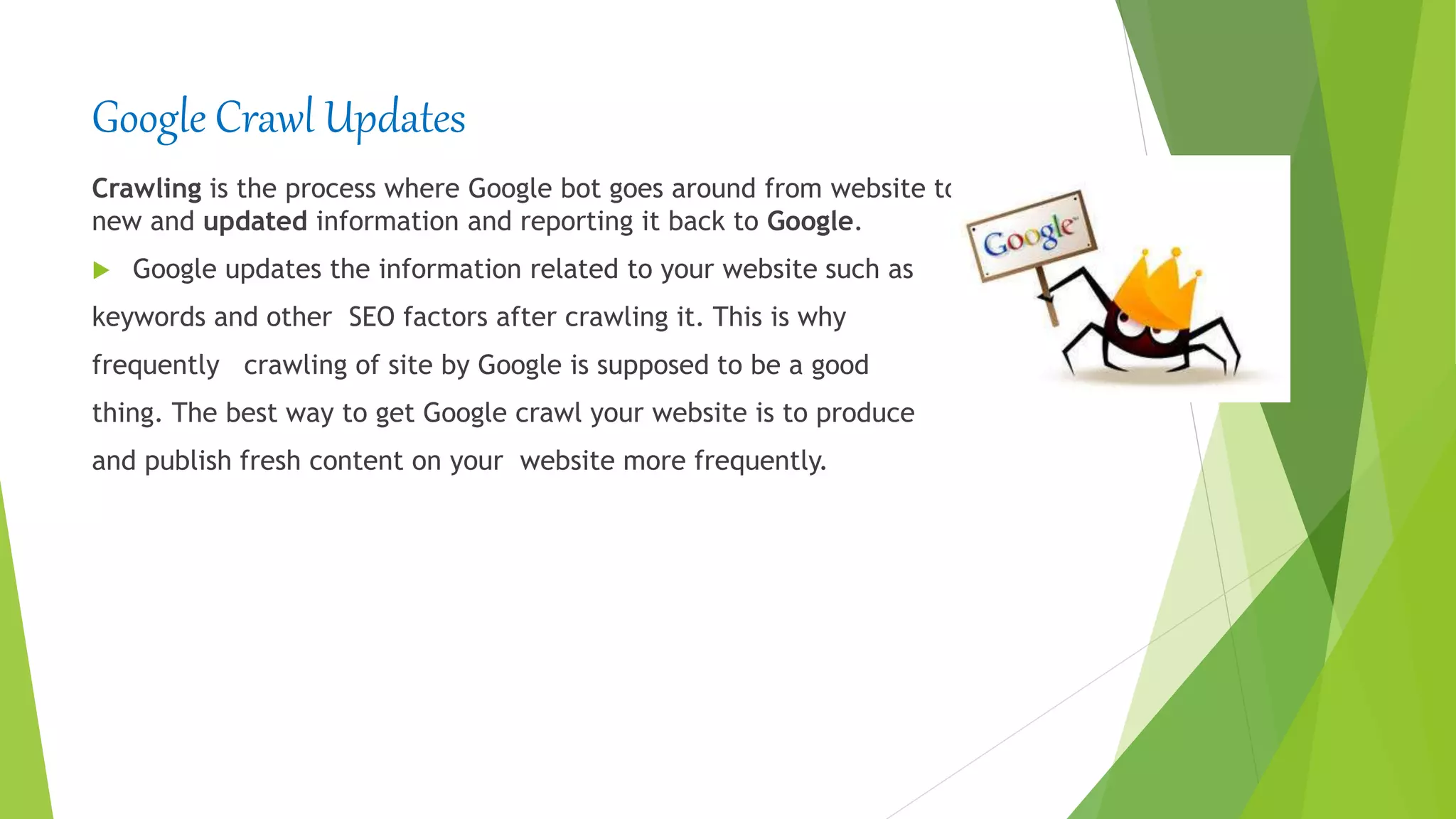
Crawling is the process where Google bot goes around from website to website, finding
new and updated information and reporting it back to Google.
 Google updates the information related to your website such as
keywords and other SEO factors after crawling it. This is why
frequently crawling of site by Google is supposed to be a good
thing. The best way to get Google crawl your website is to produce
and publish fresh content on your website more frequently.
Important Terms Related to SEO
 Anchor Text - The actual text of a link to a web page. On most websites, this
text is usually dark blue and underlined, or purple if we’ve visited the link in
the past.
 Blog - A part of our website where content like commentary on
industry/company topics, descriptions of events, photos, videos, etc. is
published regularly. Each blog post on our website is a new page that a search
engine sees, and therefore a new opportunity to get found online.
 Domain - The main web address of our site (example: www.yoursite.com).
 Inbound Link - A link from one site into another. A link from another site will
improve your SEO, especially if that site has a high PageRank.
 Keyword - A word that a user enters in search. Each web page should
be optimized with the goal of drawing in visitors who have searched specific
keywords.
 Metadata - Data that tells search engines what our website is about.
Important Terms Related to SEO
 Meta Description - A brief description of fewer than 160 characters of the
contents of a page telling us why to visit this page. This is often displayed on
search engine results pages below the page title as a sample of the content on
the page.
 No-follow Link -When a link from one site does not pass SEO credit to another.
 PageRank - A number from 0-10, assigned by Google, indicating how good our
overall SEO is. It is technically known as 'Toolbar PageRank.’
 Page Title - The name we give our web page, which is seen at the top our
browser window.
 Sitemap - A special document created by a webmaster or a piece of software
that provides a map of all the pages on a website to make it easier for a search
engine to index that website.
 Social Media - Online media created by and shared among individuals. Facebook,
YouTube, LinkedIn, Google+, and Twitter are popular social media websites.
Thank You

Training program SEO

  • 1.
    Welcome to Trainingprogram of SEO 1
  • 2.
    Why does MyWebsite Need SEO?  The majority of web traffic is driven by the major commercial search engines, Google, Bing, and Yahoo!. Search engines are unique in that they provide targeted traffic—people looking for what you offer. If search engines cannot find your site, or add your content to their databases, you miss out on incredible opportunities to drive traffic to your site.  Targeted visitors to a website can provide publicity, revenue, and exposure like no other channel of marketing.  Investing in SEO, whether through time or finances, can have an exceptional rate of return compared to other types of marketing and promotion.
  • 3.
    SEO Training Program What is SEO?  Categories of SEO  Eight components of On-page SEO  Page Title  Meta Description and Meta Data  Headings  Images  Domain Info  Moz Rank  Google Crawl Rate  URL Structure  How to Improve Off-page SEO?
  • 4.
    What is SearchEngine Optimization(SEO)? Search Engine Optimization refers to the collection of techniques and practices that allow a site to get more traffic from search engines (Google, Yahoo, Bing, etc.).
  • 5.
    Categories of SEO On-page SEO  Off-page SEO On-page SEO simply refers to the text and content on our website pages. It is responsible for 25% of our website ranking in the search engine results. Off-page SEO refers to optimization strategies outside of our website’s design such as link building with authoritative sites through relevant content.
  • 6.
    Eight Components ofOn-page SEO  Page Title  Meta Description and Meta Data  Headings  Images  Domain info  Moz Rank  Google Crawl Date  URL Structure
  • 7.
    Page Title  Pagetitles are the text at the top of the browser window in a web page. They act as the title of the page, which is presented in search engine. We can find and edit page title in our website's HTML. The text surrounded with the <title>tag is our page's title. Some Rules To Have Some Very Effective Title Pages  Include keywords  Keep it precise.  Try to place keyword close to the beginning of the title starting from left.  Do not include too much of numbers and characters in it.  Include the name of our company at the end of the page title.  Use different page titles for each page
  • 8.
    Meta Description andMeta Data  When we put in a keyword to search for the information, the text that we see as the description of the site is called Meta Data.  A short summary of the web page at the top of the pages source code in a <Meta description> tag is Meta data.  Meta description is the text explaining our web-page.
  • 9.
    Headings  Heading isperhaps the piece of text appearing larger or more prominent than other text on the page. This can be verified by checking the HTML code of the website if they include text with an <h1>, <h2>, or <h3> tag surrounding them. Usually, search engines take the text in the headings as the keywords which is why we are asked to include keywords in our headings if possible. Besides, as far as importance of the headlines as per the keywords are concerned, is given in ascending order first <h1>tags, then <h2> tags and so on. Even <h4> and <h5> tags do exist but are taken as the regular text when it comes to their influence on keywords
  • 10.
    Images Images adds tothe value of our content however we should keep few things in mind while adding a image to our content which are as follows  Associate text with pictures as search engine read the text and not the images.  Images are found to be wonderful source to engage the consumer however too much of image will slow down the loading of the web page, negatively affecting both the consumer and search engine optimization.
  • 11.
    Domain Info A domainname is our website name. It is the address where Internet users can access our website.  Older our domain is, more importance search engine gives to our website An older domain registration is a sign of commitment to the website, which in turn is a signal that the site has lesser probability of being spam.
  • 12.
    Moz Rank Moz Rankis one of the most popular and dependable metrics if we want to measure the authority of a domain or web page. MOZ rank is an important factor of both on-page and off-page SEO. We can check Moz rank of our webpage using the link https://smallseotools.com/mozrank-checker/
  • 13.
    Google Crawl Updates Crawlingis the process where Google bot goes around from website to website, finding new and updated information and reporting it back to Google.  Google updates the information related to your website such as keywords and other SEO factors after crawling it. This is why frequently crawling of site by Google is supposed to be a good thing. The best way to get Google crawl your website is to produce and publish fresh content on your website more frequently.
  • 14.
    Important Terms Relatedto SEO  Anchor Text - The actual text of a link to a web page. On most websites, this text is usually dark blue and underlined, or purple if we’ve visited the link in the past.  Blog - A part of our website where content like commentary on industry/company topics, descriptions of events, photos, videos, etc. is published regularly. Each blog post on our website is a new page that a search engine sees, and therefore a new opportunity to get found online.  Domain - The main web address of our site (example: www.yoursite.com).  Inbound Link - A link from one site into another. A link from another site will improve your SEO, especially if that site has a high PageRank.  Keyword - A word that a user enters in search. Each web page should be optimized with the goal of drawing in visitors who have searched specific keywords.  Metadata - Data that tells search engines what our website is about.
  • 15.
    Important Terms Relatedto SEO  Meta Description - A brief description of fewer than 160 characters of the contents of a page telling us why to visit this page. This is often displayed on search engine results pages below the page title as a sample of the content on the page.  No-follow Link -When a link from one site does not pass SEO credit to another.  PageRank - A number from 0-10, assigned by Google, indicating how good our overall SEO is. It is technically known as 'Toolbar PageRank.’  Page Title - The name we give our web page, which is seen at the top our browser window.  Sitemap - A special document created by a webmaster or a piece of software that provides a map of all the pages on a website to make it easier for a search engine to index that website.  Social Media - Online media created by and shared among individuals. Facebook, YouTube, LinkedIn, Google+, and Twitter are popular social media websites.
  • 16.