Decoding Job Specification: Unveiling
Meaning, Components, Steps, Purpose,
and Objectives
A job specification is a document that
outlines the qualifications, skills,
experience, and attributes required for a
particular job role. It provides a clear
understanding of the job expectations and
helps in the recruitment and selection
process.
What is a Job Specification?
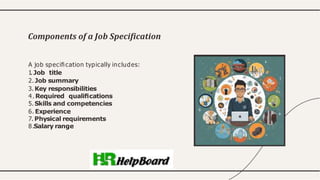
A job specification typically includes:
1. Job title
2. Job summary
3. Key responsibilities
4. Required qualifications
5. Skills and competencies
6. Experience
7. Physical requirements
8.Salary range
Components of a Job Specification
Creating a job specification involves the
following steps:
1.Conduct a job analysis
2.Identify key job requirements
3. Determine qualifications and skills
4.Define job responsibilities
5.Specify experience and education
6.Include any physical requirements
7.Set salary range
8.Review and finalize
Steps to Create Job Specification
The purpose of a job specification is to:
1. Attract qualified candidates
2. Ensure fairness in recruitment
3. Assist in evaluating candidates
4. Provide clarity to employees
5. Support performance management
Purpose of Job Specification
The objectives of a job specification are to:
1. Match the right candidate to the job
2. Reduce recruitment errors
3. Improve employee performance
4. Enhance employee satisfaction
5. Support career development
Objectives of Job Specification
Job specifications
1. Provide a clear understanding of job
requirements.
2. They assist in attracting and evaluating
qualified candidates.
3. Job specifications support fair
recruitment and performance
management.
4. They contribute to employee
satisfaction and career development.
Key Takeaways
Decoding Job Specification:
Understanding the meaning,components,
steps, purpose, and objectives is essential
for effective recruitment and employee
management. By creating comprehensive
job specifications,organizations can align
the right talent with the right roles,
leading to improved performance and
success.
Conclusion
Thanks!
Do you have any questions?
www.hrhelpboard.com

Job Specification

  • 1.
    Decoding Job Specification:Unveiling Meaning, Components, Steps, Purpose, and Objectives
  • 2.
    A job specificationis a document that outlines the qualifications, skills, experience, and attributes required for a particular job role. It provides a clear understanding of the job expectations and helps in the recruitment and selection process. What is a Job Specification?
  • 3.
    A job specificationtypically includes: 1. Job title 2. Job summary 3. Key responsibilities 4. Required qualifications 5. Skills and competencies 6. Experience 7. Physical requirements 8.Salary range Components of a Job Specification
  • 4.
    Creating a jobspecification involves the following steps: 1.Conduct a job analysis 2.Identify key job requirements 3. Determine qualifications and skills 4.Define job responsibilities 5.Specify experience and education 6.Include any physical requirements 7.Set salary range 8.Review and finalize Steps to Create Job Specification
  • 5.
    The purpose ofa job specification is to: 1. Attract qualified candidates 2. Ensure fairness in recruitment 3. Assist in evaluating candidates 4. Provide clarity to employees 5. Support performance management Purpose of Job Specification
  • 6.
    The objectives ofa job specification are to: 1. Match the right candidate to the job 2. Reduce recruitment errors 3. Improve employee performance 4. Enhance employee satisfaction 5. Support career development Objectives of Job Specification
  • 7.
    Job specifications 1. Providea clear understanding of job requirements. 2. They assist in attracting and evaluating qualified candidates. 3. Job specifications support fair recruitment and performance management. 4. They contribute to employee satisfaction and career development. Key Takeaways
  • 8.
    Decoding Job Specification: Understandingthe meaning,components, steps, purpose, and objectives is essential for effective recruitment and employee management. By creating comprehensive job specifications,organizations can align the right talent with the right roles, leading to improved performance and success. Conclusion
  • 9.
    Thanks! Do you haveany questions? www.hrhelpboard.com