
Rotary Leadership Institute
Faculty Orientation
1
Purpose Of The Day
Provide all Discussion Leaders with
techniques that can be used to enable
learning
To enable each discussion leader to feel
comfortable with any group or topic
So that we may provide all future RLI
Faculty with the means to enhance their
work with the RLI

2
How Do We Learn & Retain
Most Efficiently?
What is the Learning Pyramid?
How can we make use of such
information?

3
Learning
Pyramid
National Training Laboratories
Bethel, Maine

Average
Retention Rate
Lecture

5%

Reading

10%

Audio-Visual

20%

Demonstration

30%

Discussion Group

50%

Practice by Doing

75%

Teach Others / Immediate Use

90%

4
Working With Adults
Why can teaching adults be more difficult
than teaching children?
Learn best when problem centered
Relate new knowledge to old
Adults, especially volunteers, don’t like
to be told....They like to be asked.

5
Remember Adult Learners...
Have years of experience
Have beliefs, values, and opinions
Have pride
Need for self-direction
Are stressed when past knowledge is
challenged — may show it and tell you!

6
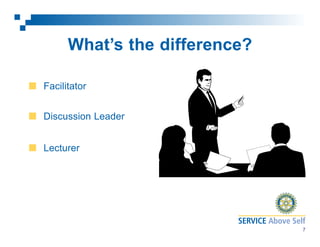
What’s the difference?
Facilitator
Discussion Leader
Lecturer

7
The Three Functions of a
Discussion Leader
Introduce and present the topic
Stimulate the exchange of knowledge
and experiences
Keep the objectives clearly defined and
followed by the group

8
Discussion Leaders
Tell A Little
Ask A Little

They have a stake in the outcome.

9
In Advance...
1. Pace you program!
2. Develop your questions to
stimulate discussion
Fact Questions vs.
Why Questions
3. Know what point you are
trying to bring out!

10
Rules on Presentation Portion
1. Be focused
2. Script your remarks
3. Be brief to allow for group input and questions
4. Focus on main points you wish to make
Remember, you don’t have time to cover everything!

11
The Discussion Leader Must Be:
Able to keep the group focus on the agenda
A clear communicator
Unbiased
Tactful
Analytical

What other traits must the
meeting leader possess?

Quick thinking
Patient
Polite
12
Responsibilities of the
Discussion Leader or Facilitator
Opening the session
Purpose
Keep discussion focused on topic
Be sure everyone gets an opportunity
to participate
Closing the session
Summarizing what we accomplished
13
Use of Questions
What is an open ended question?
Do you know what a closed
ended question is?
When do you use each type
of question?

14
Use of Questions
Overhead Questions
Directed Questions
Reverse Questions
Relay Questions
Redirected Questions
NO response to questions

15
Handling Questions
Listen to the entire question
Show that you are listening
Ensure that the question is answered
Use of a “parking lot”

16
How Does A Good
Discussion Leader Connect?
Look at the person
Listen to the feelings of the question
or the response to a questions as
well as the words
Move towards the speaker
Any other things that the DL should do?

17
Active Listening Techniques
Clarifying
Acknowledging
Supporting
Enhancing
Problem solving

18
Techniques to Respond to Questions
Listen to the entire question—listen for feelings
as well as facts and respond in kind
Show an interest
Repeat the question or paraphrase it
back to participant
Avoid answering the question yourself
Exceptions:
The group can’t answer the question correctly
Time is short—answer the question carefully
Be sure the question asked is answered
19
How To Prepare?
That Is The Question
Before The Event
Go over all materials in your assignments.
If you are not sure about some of the
material, ask questions of someone who
might have some information for you.
Make your own notes.
Time your presentations.
(Refer to handout)
01/06

20
A Few Things That May Happen
&
How To Handle Them
Side bar conversation.
Same person always waving hand.
A “heated debate” between two
participants.
An interruption from the outside:
Lunch arrives
A visiting dignitary comes to visit
21
Common Disruptive Behaviors
Check off the types of behavior that are a problem for you at meetings:
Argumentative or combative
attitudes

Not listening to others when they have
the floor

Rude or sarcastic comments

Participants who hog the floor

Bullying behavior

Arriving late

Disruptive clowning behavior

Unprepared attendees or presenters

Constant complaining

Attendees who do not participate

Frequent irrelevant discussion

Sexist comments

Rambling, repetitive speech

Whispering to others during the meeting

What over types of behavior have you seen that make
productive meetings more difficult?
22
The Day Of The Training
Go to your room early and
check out the following:
Seating—U-shaped is most desirable.
Check all equipment, does it all work?
Put your introductory slide up on the
screen.
Place your card at each seat. Why?
Be at the door to greet your class
as it arrives.

23
Things You Should Have —
Just In Case
A clock—you need to be aware of the time.
(Running over is really not good and takes
time away from the DL using the room
after you.)
A marker or two.
Extra copies of any handouts.

24
How To Use A Scribe
Ask someone ahead of time, if possible.
Clarify what is said and then make sure
the scribe writes just that. Ask if that is the
intent.
Let the scribe know that they are welcome
to participate in the discussion.
Be sure to say “Thank You” when the
exercise is done.

01/062523
Last But Not Least
Whatever the subject,
have a positive attitude.
Don’t answer questions
unless it is ABSOLUTELY
necessary.
Keep a relaxed attitude.
Above all—HAVE FUN!

26

Training methodology: Facilitator. Discussion Leaders. Lecturer

  • 1.
  • 2.
    Purpose Of TheDay Provide all Discussion Leaders with techniques that can be used to enable learning To enable each discussion leader to feel comfortable with any group or topic So that we may provide all future RLI Faculty with the means to enhance their work with the RLI 2
  • 3.
    How Do WeLearn & Retain Most Efficiently? What is the Learning Pyramid? How can we make use of such information? 3
  • 4.
    Learning Pyramid National Training Laboratories Bethel,Maine Average Retention Rate Lecture 5% Reading 10% Audio-Visual 20% Demonstration 30% Discussion Group 50% Practice by Doing 75% Teach Others / Immediate Use 90% 4
  • 5.
    Working With Adults Whycan teaching adults be more difficult than teaching children? Learn best when problem centered Relate new knowledge to old Adults, especially volunteers, don’t like to be told....They like to be asked. 5
  • 6.
    Remember Adult Learners... Haveyears of experience Have beliefs, values, and opinions Have pride Need for self-direction Are stressed when past knowledge is challenged — may show it and tell you! 6
  • 7.
  • 8.
    The Three Functionsof a Discussion Leader Introduce and present the topic Stimulate the exchange of knowledge and experiences Keep the objectives clearly defined and followed by the group 8
  • 9.
    Discussion Leaders Tell ALittle Ask A Little They have a stake in the outcome. 9
  • 10.
    In Advance... 1. Paceyou program! 2. Develop your questions to stimulate discussion Fact Questions vs. Why Questions 3. Know what point you are trying to bring out! 10
  • 11.
    Rules on PresentationPortion 1. Be focused 2. Script your remarks 3. Be brief to allow for group input and questions 4. Focus on main points you wish to make Remember, you don’t have time to cover everything! 11
  • 12.
    The Discussion LeaderMust Be: Able to keep the group focus on the agenda A clear communicator Unbiased Tactful Analytical What other traits must the meeting leader possess? Quick thinking Patient Polite 12
  • 13.
    Responsibilities of the DiscussionLeader or Facilitator Opening the session Purpose Keep discussion focused on topic Be sure everyone gets an opportunity to participate Closing the session Summarizing what we accomplished 13
  • 14.
    Use of Questions Whatis an open ended question? Do you know what a closed ended question is? When do you use each type of question? 14
  • 15.
    Use of Questions OverheadQuestions Directed Questions Reverse Questions Relay Questions Redirected Questions NO response to questions 15
  • 16.
    Handling Questions Listen tothe entire question Show that you are listening Ensure that the question is answered Use of a “parking lot” 16
  • 17.
    How Does AGood Discussion Leader Connect? Look at the person Listen to the feelings of the question or the response to a questions as well as the words Move towards the speaker Any other things that the DL should do? 17
  • 18.
  • 19.
    Techniques to Respondto Questions Listen to the entire question—listen for feelings as well as facts and respond in kind Show an interest Repeat the question or paraphrase it back to participant Avoid answering the question yourself Exceptions: The group can’t answer the question correctly Time is short—answer the question carefully Be sure the question asked is answered 19
  • 20.
    How To Prepare? ThatIs The Question Before The Event Go over all materials in your assignments. If you are not sure about some of the material, ask questions of someone who might have some information for you. Make your own notes. Time your presentations. (Refer to handout) 01/06 20
  • 21.
    A Few ThingsThat May Happen & How To Handle Them Side bar conversation. Same person always waving hand. A “heated debate” between two participants. An interruption from the outside: Lunch arrives A visiting dignitary comes to visit 21
  • 22.
    Common Disruptive Behaviors Checkoff the types of behavior that are a problem for you at meetings: Argumentative or combative attitudes Not listening to others when they have the floor Rude or sarcastic comments Participants who hog the floor Bullying behavior Arriving late Disruptive clowning behavior Unprepared attendees or presenters Constant complaining Attendees who do not participate Frequent irrelevant discussion Sexist comments Rambling, repetitive speech Whispering to others during the meeting What over types of behavior have you seen that make productive meetings more difficult? 22
  • 23.
    The Day OfThe Training Go to your room early and check out the following: Seating—U-shaped is most desirable. Check all equipment, does it all work? Put your introductory slide up on the screen. Place your card at each seat. Why? Be at the door to greet your class as it arrives. 23
  • 24.
    Things You ShouldHave — Just In Case A clock—you need to be aware of the time. (Running over is really not good and takes time away from the DL using the room after you.) A marker or two. Extra copies of any handouts. 24
  • 25.
    How To UseA Scribe Ask someone ahead of time, if possible. Clarify what is said and then make sure the scribe writes just that. Ask if that is the intent. Let the scribe know that they are welcome to participate in the discussion. Be sure to say “Thank You” when the exercise is done. 01/062523
  • 26.
    Last But NotLeast Whatever the subject, have a positive attitude. Don’t answer questions unless it is ABSOLUTELY necessary. Keep a relaxed attitude. Above all—HAVE FUN! 26