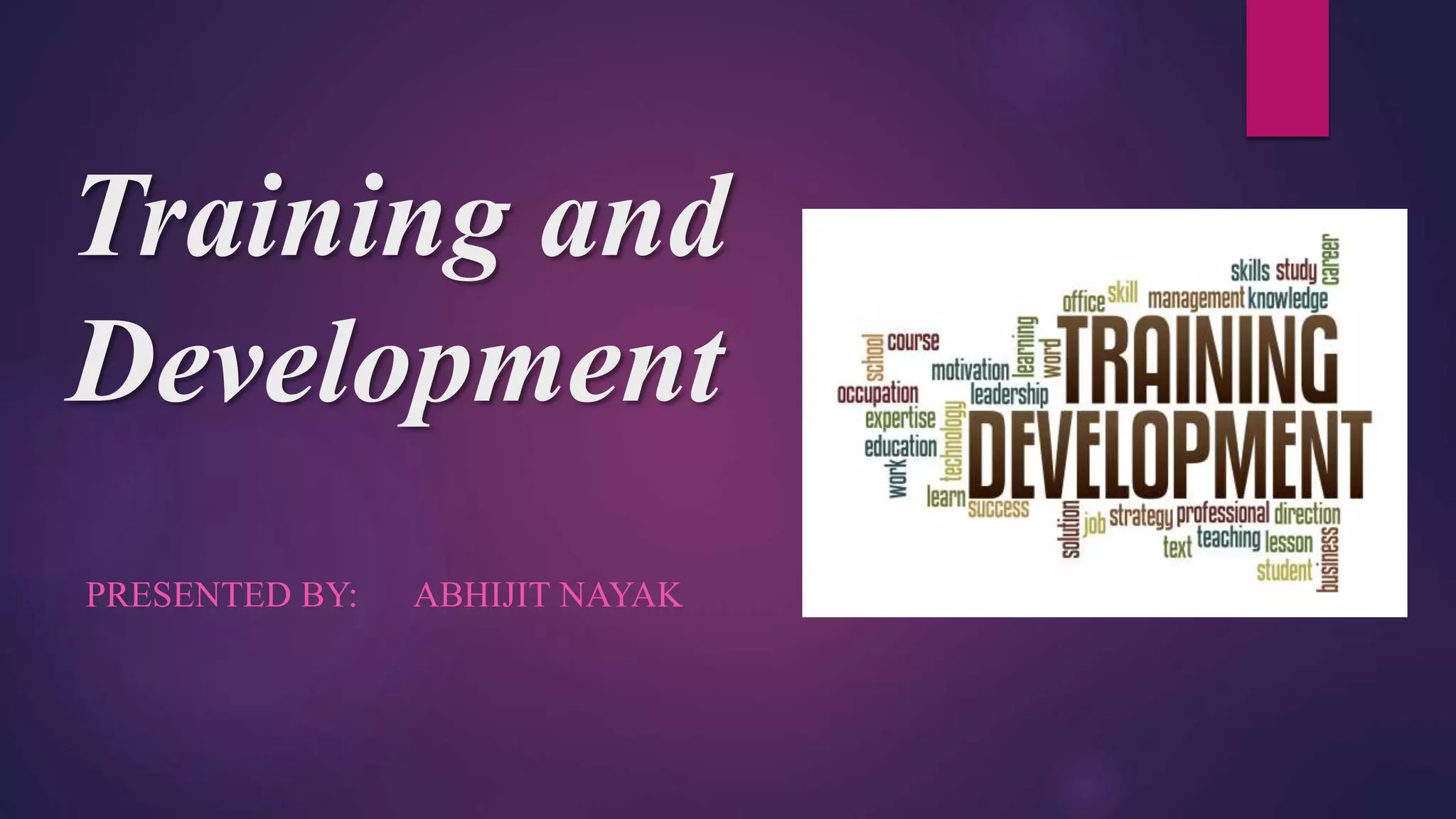
Training and
Development
PRESENTED BY: ABHIJIT NAYAK
Introduction
 Training and development is a function of human resource
management concerned with organizational activity aimed at
bettering the performance of individuals and groups in organizational
settings.
 any attempt to improve current or future employee performance by
increasing an employee’s ability to perform through learning, usually
by changing the employee’s attitude or increasing his or her skills
and knowledge.
Difference between T & D
Training Development
 Development is creating learning
abilities
 Development is not education
dependent
 Development depends on personal drive
and ambition
 Development is voluntary
 Development is a broader concept
focused on personality development
 Development includes training
wherever necessary
 Development aims at overall personal
effectiveness including job efficiencies
 Training is skills focused
 Training is presumed to have a formal
education
 Training needs depend upon lack or
deficiency in skills
 Trainings are generally need based
 Training is a narrower concept focused
on job related skills
 Training may not include development
 Training is aimed at improving job
related efficiency and performance
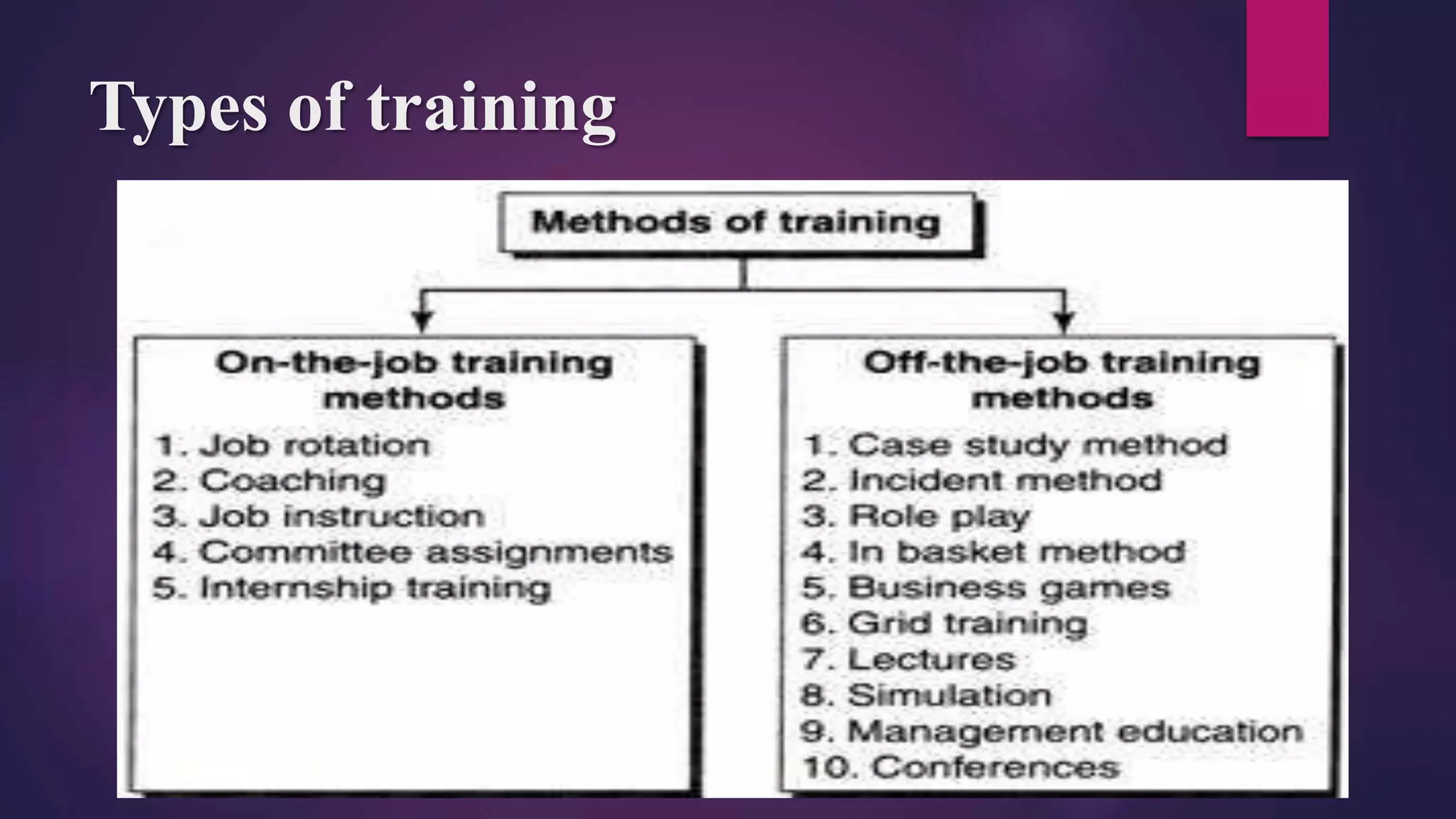
Types of training
Why we need?
 Helps remove performance deficiencies in employees
 Greater stability, flexibility and capacity for growth in an
organization
 Accidents, scraps and damages to machinery can be avoided
 Serves as effective source of recruitment
 It is an investment in HR with a promise of better returns in
future
 Reduces dissatisfaction, absenteeism, complaints and turnover
of employees
Training Inputs
 Skills
 Education
 Development
 Ethics
 Problem Solving Skills
 Decision Making
 Attitudinal Changes
Need of Training
Individual level
 Diagnosis of present problems and future challenges
 Improve individual performance or fix up performance deficiency
 Improve skills or knowledge or any other problem
 To anticipate future skill-needs and prepare employee to handle more challenging
tasks
 To prepare for possible job transfers
Group level
 To face any change in organization strategy at group levels
 When new products and services are launched
 To avoid scraps and accident rates
Identification of Training Needs
Individual Training Needs
 Performance Appraisals
 Interviews
 Questionnaires
 Attitude Surveys
 Training Progress Feedback
 Work Sampling
 Rating Scales
Group Level Training Needs
 Organizational Goals and
Objectives
 Personnel / Skills Inventories
 Organizational Climate Indices
 Efficiency Indices
 Exit Interviews
 Quality Circles
 Customer Satisfaction Survey
 Analysis of Current and
Anticipated Changes
How To Make Training Effective?
 Management Commitment
 Training & Business Strategies Integration
 Comprehensive and Systematic Approach
 Continuous and Ongoing approach
 Promoting Learning as Fundamental Value
 Creations of effective training evaluation system
THANK
YOU

Training and development

  • 1.
  • 2.
    Introduction  Training anddevelopment is a function of human resource management concerned with organizational activity aimed at bettering the performance of individuals and groups in organizational settings.  any attempt to improve current or future employee performance by increasing an employee’s ability to perform through learning, usually by changing the employee’s attitude or increasing his or her skills and knowledge.
  • 3.
    Difference between T& D Training Development  Development is creating learning abilities  Development is not education dependent  Development depends on personal drive and ambition  Development is voluntary  Development is a broader concept focused on personality development  Development includes training wherever necessary  Development aims at overall personal effectiveness including job efficiencies  Training is skills focused  Training is presumed to have a formal education  Training needs depend upon lack or deficiency in skills  Trainings are generally need based  Training is a narrower concept focused on job related skills  Training may not include development  Training is aimed at improving job related efficiency and performance
  • 4.
  • 5.
    Why we need? Helps remove performance deficiencies in employees  Greater stability, flexibility and capacity for growth in an organization  Accidents, scraps and damages to machinery can be avoided  Serves as effective source of recruitment  It is an investment in HR with a promise of better returns in future  Reduces dissatisfaction, absenteeism, complaints and turnover of employees
  • 6.
    Training Inputs  Skills Education  Development  Ethics  Problem Solving Skills  Decision Making  Attitudinal Changes
  • 7.
    Need of Training Individuallevel  Diagnosis of present problems and future challenges  Improve individual performance or fix up performance deficiency  Improve skills or knowledge or any other problem  To anticipate future skill-needs and prepare employee to handle more challenging tasks  To prepare for possible job transfers Group level  To face any change in organization strategy at group levels  When new products and services are launched  To avoid scraps and accident rates
  • 8.
    Identification of TrainingNeeds Individual Training Needs  Performance Appraisals  Interviews  Questionnaires  Attitude Surveys  Training Progress Feedback  Work Sampling  Rating Scales Group Level Training Needs  Organizational Goals and Objectives  Personnel / Skills Inventories  Organizational Climate Indices  Efficiency Indices  Exit Interviews  Quality Circles  Customer Satisfaction Survey  Analysis of Current and Anticipated Changes
  • 9.
    How To MakeTraining Effective?  Management Commitment  Training & Business Strategies Integration  Comprehensive and Systematic Approach  Continuous and Ongoing approach  Promoting Learning as Fundamental Value  Creations of effective training evaluation system
  • 10.