

Top management leadership,
employee empowerment, job
satisfaction, and customer
satisfaction in TQM organizations
By
Javeria Malik
Yumna Idrees
Fatima Kamal
Fatima Naeem
Abstract
Variables
 Top management leadership
 Employee empowerment
 Job satisfaction
 Customer satisfaction
 Purpose
Find out the relationship between these variables.
Abstract (cont...)
Methodology
Quantitative study( Questionnaire)
Limitation
Treatment of top management role and empowerment conceptually as separate
Findings
Result reveal positive correlation
Introduction
Survival of organizations
Searching for techniques
TQM tenets
Objective of the study
Provide empirical assessment of relationship
between these variables
Provide empirical assessment for TQM-based
literature
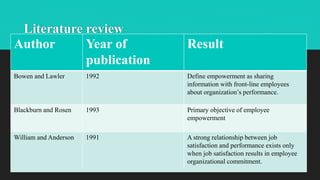
Literature review
Author Year of
publication
Result
Bowen and Lawler 1992 Define empowerment as sharing
information with front-line employees
about organization’s performance.
Blackburn and Rosen 1993 Primary objective of employee
empowerment
William and Anderson 1991 A strong relationship between job
satisfaction and performance exists only
when job satisfaction results in employee
organizational commitment.
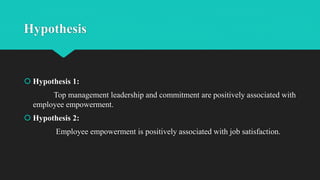
Hypothesis
 Hypothesis 1:
Top management leadership and commitment are positively associated with
employee empowerment.
 Hypothesis 2:
Employee empowerment is positively associated with job satisfaction.
Hypothesis (cont…)
Hypothesis 3a:
Employee empowerment is positively associated with
customer satisfaction.
Hypothesis 3b:
Employee job satisfaction is positively associated with
customer satisfaction.
Methods
Data:
 Obtain data from organization.
 Approximately 800 member.
 Randomly select data.
 Malcolm Baldrige award for quality achievement.
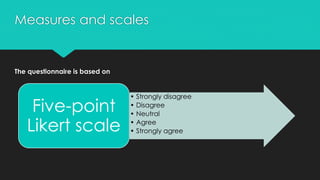
Measures and scales
The questionnaire is based on
• Strongly disagree
• Disagree
• Neutral
• Agree
• Strongly agree
Five-point
Likert scale
Measures and scales
 The statement dealt with top management leadership, employee
empowerment, employee job satisfaction and customer
satisfaction.
Employee Empowerment
 The feelings of powerlessness and creation of work environment
that strengthens the employee feeling self-efficacy. (conger,
kanungo 1988).
 Three measures of empowerment:
 Decision making authority
 Participation or involvement of decision making process.
 Access to information and other organizational resources.
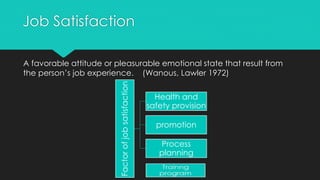
Job Satisfaction
A favorable attitude or pleasurable emotional state that result from
the person’s job experience. (Wanous, Lawler 1972)
Factorofjobsatisfaction
Health and
safety provision
promotion
Process
planning
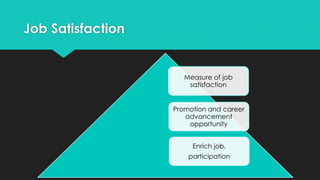
Job Satisfaction
Measure of job
satisfaction
Promotion and career
advancement
opportunity
Enrich job,
participation
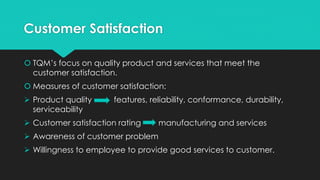
Customer Satisfaction
 TQM’s focus on quality product and services that meet the
customer satisfaction.
 Measures of customer satisfaction:
 Product quality features, reliability, conformance, durability,
serviceability
 Customer satisfaction rating manufacturing and services
 Awareness of customer problem
 Willingness to employee to provide good services to customer.
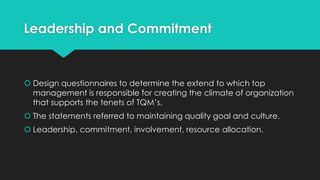
Leadership and Commitment
 Design questionnaires to determine the extend to which top
management is responsible for creating the climate of organization
that supports the tenets of TQM’s.
 The statements referred to maintaining quality goal and culture.
 Leadership, commitment, involvement, resource allocation.
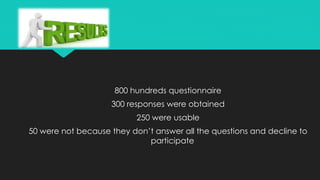
800 hundreds questionnaire
300 responses were obtained
250 were usable
50 were not because they don’t answer all the questions and decline to
participate
Results
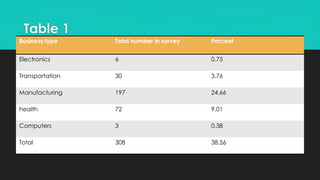
Business type Total number in survey Percent
Electronics 6 0.75
Transportation 30 3.76
Manufacturing 197 24.66
health 72 9.01
Computers 3 0.38
Total 308 38.56
Table 1
The table shown that our population was drawn from different
employees of different industries.
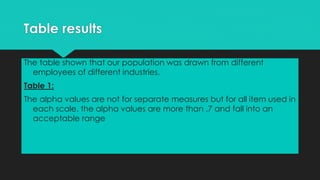
Table 1:
The alpha values are not for separate measures but for all item used in
each scale. the alpha values are more than .7 and fall into an
acceptable range
Table results
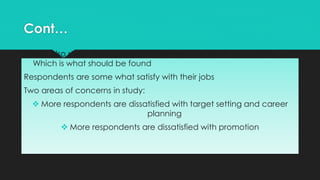
Tables also show that correlations between the items are positive.
Which is what should be found
Respondents are some what satisfy with their jobs
Two areas of concerns in study:
 More respondents are dissatisfied with target setting and career
planning
 More respondents are dissatisfied with promotion
Cont…
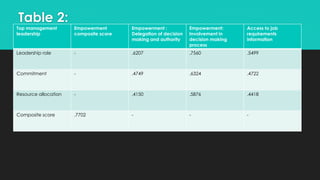
Top management
leadership
Empowerment
composite score
Empowerment :
Delegation of decision
making and authority
Empowerment:
Involvement in
decision making
process
Access to job
requirements
information
Leadership role - .6207 .7560 .5499
Commitment - .4749 .6324 .4722
Resource allocation - .4150 .5876 .4418
Composite score .7702 - - -
Table 2:
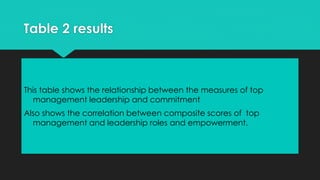
This table shows the relationship between the measures of top
management leadership and commitment
Also shows the correlation between composite scores of top
management and leadership roles and empowerment.
Table 2 results
J.S summated Career
developme
nt
opportunitie
s
Equitable
reward
Work environment The job Participation
delegation of decision
making
- .4984 .5714 .4495 .4085 .6505
Employee - .4925 .6603 .4779 .4831 .7470
Empowerment:
summated scale
.7893
Leadership - .4959 .6873 .4383 .4172 .6649
Commitment - .4216 .5793 .4294 .3824 .5719
Total .7136
table 3:
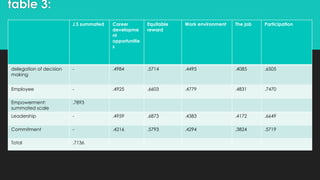
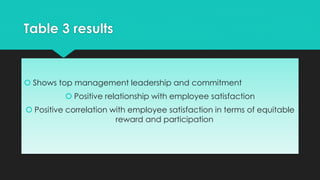
 Shows top management leadership and commitment
 Positive relationship with employee satisfaction
 Positive correlation with employee satisfaction in terms of equitable
reward and participation
Table 3 results
J.S
comp
osite
score
Career
develop
ment
opportuni
ties
Equitable
reward
Work
environ
ment
Job
satisfac
tion
Composit
e score
leadershi
p
commitm
ent
Resource
allocatio
n
Customer
satisfaction
manufacturin
g firms
Reliability - .4114 .4987 .4396 .4194 .5334 .4884 .4422 .3787
Durability - .3424 .4457 .3998 .4198 .4812 .4145 .4012 .3715
Table 4:
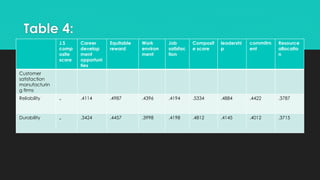
It shows the relationship between
 Customer satisfaction
 Job satisfaction
 Top management
Correlation indicates a stronger relationship between empowerment
and customer satisfaction
Table 4 results:

Tqm's methods

  • 1.
    Top management leadership, employeeempowerment, job satisfaction, and customer satisfaction in TQM organizations By Javeria Malik Yumna Idrees Fatima Kamal Fatima Naeem
  • 2.
    Abstract Variables  Top managementleadership  Employee empowerment  Job satisfaction  Customer satisfaction  Purpose Find out the relationship between these variables.
  • 3.
    Abstract (cont...) Methodology Quantitative study(Questionnaire) Limitation Treatment of top management role and empowerment conceptually as separate Findings Result reveal positive correlation
  • 4.
  • 5.
    Objective of thestudy Provide empirical assessment of relationship between these variables Provide empirical assessment for TQM-based literature
  • 6.
    Literature review Author Yearof publication Result Bowen and Lawler 1992 Define empowerment as sharing information with front-line employees about organization’s performance. Blackburn and Rosen 1993 Primary objective of employee empowerment William and Anderson 1991 A strong relationship between job satisfaction and performance exists only when job satisfaction results in employee organizational commitment.
  • 7.
    Hypothesis  Hypothesis 1: Topmanagement leadership and commitment are positively associated with employee empowerment.  Hypothesis 2: Employee empowerment is positively associated with job satisfaction.
  • 8.
    Hypothesis (cont…) Hypothesis 3a: Employeeempowerment is positively associated with customer satisfaction. Hypothesis 3b: Employee job satisfaction is positively associated with customer satisfaction.
  • 9.
    Methods Data:  Obtain datafrom organization.  Approximately 800 member.  Randomly select data.  Malcolm Baldrige award for quality achievement.
  • 10.
    Measures and scales Thequestionnaire is based on • Strongly disagree • Disagree • Neutral • Agree • Strongly agree Five-point Likert scale
  • 11.
    Measures and scales The statement dealt with top management leadership, employee empowerment, employee job satisfaction and customer satisfaction.
  • 12.
    Employee Empowerment  Thefeelings of powerlessness and creation of work environment that strengthens the employee feeling self-efficacy. (conger, kanungo 1988).  Three measures of empowerment:  Decision making authority  Participation or involvement of decision making process.  Access to information and other organizational resources.
  • 13.
    Job Satisfaction A favorableattitude or pleasurable emotional state that result from the person’s job experience. (Wanous, Lawler 1972) Factorofjobsatisfaction Health and safety provision promotion Process planning
  • 14.
    Job Satisfaction Measure ofjob satisfaction Promotion and career advancement opportunity Enrich job, participation
  • 15.
    Customer Satisfaction  TQM’sfocus on quality product and services that meet the customer satisfaction.  Measures of customer satisfaction:  Product quality features, reliability, conformance, durability, serviceability  Customer satisfaction rating manufacturing and services  Awareness of customer problem  Willingness to employee to provide good services to customer.
  • 16.
    Leadership and Commitment Design questionnaires to determine the extend to which top management is responsible for creating the climate of organization that supports the tenets of TQM’s.  The statements referred to maintaining quality goal and culture.  Leadership, commitment, involvement, resource allocation.
  • 17.
    800 hundreds questionnaire 300responses were obtained 250 were usable 50 were not because they don’t answer all the questions and decline to participate Results
  • 18.
    Business type Totalnumber in survey Percent Electronics 6 0.75 Transportation 30 3.76 Manufacturing 197 24.66 health 72 9.01 Computers 3 0.38 Total 308 38.56 Table 1
  • 19.
    The table shownthat our population was drawn from different employees of different industries. Table 1: The alpha values are not for separate measures but for all item used in each scale. the alpha values are more than .7 and fall into an acceptable range Table results
  • 20.
    Tables also showthat correlations between the items are positive. Which is what should be found Respondents are some what satisfy with their jobs Two areas of concerns in study:  More respondents are dissatisfied with target setting and career planning  More respondents are dissatisfied with promotion Cont…
  • 21.
    Top management leadership Empowerment composite score Empowerment: Delegation of decision making and authority Empowerment: Involvement in decision making process Access to job requirements information Leadership role - .6207 .7560 .5499 Commitment - .4749 .6324 .4722 Resource allocation - .4150 .5876 .4418 Composite score .7702 - - - Table 2:
  • 22.
    This table showsthe relationship between the measures of top management leadership and commitment Also shows the correlation between composite scores of top management and leadership roles and empowerment. Table 2 results
  • 23.
    J.S summated Career developme nt opportunitie s Equitable reward Workenvironment The job Participation delegation of decision making - .4984 .5714 .4495 .4085 .6505 Employee - .4925 .6603 .4779 .4831 .7470 Empowerment: summated scale .7893 Leadership - .4959 .6873 .4383 .4172 .6649 Commitment - .4216 .5793 .4294 .3824 .5719 Total .7136 table 3:
  • 24.
     Shows topmanagement leadership and commitment  Positive relationship with employee satisfaction  Positive correlation with employee satisfaction in terms of equitable reward and participation Table 3 results
  • 25.
  • 26.
    It shows therelationship between  Customer satisfaction  Job satisfaction  Top management Correlation indicates a stronger relationship between empowerment and customer satisfaction Table 4 results: