


• Presenters:
    – Richard Pearl, CFIG
    – Michael Haisten, A&P/IA
•   What is a TMG?
•   Legal Issues
•   The Fleet
•   Geography
•   Mechanical Issues
•   What’s new with the TMGA?
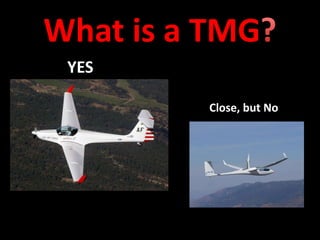
What is a TMG
 YES

         Close, but No
Why TMGs:
•   Combine soaring and travel
•   Fly even when soaring not an option
•   Forget the tow-plane
•   Carry passengers (most TMGs)
•   Fly further; no land outs or retrieves
•   Medical self-certification
TMG Issues
Legal:
  • It’s a Glider, so you need a GLIDER
    rating
  • AC 61-94
     –With a power rating (ground
       instruction, 3 flights)
     –Without a power rating (5 hours in
       TMGs, dual X-C, 10 T.O./Landings;
       need lots more……….
TMG Issues (cont’d
 Additional  training; endorsement
      required
  –
   Airspace, communications, weath
   er
 Additional complexity – engines,
    equipment
 Storage: tie-down or hangar
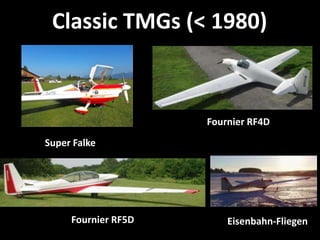
Classic TMGs (< 1980)


                     Fournier RF4D
Super Falke


     Fournier RF5D       Eisenbahn-Fliegen
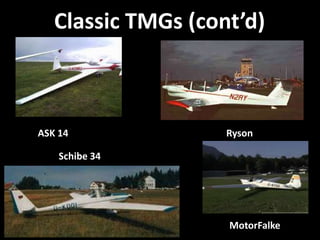
Classic TMGs (cont’d)


ASK 14              Ryson

    Schibe 34


                    MotorFalke
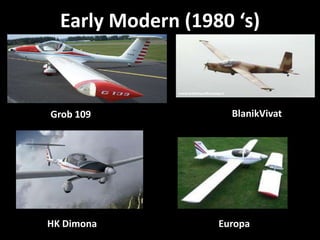
Early Modern (1980 ‘s)


Grob 109             BlanikVivat


HK Dimona          Europa
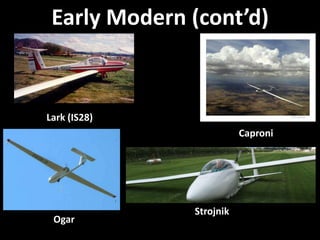
Early Modern (cont’d)


Lark (IS28)
                         Caproni


              Strojnik
 Ogar
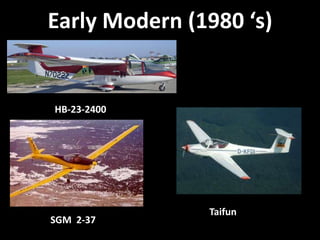
Early Modern (1980 ‘s)


HB-23-2400


               Taifun
SGM 2-37
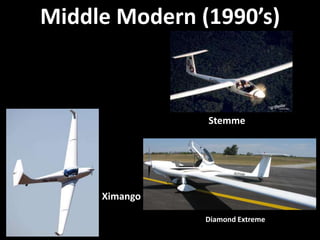
Middle Modern (1990’s)


               Stemme


     Ximango

               Diamond Extreme
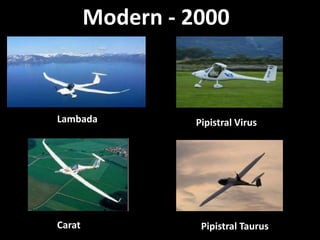
Modern - 2000


Lambada           Pipistral Virus


Carat              Pipistral Taurus
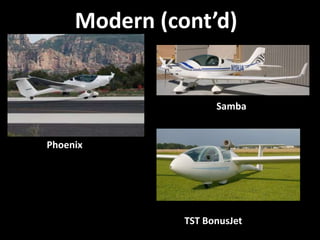
Modern (cont’d)


                     Samba


Phoenix


               TST BonusJet
Mechanical Issues
 TMGs are more a single engine land plane than a
  glider.

   – Additional systems include:

   – Engine

   – Fuel systems

   – Propeller / Propeller control

   – More complex electrical systems

   – Navigation systems
TMG - Common engines
 Limbach – Grob – Sachs
     These are VW derivatives
     80 to 90 HP
     Heat sensitive
     Lower cost
     ****not built from VW parts from the auto parts
          store****

 Rotax
Purpose-built aircraft engine
      80-100-115 HP
      More complex with liquid cooling
      115 HP is Turbo charged
      Higher cost
Propellers – Fixed Pitch
  Simple construction
  Low cost
  High drag in “glider mode”
  Air starts possible
Propellers – Variable Pitch
  Many parts:
   Manual, Hydraulic, or Electric
   control
  Climb or Cruise pitch available
  Featherablefor reduced drag in
   “glider mode”
  Air starts possible…..maybe
Propellers – Folding
Fixed pitch
 Very low drag in “glider
   mode”
 Air starts not possible
Other Considerations
 Glider category VS LSA (Light Sport Aircraft)

 Gliders have gone through the FAA certification process
        Annual inspections by an A&P with Inspection
Authorization
Rotax can only be maintained by a Rotax trained
        mechanic

 LSA has lesser certification requirements for the aircraft

 LSA requires a higher level of maintenance
        All Manufacturers maintenance schedule MUST be
followed
Rotax can only be maintained by a Rotax trained
        mechanic
Added Complexity
 Fuel systems
       Fuel tanks, lines and valves
       Fuel pumps

 Electrical systems
       Charging systems
       Lighting

 Navigation systems
      TMG’s tour so they commonly
      have aircraft navigation systems
      VOR Receivers
      DMEs
      GPS
      Some even full IFR equipped
What’s new with the
        TMGA?
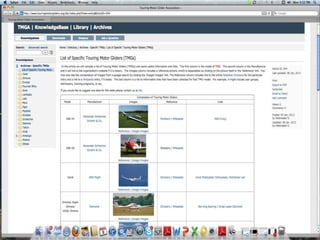
• Touring Motor Glider Association
  Web Site:

   www.touringmotorgliders.org
TMGA: Where do we go
    from here?
 • TMGA Seeking formal SSA
      Division Status
 • Fly-Ins and informal meets
 • Fun contests (soaring & fuel
      efficiency)
 • International participation
Touring Motorgliders: Versatility in Action

Touring Motorgliders: Versatility in Action

  • 2.
    • Presenters: – Richard Pearl, CFIG – Michael Haisten, A&P/IA • What is a TMG? • Legal Issues • The Fleet • Geography • Mechanical Issues • What’s new with the TMGA?
  • 3.
    What is aTMG YES Close, but No
  • 4.
    Why TMGs: • Combine soaring and travel • Fly even when soaring not an option • Forget the tow-plane • Carry passengers (most TMGs) • Fly further; no land outs or retrieves • Medical self-certification
  • 5.
    TMG Issues Legal: • It’s a Glider, so you need a GLIDER rating • AC 61-94 –With a power rating (ground instruction, 3 flights) –Without a power rating (5 hours in TMGs, dual X-C, 10 T.O./Landings; need lots more……….
  • 6.
    TMG Issues (cont’d Additional training; endorsement required – Airspace, communications, weath er  Additional complexity – engines, equipment  Storage: tie-down or hangar
  • 8.
    Classic TMGs (<1980) Fournier RF4D Super Falke Fournier RF5D Eisenbahn-Fliegen
  • 9.
    Classic TMGs (cont’d) ASK14 Ryson Schibe 34 MotorFalke
  • 10.
    Early Modern (1980‘s) Grob 109 BlanikVivat HK Dimona Europa
  • 11.
    Early Modern (cont’d) Lark(IS28) Caproni Strojnik Ogar
  • 12.
    Early Modern (1980‘s) HB-23-2400 Taifun SGM 2-37
  • 13.
    Middle Modern (1990’s) Stemme Ximango Diamond Extreme
  • 14.
    Modern - 2000 Lambada Pipistral Virus Carat Pipistral Taurus
  • 15.
    Modern (cont’d) Samba Phoenix TST BonusJet
  • 18.
    Mechanical Issues  TMGsare more a single engine land plane than a glider. – Additional systems include: – Engine – Fuel systems – Propeller / Propeller control – More complex electrical systems – Navigation systems
  • 19.
    TMG - Commonengines  Limbach – Grob – Sachs These are VW derivatives 80 to 90 HP Heat sensitive Lower cost ****not built from VW parts from the auto parts store****  Rotax Purpose-built aircraft engine 80-100-115 HP More complex with liquid cooling 115 HP is Turbo charged Higher cost
  • 20.
    Propellers – FixedPitch  Simple construction  Low cost  High drag in “glider mode”  Air starts possible
  • 21.
    Propellers – VariablePitch  Many parts: Manual, Hydraulic, or Electric control  Climb or Cruise pitch available  Featherablefor reduced drag in “glider mode”  Air starts possible…..maybe
  • 22.
    Propellers – Folding Fixedpitch  Very low drag in “glider mode”  Air starts not possible
  • 23.
    Other Considerations  Glidercategory VS LSA (Light Sport Aircraft)  Gliders have gone through the FAA certification process Annual inspections by an A&P with Inspection Authorization Rotax can only be maintained by a Rotax trained mechanic  LSA has lesser certification requirements for the aircraft  LSA requires a higher level of maintenance All Manufacturers maintenance schedule MUST be followed Rotax can only be maintained by a Rotax trained mechanic
  • 24.
    Added Complexity  Fuelsystems Fuel tanks, lines and valves Fuel pumps  Electrical systems Charging systems Lighting  Navigation systems TMG’s tour so they commonly have aircraft navigation systems VOR Receivers DMEs GPS Some even full IFR equipped
  • 25.
    What’s new withthe TMGA? • Touring Motor Glider Association Web Site: www.touringmotorgliders.org
  • 27.
    TMGA: Where dowe go from here? • TMGA Seeking formal SSA Division Status • Fly-Ins and informal meets • Fun contests (soaring & fuel efficiency) • International participation