AESOP
AN ANCIENT AUTHOR IN MODERN TIMES
Michelle Sweet
Professor Elizabeth Owens
English 1102
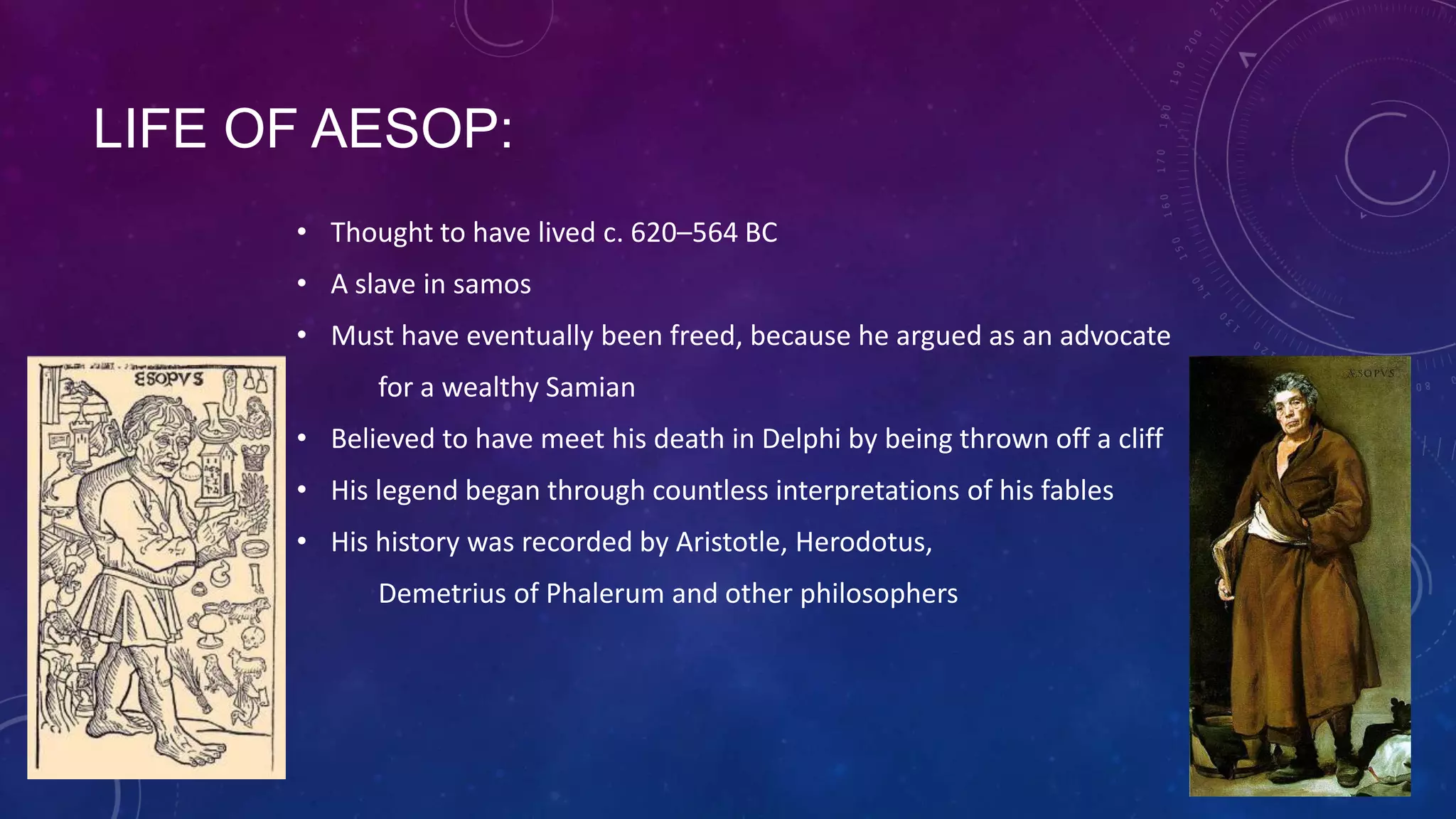
LIFE OF AESOP:
• Thought to have lived c. 620–564 BC
• A slave in samos
• Must have eventually been freed, because he argued as an advocate
for a wealthy Samian
• Believed to have meet his death in Delphi by being thrown off a cliff
• His legend began through countless interpretations of his fables
• His history was recorded by Aristotle, Herodotus,
Demetrius of Phalerum and other philosophers
AESOP’S FABLES
• Have been translated into several languages
• Not sure of the origination, historians Greece or Africa
• Many fables were attributed to him although history can prove the stories existed before his time
• Aesop himself is a story, that have been recorded in writings of Aristotle, Herodotus, and Plutarch
• Originally his fables were used for political purposes when free speech was dangerous
• Now his works are used to teach morals to children
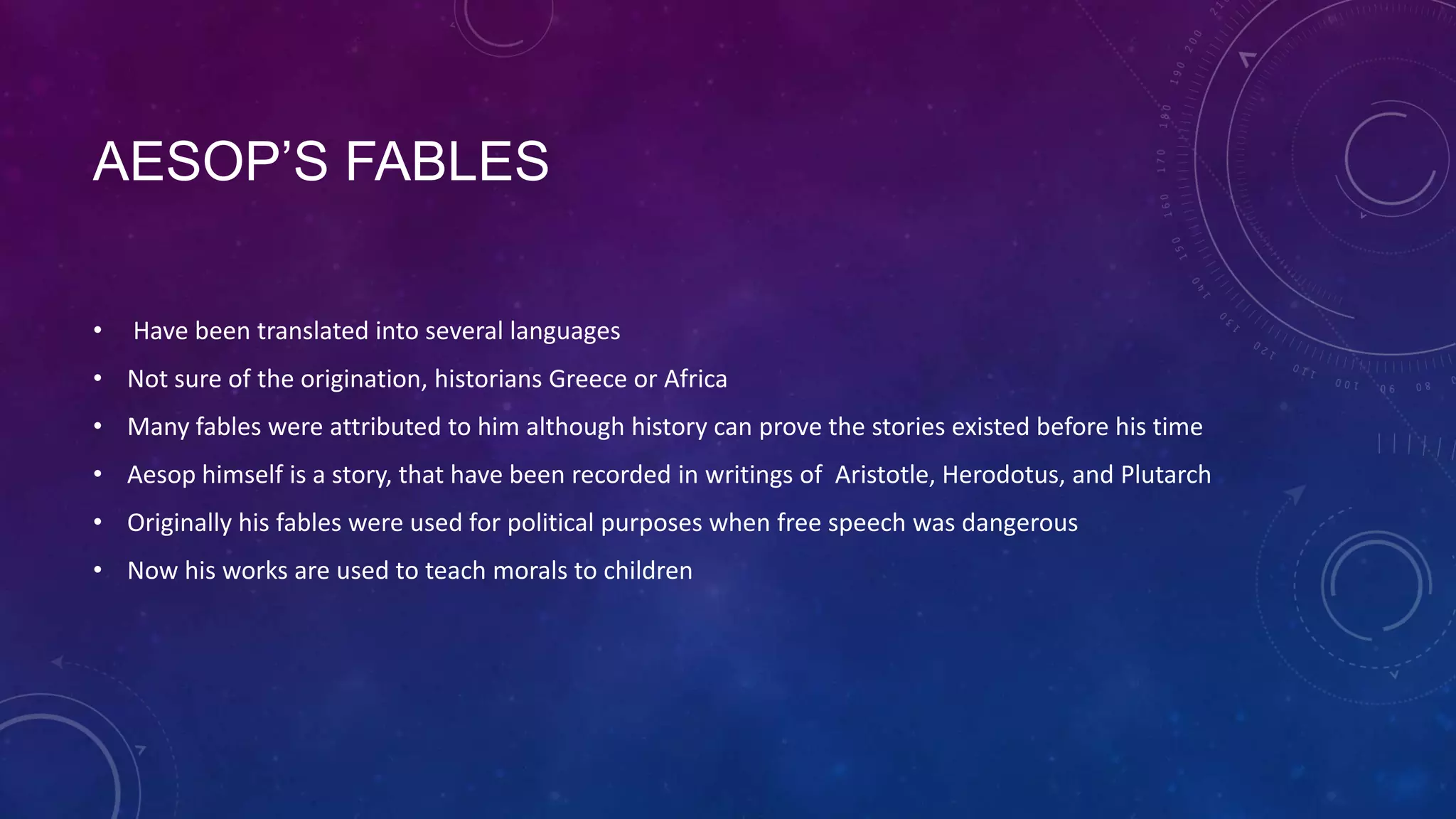
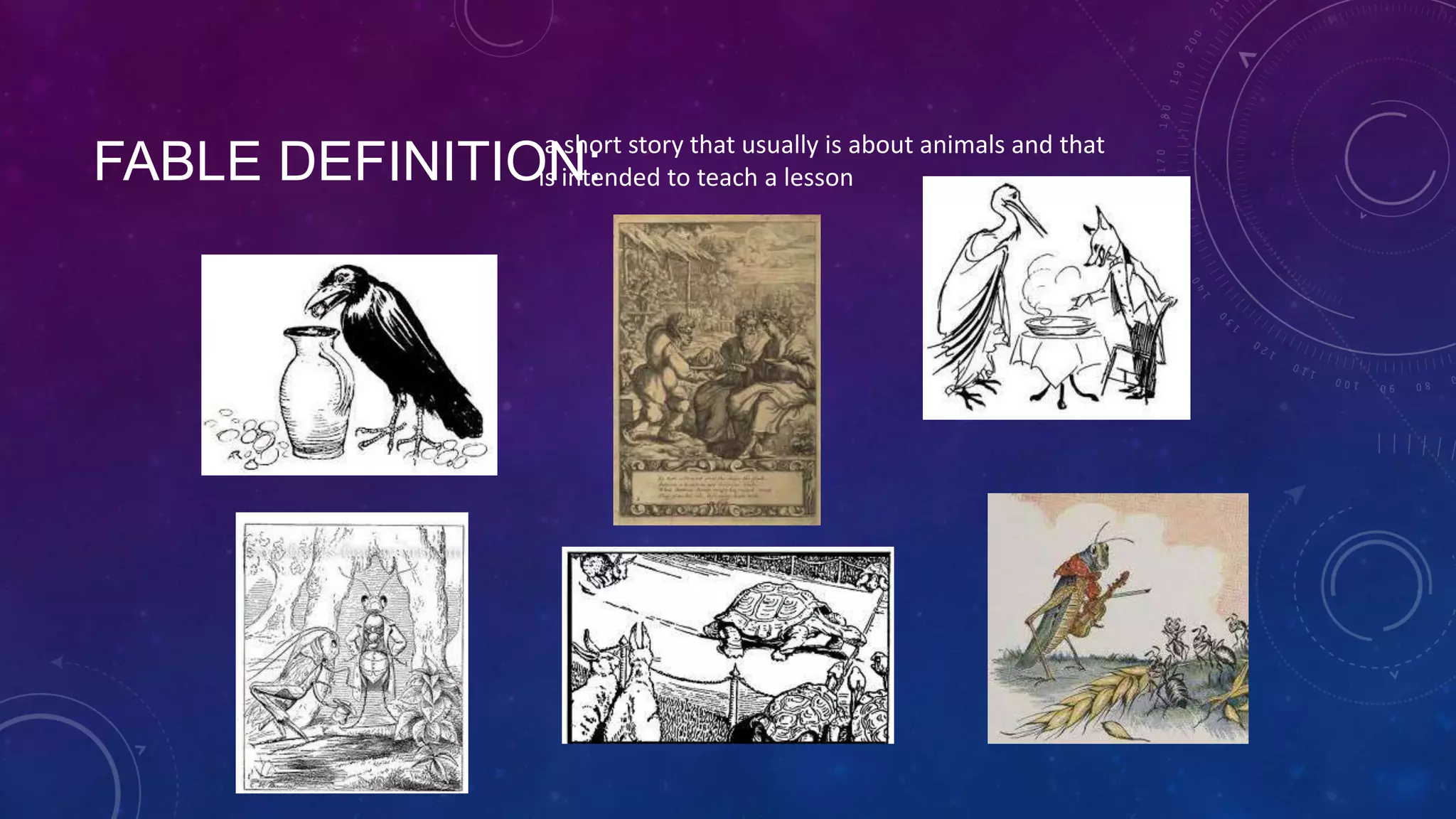
FABLE DEFINITION:a short story that usually is about animals and that
is intended to teach a lesson
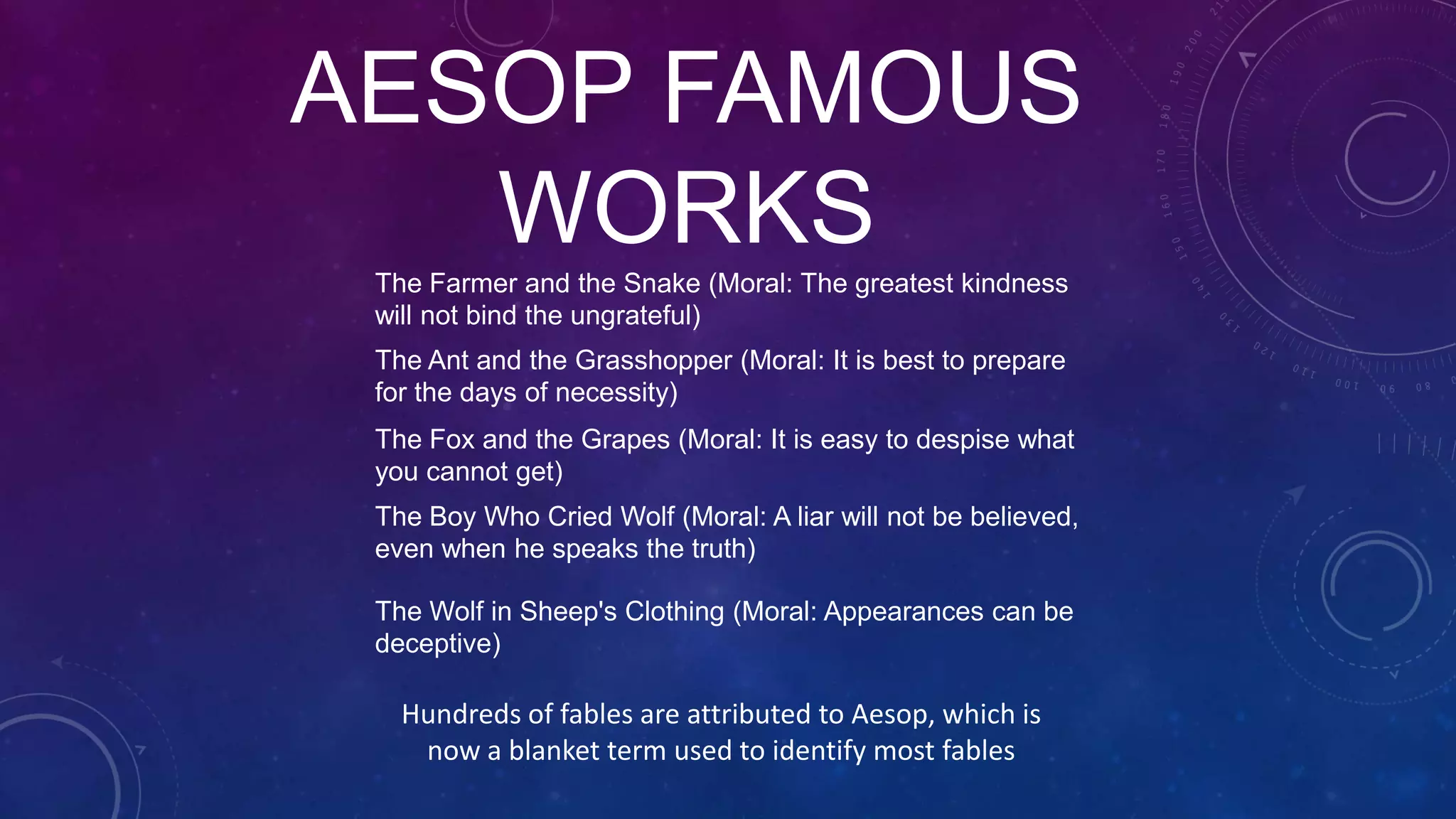
AESOP FAMOUS
WORKS
Hundreds of fables are attributed to Aesop, which is
now a blanket term used to identify most fables
The Ant and the Grasshopper (Moral: It is best to prepare
for the days of necessity)
The Fox and the Grapes (Moral: It is easy to despise what
you cannot get)
The Farmer and the Snake (Moral: The greatest kindness
will not bind the ungrateful)
The Boy Who Cried Wolf (Moral: A liar will not be believed,
even when he speaks the truth)
The Wolf in Sheep's Clothing (Moral: Appearances can be
deceptive)

Aesop: An ancient author in modern times

  • 1.
    AESOP AN ANCIENT AUTHORIN MODERN TIMES Michelle Sweet Professor Elizabeth Owens English 1102
  • 2.
    LIFE OF AESOP: •Thought to have lived c. 620–564 BC • A slave in samos • Must have eventually been freed, because he argued as an advocate for a wealthy Samian • Believed to have meet his death in Delphi by being thrown off a cliff • His legend began through countless interpretations of his fables • His history was recorded by Aristotle, Herodotus, Demetrius of Phalerum and other philosophers
  • 3.
    AESOP’S FABLES • Havebeen translated into several languages • Not sure of the origination, historians Greece or Africa • Many fables were attributed to him although history can prove the stories existed before his time • Aesop himself is a story, that have been recorded in writings of Aristotle, Herodotus, and Plutarch • Originally his fables were used for political purposes when free speech was dangerous • Now his works are used to teach morals to children
  • 4.
    FABLE DEFINITION:a shortstory that usually is about animals and that is intended to teach a lesson
  • 5.
    AESOP FAMOUS WORKS Hundreds offables are attributed to Aesop, which is now a blanket term used to identify most fables The Ant and the Grasshopper (Moral: It is best to prepare for the days of necessity) The Fox and the Grapes (Moral: It is easy to despise what you cannot get) The Farmer and the Snake (Moral: The greatest kindness will not bind the ungrateful) The Boy Who Cried Wolf (Moral: A liar will not be believed, even when he speaks the truth) The Wolf in Sheep's Clothing (Moral: Appearances can be deceptive)