 Definition:
In objective terms, utility
may be defined as the “amount of
satisfaction derived from a commodity
or service at a particular time”.
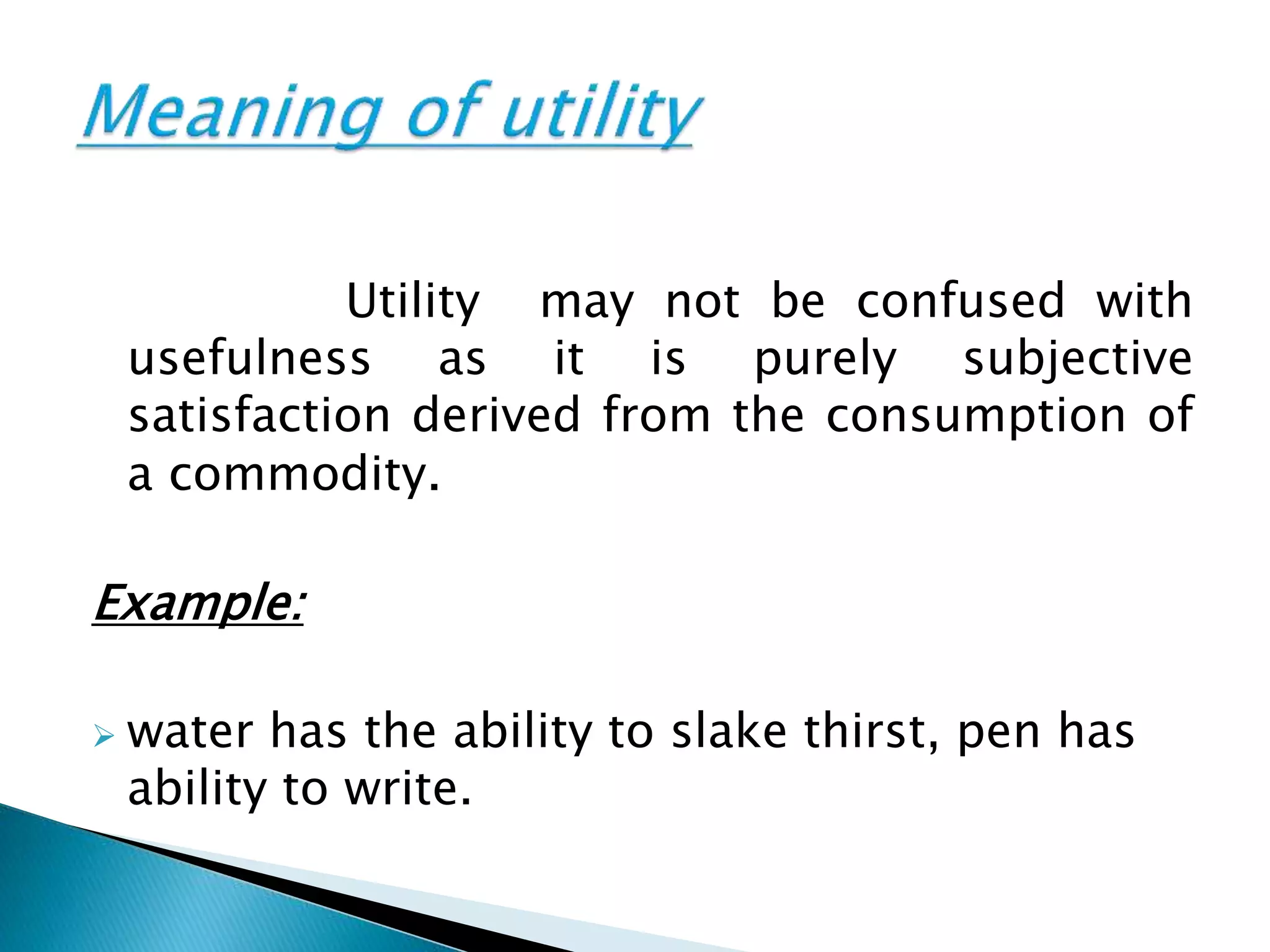
Utility may not be confused with
usefulness as it is purely subjective
satisfaction derived from the consumption of
a commodity.
Example:
 water has the ability to slake thirst, pen has
ability to write.
 Utility is the want satisfying power
of commodity.
 It is a subjective entity and varies
from person to person.
 It should be noted that utility is a
not the some thing as usefulness.
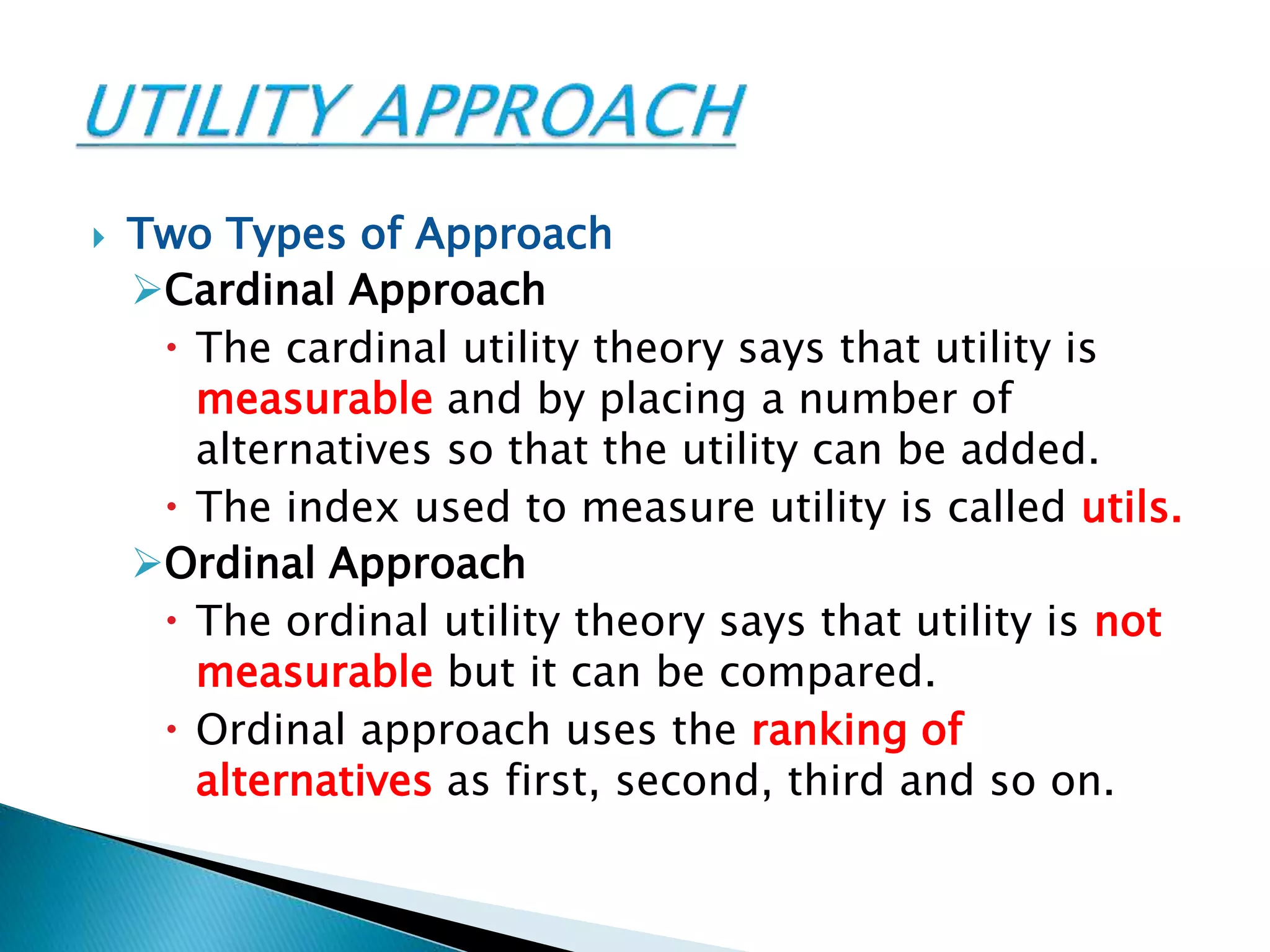
 Two Types of Approach
Cardinal Approach
 The cardinal utility theory says that utility is
measurable and by placing a number of
alternatives so that the utility can be added.
 The index used to measure utility is called utils.
Ordinal Approach
 The ordinal utility theory says that utility is not
measurable but it can be compared.
 Ordinal approach uses the ranking of
alternatives as first, second, third and so on.
Cardinal Utility Analysis and Ordinal Utility Analysis
Cardinal Utility analysis Ordinal Utility Analysis
Utility Analysis
• Alfred Marshal
• can be measured
• ‘Utils’
• Law of Diminishing
Marginal Utility
•Law of Equi-marginal
Utility
• J. R. Hicks & R.G.D. Allen
•Cannot be measured but
compared as rank
• Indifference Curve
analysis
 Dependent upon human wants.
 Immeasurable.
 Utility depend upon use.
 Utility is subjective.
 Utility depends upon shape.
 Utility depends upon on knowledge.
 Utility depends upon ownership.
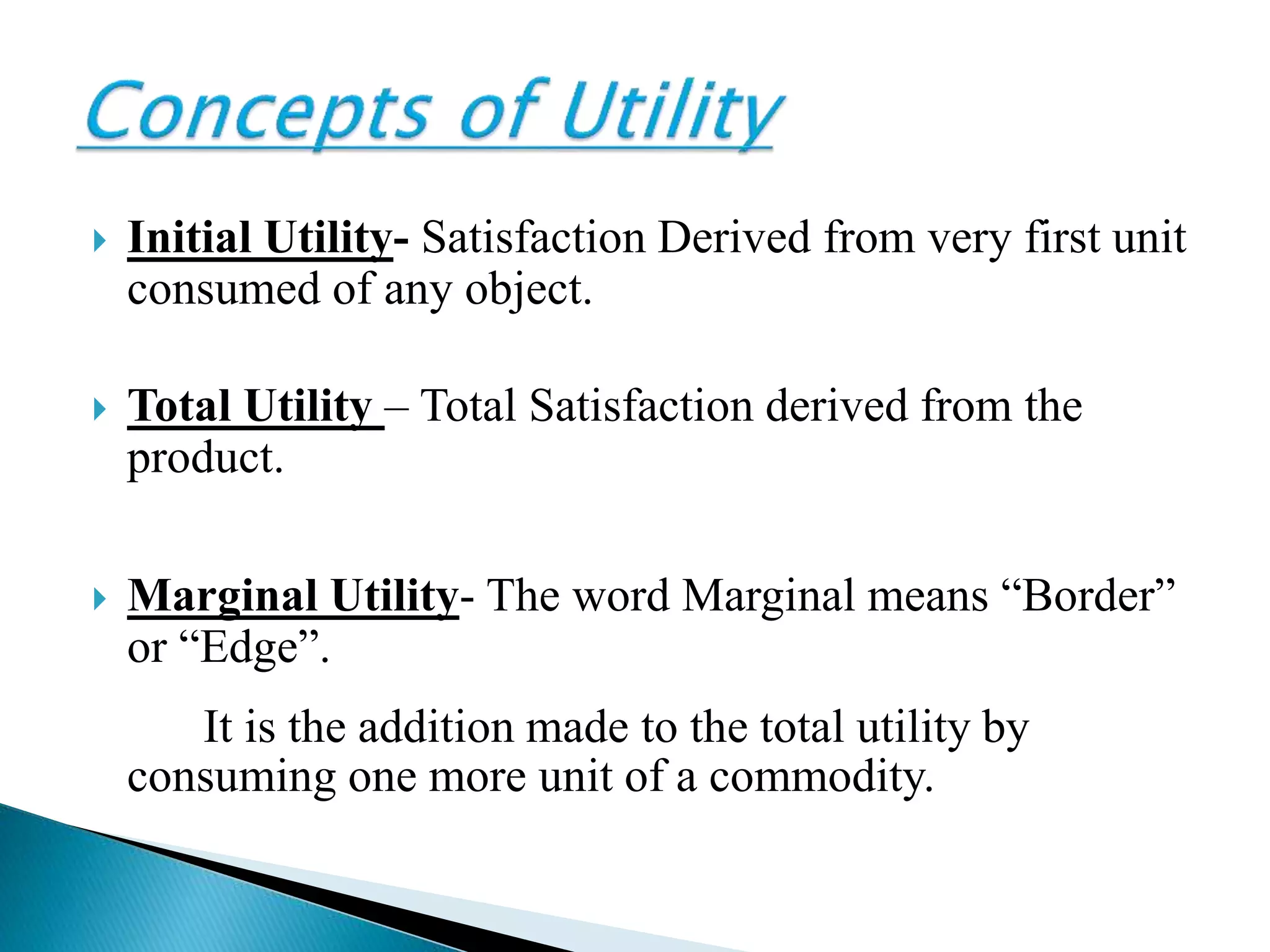
 Initial Utility- Satisfaction Derived from very first unit
consumed of any object.
 Total Utility – Total Satisfaction derived from the
product.
 Marginal Utility- The word Marginal means “Border”
or “Edge”.
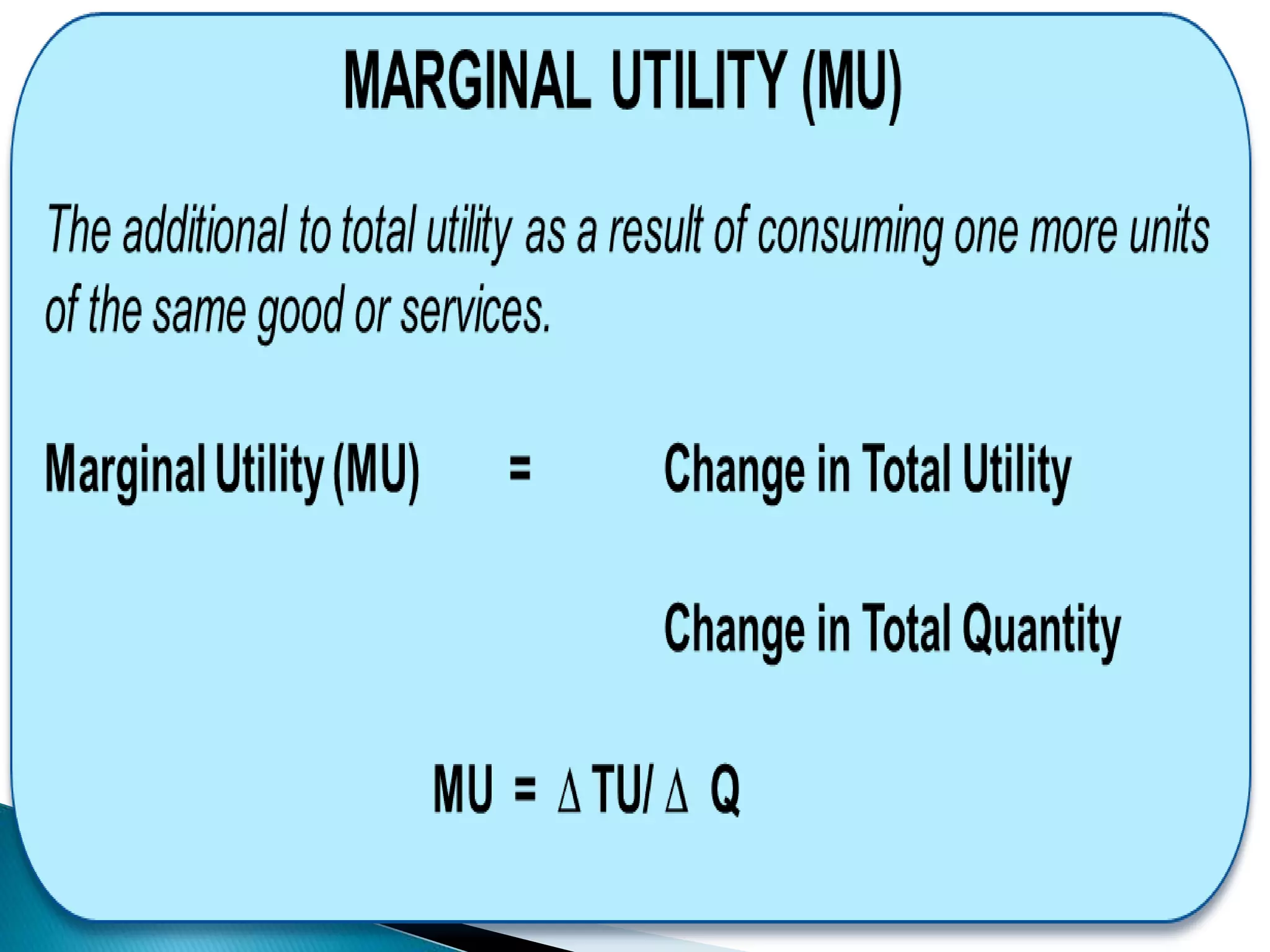
It is the addition made to the total utility by
consuming one more unit of a commodity.
Total Utility
Marginal Utility
 The sum total of satisfaction which a
consumer receives by consuming the
various unity of the commodity.
 (The more unit of a commodity he
consumes, the greater will be his total
utility)
 The total satisfaction of wants & needs
obtained from the consumption of goods &
services
 Based on the presumption that the amount
of utility generated from the consumption
of a good can be explicitly measures
 Hypothetical measure is util
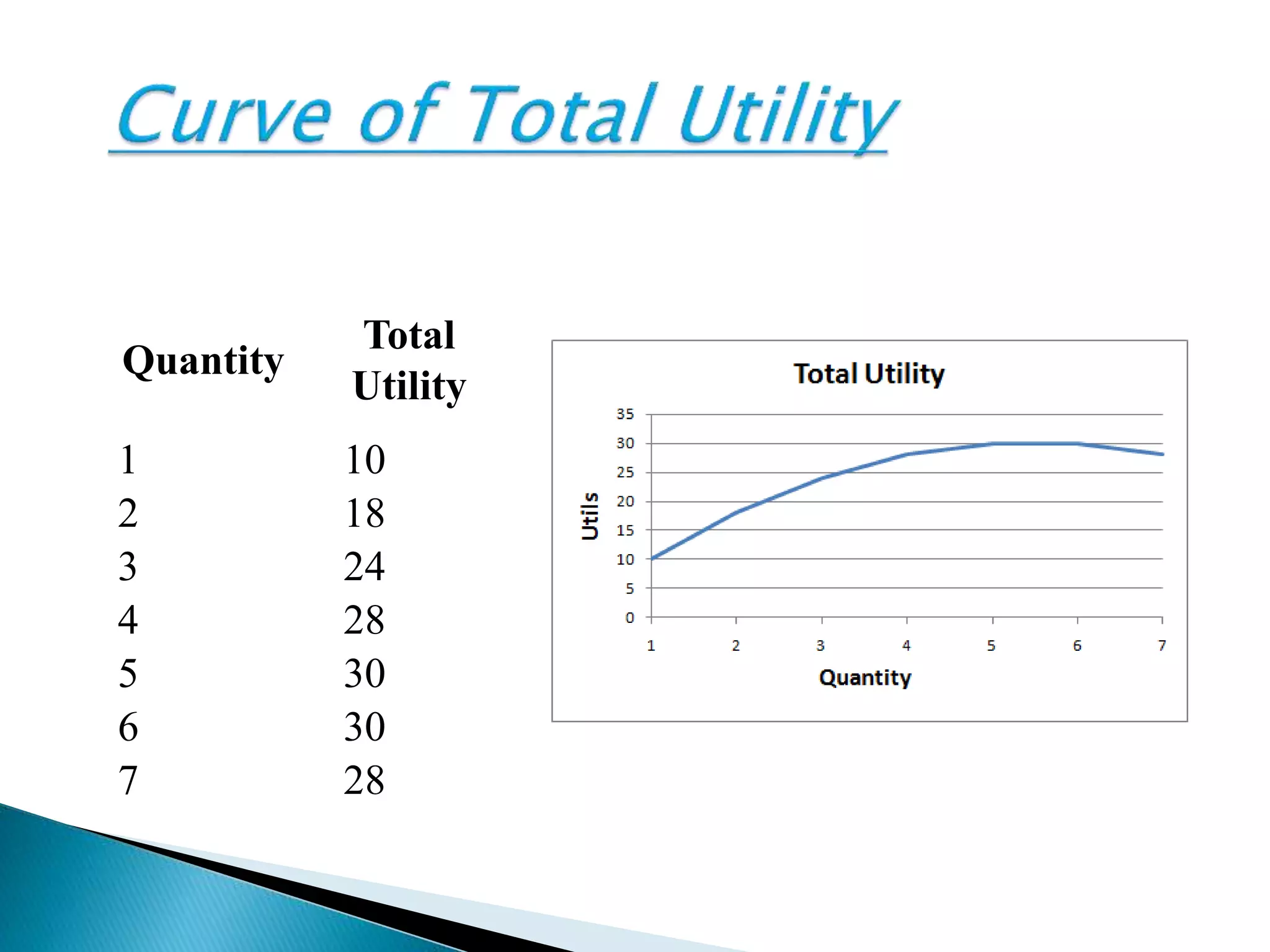
Quantity
Total
Utility
1 10
2 18
3 24
4 28
5 30
6 30
7 28
 The term marginal refers to the effects
of a small change in consumption.
'Marginal considerations are
considerations which concern a slight
increase or reduction of the stock of
anything which we possess.’
 Marginal utility can be defined as a
measure of relative satisfaction gained or
lost from an increase or decrease in the
consumption of that good or service.
Examples:
 A motor vehicle or A haircut
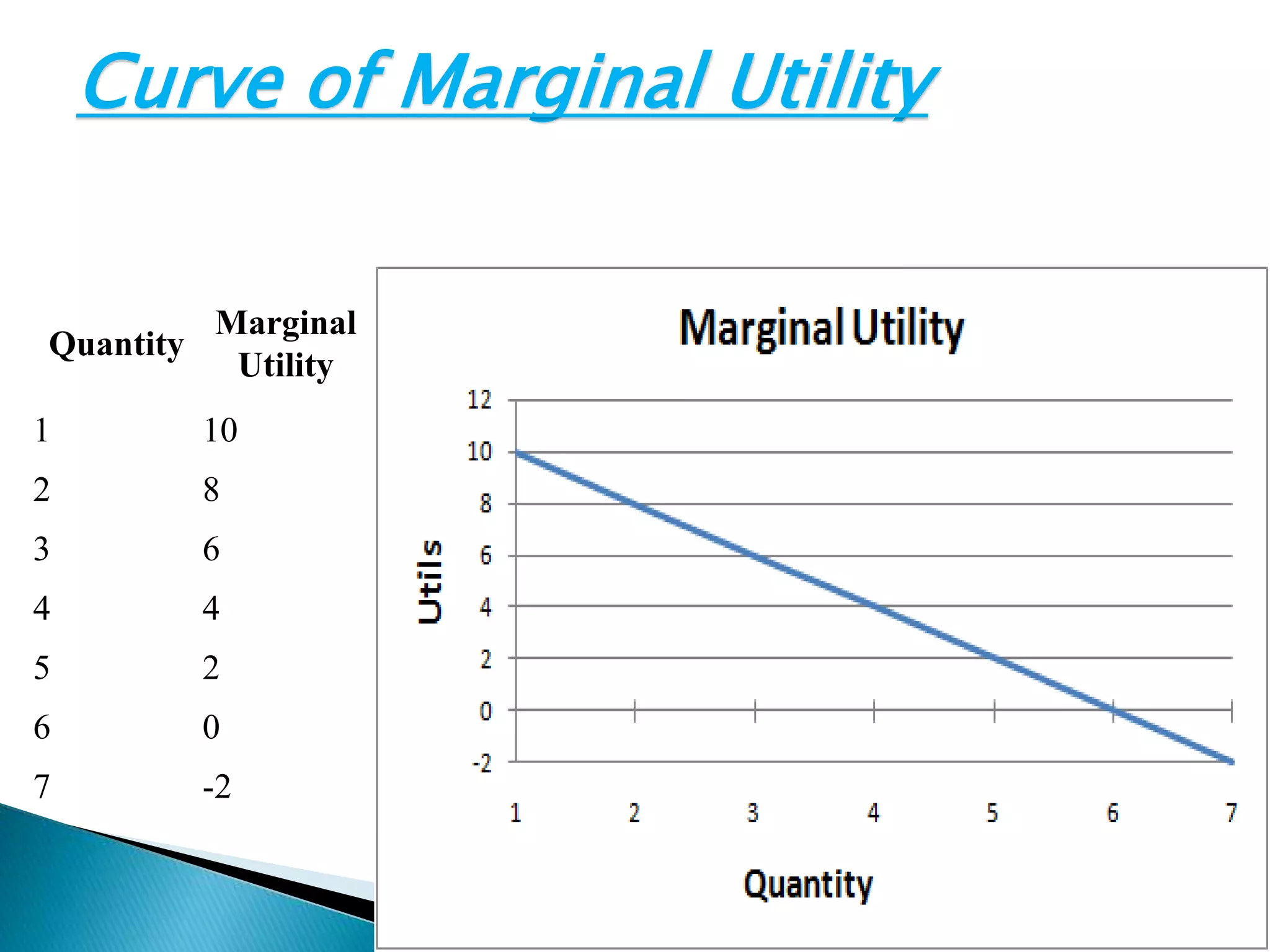
Quantity
Marginal
Utility
1 10
2 8
3 6
4 4
5 2
6 0
7 -2
Curve of Marginal Utility
Quantity TU MU Description
0 0 --
1 8 8 Initial
2 14 6
3 18 4 Positive
4 20 2
5 20 0 Zero
6 18 -2 Negative
Thank you !

total and marginal utility

  • 2.
     Definition: In objectiveterms, utility may be defined as the “amount of satisfaction derived from a commodity or service at a particular time”.
  • 3.
    Utility may notbe confused with usefulness as it is purely subjective satisfaction derived from the consumption of a commodity. Example:  water has the ability to slake thirst, pen has ability to write.
  • 4.
     Utility isthe want satisfying power of commodity.  It is a subjective entity and varies from person to person.  It should be noted that utility is a not the some thing as usefulness.
  • 5.
     Two Typesof Approach Cardinal Approach  The cardinal utility theory says that utility is measurable and by placing a number of alternatives so that the utility can be added.  The index used to measure utility is called utils. Ordinal Approach  The ordinal utility theory says that utility is not measurable but it can be compared.  Ordinal approach uses the ranking of alternatives as first, second, third and so on.
  • 6.
    Cardinal Utility Analysisand Ordinal Utility Analysis Cardinal Utility analysis Ordinal Utility Analysis Utility Analysis • Alfred Marshal • can be measured • ‘Utils’ • Law of Diminishing Marginal Utility •Law of Equi-marginal Utility • J. R. Hicks & R.G.D. Allen •Cannot be measured but compared as rank • Indifference Curve analysis
  • 7.
     Dependent uponhuman wants.  Immeasurable.  Utility depend upon use.  Utility is subjective.  Utility depends upon shape.  Utility depends upon on knowledge.  Utility depends upon ownership.
  • 8.
     Initial Utility-Satisfaction Derived from very first unit consumed of any object.  Total Utility – Total Satisfaction derived from the product.  Marginal Utility- The word Marginal means “Border” or “Edge”. It is the addition made to the total utility by consuming one more unit of a commodity.
  • 9.
  • 10.
     The sumtotal of satisfaction which a consumer receives by consuming the various unity of the commodity.  (The more unit of a commodity he consumes, the greater will be his total utility)
  • 11.
     The totalsatisfaction of wants & needs obtained from the consumption of goods & services  Based on the presumption that the amount of utility generated from the consumption of a good can be explicitly measures  Hypothetical measure is util
  • 12.
    Quantity Total Utility 1 10 2 18 324 4 28 5 30 6 30 7 28
  • 13.
     The termmarginal refers to the effects of a small change in consumption. 'Marginal considerations are considerations which concern a slight increase or reduction of the stock of anything which we possess.’
  • 14.
     Marginal utilitycan be defined as a measure of relative satisfaction gained or lost from an increase or decrease in the consumption of that good or service. Examples:  A motor vehicle or A haircut
  • 16.
    Quantity Marginal Utility 1 10 2 8 36 4 4 5 2 6 0 7 -2 Curve of Marginal Utility
  • 17.
    Quantity TU MUDescription 0 0 -- 1 8 8 Initial 2 14 6 3 18 4 Positive 4 20 2 5 20 0 Zero 6 18 -2 Negative
  • 18.