Romancing Conversation
Topics
Jack Park and Marc-Antoine Parent
TopicQuests Foundation
Open Global Mind Workshop
29 October, 2020
© 2020, TopicQuests Foundation
PhotobyJohannesPlenioonUnsplash
Big Picture
• “Never doubt that a small
group of thoughtful,
committed, citizens can
change the world. Indeed, it
is the only thing that ever
has.” ― Margaret Mead
• Conversation mapping and topic
maps tools help weave
perspectives together
Photo by Ray Hennessy on Unsplash
Problem Space: Big Picture
• Signature Question
• How can we have civil conversations online about politics?
• Signature Issues
• Massive Complexity in our conversation topics
• Massive Complexity does not reduce well to simple
solutions
• Finding Solutions requires
• Increased creative exploration of options
• Increased Trust
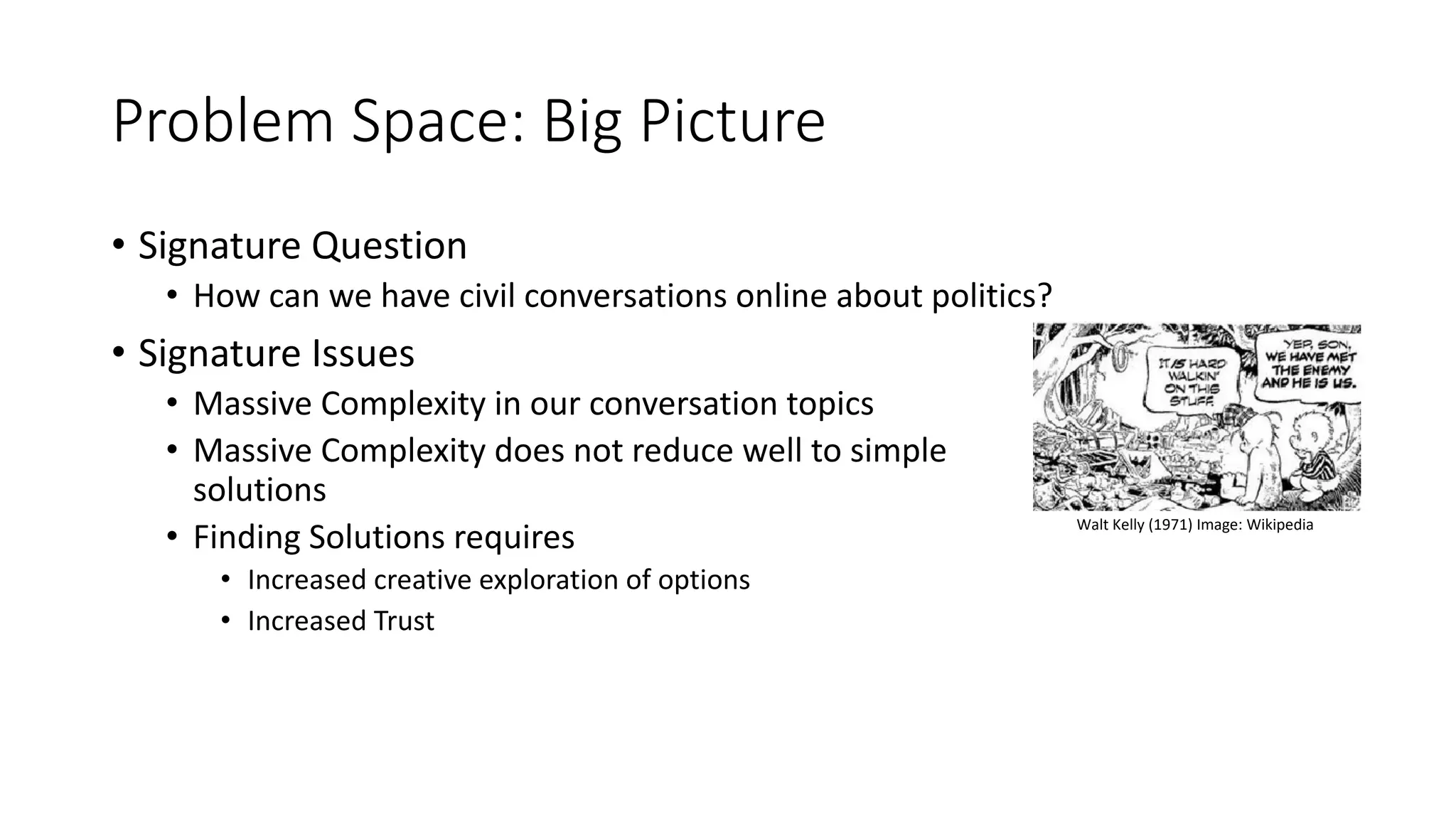
Walt Kelly (1971) Image: Wikipedia
Problem Space
• Too much information (info glut)
• Missing information
• Proprietary and not available
• Not proprietary, but hasn't been brought
to addressable space
• Massive amounts of tacit knowledge
• Native intuition not captured
• Incomplete recording
• Trust
• Heterogeneity
• Language (vernacular, dialects, etc.)
• Different world views on same topic
Urgent Challenge
How we can improve our
perception of the complexity
we live within,
so we may improve our
interaction with the world?
― Nora Bateson
A game-changing
Perception ó Action response
is necessary within the decade.
How to Improve
Conversations?
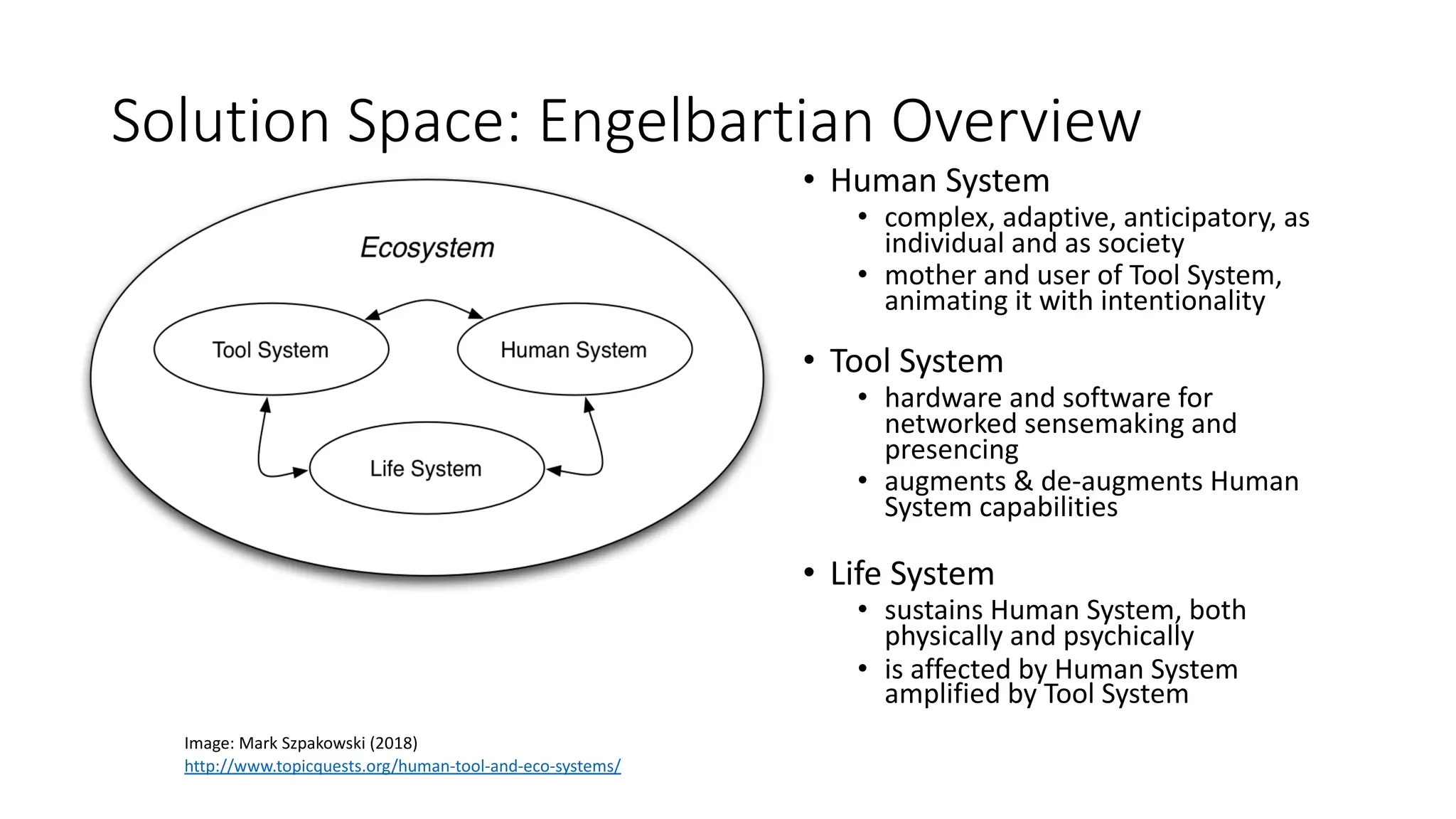
Solution Space: Engelbartian Overview
• Human System
• complex, adaptive, anticipatory, as
individual and as society
• mother and user of Tool System,
animating it with intentionality
• Tool System
• hardware and software for
networked sensemaking and
presencing
• augments & de-augments Human
System capabilities
• Life System
• sustains Human System, both
physically and psychically
• is affected by Human System
amplified by Tool System
Image: Mark Szpakowski (2018)
http://www.topicquests.org/human-tool-and-eco-systems/
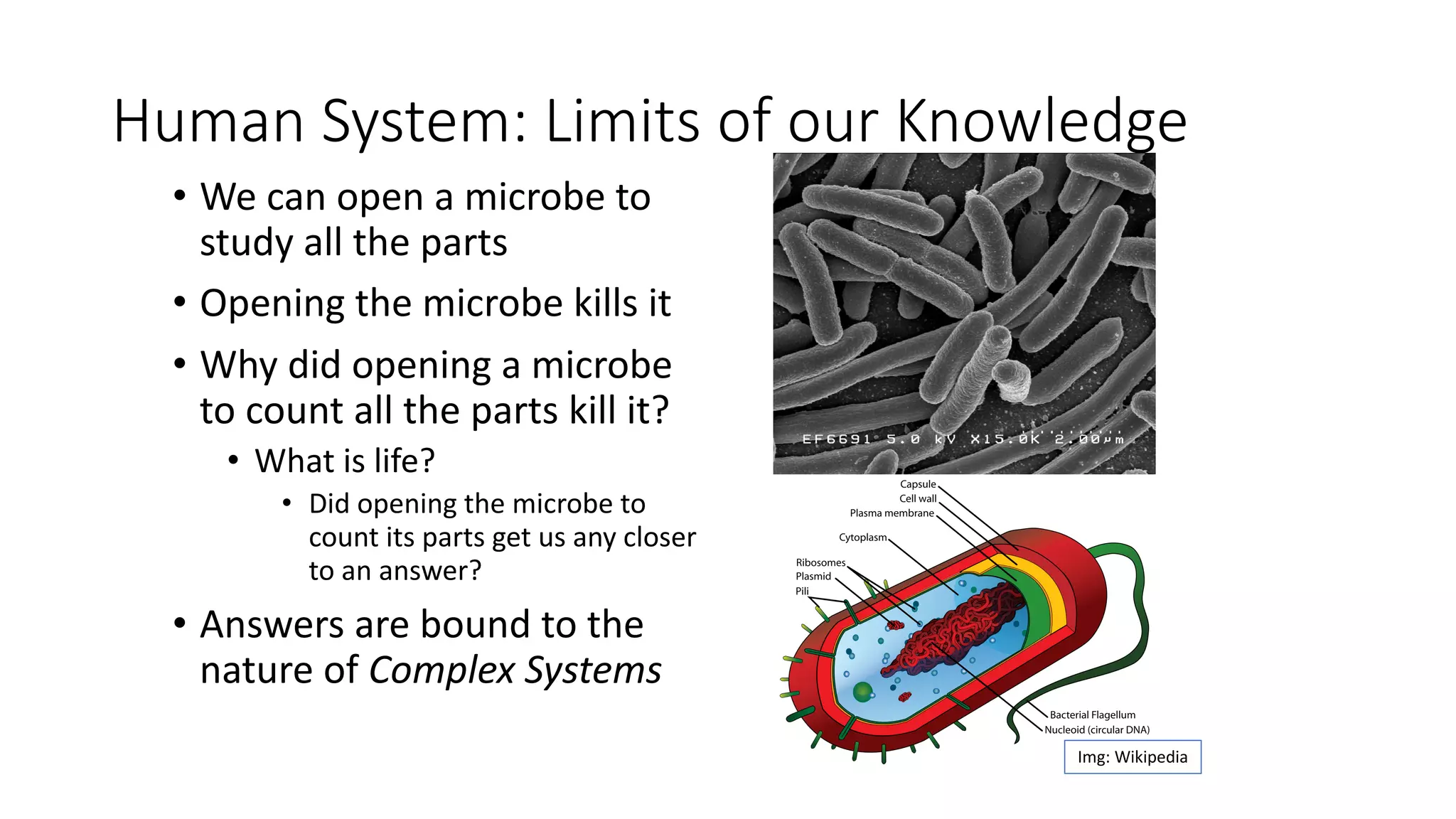
Human System: Limits of our Knowledge
• We can open a microbe to
study all the parts
• Opening the microbe kills it
• Why did opening a microbe
to count all the parts kill it?
• What is life?
• Did opening the microbe to
count its parts get us any closer
to an answer?
• Answers are bound to the
nature of Complex Systems
Img: Wikipedia
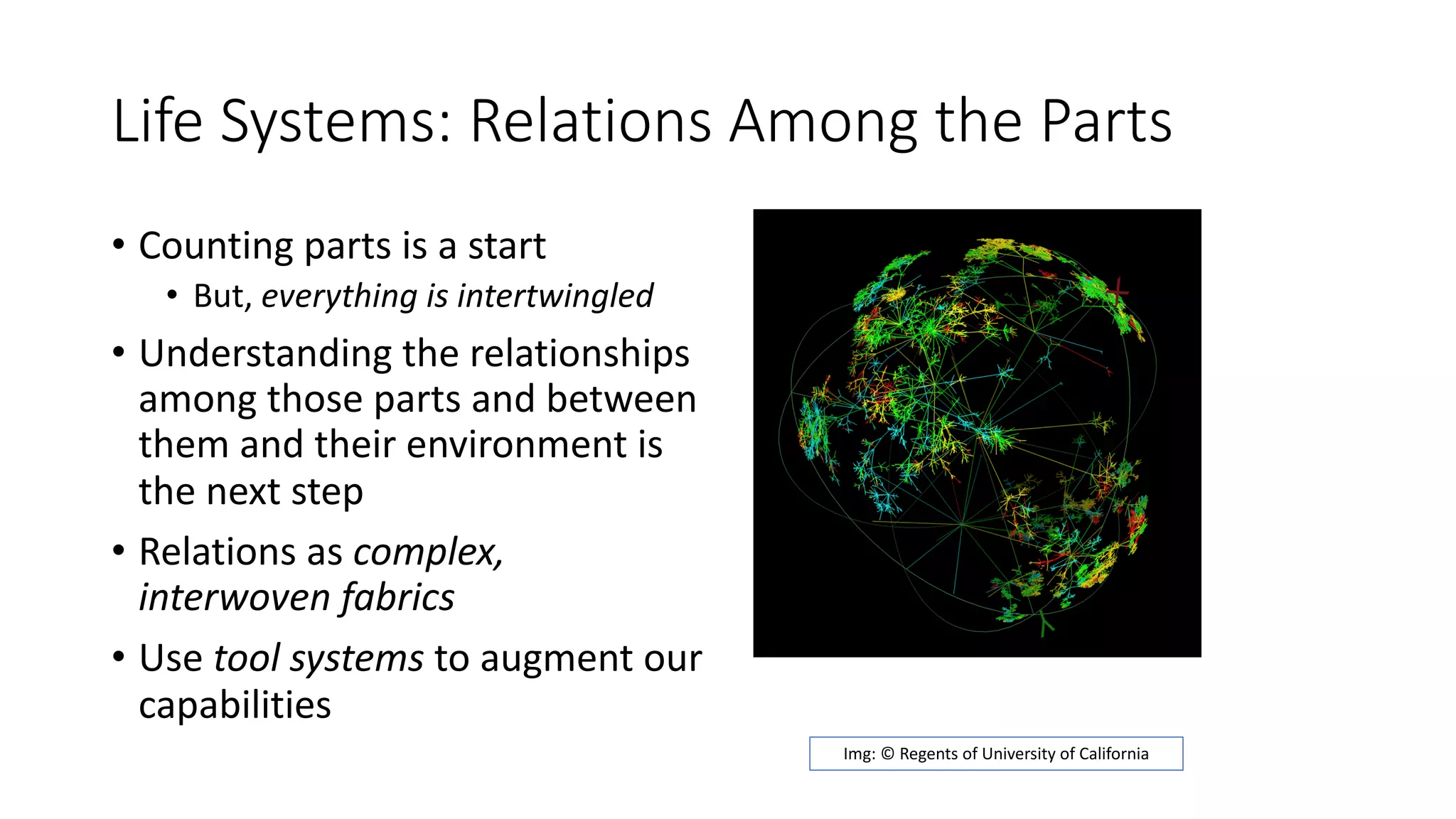
Life Systems: Relations Among the Parts
• Counting parts is a start
• But, everything is intertwingled
• Understanding the relationships
among those parts and between
them and their environment is
the next step
• Relations as complex,
interwoven fabrics
• Use tool systems to augment our
capabilities
Img: © Regents of University of California
Connecting Dots
As I’ve observed, “connecting the dots” means
putting pieces of puzzle together:
you get enriched by one or more relevant disciplines,
and what you learned from all other fields brings a
great possibility of making unique insights.
It helps you to see things from a different point.
—Kary Mullis, Nobel Laureate 1993
Photo by Ricardo Frantz on Unsplash
Tool Systems: Mapping
our Conversations
PhotobyBekirDönmezonUnsplash
• Purpose
• Augment Human Systems’ Perception of
Connections
• Improve Perception ó Action responses
• How
• Community Memory
• Indexing Subjects
• Tracking Relationships
• More Connected Dots
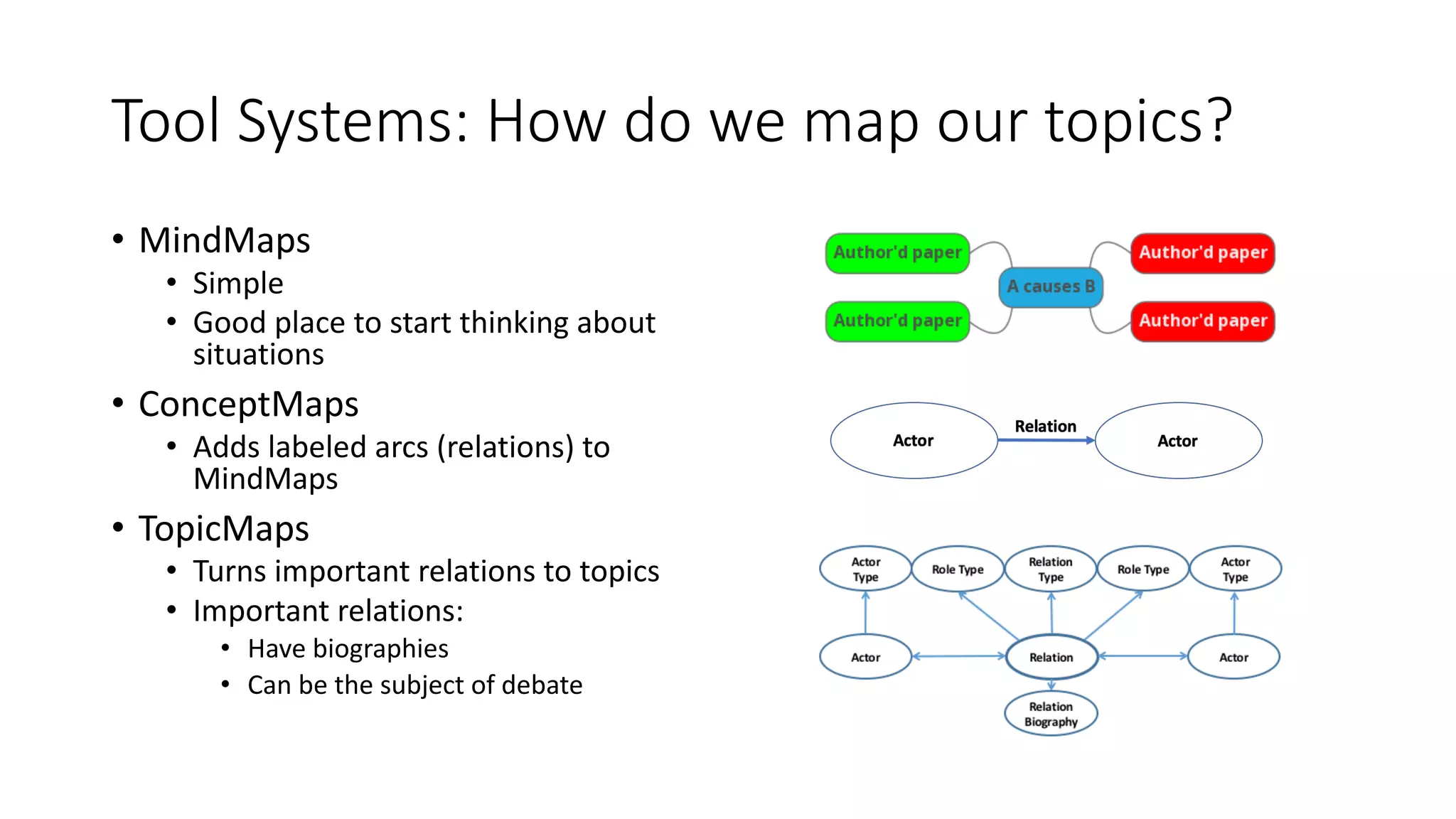
Tool Systems: How do we map our topics?
• MindMaps
• Simple
• Good place to start thinking about
situations
• ConceptMaps
• Adds labeled arcs (relations) to
MindMaps
• TopicMaps
• Turns important relations to topics
• Important relations:
• Have biographies
• Can be the subject of debate
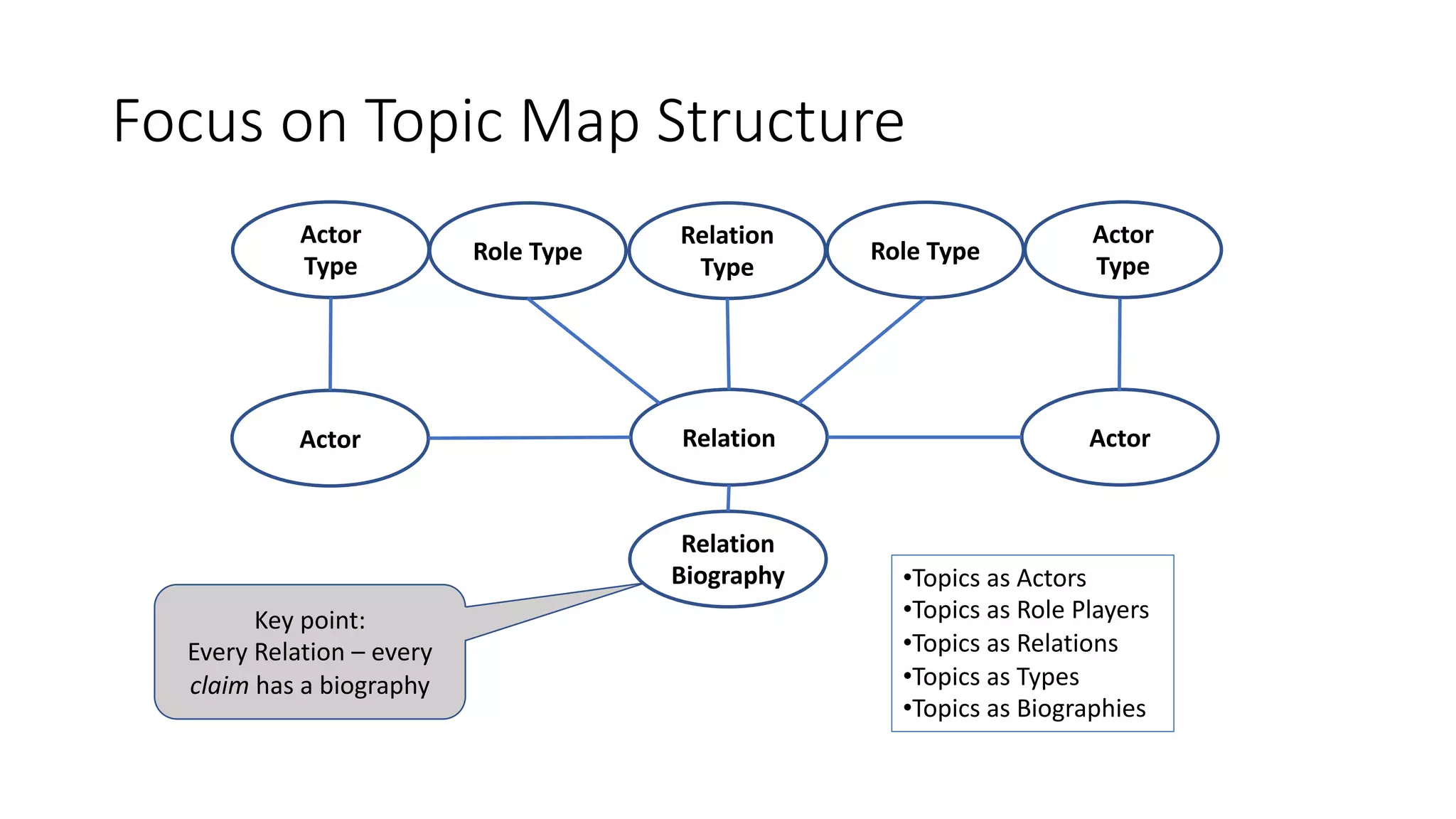
Focus on Topic Map Structure
•Topics as Actors
•Topics as Role Players
•Topics as Relations
•Topics as Types
•Topics as Biographies
Relation
Biography
Actor
Type
Relation
Type
Actor
Type
Role Type Role Type
Relation ActorActor
Key point:
Every Relation – every
claim has a biography
Higher-order Benefits
of Topic Mapping
• Indexing subjects across topic maps
enables crossing heterogeneous
community boundaries
• Knowledge federation
• Provenance
• allows community memory
• enhances trust
• Connected dots unify information
• Reduces infoglut
• Connects missing information
Photo by Gabriel Garcia Marengo on Unsplash
Using this Engelbartian Ecosystem
Perception ó Action response
• Conduct civil conversations
• Record them
• Map them
• Reflect on them
• Rinse and Repeat
Photo by Sam Goodgame on Unsplash

Topic Maps: Romancing Conversation Topics

  • 1.
    Romancing Conversation Topics Jack Parkand Marc-Antoine Parent TopicQuests Foundation Open Global Mind Workshop 29 October, 2020 © 2020, TopicQuests Foundation PhotobyJohannesPlenioonUnsplash
  • 2.
    Big Picture • “Neverdoubt that a small group of thoughtful, committed, citizens can change the world. Indeed, it is the only thing that ever has.” ― Margaret Mead • Conversation mapping and topic maps tools help weave perspectives together Photo by Ray Hennessy on Unsplash
  • 3.
    Problem Space: BigPicture • Signature Question • How can we have civil conversations online about politics? • Signature Issues • Massive Complexity in our conversation topics • Massive Complexity does not reduce well to simple solutions • Finding Solutions requires • Increased creative exploration of options • Increased Trust Walt Kelly (1971) Image: Wikipedia
  • 4.
    Problem Space • Toomuch information (info glut) • Missing information • Proprietary and not available • Not proprietary, but hasn't been brought to addressable space • Massive amounts of tacit knowledge • Native intuition not captured • Incomplete recording • Trust • Heterogeneity • Language (vernacular, dialects, etc.) • Different world views on same topic
  • 5.
    Urgent Challenge How wecan improve our perception of the complexity we live within, so we may improve our interaction with the world? ― Nora Bateson A game-changing Perception ó Action response is necessary within the decade. How to Improve Conversations?
  • 6.
    Solution Space: EngelbartianOverview • Human System • complex, adaptive, anticipatory, as individual and as society • mother and user of Tool System, animating it with intentionality • Tool System • hardware and software for networked sensemaking and presencing • augments & de-augments Human System capabilities • Life System • sustains Human System, both physically and psychically • is affected by Human System amplified by Tool System Image: Mark Szpakowski (2018) http://www.topicquests.org/human-tool-and-eco-systems/
  • 7.
    Human System: Limitsof our Knowledge • We can open a microbe to study all the parts • Opening the microbe kills it • Why did opening a microbe to count all the parts kill it? • What is life? • Did opening the microbe to count its parts get us any closer to an answer? • Answers are bound to the nature of Complex Systems Img: Wikipedia
  • 8.
    Life Systems: RelationsAmong the Parts • Counting parts is a start • But, everything is intertwingled • Understanding the relationships among those parts and between them and their environment is the next step • Relations as complex, interwoven fabrics • Use tool systems to augment our capabilities Img: © Regents of University of California
  • 9.
    Connecting Dots As I’veobserved, “connecting the dots” means putting pieces of puzzle together: you get enriched by one or more relevant disciplines, and what you learned from all other fields brings a great possibility of making unique insights. It helps you to see things from a different point. —Kary Mullis, Nobel Laureate 1993 Photo by Ricardo Frantz on Unsplash
  • 10.
    Tool Systems: Mapping ourConversations PhotobyBekirDönmezonUnsplash • Purpose • Augment Human Systems’ Perception of Connections • Improve Perception ó Action responses • How • Community Memory • Indexing Subjects • Tracking Relationships • More Connected Dots
  • 11.
    Tool Systems: Howdo we map our topics? • MindMaps • Simple • Good place to start thinking about situations • ConceptMaps • Adds labeled arcs (relations) to MindMaps • TopicMaps • Turns important relations to topics • Important relations: • Have biographies • Can be the subject of debate
  • 12.
    Focus on TopicMap Structure •Topics as Actors •Topics as Role Players •Topics as Relations •Topics as Types •Topics as Biographies Relation Biography Actor Type Relation Type Actor Type Role Type Role Type Relation ActorActor Key point: Every Relation – every claim has a biography
  • 13.
    Higher-order Benefits of TopicMapping • Indexing subjects across topic maps enables crossing heterogeneous community boundaries • Knowledge federation • Provenance • allows community memory • enhances trust • Connected dots unify information • Reduces infoglut • Connects missing information Photo by Gabriel Garcia Marengo on Unsplash
  • 14.
    Using this EngelbartianEcosystem Perception ó Action response • Conduct civil conversations • Record them • Map them • Reflect on them • Rinse and Repeat Photo by Sam Goodgame on Unsplash