Downloaded 86 times

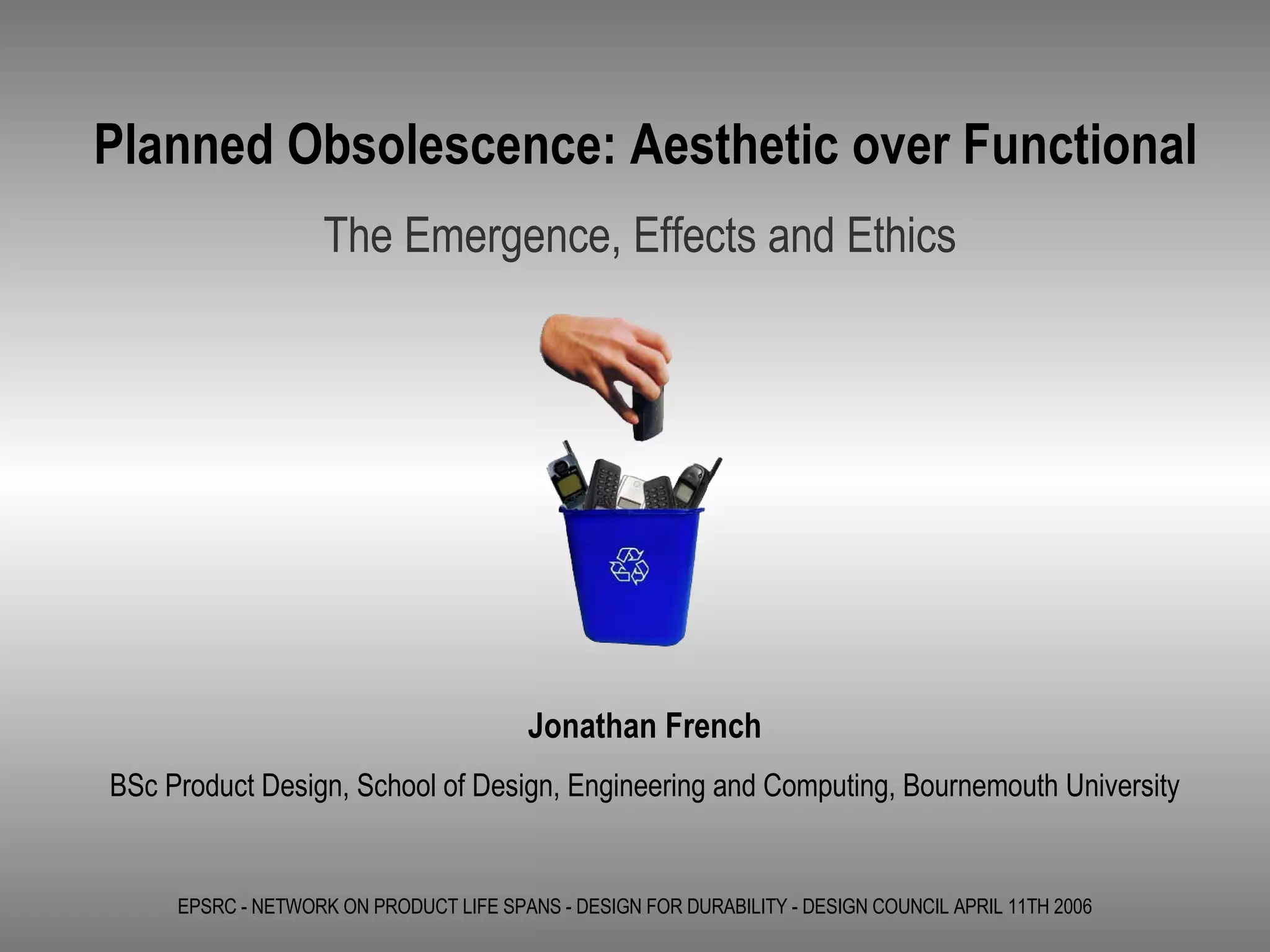
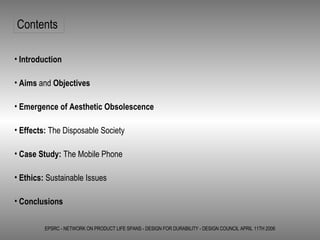
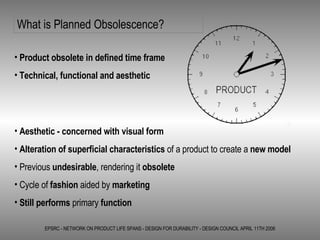
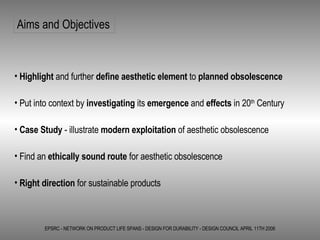
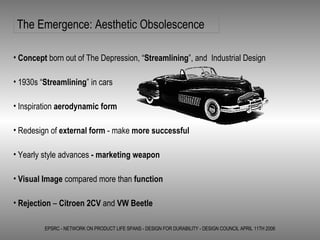
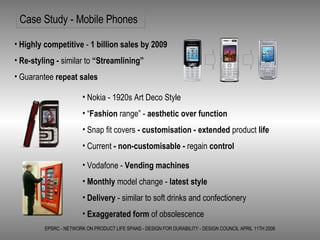

The document discusses the emergence and effects of planned obsolescence through aesthetic or superficial changes to products. It highlights how aesthetic obsolescence originated in the 1930s with automobile "streamlining" and increased yearly style changes. This fueled mass consumerism and rapid product replacement in the 1950s. A case study of the mobile phone industry illustrates how aesthetic re-styling extends to technology products and drives the need for frequent updates. The document concludes that aesthetic obsolescence has reached critical levels environmentally and that solutions require balancing consumer desires for the latest styles with more sustainable practices.


