#1: Move in closer
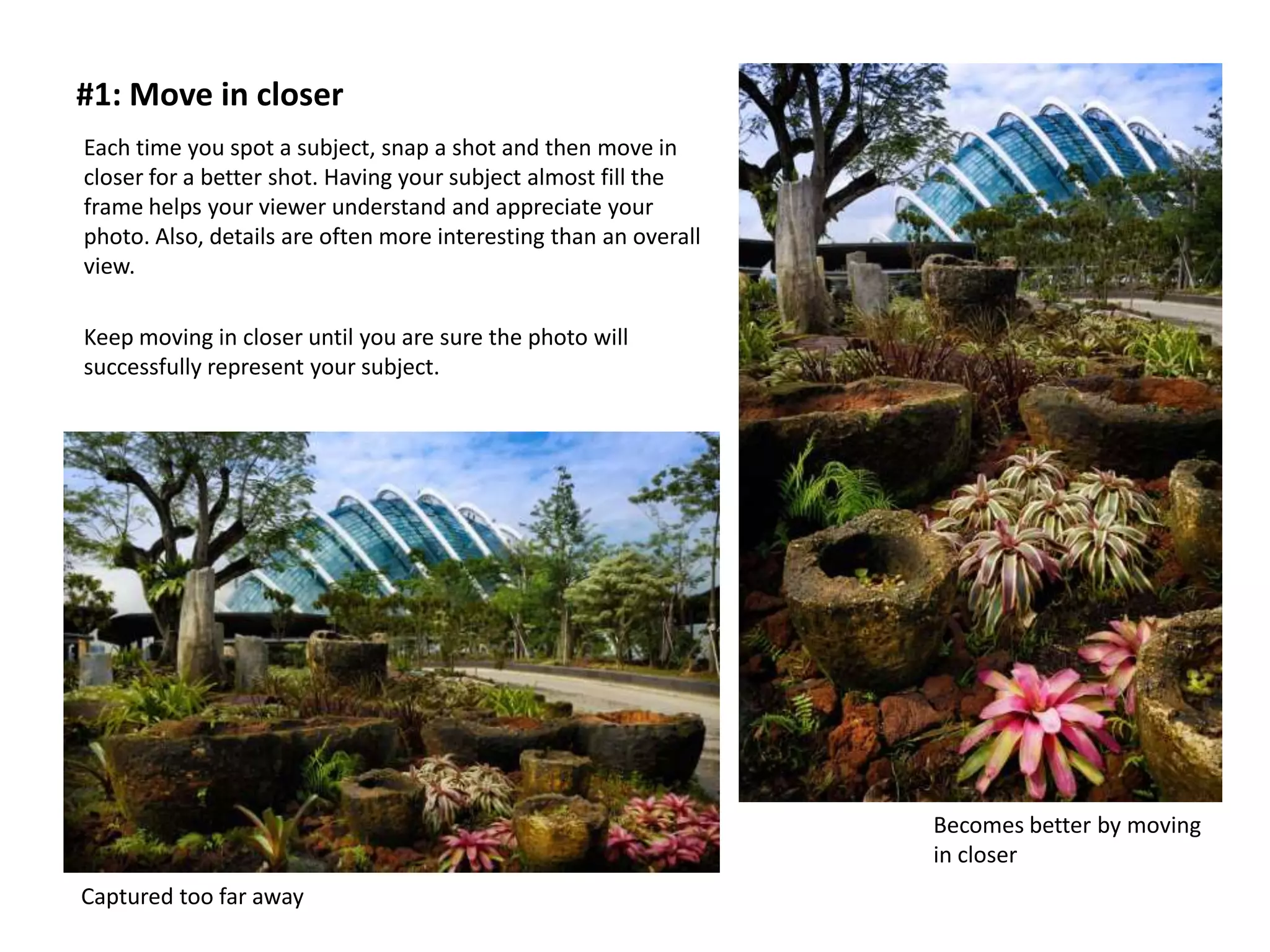
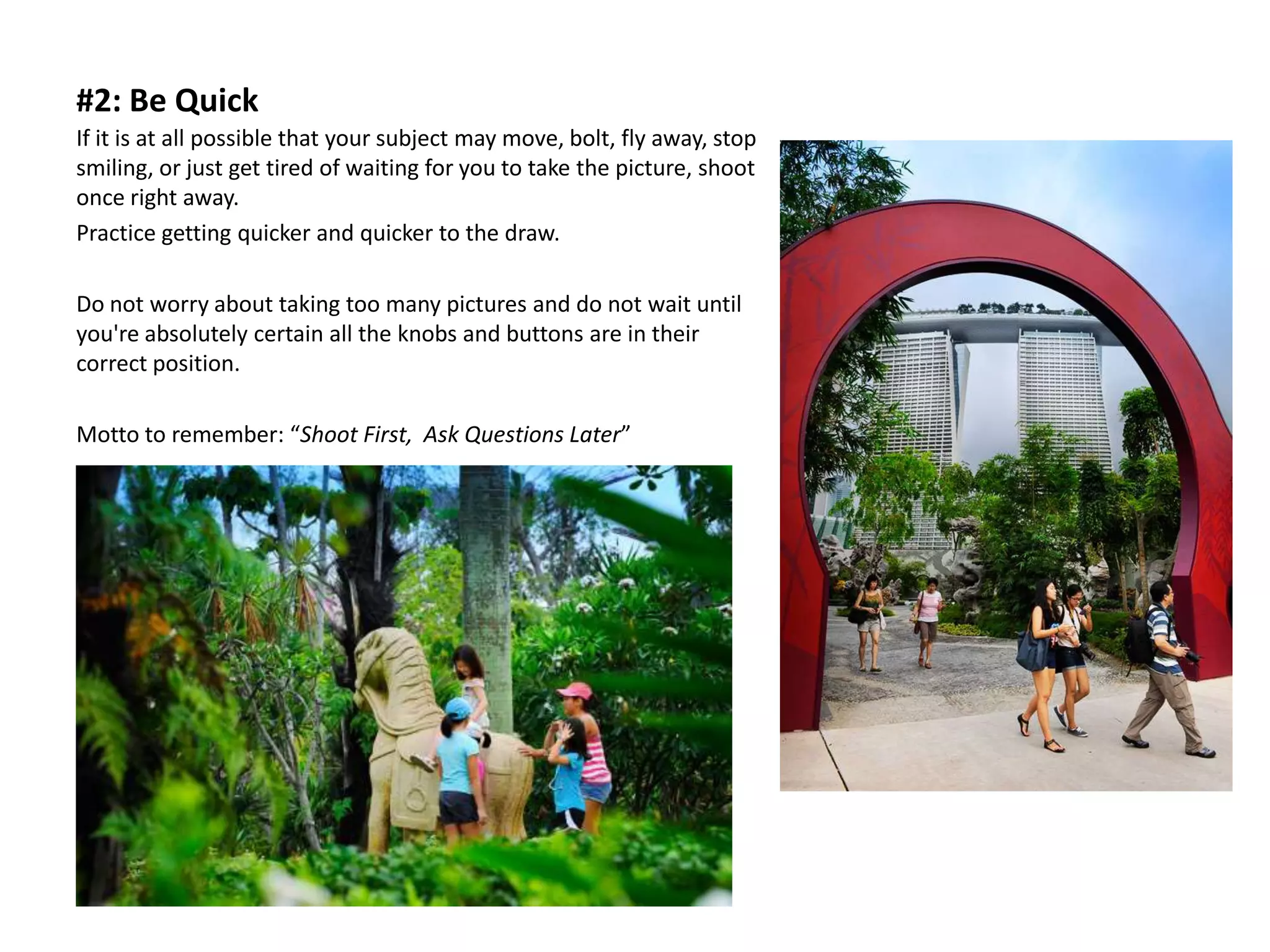
Each time you spot a subject, snap a shot and then move in
closer for a better shot. Having your subject almost fill the
frame helps your viewer understand and appreciate your
photo. Also, details are often more interesting than an overall
view.

Keep moving in closer until you are sure the photo will
successfully represent your subject.


                                                                  Becomes better by moving
                                                                  in closer
Captured too far away
#2: Be Quick
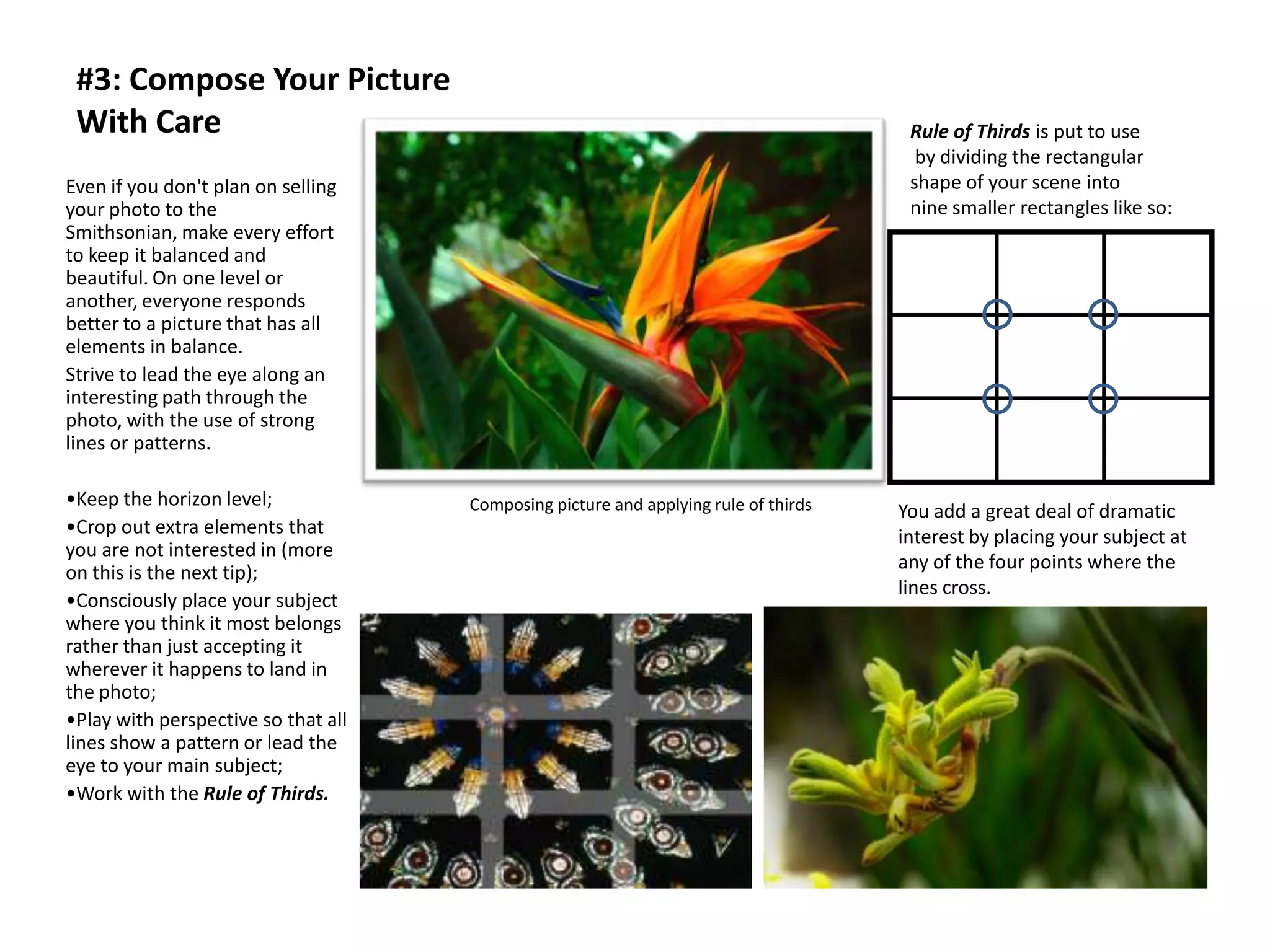
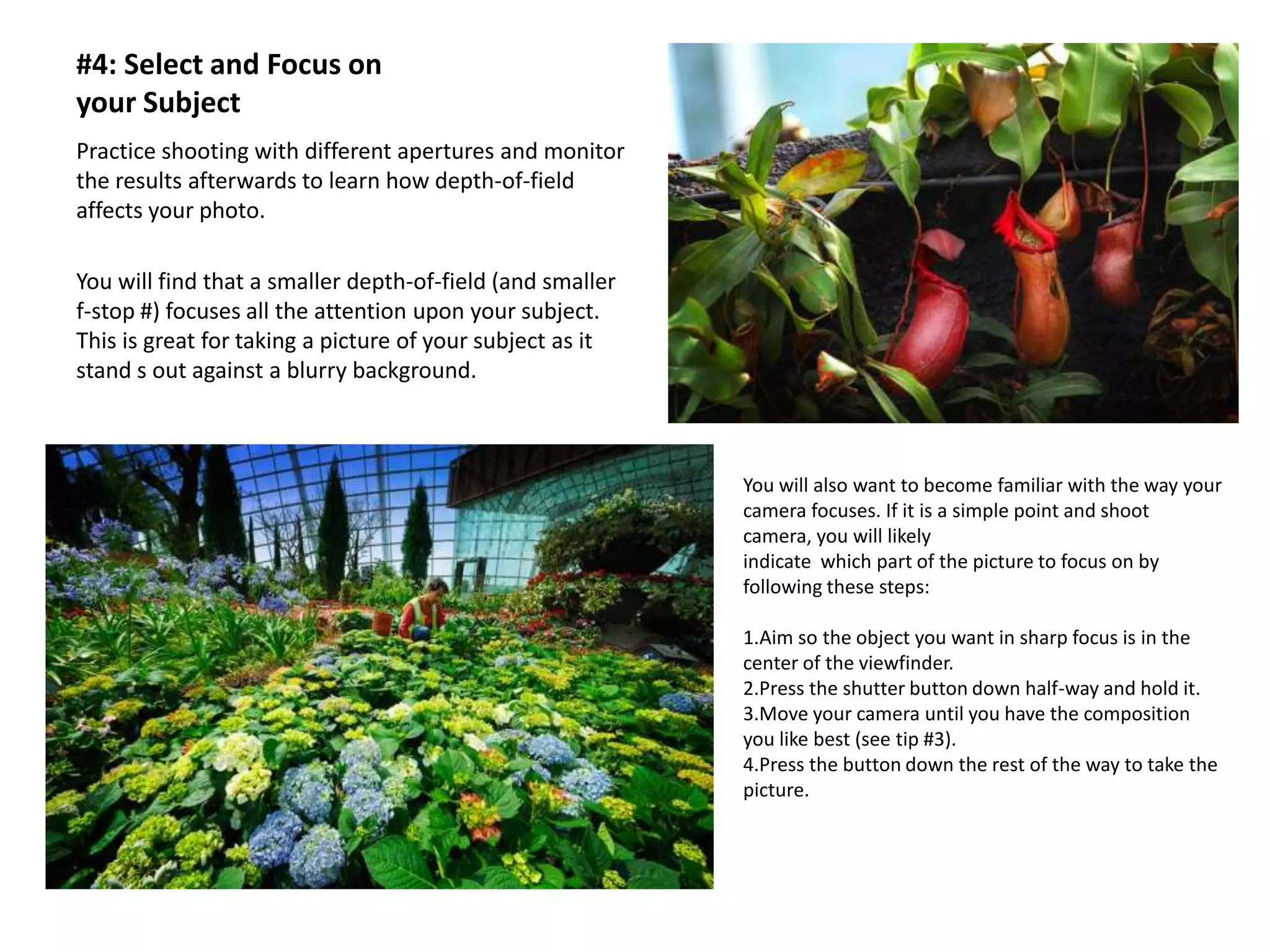
If it is at all possible that your subject may move, bolt, fly away, stop
smiling, or just get tired of waiting for you to take the picture, shoot
once right away.
Practice getting quicker and quicker to the draw.

Do not worry about taking too many pictures and do not wait until
you're absolutely certain all the knobs and buttons are in their
correct position.

Motto to remember: “Shoot First, Ask Questions Later”
#3: Compose Your Picture
 With Care                                                                            Rule of Thirds is put to use
                                                                                       by dividing the rectangular
Even if you don't plan on selling                                                     shape of your scene into
your photo to the                                                                     nine smaller rectangles like so:
Smithsonian, make every effort
to keep it balanced and
beautiful. On one level or
another, everyone responds
better to a picture that has all
elements in balance.
Strive to lead the eye along an
interesting path through the
photo, with the use of strong
lines or patterns.

•Keep the horizon level;             Composing picture and applying rule of thirds   You add a great deal of dramatic
•Crop out extra elements that                                                        interest by placing your subject at
you are not interested in (more
on this is the next tip);                                                            any of the four points where the
                                                                                     lines cross.
•Consciously place your subject
where you think it most belongs
rather than just accepting it
wherever it happens to land in
the photo;
•Play with perspective so that all
lines show a pattern or lead the
eye to your main subject;
•Work with the Rule of Thirds.
#4: Select and Focus on
your Subject
Practice shooting with different apertures and monitor
the results afterwards to learn how depth-of-field
affects your photo.

You will find that a smaller depth-of-field (and smaller
f-stop #) focuses all the attention upon your subject.
This is great for taking a picture of your subject as it
stand s out against a blurry background.


                                                           You will also want to become familiar with the way your
                                                           camera focuses. If it is a simple point and shoot
                                                           camera, you will likely
                                                           indicate which part of the picture to focus on by
                                                           following these steps:

                                                           1.Aim so the object you want in sharp focus is in the
                                                           center of the viewfinder.
                                                           2.Press the shutter button down half-way and hold it.
                                                           3.Move your camera until you have the composition
                                                           you like best (see tip #3).
                                                           4.Press the button down the rest of the way to take the
                                                           picture.
#5: Watch the Weather
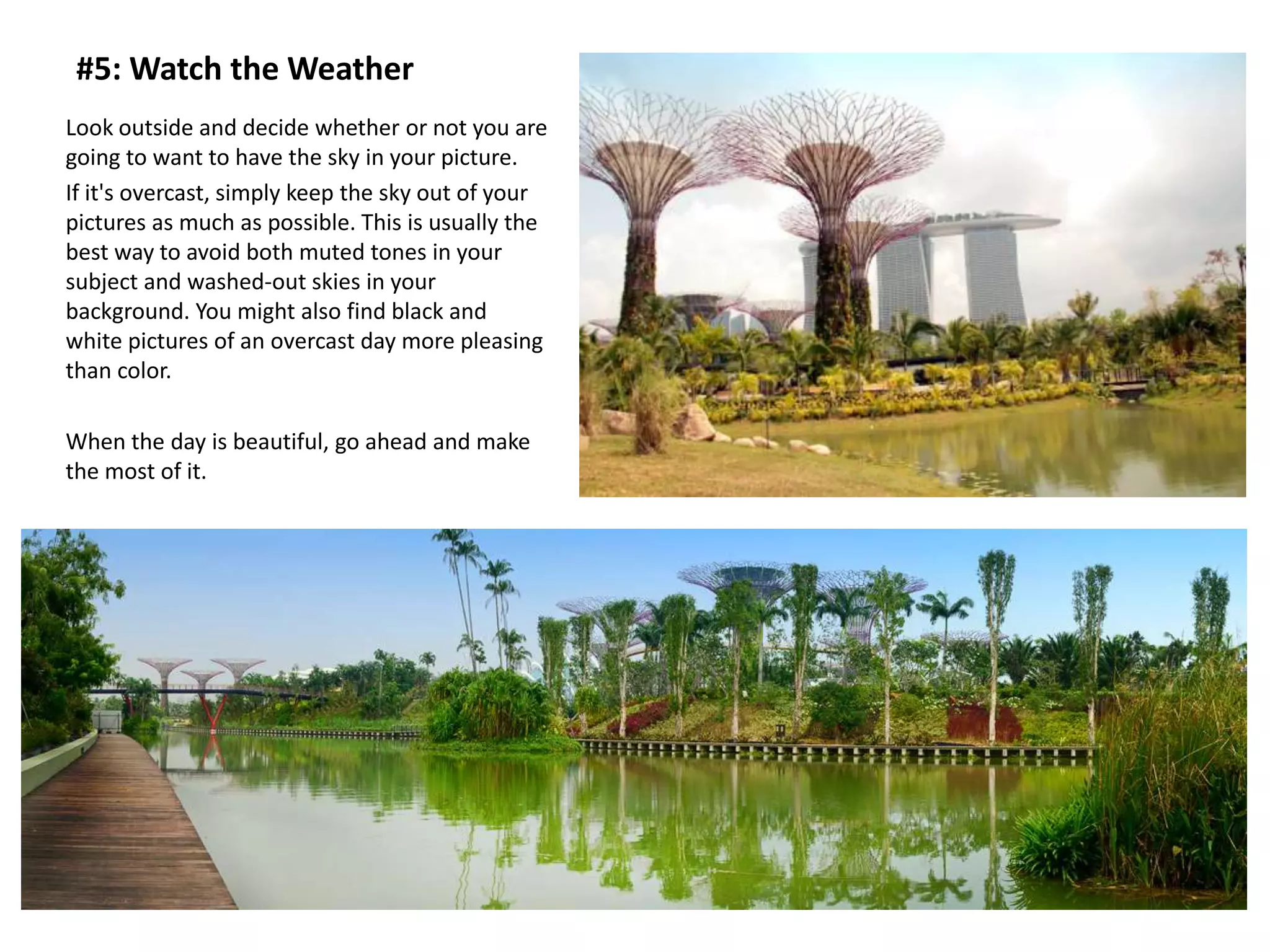
Look outside and decide whether or not you are
going to want to have the sky in your picture.
If it's overcast, simply keep the sky out of your
pictures as much as possible. This is usually the
best way to avoid both muted tones in your
subject and washed-out skies in your
background. You might also find black and
white pictures of an overcast day more pleasing
than color.

When the day is beautiful, go ahead and make
the most of it.

Top 5 photography_tips_for_beginners

  • 2.
    #1: Move incloser Each time you spot a subject, snap a shot and then move in closer for a better shot. Having your subject almost fill the frame helps your viewer understand and appreciate your photo. Also, details are often more interesting than an overall view. Keep moving in closer until you are sure the photo will successfully represent your subject. Becomes better by moving in closer Captured too far away
  • 3.
    #2: Be Quick Ifit is at all possible that your subject may move, bolt, fly away, stop smiling, or just get tired of waiting for you to take the picture, shoot once right away. Practice getting quicker and quicker to the draw. Do not worry about taking too many pictures and do not wait until you're absolutely certain all the knobs and buttons are in their correct position. Motto to remember: “Shoot First, Ask Questions Later”
  • 4.
    #3: Compose YourPicture With Care Rule of Thirds is put to use by dividing the rectangular Even if you don't plan on selling shape of your scene into your photo to the nine smaller rectangles like so: Smithsonian, make every effort to keep it balanced and beautiful. On one level or another, everyone responds better to a picture that has all elements in balance. Strive to lead the eye along an interesting path through the photo, with the use of strong lines or patterns. •Keep the horizon level; Composing picture and applying rule of thirds You add a great deal of dramatic •Crop out extra elements that interest by placing your subject at you are not interested in (more on this is the next tip); any of the four points where the lines cross. •Consciously place your subject where you think it most belongs rather than just accepting it wherever it happens to land in the photo; •Play with perspective so that all lines show a pattern or lead the eye to your main subject; •Work with the Rule of Thirds.
  • 5.
    #4: Select andFocus on your Subject Practice shooting with different apertures and monitor the results afterwards to learn how depth-of-field affects your photo. You will find that a smaller depth-of-field (and smaller f-stop #) focuses all the attention upon your subject. This is great for taking a picture of your subject as it stand s out against a blurry background. You will also want to become familiar with the way your camera focuses. If it is a simple point and shoot camera, you will likely indicate which part of the picture to focus on by following these steps: 1.Aim so the object you want in sharp focus is in the center of the viewfinder. 2.Press the shutter button down half-way and hold it. 3.Move your camera until you have the composition you like best (see tip #3). 4.Press the button down the rest of the way to take the picture.
  • 6.
    #5: Watch theWeather Look outside and decide whether or not you are going to want to have the sky in your picture. If it's overcast, simply keep the sky out of your pictures as much as possible. This is usually the best way to avoid both muted tones in your subject and washed-out skies in your background. You might also find black and white pictures of an overcast day more pleasing than color. When the day is beautiful, go ahead and make the most of it.