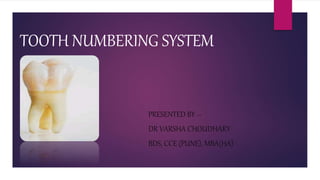
TOOTH NUMBERING SYSTEM
PRESENTED BY --
DR VARSHA CHOUDHARY
BDS, CCE (PUNE), MBA(HA)
TOOTH NUMBERING SYSTEM
The human dentition includes a total of 52 teeth.
i.e. Primary teeth – 20 nos. of teeth
Permanent teeth – 32 nos. of teeth
While performing conservative dental procedure it is necessary to employ a
easy mean of identifying, individual teeth.
For this it is necessary to combine the name of the teeth with quadrant, arch
as well as the dentition that it belongs to.
Thus, naming teeth in this manner is difficult for communication for this purpose, tooth
numbering system were develop.
for example – Mandibular right first molar
Maxillary left permanent first premolar
WHY DO WE NEED ???
System used by dentist to associated information to a specific tooth.
In clinical practice some “shorthand” system of tooth notation is necessary
for recording data.
To do so efficiently, it is necessary to adopt a type of code or numbering
system for teeth.
SYSTEM --
There are several system of numbering teeth 3 system are
currently popular and used widely.
1) Zsigmondy / palmer notation / system.
2) American dental association
3) Federation dentaire internation system
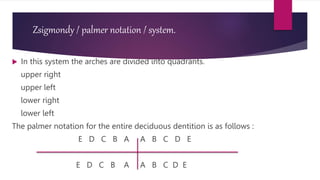
Zsigmondy / palmer notation / system.
 In this system the arches are divided into quadrants.
upper right
upper left
lower right
lower left
The palmer notation for the entire deciduous dentition is as follows :
E D C B A A B C D E
E D C B A A B C D E
Zsigmondy / palmer notation / system.
For the permanent dentition is a four-quadrant symbolic system.
Beginning with the Central Incisor, the teeth are numbered 1 to 8 in each quadrant in each
arch.
Upper right
Upper left
Lower right
Lower left
8 7 6 5 4 3 2 1 1 2 3 4 5 6 7 8
8 7 6 5 4 3 2 1 1 2 3 4 5 6 7 8
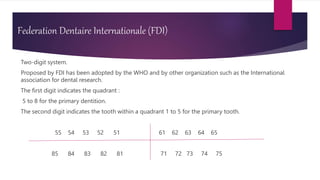
Federation Dentaire Internationale (FDI)
Two-digit system.
Proposed by FDI has been adopted by the WHO and by other organization such as the International
association for dental research.
The first digit indicates the quadrant :
5 to 8 for the primary dentition.
The second digit indicates the tooth within a quadrant 1 to 5 for the primary tooth.
55 54 53 52 51 61 62 63 64 65
85 84 83 82 81 71 72 73 74 75
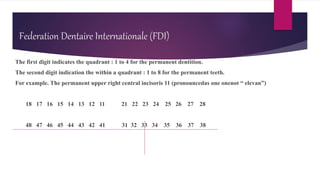
Federation Dentaire Internationale (FDI)
The first digit indicates the quadrant : 1 to 4 for the permanent dentition.
The second digit indication the within a quadrant : 1 to 8 for the permanent teeth.
For example. The permanent upper right central incisoris 11 (pronouncedas one onenot “ elevan”)
18 17 16 15 14 13 12 11 21 22 23 24 25 26 27 28
48 47 46 45 44 43 42 41 31 32 33 34 35 36 37 38
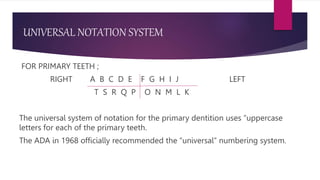
UNIVERSAL NOTATION SYSTEM
FOR PRIMARY TEETH ;
RIGHT A B C D E F G H I J LEFT
T S R Q P O N M L K
The universal system of notation for the primary dentition uses “uppercase
letters for each of the primary teeth.
The ADA in 1968 officially recommended the “universal” numbering system.
UNIVERSAL NOTATION SYSTEM
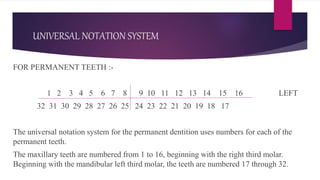
FOR PERMANENT TEETH :-
1 2 3 4 5 6 7 8 9 10 11 12 13 14 15 16 LEFT
32 31 30 29 28 27 26 25 24 23 22 21 20 19 18 17
The universal notation system for the permanent dentition uses numbers for each of the
permanent teeth.
The maxillary teeth are numbered from 1 to 16, beginning with the right third molar.
Beginning with the mandibular left third molar, the teeth are numbered 17 through 32.

TOOTH NUMBERING SYSTEM.pptx

  • 1.
    TOOTH NUMBERING SYSTEM PRESENTEDBY -- DR VARSHA CHOUDHARY BDS, CCE (PUNE), MBA(HA)
  • 2.
    TOOTH NUMBERING SYSTEM Thehuman dentition includes a total of 52 teeth. i.e. Primary teeth – 20 nos. of teeth Permanent teeth – 32 nos. of teeth While performing conservative dental procedure it is necessary to employ a easy mean of identifying, individual teeth. For this it is necessary to combine the name of the teeth with quadrant, arch as well as the dentition that it belongs to.
  • 3.
    Thus, naming teethin this manner is difficult for communication for this purpose, tooth numbering system were develop. for example – Mandibular right first molar Maxillary left permanent first premolar WHY DO WE NEED ??? System used by dentist to associated information to a specific tooth. In clinical practice some “shorthand” system of tooth notation is necessary for recording data. To do so efficiently, it is necessary to adopt a type of code or numbering system for teeth.
  • 4.
    SYSTEM -- There areseveral system of numbering teeth 3 system are currently popular and used widely. 1) Zsigmondy / palmer notation / system. 2) American dental association 3) Federation dentaire internation system
  • 5.
    Zsigmondy / palmernotation / system.  In this system the arches are divided into quadrants. upper right upper left lower right lower left The palmer notation for the entire deciduous dentition is as follows : E D C B A A B C D E E D C B A A B C D E
  • 6.
    Zsigmondy / palmernotation / system. For the permanent dentition is a four-quadrant symbolic system. Beginning with the Central Incisor, the teeth are numbered 1 to 8 in each quadrant in each arch. Upper right Upper left Lower right Lower left 8 7 6 5 4 3 2 1 1 2 3 4 5 6 7 8 8 7 6 5 4 3 2 1 1 2 3 4 5 6 7 8
  • 7.
    Federation Dentaire Internationale(FDI) Two-digit system. Proposed by FDI has been adopted by the WHO and by other organization such as the International association for dental research. The first digit indicates the quadrant : 5 to 8 for the primary dentition. The second digit indicates the tooth within a quadrant 1 to 5 for the primary tooth. 55 54 53 52 51 61 62 63 64 65 85 84 83 82 81 71 72 73 74 75
  • 8.
    Federation Dentaire Internationale(FDI) The first digit indicates the quadrant : 1 to 4 for the permanent dentition. The second digit indication the within a quadrant : 1 to 8 for the permanent teeth. For example. The permanent upper right central incisoris 11 (pronouncedas one onenot “ elevan”) 18 17 16 15 14 13 12 11 21 22 23 24 25 26 27 28 48 47 46 45 44 43 42 41 31 32 33 34 35 36 37 38
  • 9.
    UNIVERSAL NOTATION SYSTEM FORPRIMARY TEETH ; RIGHT A B C D E F G H I J LEFT T S R Q P O N M L K The universal system of notation for the primary dentition uses “uppercase letters for each of the primary teeth. The ADA in 1968 officially recommended the “universal” numbering system.
  • 10.
    UNIVERSAL NOTATION SYSTEM FORPERMANENT TEETH :- 1 2 3 4 5 6 7 8 9 10 11 12 13 14 15 16 LEFT 32 31 30 29 28 27 26 25 24 23 22 21 20 19 18 17 The universal notation system for the permanent dentition uses numbers for each of the permanent teeth. The maxillary teeth are numbered from 1 to 16, beginning with the right third molar. Beginning with the mandibular left third molar, the teeth are numbered 17 through 32.