Downloaded 83 times







The document provides an overview of tool marks, defining them as impressions left by tools on surfaces and categorizing them into types such as compression, sliding, and cutting marks. It discusses their locations in crime scenes, the collection methods for evidence, and the evaluation process by tool mark examiners to establish links to criminal activity. The importance of tool marks is highlighted, emphasizing their permanence and role in forensic investigations.
Introduction to tool marks presentation submitted by V. Rohit to Ketan Sir.
Overview discussing tool marks, types, locations, collection, packing, evaluation, and importance.
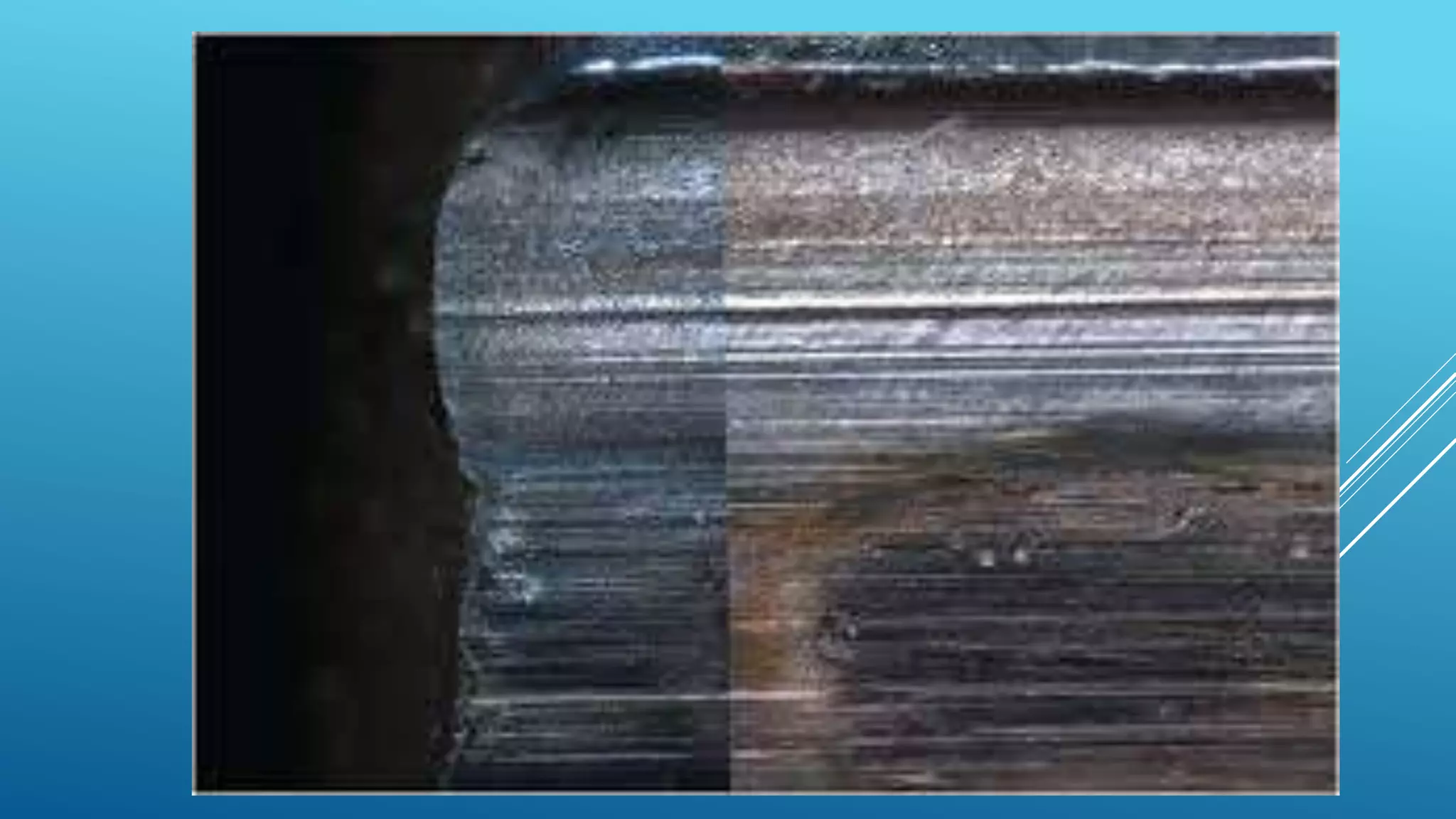
Definition of tool marks as impressions by tools, their permanence, and linking criminals to crime scenes.
Classification of tool marks into compression, sliding, and cutting tool marks.
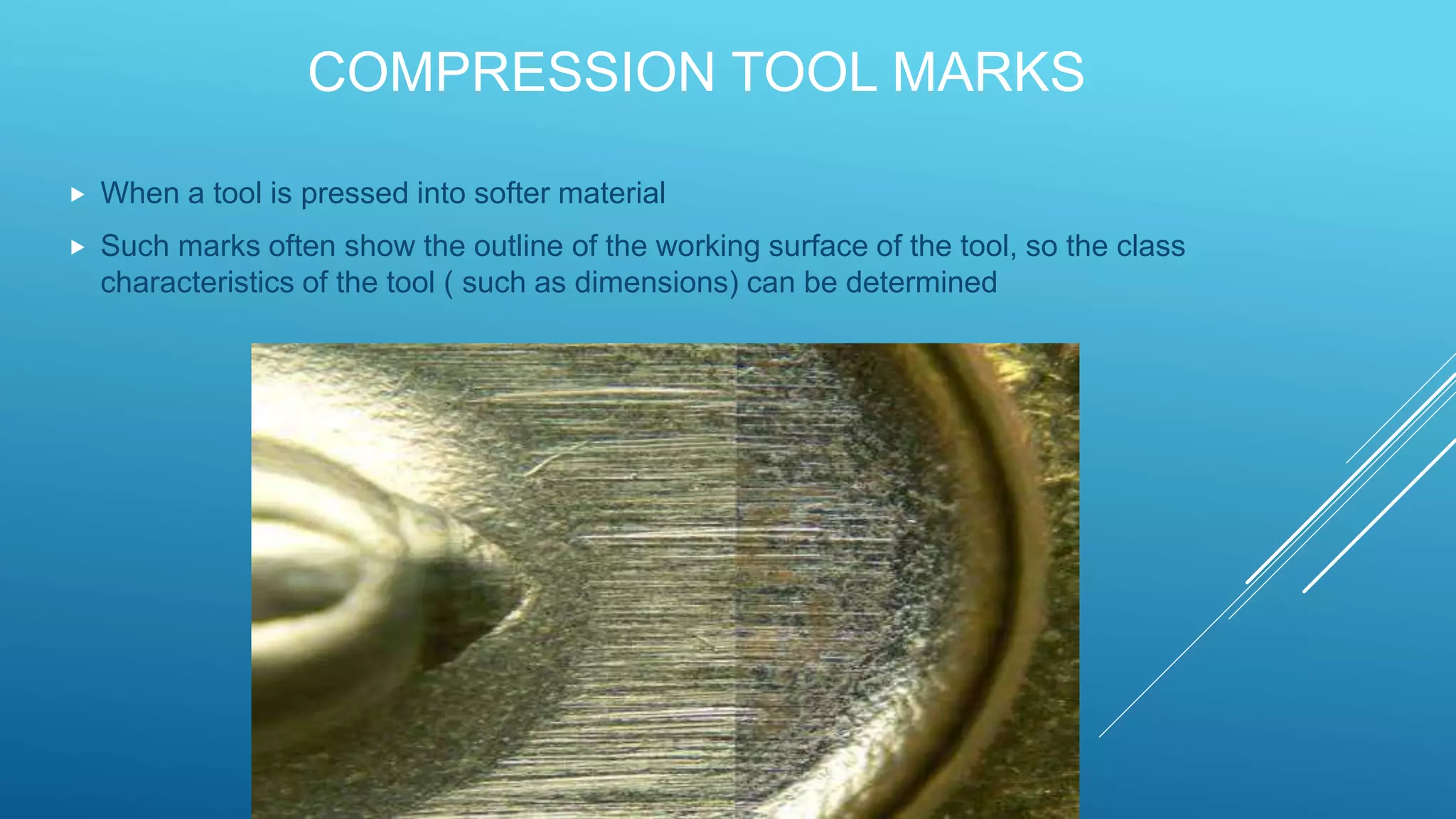
Description of compression tool marks created by pressuring tools into soft materials showing tool outlines.
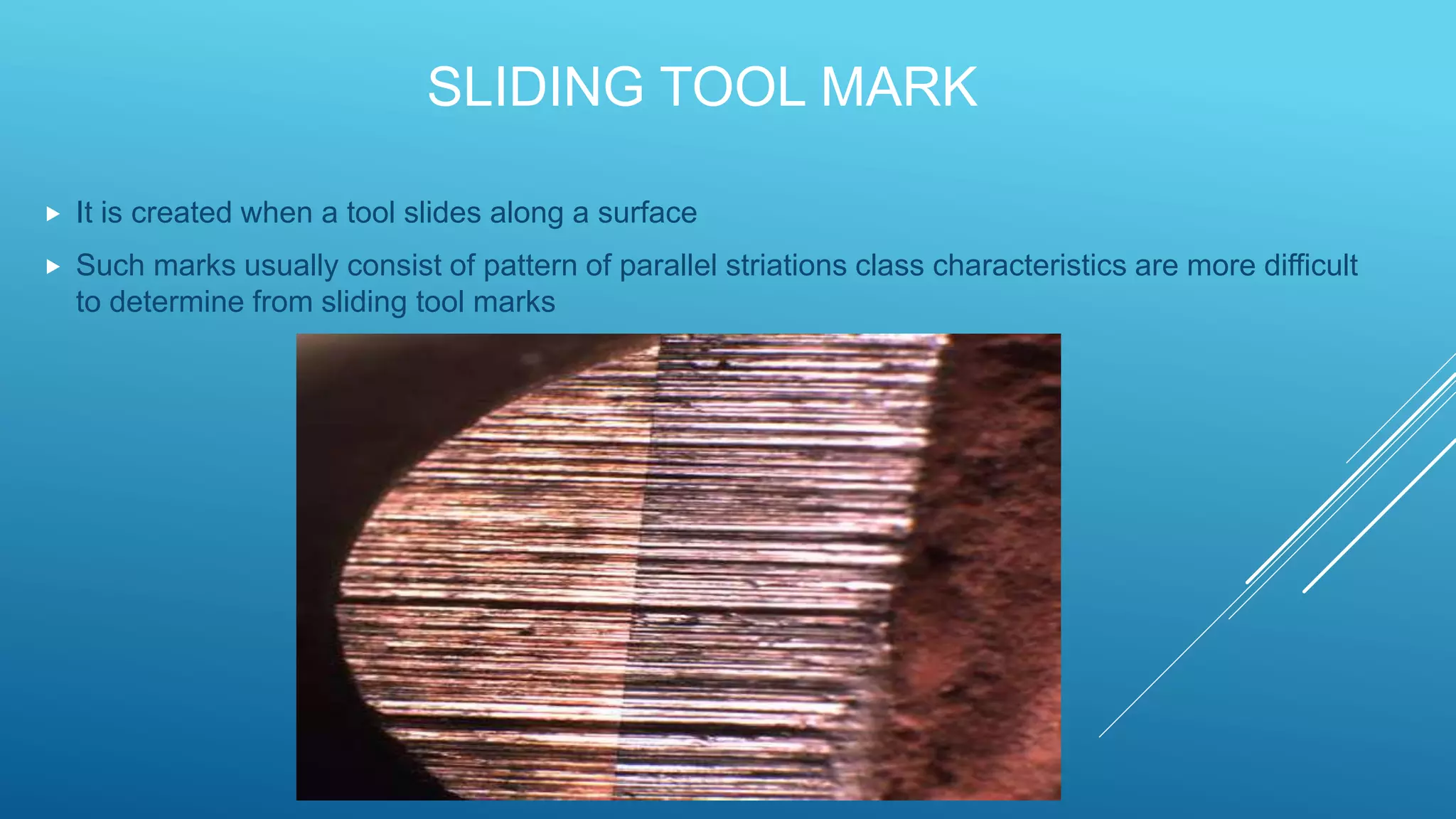
Characteristics of sliding tool marks formed by tools sliding on surfaces, showing parallel striations.
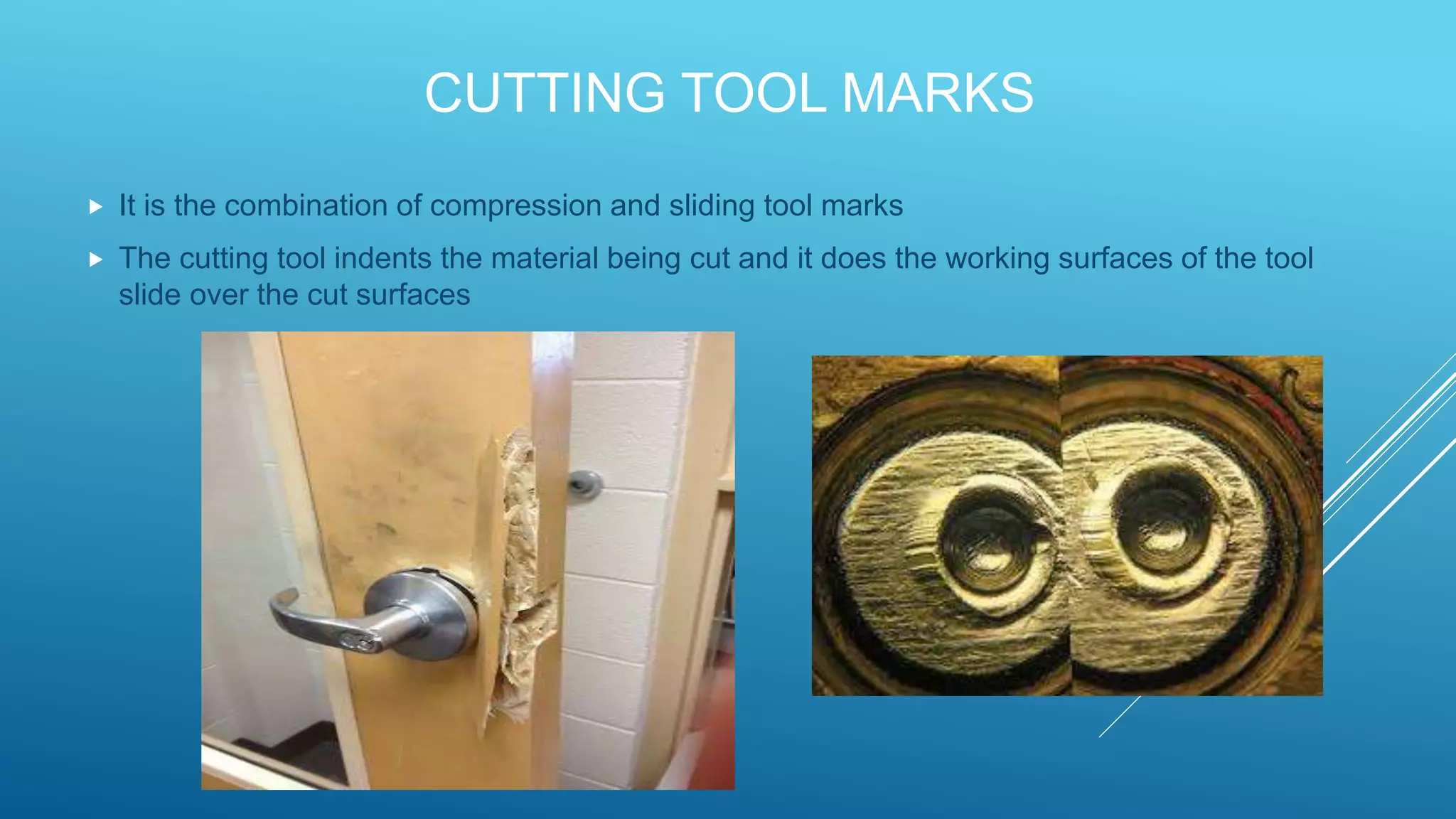
Cutting tool marks, being a combination of compression and sliding marks as tools both indent and slide.
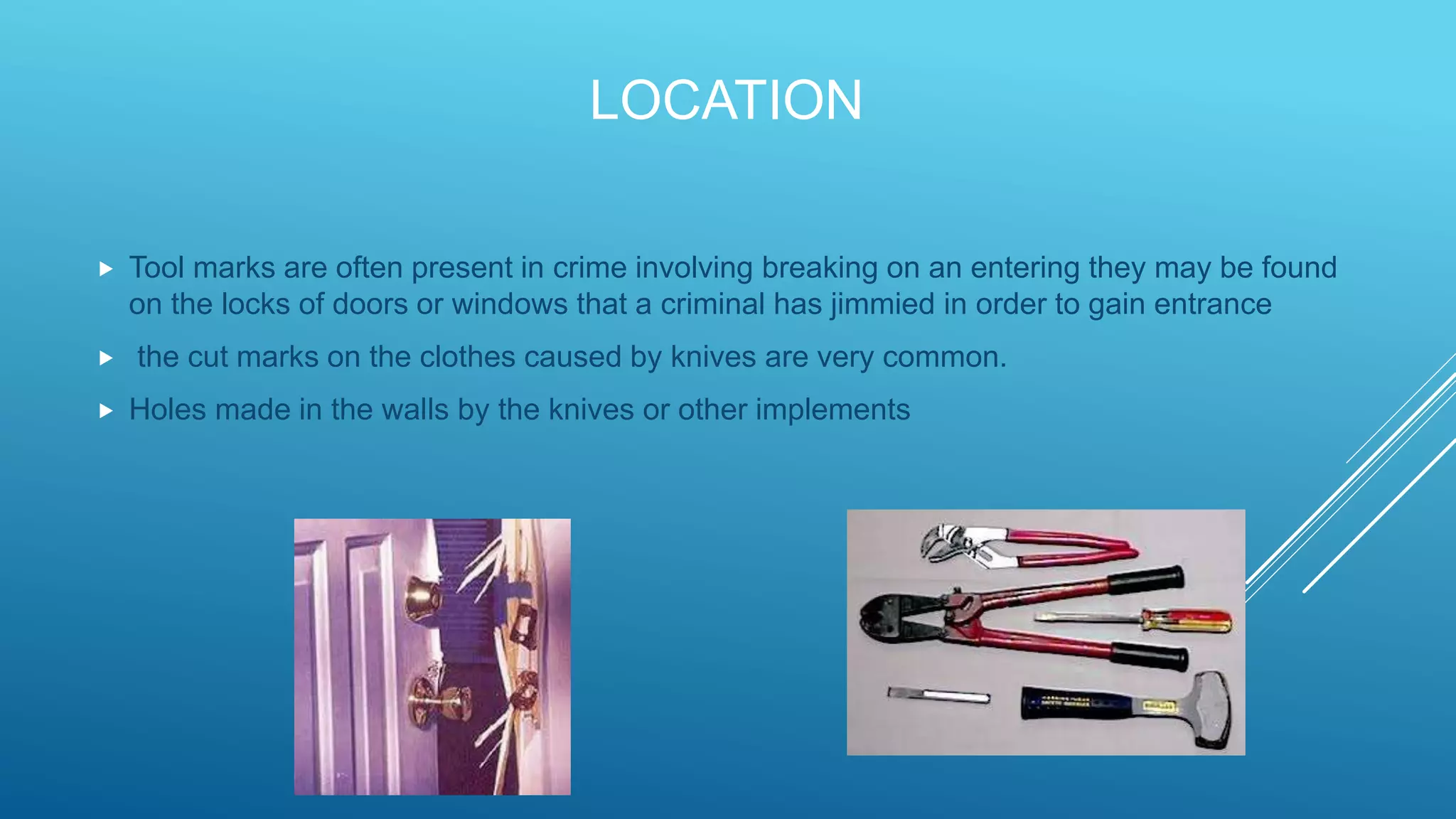
Common locations of tool marks in crimes such as break-ins, including on doors, windows, and clothing.
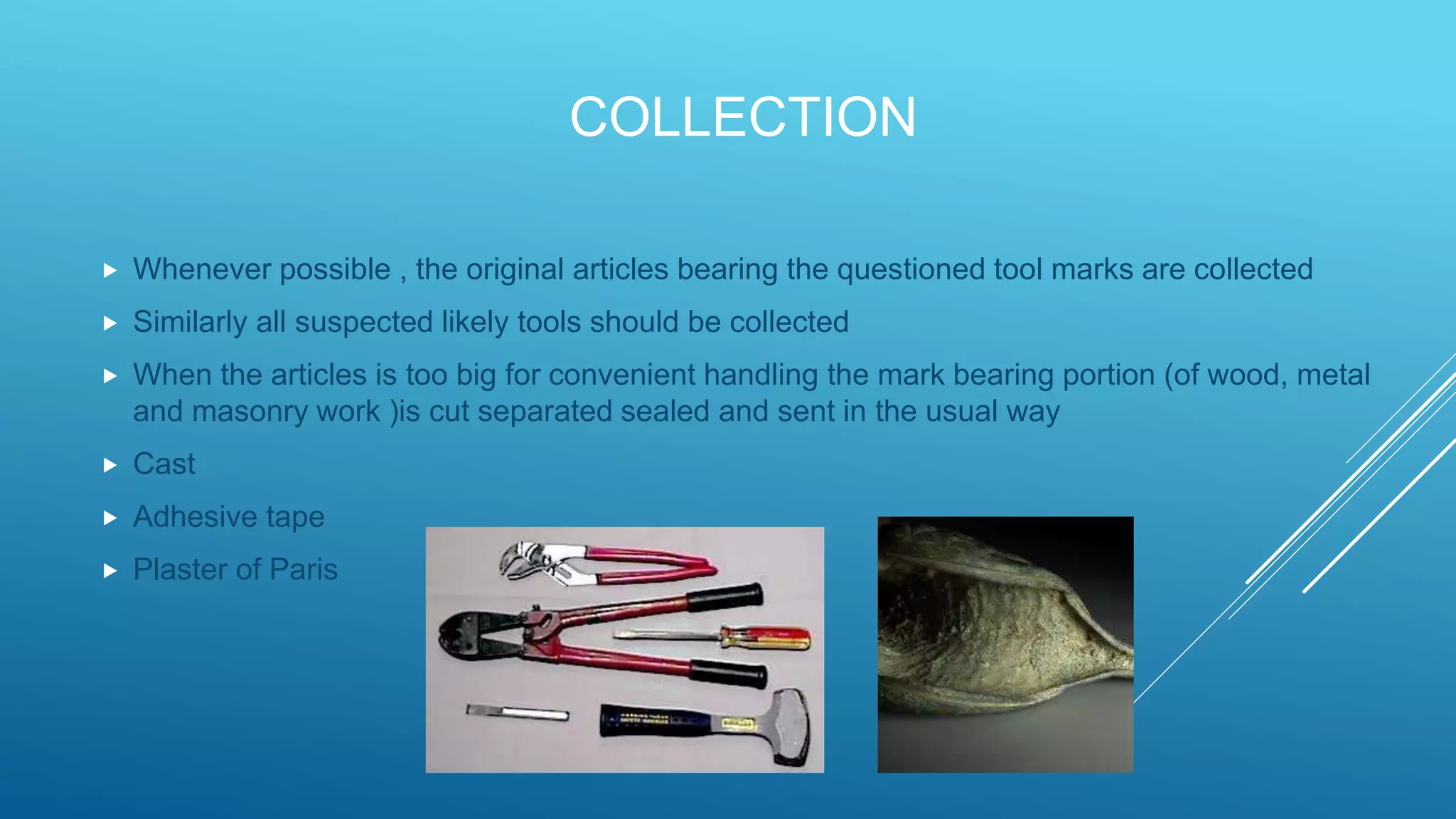
Process of collecting original articles with tool marks and suspected tools, including proper handling.
Guidelines for packaging evidence of tool marks to prevent breakage, contamination, and loss.
Tool mark examination through microscopic comparison, leading to positive, negative, or inconclusive identifications.
Key importance of tool marks including their permanency, individuality, linkage, and role in reconstruction.
References including books on forensic science relevant to tool marks in criminal investigations.
A closing statement thanking the audience for their attention in the tool marks presentation.


