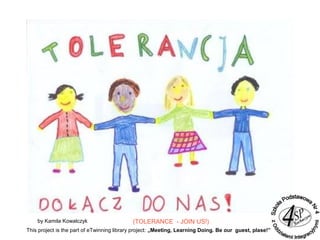
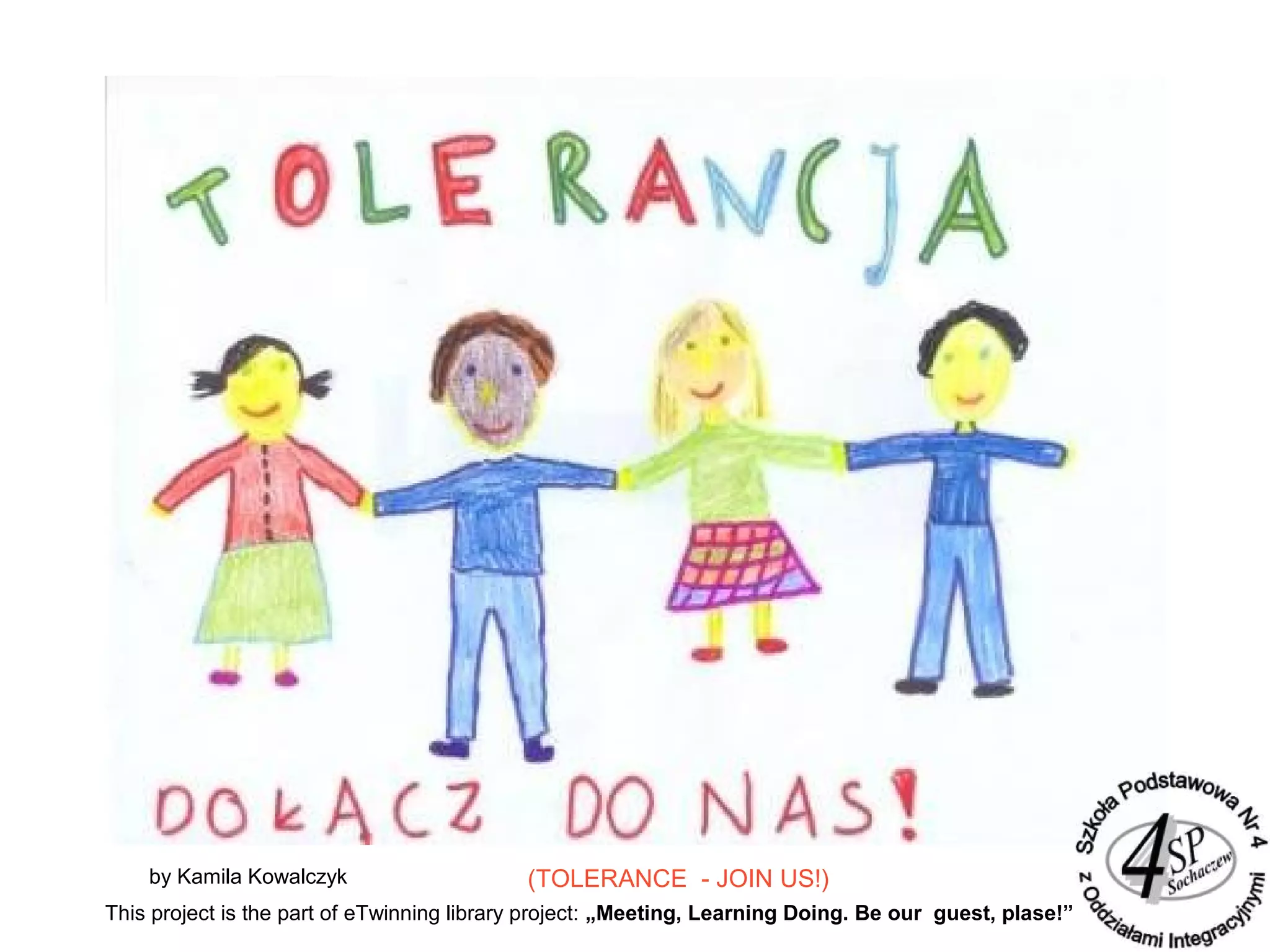
by Kamila Kowalczyk (TOLERANCE - JOIN US!)
This project is the part of eTwinning library project: „Meeting, Learning Doing. Be our guest, plase!”
The word „tolerance” comes from
Latin
„tolerare”,
which means „to bear, to suffer”.
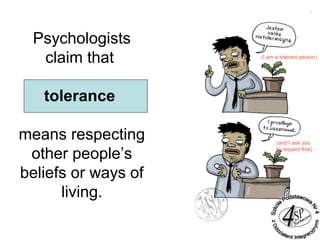
Psychologists
claim that
tolerance
means respecting
other people’s
beliefs or ways of
living.
(I am a tolerant person)
(and I ask you
to respect that)
Tolerance is a term used to
describe other people’s
attitudes and behaviors which
may be disapproved
consciously or unconsciously
or treated by us as abnormal,
nevertheless we try to
respect them.
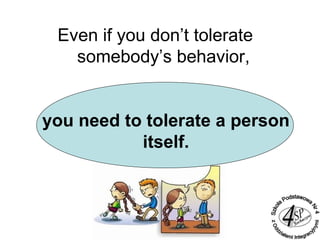
Even if you don’t tolerate
somebody’s behavior,
you need to tolerate a person
itself.
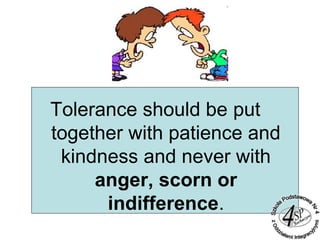
Tolerance should be put
together with patience and
kindness and never with
anger, scorn or
indifference.
We speak about positive tolerance
when it comes to people, therefore
there might be place for limited
negative tolerance when it comes
to beliefs and behaviors.
These two types of tolerance have been
selected by specialists exploring
interpersonal relations in different
cultures and societies.
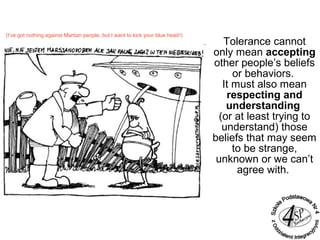
Tolerance cannot
only mean accepting
other people’s beliefs
or behaviors.
It must also mean
respecting and
understanding
(or at least trying to
understand) those
beliefs that may seem
to be strange,
unknown or we can’t
agree with.
(I’ve got nothing against Martian people, but I want to kick your blue head!)
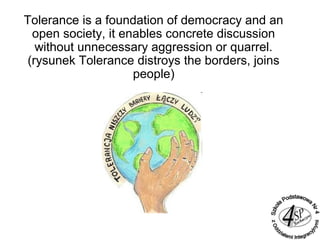
Tolerance is a foundation of democracy and an
open society, it enables concrete discussion
without unnecessary aggression or quarrel.
(rysunek Tolerance distroys the borders, joins
people)
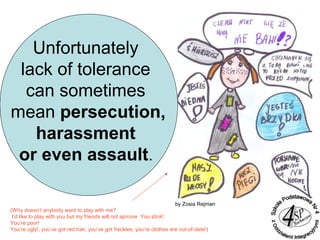
Unfortunately
lack of tolerance
can sometimes
mean persecution,
harassment
or even assault.
by Zosia Rejman
(Why doesn’t anybody want to play with me?
I’d like to play with you but my friends will not aprrove You stink!
You’re poor!
You’re ugly!, you’ve got red hair, you’ve got freckles, you’re clothes are out-of-date!)
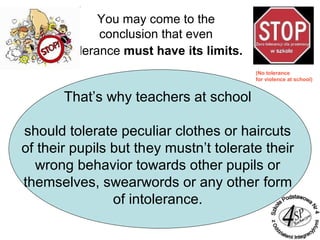
You may come to the
conclusion that even
tolerance must have its limits.
That’s why teachers at school
should tolerate peculiar clothes or haircuts
of their pupils but they mustn’t tolerate their
wrong behavior towards other pupils or
themselves, swearwords or any other form
of intolerance.
(No tolerance
for violence at school)
In order to make the school society work
properly, there’s a need for mutual
tolerance (between the pupils and
teachers).
It’s the only way to reach an agreement and
avoid conflicts.
It’s worth to remember:
there’s no person
who tolerates everything 
We sometimes find out that we
don’t agree with other about some things
while usually we consider ourselves as
tolerant. We tolerate other for being late, for
different colour of skin
or religious beliefs…,
but…
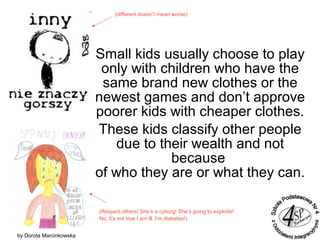
Small kids usually choose to play
only with children who have the
same brand new clothes or the
newest games and don’t approve
poorer kids with cheaper clothes.
These kids classify other people
due to their wealth and not
because
of who they are or what they can.
by Dorota Marcinkowska
(different doesn’t mean worse)
(Respect others! She’s a cyborg! She’s going to explode!
No, it’s not true I am ill. I’m diabetes!)
It’s the same with grownups who can
sometimes be even more intolerant
than children.
Being tolerant is a big thing!
Let’s look around and notice that everyone
has not only the right to choose his religion,
way of life but also to his own clothes style
and we should all respect that and not laugh
at this person.
We should leave others live their own lifes
as they want it.
Only then we can truly say we are being tolerant.
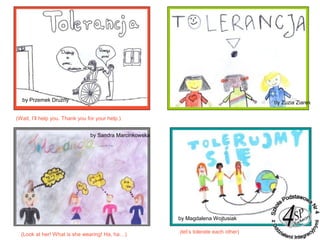
by Przemek Drużny by Zuzia Ziarek
by Sandra Marcinkowska
by Magdalena Wojtusiak
(Wait, I’ll help you. Thank you for your help.)
(let’s tolerate each other)(Look at her! What is she wearing! Ha, ha…)
November 2010
• Information - http://www.tolerancja.org.pl/rodzaje-tolerancji.html
• Art works – Students SP 4 Sochaczew
• Other Graphics - Internet
Sources:
Presentation made by: Mirosława Bąkowska
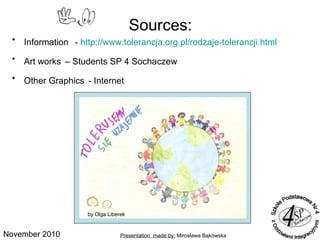
by Wiktoria Albinowskaby Olga Liberek

Tolerance 2

  • 1.
    by Kamila Kowalczyk(TOLERANCE - JOIN US!) This project is the part of eTwinning library project: „Meeting, Learning Doing. Be our guest, plase!”
  • 2.
    The word „tolerance”comes from Latin „tolerare”, which means „to bear, to suffer”.
  • 3.
    Psychologists claim that tolerance means respecting otherpeople’s beliefs or ways of living. (I am a tolerant person) (and I ask you to respect that)
  • 4.
    Tolerance is aterm used to describe other people’s attitudes and behaviors which may be disapproved consciously or unconsciously or treated by us as abnormal, nevertheless we try to respect them.
  • 5.
    Even if youdon’t tolerate somebody’s behavior, you need to tolerate a person itself.
  • 6.
    Tolerance should beput together with patience and kindness and never with anger, scorn or indifference.
  • 7.
    We speak aboutpositive tolerance when it comes to people, therefore there might be place for limited negative tolerance when it comes to beliefs and behaviors. These two types of tolerance have been selected by specialists exploring interpersonal relations in different cultures and societies.
  • 8.
    Tolerance cannot only meanaccepting other people’s beliefs or behaviors. It must also mean respecting and understanding (or at least trying to understand) those beliefs that may seem to be strange, unknown or we can’t agree with. (I’ve got nothing against Martian people, but I want to kick your blue head!)
  • 9.
    Tolerance is afoundation of democracy and an open society, it enables concrete discussion without unnecessary aggression or quarrel. (rysunek Tolerance distroys the borders, joins people)
  • 10.
    Unfortunately lack of tolerance cansometimes mean persecution, harassment or even assault. by Zosia Rejman (Why doesn’t anybody want to play with me? I’d like to play with you but my friends will not aprrove You stink! You’re poor! You’re ugly!, you’ve got red hair, you’ve got freckles, you’re clothes are out-of-date!)
  • 11.
    You may cometo the conclusion that even tolerance must have its limits. That’s why teachers at school should tolerate peculiar clothes or haircuts of their pupils but they mustn’t tolerate their wrong behavior towards other pupils or themselves, swearwords or any other form of intolerance. (No tolerance for violence at school)
  • 12.
    In order tomake the school society work properly, there’s a need for mutual tolerance (between the pupils and teachers). It’s the only way to reach an agreement and avoid conflicts.
  • 13.
    It’s worth toremember: there’s no person who tolerates everything 
  • 14.
    We sometimes findout that we don’t agree with other about some things while usually we consider ourselves as tolerant. We tolerate other for being late, for different colour of skin or religious beliefs…, but…
  • 15.
    Small kids usuallychoose to play only with children who have the same brand new clothes or the newest games and don’t approve poorer kids with cheaper clothes. These kids classify other people due to their wealth and not because of who they are or what they can. by Dorota Marcinkowska (different doesn’t mean worse) (Respect others! She’s a cyborg! She’s going to explode! No, it’s not true I am ill. I’m diabetes!)
  • 16.
    It’s the samewith grownups who can sometimes be even more intolerant than children. Being tolerant is a big thing!
  • 17.
    Let’s look aroundand notice that everyone has not only the right to choose his religion, way of life but also to his own clothes style and we should all respect that and not laugh at this person. We should leave others live their own lifes as they want it. Only then we can truly say we are being tolerant.
  • 18.
    by Przemek Drużnyby Zuzia Ziarek by Sandra Marcinkowska by Magdalena Wojtusiak (Wait, I’ll help you. Thank you for your help.) (let’s tolerate each other)(Look at her! What is she wearing! Ha, ha…)
  • 19.
    November 2010 • Information- http://www.tolerancja.org.pl/rodzaje-tolerancji.html • Art works – Students SP 4 Sochaczew • Other Graphics - Internet Sources: Presentation made by: Mirosława Bąkowska by Wiktoria Albinowskaby Olga Liberek