GOOD
MORNING !
SEMINAR
TOBACCO CESSATION

YASMIN MOIDIN
2008 BATCH
AL AZHAR DENTAL COLLEGE
THODUPUZHA
INTRODUCTION


Prevention of oral cancer mainly focuses on
modifying habits associated with the use of
tobacco



India is the largest consumer of tobacco and

third largest producer of tobacco


There are about 250 million tobacco users in
India



In India, at least 800,000 deaths every year
are related to tobacco use, and 700,000
them due to smoking

of


There are three well-known approaches

 Regulatory

approach

 1975

: Cigarette Act

 1985

: National Cancer Control Program

 2003

:

Cigarettes

Products Act
 2004

: WHO-FCTC

 Service

approach

 screening

and

other

Tobacco


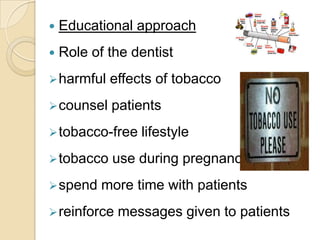
Educational approach



Role of the dentist

 harmful

effects of tobacco

 counsel

patients

 tobacco-free
 tobacco
 spend

lifestyle

use during pregnancy

more time with patients

 reinforce

messages given to patients
 build

their

patient’s

interest

to

discontinue
 promote

oral

health

and

healthy

lifestyles
 speak

with authority in the community

 effective

advocates for tobacco control

in the community
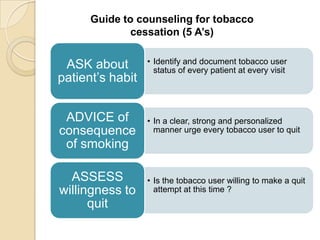
Guide to counseling for tobacco
cessation (5 A’s)

ASK about
patient’s habit

• Identify and document tobacco user
status of every patient at every visit

ADVICE of
consequence
of smoking

• In a clear, strong and personalized
manner urge every tobacco user to quit

ASSESS
willingness to
quit

• Is the tobacco user willing to make a quit
attempt at this time ?
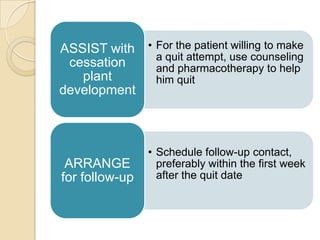
ASSIST with • For the patient willing to make
a quit attempt, use counseling
cessation
and pharmacotherapy to help
plant
him quit
development

ARRANGE
for follow-up

• Schedule follow-up contact,
preferably within the first week
after the quit date
NICOTINE REPLACEMENT
THERAPY


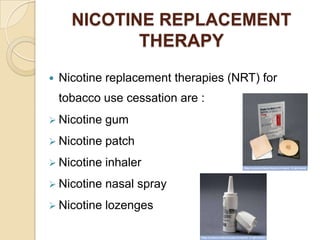
Nicotine replacement therapies (NRT) for
tobacco use cessation are :

 Nicotine

gum

 Nicotine

patch

 Nicotine

inhaler

 Nicotine

nasal spray

 Nicotine

lozenges


Basic principles for prescribing NRTs

 Medical
 Use

supervision is important

a lower dose for less dependent

tobacco users
 Contraindicated

,

:

lactation,

diseases,
disease,
,

in

cardiovascular

peripheral
endocrine

inflammation

throat,

pregnancy

of

the

oesophagitis,

vascular
disorders
mouth

and

gastric


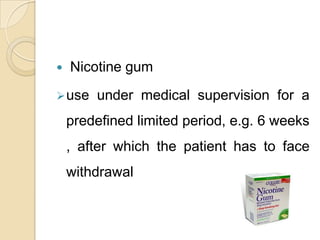
Nicotine gum

 use

under medical supervision for a

predefined limited period, e.g. 6 weeks

, after which the patient has to face
withdrawal


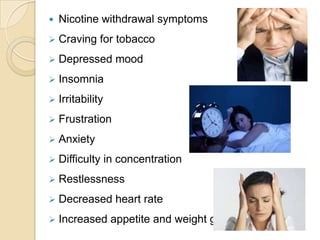
Nicotine withdrawal symptoms



Craving for tobacco



Depressed mood



Insomnia



Irritability



Frustration



Anxiety



Difficulty in concentration



Restlessness



Decreased heart rate



Increased appetite and weight gain


Antidepressants

 Function

as anti-craving medications

 Available

therapies :

 First-line

therapies



Buproprion SR



Selegeline

 Second-line


Clonidine



nortryptiline

therapies


Counseling those unwilling to quit

 Relevance

 Risks

of quitting

of continuing tobacco use

 Rewards

of quitting

 Roadblocks
 Repeat

to quitting

these at each visit


Key counseling concepts



A non judgmental attitude



Caring



Empathy



Listening



Raising awareness



Prompting self-evaluation



Offering support



Asking open-ended questions



Clarifying


Reflecting feelings



Summarizing



Affirming



Eliciting self-motivational statements



Setting realistic goals



Responding to tricky questions



Tailoring messages to the patients stage

of change
ACTION IN THE COMMUNITY
Public education
 Media advocacy




ACTION AT THE STATE AND NATIONAL
LEVELS

Making the profession and dental
facilities tobacco-free
 Advocacy with the state and national
governments

CONCLUSION
A majority of cancer deaths worldwide

are due to tobacco. These are easily
avoidable since the factors associated

with the disease have long been
identified.
REFERENCES
Essentials

of

Preventive

and

Community Dentistry – Fourth Edition
2009

SOBEN PETER

Textbook of Public Health Dentistry –
First Edition 2011 C M MARYA
THANK
THANK YOU !
YOU !

TOBACCO CESSATION

  • 1.
  • 2.
  • 3.
    TOBACCO CESSATION YASMIN MOIDIN 2008BATCH AL AZHAR DENTAL COLLEGE THODUPUZHA
  • 4.
    INTRODUCTION  Prevention of oralcancer mainly focuses on modifying habits associated with the use of tobacco  India is the largest consumer of tobacco and third largest producer of tobacco  There are about 250 million tobacco users in India  In India, at least 800,000 deaths every year are related to tobacco use, and 700,000 them due to smoking of
  • 5.
     There are threewell-known approaches  Regulatory approach  1975 : Cigarette Act  1985 : National Cancer Control Program  2003 : Cigarettes Products Act  2004 : WHO-FCTC  Service approach  screening and other Tobacco
  • 6.
     Educational approach  Role ofthe dentist  harmful effects of tobacco  counsel patients  tobacco-free  tobacco  spend lifestyle use during pregnancy more time with patients  reinforce messages given to patients
  • 7.
     build their patient’s interest to discontinue  promote oral health and healthy lifestyles speak with authority in the community  effective advocates for tobacco control in the community
  • 8.
    Guide to counselingfor tobacco cessation (5 A’s) ASK about patient’s habit • Identify and document tobacco user status of every patient at every visit ADVICE of consequence of smoking • In a clear, strong and personalized manner urge every tobacco user to quit ASSESS willingness to quit • Is the tobacco user willing to make a quit attempt at this time ?
  • 9.
    ASSIST with •For the patient willing to make a quit attempt, use counseling cessation and pharmacotherapy to help plant him quit development ARRANGE for follow-up • Schedule follow-up contact, preferably within the first week after the quit date
  • 10.
    NICOTINE REPLACEMENT THERAPY  Nicotine replacementtherapies (NRT) for tobacco use cessation are :  Nicotine gum  Nicotine patch  Nicotine inhaler  Nicotine nasal spray  Nicotine lozenges
  • 11.
     Basic principles forprescribing NRTs  Medical  Use supervision is important a lower dose for less dependent tobacco users  Contraindicated , : lactation, diseases, disease, , in cardiovascular peripheral endocrine inflammation throat, pregnancy of the oesophagitis, vascular disorders mouth and gastric
  • 12.
     Nicotine gum  use undermedical supervision for a predefined limited period, e.g. 6 weeks , after which the patient has to face withdrawal
  • 13.
     Nicotine withdrawal symptoms  Cravingfor tobacco  Depressed mood  Insomnia  Irritability  Frustration  Anxiety  Difficulty in concentration  Restlessness  Decreased heart rate  Increased appetite and weight gain
  • 14.
     Antidepressants  Function as anti-cravingmedications  Available therapies :  First-line therapies  Buproprion SR  Selegeline  Second-line  Clonidine  nortryptiline therapies
  • 15.
     Counseling those unwillingto quit  Relevance  Risks of quitting of continuing tobacco use  Rewards of quitting  Roadblocks  Repeat to quitting these at each visit
  • 16.
     Key counseling concepts  Anon judgmental attitude  Caring  Empathy  Listening  Raising awareness  Prompting self-evaluation  Offering support  Asking open-ended questions  Clarifying
  • 17.
     Reflecting feelings  Summarizing  Affirming  Eliciting self-motivationalstatements  Setting realistic goals  Responding to tricky questions  Tailoring messages to the patients stage of change
  • 18.
    ACTION IN THECOMMUNITY Public education  Media advocacy   ACTION AT THE STATE AND NATIONAL LEVELS Making the profession and dental facilities tobacco-free  Advocacy with the state and national governments 
  • 19.
    CONCLUSION A majority ofcancer deaths worldwide are due to tobacco. These are easily avoidable since the factors associated with the disease have long been identified.
  • 20.
    REFERENCES Essentials of Preventive and Community Dentistry –Fourth Edition 2009 SOBEN PETER Textbook of Public Health Dentistry – First Edition 2011 C M MARYA
  • 21.