TIME MANAGEMENT
IN NURSING
What is time management
• Time management refers to
managing time effectively so
that the right time is allowed
to the right activity.
• The goal of time management
is to find a balance between
all the things you need and
want to do.
Why do you need time management?
• To save time
• To reduce stress
• To function effectively
• To increase our work
output
• To have more control
over our job
responsibilities
Objectives of time management
• Understand the concept of time management
• Implement such concept in an activity
• Recognize some facts and principles of time
management
• Over come challenges to time management.
• Develop effective time management skills
 Identify key tasks
 Prioritize effectively
 Plan and track time
 Set smart goals
 Create long term & short term plans
 Create To –Do lists
• Develop assertiveness
How to use time effectively
• Effective planning
• Setting goals and
objectives
• Setting deadlines
• Delegation of
responsibilities
• Prioritizing activities as
per their importance
• Spending the right time on
the right activities
The process of time management
• Cost your time
• Making activity
logs
• Goal setting
• Planning
• Prioritizing
• Scheduling
Cost your time
Making activity logs
• Make a realistic
estimate of the time
spend during the on
job orders.
• Pin point the critical
areas, time spend on
low value job.
• Find high yielding
time of our day.
Goal setting
• Setting life time goals
help you to chart your
life course and your
career path
• Break up your life
time goal.
• Make a daily TO –
DO list
• Revise & update your
list on daily basis&
Planning
• Draw an action
plan
• Alist of things
that need to be
done to achieve
your goals.
Organization
Being organized is the key to effective
Time Management!
Steps to organization
Prioritization
Delegation
Prioritization
• Prioritization is defined
as deciding which
needs or problems
require immediate
action and which ones
could be delayed until
a later time because
they are not urgent.
Levels of prioritization
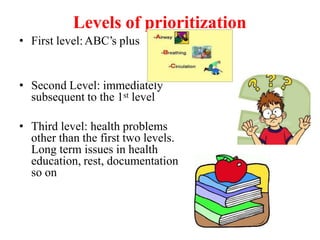
• First level:ABC’s plus
• Second Level: immediately
subsequent to the 1st level
• Third level: health problems
other than the first two levels.
Long term issues in health
education, rest, documentation
so on
Importance of prioritization
Prioritize the tasks in order of importance
 Is it life threatening or potentially life threatening, if the
task is not done?
 Would another patient be endangered if I do this task
for later?
 Is this task or process essential to patient or staff safety.
 Is this task or process essential to the medical or
nursing plan of care?
Try to leave tasks that are not urgent but take more
time for last
Tracker list: check the checklist, To –Do list
Delegation
• After creating your
prioritized “TO DO” list
decide which tasks can
be delegated
• What are some tasks that
can be delegated –
Nursing Staff, ANM,
ward boys, housekeeping.
Florence nightingale
“But then again to
look to all these
yourself does not
mean to do them
yourself ………..
but can you ensure
that it is done when
Saying “No”
“Heavy patient
assignment”
Can I refuse a patient
assignment
What should I do?
10-the best time management tips for
nurses
1. Get into the habit of arriving
early.
2. Make a note.
3. Estimate how long it will take.
4. Prioritize
5. Avoid tasks that aren’t on your
list.
6. Learn to say “NO”
7. Listen to your patients.
8. Take a breather.
9. Be flexible
10.Don’t be too hard on yourself.
Evidence based practice

Time Management in Nursing.pptx

  • 1.
  • 3.
    What is timemanagement • Time management refers to managing time effectively so that the right time is allowed to the right activity. • The goal of time management is to find a balance between all the things you need and want to do.
  • 4.
    Why do youneed time management? • To save time • To reduce stress • To function effectively • To increase our work output • To have more control over our job responsibilities
  • 5.
    Objectives of timemanagement • Understand the concept of time management • Implement such concept in an activity • Recognize some facts and principles of time management • Over come challenges to time management. • Develop effective time management skills  Identify key tasks  Prioritize effectively  Plan and track time  Set smart goals  Create long term & short term plans  Create To –Do lists • Develop assertiveness
  • 6.
    How to usetime effectively • Effective planning • Setting goals and objectives • Setting deadlines • Delegation of responsibilities • Prioritizing activities as per their importance • Spending the right time on the right activities
  • 7.
    The process oftime management • Cost your time • Making activity logs • Goal setting • Planning • Prioritizing • Scheduling
  • 8.
  • 9.
    Making activity logs •Make a realistic estimate of the time spend during the on job orders. • Pin point the critical areas, time spend on low value job. • Find high yielding time of our day.
  • 10.
    Goal setting • Settinglife time goals help you to chart your life course and your career path • Break up your life time goal. • Make a daily TO – DO list • Revise & update your list on daily basis&
  • 11.
    Planning • Draw anaction plan • Alist of things that need to be done to achieve your goals.
  • 12.
    Organization Being organized isthe key to effective Time Management!
  • 13.
  • 14.
    Prioritization • Prioritization isdefined as deciding which needs or problems require immediate action and which ones could be delayed until a later time because they are not urgent.
  • 15.
    Levels of prioritization •First level:ABC’s plus • Second Level: immediately subsequent to the 1st level • Third level: health problems other than the first two levels. Long term issues in health education, rest, documentation so on
  • 16.
    Importance of prioritization Prioritizethe tasks in order of importance  Is it life threatening or potentially life threatening, if the task is not done?  Would another patient be endangered if I do this task for later?  Is this task or process essential to patient or staff safety.  Is this task or process essential to the medical or nursing plan of care? Try to leave tasks that are not urgent but take more time for last Tracker list: check the checklist, To –Do list
  • 17.
    Delegation • After creatingyour prioritized “TO DO” list decide which tasks can be delegated • What are some tasks that can be delegated – Nursing Staff, ANM, ward boys, housekeeping.
  • 18.
    Florence nightingale “But thenagain to look to all these yourself does not mean to do them yourself ……….. but can you ensure that it is done when
  • 19.
    Saying “No” “Heavy patient assignment” CanI refuse a patient assignment What should I do?
  • 20.
    10-the best timemanagement tips for nurses 1. Get into the habit of arriving early. 2. Make a note. 3. Estimate how long it will take. 4. Prioritize 5. Avoid tasks that aren’t on your list. 6. Learn to say “NO” 7. Listen to your patients. 8. Take a breather. 9. Be flexible 10.Don’t be too hard on yourself.
  • 21.
  • 22.