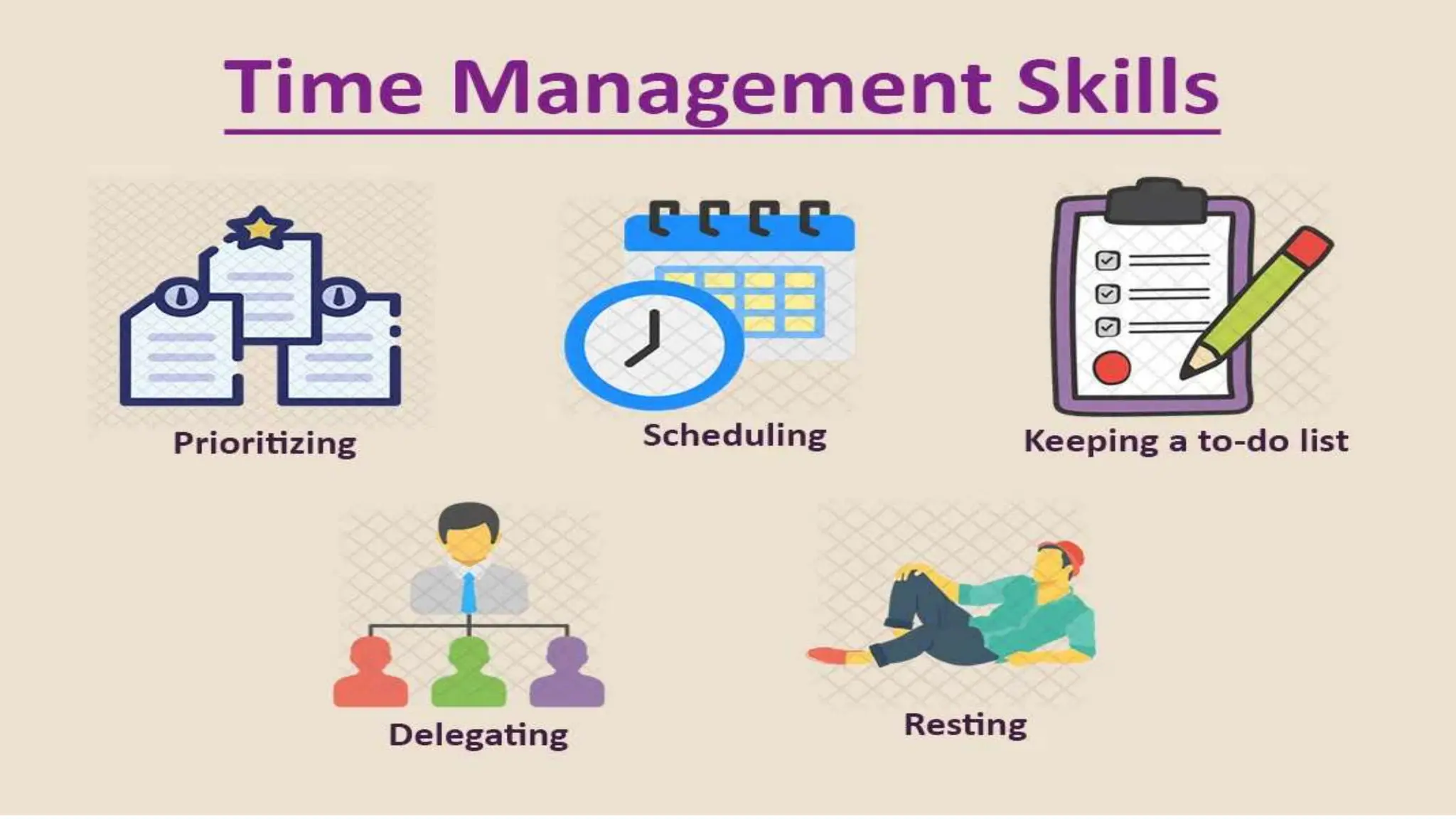
Presented by
Yogita Patel
M. Sc. Nursing Final Year
INTRODUCTION
Time management is the process of
organizing and planning how to divide
time between different activities.
Time management is the coordination of
tasks and activities to maximize the
effectiveness of an individual's efforts.
CONT…
It means technique for using time
productively and efficiently. So can
work or less, depending on our
schedule.
it is describe the planning the amount
of time and certain activities to
increase productivity
DEFINITION
TIME
Time can be defined as an organization sequence
of events that occur in succession, from past
through the present, and to the future.
MANAGEMENT
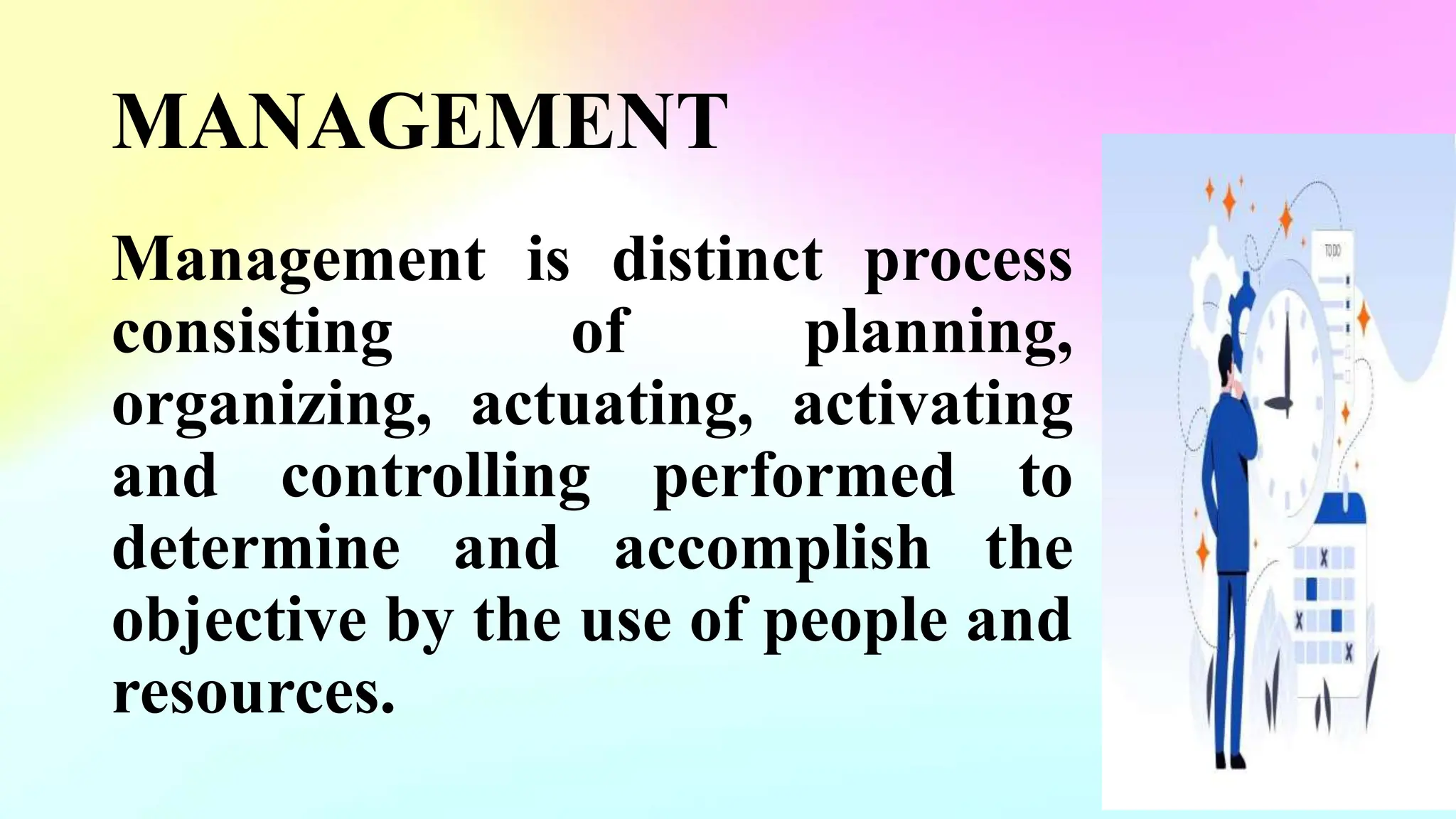
Management is distinct process
consisting of planning,
organizing, actuating, activating
and controlling performed to
determine and accomplish the
objective by the use of people and
resources.
Time management is the
coordination of tasks and
activities to maximize the
effectiveness of an individuals
efforts with prioritizing
activities and setting a schedule.
TIME MANAGEMENT
PURPOSE
Efficient And Effectively.
Get More And Better Work
Time Management Is Including Procrastination, Manage
Distraction, Scheduling Task
Daily Activity Is Flexibility
CONT..
Daily schedule of time management
Improve the multitasking ability but multitasking
increase anxiety and stress.
Time they want to need the fact on they don’t allow
to organize their activities.
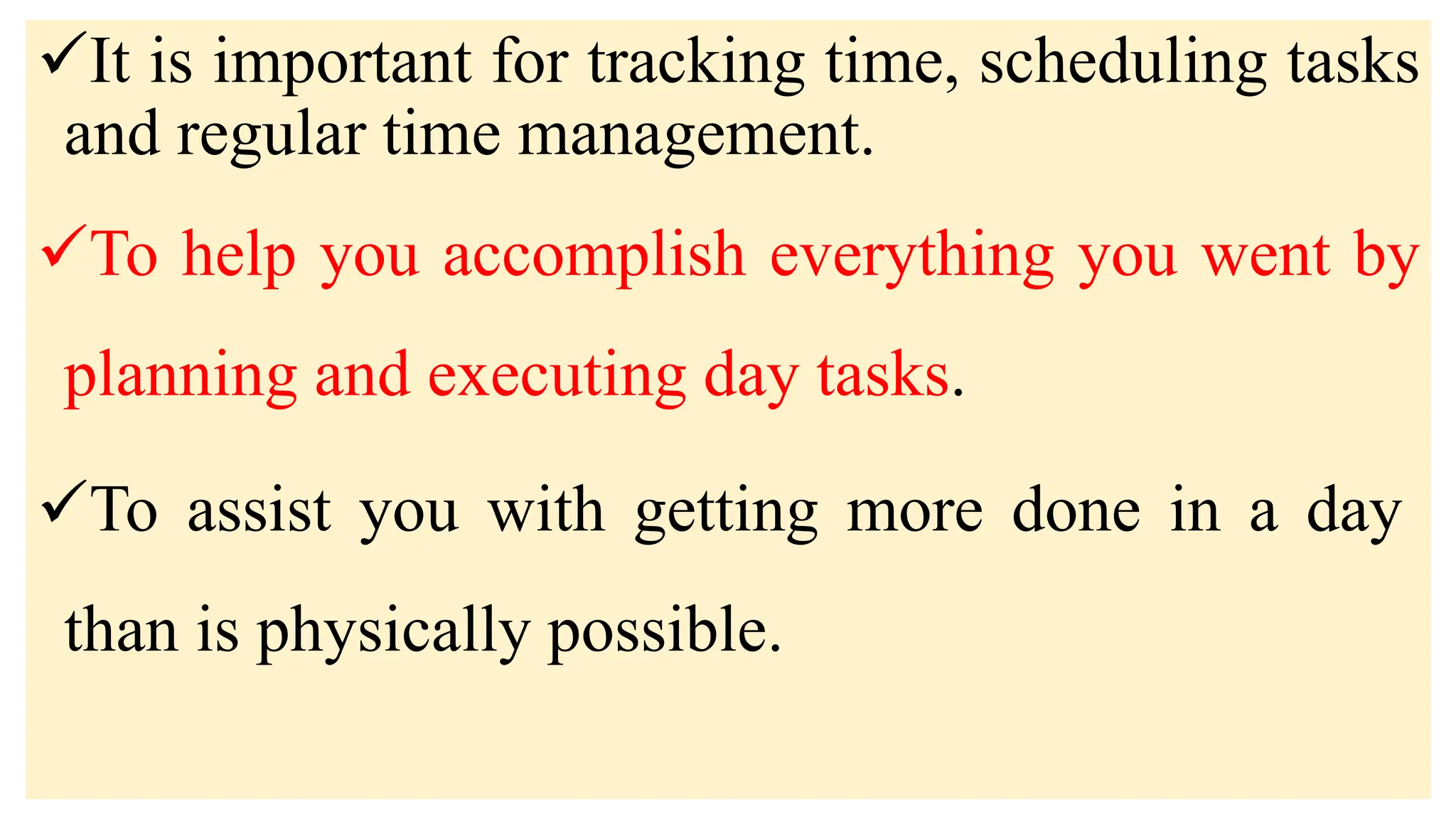
It is important for tracking time, scheduling tasks
and regular time management.
To help you accomplish everything you went by
planning and executing day tasks.
To assist you with getting more done in a day
than is physically possible.
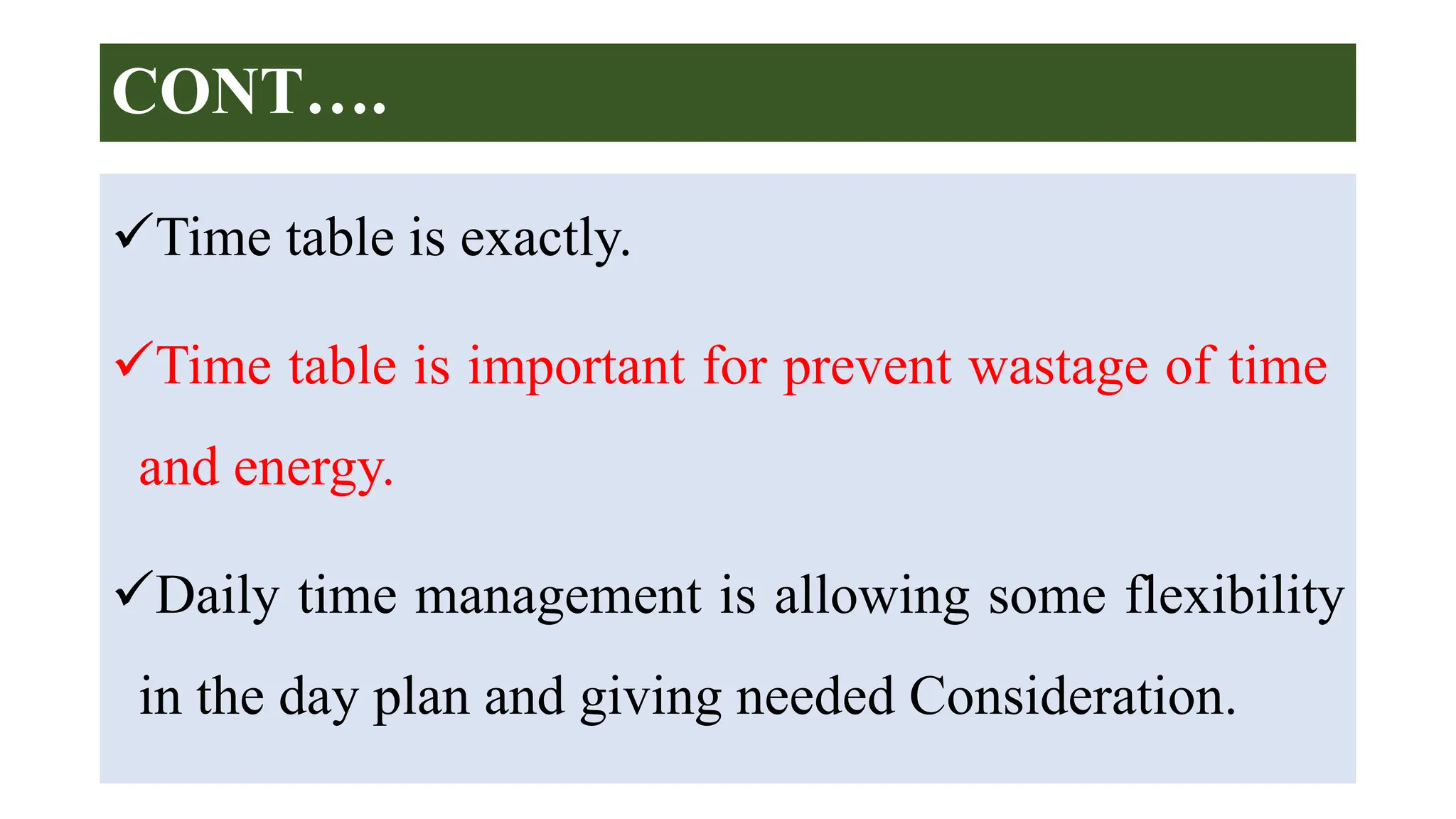
CONT….
Time table is exactly.
Time table is important for prevent wastage of time
and energy.
Daily time management is allowing some flexibility
in the day plan and giving needed Consideration.
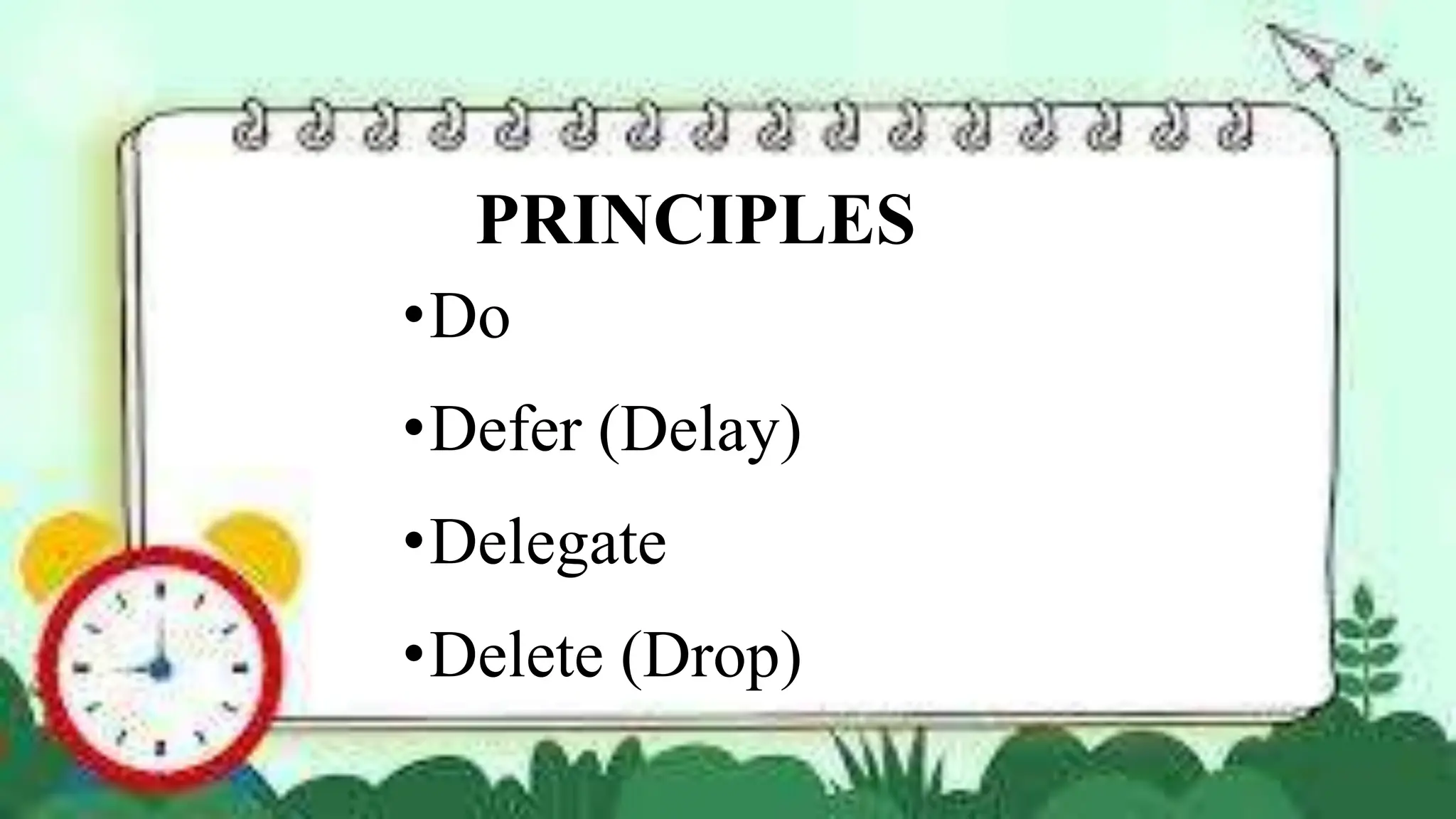
PRINCIPLES
•Do
•Defer (Delay)
•Delegate
•Delete (Drop)
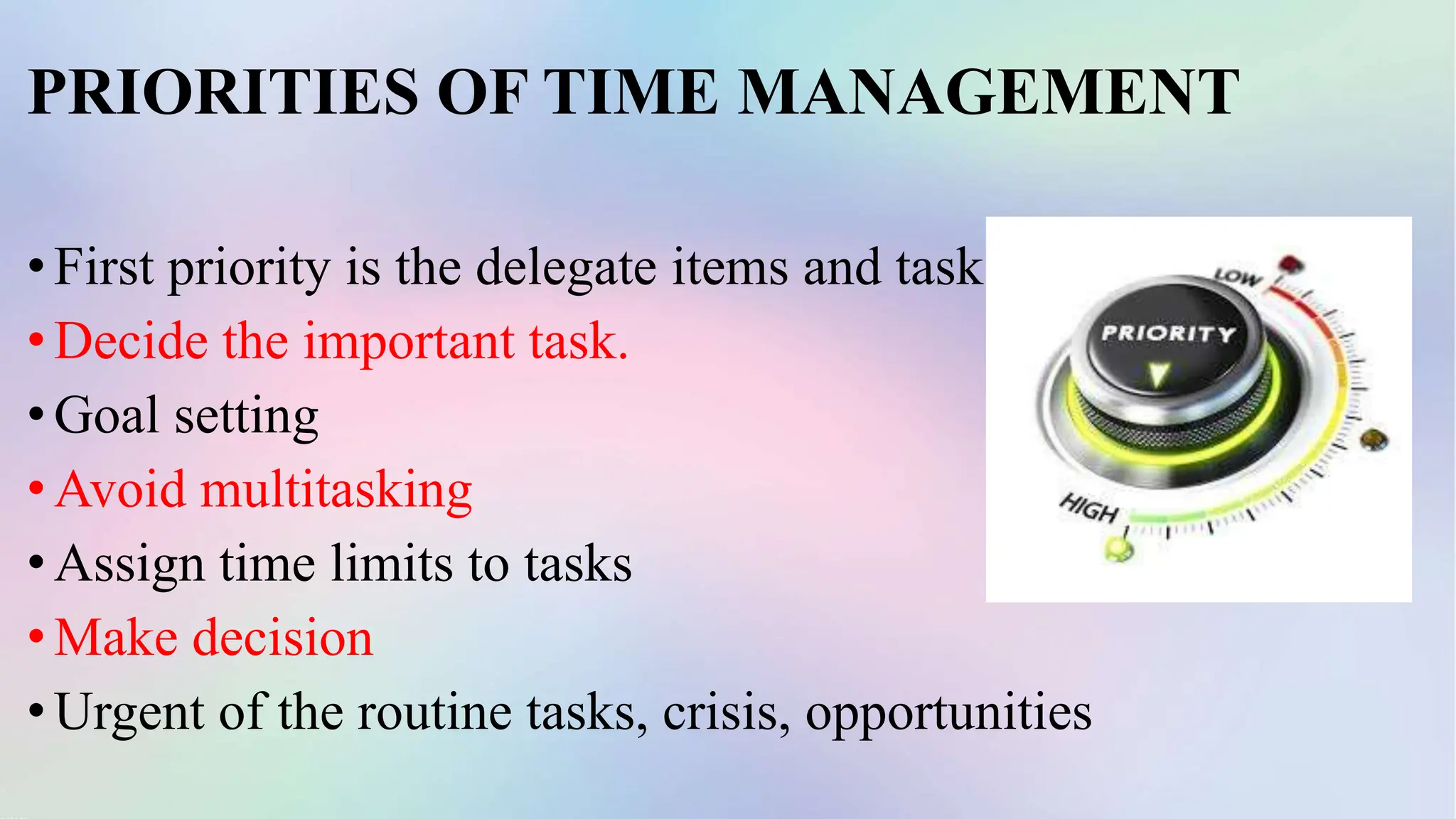
PRIORITIES OF TIME MANAGEMENT
•First priority is the delegate items and tasks.
•Decide the important task.
•Goal setting
•Avoid multitasking
•Assign time limits to tasks
•Make decision
•Urgent of the routine tasks, crisis, opportunities
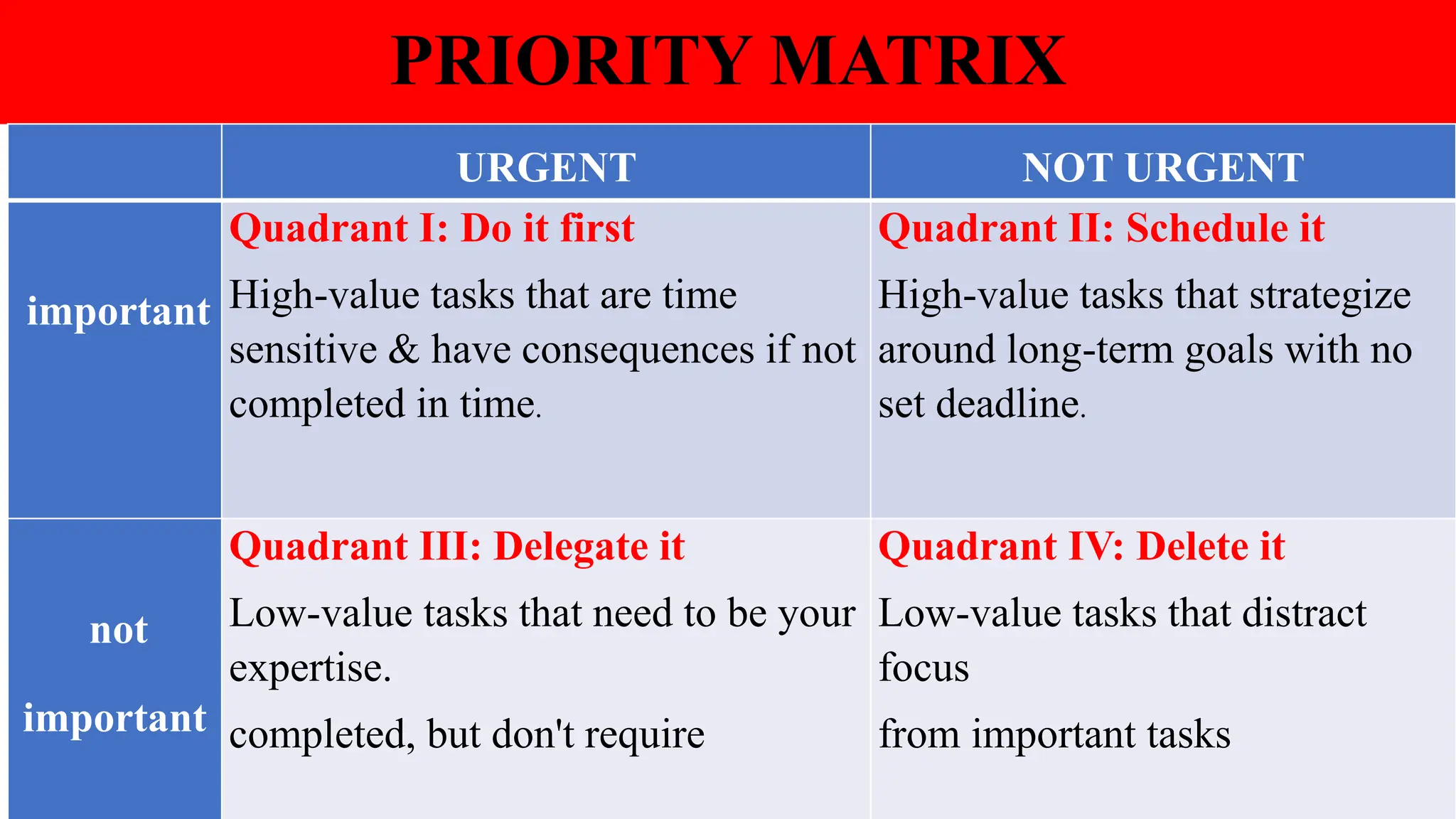
PRIORITY MATRIX
URGENT NOT URGENT
important
Quadrant I: Do it first
High-value tasks that are time
sensitive & have consequences if not
completed in time.
Quadrant II: Schedule it
High-value tasks that strategize
around long-term goals with no
set deadline.
not
important
Quadrant III: Delegate it
Low-value tasks that need to be your
expertise.
completed, but don't require
Quadrant IV: Delete it
Low-value tasks that distract
focus
from important tasks
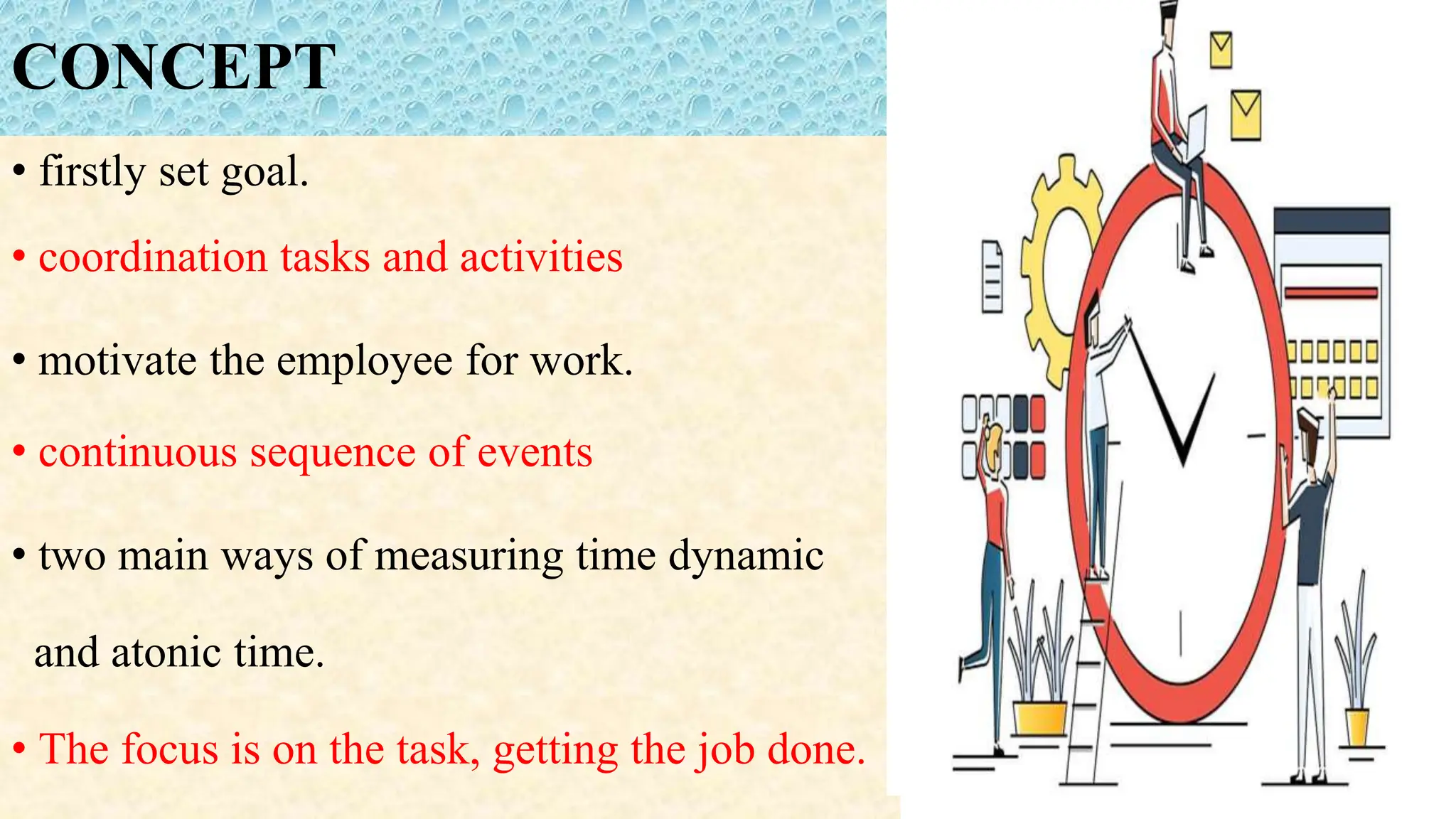
CONCEPT
• firstly set goal.
• coordination tasks and activities
• motivate the employee for work.
• continuous sequence of events
• two main ways of measuring time dynamic
and atonic time.
• The focus is on the task, getting the job done.
TIPS OF TIME
MANAGEMENT
Understand time vs. priorities. 4p’s in time management are product,
price, place, promotion.
Give your undivided attention and avoid multitasking
The SMART goals are specific, measurable, attainable, relevant, time
bounded.
Make time for your distractions
STEPS OF TIME MANAGEMENT
Analyze how you're spending your time.
Create a priority list.
Track your to-do list items.
Make adjustments.
Do, review, and repeat daily.
FACTORS
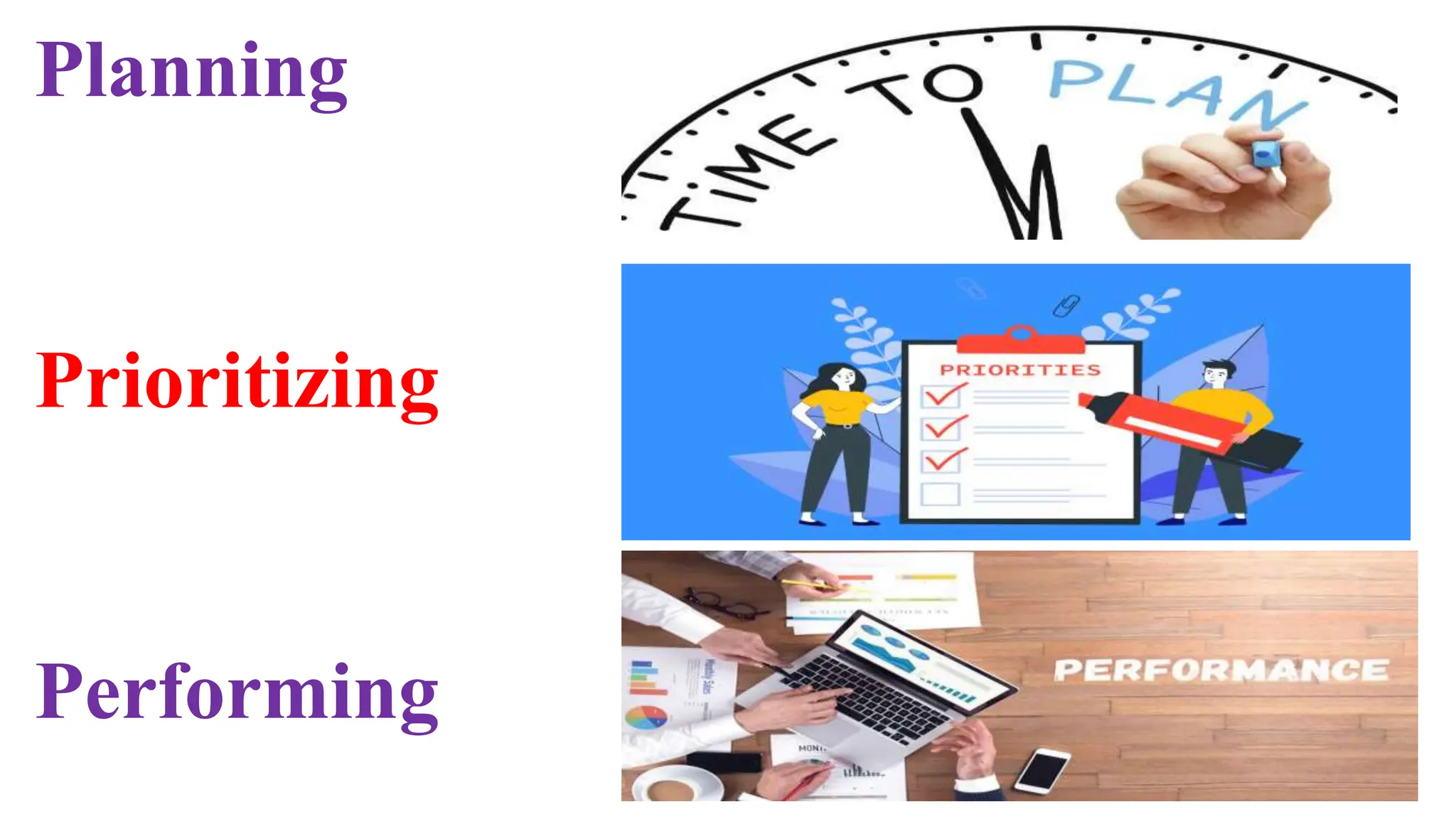
They are mainly
three factors affect
time management
skills -
Planning
Prioritizing
Performing
Others factors are-
long time
low motivation
enough rest
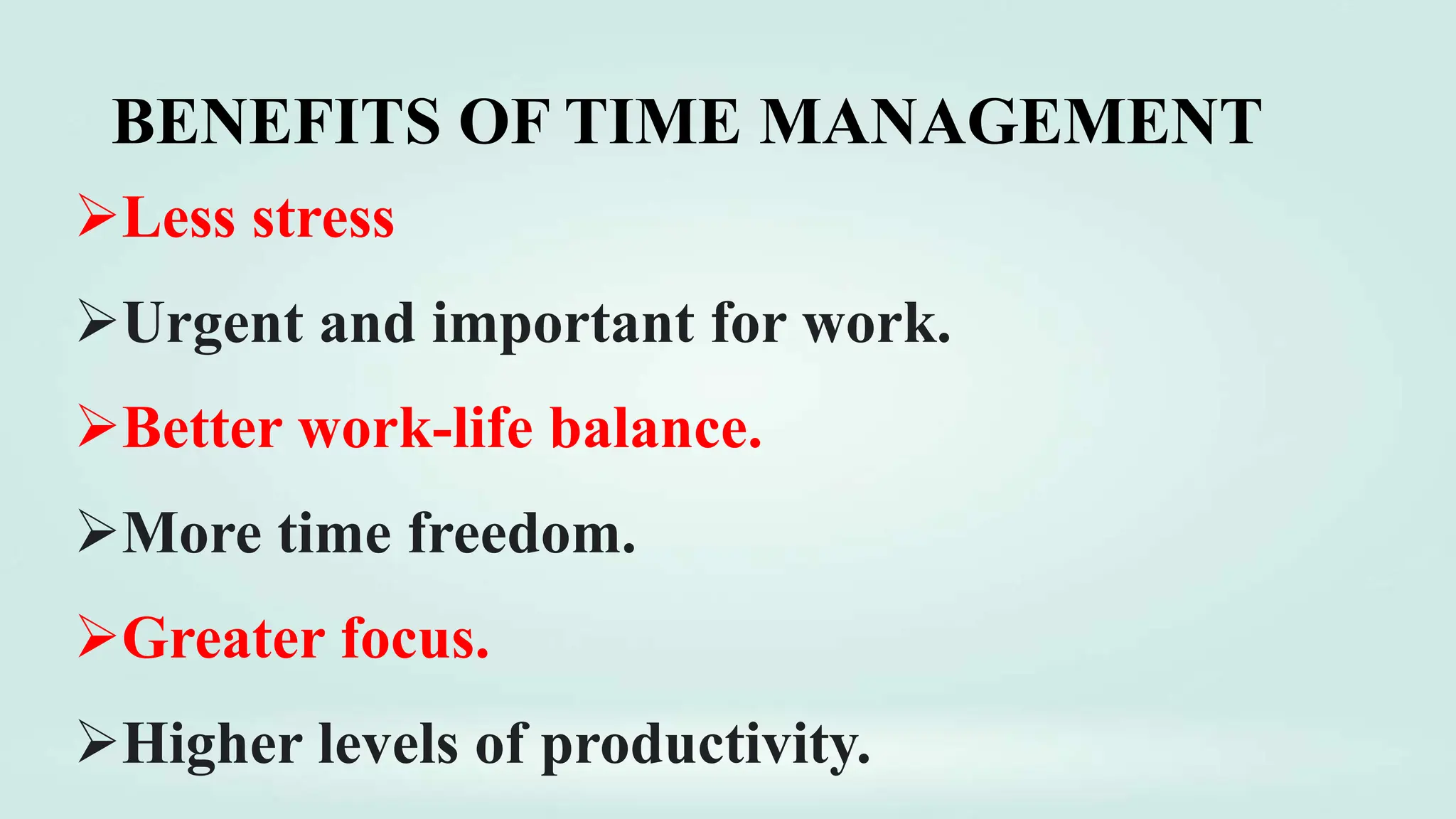
BENEFITS OF TIME MANAGEMENT
Less stress
Urgent and important for work.
Better work-life balance.
More time freedom.
Greater focus.
Higher levels of productivity.
Cont….
Less procrastination.
Things are simpler and easier.
Less distraction.
Improve focus.
Increase productivity.
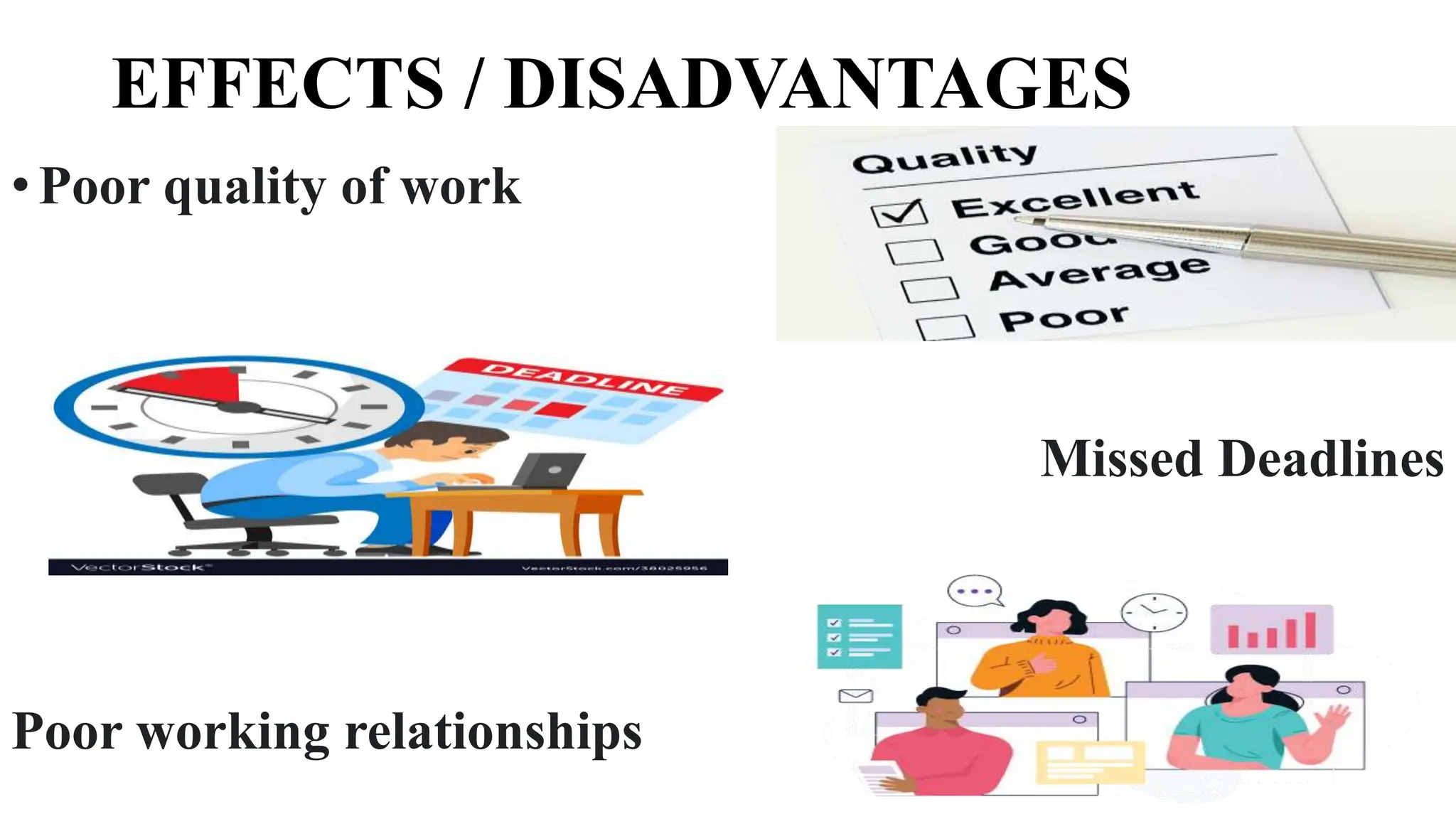
EFFECTS / DISADVANTAGES
•Poor quality of work
Missed Deadlines
Poor working relationships
Cont..
 Demotivated employees.
 Low employee morale.
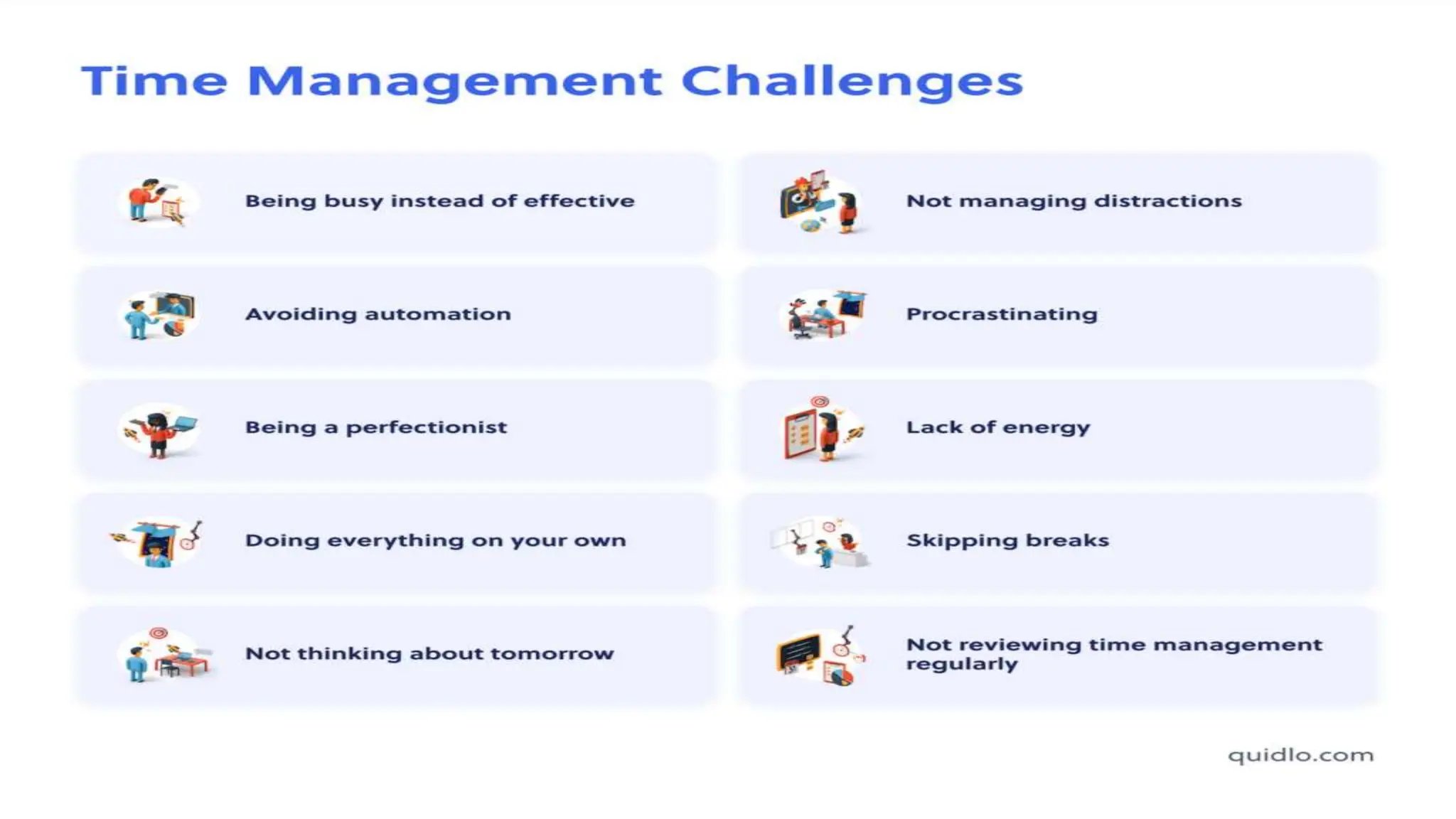
 Procrasting -it has many tasks and stop a set a limit
time.
 Distraction for the social media, television.
Time management Knowledge and skills  ..

Time management Knowledge and skills ..

  • 1.
    Presented by Yogita Patel M.Sc. Nursing Final Year
  • 2.
    INTRODUCTION Time management isthe process of organizing and planning how to divide time between different activities. Time management is the coordination of tasks and activities to maximize the effectiveness of an individual's efforts.
  • 3.
    CONT… It means techniquefor using time productively and efficiently. So can work or less, depending on our schedule. it is describe the planning the amount of time and certain activities to increase productivity
  • 4.
    DEFINITION TIME Time can bedefined as an organization sequence of events that occur in succession, from past through the present, and to the future.
  • 5.
    MANAGEMENT Management is distinctprocess consisting of planning, organizing, actuating, activating and controlling performed to determine and accomplish the objective by the use of people and resources.
  • 6.
    Time management isthe coordination of tasks and activities to maximize the effectiveness of an individuals efforts with prioritizing activities and setting a schedule. TIME MANAGEMENT
  • 7.
    PURPOSE Efficient And Effectively. GetMore And Better Work Time Management Is Including Procrastination, Manage Distraction, Scheduling Task Daily Activity Is Flexibility
  • 8.
    CONT.. Daily schedule oftime management Improve the multitasking ability but multitasking increase anxiety and stress. Time they want to need the fact on they don’t allow to organize their activities.
  • 10.
    It is importantfor tracking time, scheduling tasks and regular time management. To help you accomplish everything you went by planning and executing day tasks. To assist you with getting more done in a day than is physically possible.
  • 11.
    CONT…. Time table isexactly. Time table is important for prevent wastage of time and energy. Daily time management is allowing some flexibility in the day plan and giving needed Consideration.
  • 12.
  • 14.
    PRIORITIES OF TIMEMANAGEMENT •First priority is the delegate items and tasks. •Decide the important task. •Goal setting •Avoid multitasking •Assign time limits to tasks •Make decision •Urgent of the routine tasks, crisis, opportunities
  • 15.
    PRIORITY MATRIX URGENT NOTURGENT important Quadrant I: Do it first High-value tasks that are time sensitive & have consequences if not completed in time. Quadrant II: Schedule it High-value tasks that strategize around long-term goals with no set deadline. not important Quadrant III: Delegate it Low-value tasks that need to be your expertise. completed, but don't require Quadrant IV: Delete it Low-value tasks that distract focus from important tasks
  • 16.
    CONCEPT • firstly setgoal. • coordination tasks and activities • motivate the employee for work. • continuous sequence of events • two main ways of measuring time dynamic and atonic time. • The focus is on the task, getting the job done.
  • 17.
    TIPS OF TIME MANAGEMENT Understandtime vs. priorities. 4p’s in time management are product, price, place, promotion. Give your undivided attention and avoid multitasking The SMART goals are specific, measurable, attainable, relevant, time bounded. Make time for your distractions
  • 18.
    STEPS OF TIMEMANAGEMENT Analyze how you're spending your time. Create a priority list. Track your to-do list items. Make adjustments. Do, review, and repeat daily.
  • 19.
    FACTORS They are mainly threefactors affect time management skills -
  • 20.
  • 21.
    Others factors are- longtime low motivation enough rest
  • 23.
    BENEFITS OF TIMEMANAGEMENT Less stress Urgent and important for work. Better work-life balance. More time freedom. Greater focus. Higher levels of productivity.
  • 24.
    Cont…. Less procrastination. Things aresimpler and easier. Less distraction. Improve focus. Increase productivity.
  • 25.
    EFFECTS / DISADVANTAGES •Poorquality of work Missed Deadlines Poor working relationships
  • 26.
    Cont..  Demotivated employees. Low employee morale.  Procrasting -it has many tasks and stop a set a limit time.  Distraction for the social media, television.