Report and Analysis of
Effective Self-Management
By, Jacob Krasnow
Table of Contents
Purpose
1. Record all of the activities done in a two day period.
2. Classify the activities according to which quadrant
they belong in in the Time Management Matrix.
3. Analyzes how the activities were handled and compare
the manner and order in which they were
accomplished as compared to the ideal way they
should have been accomplished according to Covey’s
Principle-Based Time Management Matrix for effective
use of time.
Time Management
The act or process of planning and exercising
conscious control over the amount of time
spent on specific activities.
To increase effectiveness, efficiency, or
productivity.
Ability to plan and control how you spend the
hours in your day to effectively accomplish
your goals.
We are what we repeatedly do. Excellence, then, is not an act, but a habit. –
Aristotle
“Important” and “Urgent” Activities
Important activities have an outcome that leads
to the achievement of your goals, whether these are
professional or personal.

Urgent activities demand immediate attention, and
are often associated with the achievement of someone
else's goals.
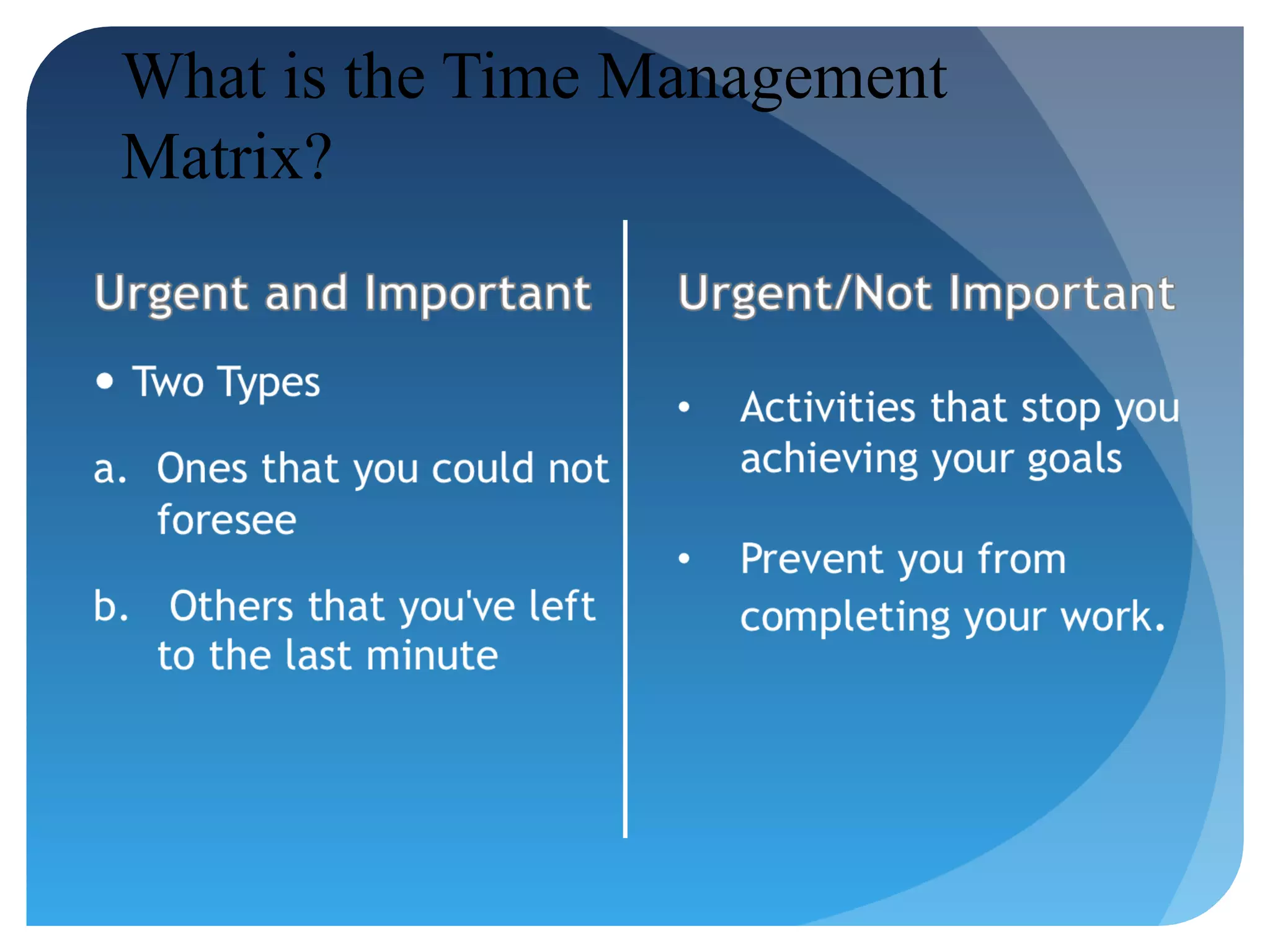
What is the Time Management
Matrix?
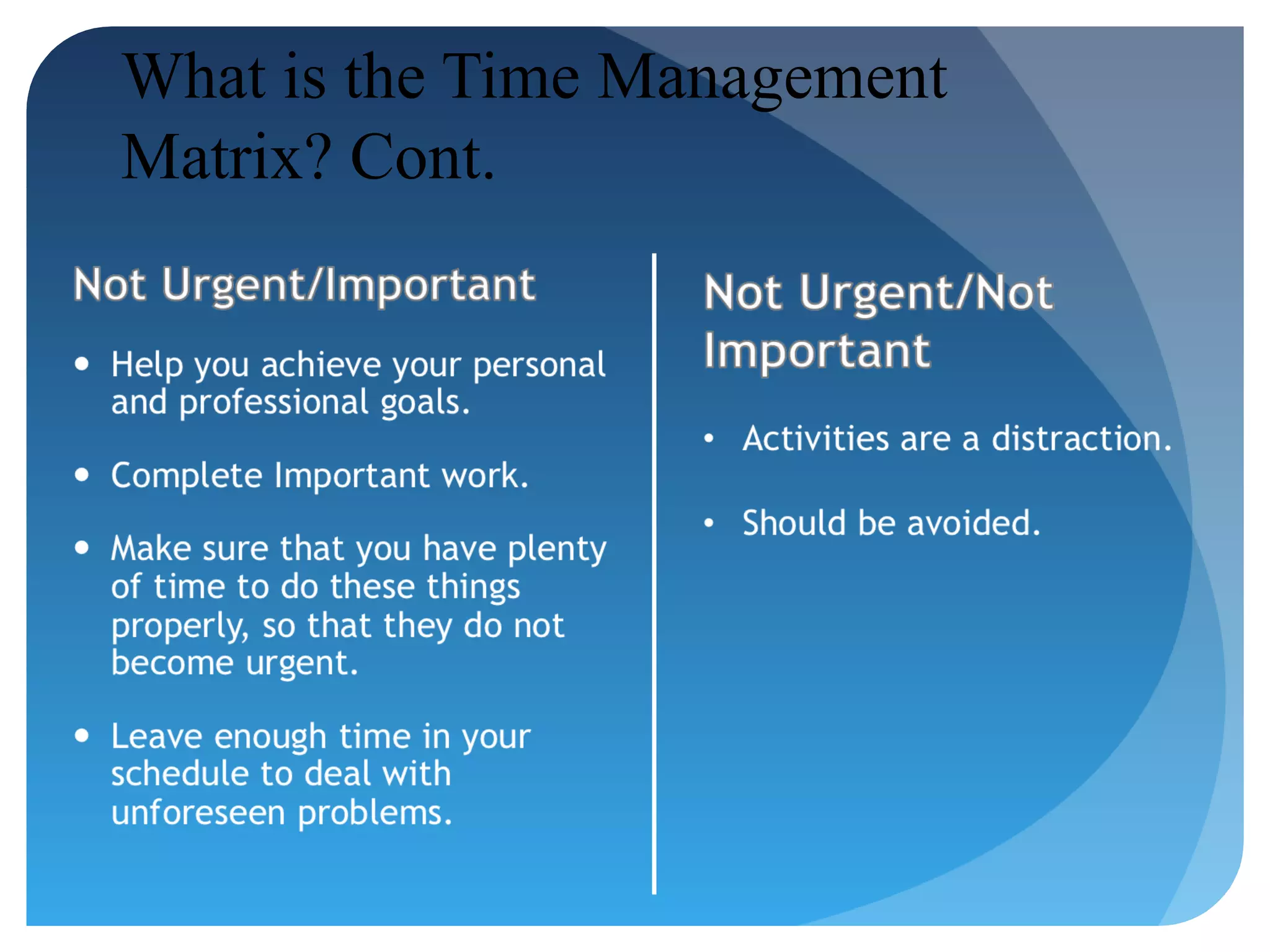
What is the Time Management
Matrix? Cont.
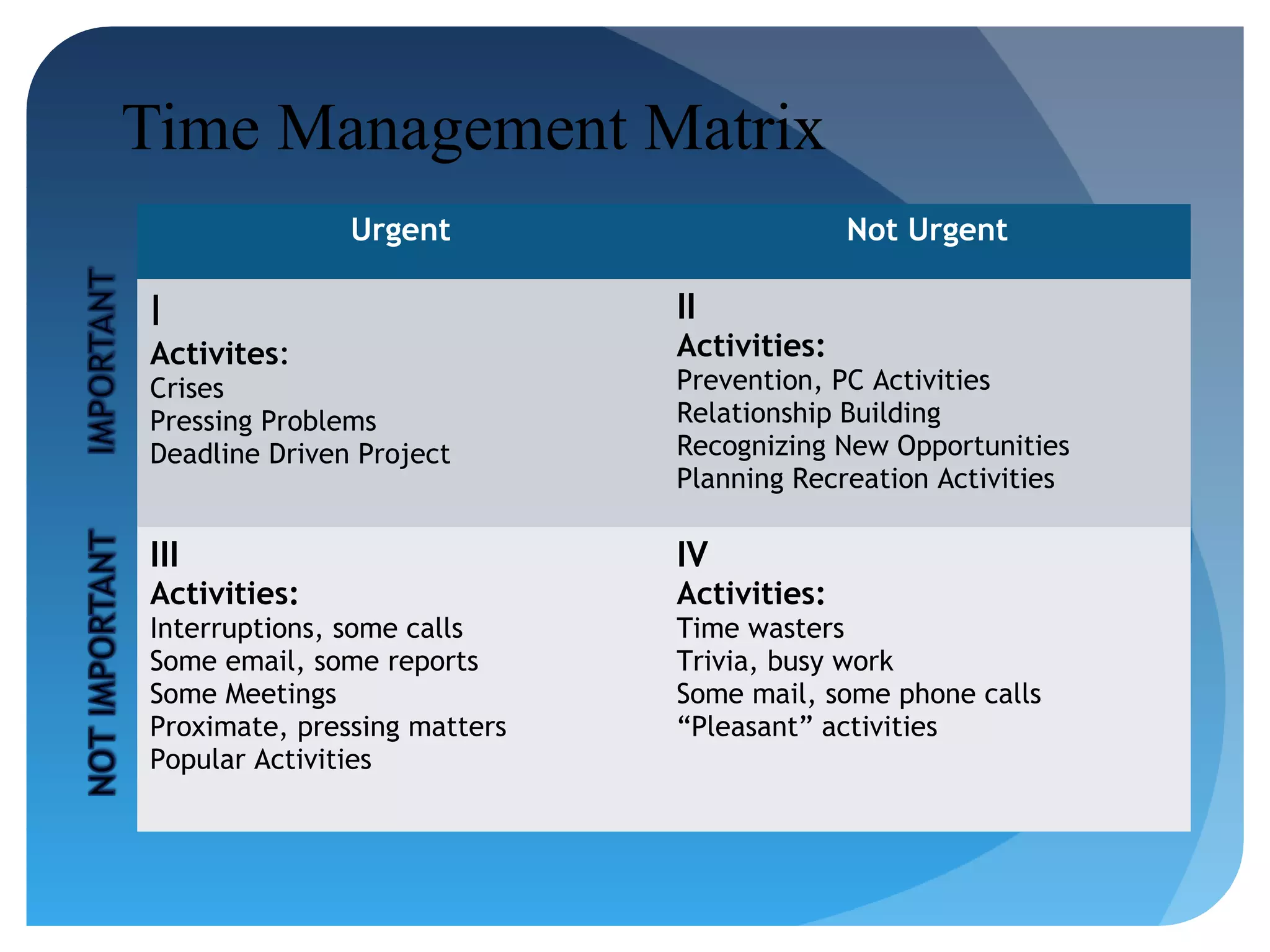
Time Management Matrix
Urgent

Not Urgent

I

II

Activites:

Activities:

Crises
Pressing Problems
Deadline Driven Project

Prevention, PC Activities
Relationship Building
Recognizing New Opportunities
Planning Recreation Activities

III

IV

Activities:

Activities:

Interruptions, some calls
Some email, some reports
Some Meetings
Proximate, pressing matters
Popular Activities

Time wasters
Trivia, busy work
Some mail, some phone calls
“Pleasant” activities
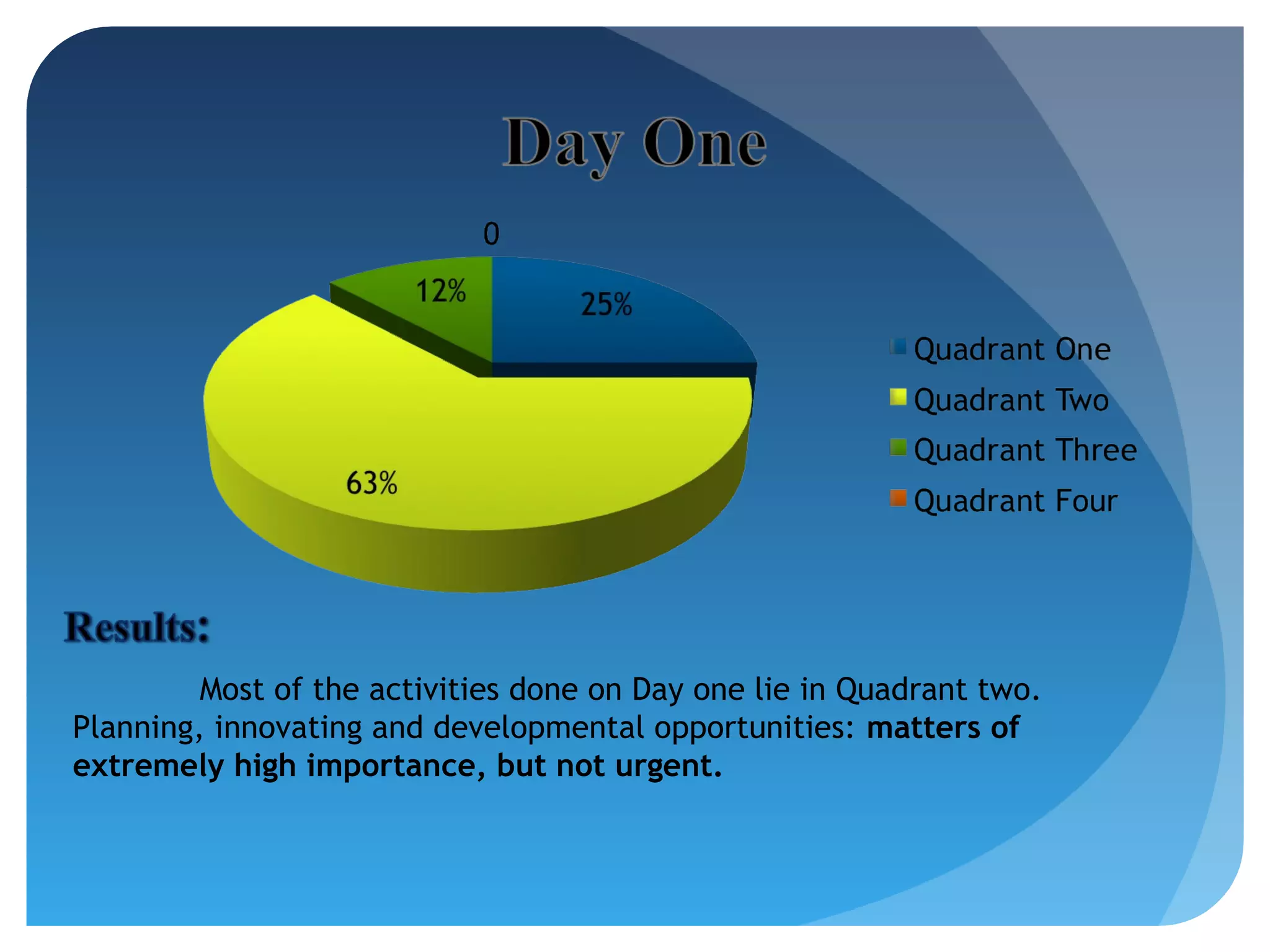
Most of the activities done on Day one lie in Quadrant two.
Planning, innovating and developmental opportunities: matters of
extremely high importance, but not urgent.
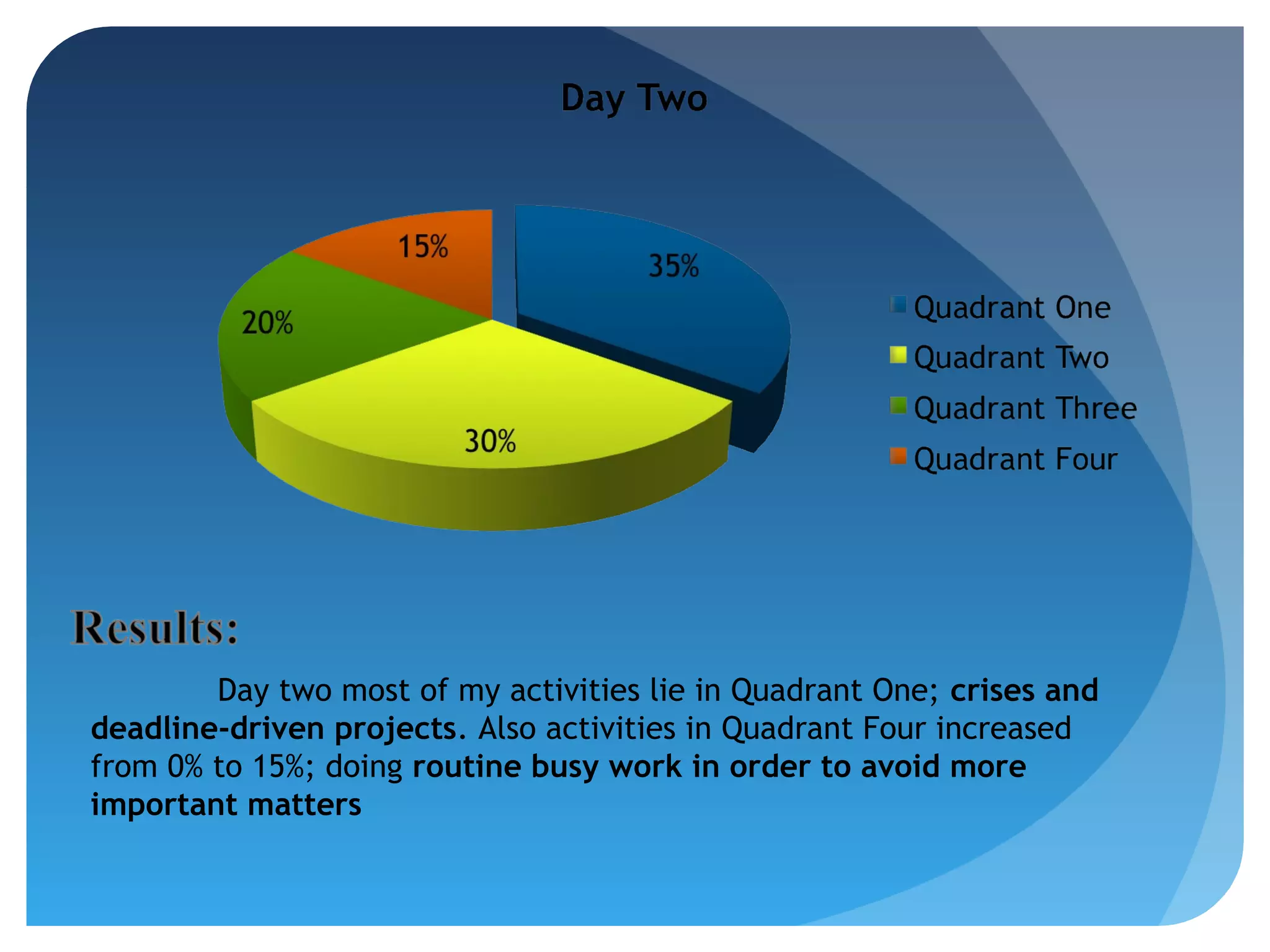
Day two most of my activities lie in Quadrant One; crises and
deadline-driven projects. Also activities in Quadrant Four increased
from 0% to 15%; doing routine busy work in order to avoid more
important matters
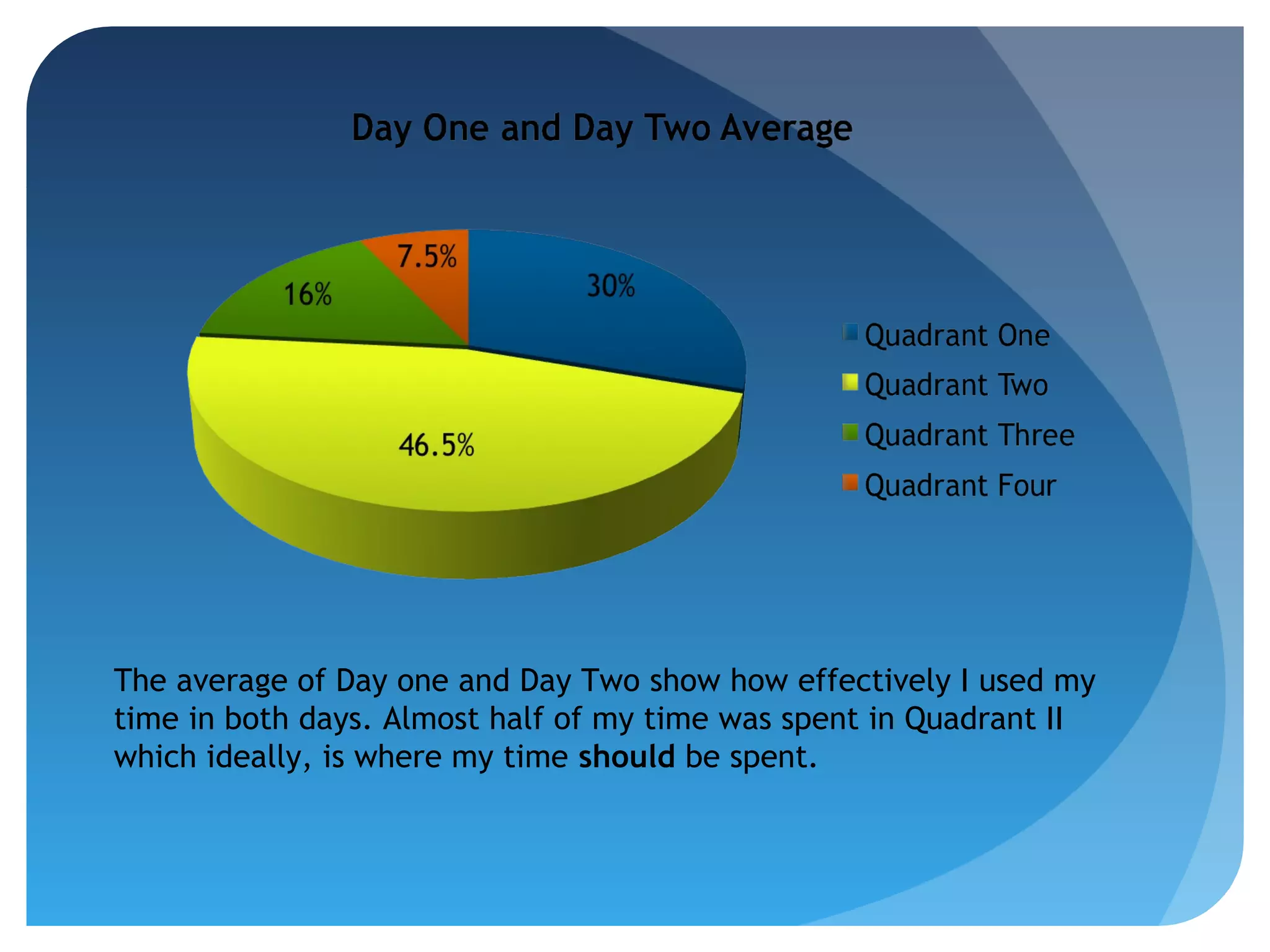
The average of Day one and Day Two show how effectively I used my
time in both days. Almost half of my time was spent in Quadrant II
which ideally, is where my time should be spent.
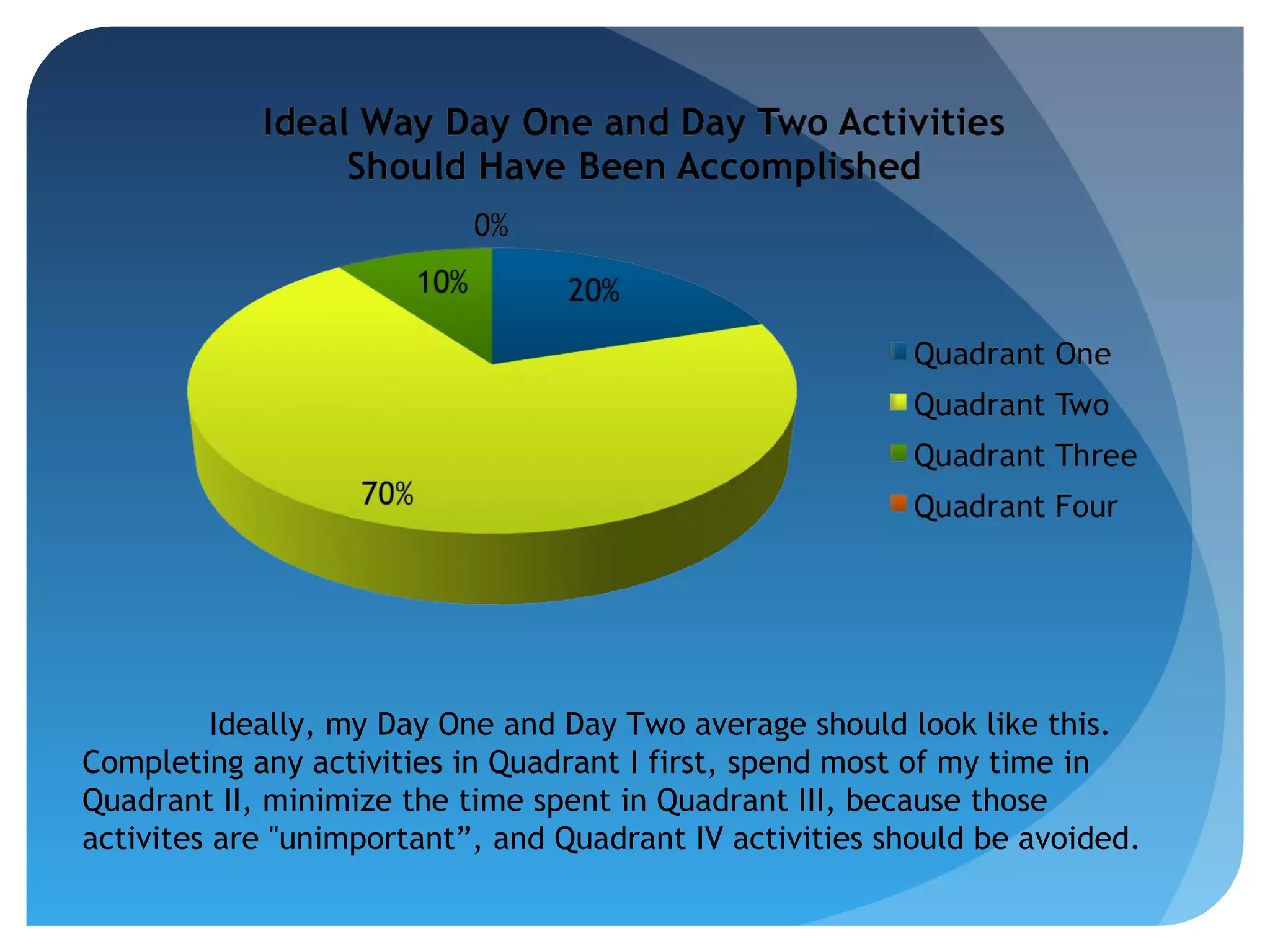
Ideally, my Day One and Day Two average should look like this.
Completing any activities in Quadrant I first, spend most of my time in
Quadrant II, minimize the time spent in Quadrant III, because those
activites are "unimportant”, and Quadrant IV activities should be avoided.
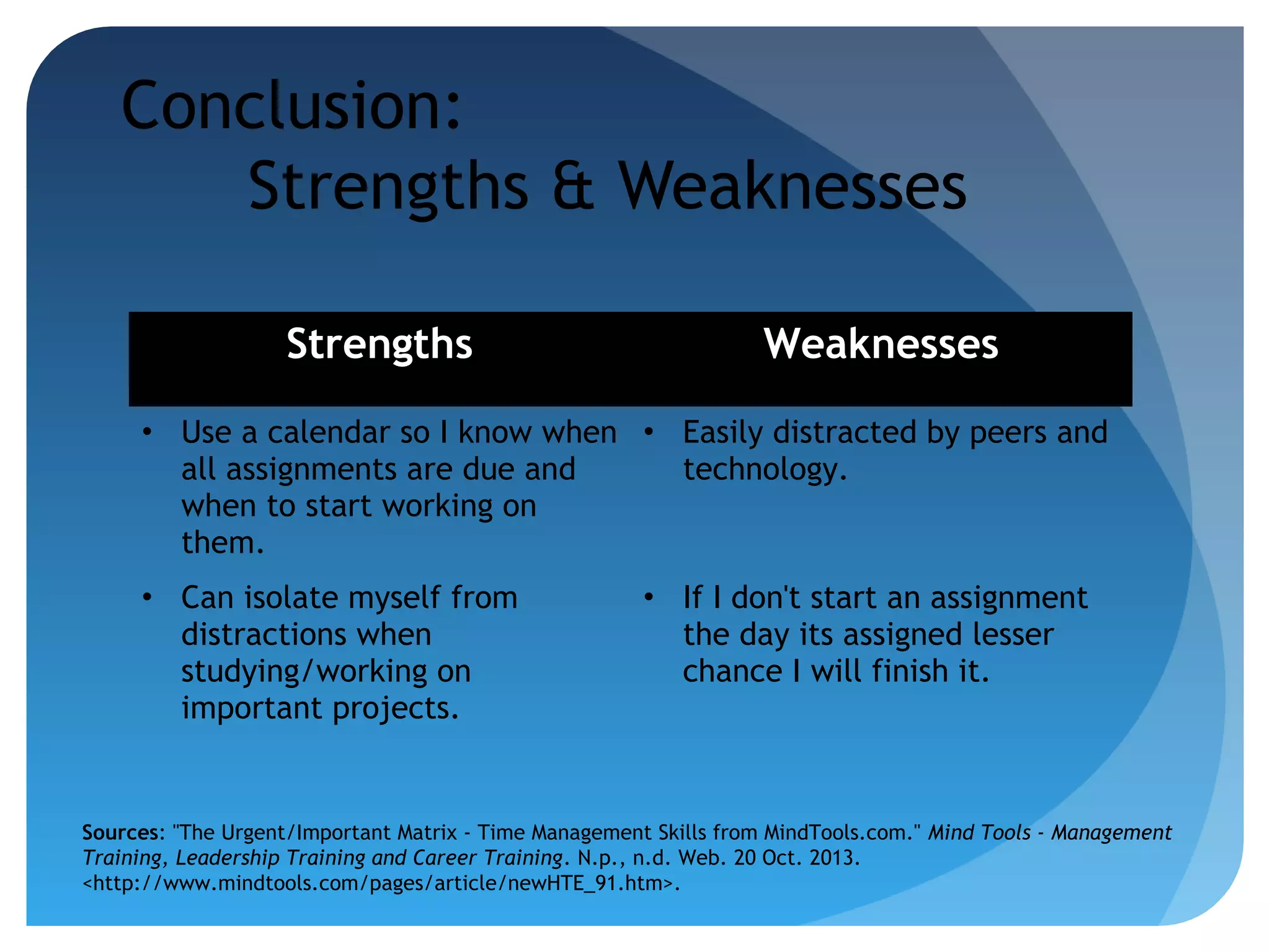
Conclusion:
Strengths & Weaknesses
Strengths

Weaknesses

• Use a calendar so I know when • Easily distracted by peers and
all assignments are due and
technology.
when to start working on
them.
• Can isolate myself from
distractions when
studying/working on
important projects.

• If I don't start an assignment
the day its assigned lesser
chance I will finish it.

Sources: "The Urgent/Important Matrix - Time Management Skills from MindTools.com." Mind Tools - Management
Training, Leadership Training and Career Training. N.p., n.d. Web. 20 Oct. 2013.
<http://www.mindtools.com/pages/article/newHTE_91.htm>.

Time Management-Krasnow

  • 1.
    Report and Analysisof Effective Self-Management By, Jacob Krasnow
  • 2.
  • 3.
    Purpose 1. Record allof the activities done in a two day period. 2. Classify the activities according to which quadrant they belong in in the Time Management Matrix. 3. Analyzes how the activities were handled and compare the manner and order in which they were accomplished as compared to the ideal way they should have been accomplished according to Covey’s Principle-Based Time Management Matrix for effective use of time.
  • 4.
    Time Management The actor process of planning and exercising conscious control over the amount of time spent on specific activities. To increase effectiveness, efficiency, or productivity. Ability to plan and control how you spend the hours in your day to effectively accomplish your goals. We are what we repeatedly do. Excellence, then, is not an act, but a habit. – Aristotle
  • 5.
    “Important” and “Urgent”Activities Important activities have an outcome that leads to the achievement of your goals, whether these are professional or personal. Urgent activities demand immediate attention, and are often associated with the achievement of someone else's goals.
  • 6.
    What is theTime Management Matrix?
  • 7.
    What is theTime Management Matrix? Cont.
  • 8.
    Time Management Matrix Urgent NotUrgent I II Activites: Activities: Crises Pressing Problems Deadline Driven Project Prevention, PC Activities Relationship Building Recognizing New Opportunities Planning Recreation Activities III IV Activities: Activities: Interruptions, some calls Some email, some reports Some Meetings Proximate, pressing matters Popular Activities Time wasters Trivia, busy work Some mail, some phone calls “Pleasant” activities
  • 9.
    Most of theactivities done on Day one lie in Quadrant two. Planning, innovating and developmental opportunities: matters of extremely high importance, but not urgent.
  • 10.
    Day two mostof my activities lie in Quadrant One; crises and deadline-driven projects. Also activities in Quadrant Four increased from 0% to 15%; doing routine busy work in order to avoid more important matters
  • 11.
    The average ofDay one and Day Two show how effectively I used my time in both days. Almost half of my time was spent in Quadrant II which ideally, is where my time should be spent.
  • 12.
    Ideally, my DayOne and Day Two average should look like this. Completing any activities in Quadrant I first, spend most of my time in Quadrant II, minimize the time spent in Quadrant III, because those activites are "unimportant”, and Quadrant IV activities should be avoided.
  • 13.
    Conclusion: Strengths & Weaknesses Strengths Weaknesses •Use a calendar so I know when • Easily distracted by peers and all assignments are due and technology. when to start working on them. • Can isolate myself from distractions when studying/working on important projects. • If I don't start an assignment the day its assigned lesser chance I will finish it. Sources: "The Urgent/Important Matrix - Time Management Skills from MindTools.com." Mind Tools - Management Training, Leadership Training and Career Training. N.p., n.d. Web. 20 Oct. 2013. <http://www.mindtools.com/pages/article/newHTE_91.htm>.