Sheila F. Perillo, MD
 Thyroid disease is the second most common
endocrine disease affecting women of
reproductive age
 a generic term referring to a clinical and biochemical
state resulting in over-production of and exposure to
thyroid hormone
 Overt hyperthyroidism complicates approximately 2 in
1,000 pregnancies.
 Pregnant women with hyperthyroidism are at
increased risk for:
 spontaneous pregnancy loss
 congestive heart failure
 thyroid storm
 preterm birth
 Preeclampsia
 fetal growth restriction, and
 increased perinatal morbidity and mortality
 the most common cause of thyrotoxicosis in
pregnancy
 An autoimmune condition characterized by
production of thyroid-stimulating immunoglobulin
(TSI) and thyroid-stimulating hormone binding
inhibitory immunoglobulin (TBII)
facilitate the thyroid-stimulating hormone
(TSH) receptor in the mediation of thyroid
stimulation and inhibition
 Hyperthyroidism- thyrotoxicosis resulting from an
abnormally functioning thyroid gland.
 Thyroid storm- acute, severe exacerbation of
hyperthyroidism
 associated with hyperemesis gravidarum
 can be due to high levels of human chorionic
gonadotropin (hCG) resulting from molar pregnancy
 high hCG levels  TSH receptor stimulation and
temporary hypothyroidism
 rarely symptomatic
 treatment with antithyroxine drugs- not beneficial
 expectant management
 not associated with poor pregnancy outcomes
 Thyroxine (T4), the major secretory product of the
thyroid gland, is converted in peripheral tissues to
triiodothyronine (T3)
 T3- biologically active form
 T4- secretion is under the direct control of pituitary
TSH
 T4 and T3 are transported in the peripheral circulation
bound to thyroxine-binding globulin (TBG),
transthyretin (formerly called "prealbumin") and
albumin.
 Less than 0.05% of plasma T4, and less than 0.5% of
plasma T3, are unbound and able to interact with
target tissues
 20 weeks' gestation
 reduced hepatic clearance
 estrogen-induced change in the structure of TBG that
prolongs serum half-life
 plasma TBG increases 2.5 folds   25% to 45%
increase in serum total T4 (TT4) from a pregravid level
of 5 to 12 mg to 9 to 16 mg
** Total T3 (TT3) increases by about 30% in the first
trimester and by 50% to 65% later
 Pregnancy  increase in available protein transient
change in free T4 (FT4) and free thyroxine index (FTI)
in the first trimester (possibly related to an increase in
hCG)
 Increased concentrations of TSH  stimulate
restoration of the free serum T4 level, such that FT4
and FTI levels are generally maintained within the
normal non-pregnant range
 Increase in volume
 Echo structure remains unchanged (Plasma iodide
levels decrease in pregnancy due to fetal use of iodide
and increased maternal renal clearance)
 15% to 18% increase in size of the thyroid gland
 enlargement usually resolves after delivery
 not associated with abnormal thyroid function tests
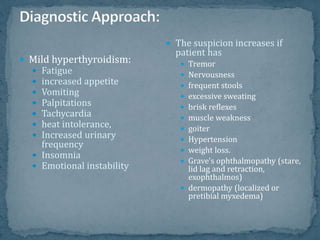
 Mild hyperthyroidism:
 Fatigue
 increased appetite
 Vomiting
 Palpitations
 Tachycardia
 heat intolerance,
 Increased urinary
frequency
 Insomnia
 Emotional instability
 The suspicion increases if
patient has
 Tremor
 Nervousness
 frequent stools
 excessive sweating
 brisk reflexes
 muscle weakness
 goiter
 Hypertension
 weight loss.
 Grave's ophthalmopathy (stare,
lid lag and retraction,
exophthalmos)
 dermopathy (localized or
pretibial myxedema)
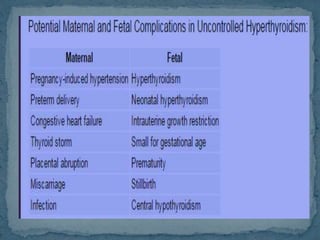
 Untreated hyperthyroidism poses considerable
maternal and fetal risks, including preterm delivery,
severe preeclampsia, heart failure, and thyroid storm
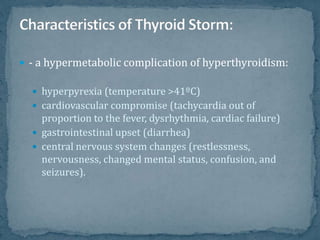
 - a hypermetabolic complication of hyperthyroidism:
 hyperpyrexia (temperature >41ºC)
 cardiovascular compromise (tachycardia out of
proportion to the fever, dysrhythmia, cardiac failure)
 gastrointestinal upset (diarrhea)
 central nervous system changes (restlessness,
nervousness, changed mental status, confusion, and
seizures).
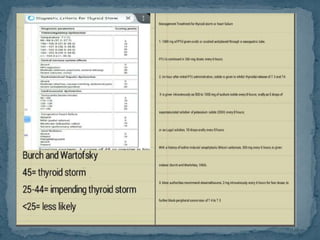
 Thyroid storm is a clinical diagnosis, and treatment
should be initiated before confirmatory test results
are available.
 Other signs of thyrotoxicosis in any patient with
postpartum congestive heart failure:
 tachycardia
 severe hypertension
 central nervous system (CNS) features, such as coma
after cesarean section or seizures suggestive of
eclampsia
 Delay in diagnosis increase the risk of maternal
mortality
 Thyroid storm is usually seen in patients with poorly
controlled hyperthyroidism complicated by additional
physiologic stressors, such as infection, surgery,
thromboembolism, preeclampsia, and parturition
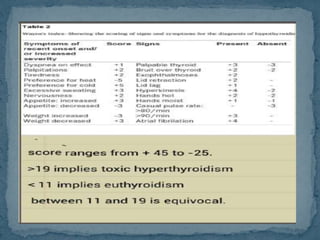
 CBC (Leukocytosis)
 Thyroid function test results
are consistent with
hyperthyroidism (elevated
FT4/FT3 and depressed TSH)
but they may not always
correlate with the severity of
the thyroid storm
 Baseline electrolyte
(occasionally hypercalcemia)
 Glucose
 Renal
 Liver function testing
(elevated hepatic enzymes)
 Coagulation studies
 CT or MRI of the brain
(unconscious patients,
signs of focal CNS signs)
 blood, uterine and wound
cultures (as appropriate)
 chest x-ray
 12-lead electrocardiogram
(ECG) and continuous
cardiac monitoring
 Pulse oximetry
 blood gas analysis
 Thyroid storm is a clinical diagnosis based on
severe signs of thyrotoxicosis:
 significant hyperpyrexia (>103ºF or >41ºC)
neuropsychiatric symptoms
 Tachycardia with a pulse rate exceeding 140 beats/min
 congestive heart failure
 Gastrointestinal symptoms (nausea and vomiting)
accompanied by liver compromise
 Obstetric intensive care unit (ICU)/ ICU that has
continuous fetal monitoring and can handle an
emergent delivery
 Therapy is designed to:
 Reduce the synthesis and release of thyroid hormone
 Remove thyroid hormone from the circulation and
increase the concentration of TBG
 Block the peripheral conversion of T4 to T3
 Block the peripheral actions of thyroid hormone
 Treat the complications of thyroid storm and provide
support
 Identify and treat potential precipitating conditions
 Supportive adjunctive care for the patient in thyroid storm
are:
 IV fluids and electrolytes
 Cardiac monitoring
 Consideration of pulmonary artery catheterization
(central hemodynamic monitoring to guide beta-blocker
therapy during hyperdynamic cardiac failure)
 Cooling measures: blanket, sponge bath, acetaminophen,
avoid salicylates (risk of increased T4). Acetaminophen
is the drug of choice
 Oxygen therapy (consider arterial line to follow serial
blood gases)
 Nasogastric tube
 Reduce synthesis of thyroid hormones:
 Thionamides : propylthiouracil (PTU)
 Methimazole)
 inhibit iodination of tyrosine -- leading to reduce
synthesis of thyroid hormones and block peripheral
conversion of T4 to T3
 can reduce the T3 concentration by 75%
 Iodide (Lugol's iodine, SSKI (Strong Solution of
Potassium Iodide), sodium iodide, orografin, or lithium
carbonate)
 inhibit proteolysis of thyroglobulin  block the
release of stored hormone
**Because one of the side effects is an initial increase in
production of thyroid hormone, it is therefore very
important to start PTU before you give iodides
 Glucocorticoids
 block release of stored hormone (as do iodides), and
peripheral conversion of T4 to T3 (as do thionamides)
They may also bolster adrenal function, and prevent
adrenal insufficiency
 PTU orally or via nasogastric tube, 300-800 mg loading dose
followed by 150-300 mg every 6 hours
 One hour after instituting PTU give: Sodium iodide, 500 mg every
8-12 hours or oral Lugol's solution, 30-60 drops daily in divided
doses.
 Iodides may be discontinued after initial improvement
 Give adrenal glucocorticoids (Hydrocortisone, 100 mg IV every 8
hour, or Prednisone, 60 mg PO every day, or
 Dexamethasone, 8 mg PO every day)
 Glucocorticoids may be discontinued after initial improvement
 Beta-blocker agents --
 Propranolol can be used to control autonomic symptoms
(especially tachycardia)
 Some effect on inhibition of peripheral conversion of T4 to T3,
but will not alter thyroid hormone release nor prevent thyroid
storm.
 Use with caution: it has a tendency to increase pulmonary
diastolic pressure, and cardiac failure is a frequent
presentation of thyroid storm
 Reserved for heart rates of 120 beats per minute or higher
 Propranolol, labetalol, and esmolol
 Propranolol,1-2 mg/min IV or dose sufficient to slow heart rate
to 90 bpm; or 20-80 mg PO or via nasogastric tube every 4-6
hourly
 Esmolol, a short-acting beta-acting antagonist given IV with a
loading dose of 250 to 500 µg/kg of body weight followed by a
continuous infusion at 50 to 100 µg/kg/min
 Echocardiogram and/or pulmonary artery catheter to help guide
management, especially in cardiac failure
 If patient has severe bronchospasm -- give 1-5 mg reserpine
every 4-6 hours or 1 mg/kg orally of guanethidine every 12
hours.
 Heart failure due to cardiomyopathy from excessive
thyroxine in women with uncontrolled
hyperthyroidism is more common in pregnant women
 Same treatment as that of thyroid storm
 Medical emergency
 Give phenobarbital to control restlessness
 Phenobarbital: 30 to 60 mg orally every 6-8 hours as
needed
 Plasmapheresis or peritoneal dialysis
 to remove circulating thyroid hormone
 reserved for patients who do not respond to conventional therapy
 Subtotal thyroidectomy (during second-trimester pregnancy)
or radioactive iodine (postpartum)
 for unsuccessful conventional therapy
 Most asymptomatic women should have a TSH and free
T4 performed approximately 6 weeks postpartum
 PTU and methimazole are excreted in breast milk
 PTU is largely protein bound and does not seem to pose
a significant risk to the breastfed infant
 Methimazole has been found in breastfed infants of
treated women in amounts sufficient to cause thyroid
dysfunction
 at low doses (10-20 mg/d) it does not seem to pose a major risk to
the nursing infant
 PTU
 first-line treatment for Grave's disease in pregnancy due
to lower risks of teratogenicity than methimazole.
 It crosses the human placenta and associated with fetal
hypothyroidism
 Cordocentesis is sometimes recommended to test fetal
thyroid function
 does not readily crosses membranes
 milk concentrations are quite low
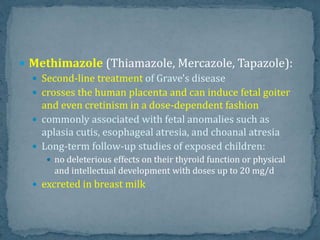
 Methimazole (Thiamazole, Mercazole, Tapazole):
 Second-line treatment of Grave's disease
 crosses the human placenta and can induce fetal goiter
and even cretinism in a dose-dependent fashion
 commonly associated with fetal anomalies such as
aplasia cutis, esophageal atresia, and choanal atresia
 Long-term follow-up studies of exposed children:
 no deleterious effects on their thyroid function or physical
and intellectual development with doses up to 20 mg/d
 excreted in breast milk
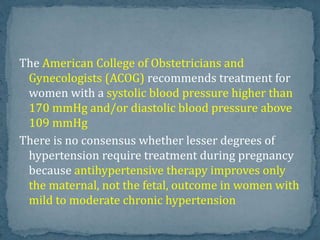
The American College of Obstetricians and
Gynecologists (ACOG) recommends treatment for
women with a systolic blood pressure higher than
170 mmHg and/or diastolic blood pressure above
109 mmHg
There is no consensus whether lesser degrees of
hypertension require treatment during pregnancy
because antihypertensive therapy improves only
the maternal, not the fetal, outcome in women with
mild to moderate chronic hypertension
 Radioactive iodine (iodine-131; I-131):
 contraindicated in pregnant women
 cost-effective, safe, and reliable treatment for
hyperthyroidism in non-pregnant women
 ACOG recommendation: women should avoid pregnancy
for 4-6 months following treatment
 Detrimental effects on the thyroid of the developing
fetus as a result of I-131 treatment for thyrotoxicosis of
the mother in the first trimester of pregnancy are
reported.
 Breast-feeding should be avoided for at least 120 days
after treatment
 Thyroid storm
 a life-threatening condition, requiring early recognition and
aggressive therapy in an intensive care unit setting.
 During gestation, women with hyperthyroidism should have
their thyroid function checked every 3-4 weeks.
 Grave's disease represents the most common cause of
maternal hyperthyroidism during pregnancy
 Only 0.2% of gestations are complicated by thyroid storm and
more than 90% of cases are caused by Grave's disease
 Increased production of thyroid hormone occurs when
autoantibodies (thyroid-stimulating antibody [TSAb] --
formerly known as LATS [long-acting thyroid stimulator])
against TSH receptors -- acts as TSH agonists.
 Thyroid Storm: Critical Care In Obstetrics
 WHEC Practice Bulletin and Clinical Management
Guidelines for healthcare providers. Educational grant
provided by Women's Health and Education Center
(WHEC).
 Published: 2 June 2010

Thyroid disease and pregnancy ppt

  • 1.
  • 2.
     Thyroid diseaseis the second most common endocrine disease affecting women of reproductive age
  • 3.
     a genericterm referring to a clinical and biochemical state resulting in over-production of and exposure to thyroid hormone  Overt hyperthyroidism complicates approximately 2 in 1,000 pregnancies.
  • 4.
     Pregnant womenwith hyperthyroidism are at increased risk for:  spontaneous pregnancy loss  congestive heart failure  thyroid storm  preterm birth  Preeclampsia  fetal growth restriction, and  increased perinatal morbidity and mortality
  • 5.
     the mostcommon cause of thyrotoxicosis in pregnancy  An autoimmune condition characterized by production of thyroid-stimulating immunoglobulin (TSI) and thyroid-stimulating hormone binding inhibitory immunoglobulin (TBII) facilitate the thyroid-stimulating hormone (TSH) receptor in the mediation of thyroid stimulation and inhibition
  • 6.
     Hyperthyroidism- thyrotoxicosisresulting from an abnormally functioning thyroid gland.  Thyroid storm- acute, severe exacerbation of hyperthyroidism
  • 7.
     associated withhyperemesis gravidarum  can be due to high levels of human chorionic gonadotropin (hCG) resulting from molar pregnancy  high hCG levels  TSH receptor stimulation and temporary hypothyroidism  rarely symptomatic  treatment with antithyroxine drugs- not beneficial  expectant management  not associated with poor pregnancy outcomes
  • 8.
     Thyroxine (T4),the major secretory product of the thyroid gland, is converted in peripheral tissues to triiodothyronine (T3)  T3- biologically active form  T4- secretion is under the direct control of pituitary TSH  T4 and T3 are transported in the peripheral circulation bound to thyroxine-binding globulin (TBG), transthyretin (formerly called "prealbumin") and albumin.  Less than 0.05% of plasma T4, and less than 0.5% of plasma T3, are unbound and able to interact with target tissues
  • 9.
     20 weeks'gestation  reduced hepatic clearance  estrogen-induced change in the structure of TBG that prolongs serum half-life  plasma TBG increases 2.5 folds   25% to 45% increase in serum total T4 (TT4) from a pregravid level of 5 to 12 mg to 9 to 16 mg ** Total T3 (TT3) increases by about 30% in the first trimester and by 50% to 65% later
  • 10.
     Pregnancy increase in available protein transient change in free T4 (FT4) and free thyroxine index (FTI) in the first trimester (possibly related to an increase in hCG)  Increased concentrations of TSH  stimulate restoration of the free serum T4 level, such that FT4 and FTI levels are generally maintained within the normal non-pregnant range
  • 11.
     Increase involume  Echo structure remains unchanged (Plasma iodide levels decrease in pregnancy due to fetal use of iodide and increased maternal renal clearance)  15% to 18% increase in size of the thyroid gland  enlargement usually resolves after delivery  not associated with abnormal thyroid function tests
  • 12.
     Mild hyperthyroidism: Fatigue  increased appetite  Vomiting  Palpitations  Tachycardia  heat intolerance,  Increased urinary frequency  Insomnia  Emotional instability  The suspicion increases if patient has  Tremor  Nervousness  frequent stools  excessive sweating  brisk reflexes  muscle weakness  goiter  Hypertension  weight loss.  Grave's ophthalmopathy (stare, lid lag and retraction, exophthalmos)  dermopathy (localized or pretibial myxedema)
  • 13.
     Untreated hyperthyroidismposes considerable maternal and fetal risks, including preterm delivery, severe preeclampsia, heart failure, and thyroid storm
  • 15.
     - ahypermetabolic complication of hyperthyroidism:  hyperpyrexia (temperature >41ºC)  cardiovascular compromise (tachycardia out of proportion to the fever, dysrhythmia, cardiac failure)  gastrointestinal upset (diarrhea)  central nervous system changes (restlessness, nervousness, changed mental status, confusion, and seizures).
  • 16.
     Thyroid stormis a clinical diagnosis, and treatment should be initiated before confirmatory test results are available.
  • 17.
     Other signsof thyrotoxicosis in any patient with postpartum congestive heart failure:  tachycardia  severe hypertension  central nervous system (CNS) features, such as coma after cesarean section or seizures suggestive of eclampsia  Delay in diagnosis increase the risk of maternal mortality
  • 18.
     Thyroid stormis usually seen in patients with poorly controlled hyperthyroidism complicated by additional physiologic stressors, such as infection, surgery, thromboembolism, preeclampsia, and parturition
  • 19.
     CBC (Leukocytosis) Thyroid function test results are consistent with hyperthyroidism (elevated FT4/FT3 and depressed TSH) but they may not always correlate with the severity of the thyroid storm  Baseline electrolyte (occasionally hypercalcemia)  Glucose  Renal  Liver function testing (elevated hepatic enzymes)  Coagulation studies  CT or MRI of the brain (unconscious patients, signs of focal CNS signs)  blood, uterine and wound cultures (as appropriate)  chest x-ray  12-lead electrocardiogram (ECG) and continuous cardiac monitoring  Pulse oximetry  blood gas analysis
  • 20.
     Thyroid stormis a clinical diagnosis based on severe signs of thyrotoxicosis:  significant hyperpyrexia (>103ºF or >41ºC) neuropsychiatric symptoms  Tachycardia with a pulse rate exceeding 140 beats/min  congestive heart failure  Gastrointestinal symptoms (nausea and vomiting) accompanied by liver compromise
  • 21.
     Obstetric intensivecare unit (ICU)/ ICU that has continuous fetal monitoring and can handle an emergent delivery  Therapy is designed to:  Reduce the synthesis and release of thyroid hormone  Remove thyroid hormone from the circulation and increase the concentration of TBG  Block the peripheral conversion of T4 to T3  Block the peripheral actions of thyroid hormone  Treat the complications of thyroid storm and provide support  Identify and treat potential precipitating conditions
  • 22.
     Supportive adjunctivecare for the patient in thyroid storm are:  IV fluids and electrolytes  Cardiac monitoring  Consideration of pulmonary artery catheterization (central hemodynamic monitoring to guide beta-blocker therapy during hyperdynamic cardiac failure)  Cooling measures: blanket, sponge bath, acetaminophen, avoid salicylates (risk of increased T4). Acetaminophen is the drug of choice  Oxygen therapy (consider arterial line to follow serial blood gases)  Nasogastric tube
  • 23.
     Reduce synthesisof thyroid hormones:  Thionamides : propylthiouracil (PTU)  Methimazole)  inhibit iodination of tyrosine -- leading to reduce synthesis of thyroid hormones and block peripheral conversion of T4 to T3  can reduce the T3 concentration by 75%
  • 24.
     Iodide (Lugol'siodine, SSKI (Strong Solution of Potassium Iodide), sodium iodide, orografin, or lithium carbonate)  inhibit proteolysis of thyroglobulin  block the release of stored hormone **Because one of the side effects is an initial increase in production of thyroid hormone, it is therefore very important to start PTU before you give iodides
  • 25.
     Glucocorticoids  blockrelease of stored hormone (as do iodides), and peripheral conversion of T4 to T3 (as do thionamides) They may also bolster adrenal function, and prevent adrenal insufficiency
  • 26.
     PTU orallyor via nasogastric tube, 300-800 mg loading dose followed by 150-300 mg every 6 hours  One hour after instituting PTU give: Sodium iodide, 500 mg every 8-12 hours or oral Lugol's solution, 30-60 drops daily in divided doses.  Iodides may be discontinued after initial improvement  Give adrenal glucocorticoids (Hydrocortisone, 100 mg IV every 8 hour, or Prednisone, 60 mg PO every day, or  Dexamethasone, 8 mg PO every day)  Glucocorticoids may be discontinued after initial improvement
  • 27.
     Beta-blocker agents--  Propranolol can be used to control autonomic symptoms (especially tachycardia)  Some effect on inhibition of peripheral conversion of T4 to T3, but will not alter thyroid hormone release nor prevent thyroid storm.  Use with caution: it has a tendency to increase pulmonary diastolic pressure, and cardiac failure is a frequent presentation of thyroid storm  Reserved for heart rates of 120 beats per minute or higher  Propranolol, labetalol, and esmolol
  • 28.
     Propranolol,1-2 mg/minIV or dose sufficient to slow heart rate to 90 bpm; or 20-80 mg PO or via nasogastric tube every 4-6 hourly  Esmolol, a short-acting beta-acting antagonist given IV with a loading dose of 250 to 500 µg/kg of body weight followed by a continuous infusion at 50 to 100 µg/kg/min  Echocardiogram and/or pulmonary artery catheter to help guide management, especially in cardiac failure  If patient has severe bronchospasm -- give 1-5 mg reserpine every 4-6 hours or 1 mg/kg orally of guanethidine every 12 hours.
  • 29.
     Heart failuredue to cardiomyopathy from excessive thyroxine in women with uncontrolled hyperthyroidism is more common in pregnant women  Same treatment as that of thyroid storm  Medical emergency  Give phenobarbital to control restlessness  Phenobarbital: 30 to 60 mg orally every 6-8 hours as needed  Plasmapheresis or peritoneal dialysis  to remove circulating thyroid hormone  reserved for patients who do not respond to conventional therapy  Subtotal thyroidectomy (during second-trimester pregnancy) or radioactive iodine (postpartum)  for unsuccessful conventional therapy
  • 30.
     Most asymptomaticwomen should have a TSH and free T4 performed approximately 6 weeks postpartum  PTU and methimazole are excreted in breast milk  PTU is largely protein bound and does not seem to pose a significant risk to the breastfed infant  Methimazole has been found in breastfed infants of treated women in amounts sufficient to cause thyroid dysfunction  at low doses (10-20 mg/d) it does not seem to pose a major risk to the nursing infant
  • 31.
     PTU  first-linetreatment for Grave's disease in pregnancy due to lower risks of teratogenicity than methimazole.  It crosses the human placenta and associated with fetal hypothyroidism  Cordocentesis is sometimes recommended to test fetal thyroid function  does not readily crosses membranes  milk concentrations are quite low
  • 32.
     Methimazole (Thiamazole,Mercazole, Tapazole):  Second-line treatment of Grave's disease  crosses the human placenta and can induce fetal goiter and even cretinism in a dose-dependent fashion  commonly associated with fetal anomalies such as aplasia cutis, esophageal atresia, and choanal atresia  Long-term follow-up studies of exposed children:  no deleterious effects on their thyroid function or physical and intellectual development with doses up to 20 mg/d  excreted in breast milk
  • 33.
    The American Collegeof Obstetricians and Gynecologists (ACOG) recommends treatment for women with a systolic blood pressure higher than 170 mmHg and/or diastolic blood pressure above 109 mmHg There is no consensus whether lesser degrees of hypertension require treatment during pregnancy because antihypertensive therapy improves only the maternal, not the fetal, outcome in women with mild to moderate chronic hypertension
  • 34.
     Radioactive iodine(iodine-131; I-131):  contraindicated in pregnant women  cost-effective, safe, and reliable treatment for hyperthyroidism in non-pregnant women  ACOG recommendation: women should avoid pregnancy for 4-6 months following treatment  Detrimental effects on the thyroid of the developing fetus as a result of I-131 treatment for thyrotoxicosis of the mother in the first trimester of pregnancy are reported.  Breast-feeding should be avoided for at least 120 days after treatment
  • 35.
     Thyroid storm a life-threatening condition, requiring early recognition and aggressive therapy in an intensive care unit setting.  During gestation, women with hyperthyroidism should have their thyroid function checked every 3-4 weeks.  Grave's disease represents the most common cause of maternal hyperthyroidism during pregnancy  Only 0.2% of gestations are complicated by thyroid storm and more than 90% of cases are caused by Grave's disease  Increased production of thyroid hormone occurs when autoantibodies (thyroid-stimulating antibody [TSAb] -- formerly known as LATS [long-acting thyroid stimulator]) against TSH receptors -- acts as TSH agonists.
  • 38.
     Thyroid Storm:Critical Care In Obstetrics  WHEC Practice Bulletin and Clinical Management Guidelines for healthcare providers. Educational grant provided by Women's Health and Education Center (WHEC).  Published: 2 June 2010

Editor's Notes

  • #6 Grave's disease, the most common cause of thyrotoxicosis in pregnancy, is an autoimmune condition characterized by production of thyroid-stimulating immunoglobulin (TSI) and thyroid-stimulating hormone binding inhibitory immunoglobulin (TBII)  These two antibodies facilitate the thyroid-stimulating hormone (TSH) receptor in the mediation of thyroid stimulation and inhibition, respectively.
  • #7 Hyperthyroidism is thyrotoxicosis resulting from an abnormally functioning thyroid gland. Thyroid storm is an acute, severe exacerbation of hyperthyroidism.
  • #8 There is a unique form of hyperthyroidism associated with pregnancy called gestational transient thyrotoxicosis. It is typically associated with hyperemesis gravidarum, and can be due to high levels ofhuman chorionic gonadotropin (hCG) resulting from molar pregnancy. These high hCG levels lead to TSH receptor stimulation and temporary hypothyroidism. Women with gestational transient thyrotoxicosis are rarely symptomatic and treatment with antithyroxine drugs has not been shown to be beneficial (4). With expectant management of hyperemesis gravidarum, serum free T4 levels usually normalize in parallel with the decline in hCG concentrations as pregnancy progresses beyond the first trimester. Notably, TSH levels may remain partially depressed for several weeks after free T4 levels have returned to normal range. Gestational transient thyrotoxicosis has not been associated with poor pregnancy outcomes.
  • #9 Impact of Pregnancy on Thyroid: Thyroxine (T4), the major secretory product of the thyroid gland, is converted in peripheral tissues to triiodothyronine (T3), the biologically active form of this hormone. T4 secretion is under the direct control of pituitary TSH. The cell surface receptor for TSH is similar to the receptors for luteinizing hormone (LH) and human chorionic gonadotropin (hCG). T4 and T3 are transported in the peripheral circulation bound to thyroxine-binding globulin (TBG), transthyretin (formerly called "prealbumin") and albumin. Less than 0.05% of plasma T4, and less than 0.5% of plasma T3, are unbound and able to interact with target tissues (4). Routine T4 measurements reflect total serum concentration and may be altered by increases or decreases in concentrations of circulating proteins.
  • #10 By 20 weeks' gestation, plasma TBG increases 2.5 folds because of reduced hepatic clearance and an estrogen-induced change in the str ucture of TBG that prolongs serum half-life (5). This TBG alteration causes significant changes in some of the test results in pregnancy. There is a 25% to 45% increase in serum total T4 (TT4) from a pregravid level of 5 to 12 mg to 9 to 16 mg. Total T3 (TT3) increases by about 30% in the first trimester and by 50% to 65% later
  • #11 The increase in available protein binding induced by pregnancy causes a transient change in free T4 (FT4) and free thyroxine index (FTI) in the first trimester (possibly related to an increase in hCG). Increased concentrations of TSH stimulate restoration of the free serum T4 level, such that FT4 and FTI levels are generally maintained within the normal non-pregnant range
  • #12 . Ultrasound evaluation of the thyroid gland during pregnancy shows an increase in volume, whereas its echo structure remains unchanged (Plasma iodide levels decrease in pregnancy due to fetal use of iodide and increased maternal renal clearance. The result in many pregnant women is a 15% to 18% increase in size of the thyroid gland. The enlargement usually resolves after delivery and is not associated with abnormal thyroid function tests.
  • #13 Mild hyperthyroidism mimics symptoms of normal pregnancy, and can be present as fatigue, increased appetite, vomiting, palpitations, tachycardia, heat intolerance, increased urinary frequency, insomnia, and emotional instability. The suspicion increases if patient has tremor, nervousness, frequent stools, excessive sweating, brisk reflexes, muscle weakness, goiter, hypertension, or weight loss. Grave's ophthalmopathy (stare, lid lag and retraction, exophthalmos) and dermopathy (localized or pretibial myxedema) are diagnostic.
  • #14 The disease usually gets worse in the first trimester but typically moderates later in pregnancy. Untreated hyperthyroidism poses considerable maternal and fetal risks, including preterm delivery, severe preeclampsia, heart failure, and thyroid storm (8). Although nausea is common in early pregnancy, the occurrence of hyperemesis gravidarum together with weight loss can signify overt hyperthyroidism. Thyroid testing may be beneficial in these circumstances.
  • #16 The characteristics of thyroid storm, which is a hypermetabolic complication of hyperthyroidism, and hyperpyrexia (temperature >41ºC), cardiovascular compromise (tachycardia out of proportion to the fever, dysrhythmia, cardiac failure), gastrointestinal upset (diarrhea), and central nervous system changes (restlessness, nervousness, changed mental status, confusion, and seizures). Thyroid storm is a clinical diagnosis, and treatment should be initiated before confirmatory test results are available
  • #18 . In many patients there is absence of classic symptoms. Be alert for other signs of thyrotoxicosis in any patient with postpartum congestive heart failure, tachycardia, and severe hypertension (9). Occasionally, the diagnosis may be obfuscated by central nervous system (CNS) features, such as coma after cesarean section or seizures suggestive of eclampsia. The resulting delay in diagnosis can increase the risk of maternal mortality.
  • #20 patients with focal CNS signs that do not respond to specific thyroid storm therapy are at risk of atrial fibrillation and CNS embolization so investigate for cerebral emboli and prescribe anticoagulants if necessary. A echocardiogram is helpful for management in cases where cardiac decompensation is suspected. Pulse oximetry should be used to monitor peripheral arterial oxygen saturation blood gas analysis will help acid-base balance assessment.
  • #21 Thyroid storm is a clinical diagnosis based on severe signs of thyrotoxicosis: with significant hyperpyrexia (>103ºF or >41ºC) and neuropsychiatric symptoms that are essential for the clinical diagnosis. Tachycardia with a pulse rate exceeding 140 beats/min is not uncommon, and congestive heart failure is a frequent complication. Gastrointestinal symptoms such as nausea and vomiting, accompanied by liver compromise, have been reported.
  • #22 Management of thyroid storm is best accomplished in an obstetric intensive care unit (ICU), or an ICU that has continuous fetal monitoring and can handle an emergent delivery. Therapy is designed to: Reduce the synthesis and release of thyroid hormone; Remove thyroid hormone from the circulation and increase the concentration of TBG; Block the peripheral conversion of T4 to T3; Block the peripheral actions of thyroid hormone; Treat the complications of thyroid storm and provide support; Identify and treat potential precipitating conditions.
  • #23 Supportive adjunctive care for the patient in thyroid storm are: IV fluids and electrolytes; Cardiac monitoring; Consideration of pulmonary artery catheterization (central hemodynamic monitoring to guide beta-blocker therapy during hyperdynamic cardiac failure); Cooling measures: blanket, sponge bath, acetaminophen, avoid salicylates (risk of increased T4). Acetaminophen is the drug of choice; Oxygen therapy (consider arterial line to follow serial blood gases); Nasogastric tube if patient is unable to swallow (may be only avenue for propylthiouracil administration).
  • #24 Medication to reduce synthesis of thyroid hormones are: thionamides (propylthiouracil (PTU) and methimazole); iodide and glucocorticoids. These drugs should be started as soon as diagnosis of thyroid storm is made. PTU and methimazole inhibit iodination of tyrosine -- leading to reduce synthesis of thyroid hormones and block peripheral conversion of T4 to T3 (11). These drugs alone can reduce the T3 concentration by 75%. Iodide can be in the form of Lugol's iodine, SSKI (Strong Solution of Potassium Iodide), sodium iodide, orografin, or lithium carbonate (for use in patients allergic to iodine). These drugs function by inhibiting proteolysis of thyroglobulin and thereby blocking the release of stored hormone. Because one of the side effects is an initial increase in production of thyroid hormone, it is therefore very important to start PTU before you give iodides. Glucocorticoids block release of stored hormone (as do iodides), and peripheral conversion of T4 to T3 (as do thionamides). They may also bolster adrenal function, and prevent adrenal insufficiency, although data in support of this particular benefit are few (12). Start PTU before giving iodides.
  • #27 Propylthiouracil (PTU) followed at least 1 hour later by iodides to block T4 release (IV sodium iodide or oral Lugol's): PTU orally or via nasogastric tube, 300-800 mg loading dose followed by 150-300 mg every 6 hours; One hour after instituting PTU give: Sodium iodide, 500 mg every 8-12 hours or oral Lugol's solution, 30-60 drops daily in divided doses. Iodides may be discontinued after initial improvement. Give adrenal glucocorticoids to inhibit peripheral conversion of T4 to T3. Consider any of the following options as appropriate: Hydrocortisone, 100 mg IV every 8 hour, or Prednisone, 60 mg PO every day, or Dexamethasone, 8 mg PO every day Glucocorticoids may be discontinued after initial improvement.
  • #28 Medications to control maternal tachycardia: beta-blocker agents -- propranolol can be used to control autonomic symptoms (especially tachycardia). Beta-adrenergic blockade may have some effect on inhibition of peripheral conversion of T4 to T3, but will not alter thyroid hormone release nor prevent thyroid storm. Use propranolol with caution because it has a tendency to increase pulmonary diastolic pressure, and cardiac failure is a frequent presentation of thyroid storm. Treatment with a beta-blocker to control tachycardia is usually reserved for heart rates of 120 beats per minute or higher. Propranolol, labetalol, and esmolol have all been used successfully in pregnancy (13). Commonly following dosages are used: Propranolol, 1-2 mg/min IV or dose sufficient to slow heart rate to 90 bpm; or 20-80 mg PO or via nasogastric tube every 4-6 hourly; Esmolol, a short-acting beta-acting antagonist given IV with a loading dose of 250 to 500 µg/kg of body weight followed by a continuous infusion at 50 to 100 µg/kg/min may also be used. Consider a echocardiogram and/or pulmonary artery catheter to help guide management, especially in cardiac failure; If patient has severe bronchospasm -- give 1-5 mg reserpine every 4-6 hours or 1 mg/kg orally of guanethidine every 12 hours.
  • #29 Propranolol, 1-2 mg/min IV or dose sufficient to slow heart rate to 90 bpm; or 20-80 mg PO or via nasogastric tube every 4-6 hourly Esmolol, a short-acting beta-acting antagonist given IV with a loading dose of 250 to 500 µg/kg of body weight followed by a continuous infusion at 50 to 100 µg/kg/min may also be used Consider a echocardiogram and/or pulmonary artery catheter to help guide management, especially in cardiac failure If patient has severe bronchospasm -- give 1-5 mg reserpine every 4-6 hours or 1 mg/kg orally of guanethidine every 12 hours. Reserpine? Guanethidine?
  • #30 Heart failure due to cardiomyopathy from excessive thyroxine in women with uncontrolled hyperthyroidism is more common in pregnant women (14). Treatment of thyroid storm or thyrotoxic heart failure is similar. They both should be treated as medical emergencies. Phenobarbital: 30 to 60 mg orally every 6-8 hours as needed to control restlessness. After initial clinical management, iodides and glucocorticoids can be discontinued. Reserve plasmapheresis or peritoneal dialysis to remove circulating thyroid hormone for patients who do not respond to conventional therapy. Prescribe anticoagulants if appropriate. If conventional therapy is unsuccessful: consider subtotal thyroidectomy (during second-trimester pregnancy) or radioactive iodine (postpartum). 
  • #31 Postpartum Care: Women with Grave's disease should be followed up closely after delivery, because recurrence or aggravation of symptoms is not uncommon in the first few months of postpartum. Most asymptomatic women should have a TSH and free T4 performed approximately 6 weeks postpartum. Both PTU and methimazole are excreted in breast milk, but PTU is largely protein bound and does not seem to pose a significant risk to the breastfed infant. Methimazole has been found in breastfed infants of treated women in amounts sufficient to cause thyroid dysfunction. However, at low doses (10-20 mg/d) it does not seem to pose a major risk to the nursing infant. The American Academy of Pediatricians considers both compatible with breastfeeding 
  • #32 Teratogenic effects of Antithyroid Medications: PTU, methimazole and whole category -- there is general consensus among clinicians that the lowest dose needed to keep T3 and T4 within the upper normal range for these women should be used (18). Because women previously ablated with either radioactive iodine or thyroidectomy may still be producing thyroid-stimulating antibodies (even though they are themselves euthyroid), the fetus remains at risk and should be monitored with serial ultrasonography for growth and early detection of goiter. No deleterious effects on neonatal thyroid function or on physical and intellectual development of breastfed infants have been described (19). PTU: it is first-line treatment for Grave's disease in pregnancy due to lower risks of teratogenicity than methimazole. It crosses the human placenta and associated with fetal hypothyroidism Cordocentesis is sometimes recommended to test fetal thyroid function. It does not readily crosses membranes and milk concentrations are quite low.
  • #33 Methimazole (Thiamazole, Mercazole, Tapazole): it is the second-line treatment of Grave's disease. It crosses the human placenta and can induce fetal goiter and even cretinism in a dose-dependent fashion. It is also commonly associated with fetal anomalies such as aplasia cutis, esophageal atresia, and choanal atresia (20). Long-term follow-up studies of exposed children reveal no deleterious effects on their thyroid function or physical and intellectual development with doses up to 20 mg/d (19). It is excreted in breast milk.
  • #34 Propranolol, labetalol and whole category: approximately 3% of women take an antihypertensive during pregnancy. The American College of Obstetricians and Gynecologists (ACOG) recommends treatment for women with a systolic blood pressure higher than 170 mmHg and/or diastolic blood pressure above 109 mmHg. There is no consensus whether lesser degrees of hypertension require treatment during pregnancy because antihypertensive therapy improves only the maternal, not the fetal, outcome in women with mild to moderate chronic hypertension (22).
  • #35 Radioactive iodine (iodine-131; I-131): it is contraindicated in pregnant women. It is cost-effective, safe, and reliable treatment for hyperthyroidism in non-pregnant women (21). Although excreted from the body within 1 month, the ACOG recommendation is that women should avoid pregnancy for 4-6 months following treatment. No adequate reports or well-controlled studies in human fetuses are available. Detrimental effects on the thyroid of the developing fetus as a result of I-131 treatment for thyrotoxicosis of the mother in the first trimester of pregnancy are reported. Breast-feeding should be avoided for at least 120 days after treatment.