Pregnancy Induced Hypertension


       Dr. Ayshwarya Revadkar
       OBGY UNIT 3,YCMH
INTRODUCTION
   Multisystem
    disorder with
    varied and still
    unknown etiology
    with unpredictable
    outcome, with
    increase in
    maternal & fetal
    morbidity and
    mortality.
Intro conti…
   Also known as “Toxaemia of pregnancy”

   Major cause of maternal mortality in India.

   Asso with poor outcome of pregnancy if
    uncared for.

   It affects 7 – 15 % of all pregnancies.
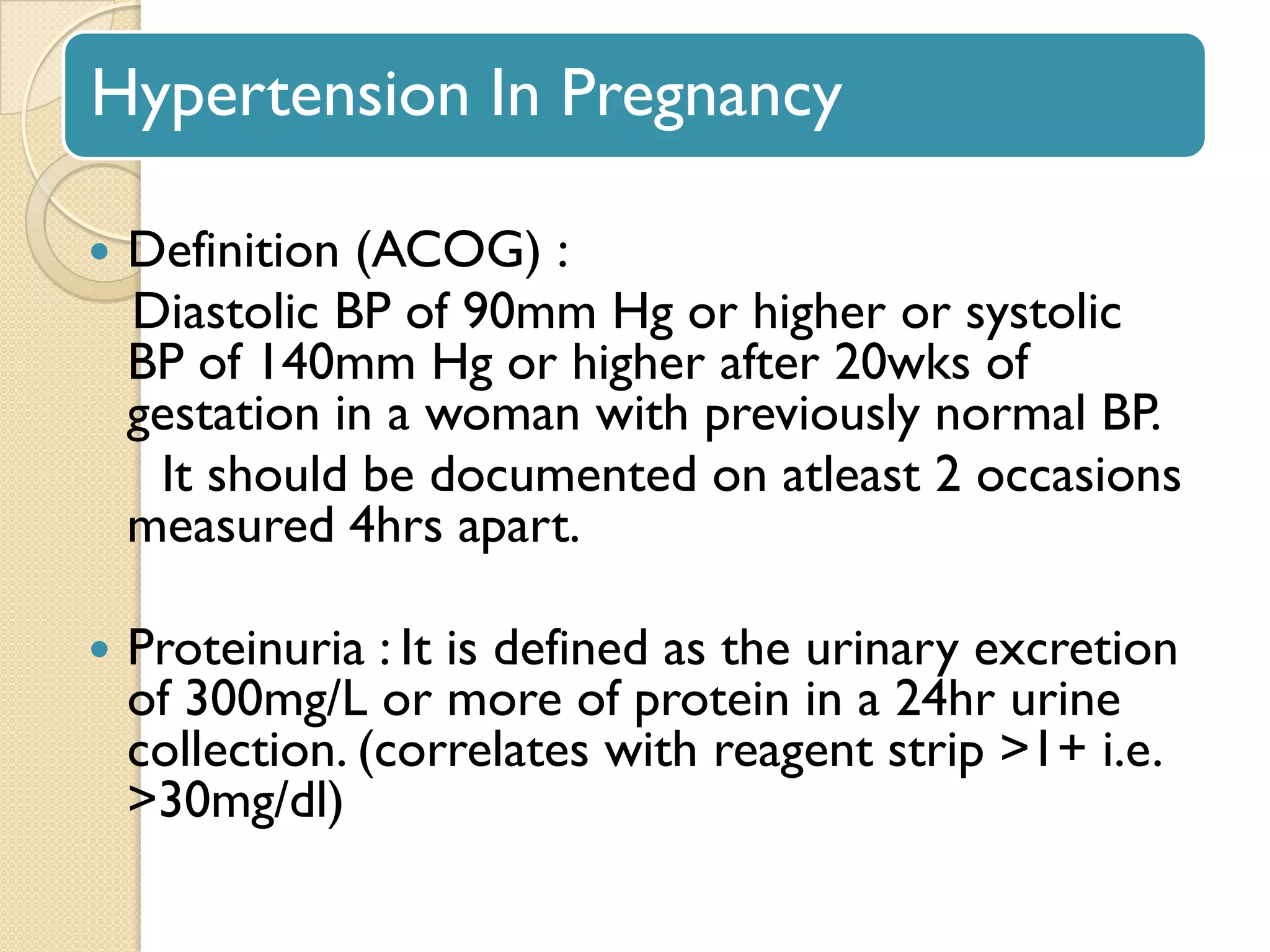
Hypertension In Pregnancy

   Definition (ACOG) :
    Diastolic BP of 90mm Hg or higher or systolic
    BP of 140mm Hg or higher after 20wks of
    gestation in a woman with previously normal BP.
     It should be documented on atleast 2 occasions
    measured 4hrs apart.

   Proteinuria : It is defined as the urinary excretion
    of 300mg/L or more of protein in a 24hr urine
    collection. (correlates with reagent strip >1+ i.e.
    >30mg/dl)
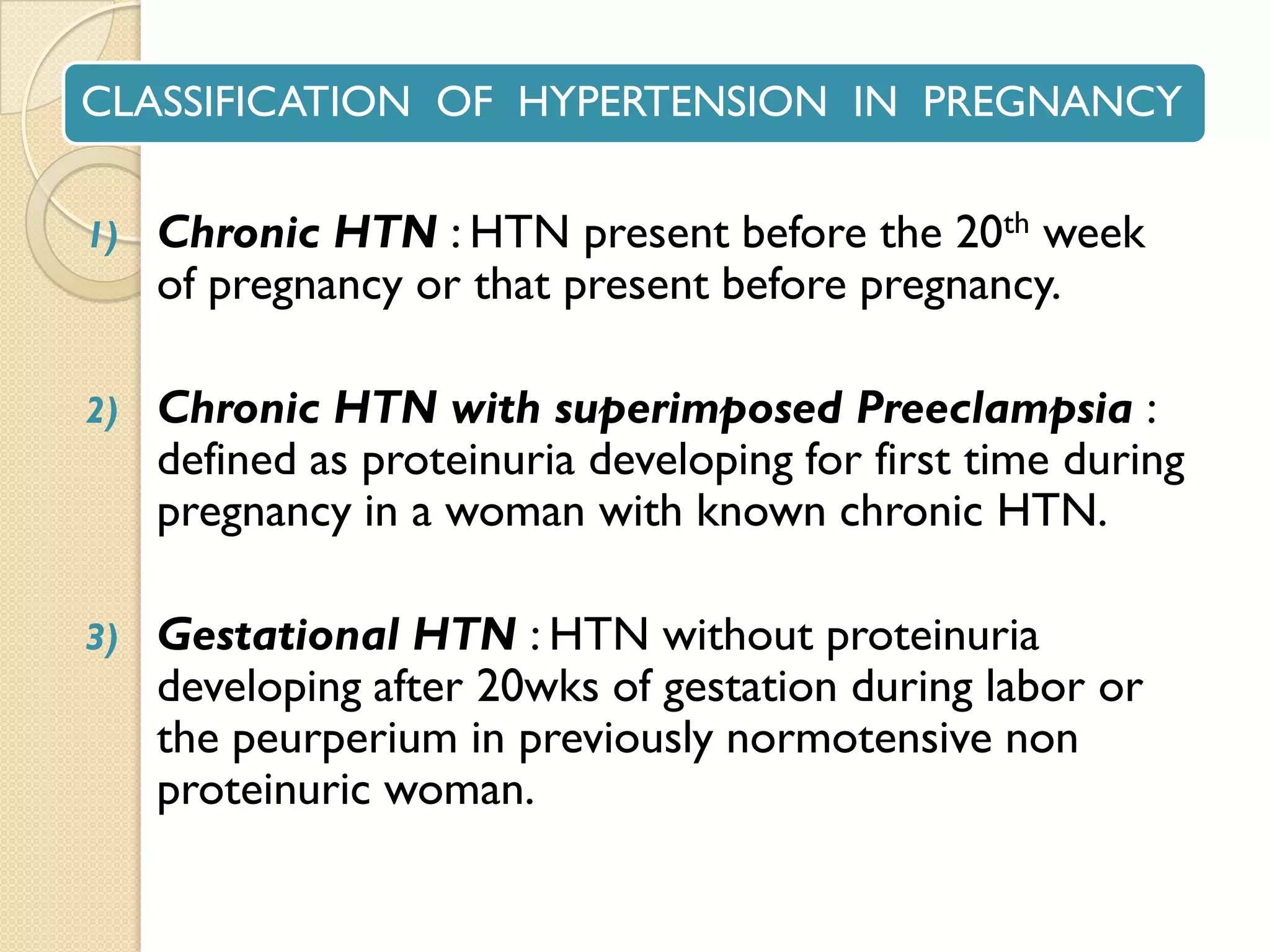
CLASSIFICATION OF HYPERTENSION IN PREGNANCY

1)   Chronic HTN : HTN present before the 20th week
     of pregnancy or that present before pregnancy.

2)   Chronic HTN with superimposed Preeclampsia :
     defined as proteinuria developing for first time during
     pregnancy in a woman with known chronic HTN.

3)   Gestational HTN : HTN without proteinuria
     developing after 20wks of gestation during labor or
     the peurperium in previously normotensive non
     proteinuric woman.
4) Preeclampsia : Gestational HTN asso with
   proteinuria .

5) Eclampsia : Convulsions occuring in a pt
   with preeclampsia.

* HELLP Syndrome : Severe form of
  preeclampsia char by hemolysis (abnormal
  PBS, bil > 1.2mg/dl), thrombocytopenia
  (platelets<1lakh/mm3) and elavated liver
  enzymes (AST>70, U/L, LDH>600 U/L)
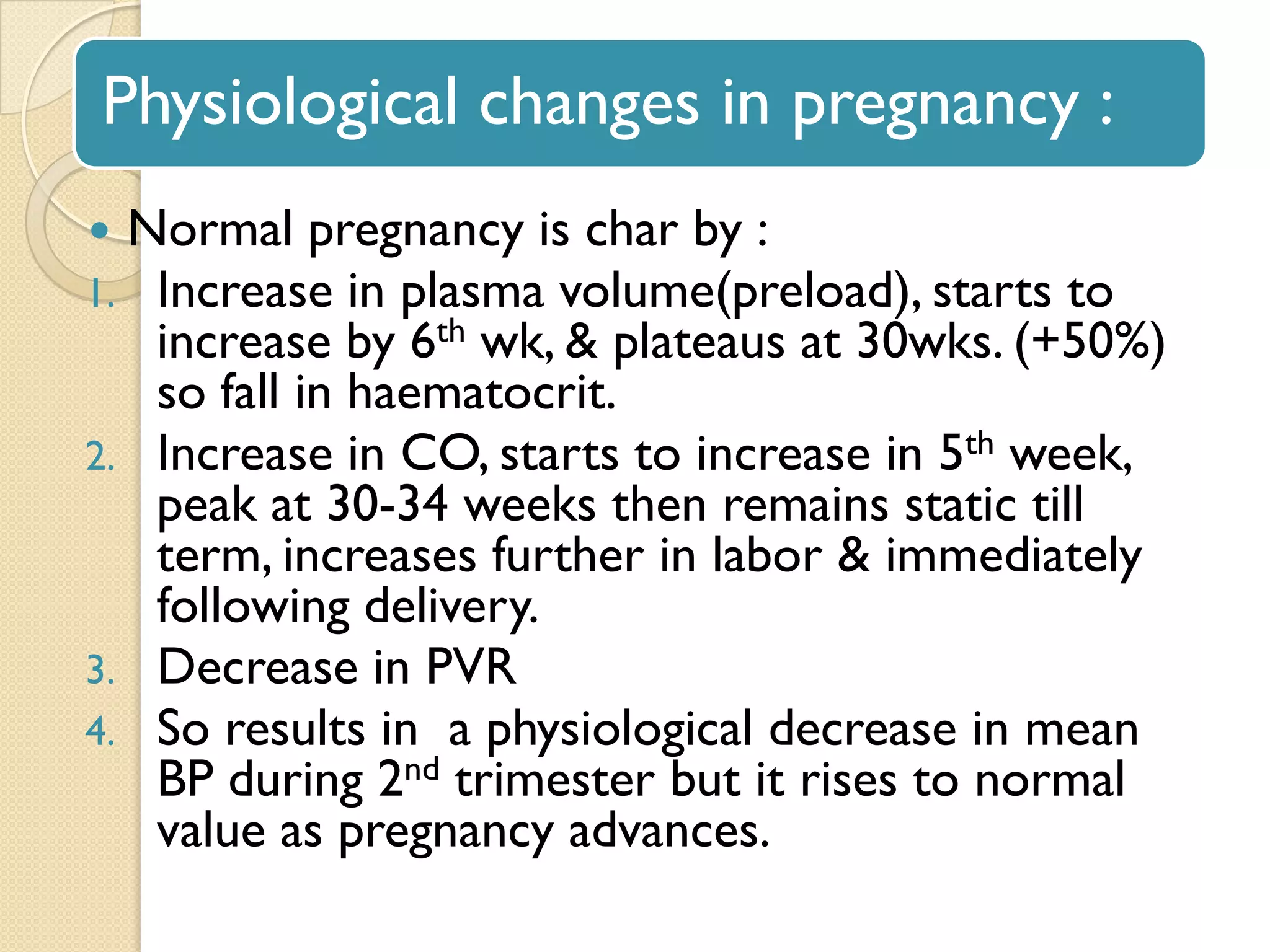
Physiological changes in pregnancy :
 Normal pregnancy is char by :
1. Increase in plasma volume(preload), starts  to
   increase by 6th wk, & plateaus at 30wks. (+50%)
   so fall in haematocrit.
2. Increase in CO, starts to increase in 5th week,
   peak at 30-34 weeks then remains static till
   term, increases further in labor & immediately
   following delivery.
3. Decrease in PVR
4. So results in a physiological decrease in mean
   BP during 2nd trimester but it rises to normal
   value as pregnancy advances.
Conti..
   Hypercoagulable state :

   Increase (50%) in fibrinogen to 300-600
   Fall in platelets (15%)
   Raised ESR 4 times of normal. (so no diagnostic
    value)
   Decreased fibrinolytic activity
   Increase in clotting factors 1 7 9 10 but others
    decreased so difference in CT.
   All these help to effectively control blood loss &
    achieve hemostasis after placental separation.
Chronic HTN & Pregnancy :
     Etiology :
    1. Most common : Essential HTN
    2. Secondary HTN :
    1. Renal : parenchymal or renovascular
    2. Endocrine : pheochromocytoma, prim
        aldosteronism, cushings syndrome.
    3. Neurogenic : increased ICT
    4. Vascular : Aortic coarctation
    3. Systolic HTN :
      Thyrotoxicosis, hyperkinetic circulation.
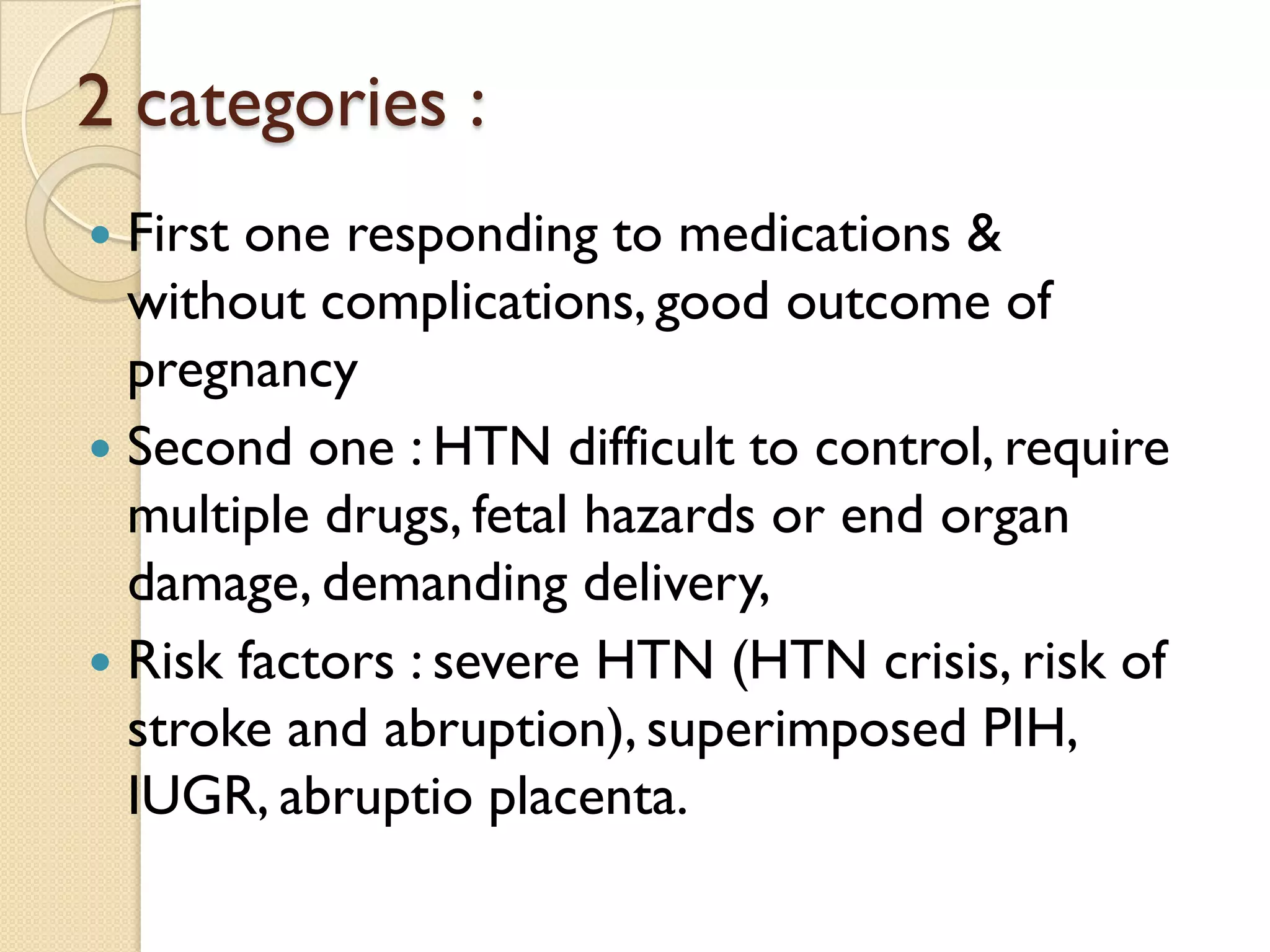
2 categories :
 First one responding to medications &
  without complications, good outcome of
  pregnancy
 Second one : HTN difficult to control, require
  multiple drugs, fetal hazards or end organ
  damage, demanding delivery,
 Risk factors : severe HTN (HTN crisis, risk of
  stroke and abruption), superimposed PIH,
  IUGR, abruptio placenta.
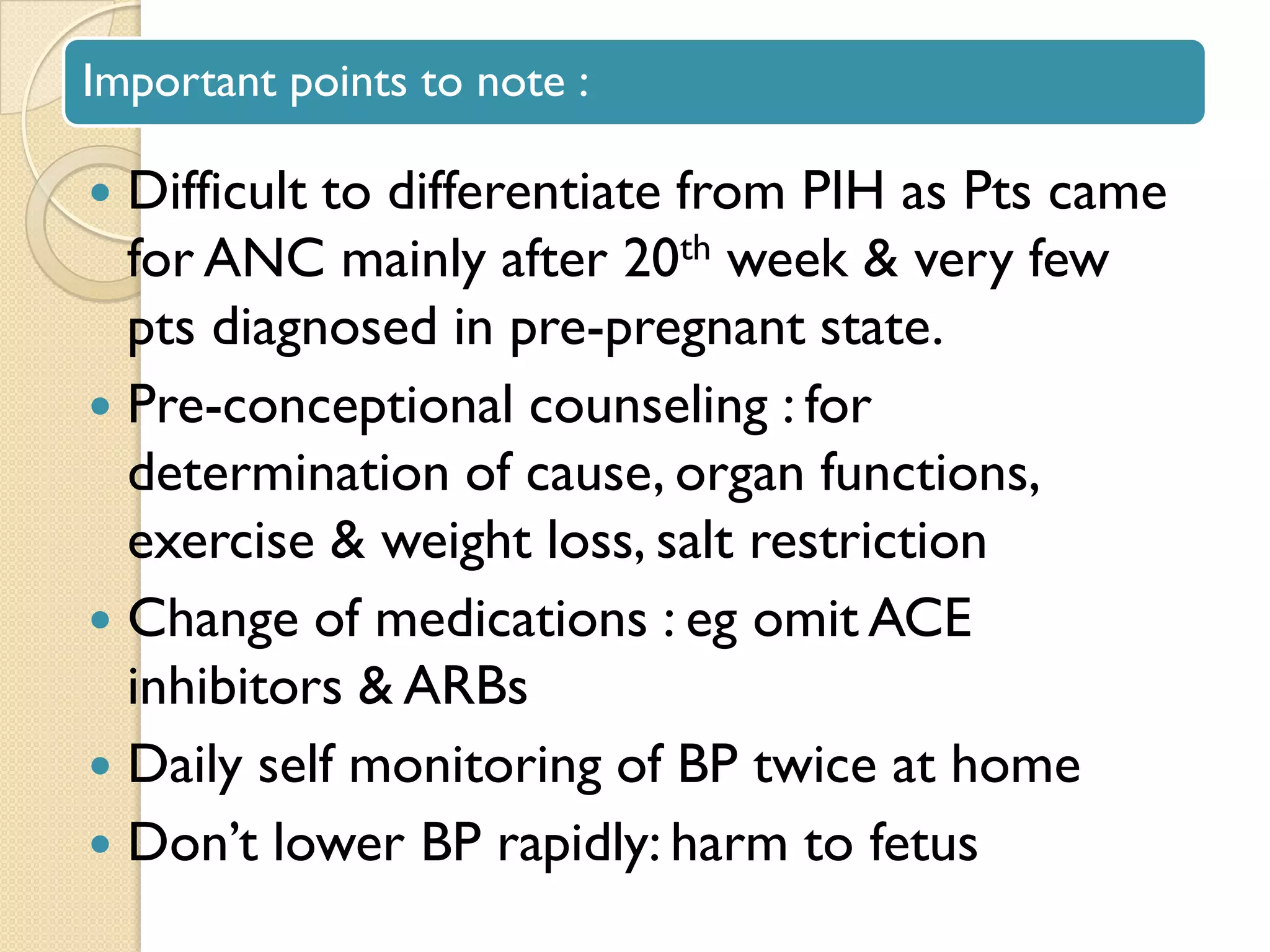
Important points to note :

 Difficult to differentiate from PIH as Pts came
  for ANC mainly after 20th week & very few
  pts diagnosed in pre-pregnant state.
 Pre-conceptional counseling : for
  determination of cause, organ functions,
  exercise & weight loss, salt restriction
 Change of medications : eg omit ACE
  inhibitors & ARBs
 Daily self monitoring of BP twice at home
 Don’t lower BP rapidly: harm to fetus
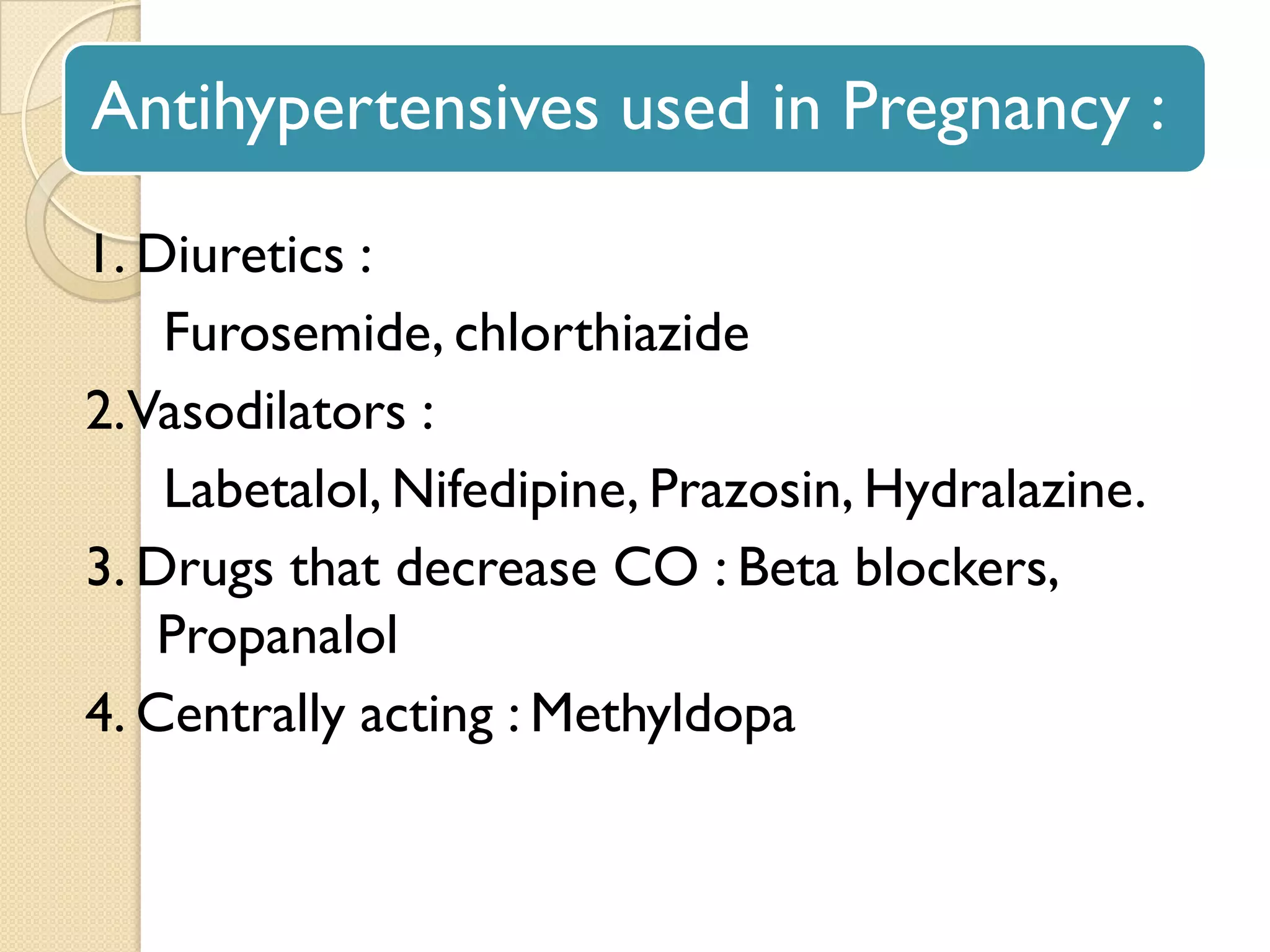
Antihypertensives used in Pregnancy :

1. Diuretics :
    Furosemide, chlorthiazide
2.Vasodilators :
    Labetalol, Nifedipine, Prazosin, Hydralazine.
3. Drugs that decrease CO : Beta blockers,
    Propanalol
4. Centrally acting : Methyldopa
 30% pts have chance to develop super-
  imposed preeclampsia.
 If this happens, PIH is very severe, occurs
  early in pregnancy, responds poorly to
  bed rest.
 How to differentiate aggrevated HTN
  from superimposed PIH ?
 Proteinuria, Urinary Ca excretion,
High risk factors indicating poor outcome

   Diastolic BP 85 or greater, MAP 95 or greater, in
    repeated observations 6hrs apart after 14weeks
    of GA.
   H/O severe HTN in previous pregnancies.
   h/o abruption
   h/o stillbirth or unexplained neonatal death.
   h/o IUGR
   AGE > 35yrs or chronic HTN of >15yrs duration
   Marked obesity
   Secondary HTN
Management
 Many pts will have mild disease &
  progress to term.
 ANC visits every 2 weekly until 32 wks &
  then every weekly.
 Variables to monitor : BP, uterine growth,
  preterm labor, DFMC, maternal weight
 Pts with other high risk factor develop
  complication resulting in preterm delivery.
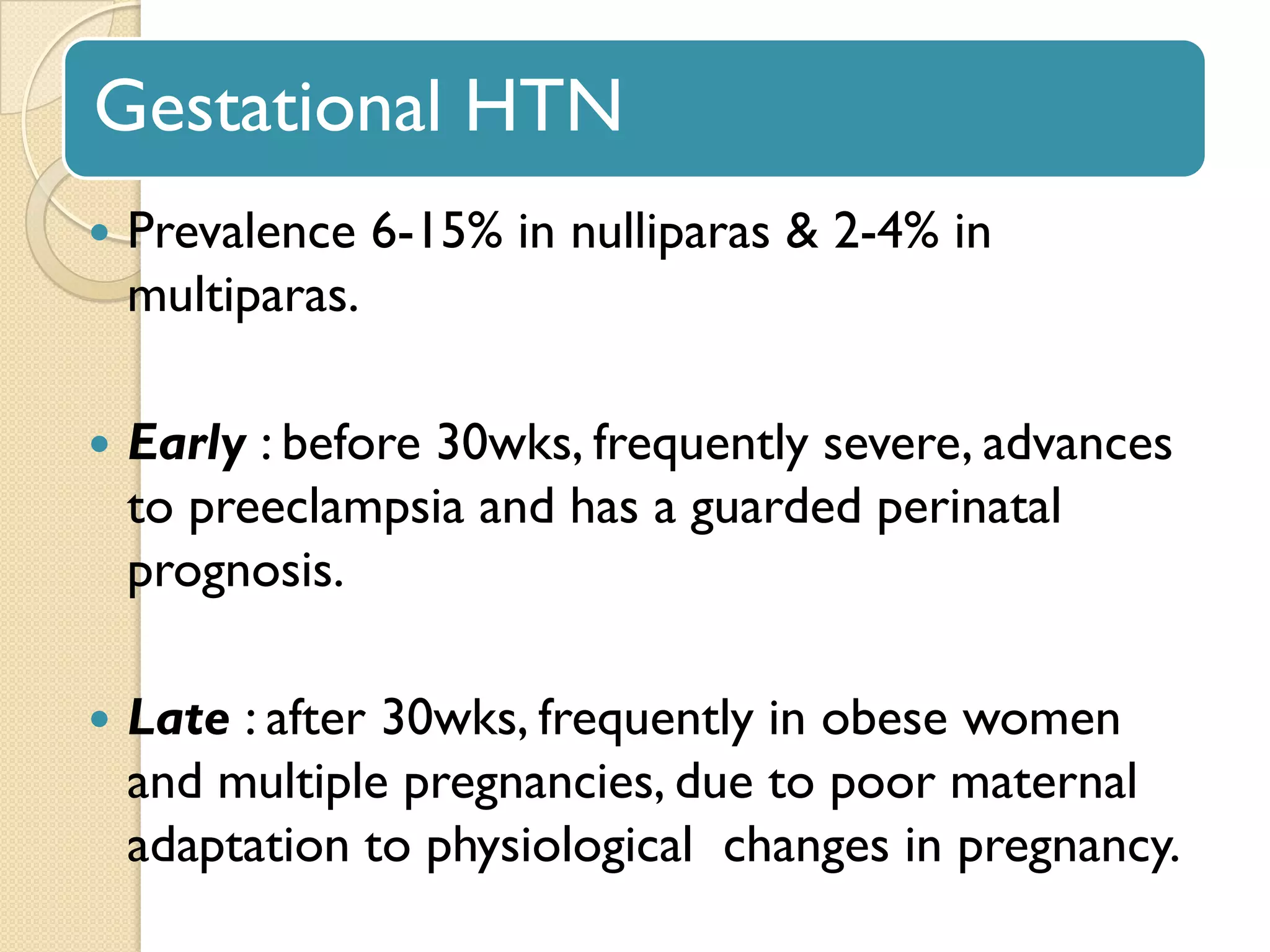
Gestational HTN
   Prevalence 6-15% in nulliparas & 2-4% in
    multiparas.

   Early : before 30wks, frequently severe, advances
    to preeclampsia and has a guarded perinatal
    prognosis.

   Late : after 30wks, frequently in obese women
    and multiple pregnancies, due to poor maternal
    adaptation to physiological changes in pregnancy.
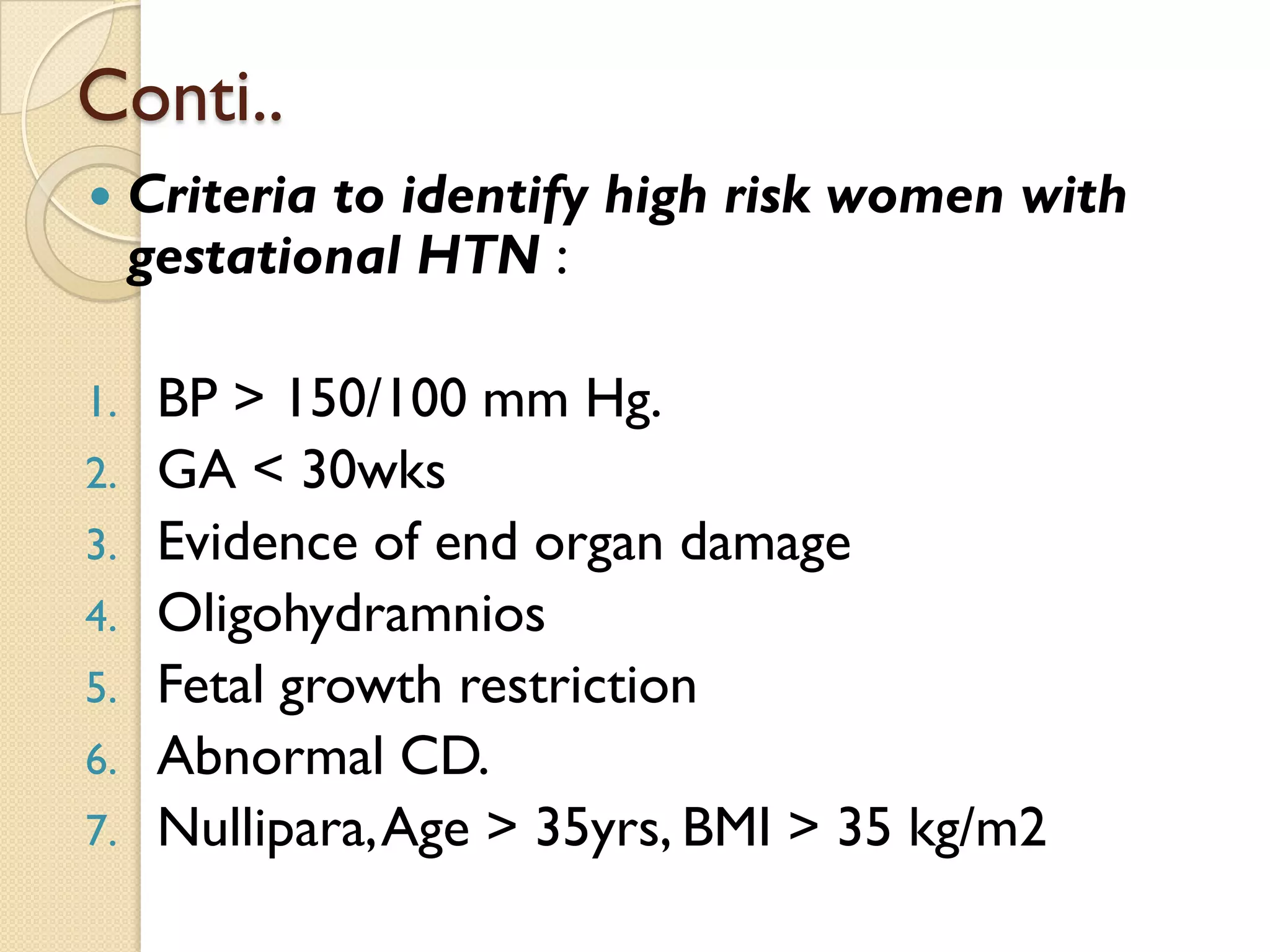
Conti..
    Criteria to identify high risk women with
     gestational HTN :

1.    BP > 150/100 mm Hg.
2.    GA < 30wks
3.    Evidence of end organ damage
4.    Oligohydramnios
5.    Fetal growth restriction
6.    Abnormal CD.
7.    Nullipara, Age > 35yrs, BMI > 35 kg/m2
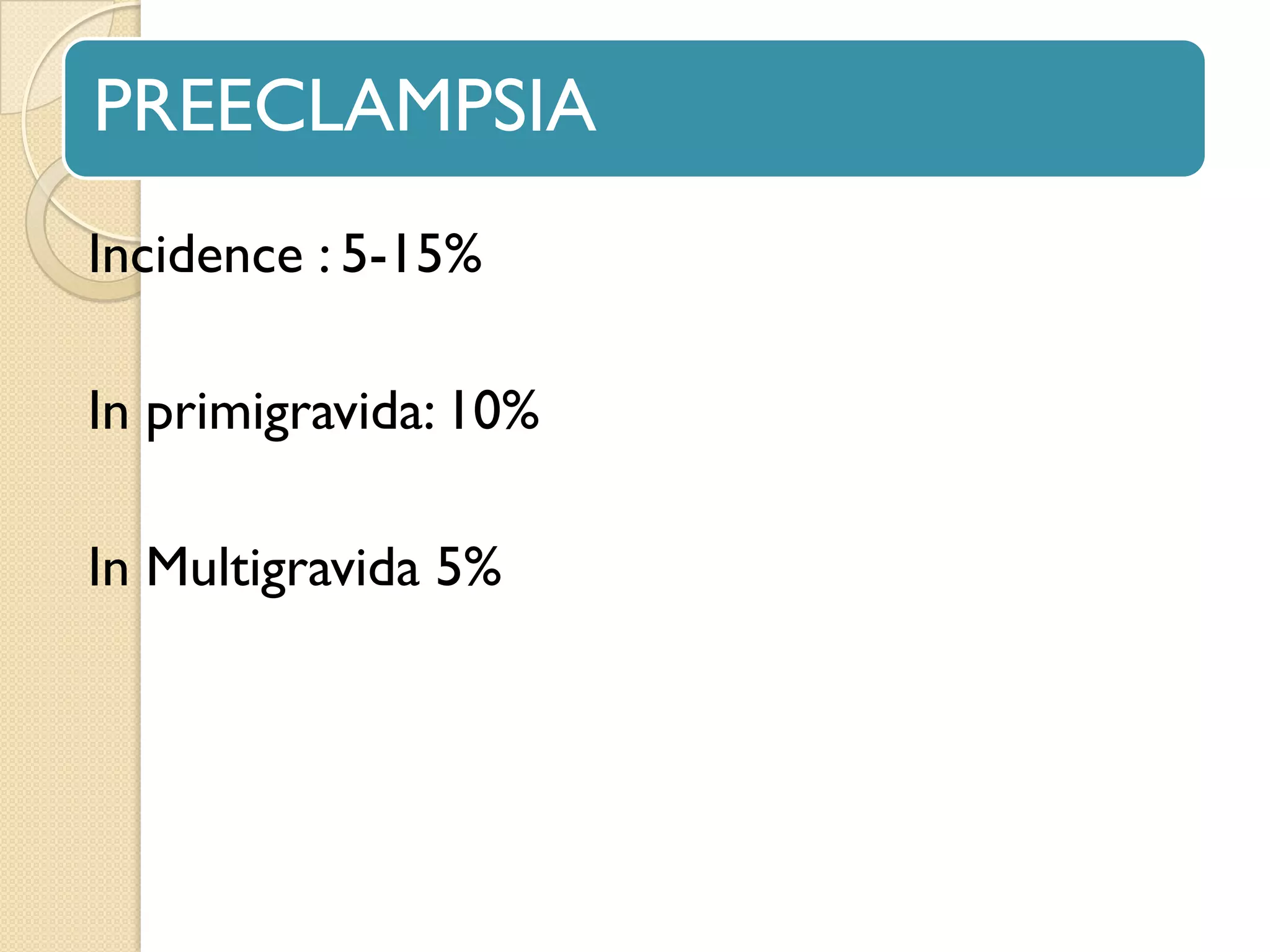
PREECLAMPSIA
Incidence : 5-15%

In primigravida: 10%

In Multigravida 5%
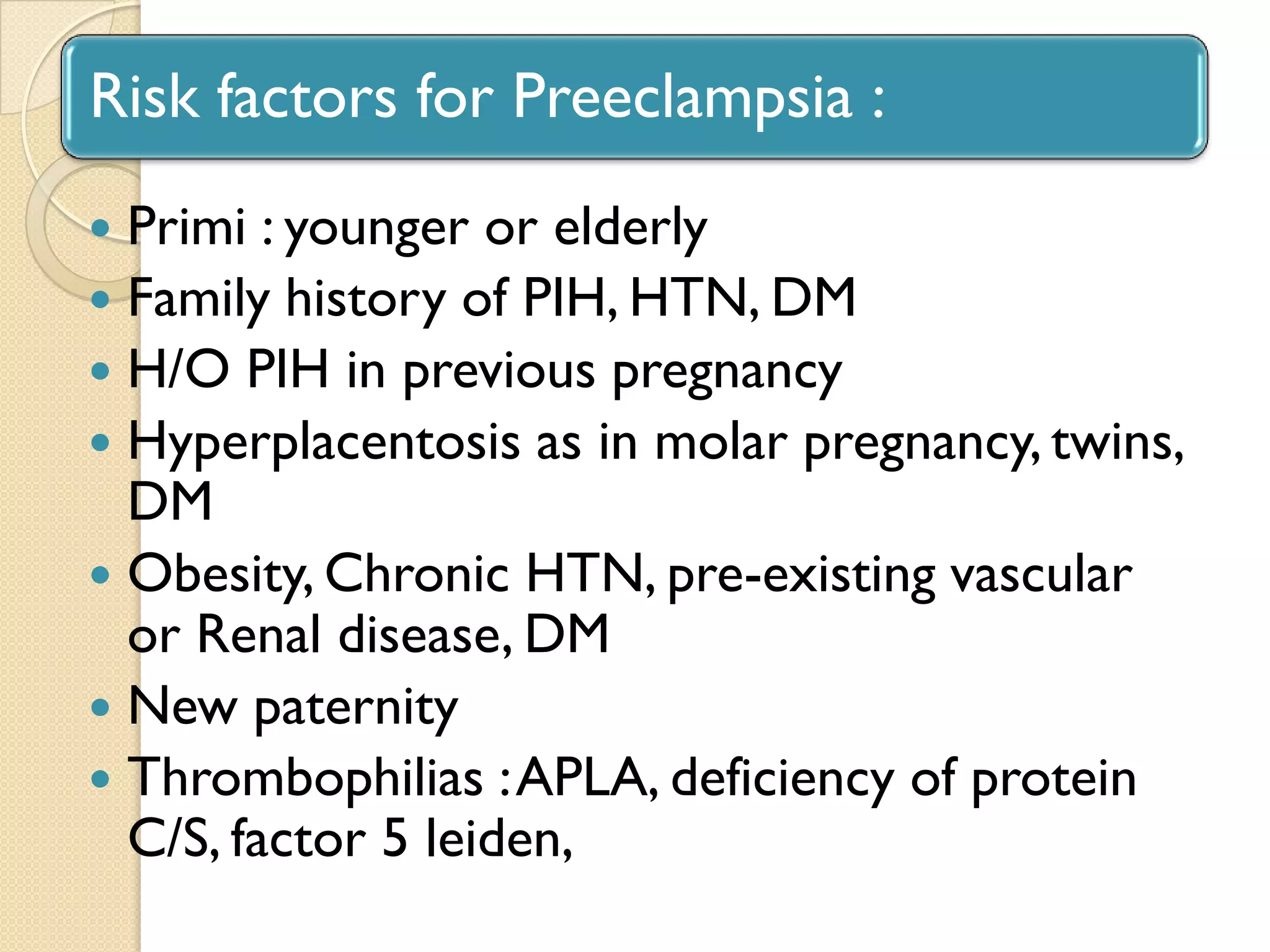
Risk factors for Preeclampsia :
 Primi : younger or elderly
 Family history of PIH, HTN, DM
 H/O PIH in previous pregnancy
 Hyperplacentosis as in molar pregnancy, twins,
  DM
 Obesity, Chronic HTN, pre-existing vascular
  or Renal disease, DM
 New paternity
 Thrombophilias : APLA, deficiency of protein
  C/S, factor 5 leiden,
ETIOLOGY & PATHOGENESIS
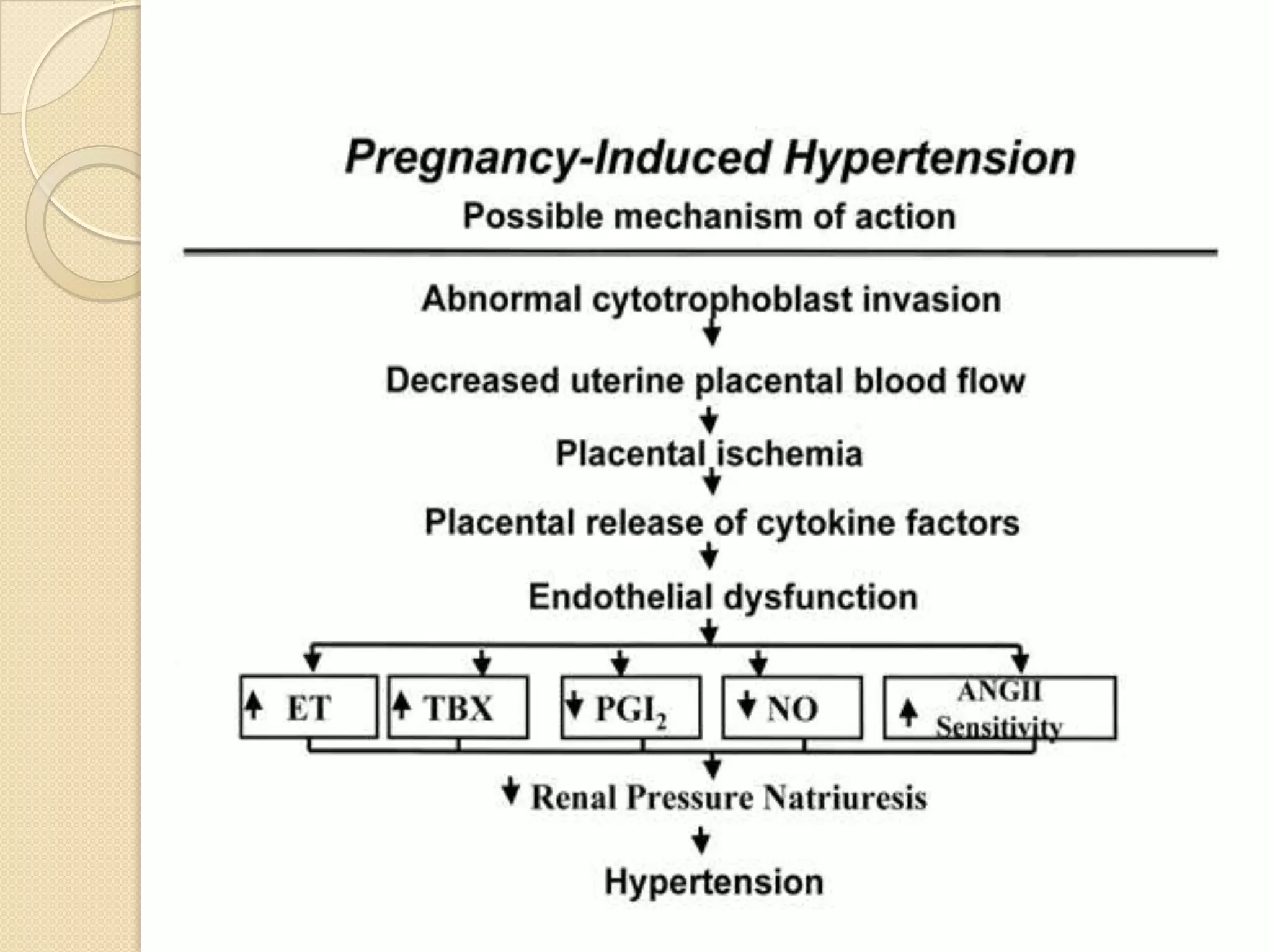
 Basic etiology is abnormal placentation : failure
  of trophoblast invasion
 Failure of second wave of endovascular
  trophoblast migration resulting in reduction of
  blood supply to fetoplacental unit.
 2 main things we should remember :
   Endothelial Dysfunction due to oxidative
  stress and inflammatory mediators, Vasospasm
  due to imbalance b/w vasodilators(PGI2, NO) &
  vasoconstrictors (TxA2, angiotensin 2,
  endothelin).
Conti..
 All of above result in :
 Increased vasoconstriction
 Decreased organ perfusion : utero-placental –
  IUGR, Kidneys- glomerular
  endotheliosis,oliguria, liver ischaemia, HELLP,
  CNS seizures.
 Increased endothelial dysfunction – capillary
  leak, oedema, Pulmonary oedema, proteinuria.
 Activation of coagulation: DIC, low platelets
 Haemoconcentration
Diagnosis

 BP > 140/90 mmHg
  (NICE gudelines mild 140/90 to 149/99,
  Moderate150/100 to 159/109 & severe
  160/110)
 Proteinuria :
  24hr urinary protein >300mg, (>5gm severe
  PIH)
  dipstick method > 1+ (30mg/dl)
 Urinary Protein/creatinine ratio > 30mg/mmol
Other :
 Pathological oedema
 Excessive weight gain : is > 0.5kg in one
  week or >2kg in one month in later
  months of pregnancy.
 Clinical e/o vasoconstriction by
  fundoscopy
s/o Impending Eclampsia :
 Headache
 Epigastric or rt upper quadrant pain :
  particularly in HELLP S due to liver
  dysfunction.
 Visual symptoms : scotomas progressing
  to blurred vision, even blindness.
  (abnormality lies in occipital cortex, not in
  retina.) recovers faster post natally.
 Brisk DTRs : CNS irritabilty.
   “Neverneglect these alarming
    signs….and u will save a life or
    two…”
Laboratory findings :

 Haemoconcentration leads to false Hb.
 Thrombocytopenia
 RFTs: Serum Uric Acid >4.5mg/dl, BUL,
  serum creatinine- derrange only in severe
  cases.
 LFTs : raised liver enzymes in severe cases
 Incresed fibrinogen, it is decreased in
  abruption.
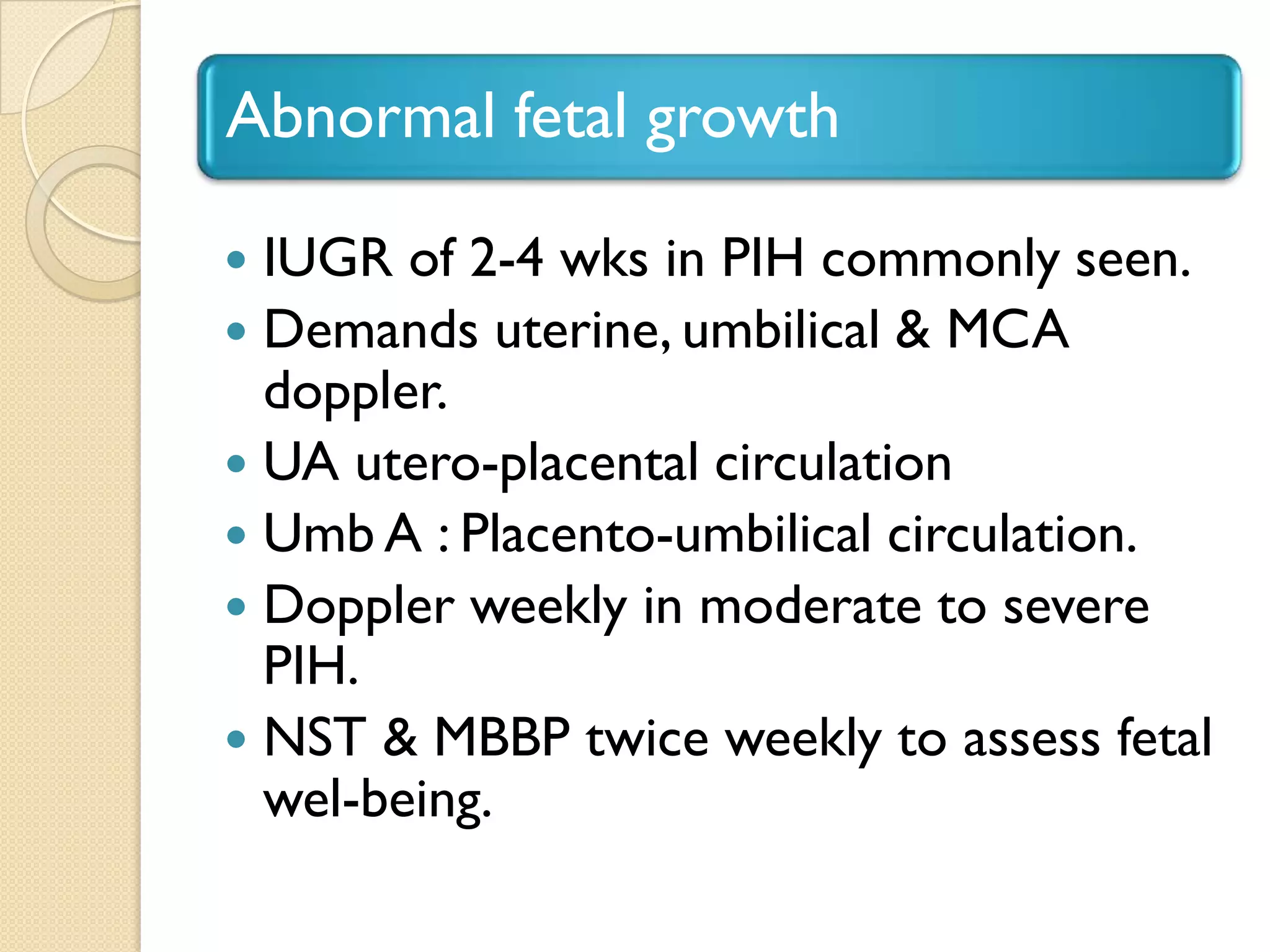
Abnormal fetal growth

 IUGR of 2-4 wks in PIH commonly seen.
 Demands uterine, umbilical & MCA
  doppler.
 UA utero-placental circulation
 Umb A : Placento-umbilical circulation.
 Doppler weekly in moderate to severe
  PIH.
 NST & MBBP twice weekly to assess fetal
  wel-being.
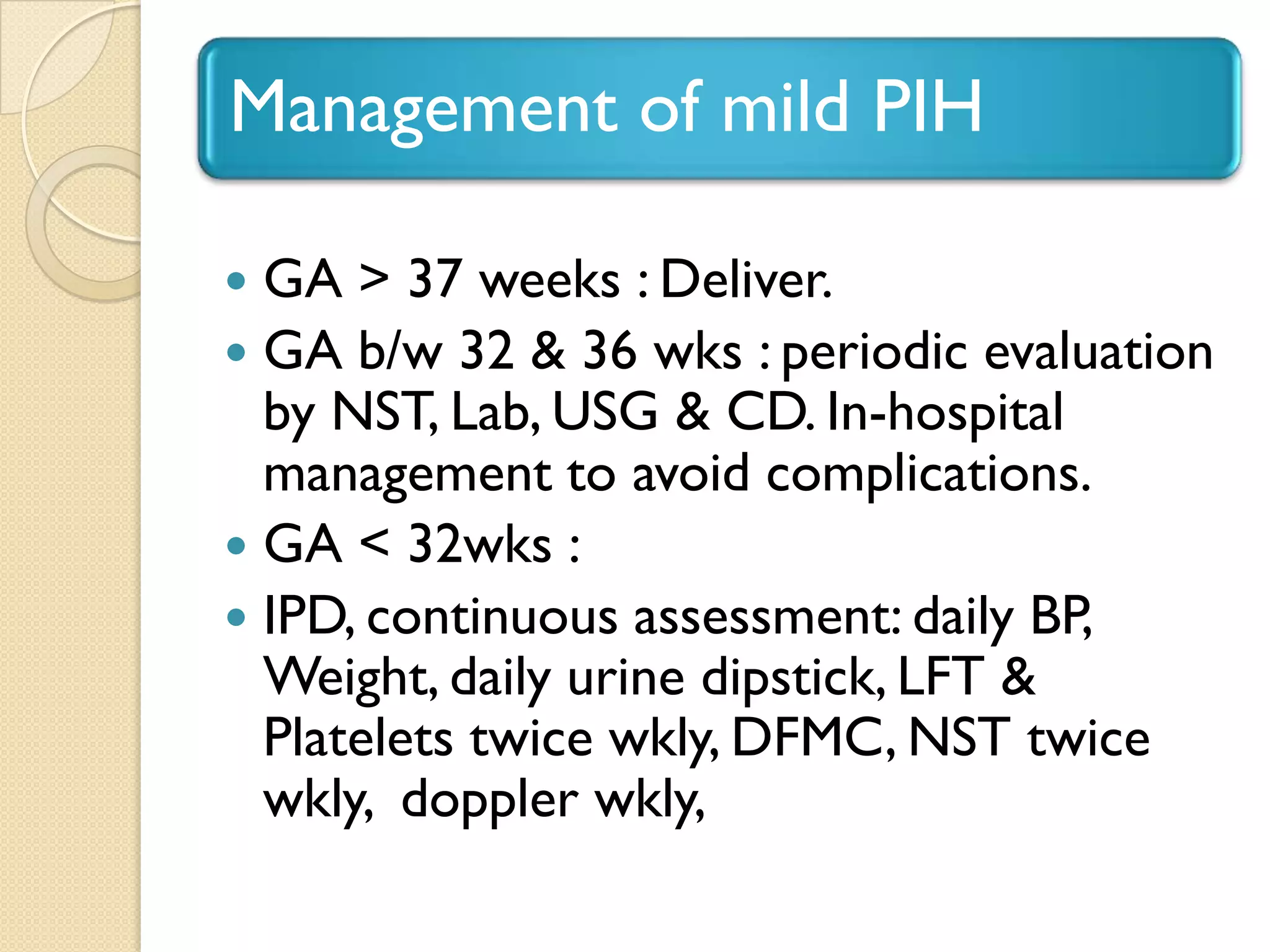
Management of mild PIH

 GA > 37 weeks : Deliver.
 GA b/w 32 & 36 wks : periodic evaluation
  by NST, Lab, USG & CD. In-hospital
  management to avoid complications.
 GA < 32wks :
 IPD, continuous assessment: daily BP,
  Weight, daily urine dipstick, LFT &
  Platelets twice wkly, DFMC, NST twice
  wkly, doppler wkly,
Conti..
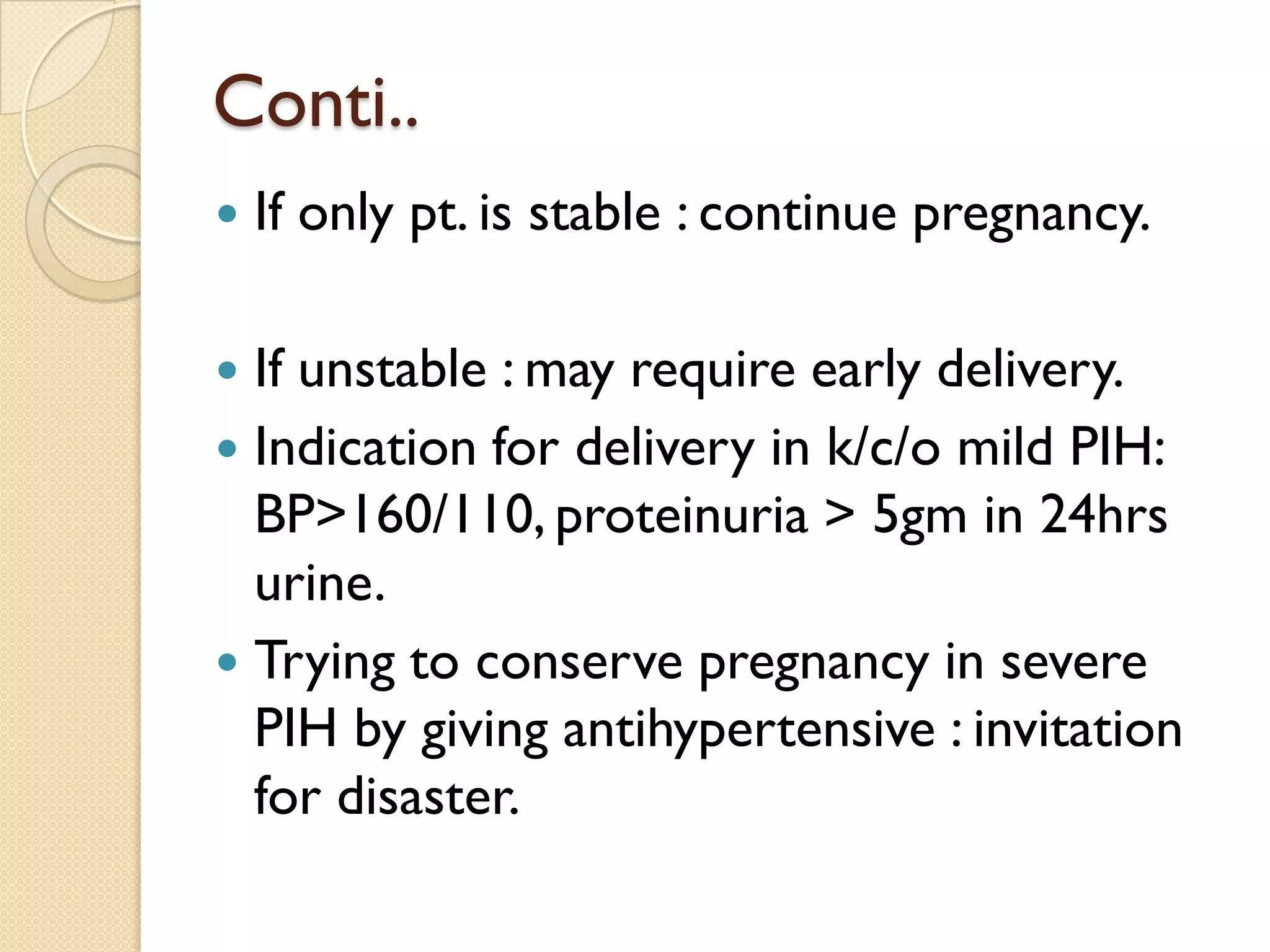
   If only pt. is stable : continue pregnancy.

 If unstable : may require early delivery.
 Indication for delivery in k/c/o mild PIH:
  BP>160/110, proteinuria > 5gm in 24hrs
  urine.
 Trying to conserve pregnancy in severe
  PIH by giving antihypertensive : invitation
  for disaster.
Anti hypertensive
 Drug of choice: Labetalol orally in dose of
  100-400 mg every 8-12hrly.
 Others :
 Methyl dopa 250mg-500mg 6-8 hrly.
 Nifedipine 10-20mg bd - tds.
 Hydralazine : 10-25mg 12hrly.
 Iv or oral furosemide, oral thiazide: only
  after delivery.
 If s/o severity devlop : MgSO4.
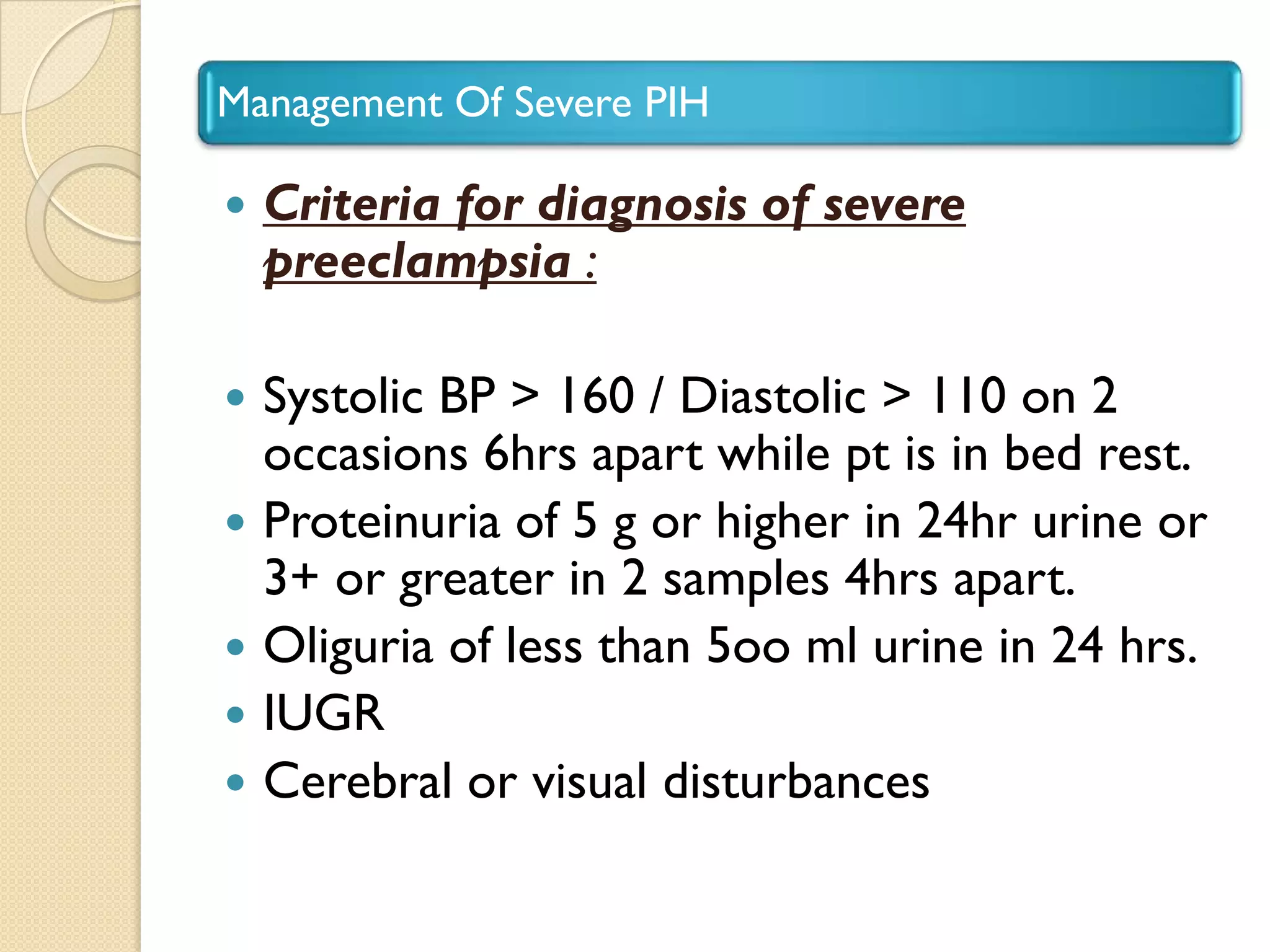
Management Of Severe PIH

   Criteria for diagnosis of severe
    preeclampsia :

   Systolic BP > 160 / Diastolic > 110 on 2
    occasions 6hrs apart while pt is in bed rest.
   Proteinuria of 5 g or higher in 24hr urine or
    3+ or greater in 2 samples 4hrs apart.
   Oliguria of less than 5oo ml urine in 24 hrs.
   IUGR
   Cerebral or visual disturbances
Conti..
 Pulmonary oedema or cyanosis
 Epigastric or right uppaer quadrant pain
 Impaired liver function
 Thrombocytopenia
 Very imp : s/o impending eccampsia
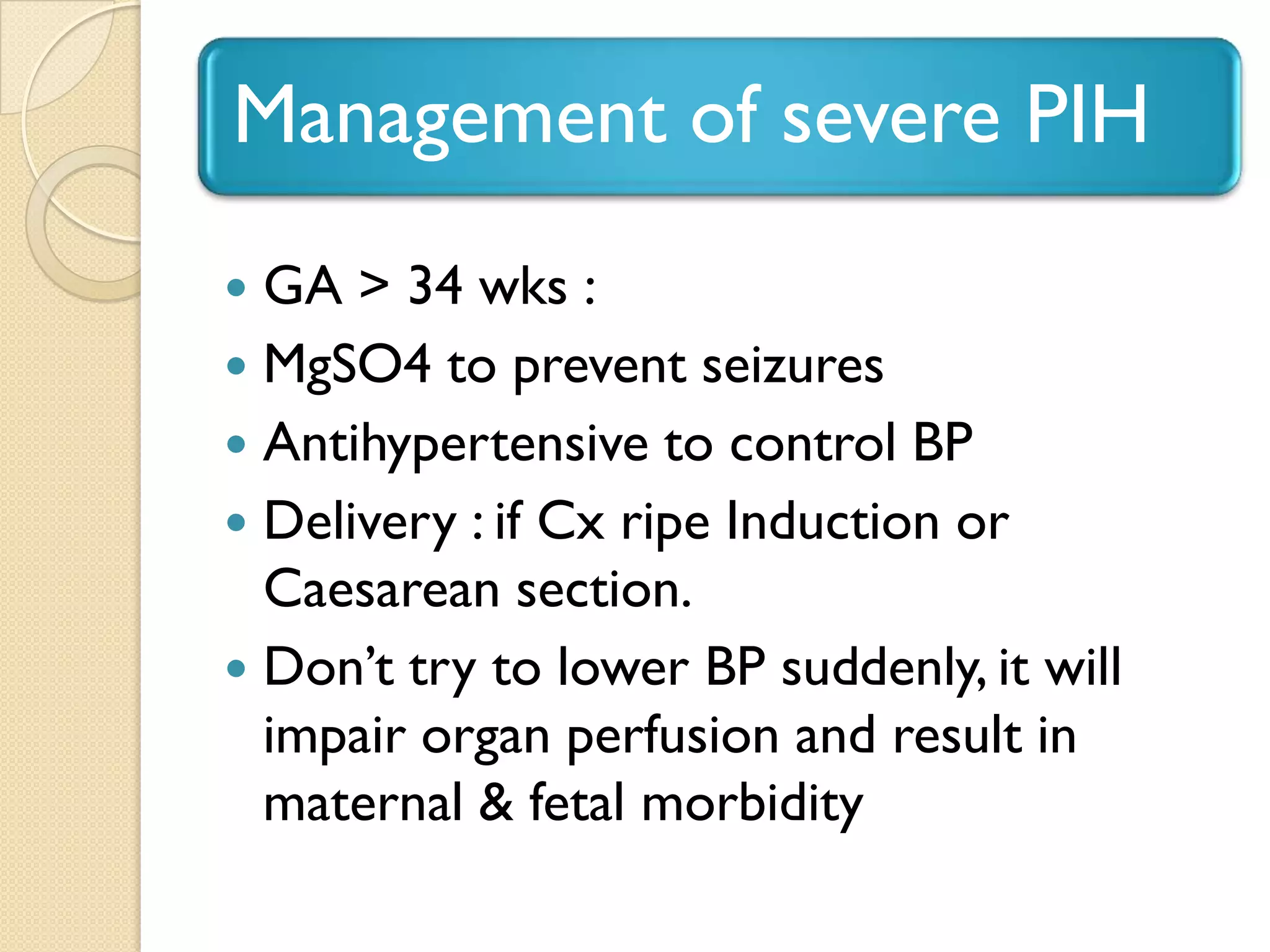
Management of severe PIH
 GA > 34 wks :
 MgSO4 to prevent seizures
 Antihypertensive to control BP
 Delivery : if Cx ripe Induction or
  Caesarean section.
 Don’t try to lower BP suddenly, it will
  impair organ perfusion and result in
  maternal & fetal morbidity
Hypertnsive crisis BP> 160/110

 Labetalol 10-20mg iv every 10min, max
  upto 300mg iv, maintenance dose 40mg/hr
 Hydralazine : 5mg iv every 30min, max
  30mg iv, maint dose 10mg/hr
 Nifedipine : 10-20mg oral, max up to
  240mg in 24hrs, for maint 4-6 hrly
 Nitroglycerine : 5microgm/min iv or
 Sod nitroprusside 0.25-5 microgm/kg/min
  iv short term therapy only when other
  drugs failed.
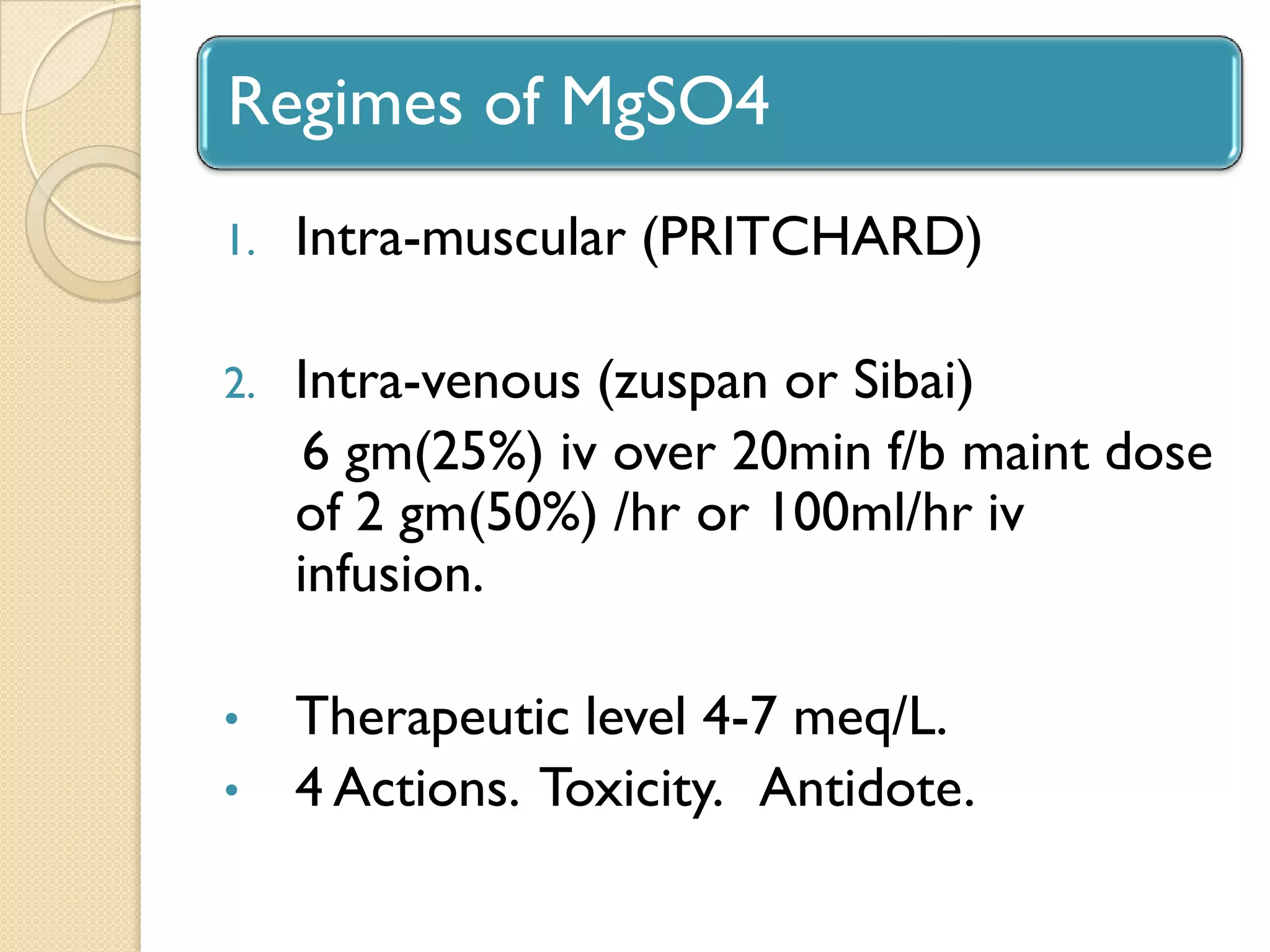
Regimes of MgSO4
1.   Intra-muscular (PRITCHARD)

2.   Intra-venous (zuspan or Sibai)
      6 gm(25%) iv over 20min f/b maint dose
     of 2 gm(50%) /hr or 100ml/hr iv
     infusion.

•    Therapeutic level 4-7 meq/L.
•    4 Actions. Toxicity. Antidote.
Severe PIH :
 GA 28-33 wks :
 Postpone delivery for 24-48hrs for action
  of steroids.
 GA 24-28 wks : Indivisualised for pt acc
  to severity.
   Guidelines for expectant management :

Bed rest
Daily weight
Daily input & output
Antihypertensive t/t
Steroids
Lab on alternate days
Daily NST
DFMC
CD twice a week
AFI twice a week
USG to see for fetal growth every 2 weeks
GA < 24 weeks:

 Severe maternal morbidity if pregnancy
  conserved
 Perinatal mortality, IUDs.
 Only t/t is Delivery.
Ecampsia

   It is the extremely severe form of PIH char by
    sudden onset of generalized tonic clonic
    convulsions.
   Higher frequency in developing countries.
   Occurs antepartum in 35-45%, intrapartum in 15-
    20%,
    postpartum in 35-45%.
   Preceded by impending signs & aura.
   In 15 % of patients, HTN & protenuria are absent.
   Preventable in 70% cases.
   No any long term neurological deficit.
Pathophysiology :
   In mild HTN or normotension : abnormal
    autoregulatory response consisting of severe
    arterial vasospasm with rupture of
    endothelium & pericapillary haemorhages
    with development of abnormal electric foci
    causing convulsion.

   In severe HTN, limit of autoregulation
    exceeded, vasodialatation occurs with
    hyperperfusion causing endothelial capillary
    damage and interstitial vasogenic edema.
Management of Eclampsia
   Place pt in lateral decubitus.
   Mouth gag
   Suction oral secretions
   O2 by mask
   Elevate bedside rails to avoid injury
   Switch off lights, keep quite environment
    surrounding pt.
   Pulse oxymeter, foley’s catheter, iv access
   MgSO4
   Start IV fluids at low rate 100ml/hr.
   Antihypertensive : 1st drug of choice in severe
    HTN is iv Labetalol.
   Deliver the pt.
Conti..
   Continue MgSO4 till 24hrs postpartum to avoid
    convusion.
   Nimodepine 60 mg oral 4hrly: drug of choice in
    mild elevated BP with impending signs/ eclampsia.
   Phenytoin :
    loading dose 10-15 mg/kg slow iv f/b maint dose
    100mg iv every 6-8hrly.
    For prophylaxis 100mg iv/im 4hrly.
   Oral phenytoin should be continued in postpartum
    period.
   Postpartum i.v. Furosemide should be given
    aggresively for early recovery.
Fetal Response To Maternal Seizures

 In majority of cases: transient fetal distress
  during seizure, normalizes as seizure is over.
 Occasionaly the tetanic uterine contraction
  is severe enough to cause abruption & IUD.
 Thus if fetal distress continues for more than
  5 min after end of seizure & despite giving
  O2, abruption should be suspected & LSCS
  should be done. In these case both maternal
  & fetal prognosis is poor.
Increase in LSCS for eclampsia in
modern OBs :
 Due to
 Unripe Cx, poor progress in labor
 IUGR, preterm baby
 Inadequate control of BP
 Mainly to avoid adverse maternal & fetal
  effects of pregnancy continuation.
Postparum care :
 MgSO4 for atleast 24hrs after delivery
 Aggressive diuresis & maintained several
  days
 Antihypertensive until BP normalizes.


   Approximately 35% pts will have PIH in
    subsequent pregnancy.
HELLP SYNDROME
   Criteria for diagnosis :

1) Haemolysis (microangiopathic H.A.)
    Burr cells, schistocytes on PBS
    bilirubin > 1.2mg/dl
    absent plasma haptoglobin
2) Elevated liver enzymes
   AST > 72 IU/L
    LDH > 600 IU/L
3)Low platelets
   < 1 lakh/mm3
Conti..
Maternal morbidity :
     Abruption
     DIC
     Pulmonary oedema
     ARF
     ARDS
     Hepatic rupture leading to DIC & death
     Death in 1%
Management
 Immediate delivery is indicated once
  diagnosis of HELLP established.
 Vaginal or LSCS
 Platelets if count < 50000 or if s/o altered
  hemostasis.
 Plasmapheresis is lifesaving if
  deterioration in course of disease.
 Better to err by delivering preterm fetus
  than to conserve for further harm.
Other severe complications of PIH
 Pulmonary oedema (d/t fluid overload,
  oligouria & LVF)
 ARF
 Abruption
 Intra-cranial bleeding
 Visual disorders.
 Recurrence in next pregn 30%
 High risk of chronic HTN.
Post natal care
   Daily BP monitoring till pt is indoor.
   Once discharged, BP on alt days till normal
    value settles in.
   Continue antihypertensive till normalization
    of BP postpartum.
   Repeat lab after 48hrs.
   If abnormal monitor weekly.
   Do reagent strip for proteinuria at 6wks
    follow up. If abn, repeat at 3months.
   Counselling of pt about recurrence of PIH
    and risk of chronic HTN.
Prevention
 Research going on without effective
  solution
 Low dose aspirin
 Ca supplementation: cheap & effective
 ? Anti-oxidants, ? Fish oil supplementation
 No role of salt restricted diet in PIH
 Predictive tests.
   “Let us understand PIH better for
    managing patients more efficiently.”


 “THANK        YOU…”

Pregnancy Induced Hypertension

  • 1.
    Pregnancy Induced Hypertension Dr. Ayshwarya Revadkar OBGY UNIT 3,YCMH
  • 2.
    INTRODUCTION  Multisystem disorder with varied and still unknown etiology with unpredictable outcome, with increase in maternal & fetal morbidity and mortality.
  • 3.
    Intro conti…  Also known as “Toxaemia of pregnancy”  Major cause of maternal mortality in India.  Asso with poor outcome of pregnancy if uncared for.  It affects 7 – 15 % of all pregnancies.
  • 4.
    Hypertension In Pregnancy  Definition (ACOG) : Diastolic BP of 90mm Hg or higher or systolic BP of 140mm Hg or higher after 20wks of gestation in a woman with previously normal BP. It should be documented on atleast 2 occasions measured 4hrs apart.  Proteinuria : It is defined as the urinary excretion of 300mg/L or more of protein in a 24hr urine collection. (correlates with reagent strip >1+ i.e. >30mg/dl)
  • 5.
    CLASSIFICATION OF HYPERTENSIONIN PREGNANCY 1) Chronic HTN : HTN present before the 20th week of pregnancy or that present before pregnancy. 2) Chronic HTN with superimposed Preeclampsia : defined as proteinuria developing for first time during pregnancy in a woman with known chronic HTN. 3) Gestational HTN : HTN without proteinuria developing after 20wks of gestation during labor or the peurperium in previously normotensive non proteinuric woman.
  • 6.
    4) Preeclampsia :Gestational HTN asso with proteinuria . 5) Eclampsia : Convulsions occuring in a pt with preeclampsia. * HELLP Syndrome : Severe form of preeclampsia char by hemolysis (abnormal PBS, bil > 1.2mg/dl), thrombocytopenia (platelets<1lakh/mm3) and elavated liver enzymes (AST>70, U/L, LDH>600 U/L)
  • 7.
    Physiological changes inpregnancy :  Normal pregnancy is char by : 1. Increase in plasma volume(preload), starts to increase by 6th wk, & plateaus at 30wks. (+50%) so fall in haematocrit. 2. Increase in CO, starts to increase in 5th week, peak at 30-34 weeks then remains static till term, increases further in labor & immediately following delivery. 3. Decrease in PVR 4. So results in a physiological decrease in mean BP during 2nd trimester but it rises to normal value as pregnancy advances.
  • 8.
    Conti..  Hypercoagulable state :  Increase (50%) in fibrinogen to 300-600  Fall in platelets (15%)  Raised ESR 4 times of normal. (so no diagnostic value)  Decreased fibrinolytic activity  Increase in clotting factors 1 7 9 10 but others decreased so difference in CT.  All these help to effectively control blood loss & achieve hemostasis after placental separation.
  • 9.
    Chronic HTN &Pregnancy :  Etiology : 1. Most common : Essential HTN 2. Secondary HTN : 1. Renal : parenchymal or renovascular 2. Endocrine : pheochromocytoma, prim aldosteronism, cushings syndrome. 3. Neurogenic : increased ICT 4. Vascular : Aortic coarctation 3. Systolic HTN : Thyrotoxicosis, hyperkinetic circulation.
  • 10.
    2 categories : First one responding to medications & without complications, good outcome of pregnancy  Second one : HTN difficult to control, require multiple drugs, fetal hazards or end organ damage, demanding delivery,  Risk factors : severe HTN (HTN crisis, risk of stroke and abruption), superimposed PIH, IUGR, abruptio placenta.
  • 11.
    Important points tonote :  Difficult to differentiate from PIH as Pts came for ANC mainly after 20th week & very few pts diagnosed in pre-pregnant state.  Pre-conceptional counseling : for determination of cause, organ functions, exercise & weight loss, salt restriction  Change of medications : eg omit ACE inhibitors & ARBs  Daily self monitoring of BP twice at home  Don’t lower BP rapidly: harm to fetus
  • 12.
    Antihypertensives used inPregnancy : 1. Diuretics : Furosemide, chlorthiazide 2.Vasodilators : Labetalol, Nifedipine, Prazosin, Hydralazine. 3. Drugs that decrease CO : Beta blockers, Propanalol 4. Centrally acting : Methyldopa
  • 13.
     30% ptshave chance to develop super- imposed preeclampsia.  If this happens, PIH is very severe, occurs early in pregnancy, responds poorly to bed rest.  How to differentiate aggrevated HTN from superimposed PIH ?  Proteinuria, Urinary Ca excretion,
  • 14.
    High risk factorsindicating poor outcome  Diastolic BP 85 or greater, MAP 95 or greater, in repeated observations 6hrs apart after 14weeks of GA.  H/O severe HTN in previous pregnancies.  h/o abruption  h/o stillbirth or unexplained neonatal death.  h/o IUGR  AGE > 35yrs or chronic HTN of >15yrs duration  Marked obesity  Secondary HTN
  • 15.
    Management  Many ptswill have mild disease & progress to term.  ANC visits every 2 weekly until 32 wks & then every weekly.  Variables to monitor : BP, uterine growth, preterm labor, DFMC, maternal weight  Pts with other high risk factor develop complication resulting in preterm delivery.
  • 16.
    Gestational HTN  Prevalence 6-15% in nulliparas & 2-4% in multiparas.  Early : before 30wks, frequently severe, advances to preeclampsia and has a guarded perinatal prognosis.  Late : after 30wks, frequently in obese women and multiple pregnancies, due to poor maternal adaptation to physiological changes in pregnancy.
  • 17.
    Conti..  Criteria to identify high risk women with gestational HTN : 1. BP > 150/100 mm Hg. 2. GA < 30wks 3. Evidence of end organ damage 4. Oligohydramnios 5. Fetal growth restriction 6. Abnormal CD. 7. Nullipara, Age > 35yrs, BMI > 35 kg/m2
  • 18.
    PREECLAMPSIA Incidence : 5-15% Inprimigravida: 10% In Multigravida 5%
  • 19.
    Risk factors forPreeclampsia :  Primi : younger or elderly  Family history of PIH, HTN, DM  H/O PIH in previous pregnancy  Hyperplacentosis as in molar pregnancy, twins, DM  Obesity, Chronic HTN, pre-existing vascular or Renal disease, DM  New paternity  Thrombophilias : APLA, deficiency of protein C/S, factor 5 leiden,
  • 20.
    ETIOLOGY & PATHOGENESIS Basic etiology is abnormal placentation : failure of trophoblast invasion  Failure of second wave of endovascular trophoblast migration resulting in reduction of blood supply to fetoplacental unit.  2 main things we should remember : Endothelial Dysfunction due to oxidative stress and inflammatory mediators, Vasospasm due to imbalance b/w vasodilators(PGI2, NO) & vasoconstrictors (TxA2, angiotensin 2, endothelin).
  • 22.
    Conti..  All ofabove result in :  Increased vasoconstriction  Decreased organ perfusion : utero-placental – IUGR, Kidneys- glomerular endotheliosis,oliguria, liver ischaemia, HELLP, CNS seizures.  Increased endothelial dysfunction – capillary leak, oedema, Pulmonary oedema, proteinuria.  Activation of coagulation: DIC, low platelets  Haemoconcentration
  • 23.
    Diagnosis  BP >140/90 mmHg (NICE gudelines mild 140/90 to 149/99, Moderate150/100 to 159/109 & severe 160/110)  Proteinuria : 24hr urinary protein >300mg, (>5gm severe PIH) dipstick method > 1+ (30mg/dl)  Urinary Protein/creatinine ratio > 30mg/mmol
  • 24.
    Other :  Pathologicaloedema  Excessive weight gain : is > 0.5kg in one week or >2kg in one month in later months of pregnancy.  Clinical e/o vasoconstriction by fundoscopy
  • 25.
    s/o Impending Eclampsia:  Headache  Epigastric or rt upper quadrant pain : particularly in HELLP S due to liver dysfunction.  Visual symptoms : scotomas progressing to blurred vision, even blindness. (abnormality lies in occipital cortex, not in retina.) recovers faster post natally.  Brisk DTRs : CNS irritabilty.
  • 26.
    “Neverneglect these alarming signs….and u will save a life or two…”
  • 27.
    Laboratory findings : Haemoconcentration leads to false Hb.  Thrombocytopenia  RFTs: Serum Uric Acid >4.5mg/dl, BUL, serum creatinine- derrange only in severe cases.  LFTs : raised liver enzymes in severe cases  Incresed fibrinogen, it is decreased in abruption.
  • 28.
    Abnormal fetal growth IUGR of 2-4 wks in PIH commonly seen.  Demands uterine, umbilical & MCA doppler.  UA utero-placental circulation  Umb A : Placento-umbilical circulation.  Doppler weekly in moderate to severe PIH.  NST & MBBP twice weekly to assess fetal wel-being.
  • 29.
    Management of mildPIH  GA > 37 weeks : Deliver.  GA b/w 32 & 36 wks : periodic evaluation by NST, Lab, USG & CD. In-hospital management to avoid complications.  GA < 32wks :  IPD, continuous assessment: daily BP, Weight, daily urine dipstick, LFT & Platelets twice wkly, DFMC, NST twice wkly, doppler wkly,
  • 30.
    Conti..  If only pt. is stable : continue pregnancy.  If unstable : may require early delivery.  Indication for delivery in k/c/o mild PIH: BP>160/110, proteinuria > 5gm in 24hrs urine.  Trying to conserve pregnancy in severe PIH by giving antihypertensive : invitation for disaster.
  • 31.
    Anti hypertensive  Drugof choice: Labetalol orally in dose of 100-400 mg every 8-12hrly.  Others :  Methyl dopa 250mg-500mg 6-8 hrly.  Nifedipine 10-20mg bd - tds.  Hydralazine : 10-25mg 12hrly.  Iv or oral furosemide, oral thiazide: only after delivery.  If s/o severity devlop : MgSO4.
  • 32.
    Management Of SeverePIH  Criteria for diagnosis of severe preeclampsia :  Systolic BP > 160 / Diastolic > 110 on 2 occasions 6hrs apart while pt is in bed rest.  Proteinuria of 5 g or higher in 24hr urine or 3+ or greater in 2 samples 4hrs apart.  Oliguria of less than 5oo ml urine in 24 hrs.  IUGR  Cerebral or visual disturbances
  • 33.
    Conti..  Pulmonary oedemaor cyanosis  Epigastric or right uppaer quadrant pain  Impaired liver function  Thrombocytopenia  Very imp : s/o impending eccampsia
  • 34.
    Management of severePIH  GA > 34 wks :  MgSO4 to prevent seizures  Antihypertensive to control BP  Delivery : if Cx ripe Induction or Caesarean section.  Don’t try to lower BP suddenly, it will impair organ perfusion and result in maternal & fetal morbidity
  • 35.
    Hypertnsive crisis BP>160/110  Labetalol 10-20mg iv every 10min, max upto 300mg iv, maintenance dose 40mg/hr  Hydralazine : 5mg iv every 30min, max 30mg iv, maint dose 10mg/hr  Nifedipine : 10-20mg oral, max up to 240mg in 24hrs, for maint 4-6 hrly  Nitroglycerine : 5microgm/min iv or  Sod nitroprusside 0.25-5 microgm/kg/min iv short term therapy only when other drugs failed.
  • 36.
    Regimes of MgSO4 1. Intra-muscular (PRITCHARD) 2. Intra-venous (zuspan or Sibai) 6 gm(25%) iv over 20min f/b maint dose of 2 gm(50%) /hr or 100ml/hr iv infusion. • Therapeutic level 4-7 meq/L. • 4 Actions. Toxicity. Antidote.
  • 37.
    Severe PIH : GA 28-33 wks :  Postpone delivery for 24-48hrs for action of steroids.  GA 24-28 wks : Indivisualised for pt acc to severity.
  • 38.
    Guidelines for expectant management : Bed rest Daily weight Daily input & output Antihypertensive t/t Steroids Lab on alternate days Daily NST DFMC CD twice a week AFI twice a week USG to see for fetal growth every 2 weeks
  • 39.
    GA < 24weeks:  Severe maternal morbidity if pregnancy conserved  Perinatal mortality, IUDs.  Only t/t is Delivery.
  • 40.
    Ecampsia  It is the extremely severe form of PIH char by sudden onset of generalized tonic clonic convulsions.  Higher frequency in developing countries.  Occurs antepartum in 35-45%, intrapartum in 15- 20%, postpartum in 35-45%.  Preceded by impending signs & aura.  In 15 % of patients, HTN & protenuria are absent.  Preventable in 70% cases.  No any long term neurological deficit.
  • 41.
    Pathophysiology :  In mild HTN or normotension : abnormal autoregulatory response consisting of severe arterial vasospasm with rupture of endothelium & pericapillary haemorhages with development of abnormal electric foci causing convulsion.  In severe HTN, limit of autoregulation exceeded, vasodialatation occurs with hyperperfusion causing endothelial capillary damage and interstitial vasogenic edema.
  • 42.
    Management of Eclampsia  Place pt in lateral decubitus.  Mouth gag  Suction oral secretions  O2 by mask  Elevate bedside rails to avoid injury  Switch off lights, keep quite environment surrounding pt.  Pulse oxymeter, foley’s catheter, iv access  MgSO4  Start IV fluids at low rate 100ml/hr.  Antihypertensive : 1st drug of choice in severe HTN is iv Labetalol.  Deliver the pt.
  • 43.
    Conti..  Continue MgSO4 till 24hrs postpartum to avoid convusion.  Nimodepine 60 mg oral 4hrly: drug of choice in mild elevated BP with impending signs/ eclampsia.  Phenytoin : loading dose 10-15 mg/kg slow iv f/b maint dose 100mg iv every 6-8hrly. For prophylaxis 100mg iv/im 4hrly.  Oral phenytoin should be continued in postpartum period.  Postpartum i.v. Furosemide should be given aggresively for early recovery.
  • 44.
    Fetal Response ToMaternal Seizures  In majority of cases: transient fetal distress during seizure, normalizes as seizure is over.  Occasionaly the tetanic uterine contraction is severe enough to cause abruption & IUD.  Thus if fetal distress continues for more than 5 min after end of seizure & despite giving O2, abruption should be suspected & LSCS should be done. In these case both maternal & fetal prognosis is poor.
  • 45.
    Increase in LSCSfor eclampsia in modern OBs :  Due to  Unripe Cx, poor progress in labor  IUGR, preterm baby  Inadequate control of BP  Mainly to avoid adverse maternal & fetal effects of pregnancy continuation.
  • 46.
    Postparum care : MgSO4 for atleast 24hrs after delivery  Aggressive diuresis & maintained several days  Antihypertensive until BP normalizes.  Approximately 35% pts will have PIH in subsequent pregnancy.
  • 47.
    HELLP SYNDROME  Criteria for diagnosis : 1) Haemolysis (microangiopathic H.A.) Burr cells, schistocytes on PBS bilirubin > 1.2mg/dl absent plasma haptoglobin 2) Elevated liver enzymes AST > 72 IU/L LDH > 600 IU/L 3)Low platelets < 1 lakh/mm3
  • 48.
    Conti.. Maternal morbidity :  Abruption  DIC  Pulmonary oedema  ARF  ARDS  Hepatic rupture leading to DIC & death  Death in 1%
  • 49.
    Management  Immediate deliveryis indicated once diagnosis of HELLP established.  Vaginal or LSCS  Platelets if count < 50000 or if s/o altered hemostasis.  Plasmapheresis is lifesaving if deterioration in course of disease.  Better to err by delivering preterm fetus than to conserve for further harm.
  • 50.
    Other severe complicationsof PIH  Pulmonary oedema (d/t fluid overload, oligouria & LVF)  ARF  Abruption  Intra-cranial bleeding  Visual disorders.  Recurrence in next pregn 30%  High risk of chronic HTN.
  • 51.
    Post natal care  Daily BP monitoring till pt is indoor.  Once discharged, BP on alt days till normal value settles in.  Continue antihypertensive till normalization of BP postpartum.  Repeat lab after 48hrs.  If abnormal monitor weekly.  Do reagent strip for proteinuria at 6wks follow up. If abn, repeat at 3months.  Counselling of pt about recurrence of PIH and risk of chronic HTN.
  • 52.
    Prevention  Research goingon without effective solution  Low dose aspirin  Ca supplementation: cheap & effective  ? Anti-oxidants, ? Fish oil supplementation  No role of salt restricted diet in PIH  Predictive tests.
  • 53.
    “Let us understand PIH better for managing patients more efficiently.”  “THANK YOU…”