Namrata Dass
 
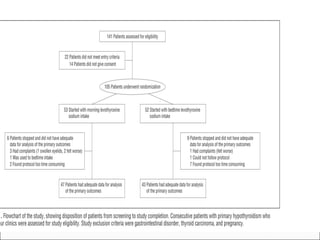
STUDY PARTICIPANTS 18 years or older  On stable levothyroxine regimen for at least 6 months Patients with a gastrointestinal  tract disorder, those with thyroid carcinoma, and those who were pregnant were excluded from the study Also excluded were patients who were taking medication known to interfere with the uptake of levothyroxine
  RANDOMIZATION AND TREATMENT patients were randomized to start the study period with 1 capsule of levothyroxine in the morning (and 1 capsule of placebo at bedtime) or with 1 capsule of levothyroxine at bedtime(and 1 capsule of placebo at bedtime) After 3 months,  patients were switched from levothyroxine in the morning to placebo and vice versa for another 3 months
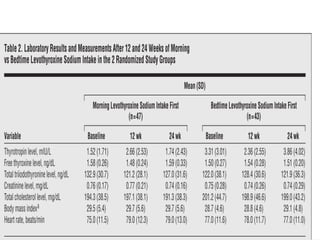
  DATA COLLECTION AND  FOLLOW UP At baseline  and every 6 weeks pt were seen in the clinic Plasma thyrotropin, FT4, T3, creatinine, and lipid levels, and blood pressure, heart rate, and body weight were measured.  The remaining capsules in the containers were counted to check for compliance
QUALITY OF LIFE   Three QOL questionnaires  (36-Item Short Form Health Survey, Hospital Anxiety and Depression Scale, and 20-Item Mul- tidimensional Fatigue Inventory) and a specific questionnaire  about symptoms of hypothyroidism and hyperthyroidism were completed by patients at baseline, at 3 months, and at the end of the study.
STATISTICAL ANALYSIS Primary end point was a change in thyroid hormone variables between 12 weeks of morning levothyroxine intake and 12 weeks of bedtime levothyroxine intake Secondary end points were changes in QOL ,thyroid symptom score, body mass index, heart rate, and serum lipid and creatinine levels
 
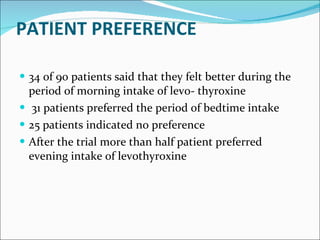
PATIENT PREFERENCE 34 of 90 patients said that they felt better during the period of morning intake of levo- thyroxine 31 patients preferred the period of bedtime intake 25 patients indicated no preference After the trial more than half patient preferred evening intake of levothyroxine
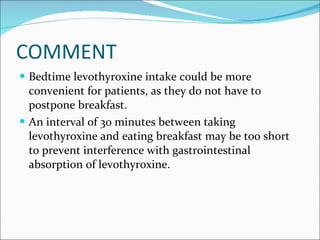
COMMENT Bedtime levothyroxine intake could be more convenient for patients, as they do not have to postpone breakfast.  An interval of 30 minutes between taking levothyroxine and eating breakfast may be too short to prevent interference with gastrointestinal absorption of levothyroxine.
Pt may take other medications that interfere with levothyroxine absorption in morning Bowel motility is slower at night, resulting in more prolonged exposure of levothyroxine to the intestinal wall and, consequently, in better bioavailability. Basal gastric acid secretion is highest in the late evening and is lowest in the morning.

Thyroid

  • 1.
  • 2.
  • 3.
    STUDY PARTICIPANTS 18years or older On stable levothyroxine regimen for at least 6 months Patients with a gastrointestinal tract disorder, those with thyroid carcinoma, and those who were pregnant were excluded from the study Also excluded were patients who were taking medication known to interfere with the uptake of levothyroxine
  • 4.
      RANDOMIZATION ANDTREATMENT patients were randomized to start the study period with 1 capsule of levothyroxine in the morning (and 1 capsule of placebo at bedtime) or with 1 capsule of levothyroxine at bedtime(and 1 capsule of placebo at bedtime) After 3 months, patients were switched from levothyroxine in the morning to placebo and vice versa for another 3 months
  • 5.
    DATACOLLECTION AND FOLLOW UP At baseline and every 6 weeks pt were seen in the clinic Plasma thyrotropin, FT4, T3, creatinine, and lipid levels, and blood pressure, heart rate, and body weight were measured. The remaining capsules in the containers were counted to check for compliance
  • 6.
    QUALITY OF LIFE  Three QOL questionnaires (36-Item Short Form Health Survey, Hospital Anxiety and Depression Scale, and 20-Item Mul- tidimensional Fatigue Inventory) and a specific questionnaire about symptoms of hypothyroidism and hyperthyroidism were completed by patients at baseline, at 3 months, and at the end of the study.
  • 7.
    STATISTICAL ANALYSIS Primaryend point was a change in thyroid hormone variables between 12 weeks of morning levothyroxine intake and 12 weeks of bedtime levothyroxine intake Secondary end points were changes in QOL ,thyroid symptom score, body mass index, heart rate, and serum lipid and creatinine levels
  • 8.
  • 9.
    PATIENT PREFERENCE 34of 90 patients said that they felt better during the period of morning intake of levo- thyroxine 31 patients preferred the period of bedtime intake 25 patients indicated no preference After the trial more than half patient preferred evening intake of levothyroxine
  • 10.
    COMMENT Bedtime levothyroxineintake could be more convenient for patients, as they do not have to postpone breakfast. An interval of 30 minutes between taking levothyroxine and eating breakfast may be too short to prevent interference with gastrointestinal absorption of levothyroxine.
  • 11.
    Pt may takeother medications that interfere with levothyroxine absorption in morning Bowel motility is slower at night, resulting in more prolonged exposure of levothyroxine to the intestinal wall and, consequently, in better bioavailability. Basal gastric acid secretion is highest in the late evening and is lowest in the morning.