Three Strikes and Your Out
Hyperglycemia
Hyperthermia
Hypoxia
Rebecca P Campbell RN BS
Outline
 Statistics
 Short review
 Snapshots
 Symptoms:
differential
diagnosis
 Three Strikes
Hyperglycemia
Hyperthermia
Hypoxia
 Five “F’s”
 Future
Therapies
 Be the Ball Girl
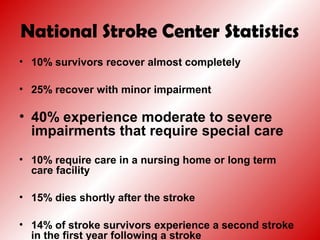
National Stroke Center Statistics
• 10% survivors recover almost completely
• 25% recover with minor impairment
• 40% experience moderate to severe
impairments that require special care
• 10% require care in a nursing home or long term
care facility
• 15% dies shortly after the stroke
• 14% of stroke survivors experience a second stroke
in the first year following a stroke
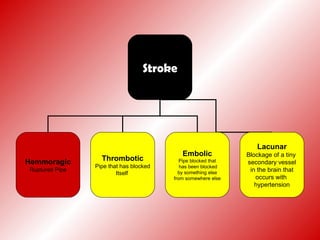
Stroke
Hemmoragic
Ruptured Pipe
Thrombotic
Pipe that has blocked
Itself
Embolic
Pipe blocked that
has been blocked
by something else
from somewhere else
Lacunar
Blockage of a tiny
secondary vessel
in the brain that
occurs with
hypertension
Snapshots
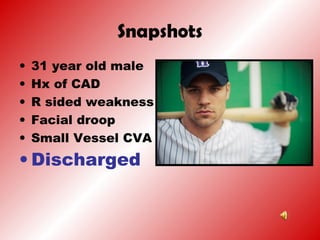
• 31 year old male
• Hx of CAD
• R sided weakness
• Facial droop
• Small Vessel CVA
• Discharged
Snapshots
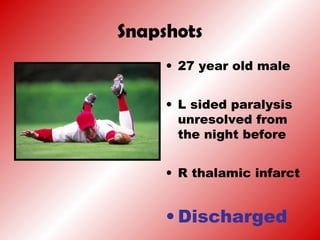
• 27 year old male
• L sided paralysis
unresolved from
the night before
• R thalamic infarct
• Discharged
Snapshots
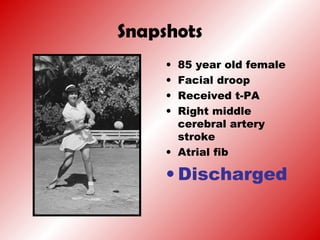
• 85 year old female
• Facial droop
• Received t-PA
• Right middle
cerebral artery
stroke
• Atrial fib
• Discharged
Snapshots
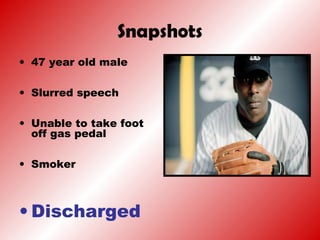
• 47 year old male
• Slurred speech
• Unable to take foot
off gas pedal
• Smoker
• Discharged
Symptoms: Differential
Diagnosis
• Ischemic vs Hemmoragic
• Craniocerebral trauma vs Cervical trauma
• Meningitis vs Encephalitis
• Seizure or Migraine with persistent
neurological signs
Symptoms: Differential
Diagnosis
• Intracranial Mass
– Tumor
– Subdural hematoma
• Metabolic
– Hyperglycemia
– Hypoglycemia
• Post Cardiac Event
• Drug or Narcotic Overdose
Goals
Neuro protection
Save the Penumbra
Prevent secondary side effect
Improve function
Improve life
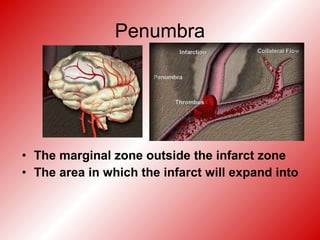
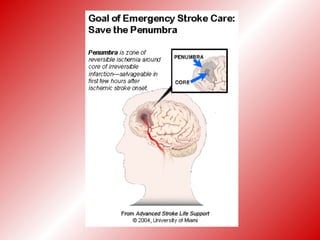
Penumbra
• The marginal zone outside the infarct zone
• The area in which the infarct will expand into
Things to avoid:
Hyperglycemia
Hyperthermia
Hypoxia
Hyperglycemia
• Review of healthy
Endothelial Function
What it should be
doing:
– Inflammation
prevention
– Coagulation Role
– Vascular Tone
– Oxidation Inhibition
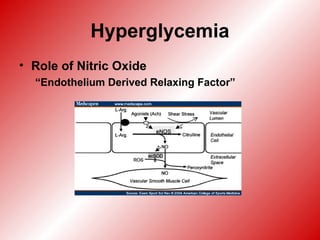
Hyperglycemia
• Role of Nitric Oxide
“Endothelium Derived Relaxing Factor”
Hyperglycemia Effects
on the Brain
Increased infarct size because of
impairment of vasodilation
Hypometabolic alterations of brain
(lactic acidosis)
Inflammation
(apoptosis-programmed cell death)
Causes of Hyperglycemia in the
CVA Patient
• Non specific reaction to acute stress
• Autonomic: cortisol and catecholamine
release in the stress response
• Uncovering Latent Diabetes
• Secondary to the actual CVA and the
regulatory centers of the brain
Review: Hyperglycemia
• Cannot Vasodilate
• Acidosis
• Inflammation
• Cell Death
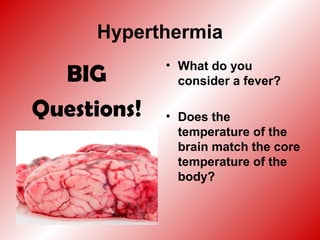
Hyperthermia
BIG
Questions!
• What do you
consider a fever?
• Does the
temperature of the
brain match the core
temperature of the
body?
Surprise!!
• In rats and traumatic brain
injury:
Brain temp 102 F /
Rectal temp 100.7 F
Journal of Neuroscience Nursing December 2007
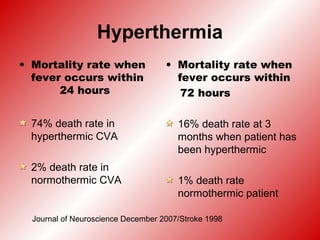
Hyperthermia
• Mortality rate when
fever occurs within
24 hours
74% death rate in
hyperthermic CVA
2% death rate in
normothermic CVA
• Mortality rate when
fever occurs within
72 hours
16% death rate at 3
months when patient has
been hyperthermic
1% death rate
normothermic patient
Journal of Neuroscience December 2007/Stroke 1998
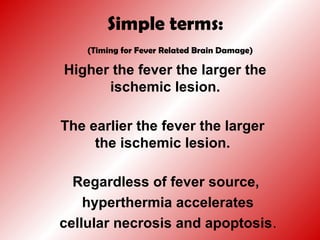
Simple terms:
(Timing for Fever Related Brain Damage)
Higher the fever the larger the
ischemic lesion.
The earlier the fever the larger
the ischemic lesion.
Regardless of fever source,
hyperthermia accelerates
cellular necrosis and apoptosis.
Hyperthermia Effects
on the Brain
Enhances the release of Neurotransmitters
Exaggerates free radical production
Extensive breakdown of the blood brain
barrier
Increases the depolarizations of neural cells
in the penumbra
Increases intracellular acidosis
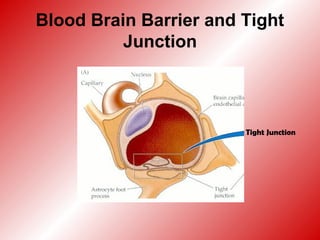
Blood Brain Barrier and Tight
Junction
Tight Junction
Etiology of Hyperthermia in the
CVA Patient
NON Infectious
Infectious
Inflammatory process
Etiology of Hyperthermia in the
CVA Patient
Infectious
CMV
Chalmydia
pneumoniae
Helicobacter Pylori
Hepatitis A
Etiology of Hyperthermia in the
CVA Patient
Inflammatory
process
Lupus
Giant Cell Arteritis
Reactive
Airway/COPD
Diabetics
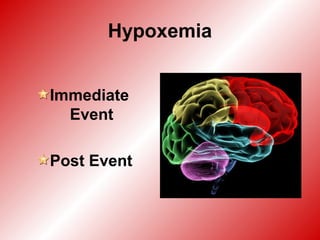
Hypoxemia
Immediate
Event
Post Event
Hypoxemia
Immediate
Events
Sodium Channels
Vasogenic Edema
Calcium Channels
Vasogenic Edema
Hypoxia Effect on Cell Volume and Ion
Uptake of Cerebral Microvascular
Endothelial Cells
AJP Cell Physiology, October 17, 2007
Hypoxemia
Post Events
Pulmonary
Embolism
Always consider the possibility of
PE in the presence of
cardiorespiratory symptoms post
stroke even if an alternative
diagnosis is evident.
Pneumonia
Sleep Apnea
Goals
Neuro protection
Save the Penumbra
Prevent secondary side effect
Improve function
Improve life
The Five “F’s”
Flat
Fluids
Fingersticks
Fever Control
Frequent
Neurochecks
The Five “F’s”
Flat
Fluids
Fingersticks
Fever Control
Frequent
Neurochecks
• Improves
perfusion to the
brain
• Prevent
Orthostatic blood
pressure changes
The Five “F’s”
Flat
Fluids
Fingersticks
Fever Control
Frequent
Neurochecks
NSS only
Maintain blood
pressure
above 100/70
below 180/105
Correct
rate/perfusion issues
The Five “F’s”
Flat
Fluids
Fingersticks
Fever Control
Frequent
Neurochecks
AHA Guidelines:
Keep blood sugar
between 80-140
Threshold for
insulin use
between 140-180
The Five “F’s”
Flat
Fluids
Fingersticks
Fever Control
Frequent
Neurochecks
Keep patient
NORMOTHERMIC
98.0-98.6 o
F
Tylenol and Early
Antibiotics
Hypothermia: core temp below
98.0 is NOT recommended
by the AHA at this time
The Five “F’s”
Flat
Fluids
Fingersticks
Fever Control
Frequent
Neurochecks
NIH stroke scale
Increase of infarct
zone into the
penumbra
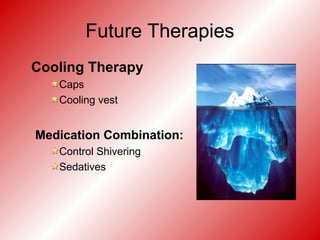
Future Therapies
Cooling Therapy
Caps
Cooling vest
Medication Combination:
Control Shivering
Sedatives
Future Therapies
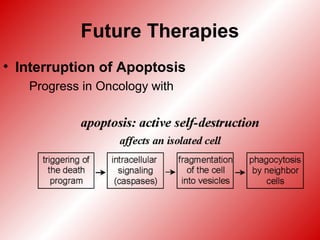
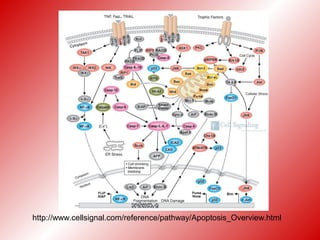
• Interruption of Apoptosis
Progress in Oncology with
http://www.cellsignal.com/reference/pathway/Apoptosis_Overview.html
Future Therapies
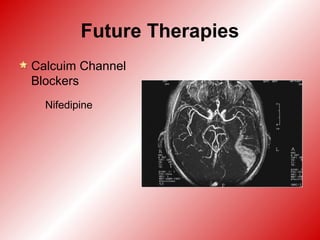
Calcuim Channel
Blockers
Nifedipine
• Antibiotics
Minocycline
• Albumin
Control vasogenic
edema
Future Therapies
Future Therapies
• More aggressive
use of medical
devices
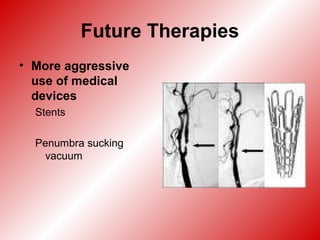
Stents
Penumbra sucking
vacuum
Future Therapies
• More aggressive
use of medical
devices
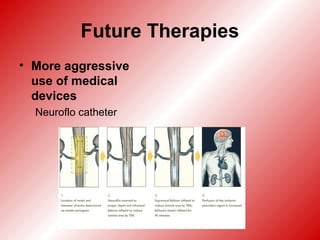
Neuroflo catheter
References
Allen, S. McColl, B., Rothwell, N. (2007) Systemic Inflammation and Stroke: Etiology, Pathology and Targets for
Therapy. Biochemical Society Transactions. Vol 35, part 5, 1163-1165
Alonso, O., Busto, R., Dietrich, D., (1993) Moderated Hyperglycemia Worsens Acute Blood Brain Barrier Injury After
Fore Brain Ischemia in Rats. Stroke. 24, 111-116.
Bae, H.J., et al. (2005) In Hospital Medical Complications and Long Term Mortality After Ischemic Stroke. Stroke. 36,
2241-2245.
Brillault, J., Foroutan, S., Lam, T., Odonnel, M., Rutkowsky, J. (2008) Hypoxia Effects on cell volume and Ion Uptake of
Cerebral Microvascular Endothelial Cells. AJP-Cell Physiol. 294, 88-96.
Brown, R., David, T., Egleton,R., Mark, k. (2004) Protecting Against Hypoxia-Induced Blood Brain Barrier Disruption:
Changes in Intracellular Calcium. APJ-Cell Physiol. 286, 1045-1052.
Busto, R., Ginsberg, M. (1998) Combating Hyperthermia in Acute Stroke a Significant Clinical Concern. Stroke. 29,
529-534.
Campbell, L., Grayson, T., Kuo, C. (1998) Chlamydia Pneumoniae and Cardiovascular Disease. Emerging Infectious
Disease. Vol. 4, No. 4, Electronically retrieved July 16, 2008.
http://www.cdc.gov/ncidod/EiD/vo14no4/campbell.htm
Chaudhuri, A., Dandona, P., Garg, R., Munschauer, F. (2006) Hyperglycemia, Insulin and Acute Ischemic Stroke, A
Mechanistic Justification for Trial of Insulin Infusion Therapy. Stroke. 37, 267-273.
References
Cooling Therapy for Stroke. John Hopkins Medicine Health Alerts. Retrieved June 26, 2008.
http://www.johnshopkinshealthalerts.com/reports/hypertension_stroke.
Fisher, J., Heller, R., Levi, C. Lim, L., Maths, B., Wang, Y. (2000) Influence of Admission Body Temperature on Stroke
Mortality. Stroke, 31, 404-409.
Ginsburg, M. (2003) Adventures in the Pathophysiology of Brain Ischemia: Penumbra, Gene Expression,
Neuroprotection. Stroke, 34, 214-223
Guanci, M., Hinkle, J. (2007) Acute Ischemic Stroke Review. Journal of Neuroscience Nursing. 39, 5, 285-293.
Initial Success of Intracranial Stents New Devices Bring Hope for Those at Highest Risk. Stroke Connection, Jul
August, p.6.
Kelly, J., Hunt, B., Lewis, R., Rudd, A. (2002) Pulmonary Embolism and Pneumonia May Be Confounded After Acute
Stroke May Co Exist. British Geriatric Society Age and Aging. 31, 235-239.
McIlvoy, Laura. (2007) The Impact of Brain Temperature and Core Temperature on Intracranial and Cerebral
Perfussion Pressure. Journal of Neuroscience Nursing, 39, 6, 324-331.
Obstructive Sleep Apnea Causes Early Death in Stroke Patients. Science Daily, May 20, 2008. Electronically
retrieved July 16, 2008. http://www.sciencedaily.com/releases/2008/05/080518182655.htm.
Viral Infection Linked to Heart Attack and Stroke. Science Daily, December 24, 2002. Electronically retrieved July 11,
2008. http://www.sciencedaily.com/releases/2002/12/021224091204.htm.
Vojdani, A. The Role of Chlamydia Pneumoniae in Athersclerosis is Cardiology Ready for a Revolution? Electronically
retrieved July 11, 2008. http://www.immuno-science-lab.com/html/chlamydia_pneumoniae.html

Three strikes an your out

  • 1.
    Three Strikes andYour Out Hyperglycemia Hyperthermia Hypoxia Rebecca P Campbell RN BS
  • 2.
    Outline  Statistics  Shortreview  Snapshots  Symptoms: differential diagnosis  Three Strikes Hyperglycemia Hyperthermia Hypoxia  Five “F’s”  Future Therapies  Be the Ball Girl
  • 3.
    National Stroke CenterStatistics • 10% survivors recover almost completely • 25% recover with minor impairment • 40% experience moderate to severe impairments that require special care • 10% require care in a nursing home or long term care facility • 15% dies shortly after the stroke • 14% of stroke survivors experience a second stroke in the first year following a stroke
  • 4.
    Stroke Hemmoragic Ruptured Pipe Thrombotic Pipe thathas blocked Itself Embolic Pipe blocked that has been blocked by something else from somewhere else Lacunar Blockage of a tiny secondary vessel in the brain that occurs with hypertension
  • 5.
    Snapshots • 31 yearold male • Hx of CAD • R sided weakness • Facial droop • Small Vessel CVA • Discharged
  • 6.
    Snapshots • 27 yearold male • L sided paralysis unresolved from the night before • R thalamic infarct • Discharged
  • 7.
    Snapshots • 85 yearold female • Facial droop • Received t-PA • Right middle cerebral artery stroke • Atrial fib • Discharged
  • 8.
    Snapshots • 47 yearold male • Slurred speech • Unable to take foot off gas pedal • Smoker • Discharged
  • 9.
    Symptoms: Differential Diagnosis • Ischemicvs Hemmoragic • Craniocerebral trauma vs Cervical trauma • Meningitis vs Encephalitis • Seizure or Migraine with persistent neurological signs
  • 10.
    Symptoms: Differential Diagnosis • IntracranialMass – Tumor – Subdural hematoma • Metabolic – Hyperglycemia – Hypoglycemia • Post Cardiac Event • Drug or Narcotic Overdose
  • 11.
    Goals Neuro protection Save thePenumbra Prevent secondary side effect Improve function Improve life
  • 12.
    Penumbra • The marginalzone outside the infarct zone • The area in which the infarct will expand into
  • 14.
  • 15.
    Hyperglycemia • Review ofhealthy Endothelial Function What it should be doing: – Inflammation prevention – Coagulation Role – Vascular Tone – Oxidation Inhibition
  • 16.
    Hyperglycemia • Role ofNitric Oxide “Endothelium Derived Relaxing Factor”
  • 17.
    Hyperglycemia Effects on theBrain Increased infarct size because of impairment of vasodilation Hypometabolic alterations of brain (lactic acidosis) Inflammation (apoptosis-programmed cell death)
  • 18.
    Causes of Hyperglycemiain the CVA Patient • Non specific reaction to acute stress • Autonomic: cortisol and catecholamine release in the stress response • Uncovering Latent Diabetes • Secondary to the actual CVA and the regulatory centers of the brain
  • 19.
    Review: Hyperglycemia • CannotVasodilate • Acidosis • Inflammation • Cell Death
  • 20.
    Hyperthermia BIG Questions! • What doyou consider a fever? • Does the temperature of the brain match the core temperature of the body?
  • 21.
    Surprise!! • In ratsand traumatic brain injury: Brain temp 102 F / Rectal temp 100.7 F Journal of Neuroscience Nursing December 2007
  • 22.
    Hyperthermia • Mortality ratewhen fever occurs within 24 hours 74% death rate in hyperthermic CVA 2% death rate in normothermic CVA • Mortality rate when fever occurs within 72 hours 16% death rate at 3 months when patient has been hyperthermic 1% death rate normothermic patient Journal of Neuroscience December 2007/Stroke 1998
  • 23.
    Simple terms: (Timing forFever Related Brain Damage) Higher the fever the larger the ischemic lesion. The earlier the fever the larger the ischemic lesion. Regardless of fever source, hyperthermia accelerates cellular necrosis and apoptosis.
  • 24.
    Hyperthermia Effects on theBrain Enhances the release of Neurotransmitters Exaggerates free radical production Extensive breakdown of the blood brain barrier Increases the depolarizations of neural cells in the penumbra Increases intracellular acidosis
  • 25.
    Blood Brain Barrierand Tight Junction Tight Junction
  • 26.
    Etiology of Hyperthermiain the CVA Patient NON Infectious Infectious Inflammatory process
  • 27.
    Etiology of Hyperthermiain the CVA Patient Infectious CMV Chalmydia pneumoniae Helicobacter Pylori Hepatitis A
  • 28.
    Etiology of Hyperthermiain the CVA Patient Inflammatory process Lupus Giant Cell Arteritis Reactive Airway/COPD Diabetics
  • 29.
  • 30.
    Hypoxemia Immediate Events Sodium Channels Vasogenic Edema CalciumChannels Vasogenic Edema Hypoxia Effect on Cell Volume and Ion Uptake of Cerebral Microvascular Endothelial Cells AJP Cell Physiology, October 17, 2007
  • 31.
    Hypoxemia Post Events Pulmonary Embolism Always considerthe possibility of PE in the presence of cardiorespiratory symptoms post stroke even if an alternative diagnosis is evident. Pneumonia Sleep Apnea
  • 32.
    Goals Neuro protection Save thePenumbra Prevent secondary side effect Improve function Improve life
  • 33.
  • 34.
    The Five “F’s” Flat Fluids Fingersticks FeverControl Frequent Neurochecks • Improves perfusion to the brain • Prevent Orthostatic blood pressure changes
  • 35.
    The Five “F’s” Flat Fluids Fingersticks FeverControl Frequent Neurochecks NSS only Maintain blood pressure above 100/70 below 180/105 Correct rate/perfusion issues
  • 36.
    The Five “F’s” Flat Fluids Fingersticks FeverControl Frequent Neurochecks AHA Guidelines: Keep blood sugar between 80-140 Threshold for insulin use between 140-180
  • 37.
    The Five “F’s” Flat Fluids Fingersticks FeverControl Frequent Neurochecks Keep patient NORMOTHERMIC 98.0-98.6 o F Tylenol and Early Antibiotics Hypothermia: core temp below 98.0 is NOT recommended by the AHA at this time
  • 38.
    The Five “F’s” Flat Fluids Fingersticks FeverControl Frequent Neurochecks NIH stroke scale Increase of infarct zone into the penumbra
  • 39.
    Future Therapies Cooling Therapy Caps Coolingvest Medication Combination: Control Shivering Sedatives
  • 40.
    Future Therapies • Interruptionof Apoptosis Progress in Oncology with
  • 41.
  • 42.
  • 43.
    • Antibiotics Minocycline • Albumin Controlvasogenic edema Future Therapies
  • 44.
    Future Therapies • Moreaggressive use of medical devices Stents Penumbra sucking vacuum
  • 45.
    Future Therapies • Moreaggressive use of medical devices Neuroflo catheter
  • 47.
    References Allen, S. McColl,B., Rothwell, N. (2007) Systemic Inflammation and Stroke: Etiology, Pathology and Targets for Therapy. Biochemical Society Transactions. Vol 35, part 5, 1163-1165 Alonso, O., Busto, R., Dietrich, D., (1993) Moderated Hyperglycemia Worsens Acute Blood Brain Barrier Injury After Fore Brain Ischemia in Rats. Stroke. 24, 111-116. Bae, H.J., et al. (2005) In Hospital Medical Complications and Long Term Mortality After Ischemic Stroke. Stroke. 36, 2241-2245. Brillault, J., Foroutan, S., Lam, T., Odonnel, M., Rutkowsky, J. (2008) Hypoxia Effects on cell volume and Ion Uptake of Cerebral Microvascular Endothelial Cells. AJP-Cell Physiol. 294, 88-96. Brown, R., David, T., Egleton,R., Mark, k. (2004) Protecting Against Hypoxia-Induced Blood Brain Barrier Disruption: Changes in Intracellular Calcium. APJ-Cell Physiol. 286, 1045-1052. Busto, R., Ginsberg, M. (1998) Combating Hyperthermia in Acute Stroke a Significant Clinical Concern. Stroke. 29, 529-534. Campbell, L., Grayson, T., Kuo, C. (1998) Chlamydia Pneumoniae and Cardiovascular Disease. Emerging Infectious Disease. Vol. 4, No. 4, Electronically retrieved July 16, 2008. http://www.cdc.gov/ncidod/EiD/vo14no4/campbell.htm Chaudhuri, A., Dandona, P., Garg, R., Munschauer, F. (2006) Hyperglycemia, Insulin and Acute Ischemic Stroke, A Mechanistic Justification for Trial of Insulin Infusion Therapy. Stroke. 37, 267-273.
  • 48.
    References Cooling Therapy forStroke. John Hopkins Medicine Health Alerts. Retrieved June 26, 2008. http://www.johnshopkinshealthalerts.com/reports/hypertension_stroke. Fisher, J., Heller, R., Levi, C. Lim, L., Maths, B., Wang, Y. (2000) Influence of Admission Body Temperature on Stroke Mortality. Stroke, 31, 404-409. Ginsburg, M. (2003) Adventures in the Pathophysiology of Brain Ischemia: Penumbra, Gene Expression, Neuroprotection. Stroke, 34, 214-223 Guanci, M., Hinkle, J. (2007) Acute Ischemic Stroke Review. Journal of Neuroscience Nursing. 39, 5, 285-293. Initial Success of Intracranial Stents New Devices Bring Hope for Those at Highest Risk. Stroke Connection, Jul August, p.6. Kelly, J., Hunt, B., Lewis, R., Rudd, A. (2002) Pulmonary Embolism and Pneumonia May Be Confounded After Acute Stroke May Co Exist. British Geriatric Society Age and Aging. 31, 235-239. McIlvoy, Laura. (2007) The Impact of Brain Temperature and Core Temperature on Intracranial and Cerebral Perfussion Pressure. Journal of Neuroscience Nursing, 39, 6, 324-331. Obstructive Sleep Apnea Causes Early Death in Stroke Patients. Science Daily, May 20, 2008. Electronically retrieved July 16, 2008. http://www.sciencedaily.com/releases/2008/05/080518182655.htm. Viral Infection Linked to Heart Attack and Stroke. Science Daily, December 24, 2002. Electronically retrieved July 11, 2008. http://www.sciencedaily.com/releases/2002/12/021224091204.htm. Vojdani, A. The Role of Chlamydia Pneumoniae in Athersclerosis is Cardiology Ready for a Revolution? Electronically retrieved July 11, 2008. http://www.immuno-science-lab.com/html/chlamydia_pneumoniae.html

Editor's Notes

  • #2 When Denise Kistler and I sat down to discuss what topic to cover for Summer Update the topic of Negative outcomes came up. What are the events that will influence the final functional and cognitive outcome for a stroke patient, that may occur during a hospitalization. I of course knew the easy ones: pneumonia, urinary tract infection, malnutrition, skin breakdown. But Denise said, “Hyperglycemia” will negatively impact the patient and at that time I couldn’t tell you why. As I started digging through the mounds of information these three events: hyperglycemia, hyperthermia and hypoxia are the most devastating.
  • #3 Here is the where we are going. Statistics are easy, Snapshots are recounts of recent patients that have been treated at GVH, Short review and Symptoms are quickies just to keep everyone on one team. Then we head into the three big bad strike outs. What to do about those strikes is covered in the Five “F’s” , Future therapies are not what we are doing here yet, but they are being researched. Finally, Be the Ballgirl is just an inspirational clip for you to see how paying attention and taking an extra step or two can make a big difference.
  • #4 They are pretty self explanatory. The number that we are trying to improve upon is the 40% that experience moderate to severe impairments that require special care.
  • #5 Here is the quick review:
  • #6 This 31 year old male with a family history of CAD presented to our DEM with R sided weakness, facial droop. Patient was outside the window for t-PA and found to have a small vessel stroke. He was discharged with slight facial droop and secondary prevention in place (zocor, aspirin, stroke education, and the instructions to seek medical attention immediately if he experienced this again.
  • #7 This 27 year old mail presented with Left sided paralysis the evening before that did not resolve. Was found to have a R thalamic infarct thought to be secondary to vasospasm from cocaine use. Was discharged with hand numbness only.
  • #8 This sporty 85 year old female from a local independent living facility presented with facial drop with in the 3 hour window of opportunity for receiving t-PA. After receiving t-PA symptoms of stroke resolved. She was found to have a R middle common artery stroke and Atrial Fib. She was discharged back to the independent living facility for independent living with coumadin added as secondary prevention.
  • #9 This Hansome 47 year old male presented to our DEM with slurred speech and a complaint of being unable to take foot off of the gas pedal. YES! He was driving when he had his stroke. His symptoms did some what resolve in the DEM, but he continued to wax and wane. T-PA was administered although controversial in the light of improving symptoms. He was also a smoker. All of his imagining studies were negative and he was discharged fully functional.
  • #10 Whether you are an ER nurse, ICU nurse or school nurse, when a person presents with stroke like symptoms we must consider all the possibilities and not just fixate on the one diagnosis. Is this a clot vs a bleed, have they fallen recently or had an automobile accident, have they been sick, do they have a history of other neurological problems.
  • #11 Do they have a history of cancer? Metabolic questions again: always check their BGM. Could this patient have had a silent Mi or an atypical presentation for an MI and now have a low perfusion state with have a dilated left ventrical. And remember the one patient who presented with a vasospasm with coccaine use? Don’t forget to think about recreational drug use.
  • #12 Goals are to always protect the brain, save the penumbra and prevent the expansion of the infarct zone. Prevent those secondary side effects such as uti, skin breakdown which are considered preventable and Medicare will shortly not be paying for the cost of preventable events. If we have saved as much of the brain and the penumbra as possible the patient will have improved function and an improved life.
  • #13 I love these pictures of the penumbra because the one on the left shows how large the penumbra could be based on the location of the clot. Again, it is the marginal zone outside the infarct (dead) zone and it is the area we are fighting for.
  • #14 Again, another visual demonstration of the penumbra and the fact that the area is salvageable.
  • #15 What are our three strikes: Hyperglycemia, Hyperthermia and Hypoxia.
  • #16 I need to mention the role of the Endothelial lining in blood vessels. So much research on inflammation, coronary, vascular and other chronic diseases involves the endothelium. In a healthy person, the endothelium is the largest endocrine organ. It is considered ENDOCRINE because it does secrete substances, NITRIC OXIDE being the most important of them. A healthy endothelium will prevent inflammation and will inhibit adhesion of leukocytes (wbc) and platelets to the vascular wall. A healthy endothelium will have a role in coagulation in that it will enhance fibrinolysis-or the body’s natural ability to degrade and remove clots. A healthy endothelium will impact vascular tone by inhibiting vasospasm and promoting vasodilation. A healthy endothelium will inhibit smooth muscle growth. A healthy endothelium will inhibit the oxidation of LDL molecules. Oxidation is the process of adding an oxygen molecule to a compound. If these oxidized compounds are left unchecked they will initiate chemical reactions that damage celluar DNA.
  • #17 Nitric Oxide is know as the endothelium derived relaxing factor. The endotheluim uses Nitric Oxide to signal the surrounding smooth muscle to relax thus resulting in vasodilation and increased blood flow. For your information: Nitroglycerin is converted to Nitric oxide thus producing vasodilation in the coronary arteries and Sildenafil (aka Viagra) stimulates Nitric oxide production in the vessels of that organ resulting in the vasodilation of that area. This is why there is the warning about taking viagra when you are already on Nitrates.
  • #18 Here is what hyperglycemia does to the penumbra: Inability to vasodilate the surrounding area reduces the blood flow needed by the penumbra to survive and therefore the area continues to infarct. In the area of infarct, a hypometabolism develops due to the decreased blood flow. Lactic acid (that byproduct of carbohydrate metabolism) continues to accumulates and cannot be cleared from the area causing a cortical acidosis leading the penumbra to turn ischemic. Inflammation: hyperglycemia is known to be associated with inflammation and oxidative stress. With any inflammatory process you have heat, swelling, leukocytes and platelets sent by the immune system. Hyperglycemia impairs that endothelial functional ablilty to remove this stuff. Once the inflammation cascade has been triggered, pro inflammatory cytokines show up and initiate the process of apoptosis-also known as programmed cellular death. So if the original injury has not hurt the area enough, the inflammation cascade and our inability to stop it with its cytokines will tell the struggling cells of the penumbra to die.
  • #19 Causes of Hyperglycemia in the post CVA patient Non specific reaction to acute stress Autonomic, hormonal and metabolic alteration as a result of acute stress Uncovering Latent diabetes Stress activation of the hypothalamo-hypophyseal-adrenal axis attributed to a direct effect of brain ischemia on the pituitary Irritation of the glucose regulatory centers in the brain secondary to the actual cva The most popular belief is that hyperglycemia is a stress response with activation of the hypothalamo-hypophyseal-adrenal axis leading to an increase in cortisol and catecholamines.
  • #21 Two Big questions need to be asked of nurses on the topic of hyperthermia: What do you consider a fever? Does the temperature of the brain match the core temperature of the body? Majority of the brain hyperthermia studies are studies performed on rats or are performed on patient’s with traumatic brain injuries. Either their brains are exposed due to trauma or they have ICP monitoring devices. Studying the brain temp verses core temps in the stroke population is not possible because we do not have the noninvasive technology available yet. BUT studies do show that in rats and the traumatic brain injured populations, an average brain temp of 38.9 C (102oF) and a rectal temp of 37.8C (100.7oF).
  • #22 What do you consider a fever? Do you consider a fever of 100. significant? Do you consider a CVA a traumatic brain injury? The difference is that the traumatic brain injury comes from an external source and the CVA comes from an internal source. Both cause neuronal destruction. We just don’t have the human invasive studies to verify the elevation of brain temp over core temp in the stroke population.
  • #23 When we look at mortality rates, patients who have been hyperthermic have a higher rate of death. There is a significant impact with in the first 24 hours and then when we look at mortality rates later in the recovery stage, there is a higher mortality at three months when the patient has been febrile with in the first 72 hours.
  • #24 In simple terms: Higher the fever the larger the ischemic lesion. The earlier the fever the larger the ischemic lesion. Regardless of the fever source, hyperthermia accelerates cellular necrosis and apoptosis (programmed cell death).
  • #25 Remember when we add heat to anything we get and increase of activity-molecules start bouncing around and moving. Well it isn’t too different in the brain in that when we add the heat of fever, everything becomes accelerated and accentuated. There is an increase in all of the Neurotransmitters, oxidation and free radical production accelerates (remember those free radical damage the cells further) , there is a break down in the blood brain barrier, the neurons of the penumbra are hyperexcitable and are rapidly firing. Then there is the increase of intracellular acidosis because heat accelerates everything and we have consumed/used more oxygen and energy. Their byproducts are accumulating faster than the brain vasculature can clear it.
  • #26 This is a good diagram of what the endothelial cell and the neuronal cells look like. It is here that the blood brain barrier breaks down. Remember Nitric Oxide, the good side of Nitric oxide is that it is cause dilation of smoothe muscle, the down side of it is that when is over accumulates and has no where to go what it dilates is the tight junction between the cells and causes the blood brain barrier to break down.
  • #27 There can be several sources for the fever. Noninfectious is a Central hyperthermia-an expression of cell necrosis or changes in the thermoregulatory centers of the anterior region of the hypothalamus. Infectious: Inflammatory process
  • #28 The role of infectious disease impact on the prevalence of stroke is still evolving. There seems to be a strong correlation between recent or concurrent infection and the occurance of stroke.
  • #29 The presence of an active inflammatory process is also a potential fever producer. How to tell the difference between the presence of an infectious process and an inflammatory process would be to use the inflammation markers: CRP c reative protein, Homocystine, WBC count and lipid panels.
  • #31 In addition to hyperthermia causing a breakdown of the blood brain barrier, hypoxia will directly affect the blood brain barrier by impacting the ion flux of the cell wall. The two ion channel involved: Sodium channel and calcium channels. Sodium channels: Endothelial cells left in a hypoxic state for 3 hours or longer show a significant uptake of sodium into the brain. With sodium goes water, causing swelling, edema and them cell rupture. Calcium Channels: Hypoxia causes and influx of calcium into the cell. The increase in calcium leads to a breakdown in the blood brain barrier and again we get more solutes and water from the vascular system into the neuronal spaces causing swelling, edema and cell death.
  • #32 This brain has been under assault and we have seen what hypoxia can do to the cellular structures of the brain shortly after the immediate insult. This penumbra area is so delicate that there can be extensions of infarct zone due to additional hypoxic events such as PE/ pneumonia and sleep apnea. Yet these three events are capable of causing death in the stroke patient all by themselves. Timing is everything. Pulmonary embolism and pneumonia are both prevalent complications after stroke. Given their similar presentations there is a strong possibility for misdiagnosing them. There is also the possibility that they can co exist. Again, timing is everything. Both are unusual in the first week post CVA. They are most common between the 2nd and 4th week. Their frequency correlates with neurologic impairment, paralysis of the lower extremity, dysphagia, dehydration, prolonged bedrest and advanced age. Pulmonary Embolism: Is usually unsuspected because for the ischemic stroke patient we have them on anticoagulants and DVT prophylaxis. We think that they should not be able to form clots but in reality they may already be in a hypercoagulable state evident in their cerebral accident. For the Hemmoragic stroke, anticoagulation may or may not be apart of their medical treatment yet. We currently evaluate each hemmoragic stroke individually for the safety of starting anticoagulants. Additional factors that impact our ability to clinically see a PE or hypoxic state evolving are: dysphagia/speech impairment, cognitive impairment from the original injury. Always consider the possibility of PE in the presence of cardiorespiratory symptoms post stroke even if an alternative diagnosis is evident. Pneumonia: Patietns with feeding tubes and decreased protective reflexes are at risk for pneumonia. One third of all stroke patients will develop pneumonia with in one month, it will add and average of 7 days onto a hospitalization. Patients with oral motor tone flaccidity may need bipap or cpap at night to assist in keeping their airway patent. Just a word about sleep apnea: The toronto Rehabilitation Institue and the Center for Sleep Chronobiology found that 72% of the stroke patients in their study had significant (>ten events) sleep apnea. They also found that the severity of the apnea had a direct relationship with the patients functional impairments regardless of the patient’s age, weight or location of their CVA. The additional oxygen deprivation caused by sleep apnea can aggravate the hypoxic insult of the stroke and impact the final outcome for the patient.
  • #35 Flat: Keeping the patient flat during the immediate injury improves perfusion to the brain. We are not fighting against gravity. You also want to prevent the drop in perfusion due to orthostatic hypotension. That drop in blood pressure will affect perfusion of the penumbra which we want to perfuse at this time.
  • #36 Fluids: NSS only. Fluids are use to maintain blood pressure and perfusion. Negative outcomes are associate extremes in blood pressure whether they are in the hypertensive range or the hypotensive range. Prevention of both is very important. You want to prevent hypotension, so you may be holding blood pressure medications. Your goal is to maintain perfusion of that penumbra area. Negative outcomes occur with when blood pressure drops below 100 systolic and below 70 diastolic. If the patient is having perfusion issues due to rapid heart rates, you need to correct the rate/rhythm (rapid afib) issues as well. (keep sbp above 100, but below 180, and Dbp above 70-below 110-recommend that the bp be maintained at below 180/105 for the first 24 hours after tPA pg. 1674 Guidelines)
  • #37 Fingersticks: Frequent checking even on the patient without a history of DM. Guidelines from the American heart/American stroke recommend maintaining a blood glucose between 80-140. Evidence suggest that persistant hyperglycemia in the first 24 hours after stroke is associated with poor outcomes. American heart/stroke guidelines are looking at the 140-180 mg/dl as the threshold for administering insulin in this population.
  • #38 Fever Control: Keep them normothermic 98.0-98.6. Administering acetaminophen and early antibiotics is recommended. Although hypothermia is known to improve neurological outcomes with cardiac surgery, it is NOT recommended at this time by AHA. This is one of the areas being aggressively studied.
  • #39 Frequent Neurochecks: looking for increase of infarct zone into the penumbra or improvement in symptoms.
  • #41 Apoptosis is the programmed cell death that cells participate in. Research is trying to find ways of interrupting the various stages of apoptosis. This is a very simple model. There are multiple proteins, enzymes and cytokines that all have a role in apoptosis. Scientist are working on all of those various area along with gene therapy to interrupt apoptosis.
  • #43 Remember the ion shift with hypoxia, calcium channel blockers are being studied to see if they can impact and decrease that inter cellular shift of calcium.
  • #45 Stents, Penumbra sucking is a vacuum device being trialed by Rush University Medical Center to evacuate a clot out of a large vessel
  • #46 This is in development. The theory is to increase blood flow to the ischemic penumbra by diverting it from the lower extremities. This is not approved by the AHA- this is just to show you what is going on out there.
  • #47 Be the Ball girl. When someone is prepared, attentive and an opportunity arises to act, the end result is impressive. We need to be prepared and attentive so when our opportunity arises, we act. Here is a person who acted. Be the ball girl.