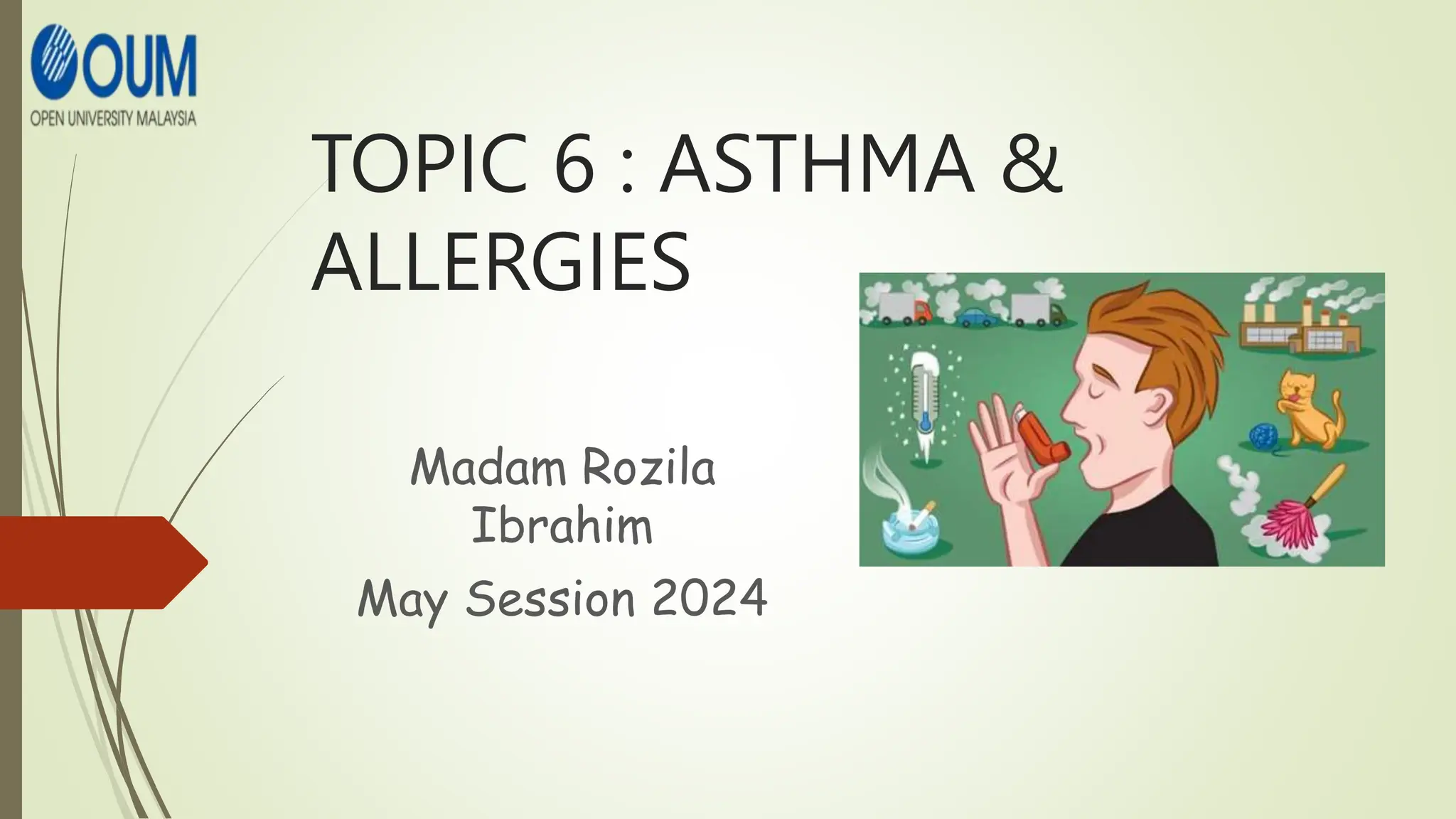
TOPIC 6 : ASTHMA &
ALLERGIES
Madam Rozila
Ibrahim
May Session 2024
Learning Outcome
At the end of the session, learner's would be able to;
Discuss the pathophysiology of asthma.
Describe of the respiratory assessment of patient with
asthma.
Discuss the immediate care for patient with asthma
during an acute onset of attack.
Discuss the asthma action plan.
12/7/2024
2
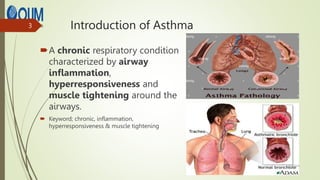
Introduction of Asthma
A chronic respiratory condition
characterized by airway
inflammation,
hyperresponsiveness and
muscle tightening around the
airways.
 Keyword; chronic, inflammation,
hyperresponsiveness & muscle tightening
12/7/2024
3
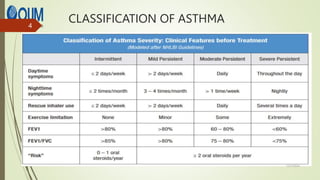
CLASSIFICATION OF ASTHMA
12/7/2024
4
12/7/2024
5
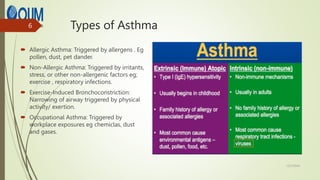
Types of Asthma
 Allergic Asthma: Triggered by allergens . Eg
pollen, dust, pet dander.
 Non-Allergic Asthma: Triggered by irritants,
stress, or other non-allergenic factors eg;
exercise , respiratory infections.
 Exercise-Induced Bronchoconstriction:
Narrowing of airway triggered by physical
activity/ exertion.
 Occupational Asthma: Triggered by
workplace exposures eg chemiclas, dust
and gases.
12/7/2024
6
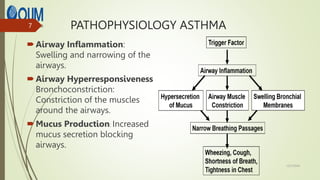
PATHOPHYSIOLOGY ASTHMA
Airway Inflammation:
Swelling and narrowing of the
airways.
Airway Hyperresponsiveness
Bronchoconstriction:
Constriction of the muscles
around the airways.
Mucus Production: Increased
mucus secretion blocking
airways.
12/7/2024
7
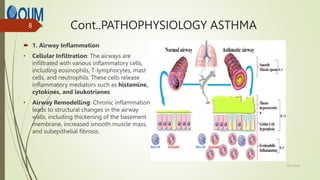
Cont..PATHOPHYSIOLOGY ASTHMA
 1. Airway Inflammation
• Cellular Infiltration: The airways are
infiltrated with various inflammatory cells,
including eosinophils, T-lymphocytes, mast
cells, and neutrophils. These cells release
inflammatory mediators such as histamine,
cytokines, and leukotrienes.
• Airway Remodelling: Chronic inflammation
leads to structural changes in the airway
walls, including thickening of the basement
membrane, increased smooth muscle mass,
and subepithelial fibrosis.
12/7/2024
8
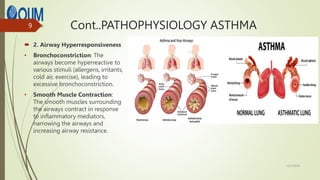
Cont..PATHOPHYSIOLOGY ASTHMA
 2. Airway Hyperresponsiveness
• Bronchoconstriction: The
airways become hyperreactive to
various stimuli (allergens, irritants,
cold air, exercise), leading to
excessive bronchoconstriction.
• Smooth Muscle Contraction:
The smooth muscles surrounding
the airways contract in response
to inflammatory mediators,
narrowing the airways and
increasing airway resistance.
12/7/2024
9
Cont..PATHOPHYSIOLOGY ASTHMA
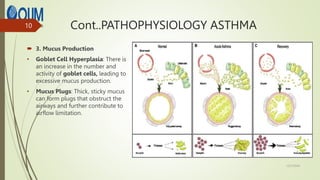
 3. Mucus Production
• Goblet Cell Hyperplasia: There is
an increase in the number and
activity of goblet cells, leading to
excessive mucus production.
• Mucus Plugs: Thick, sticky mucus
can form plugs that obstruct the
airways and further contribute to
airflow limitation.
12/7/2024
10
Cont..PATHOPHYSIOLOGY ASTHMA
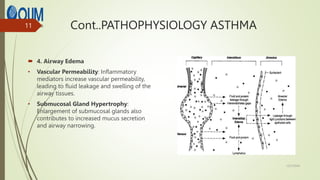
 4. Airway Edema
• Vascular Permeability: Inflammatory
mediators increase vascular permeability,
leading to fluid leakage and swelling of the
airway tissues.
• Submucosal Gland Hypertrophy:
Enlargement of submucosal glands also
contributes to increased mucus secretion
and airway narrowing.
12/7/2024
11
Cont..PATHOPHYSIOLOGY ASTHMA
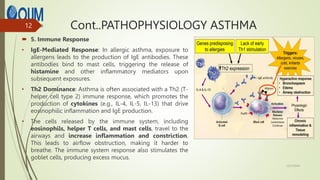
 5. Immune Response
• IgE-Mediated Response: In allergic asthma, exposure to
allergens leads to the production of IgE antibodies. These
antibodies bind to mast cells, triggering the release of
histamine and other inflammatory mediators upon
subsequent exposures.
• Th2 Dominance: Asthma is often associated with a Th2 (T-
helper cell type 2) immune response, which promotes the
production of cytokines (e.g., IL-4, IL-5, IL-13) that drive
eosinophilic inflammation and IgE production.
• The cells released by the immune system, including
eosinophils, helper T cells, and mast cells, travel to the
airways and increase inflammation and constriction.
This leads to airflow obstruction, making it harder to
breathe. The immune system response also stimulates the
goblet cells, producing excess mucus.
12/7/2024
12
SIGN & SYMPTOMS
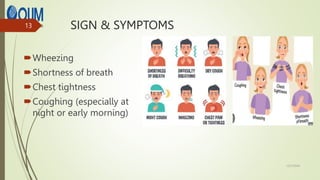
Wheezing
Shortness of breath
Chest tightness
Coughing (especially at
night or early morning)
12/7/2024
13
Respiratory assessment of patient with
asthma.
 1. Patient History
• Symptoms: Ask about common symptoms such as wheezing, shortness of breath, chest
tightness, and cough. Inquire about the frequency, duration, and triggers of these
symptoms.
• Medical History: Assess any previous asthma diagnoses, hospitalizations, emergency
visits, and use of medications like inhalers or corticosteroids.
• Family History: Determine if there is a family history of asthma or other respiratory
conditions.
• Allergy History: Identify any known allergies, including environmental, food, or
medication-related allergies.
• Lifestyle Factors: Consider smoking status, occupational exposures, and physical activity
levels.
12/7/2024
14
Respiratory assessment of patient with
asthma.
 2. Physical Examination
• General Appearance: Observe for signs of respiratory distress such as
nasal flaring, use of accessory muscles, and cyanosis.
• Respiratory Rate and Effort: Measure the respiratory rate and note any
difficulty in breathing.
• Auscultation: Listen to lung sounds using a stethoscope to identify
wheezing, crackles, or diminished breath sounds.
• Peak Expiratory Flow Rate (PEFR): Measure the patient’s PEFR using a
peak flow meter to assess airflow limitation.
12/7/2024
15
Respiratory assessment of patient with
asthma.
 3. Diagnostic Tests
• Spirometry: Conduct spirometry to measure lung function, including
Forced Expiratory Volume in 1 second (FEV1) and Forced Vital Capacity
(FVC).
• Allergy Testing: Perform skin or blood tests to identify potential
allergens that may trigger asthma symptoms.
• Chest X-Ray: Obtain a chest X-ray if there are atypical symptoms or if
other conditions need to be ruled out.
12/7/2024
16
Respiratory assessment of patient with
asthma.
 4. Monitoring and Documentation
• Symptom Diary: Encourage patients to keep a diary of their symptoms,
medication use, and peak flow readings.
• Asthma Action Plan: Develop an individualized asthma action plan that
includes medication management and steps to take during an
exacerbation.
• Regular Follow-Ups: Schedule regular follow-up appointments to monitor
the patient's asthma control and adjust treatment as needed.

12/7/2024
17
Respiratory assessment of patient with
asthma.
 5. Patient Education
• Inhaler Technique: Ensure the patient knows the correct technique for
using inhalers.
• Trigger Avoidance: Educate the patient on how to avoid or manage known
triggers.
• Action Plan: Teach the patient how to follow their asthma action plan and
recognize signs of worsening asthma.
12/7/2024
18
Diagnostic of Asthma
• Medical history and physical examination –Reviewing symptoms and
identifying triggers.
• Pulmonary function tests (Spirometry) – Measures how much air can inhale
and exhale, and how quickly can exhale.
• Peak Expiratory Flow Rate (PEFR)- Measures the fastest speed can blow air
out of the lungs.
• Allergy testing- Identifies specific allergens that may trigger asthma
symptoms.
12/7/2024
19
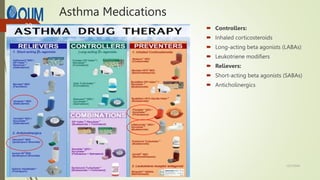
Asthma Medications
 Controllers:
 Inhaled corticosteroids
 Long-acting beta agonists (LABAs)
 Leukotriene modifiers
 Relievers:
 Short-acting beta agonists (SABAs)
 Anticholinergics
12/7/2024
20
Immediate care for patient with asthma during
an acute onset of attack.
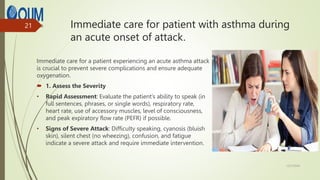
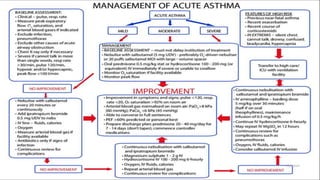
Immediate care for a patient experiencing an acute asthma attack
is crucial to prevent severe complications and ensure adequate
oxygenation.
 1. Assess the Severity
• Rapid Assessment: Evaluate the patient’s ability to speak (in
full sentences, phrases, or single words), respiratory rate,
heart rate, use of accessory muscles, level of consciousness,
and peak expiratory flow rate (PEFR) if possible.
• Signs of Severe Attack: Difficulty speaking, cyanosis (bluish
skin), silent chest (no wheezing), confusion, and fatigue
indicate a severe attack and require immediate intervention.
12/7/2024
21
12/7/2024
22
Immediate care for patient with asthma during
an acute onset of attack.
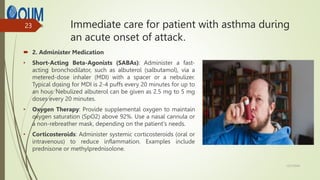
 2. Administer Medication
• Short-Acting Beta-Agonists (SABAs): Administer a fast-
acting bronchodilator, such as albuterol (salbutamol), via a
metered-dose inhaler (MDI) with a spacer or a nebulizer.
Typical dosing for MDI is 2-4 puffs every 20 minutes for up to
an hour. Nebulized albuterol can be given as 2.5 mg to 5 mg
doses every 20 minutes.
• Oxygen Therapy: Provide supplemental oxygen to maintain
oxygen saturation (SpO2) above 92%. Use a nasal cannula or
a non-rebreather mask, depending on the patient's needs.
• Corticosteroids: Administer systemic corticosteroids (oral or
intravenous) to reduce inflammation. Examples include
prednisone or methylprednisolone.
12/7/2024
23
Immediate care for patient with asthma during
an acute onset of attack.
 3. Monitor and Reassess
• Continuous Monitoring: Keep track of the patient's vital signs,
respiratory status, and response to treatment.
• PEFR or Spirometry: If available and the patient can perform the test,
measure PEFR to assess the response to treatment. A significant
improvement indicates a positive response.
12/7/2024
24
Immediate care for patient with asthma during
an acute onset of attack.
 4. Positioning
• Comfortable Position: Position the patient in a high Fowler’s position (sitting upright) to
facilitate easier breathing.
 5. Calm Environment
• Reduce Anxiety: Keep the patient calm and reassure them, as anxiety can worsen
symptoms. Encourage slow, deep breaths.
 6. Seek Emergency Help if Needed
• Severe Symptoms: If the patient’s condition does not improve or worsens despite initial
treatment, or if they exhibit signs of a severe attack (such as decreased level of
consciousness, severe dyspnea, or cyanosis), activate emergency medical services or
transport the patient to the nearest emergency department immediately.
12/7/2024
25
Immediate care for patient with asthma during
an acute onset of attack.
 7. Prepare for Advanced Interventions
• Intubation and Mechanical Ventilation: In cases of life-threatening asthma where the
patient is unable to maintain adequate oxygenation and ventilation, prepare for
potential intubation and mechanical ventilation.
 8. Document and Communicate
• Record Treatments: Document all administered medications, doses, times, and the
patient’s response.
• Handover: Communicate effectively with other healthcare providers, especially if
transferring care to emergency services or a higher level of care.
**Providing timely and effective immediate care during an acute asthma attack can
significantly improve patient outcomes and prevent severe complications.
12/7/2024
26
MANAGING ACUTE ASTHMA
Goals:
 Control symptoms
 Prevent asthma attacks
 Maintain normal activity levels
 Reduce medication side effects
Strategies:
 Avoid triggers
 Use medications (controllers and relievers)
 Monitor symptoms and lung function
12/7/2024
27
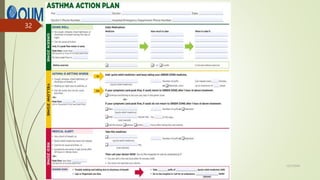
ASTHMA ACTION PLAN
 Asthma action plan is a written, individualized plan developed by a healthcare provider in
collaboration with the patient.
 Provides detailed instructions on managing asthma on a daily basis and how to handle
worsening symptoms or asthma attacks.
 The goal is to improve asthma control, reduce exacerbations, and prevent emergency
situations.
 Daily Management
• Medications: List of daily medications, including names, dosages, and times to take them
(e.g., long-term control medications like inhaled corticosteroids).
• Peak Flow Monitoring: Instructions on how and when to use a peak flow meter to
monitor lung function.
• Trigger Avoidance: Identification and avoidance of asthma triggers (e.g., allergens,
smoke, exercise, cold air).
12/7/2024
28
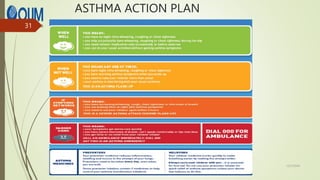
ASTHMA ACTION PLAN
 Recognizing and Responding to Symptoms
• Symptom Zones: A color-coded system (green, yellow, red) to help patients recognize
the severity of their symptoms and respond appropriately:
• Green Zone (Good Control): No symptoms, normal activities, peak flow at 80-100%
of personal best. Continue daily medications.
• Yellow Zone (Caution): Symptoms like coughing, wheezing, or shortness of breath;
peak flow at 50-79% of personal best. Increase medications as directed (e.g., using
quick-relief inhaler) and monitor closely.
• Red Zone (Danger): Severe symptoms, difficulty breathing, trouble walking/talking,
peak flow less than 50% of personal best. Immediate action required (e.g., take
quick-relief inhaler and seek emergency care).
12/7/2024
29
ASTHMA ACTION PLAN
 Emergency Instructions
• Emergency Contacts: List of phone numbers for healthcare providers and emergency
services.
• Step-by-Step Actions: Detailed steps to take during a severe asthma attack, including
medication doses and when to seek emergency medical help.
• Hospital Information: Directions to the nearest hospital or emergency department if
needed.

 Follow-Up and Review
• Regular Check-Ups: Schedule for regular follow-up appointments with a healthcare provider
to review and update the action plan as needed.

• Education and Training: Ensure the patient and their family or caregivers understand how to
use the plan, medications, and devices properly.
12/7/2024
30
ASTHMA ACTION PLAN
12/7/2024
31
12/7/2024
32
HEALTH BELIEFS
 Definition: Personal views and perceptions about asthma and its
management.
 Importance: Influences adherence to treatment and health
behaviors.
 Perceived Susceptibility :Belief about the likelihood of
experiencing asthma symptoms or attacks. Example: "I think I'm
very likely to have an asthma attack if I don't take my medication.
 "Perceived Severity : Belief about the seriousness and
consequences of asthma. Example: "Asthma can severely impact
my daily life and overall health."
12/7/2024
33
HEALTH BELIEFS
 Perceived Benefits : Belief in the effectiveness of treatments and
preventive measures. Example: "Using my inhaler regularly helps me
breathe better and reduces my symptoms.
 "Perceived Barriers : Perceived obstacles to effective asthma
management. Example: "The cost of asthma medications is too high," or
"I forget to take my medication.
 "Self-Efficacy : Confidence in one's ability to manage asthma.Example:
"I am confident that I can avoid asthma triggers and use my inhaler
correctly."
12/7/2024
34
HEALTH BELIEFS
 Cues to Action : Triggers that prompt action in managing asthma.
Example: "I feel short of breath, so I need to use my inhaler," or "My
doctor reminded me to take my medication.“
 Conclusion : Understanding and addressing health beliefs can improve
asthma management and patient outcomes. Healthcare providers should
consider these beliefs when developing treatment plans and providing
education.
12/7/2024
35
Conclusion
 Understanding asthma and its triggers is crucial.
 Proper management can control symptoms and improve quality of life.
 Education and awareness are essential for patients and caregivers.
12/7/2024
36
12/7/2024
37
12/7/2024
38

THIS SLIDE IS EXPOLE ABOUT ASTHMA DISEASE

  • 1.
    TOPIC 6 :ASTHMA & ALLERGIES Madam Rozila Ibrahim May Session 2024
  • 2.
    Learning Outcome At theend of the session, learner's would be able to; Discuss the pathophysiology of asthma. Describe of the respiratory assessment of patient with asthma. Discuss the immediate care for patient with asthma during an acute onset of attack. Discuss the asthma action plan. 12/7/2024 2
  • 3.
    Introduction of Asthma Achronic respiratory condition characterized by airway inflammation, hyperresponsiveness and muscle tightening around the airways.  Keyword; chronic, inflammation, hyperresponsiveness & muscle tightening 12/7/2024 3
  • 4.
  • 5.
  • 6.
    Types of Asthma Allergic Asthma: Triggered by allergens . Eg pollen, dust, pet dander.  Non-Allergic Asthma: Triggered by irritants, stress, or other non-allergenic factors eg; exercise , respiratory infections.  Exercise-Induced Bronchoconstriction: Narrowing of airway triggered by physical activity/ exertion.  Occupational Asthma: Triggered by workplace exposures eg chemiclas, dust and gases. 12/7/2024 6
  • 7.
    PATHOPHYSIOLOGY ASTHMA Airway Inflammation: Swellingand narrowing of the airways. Airway Hyperresponsiveness Bronchoconstriction: Constriction of the muscles around the airways. Mucus Production: Increased mucus secretion blocking airways. 12/7/2024 7
  • 8.
    Cont..PATHOPHYSIOLOGY ASTHMA  1.Airway Inflammation • Cellular Infiltration: The airways are infiltrated with various inflammatory cells, including eosinophils, T-lymphocytes, mast cells, and neutrophils. These cells release inflammatory mediators such as histamine, cytokines, and leukotrienes. • Airway Remodelling: Chronic inflammation leads to structural changes in the airway walls, including thickening of the basement membrane, increased smooth muscle mass, and subepithelial fibrosis. 12/7/2024 8
  • 9.
    Cont..PATHOPHYSIOLOGY ASTHMA  2.Airway Hyperresponsiveness • Bronchoconstriction: The airways become hyperreactive to various stimuli (allergens, irritants, cold air, exercise), leading to excessive bronchoconstriction. • Smooth Muscle Contraction: The smooth muscles surrounding the airways contract in response to inflammatory mediators, narrowing the airways and increasing airway resistance. 12/7/2024 9
  • 10.
    Cont..PATHOPHYSIOLOGY ASTHMA  3.Mucus Production • Goblet Cell Hyperplasia: There is an increase in the number and activity of goblet cells, leading to excessive mucus production. • Mucus Plugs: Thick, sticky mucus can form plugs that obstruct the airways and further contribute to airflow limitation. 12/7/2024 10
  • 11.
    Cont..PATHOPHYSIOLOGY ASTHMA  4.Airway Edema • Vascular Permeability: Inflammatory mediators increase vascular permeability, leading to fluid leakage and swelling of the airway tissues. • Submucosal Gland Hypertrophy: Enlargement of submucosal glands also contributes to increased mucus secretion and airway narrowing. 12/7/2024 11
  • 12.
    Cont..PATHOPHYSIOLOGY ASTHMA  5.Immune Response • IgE-Mediated Response: In allergic asthma, exposure to allergens leads to the production of IgE antibodies. These antibodies bind to mast cells, triggering the release of histamine and other inflammatory mediators upon subsequent exposures. • Th2 Dominance: Asthma is often associated with a Th2 (T- helper cell type 2) immune response, which promotes the production of cytokines (e.g., IL-4, IL-5, IL-13) that drive eosinophilic inflammation and IgE production. • The cells released by the immune system, including eosinophils, helper T cells, and mast cells, travel to the airways and increase inflammation and constriction. This leads to airflow obstruction, making it harder to breathe. The immune system response also stimulates the goblet cells, producing excess mucus. 12/7/2024 12
  • 13.
    SIGN & SYMPTOMS Wheezing Shortnessof breath Chest tightness Coughing (especially at night or early morning) 12/7/2024 13
  • 14.
    Respiratory assessment ofpatient with asthma.  1. Patient History • Symptoms: Ask about common symptoms such as wheezing, shortness of breath, chest tightness, and cough. Inquire about the frequency, duration, and triggers of these symptoms. • Medical History: Assess any previous asthma diagnoses, hospitalizations, emergency visits, and use of medications like inhalers or corticosteroids. • Family History: Determine if there is a family history of asthma or other respiratory conditions. • Allergy History: Identify any known allergies, including environmental, food, or medication-related allergies. • Lifestyle Factors: Consider smoking status, occupational exposures, and physical activity levels. 12/7/2024 14
  • 15.
    Respiratory assessment ofpatient with asthma.  2. Physical Examination • General Appearance: Observe for signs of respiratory distress such as nasal flaring, use of accessory muscles, and cyanosis. • Respiratory Rate and Effort: Measure the respiratory rate and note any difficulty in breathing. • Auscultation: Listen to lung sounds using a stethoscope to identify wheezing, crackles, or diminished breath sounds. • Peak Expiratory Flow Rate (PEFR): Measure the patient’s PEFR using a peak flow meter to assess airflow limitation. 12/7/2024 15
  • 16.
    Respiratory assessment ofpatient with asthma.  3. Diagnostic Tests • Spirometry: Conduct spirometry to measure lung function, including Forced Expiratory Volume in 1 second (FEV1) and Forced Vital Capacity (FVC). • Allergy Testing: Perform skin or blood tests to identify potential allergens that may trigger asthma symptoms. • Chest X-Ray: Obtain a chest X-ray if there are atypical symptoms or if other conditions need to be ruled out. 12/7/2024 16
  • 17.
    Respiratory assessment ofpatient with asthma.  4. Monitoring and Documentation • Symptom Diary: Encourage patients to keep a diary of their symptoms, medication use, and peak flow readings. • Asthma Action Plan: Develop an individualized asthma action plan that includes medication management and steps to take during an exacerbation. • Regular Follow-Ups: Schedule regular follow-up appointments to monitor the patient's asthma control and adjust treatment as needed. 12/7/2024 17
  • 18.
    Respiratory assessment ofpatient with asthma.  5. Patient Education • Inhaler Technique: Ensure the patient knows the correct technique for using inhalers. • Trigger Avoidance: Educate the patient on how to avoid or manage known triggers. • Action Plan: Teach the patient how to follow their asthma action plan and recognize signs of worsening asthma. 12/7/2024 18
  • 19.
    Diagnostic of Asthma •Medical history and physical examination –Reviewing symptoms and identifying triggers. • Pulmonary function tests (Spirometry) – Measures how much air can inhale and exhale, and how quickly can exhale. • Peak Expiratory Flow Rate (PEFR)- Measures the fastest speed can blow air out of the lungs. • Allergy testing- Identifies specific allergens that may trigger asthma symptoms. 12/7/2024 19
  • 20.
    Asthma Medications  Controllers: Inhaled corticosteroids  Long-acting beta agonists (LABAs)  Leukotriene modifiers  Relievers:  Short-acting beta agonists (SABAs)  Anticholinergics 12/7/2024 20
  • 21.
    Immediate care forpatient with asthma during an acute onset of attack. Immediate care for a patient experiencing an acute asthma attack is crucial to prevent severe complications and ensure adequate oxygenation.  1. Assess the Severity • Rapid Assessment: Evaluate the patient’s ability to speak (in full sentences, phrases, or single words), respiratory rate, heart rate, use of accessory muscles, level of consciousness, and peak expiratory flow rate (PEFR) if possible. • Signs of Severe Attack: Difficulty speaking, cyanosis (bluish skin), silent chest (no wheezing), confusion, and fatigue indicate a severe attack and require immediate intervention. 12/7/2024 21
  • 22.
  • 23.
    Immediate care forpatient with asthma during an acute onset of attack.  2. Administer Medication • Short-Acting Beta-Agonists (SABAs): Administer a fast- acting bronchodilator, such as albuterol (salbutamol), via a metered-dose inhaler (MDI) with a spacer or a nebulizer. Typical dosing for MDI is 2-4 puffs every 20 minutes for up to an hour. Nebulized albuterol can be given as 2.5 mg to 5 mg doses every 20 minutes. • Oxygen Therapy: Provide supplemental oxygen to maintain oxygen saturation (SpO2) above 92%. Use a nasal cannula or a non-rebreather mask, depending on the patient's needs. • Corticosteroids: Administer systemic corticosteroids (oral or intravenous) to reduce inflammation. Examples include prednisone or methylprednisolone. 12/7/2024 23
  • 24.
    Immediate care forpatient with asthma during an acute onset of attack.  3. Monitor and Reassess • Continuous Monitoring: Keep track of the patient's vital signs, respiratory status, and response to treatment. • PEFR or Spirometry: If available and the patient can perform the test, measure PEFR to assess the response to treatment. A significant improvement indicates a positive response. 12/7/2024 24
  • 25.
    Immediate care forpatient with asthma during an acute onset of attack.  4. Positioning • Comfortable Position: Position the patient in a high Fowler’s position (sitting upright) to facilitate easier breathing.  5. Calm Environment • Reduce Anxiety: Keep the patient calm and reassure them, as anxiety can worsen symptoms. Encourage slow, deep breaths.  6. Seek Emergency Help if Needed • Severe Symptoms: If the patient’s condition does not improve or worsens despite initial treatment, or if they exhibit signs of a severe attack (such as decreased level of consciousness, severe dyspnea, or cyanosis), activate emergency medical services or transport the patient to the nearest emergency department immediately. 12/7/2024 25
  • 26.
    Immediate care forpatient with asthma during an acute onset of attack.  7. Prepare for Advanced Interventions • Intubation and Mechanical Ventilation: In cases of life-threatening asthma where the patient is unable to maintain adequate oxygenation and ventilation, prepare for potential intubation and mechanical ventilation.  8. Document and Communicate • Record Treatments: Document all administered medications, doses, times, and the patient’s response. • Handover: Communicate effectively with other healthcare providers, especially if transferring care to emergency services or a higher level of care. **Providing timely and effective immediate care during an acute asthma attack can significantly improve patient outcomes and prevent severe complications. 12/7/2024 26
  • 27.
    MANAGING ACUTE ASTHMA Goals: Control symptoms  Prevent asthma attacks  Maintain normal activity levels  Reduce medication side effects Strategies:  Avoid triggers  Use medications (controllers and relievers)  Monitor symptoms and lung function 12/7/2024 27
  • 28.
    ASTHMA ACTION PLAN Asthma action plan is a written, individualized plan developed by a healthcare provider in collaboration with the patient.  Provides detailed instructions on managing asthma on a daily basis and how to handle worsening symptoms or asthma attacks.  The goal is to improve asthma control, reduce exacerbations, and prevent emergency situations.  Daily Management • Medications: List of daily medications, including names, dosages, and times to take them (e.g., long-term control medications like inhaled corticosteroids). • Peak Flow Monitoring: Instructions on how and when to use a peak flow meter to monitor lung function. • Trigger Avoidance: Identification and avoidance of asthma triggers (e.g., allergens, smoke, exercise, cold air). 12/7/2024 28
  • 29.
    ASTHMA ACTION PLAN Recognizing and Responding to Symptoms • Symptom Zones: A color-coded system (green, yellow, red) to help patients recognize the severity of their symptoms and respond appropriately: • Green Zone (Good Control): No symptoms, normal activities, peak flow at 80-100% of personal best. Continue daily medications. • Yellow Zone (Caution): Symptoms like coughing, wheezing, or shortness of breath; peak flow at 50-79% of personal best. Increase medications as directed (e.g., using quick-relief inhaler) and monitor closely. • Red Zone (Danger): Severe symptoms, difficulty breathing, trouble walking/talking, peak flow less than 50% of personal best. Immediate action required (e.g., take quick-relief inhaler and seek emergency care). 12/7/2024 29
  • 30.
    ASTHMA ACTION PLAN Emergency Instructions • Emergency Contacts: List of phone numbers for healthcare providers and emergency services. • Step-by-Step Actions: Detailed steps to take during a severe asthma attack, including medication doses and when to seek emergency medical help. • Hospital Information: Directions to the nearest hospital or emergency department if needed.  Follow-Up and Review • Regular Check-Ups: Schedule for regular follow-up appointments with a healthcare provider to review and update the action plan as needed. • Education and Training: Ensure the patient and their family or caregivers understand how to use the plan, medications, and devices properly. 12/7/2024 30
  • 31.
  • 32.
  • 33.
    HEALTH BELIEFS  Definition:Personal views and perceptions about asthma and its management.  Importance: Influences adherence to treatment and health behaviors.  Perceived Susceptibility :Belief about the likelihood of experiencing asthma symptoms or attacks. Example: "I think I'm very likely to have an asthma attack if I don't take my medication.  "Perceived Severity : Belief about the seriousness and consequences of asthma. Example: "Asthma can severely impact my daily life and overall health." 12/7/2024 33
  • 34.
    HEALTH BELIEFS  PerceivedBenefits : Belief in the effectiveness of treatments and preventive measures. Example: "Using my inhaler regularly helps me breathe better and reduces my symptoms.  "Perceived Barriers : Perceived obstacles to effective asthma management. Example: "The cost of asthma medications is too high," or "I forget to take my medication.  "Self-Efficacy : Confidence in one's ability to manage asthma.Example: "I am confident that I can avoid asthma triggers and use my inhaler correctly." 12/7/2024 34
  • 35.
    HEALTH BELIEFS  Cuesto Action : Triggers that prompt action in managing asthma. Example: "I feel short of breath, so I need to use my inhaler," or "My doctor reminded me to take my medication.“  Conclusion : Understanding and addressing health beliefs can improve asthma management and patient outcomes. Healthcare providers should consider these beliefs when developing treatment plans and providing education. 12/7/2024 35
  • 36.
    Conclusion  Understanding asthmaand its triggers is crucial.  Proper management can control symptoms and improve quality of life.  Education and awareness are essential for patients and caregivers. 12/7/2024 36
  • 37.
  • 38.