Respiratory Diseases
LGD 2
History:
JJ is a 23-year-old female who came
in the ER for the first time for
shortness of breath and productive
cough. She was brought in by her
cousin who noticed the former
coughing 2 hours after playing with
the neighborhood stray cat. The
patient has no fever, is a non-smoker,
and is working as a kindergarten
teacher.
She has a history of a mild allergic
reaction to an unrecalled medication.
Relevant family history includes
asthma on her father's side.
CASE:
Physical Examination:
General Survey: awake, oriented, responsive,
anxious, speaking in phrases
Vital signs: BP 118/75, HR 109, RR 26, temp
36.8°C, 02 sat 93% at room air, PS 0/10, wt 54 kg
HEENT: anicteric sclerae; pink palpebral
conjunctivae; (+) minimal nasal flaring
Skin: moist, warm, with good turgor and mobility,
acyanotic Chest/Lungs: equal chest expansion,
no accessory muscle movement, (+) expiratory
wheeze on both lungs, no crackles
CVS: distinct heart sounds, tachycardic, regular
Abdomen: soft, normoactive bowel sounds
GUT: unremarkable
Extremities: strong peripheral pulses, CRT <2 sec
CNS: unremarkable
Laboratories:
CBC: Hbg 12.9 g/dI, Hct 0.36, platelet
289,000
WBC 13,100
Baso 0.5%
Neu 64.9%
Mono 3.2%
Eos 10.2%
Lympho 24.4%
CXR-PA: trachea at midline, no
parenchymal infiltrates, pulmonary vessels
not engorged, cardiac silhouette clear and
normal in size, costovertebral angles sharp
Q1: What is broncial asthma? How is it
differen from COPD in its pathophysiology
and clinical presentation?
Asthma is a disease characterized by:
episodic airway obstruction and hyperresponsiveness (inceased sensitivity of the airways
to an inhaled constrictor agents) - dust, pollens and mold, pet fur
frequently accompanied by airway inflammation.
The airway blockage is usually reversible,
most frequently presents as:
episodic shortness of breath, wheezing, and cough,
which can occur in relation to triggers but may also occur spontaneously.
Other symptoms can include:
chest tightness and/or mucus production.
These symptoms can resolve spontaneously or with therapy.
In some patients, wheezing and/or dyspnea can be persistent.
Episodes of acute bronchospasm, known as exacerbations, may be severe enough to
require emergency medical care or hospitalization and may result in death.
Pathophysiology of Asthma:
Illustrated is a cross-sectional lumen of a bronchus.
The left-hand side represents the normal airway, the
right represents an asthmatic airway highlighting the
pathologic changes that can be seen in asthma.
The asthmatic airway lumen is reduced by smooth-
muscle constriction, mucus in the airway lumen, and
thickening of the submucosa due to edema and
cellular infiltration. In addition, the ability of the
lumen to increase in size with smooth-muscle
relaxation may be impaired by deposition of
collagen.
The epithelium is disrupted, and there is evidence of
vascular and neuronal proliferation.
All these changes may not be present in one
individual, and certain patients may have normal-
appearing airways.
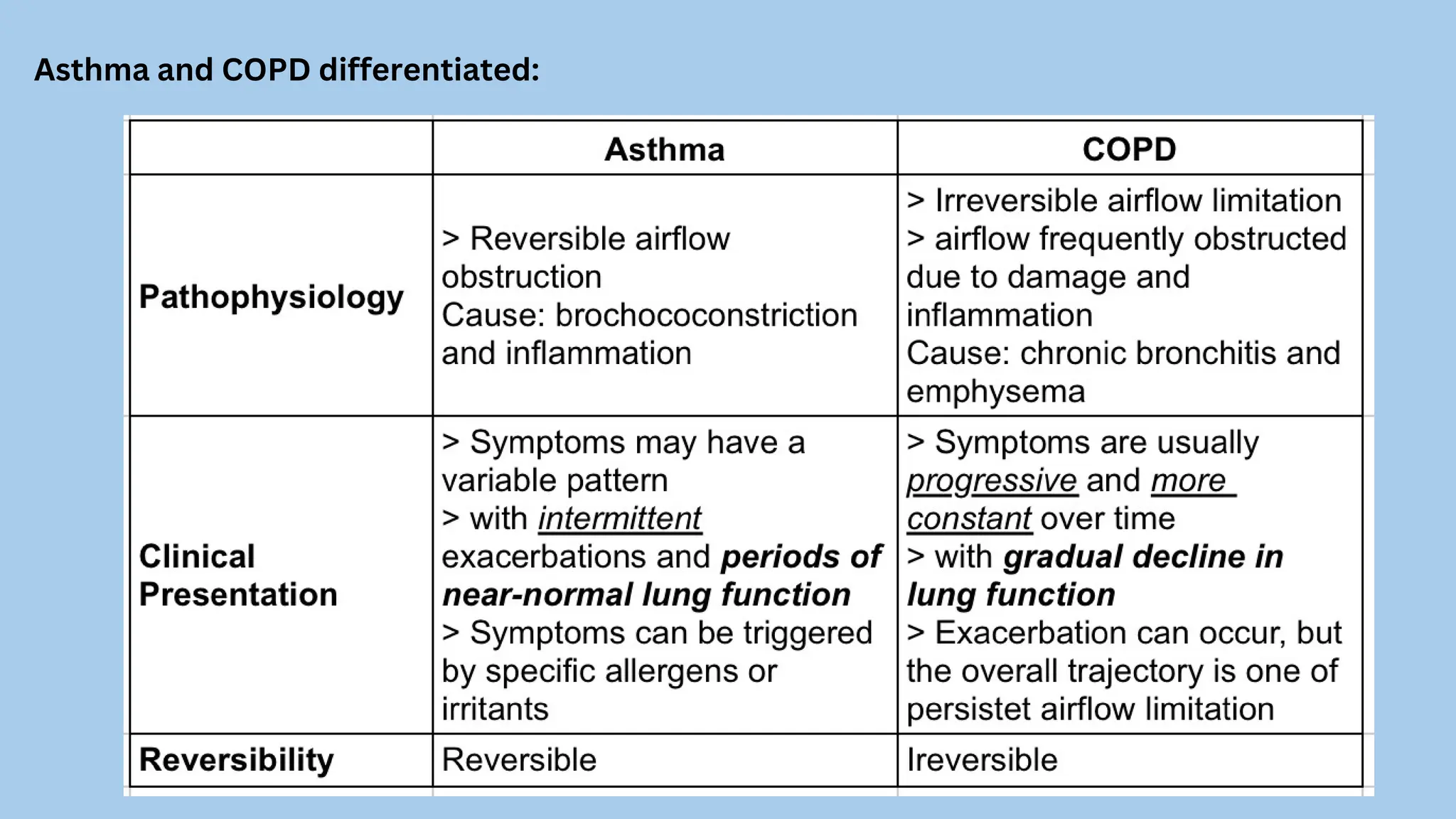
Asthma and COPD differentiated:
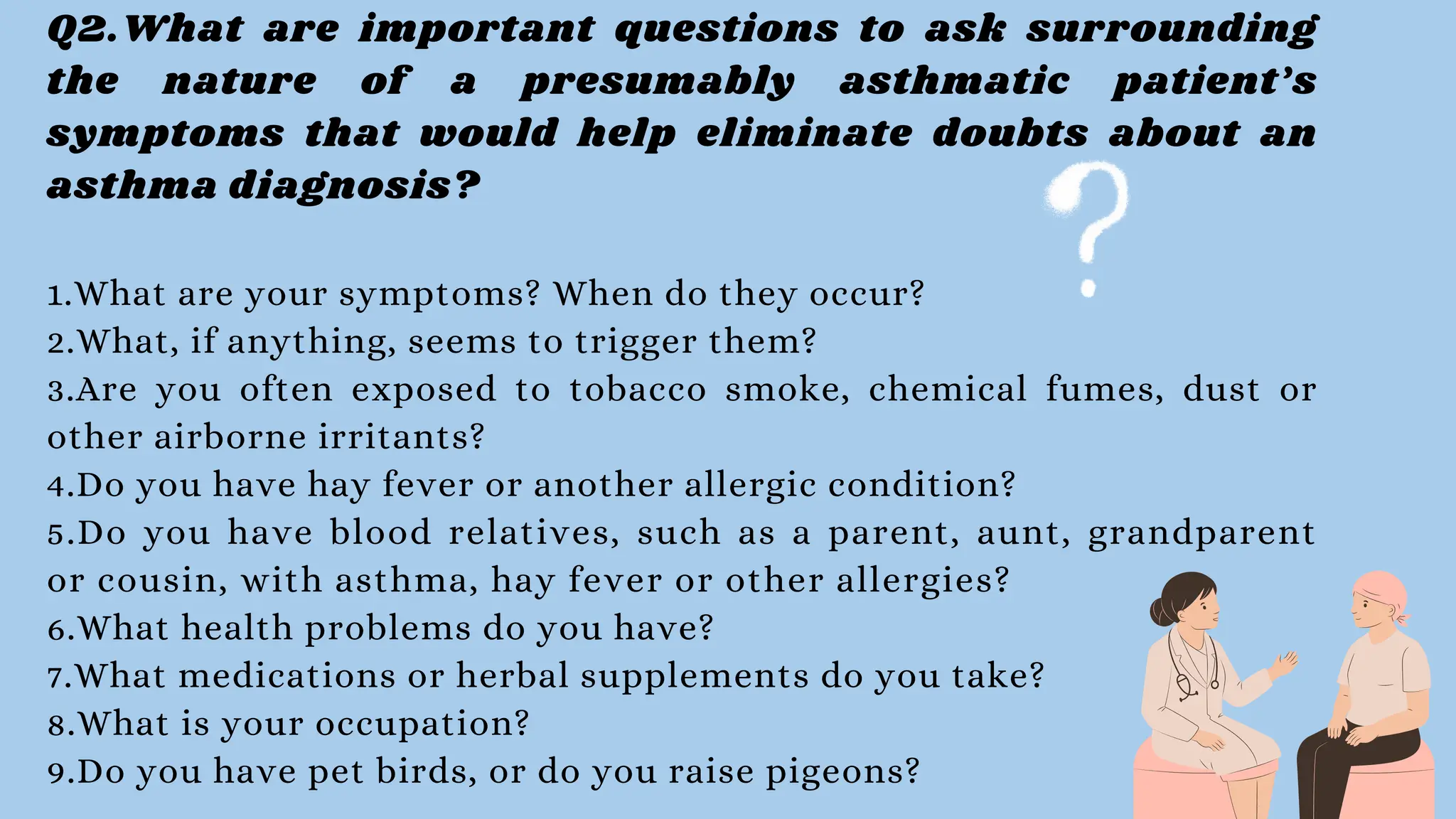
Q2.What are important questions to ask surrounding
the nature of a presumably asthmatic patient’s
symptoms that would help eliminate doubts about an
asthma diagnosis?
1.What are your symptoms? When do they occur?
2.What, if anything, seems to trigger them?
3.Are you often exposed to tobacco smoke, chemical fumes, dust or
other airborne irritants?
4.Do you have hay fever or another allergic condition?
5.Do you have blood relatives, such as a parent, aunt, grandparent
or cousin, with asthma, hay fever or other allergies?
6.What health problems do you have?
7.What medications or herbal supplements do you take?
8.What is your occupation?
9.Do you have pet birds, or do you raise pigeons?
3. How is asthma definitively diagnosed?
What are the expected spirometric findings in asthma in
adults and children ?
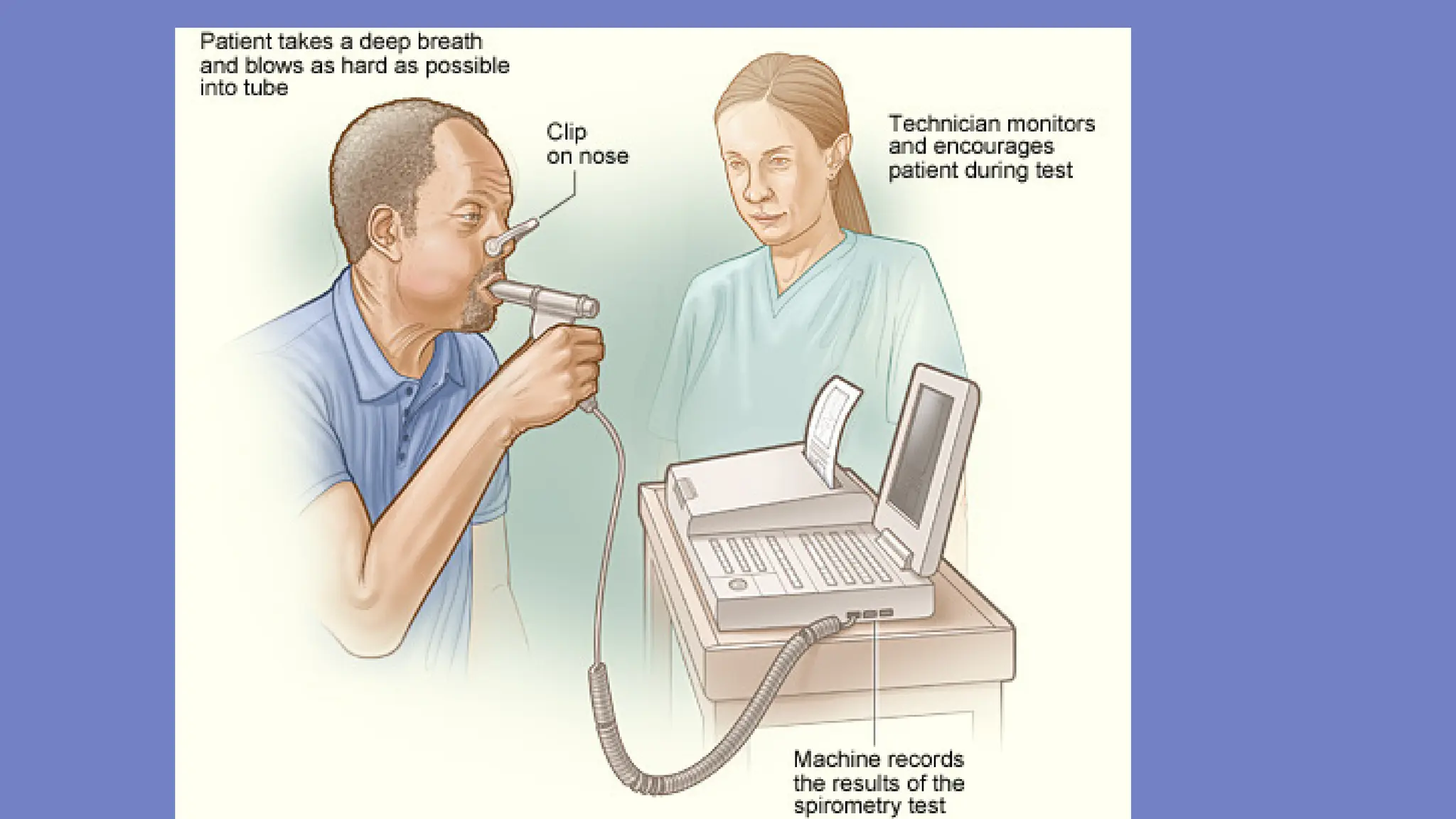
Definitive diagnosis: Spirometry
Spirometry demonstrates the reversible air flow obstruction in
the airways. Spirometric findings of an asthma patient shows
reduced levels of FEV1(forced expiratory volume in one
second) and FEV1/FVC(forced vital capacity) ratio.
*FEV1/FVC normal ratio is 0.75 to 0.80
* Adults increase in FEV1 of >12% and > 200 ml from baseline,
10-15 mins After 200-400 mcg Salbutamol.
*In pediatric patients with asthma, a normal FEV1/FVC ratio is
generally above 0.85. A reduced ratio may suggest airflow
obstruction, supporting the diagnosis of asthma, especially if there is
a significant improvement (increase of >12% and >200 ml) in FEV1
after bronchodilator administration.
4.What is the first line treatment of asthma according to the 2023 GINA guidelines?
*Inhaled corticosteroids (ICS) are commonly recommended as first-line treatment for asthma
*GINA recommends that all adults and adolescents and all children 6–11 years should receive ICS-containing
medication, incorporated in their maintenance and/or anti-inflammatory reliever treatment as part of personalized
asthma management
1.Bronchodilators
Leukotriene Modifiers - e.g., Montelukast: Block leukotrienes, substances that contribute to inflammation.
Side Effects:
Corticosteroids may cause oral thrush, hoarseness, and inhaled corticosteroids can lead to local side
effects.Long-term use can have systemic effects like adrenal suppression. Leukotriene modifiers can cause
headache and gastrointestinal upset.
Mechanism of Action
Short-Acting Beta-Agonists (SABA) - e.g., Albuterol: Stimulate beta-2 adrenergic receptors, leading to
bronchodilation by relaxing smooth muscles in the airways.
Long-Acting Beta-Agonists (LABA) - e.g., Salmeterol: Similar to SABAs but have a longer duration of action
Side Effects
Common side effects include tremors, increased heart rate (tachycardia), and nervousness.
2.Anti-Inflammatory Agents:
Mechanism of Action
Corticosteroids - e.g., Fluticasone, Budesonide: Reduce inflammation by inhibiting the production of
inflammatory mediators.
5.What are the mechanisms of action of each group of drugs used in the treatment
and control of asthma? What are their side effects?
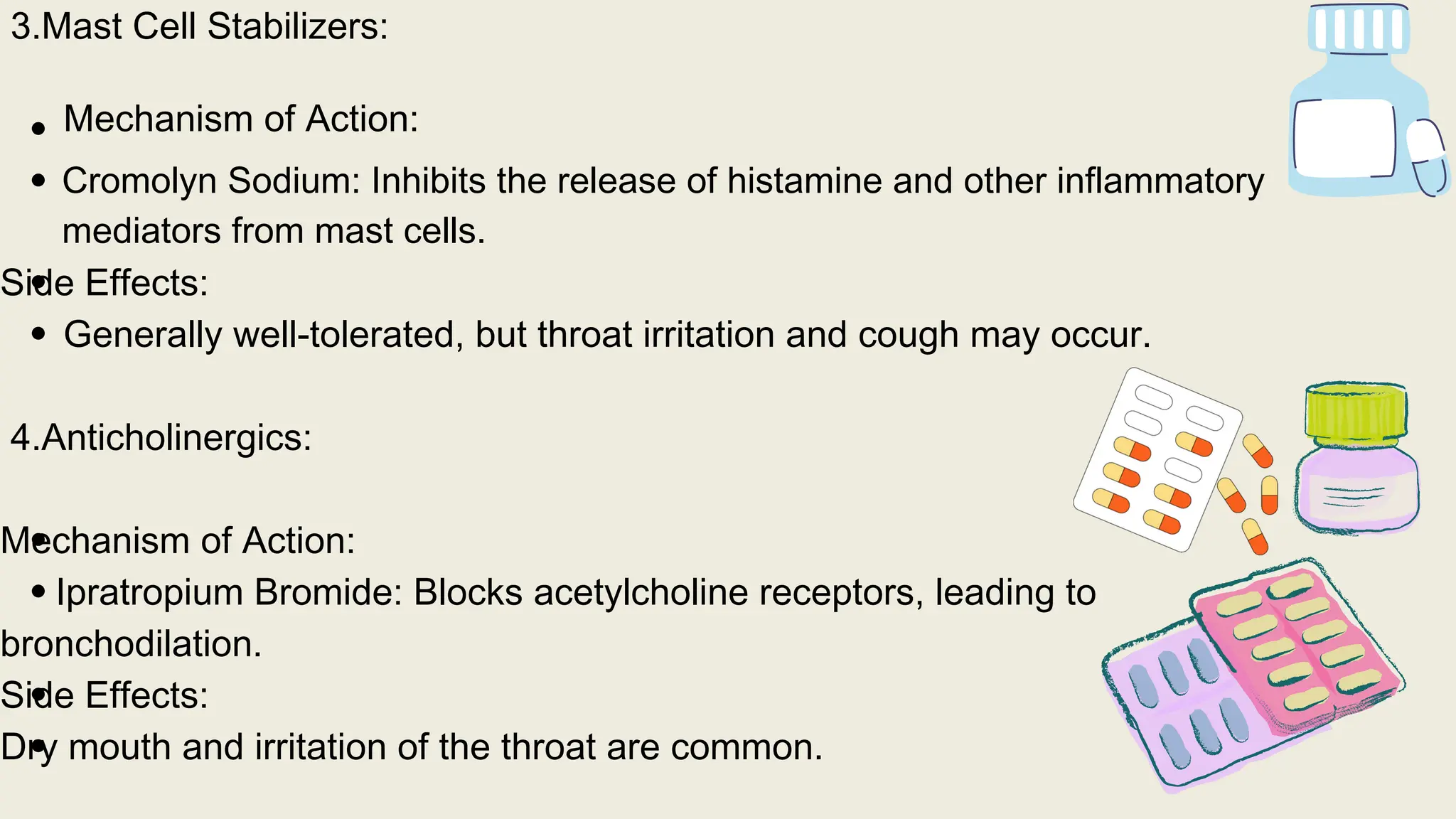
3.Mast Cell Stabilizers:
Mechanism of Action:
Side Effects:
Generally well-tolerated, but throat irritation and cough may occur.
4.Anticholinergics:
Mechanism of Action:
Ipratropium Bromide: Blocks acetylcholine receptors, leading to
bronchodilation.
Side Effects:
Dry mouth and irritation of the throat are common.
Cromolyn Sodium: Inhibits the release of histamine and other inflammatory
mediators from mast cells.
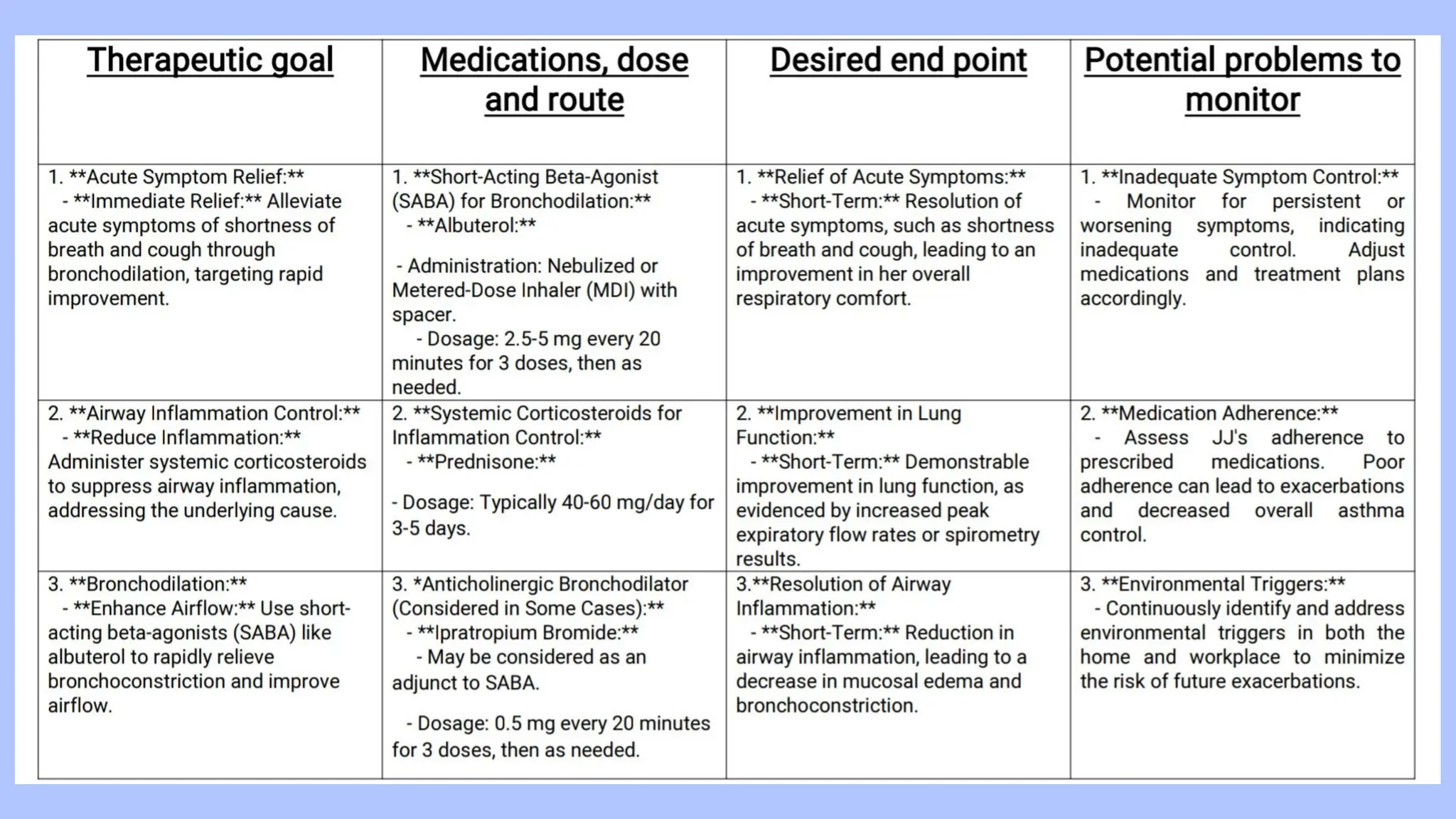
6. After asking the questions mentioned in objective no. 2 and obtaining spirometry results (see “PFT
report” below), a diagnosis of asthma was made. Assuming that urgent treatment has already been
given to the patient, what are the steps to follow when attempting to control asthma symptoms and
reduce future exacerbations? Create a table of your intended therapeutic plan as well.
1.Identify and Avoid Triggers:
• Investigate and manage specific triggers, such as potential allergens. Given the
history of coughing after playing with a stray cat, consider allergy testing to identify
any cat allergens.
2.Asthma Education:
• Provide comprehensive asthma education, focusing on trigger avoidance, proper
inhaler technique, and the importance of adherence to prescribed medications.
3.Long-Term Controller Medication:
• Prescribe an inhaled corticosteroid, such as fluticasone, as a maintenance therapy
to reduce airway inflammation and prevent exacerbations.
steps to follow when attempting to control asthma symptoms and reduce future exacerbations
4.Short-Acting Beta-Agonist (SABA):
• Recommend the use of a short-acting beta-agonist (e.g., albuterol) as a rescue inhaler for acute
symptoms. Instruct on proper usage and emphasize that it should be used as needed for wheezing or
shortness of breath.
5.Regular Follow-Up:
• Schedule regular follow-up appointments to monitor symptoms, assess medication effectiveness, and
adjust the treatment plan accordingly.
6.Allergy Management:
• Consider allergy management strategies, including environmental modifications and allergen
avoidance. If allergic triggers are identified, work on minimizing exposure.
7.Emergency Action Plan:
• Develop an emergency action plan with JJ, outlining steps to take in case of worsening symptoms.
Ensure she knows when to seek medical attention promptly.
8.Encourage Healthy Lifestyle:
• Encourage a healthy lifestyle, including regular exercise, a balanced diet, and adequate sleep, which
can contribute to overall respiratory health.
9.Stress Management:
• Address anxiety levels, as stress can be a trigger for asthma exacerbations. Encourage stress-
management techniques, such as deep breathing exercises or mindfulness.
7) Four weeks after a diagnosis of asthma was made and treatment was started,
the patient below came to the OPD for a follow-up check-up. What are the 4
questions you must ask to assess the effectiveness of the treatment regimen?
Have you noticed any changes in your asthma
symptoms since starting the prescribed treatment?
Specifically, inquire about changes in coughing,
wheezing, chest tightness, and shortness of breath.
1)Medication Adherence:
Can you confirm that you have been taking the prescribed
medications consistently as directed, and have you
experienced any side effects or challenges with the medication
regimen?
2)Symptom Improvement:
3)Frequency and Severity
Have you been able to engage in your usual daily activities, including
physical exercise, without a significant increase in asthma-related
difficulties?
How often are you experiencing asthma symptoms now, and have they
become less severe or frequent compared to before the treatment?
4)Activity Level:
Therapeutic Goal
The therapeutic goal would likely involve relieving her current
symptoms of shortness of breath and cough, identifying and managing
any potential allergic reactions, and preventing future episodes. This
may include administering bronchodilators or anti-inflammatory
medications, providing allergy management, and offering guidance on
avoiding triggers.
Respiratory diseases (Asthma and COPD) case based presentation

Respiratory diseases (Asthma and COPD) case based presentation

  • 1.
  • 2.
    History: JJ is a23-year-old female who came in the ER for the first time for shortness of breath and productive cough. She was brought in by her cousin who noticed the former coughing 2 hours after playing with the neighborhood stray cat. The patient has no fever, is a non-smoker, and is working as a kindergarten teacher. She has a history of a mild allergic reaction to an unrecalled medication. Relevant family history includes asthma on her father's side. CASE:
  • 3.
    Physical Examination: General Survey:awake, oriented, responsive, anxious, speaking in phrases Vital signs: BP 118/75, HR 109, RR 26, temp 36.8°C, 02 sat 93% at room air, PS 0/10, wt 54 kg HEENT: anicteric sclerae; pink palpebral conjunctivae; (+) minimal nasal flaring Skin: moist, warm, with good turgor and mobility, acyanotic Chest/Lungs: equal chest expansion, no accessory muscle movement, (+) expiratory wheeze on both lungs, no crackles CVS: distinct heart sounds, tachycardic, regular Abdomen: soft, normoactive bowel sounds GUT: unremarkable Extremities: strong peripheral pulses, CRT <2 sec CNS: unremarkable Laboratories: CBC: Hbg 12.9 g/dI, Hct 0.36, platelet 289,000 WBC 13,100 Baso 0.5% Neu 64.9% Mono 3.2% Eos 10.2% Lympho 24.4% CXR-PA: trachea at midline, no parenchymal infiltrates, pulmonary vessels not engorged, cardiac silhouette clear and normal in size, costovertebral angles sharp
  • 4.
    Q1: What isbroncial asthma? How is it differen from COPD in its pathophysiology and clinical presentation? Asthma is a disease characterized by: episodic airway obstruction and hyperresponsiveness (inceased sensitivity of the airways to an inhaled constrictor agents) - dust, pollens and mold, pet fur frequently accompanied by airway inflammation. The airway blockage is usually reversible, most frequently presents as: episodic shortness of breath, wheezing, and cough, which can occur in relation to triggers but may also occur spontaneously. Other symptoms can include: chest tightness and/or mucus production. These symptoms can resolve spontaneously or with therapy. In some patients, wheezing and/or dyspnea can be persistent. Episodes of acute bronchospasm, known as exacerbations, may be severe enough to require emergency medical care or hospitalization and may result in death.
  • 5.
    Pathophysiology of Asthma: Illustratedis a cross-sectional lumen of a bronchus. The left-hand side represents the normal airway, the right represents an asthmatic airway highlighting the pathologic changes that can be seen in asthma. The asthmatic airway lumen is reduced by smooth- muscle constriction, mucus in the airway lumen, and thickening of the submucosa due to edema and cellular infiltration. In addition, the ability of the lumen to increase in size with smooth-muscle relaxation may be impaired by deposition of collagen. The epithelium is disrupted, and there is evidence of vascular and neuronal proliferation. All these changes may not be present in one individual, and certain patients may have normal- appearing airways.
  • 6.
    Asthma and COPDdifferentiated:
  • 7.
    Q2.What are importantquestions to ask surrounding the nature of a presumably asthmatic patient’s symptoms that would help eliminate doubts about an asthma diagnosis? 1.What are your symptoms? When do they occur? 2.What, if anything, seems to trigger them? 3.Are you often exposed to tobacco smoke, chemical fumes, dust or other airborne irritants? 4.Do you have hay fever or another allergic condition? 5.Do you have blood relatives, such as a parent, aunt, grandparent or cousin, with asthma, hay fever or other allergies? 6.What health problems do you have? 7.What medications or herbal supplements do you take? 8.What is your occupation? 9.Do you have pet birds, or do you raise pigeons?
  • 8.
    3. How isasthma definitively diagnosed? What are the expected spirometric findings in asthma in adults and children ? Definitive diagnosis: Spirometry Spirometry demonstrates the reversible air flow obstruction in the airways. Spirometric findings of an asthma patient shows reduced levels of FEV1(forced expiratory volume in one second) and FEV1/FVC(forced vital capacity) ratio.
  • 10.
    *FEV1/FVC normal ratiois 0.75 to 0.80 * Adults increase in FEV1 of >12% and > 200 ml from baseline, 10-15 mins After 200-400 mcg Salbutamol. *In pediatric patients with asthma, a normal FEV1/FVC ratio is generally above 0.85. A reduced ratio may suggest airflow obstruction, supporting the diagnosis of asthma, especially if there is a significant improvement (increase of >12% and >200 ml) in FEV1 after bronchodilator administration.
  • 11.
    4.What is thefirst line treatment of asthma according to the 2023 GINA guidelines? *Inhaled corticosteroids (ICS) are commonly recommended as first-line treatment for asthma *GINA recommends that all adults and adolescents and all children 6–11 years should receive ICS-containing medication, incorporated in their maintenance and/or anti-inflammatory reliever treatment as part of personalized asthma management
  • 12.
    1.Bronchodilators Leukotriene Modifiers -e.g., Montelukast: Block leukotrienes, substances that contribute to inflammation. Side Effects: Corticosteroids may cause oral thrush, hoarseness, and inhaled corticosteroids can lead to local side effects.Long-term use can have systemic effects like adrenal suppression. Leukotriene modifiers can cause headache and gastrointestinal upset. Mechanism of Action Short-Acting Beta-Agonists (SABA) - e.g., Albuterol: Stimulate beta-2 adrenergic receptors, leading to bronchodilation by relaxing smooth muscles in the airways. Long-Acting Beta-Agonists (LABA) - e.g., Salmeterol: Similar to SABAs but have a longer duration of action Side Effects Common side effects include tremors, increased heart rate (tachycardia), and nervousness. 2.Anti-Inflammatory Agents: Mechanism of Action Corticosteroids - e.g., Fluticasone, Budesonide: Reduce inflammation by inhibiting the production of inflammatory mediators. 5.What are the mechanisms of action of each group of drugs used in the treatment and control of asthma? What are their side effects?
  • 13.
    3.Mast Cell Stabilizers: Mechanismof Action: Side Effects: Generally well-tolerated, but throat irritation and cough may occur. 4.Anticholinergics: Mechanism of Action: Ipratropium Bromide: Blocks acetylcholine receptors, leading to bronchodilation. Side Effects: Dry mouth and irritation of the throat are common. Cromolyn Sodium: Inhibits the release of histamine and other inflammatory mediators from mast cells.
  • 14.
    6. After askingthe questions mentioned in objective no. 2 and obtaining spirometry results (see “PFT report” below), a diagnosis of asthma was made. Assuming that urgent treatment has already been given to the patient, what are the steps to follow when attempting to control asthma symptoms and reduce future exacerbations? Create a table of your intended therapeutic plan as well. 1.Identify and Avoid Triggers: • Investigate and manage specific triggers, such as potential allergens. Given the history of coughing after playing with a stray cat, consider allergy testing to identify any cat allergens. 2.Asthma Education: • Provide comprehensive asthma education, focusing on trigger avoidance, proper inhaler technique, and the importance of adherence to prescribed medications. 3.Long-Term Controller Medication: • Prescribe an inhaled corticosteroid, such as fluticasone, as a maintenance therapy to reduce airway inflammation and prevent exacerbations. steps to follow when attempting to control asthma symptoms and reduce future exacerbations
  • 15.
    4.Short-Acting Beta-Agonist (SABA): •Recommend the use of a short-acting beta-agonist (e.g., albuterol) as a rescue inhaler for acute symptoms. Instruct on proper usage and emphasize that it should be used as needed for wheezing or shortness of breath. 5.Regular Follow-Up: • Schedule regular follow-up appointments to monitor symptoms, assess medication effectiveness, and adjust the treatment plan accordingly. 6.Allergy Management: • Consider allergy management strategies, including environmental modifications and allergen avoidance. If allergic triggers are identified, work on minimizing exposure. 7.Emergency Action Plan: • Develop an emergency action plan with JJ, outlining steps to take in case of worsening symptoms. Ensure she knows when to seek medical attention promptly. 8.Encourage Healthy Lifestyle: • Encourage a healthy lifestyle, including regular exercise, a balanced diet, and adequate sleep, which can contribute to overall respiratory health. 9.Stress Management: • Address anxiety levels, as stress can be a trigger for asthma exacerbations. Encourage stress- management techniques, such as deep breathing exercises or mindfulness.
  • 17.
    7) Four weeksafter a diagnosis of asthma was made and treatment was started, the patient below came to the OPD for a follow-up check-up. What are the 4 questions you must ask to assess the effectiveness of the treatment regimen? Have you noticed any changes in your asthma symptoms since starting the prescribed treatment? Specifically, inquire about changes in coughing, wheezing, chest tightness, and shortness of breath. 1)Medication Adherence: Can you confirm that you have been taking the prescribed medications consistently as directed, and have you experienced any side effects or challenges with the medication regimen? 2)Symptom Improvement:
  • 18.
    3)Frequency and Severity Haveyou been able to engage in your usual daily activities, including physical exercise, without a significant increase in asthma-related difficulties? How often are you experiencing asthma symptoms now, and have they become less severe or frequent compared to before the treatment? 4)Activity Level:
  • 19.
    Therapeutic Goal The therapeuticgoal would likely involve relieving her current symptoms of shortness of breath and cough, identifying and managing any potential allergic reactions, and preventing future episodes. This may include administering bronchodilators or anti-inflammatory medications, providing allergy management, and offering guidance on avoiding triggers.