PRESENTED BY:
Dr. Arindom Changmai
Sr. Lecturer,DEPT. OF OMFS
GOVERNMENT DENTAL
COLLEGE, SILCHAR ,ASSAM
1
CONTENTS
 INTRODUCTION
 DEFINITIONS
 THEORIES OF IMPACTION
 ETIOLOGY
 INDICATION AND CONTRAINDICATION
 CLASSIFICATION
 SURGICAL ANATOMY
 RADIOLOGICAL ASSESSMENT
 ASSESSMENT OF SURGICAL DIFFICULTY
 SURGICAL PROCEDURE
 COMPLICATIONS
 RECENT ADVANCES
 REFERENCES
2
INTRODUCTION
 The third molar has been the most widely discussed tooth in
the dental literature, and the debatable question “….. to
extract or not to extract” seems set to run into the next
century. - Faiez N. Hattab, JOMS, 57: 389-391 (1999)
 Also because of its late eruption it is the most commonly
impacted tooth.
 The word impaction is derived from the latin word impactus.
 The surgical removal of 3rd molars has been and still is the
most common operation performed by the oral and
maxillofacial surgeon both in clinical practice as well as in a
hospital setting. 3
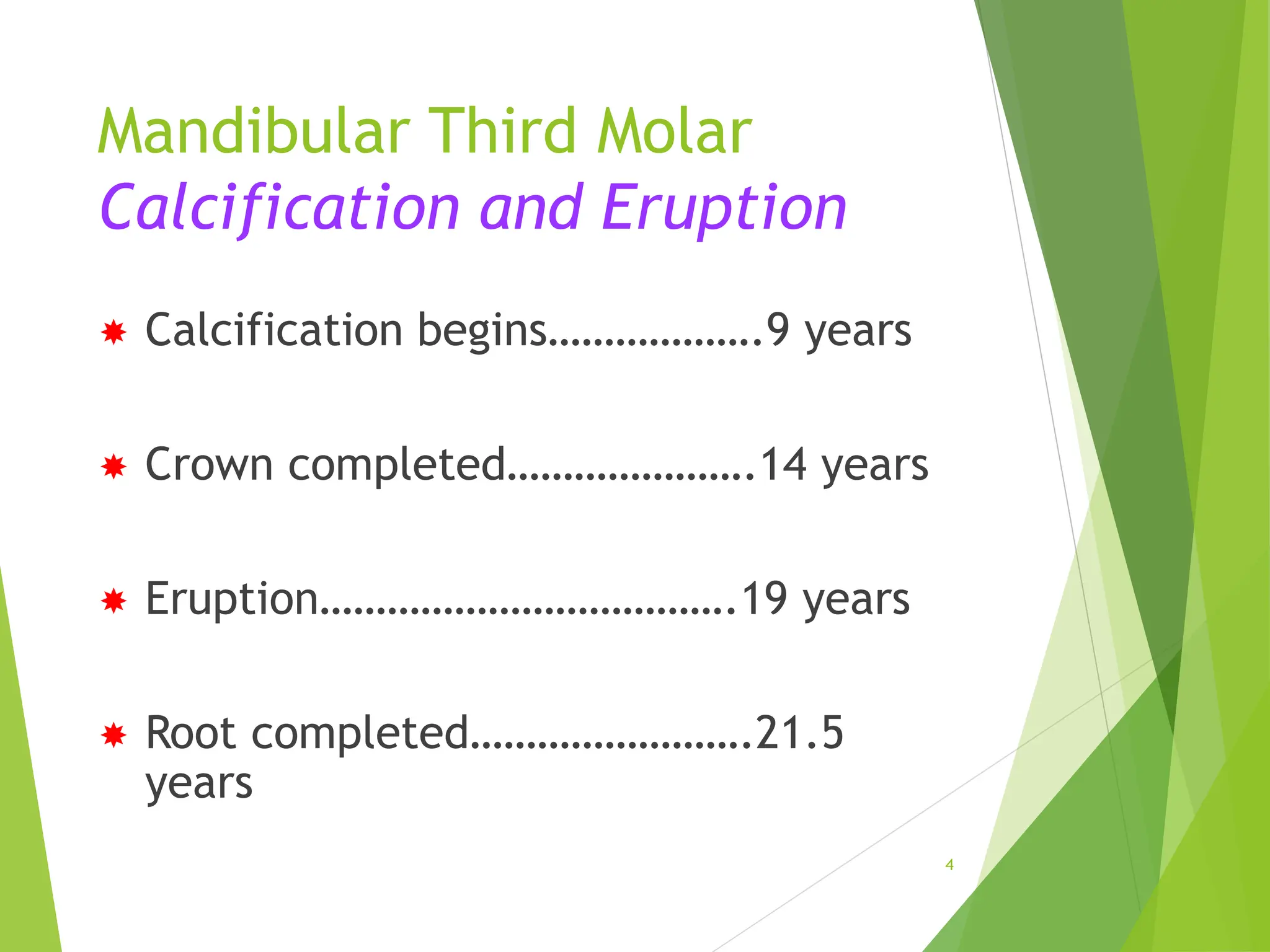
Mandibular Third Molar
Calcification and Eruption
 Calcification begins……………….9 years
 Crown completed………………….14 years
 Eruption……………………………….19 years
 Root completed…………………….21.5
years
4
DEFINITIONS
 According to WHO – An impacted tooth is any tooth that
is prevented from reaching its normal position in the
mouth by tissue, bone or another tooth.
 According to Archer- A tooth which is completely or
partially unerupted and is positioned against another
tooth, bone or soft tissue so that its further eruption is
unlikely, described according to its anatomic Position .
 According to Anderson-An impacted tooth is a tooth -which
is prevented from completely erupting into a normal
functional position due to lack of space, obstruction by
another tooth or an abnormal eruption path 5
WHEN IS A TOOTH
CONSIDERED IMPACTED?
A tooth is considered impacted if :
 It has failed to erupt fully within the expected
time of eruption
 If the angulation of the tooth is such that its
eruption into the oral cavity is unlikely
 When the ratio of crown to the space available
for eruption is lesser than 1
6
THEORIES OF IMPACTION(DURBECK)
1) Orthodontic theory : Jaws develop in downward
and forward direction. Growth of the jaw and
movement of teeth occurs in forward direction, so
any thing that interfere with such moment will cause
an impaction (small jaw-decreased space).
A dense bone decreases the movement of the teeth
in forward direction.
7
Theories of impaction
2) Phylogenic theory: Nature tries to eliminate the disused
organs i.e., use makes the organ develop better, disuse
causes slow regression of organ.
[More-functional masticatory force – better the
development of the jaw]
Due to changing nutritional habits of our civilization,
use of large powerful jaws have been practically
eliminated. Thus, over centuries the mandible and maxilla
decreased in size leaving insufficient room for third molars.
8
Theories of impaction
3) Mendelian theory: Heredity is most common
cause. The hereditary transmission of small
jaws and large teeth from parents to
siblings. This may be important etiological
factor in the occurrence of impaction.
4)Pathological theory: Chronic infections
affecting an individual may bring the
condensation of osseous tissue further
preventing the growth and development of the
jaws.
5)Endocrinal theory: Increase or decrease in
growth hormone secretion may affect the size
of the jaws
9
ETIOLOGY OF IMPACTION
(BERGER)
 LOCAL CAUSES
Lack of Space in the Dental arch
Obstruction for eruption
Ankylosis
Retained deciduous teeth
Non absorbing alveolar bone
Bony lesion
Ectopic position of tooth bud
Habits involving tongue, finger,cheek,pencil,etc.
10
SYSTEMIC CAUSES
Prenatal causes
 Heredity
Postnatal causes
 Rickets
 Anemia
 Congenital syphilis
 T.B
 Endocrine dysfunctions
 Malnutrition
Rare conditions
 Cleidocranial
dysostosis
 Oxycephaly
 Progeria
 Achondroplasia
 Cleft palate
11
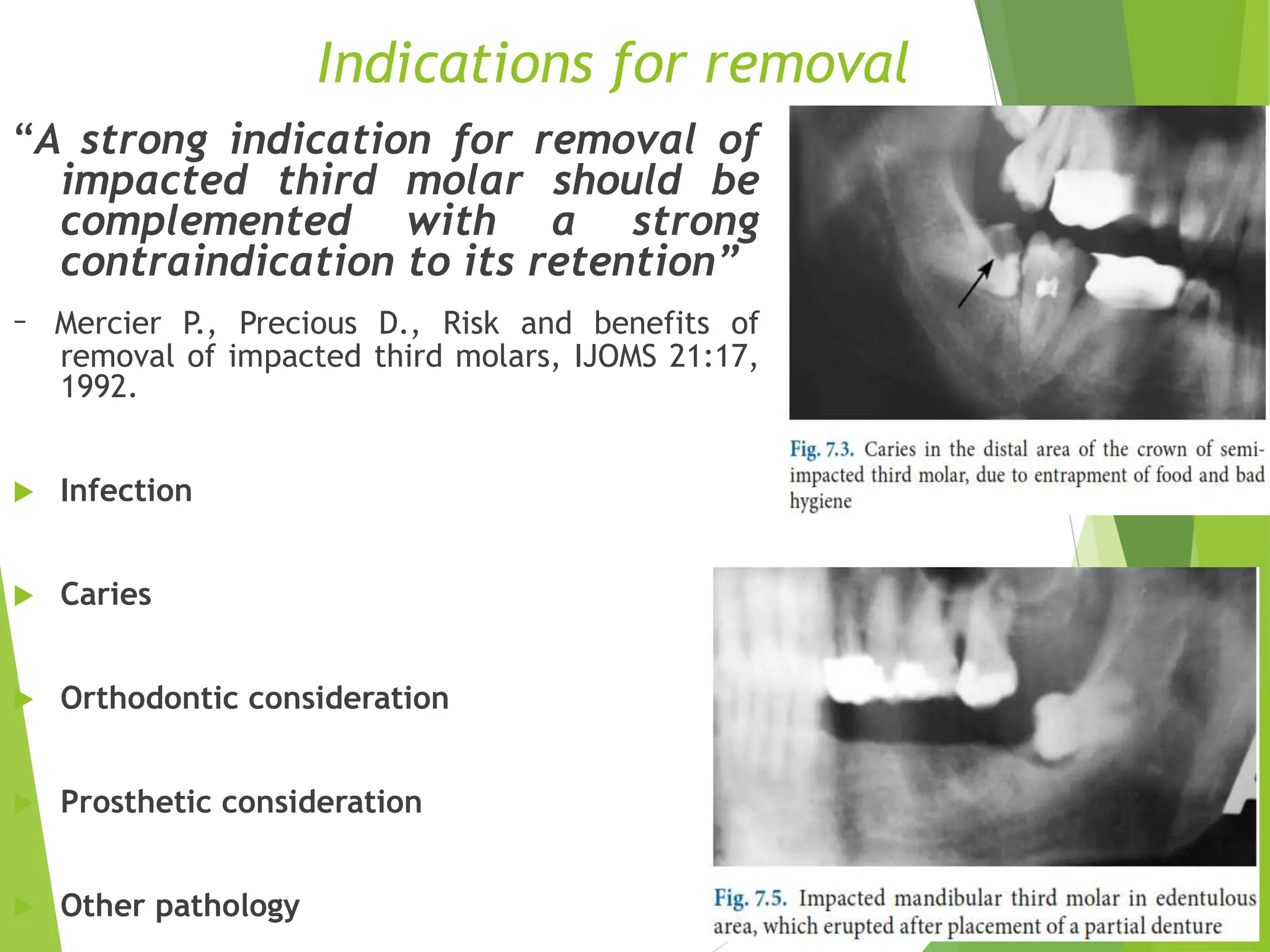
Indications for removal
“A strong indication for removal of
impacted third molar should be
complemented with a strong
contraindication to its retention”
– Mercier P., Precious D., Risk and benefits of
removal of impacted third molars, IJOMS 21:17,
1992.
 Infection
 Caries
 Orthodontic consideration
 Prosthetic consideration
 Other pathology
12
13
CONTRAINDICATIONS OF THIRD MOLAR
REMOVAL
 Extremes of Age
 Compromised Medical Status
 Surgical Damage to Adjacent Structures
14
CLASSIFICATION
15
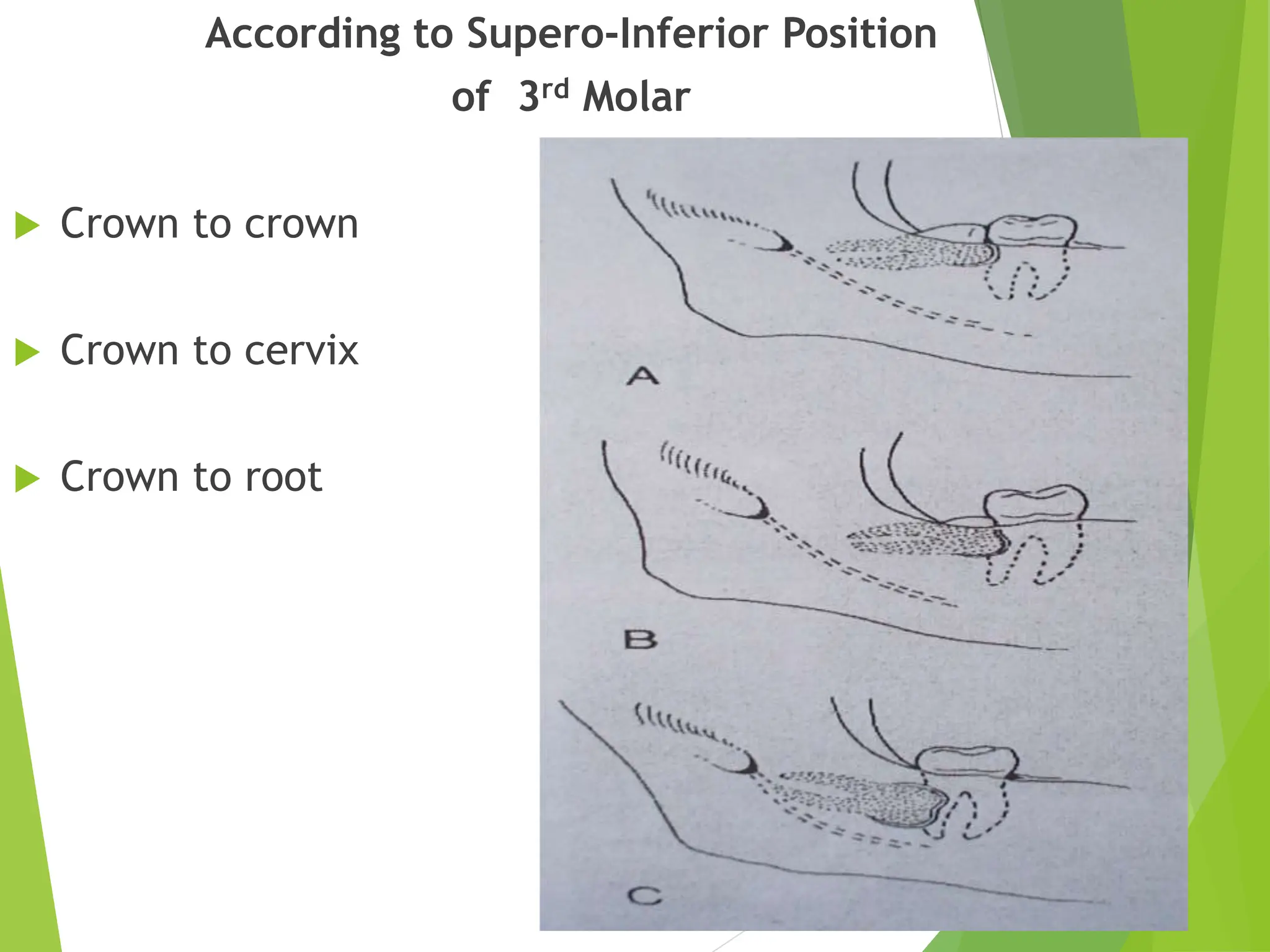
According to Supero-Inferior Position
of 3rd Molar
 Crown to crown
 Crown to cervix
 Crown to root
16
17
Killey & Kay’s Classification
a) Based on angulation and position:
(Same as Winter’s classification)
b) Based on the state of eruption: - Completely erupted
- Partially erupted
- Unerupted
c) Based on roots: 1) Number of roots - Fused roots
- Two roots
- Multiple roots
2) Root pattern - Surgically favorable
- Surgically unfavorable
18
 The AAOMS
published the ADA
coding with
explanations from the
AAOMS procedural
terminology, in
parentheses, as follows:
 07220 : (overlying) soft
tissue impaction.
 07230 : partially bony
Impaction
 07240 : complete bony
impaction
 07241 : complete bony
impaction, with unusual
surgical complications.
19
G.R.OGDEN METHOD
A simple method of determining the
type of impaction involves comparing
the distance between the roots of 3rd
and 2nd molars , with the distance
between the roots of the 2nd and 1st
molars .
20
21
Surgical Anatomy
 Location: lower 3rd molar is
situated at the distal end of the
body of the mandible where it
meets a relatively thin ramus.
 Embedded b/w thick buccal alv
bone buttressed by external
oblique ridge & the narrow inner
cortical plate.
 Retro Molar triangle- depressed
roughened area post. to 3rd
molar
22
23
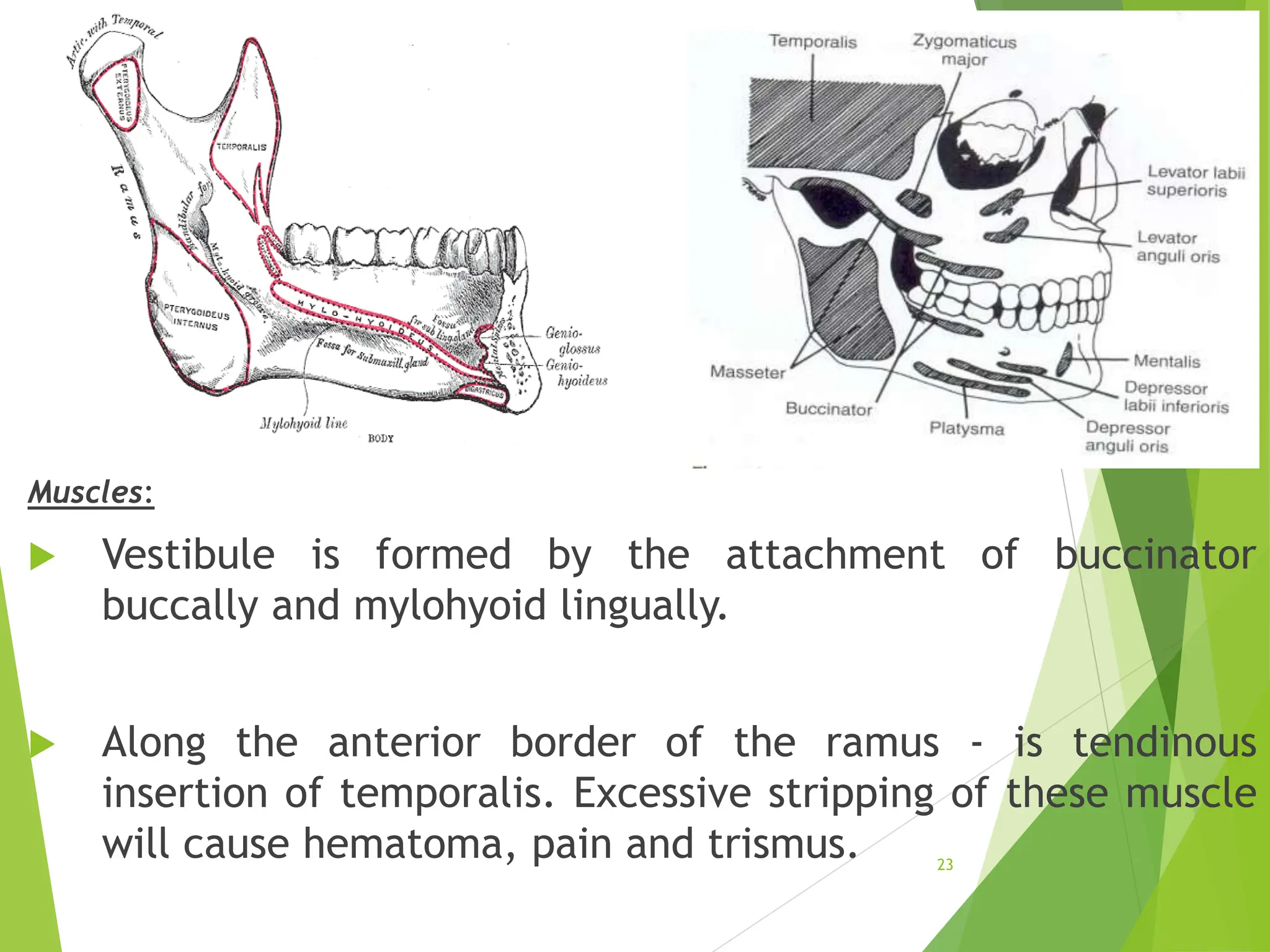
Muscles:
 Vestibule is formed by the attachment of buccinator
buccally and mylohyoid lingually.
 Along the anterior border of the ramus - is tendinous
insertion of temporalis. Excessive stripping of these muscle
will cause hematoma, pain and trismus.
The Retromolar Triangle
 Behind the third molar is a depressed roughened
area on the upper surface of the mandible which is
bounded by the lingual and buccal crests of the
alveolar ridge this is the retromolar triangle.
 Lying lateral to the retromolar triangle is a
shallow, hollow depression, the retromolar fossa,
which is bounded by the anterior border of the
ascending ramus.
 This is the area into which a third molar would
erupt if the usual dental arch were shrunk by
abrasive and attritive foods. Spread of acute
inflammatory processes may occur in any
transverse plane from the retromolar triangle.
 The retromolar triangle is the site for initial
surgical procedures to remove the usual impacted
mandibular third molars. 24
Facial artery and veins
 The facial artery crosses
the region of 1st
mandibular molar at the
anterior border of the
massetor
 This artery can be
severed accidentally
during surgical
procedure
 Hence deep incisions in
1st molar area
predispose a risk of
injuring facial artery
25
INFERIOR ALVEOLAR NERVE CANAL
 The mandibular canal is located inside the jaw and transmits
the lower alveolar artery and lower alveolar nerve, a branch
of the third division of the trigeminal nerve, from the
mandibular foramen to the mental foramen (BERBERI et al.,
1994 and MADEIRA, 1995).
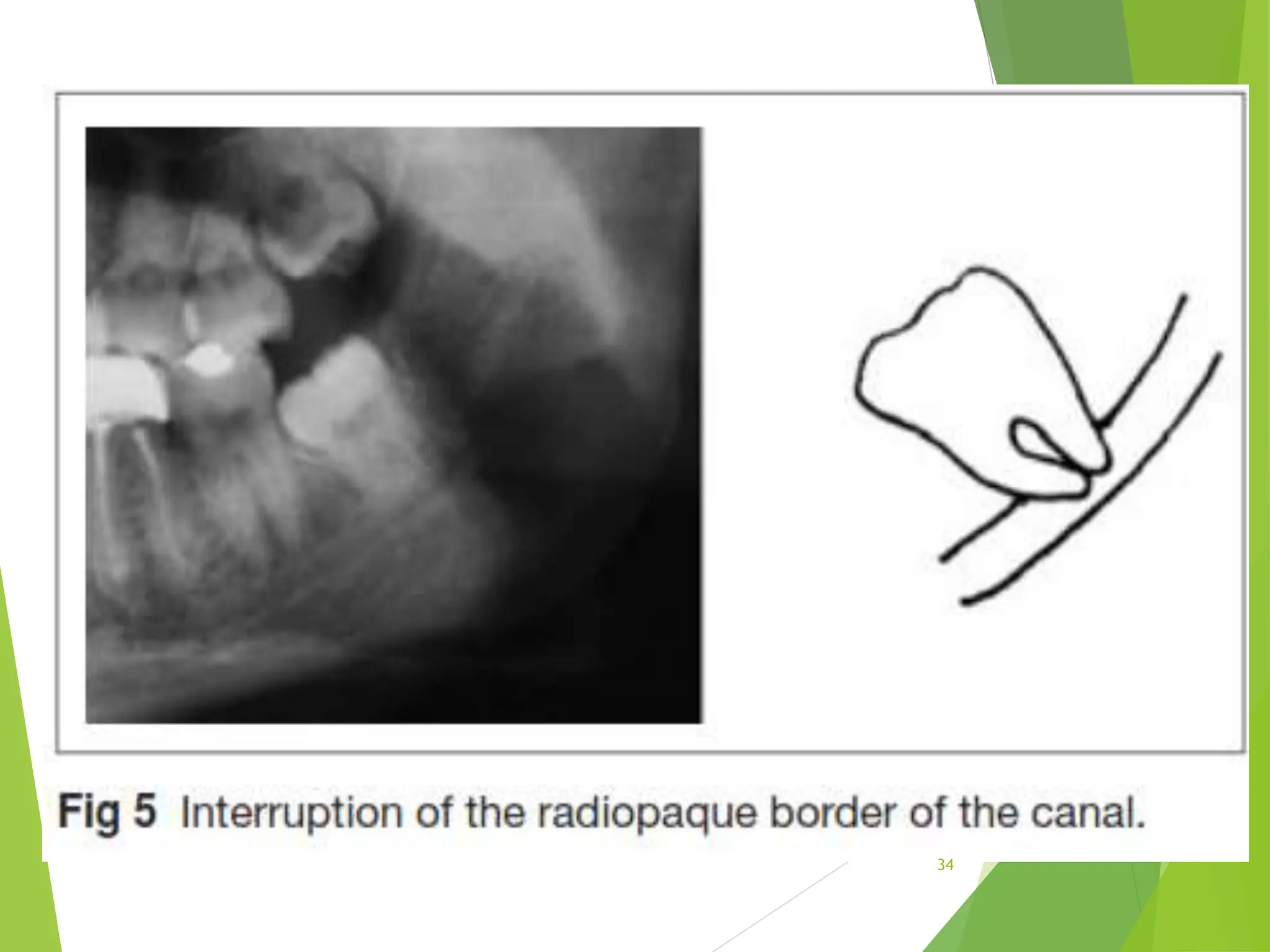
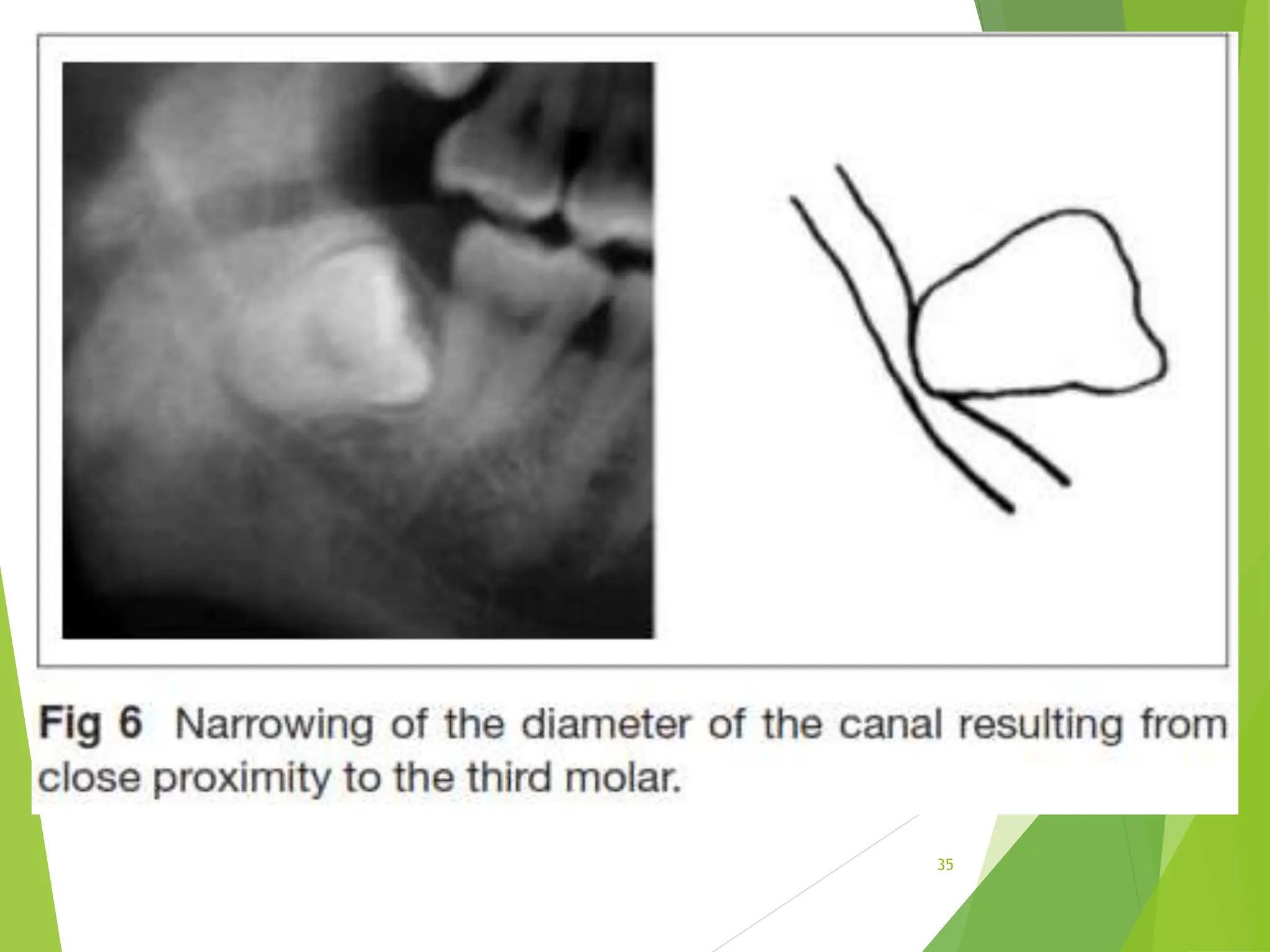
 The radiographic appearance of the mandibular canal is
characterized by a radiolucent line delimited by two
radiopaque lines (WORTH, 1975) .
26
27
LINGUAL NERVE
 The LN, a branch of the mandibular division of the trigeminal
nerve provides sensory innervation to the ipsilateral two-
thirds of the mucous membranes of the tongue, floor of mouth
and the mandibular lingual gingiva (Liegbott, 1986; Zur et al.,
2004).
 The origin of the LN begins as a branch from the posterior
division of trigeminal nerve in the infratemporal fossa.
 While in the infratemporal fossa, the chorda tympani joins the
LN at an acute angle as it exits through the pterygotympanic
fissure of the glenoid fossa (Girod et al., 1989).
28
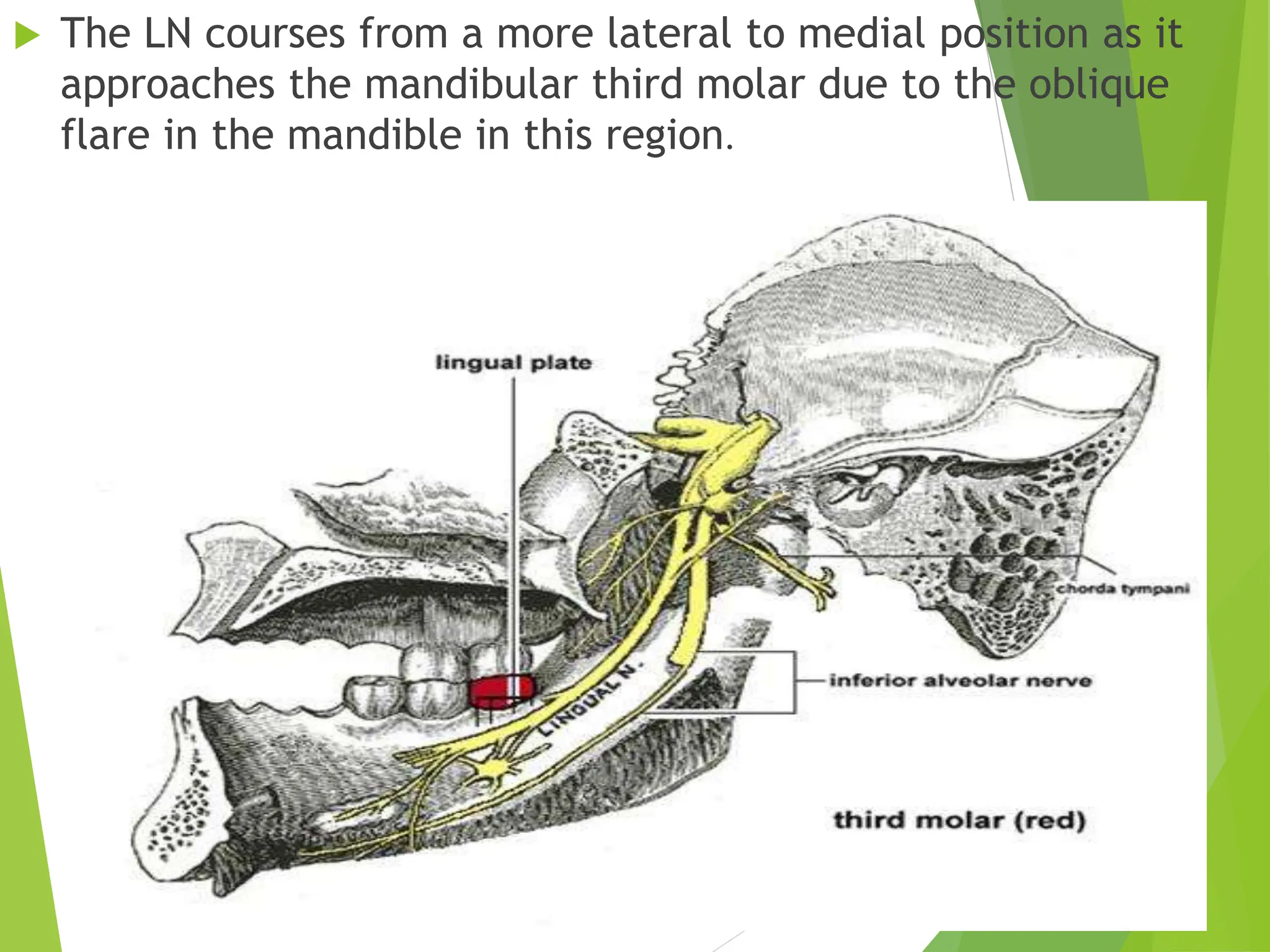
 The LN courses from a more lateral to medial position as it
approaches the mandibular third molar due to the oblique
flare in the mandible in this region.
29
Pre operative assessment
Clinical assessment;
 History
 Age
 Mouth opening
 Size of mouth and tongue
 Flexibility of the oral musculature
 Physical status of the patient
 Palpation of external oblique ridge
 Existing pathology
30
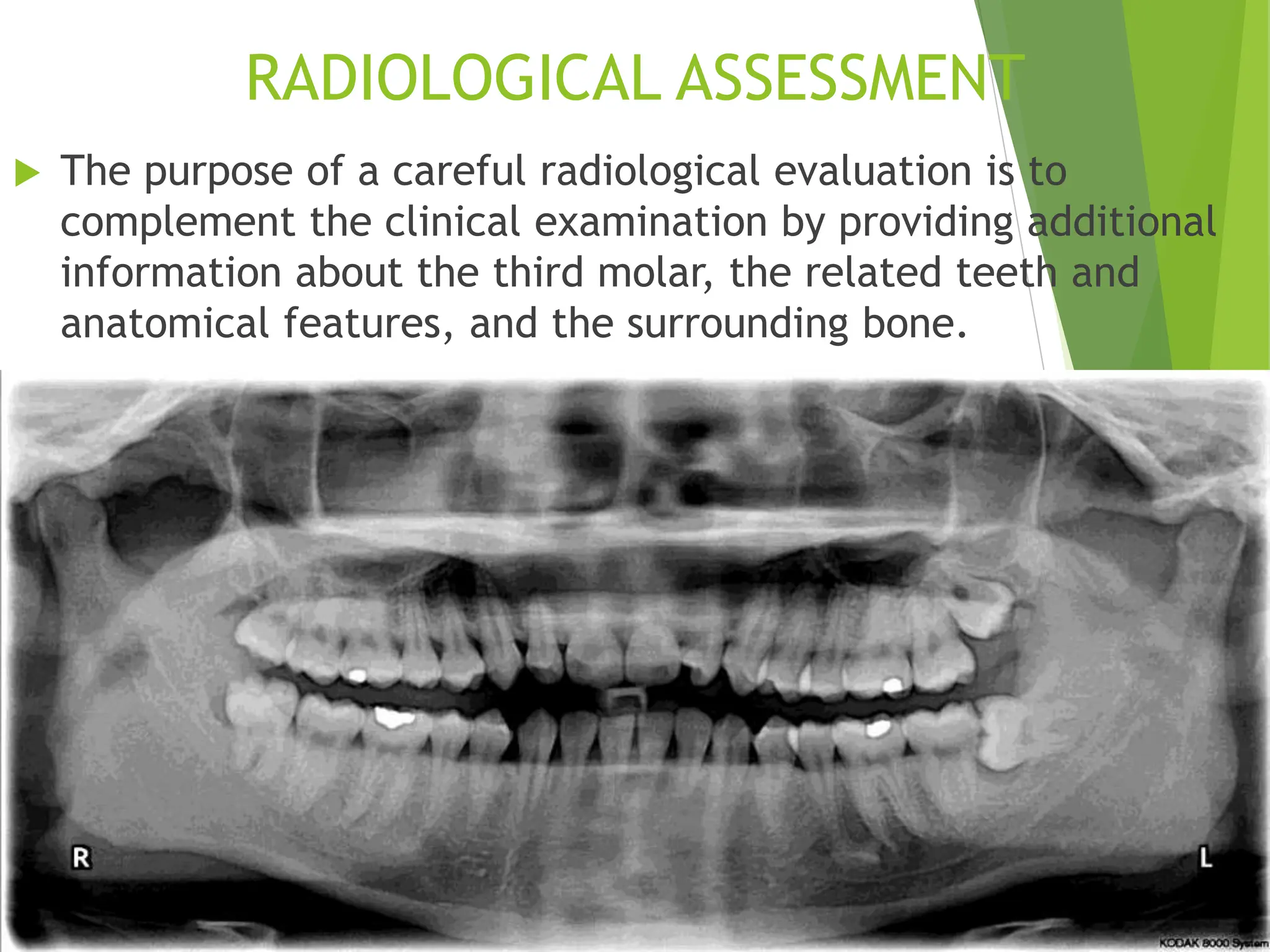
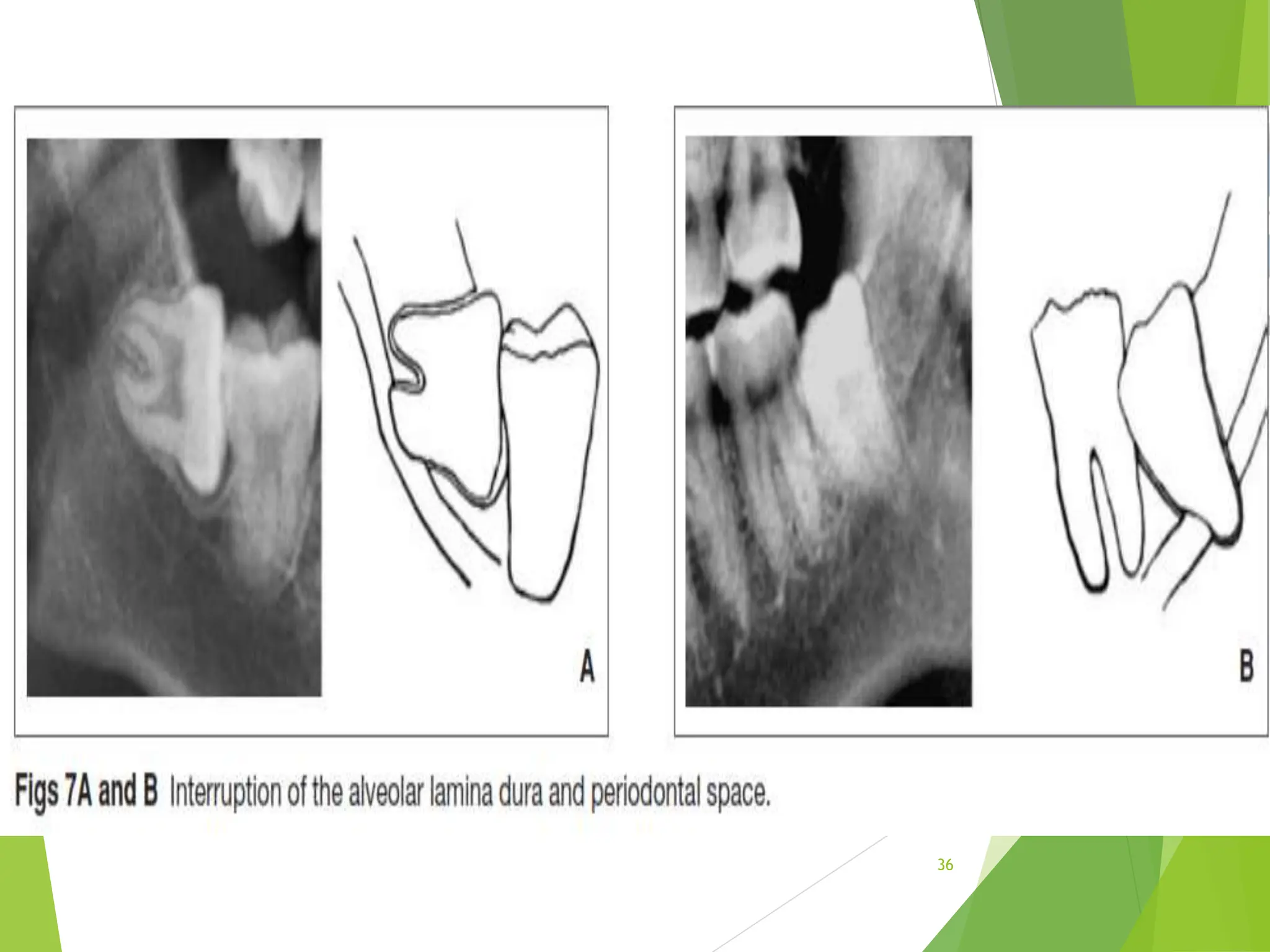
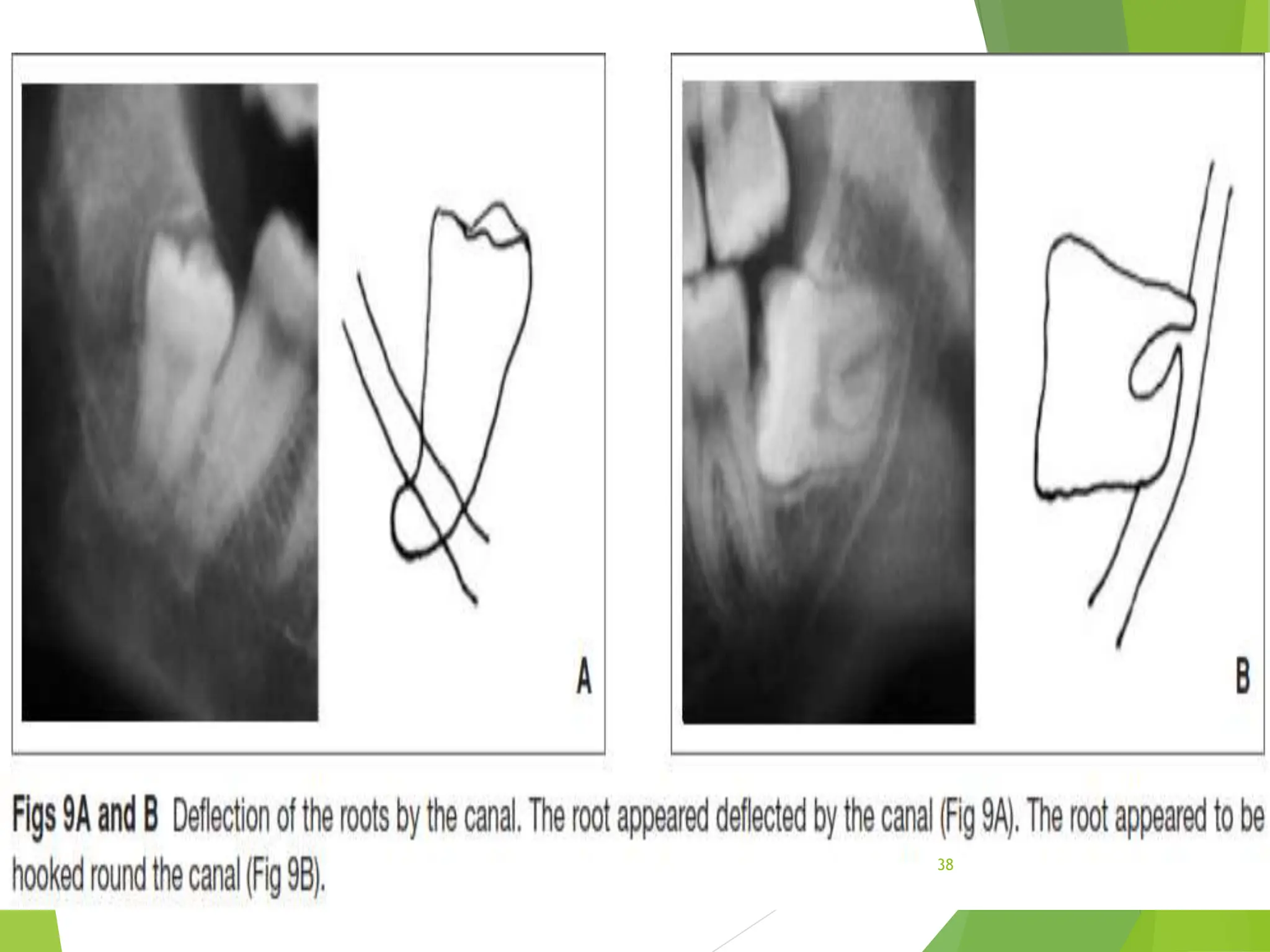
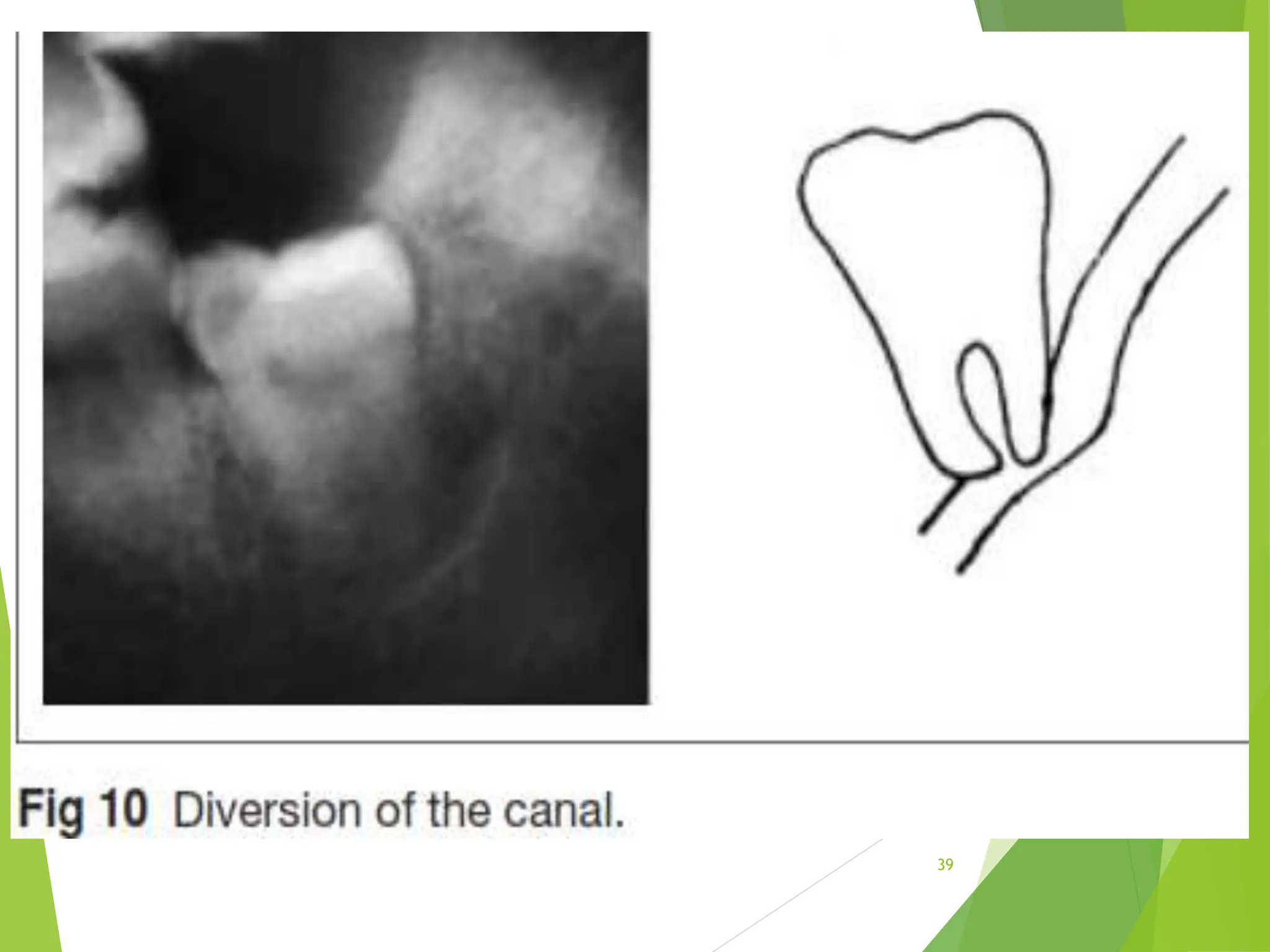
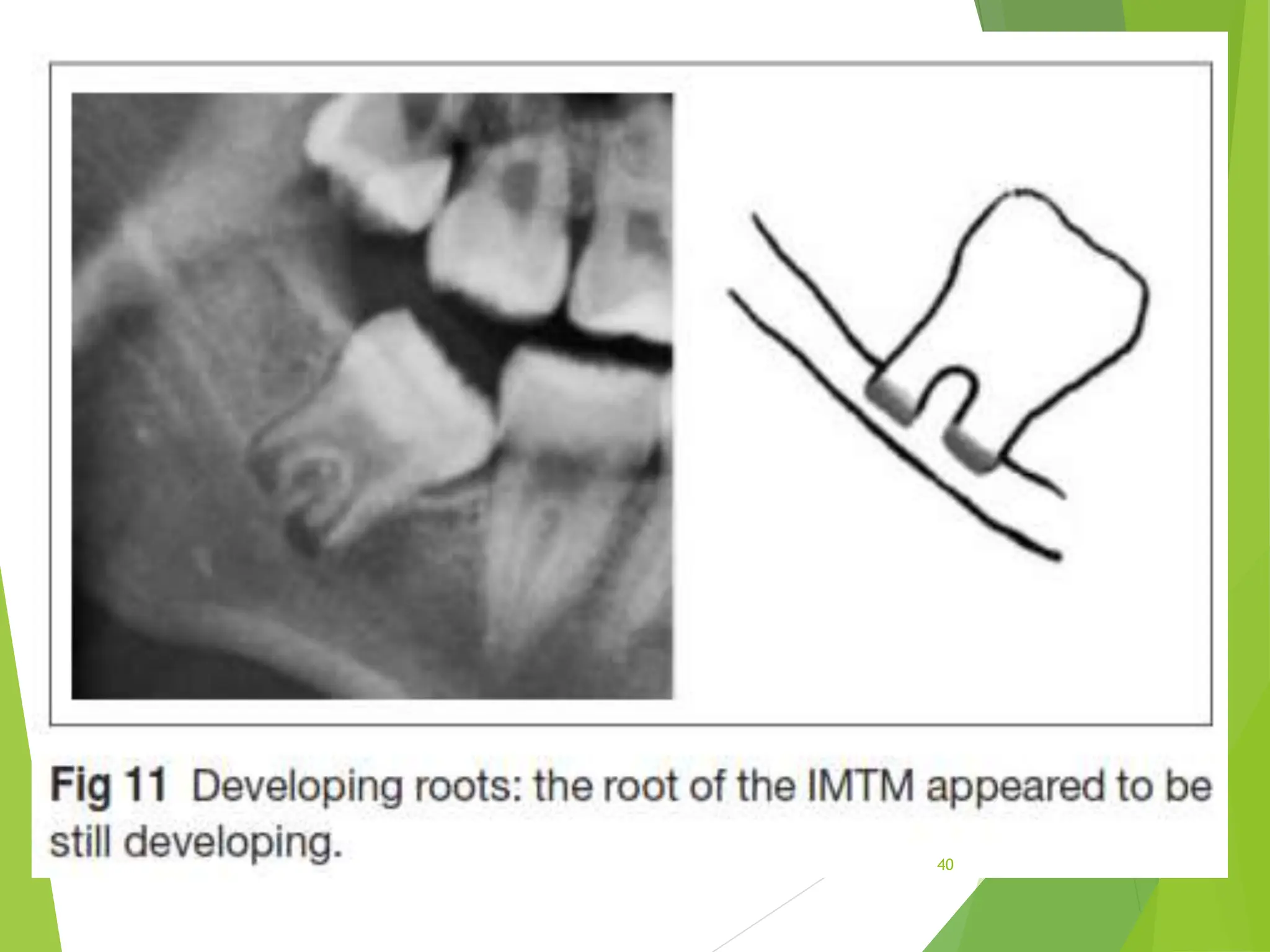
RADIOLOGICAL ASSESSMENT
 The purpose of a careful radiological evaluation is to
complement the clinical examination by providing additional
information about the third molar, the related teeth and
anatomical features, and the surrounding bone.
31
RADIOGRAPHIC ASSESSMENT
 Assessment of angulations and depth
 Number and shape of roots
 Relation of the third molar roots to the mandibular
canal
 Condition of the second molar
 Density of the bone
 Bone loss
 Follicular size
 Existing pathology
32
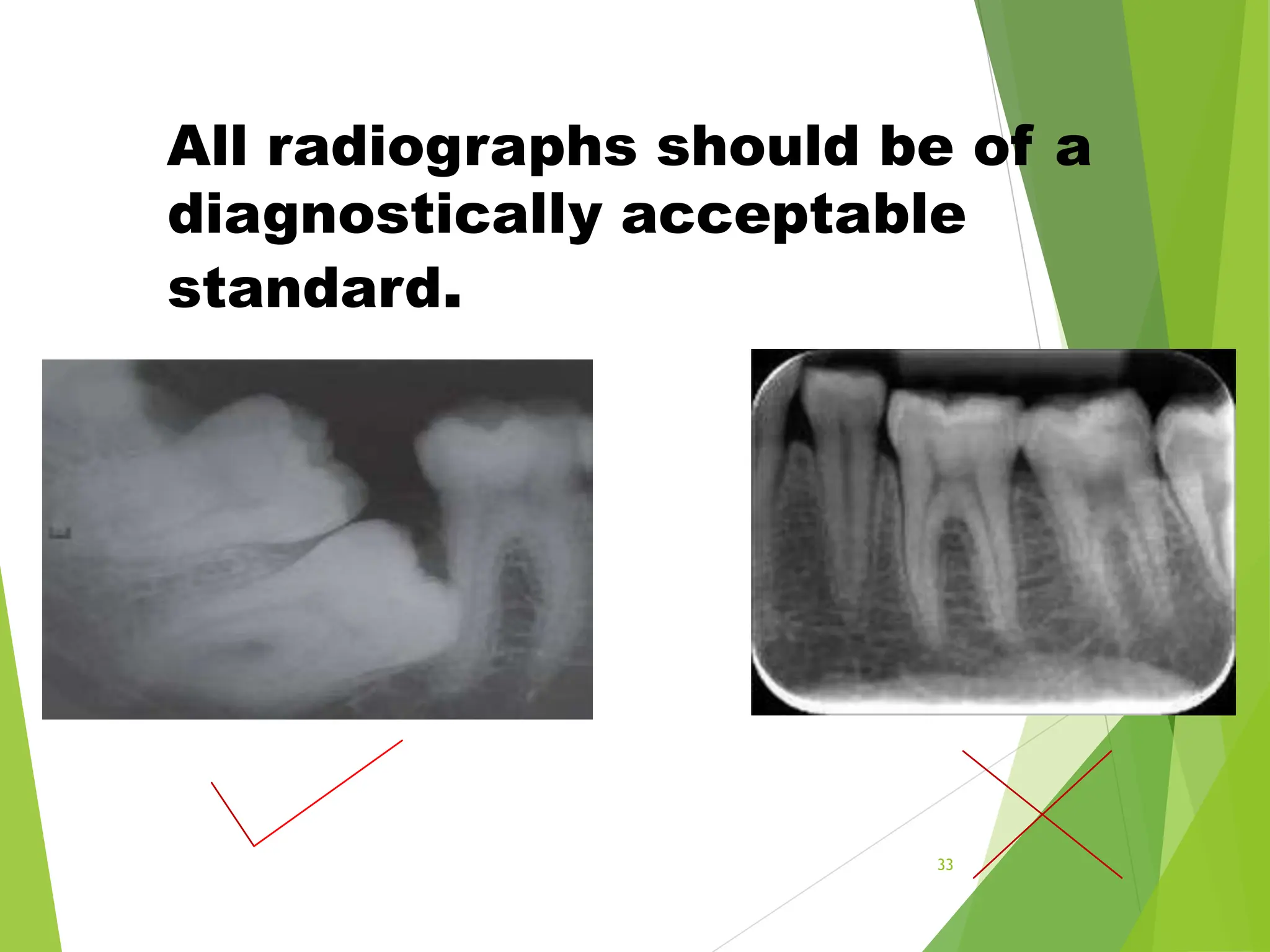
All radiographs should be of a
diagnostically acceptable
standard.
33
34
35
36
37
38
39
40
ASSESSMENT OF SURGICAL DIFFICULTY
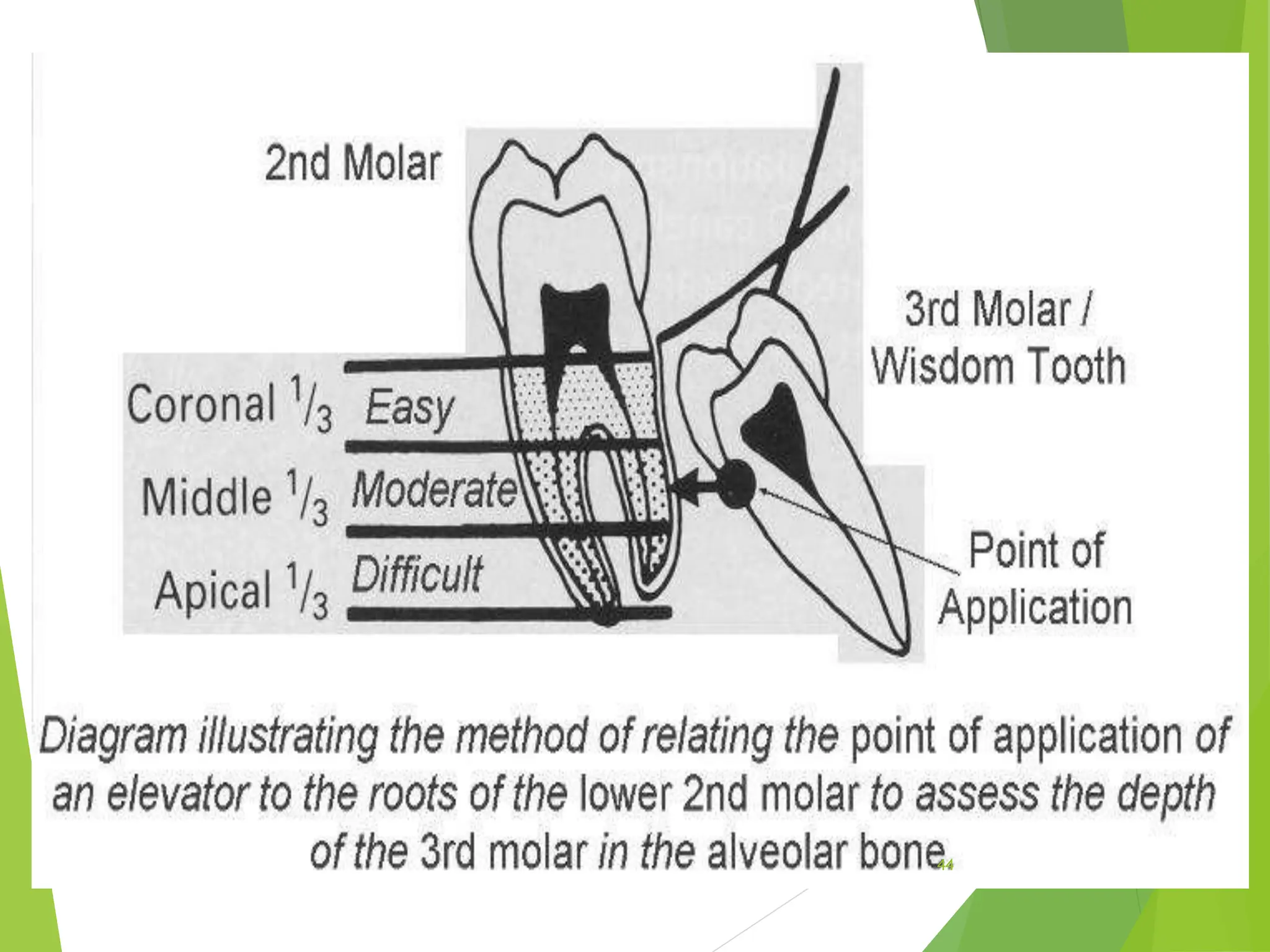
 Although the extraction of impacted lower third molars is
common in oral surgical practice, it may be difficult.
 Various methods have been proposed for the preoperative
evaluation of difficulty, but these have often been of limited
validity.
 Few authors have proposed indexes for measuring
intraoperative/surgical difficulty.
 Pederson proposed such an index, but it is seldom used
because it has been reported that it does not match actual
surgical difficulty.
41
42
DRAWBACKS OF PEDERSON SCALE
 The Sensitivity of the Pederson Index in identifying
very difficult cases was 20%.
 No clinical variables are included.
 Root morphology is not included.
43
44
WHARFE ASSESSMENT BY McGREGOR(1985)
 The six factors chosen for scoring are:
 Winters classification
 Height of the mandible
 Angulation of the 2nd molar
 Root shape & morphology
 Follicle development
 Path of Exit of the tooth during removal
45
46
47
Factors That
Make Impaction
Surgery… Less
Difficult
48
More difficult
49
SURGICAL PROCEDURE
 FIVE BASIC STEPS:
 ADEQUATE EXPOSURE
 ACCESS TO THE TOOTH
 SECTIONING OF THE TOOTH(OPTIONAL)
 ELEVATION FROM THE ALVEOLAR PROCESS
 DEBRIDMENT & IRRIGATION
50
ARMAMENTARIUM
51
Wards incision
52
Sir TG Ward 1968, made some modification of the incision. The anterior line of
the incision runs from the distal aspect of the second molar curving ,downward
and forward to the level of the apex of the distal root of the first molar. The
posterior part of the incision is the same but the anterior part commences as the
junction of the anterior and middle thirds of the second molar and runs down to
the apex of the distal root of the first molar.
CHISEL AND MALLET
 Traditional technique,
 Support of mandible is mandatory
 The chisel is kept parallel to the long axis
of bone
 Indications
53
 Young patients
An external oblique ridge slightly below the level of bone enclosing
the 3rd molar
An external oblique ridge that is slightly behind the 3rd molar so that
the distolingual corner of the tooth sits in a thin balcony of bone
54
LOW SPEED ENGINE DRIVEN DRILLS
 INDICATIONS
55
Old patients
An external oblique ridge and internal oblique ridge or
both are far formed in relationship to the tooth
Hence guttering is necessary to avoid excess removal
of bone
COMPLICATIONS
Accidental denuding of roots of 2nd molar
While guttering the bone the mandibular canal may be
opened and damage to nerve may occur
While cutting distolingual part of bone high chance of
lingual nerve damage hence it should be moved lingual to
buccal to prevent sudden slipping into lingual side
Bur technique
 The size of the bur used for the removal of the bone
removal :
Ideal length – 7mm; diameter – 1.5mm.
The bur should rotate in correct direction
and at maximum speed.
Cutting instruments that induce air should’nt
be used.
Handpiece should not rest on the tissues of
the cheek and lips to avoid burning
56
57
The crown of the impacted tooth should
be exposed (CEJ) by removal of
surrounding bone:
mesially – to create a point of
application
Buccaly – cutting a trough or
gutter around the tooth to the
root furcation.
Distolingually – lingual plate
should not be breached to
protect the lingual nerve.
58
Irrigation
 The surgeons should apply a handpiece load of
approximately 300g and an irrigation rate of 15
mL/min (for intermittent drip) to 24 mL/min (for
continuous flow). (Sharon et al Oral Surg Oral Med Oral
Pathol Oral Radiol Endod 1999)
 The various solutions which can be used as
irrigants are:
Normal Saline
Ringer’s lactate.
1% povidone iodine
59
The irrigation cools the bur and prevents bone-
damaging heat buildup.
The irrigation also increases the efficiency of
the bur by washing away bone chips from the
flutes of the bur and by providing a certain
amount of lubrication.
60
Chiesel vs bur
61
Bone belongs to the patient and the tooth belongs to the surgeon.
 Pell and Gregory stated the following advantages of
splitting technique:
 Amount of bone to be removed is reduced.
 The time of operation is reduced.
 The field of operation is small and therefore damage
to adjacent teeth and bone is reduced.
 Risk of jaw fracture is reduced.
 Risk of damage to the inferior alveolar nerve is
reduced
62
Sectioning of the tooth
CRITERIA TO DECIDE IF SECTIONING OF TOOTH IS
INDICATED
63
Sectioning of the tooth based on the type
of impaction
 Horizontal impactions - the crown
is separated from its roots and
removed first. The roots are
themselves divided and removed
individually into the space
vacated by the crown.
 Vertical impactions - the tooth is
divided in half along its vertical
axis and each half removed
individually.
64
65
Disto-angular impactions - the
tooth may be divided in half along
its longitudinal axis or the crown
may be sectioned from its roots
with the roots being elevated into
the space vacated by the crown.
Mesio-angular impactions - the
tooth may be divided in half along
its longitudinal axis or the crown
may be divided obliquely with the
distal segment removed first prior
to mobilizing the rest of the tooth.
66
DEBRIDMENT AND IRRIGATION
67
AFTER REMOVAL OF TOOTH
All particulate bone chips and debris should be debrided
Thorough irrigation with sterile saline including under the
reflected soft tissue flap
A periapical curette can be used
COMPLICATIONS OF THIRD MOLAR
SURGERY
 Surgical extraction of third molars is often accompanied by pain, swelling,
trismus, and general oral dysfunction during the healing phase.
 Complications related to third molar removal range from 4.6% to 30.9%
INTRAOPERATIVE
During incision
 Facial or buccal vessel may be cut
 Lingual nerve injury
 Bleeding from Retromolar vessels
During bone removal
 Damage to second molar and roots
 Fracture of mandible
 Bleeding
68
 DURING ELEVATION
 Crown fracture
 root fracture
 fracture of the jaws
 slipping of tooth into lingual pouch
 damage to nerve
 aspiration of the tooth

 DURING DEBRIDEMENT
 Damage to inferior alveolar nerve
69
 Injudicious use of force during
removal of the tooth, a deeply
impacted tooth, and
osteoporosis and other metabolic
bone disorders or lesions, such as
cysts or tumours, increase the
likelihood of fracture.
 The presence of an impacted
tooth in a severely atrophic
mandible, or infection involving
the bone surrounding the tooth,
may also predispose to fracture. 70
DAMAGE TO NERVE
 The incidence of lingual and IAN injuries reported ranges from 0.4%
to 22%.
 The incidence of neurologic injuries from third molar surgery may
be related to multiple factors, including surgeon experience and
proximity of the tooth relative to the IAN canal.
71
Conclusion
Surgical removal of impacted tooth is a stressful
experience for many patients..
As each patient and each surgical procedure are unique
, surgeons should carefully assess the risk factors of
removal of impacted tooth by proper diagnosis and
choose correct surgical techniques to avoid surgical
complications & minimizing adverse side effects
thereby making the surgical experience more favorable
for patients .
72
BIBLIOGRAPHY
 Peterson’s Principles of oral and
maxillofacial surgery, 2nd edition, vol. 1.
 Textbook of oral and maxillofacial surgery,
vol. 2, Laskin.
 Textbook of oral and maxillofacial surgery-
Kruger
 Oral and maxillofacial surgery-Archer
 Surgery of the mouth and jaws-Moore
 OMFS CLINICS OF NA VOLUME 19 FEB 2007
73
74

THIRD MOLAR IMPACTed tooth , development & Surgical complications.pptx

  • 1.
    PRESENTED BY: Dr. ArindomChangmai Sr. Lecturer,DEPT. OF OMFS GOVERNMENT DENTAL COLLEGE, SILCHAR ,ASSAM 1
  • 2.
    CONTENTS  INTRODUCTION  DEFINITIONS THEORIES OF IMPACTION  ETIOLOGY  INDICATION AND CONTRAINDICATION  CLASSIFICATION  SURGICAL ANATOMY  RADIOLOGICAL ASSESSMENT  ASSESSMENT OF SURGICAL DIFFICULTY  SURGICAL PROCEDURE  COMPLICATIONS  RECENT ADVANCES  REFERENCES 2
  • 3.
    INTRODUCTION  The thirdmolar has been the most widely discussed tooth in the dental literature, and the debatable question “….. to extract or not to extract” seems set to run into the next century. - Faiez N. Hattab, JOMS, 57: 389-391 (1999)  Also because of its late eruption it is the most commonly impacted tooth.  The word impaction is derived from the latin word impactus.  The surgical removal of 3rd molars has been and still is the most common operation performed by the oral and maxillofacial surgeon both in clinical practice as well as in a hospital setting. 3
  • 4.
    Mandibular Third Molar Calcificationand Eruption  Calcification begins……………….9 years  Crown completed………………….14 years  Eruption……………………………….19 years  Root completed…………………….21.5 years 4
  • 5.
    DEFINITIONS  According toWHO – An impacted tooth is any tooth that is prevented from reaching its normal position in the mouth by tissue, bone or another tooth.  According to Archer- A tooth which is completely or partially unerupted and is positioned against another tooth, bone or soft tissue so that its further eruption is unlikely, described according to its anatomic Position .  According to Anderson-An impacted tooth is a tooth -which is prevented from completely erupting into a normal functional position due to lack of space, obstruction by another tooth or an abnormal eruption path 5
  • 6.
    WHEN IS ATOOTH CONSIDERED IMPACTED? A tooth is considered impacted if :  It has failed to erupt fully within the expected time of eruption  If the angulation of the tooth is such that its eruption into the oral cavity is unlikely  When the ratio of crown to the space available for eruption is lesser than 1 6
  • 7.
    THEORIES OF IMPACTION(DURBECK) 1)Orthodontic theory : Jaws develop in downward and forward direction. Growth of the jaw and movement of teeth occurs in forward direction, so any thing that interfere with such moment will cause an impaction (small jaw-decreased space). A dense bone decreases the movement of the teeth in forward direction. 7
  • 8.
    Theories of impaction 2)Phylogenic theory: Nature tries to eliminate the disused organs i.e., use makes the organ develop better, disuse causes slow regression of organ. [More-functional masticatory force – better the development of the jaw] Due to changing nutritional habits of our civilization, use of large powerful jaws have been practically eliminated. Thus, over centuries the mandible and maxilla decreased in size leaving insufficient room for third molars. 8
  • 9.
    Theories of impaction 3)Mendelian theory: Heredity is most common cause. The hereditary transmission of small jaws and large teeth from parents to siblings. This may be important etiological factor in the occurrence of impaction. 4)Pathological theory: Chronic infections affecting an individual may bring the condensation of osseous tissue further preventing the growth and development of the jaws. 5)Endocrinal theory: Increase or decrease in growth hormone secretion may affect the size of the jaws 9
  • 10.
    ETIOLOGY OF IMPACTION (BERGER) LOCAL CAUSES Lack of Space in the Dental arch Obstruction for eruption Ankylosis Retained deciduous teeth Non absorbing alveolar bone Bony lesion Ectopic position of tooth bud Habits involving tongue, finger,cheek,pencil,etc. 10
  • 11.
    SYSTEMIC CAUSES Prenatal causes Heredity Postnatal causes  Rickets  Anemia  Congenital syphilis  T.B  Endocrine dysfunctions  Malnutrition Rare conditions  Cleidocranial dysostosis  Oxycephaly  Progeria  Achondroplasia  Cleft palate 11
  • 12.
    Indications for removal “Astrong indication for removal of impacted third molar should be complemented with a strong contraindication to its retention” – Mercier P., Precious D., Risk and benefits of removal of impacted third molars, IJOMS 21:17, 1992.  Infection  Caries  Orthodontic consideration  Prosthetic consideration  Other pathology 12
  • 13.
  • 14.
    CONTRAINDICATIONS OF THIRDMOLAR REMOVAL  Extremes of Age  Compromised Medical Status  Surgical Damage to Adjacent Structures 14
  • 15.
  • 16.
    According to Supero-InferiorPosition of 3rd Molar  Crown to crown  Crown to cervix  Crown to root 16
  • 17.
    17 Killey & Kay’sClassification a) Based on angulation and position: (Same as Winter’s classification) b) Based on the state of eruption: - Completely erupted - Partially erupted - Unerupted c) Based on roots: 1) Number of roots - Fused roots - Two roots - Multiple roots 2) Root pattern - Surgically favorable - Surgically unfavorable
  • 18.
  • 19.
     The AAOMS publishedthe ADA coding with explanations from the AAOMS procedural terminology, in parentheses, as follows:  07220 : (overlying) soft tissue impaction.  07230 : partially bony Impaction  07240 : complete bony impaction  07241 : complete bony impaction, with unusual surgical complications. 19
  • 20.
    G.R.OGDEN METHOD A simplemethod of determining the type of impaction involves comparing the distance between the roots of 3rd and 2nd molars , with the distance between the roots of the 2nd and 1st molars . 20
  • 21.
  • 22.
    Surgical Anatomy  Location:lower 3rd molar is situated at the distal end of the body of the mandible where it meets a relatively thin ramus.  Embedded b/w thick buccal alv bone buttressed by external oblique ridge & the narrow inner cortical plate.  Retro Molar triangle- depressed roughened area post. to 3rd molar 22
  • 23.
    23 Muscles:  Vestibule isformed by the attachment of buccinator buccally and mylohyoid lingually.  Along the anterior border of the ramus - is tendinous insertion of temporalis. Excessive stripping of these muscle will cause hematoma, pain and trismus.
  • 24.
    The Retromolar Triangle Behind the third molar is a depressed roughened area on the upper surface of the mandible which is bounded by the lingual and buccal crests of the alveolar ridge this is the retromolar triangle.  Lying lateral to the retromolar triangle is a shallow, hollow depression, the retromolar fossa, which is bounded by the anterior border of the ascending ramus.  This is the area into which a third molar would erupt if the usual dental arch were shrunk by abrasive and attritive foods. Spread of acute inflammatory processes may occur in any transverse plane from the retromolar triangle.  The retromolar triangle is the site for initial surgical procedures to remove the usual impacted mandibular third molars. 24
  • 25.
    Facial artery andveins  The facial artery crosses the region of 1st mandibular molar at the anterior border of the massetor  This artery can be severed accidentally during surgical procedure  Hence deep incisions in 1st molar area predispose a risk of injuring facial artery 25
  • 26.
    INFERIOR ALVEOLAR NERVECANAL  The mandibular canal is located inside the jaw and transmits the lower alveolar artery and lower alveolar nerve, a branch of the third division of the trigeminal nerve, from the mandibular foramen to the mental foramen (BERBERI et al., 1994 and MADEIRA, 1995).  The radiographic appearance of the mandibular canal is characterized by a radiolucent line delimited by two radiopaque lines (WORTH, 1975) . 26
  • 27.
  • 28.
    LINGUAL NERVE  TheLN, a branch of the mandibular division of the trigeminal nerve provides sensory innervation to the ipsilateral two- thirds of the mucous membranes of the tongue, floor of mouth and the mandibular lingual gingiva (Liegbott, 1986; Zur et al., 2004).  The origin of the LN begins as a branch from the posterior division of trigeminal nerve in the infratemporal fossa.  While in the infratemporal fossa, the chorda tympani joins the LN at an acute angle as it exits through the pterygotympanic fissure of the glenoid fossa (Girod et al., 1989). 28
  • 29.
     The LNcourses from a more lateral to medial position as it approaches the mandibular third molar due to the oblique flare in the mandible in this region. 29
  • 30.
    Pre operative assessment Clinicalassessment;  History  Age  Mouth opening  Size of mouth and tongue  Flexibility of the oral musculature  Physical status of the patient  Palpation of external oblique ridge  Existing pathology 30
  • 31.
    RADIOLOGICAL ASSESSMENT  Thepurpose of a careful radiological evaluation is to complement the clinical examination by providing additional information about the third molar, the related teeth and anatomical features, and the surrounding bone. 31
  • 32.
    RADIOGRAPHIC ASSESSMENT  Assessmentof angulations and depth  Number and shape of roots  Relation of the third molar roots to the mandibular canal  Condition of the second molar  Density of the bone  Bone loss  Follicular size  Existing pathology 32
  • 33.
    All radiographs shouldbe of a diagnostically acceptable standard. 33
  • 34.
  • 35.
  • 36.
  • 37.
  • 38.
  • 39.
  • 40.
  • 41.
    ASSESSMENT OF SURGICALDIFFICULTY  Although the extraction of impacted lower third molars is common in oral surgical practice, it may be difficult.  Various methods have been proposed for the preoperative evaluation of difficulty, but these have often been of limited validity.  Few authors have proposed indexes for measuring intraoperative/surgical difficulty.  Pederson proposed such an index, but it is seldom used because it has been reported that it does not match actual surgical difficulty. 41
  • 42.
  • 43.
    DRAWBACKS OF PEDERSONSCALE  The Sensitivity of the Pederson Index in identifying very difficult cases was 20%.  No clinical variables are included.  Root morphology is not included. 43
  • 44.
  • 45.
    WHARFE ASSESSMENT BYMcGREGOR(1985)  The six factors chosen for scoring are:  Winters classification  Height of the mandible  Angulation of the 2nd molar  Root shape & morphology  Follicle development  Path of Exit of the tooth during removal 45
  • 46.
  • 47.
  • 48.
  • 49.
  • 50.
    SURGICAL PROCEDURE  FIVEBASIC STEPS:  ADEQUATE EXPOSURE  ACCESS TO THE TOOTH  SECTIONING OF THE TOOTH(OPTIONAL)  ELEVATION FROM THE ALVEOLAR PROCESS  DEBRIDMENT & IRRIGATION 50
  • 51.
  • 52.
    Wards incision 52 Sir TGWard 1968, made some modification of the incision. The anterior line of the incision runs from the distal aspect of the second molar curving ,downward and forward to the level of the apex of the distal root of the first molar. The posterior part of the incision is the same but the anterior part commences as the junction of the anterior and middle thirds of the second molar and runs down to the apex of the distal root of the first molar.
  • 53.
    CHISEL AND MALLET Traditional technique,  Support of mandible is mandatory  The chisel is kept parallel to the long axis of bone  Indications 53  Young patients An external oblique ridge slightly below the level of bone enclosing the 3rd molar An external oblique ridge that is slightly behind the 3rd molar so that the distolingual corner of the tooth sits in a thin balcony of bone
  • 54.
  • 55.
    LOW SPEED ENGINEDRIVEN DRILLS  INDICATIONS 55 Old patients An external oblique ridge and internal oblique ridge or both are far formed in relationship to the tooth Hence guttering is necessary to avoid excess removal of bone COMPLICATIONS Accidental denuding of roots of 2nd molar While guttering the bone the mandibular canal may be opened and damage to nerve may occur While cutting distolingual part of bone high chance of lingual nerve damage hence it should be moved lingual to buccal to prevent sudden slipping into lingual side
  • 56.
    Bur technique  Thesize of the bur used for the removal of the bone removal : Ideal length – 7mm; diameter – 1.5mm. The bur should rotate in correct direction and at maximum speed. Cutting instruments that induce air should’nt be used. Handpiece should not rest on the tissues of the cheek and lips to avoid burning 56
  • 57.
  • 58.
    The crown ofthe impacted tooth should be exposed (CEJ) by removal of surrounding bone: mesially – to create a point of application Buccaly – cutting a trough or gutter around the tooth to the root furcation. Distolingually – lingual plate should not be breached to protect the lingual nerve. 58
  • 59.
    Irrigation  The surgeonsshould apply a handpiece load of approximately 300g and an irrigation rate of 15 mL/min (for intermittent drip) to 24 mL/min (for continuous flow). (Sharon et al Oral Surg Oral Med Oral Pathol Oral Radiol Endod 1999)  The various solutions which can be used as irrigants are: Normal Saline Ringer’s lactate. 1% povidone iodine 59
  • 60.
    The irrigation coolsthe bur and prevents bone- damaging heat buildup. The irrigation also increases the efficiency of the bur by washing away bone chips from the flutes of the bur and by providing a certain amount of lubrication. 60
  • 61.
  • 62.
    Bone belongs tothe patient and the tooth belongs to the surgeon.  Pell and Gregory stated the following advantages of splitting technique:  Amount of bone to be removed is reduced.  The time of operation is reduced.  The field of operation is small and therefore damage to adjacent teeth and bone is reduced.  Risk of jaw fracture is reduced.  Risk of damage to the inferior alveolar nerve is reduced 62 Sectioning of the tooth
  • 63.
    CRITERIA TO DECIDEIF SECTIONING OF TOOTH IS INDICATED 63
  • 64.
    Sectioning of thetooth based on the type of impaction  Horizontal impactions - the crown is separated from its roots and removed first. The roots are themselves divided and removed individually into the space vacated by the crown.  Vertical impactions - the tooth is divided in half along its vertical axis and each half removed individually. 64
  • 65.
    65 Disto-angular impactions -the tooth may be divided in half along its longitudinal axis or the crown may be sectioned from its roots with the roots being elevated into the space vacated by the crown. Mesio-angular impactions - the tooth may be divided in half along its longitudinal axis or the crown may be divided obliquely with the distal segment removed first prior to mobilizing the rest of the tooth.
  • 66.
  • 67.
    DEBRIDMENT AND IRRIGATION 67 AFTERREMOVAL OF TOOTH All particulate bone chips and debris should be debrided Thorough irrigation with sterile saline including under the reflected soft tissue flap A periapical curette can be used
  • 68.
    COMPLICATIONS OF THIRDMOLAR SURGERY  Surgical extraction of third molars is often accompanied by pain, swelling, trismus, and general oral dysfunction during the healing phase.  Complications related to third molar removal range from 4.6% to 30.9% INTRAOPERATIVE During incision  Facial or buccal vessel may be cut  Lingual nerve injury  Bleeding from Retromolar vessels During bone removal  Damage to second molar and roots  Fracture of mandible  Bleeding 68
  • 69.
     DURING ELEVATION Crown fracture  root fracture  fracture of the jaws  slipping of tooth into lingual pouch  damage to nerve  aspiration of the tooth   DURING DEBRIDEMENT  Damage to inferior alveolar nerve 69
  • 70.
     Injudicious useof force during removal of the tooth, a deeply impacted tooth, and osteoporosis and other metabolic bone disorders or lesions, such as cysts or tumours, increase the likelihood of fracture.  The presence of an impacted tooth in a severely atrophic mandible, or infection involving the bone surrounding the tooth, may also predispose to fracture. 70
  • 71.
    DAMAGE TO NERVE The incidence of lingual and IAN injuries reported ranges from 0.4% to 22%.  The incidence of neurologic injuries from third molar surgery may be related to multiple factors, including surgeon experience and proximity of the tooth relative to the IAN canal. 71
  • 72.
    Conclusion Surgical removal ofimpacted tooth is a stressful experience for many patients.. As each patient and each surgical procedure are unique , surgeons should carefully assess the risk factors of removal of impacted tooth by proper diagnosis and choose correct surgical techniques to avoid surgical complications & minimizing adverse side effects thereby making the surgical experience more favorable for patients . 72
  • 73.
    BIBLIOGRAPHY  Peterson’s Principlesof oral and maxillofacial surgery, 2nd edition, vol. 1.  Textbook of oral and maxillofacial surgery, vol. 2, Laskin.  Textbook of oral and maxillofacial surgery- Kruger  Oral and maxillofacial surgery-Archer  Surgery of the mouth and jaws-Moore  OMFS CLINICS OF NA VOLUME 19 FEB 2007 73
  • 74.