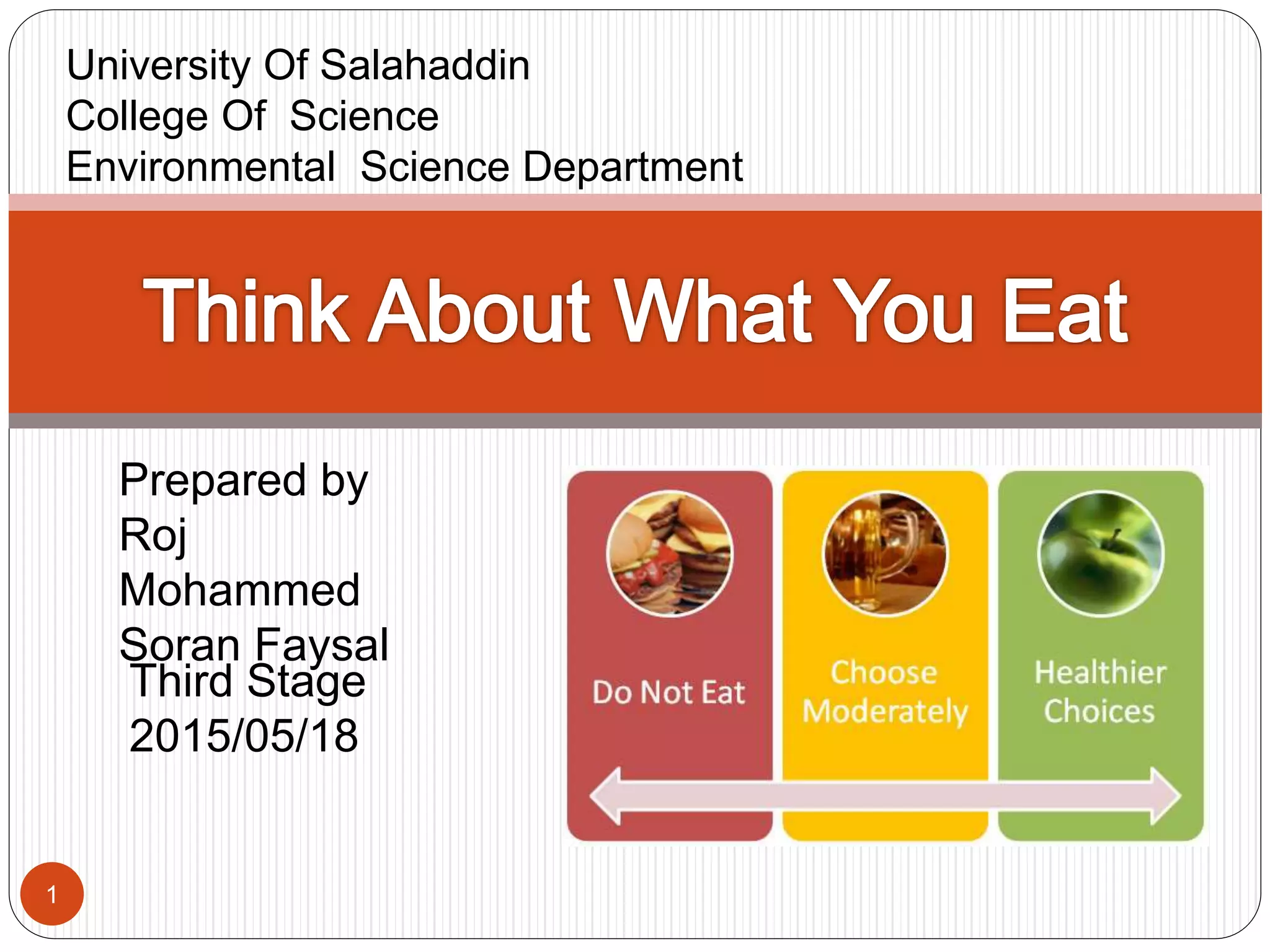
Prepared by
Roj
Mohammed
Soran Faysal
1
Third Stage
2015/05/18
University Of Salahaddin
College Of Science
Environmental Science Department
Content
 Introduction
 Food
 The Importance Of Food In Our
Lives
 How Much Food Do You Need?
 Food Security
 Food Shortage
 Famine
 Hunger Statistics
 Food Effect On Earth
 About Food Waste
 Solution
 Quality Of Life2
Introduction
 The way we eat has a massive impact on the
planet. Food production as A huge scale cause
many problem to environment and ecosystem,
that changing what we consume really can help
cut greenhouse gas emissions and limit
damage to vulnerable species and
environments.
3
Food
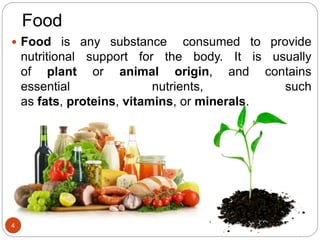
 Food is any substance consumed to provide
nutritional support for the body. It is usually
of plant or animal origin, and contains
essential nutrients, such
as fats, proteins, vitamins, or minerals.
4
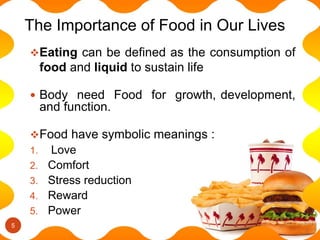
Eating can be defined as the consumption of
food and liquid to sustain life
 Body need Food for growth, development,
and function.
Food have symbolic meanings :
1. Love
2. Comfort
3. Stress reduction
4. Reward
5. Power
The Importance of Food in Our Lives
5
How much food do you need?
6
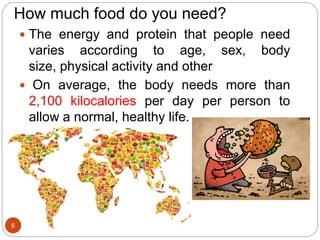
 The energy and protein that people need
varies according to age, sex, body
size, physical activity and other
 On average, the body needs more than
2,100 kilocalories per day per person to
allow a normal, healthy life.
Food security
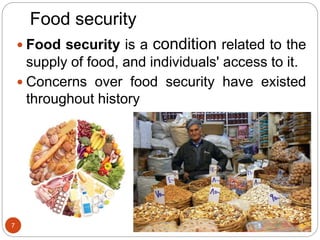
 Food security is a condition related to the
supply of food, and individuals' access to it.
 Concerns over food security have existed
throughout history
7
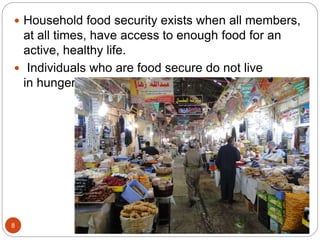
 Household food security exists when all members,
at all times, have access to enough food for an
active, healthy life.
 Individuals who are food secure do not live
in hunger or fear of starvation
8
Problem
Food shortage
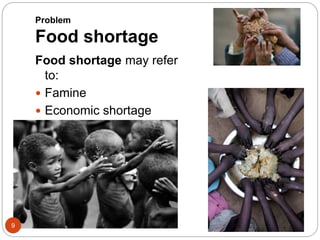
Food shortage may refer
to:
 Famine
 Economic shortage
9
Famine
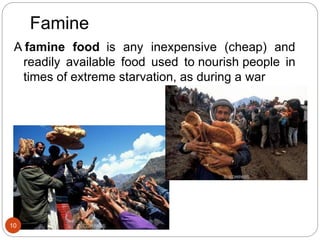
A famine food is any inexpensive (cheap) and
readily available food used to nourish people in
times of extreme starvation, as during a war
10
Hunger Statistics
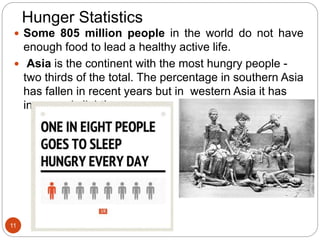
 Some 805 million people in the world do not have
enough food to lead a healthy active life.
 Asia is the continent with the most hungry people -
two thirds of the total. The percentage in southern Asia
has fallen in recent years but in western Asia it has
increased slightly.
11
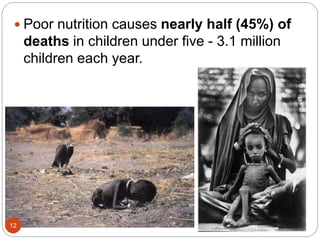
 Poor nutrition causes nearly half (45%) of
deaths in children under five - 3.1 million
children each year.
12
Food Effect on earth
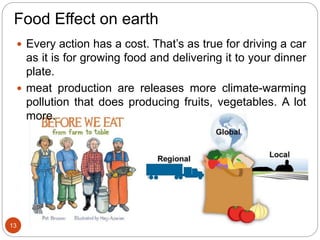
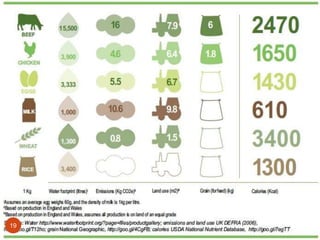
 Every action has a cost. That’s as true for driving a car
as it is for growing food and delivering it to your dinner
plate.
 meat production are releases more climate-warming
pollution that does producing fruits, vegetables. A lot
more.
13
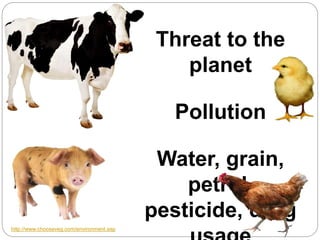
Threat to the
planet
Pollution
Water, grain,
petrol,
pesticide, drug
http://www.chooseveg.com/environment.asp
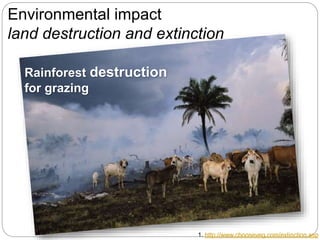
Environmental impact
land destruction and extinction
Rainforest destruction
for grazing
1. http://www.chooseveg.com/extinction.asp
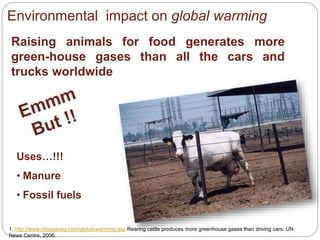
Environmental impact on global warming
Raising animals for food generates more
green-house gases than all the cars and
trucks worldwide
1. http://www.chooseveg.com/global-warming.asp Rearing cattle produces more greenhouse gases than driving cars. UN
News Centre, 2006.
Uses…!!!
• Manure
• Fossil fuels
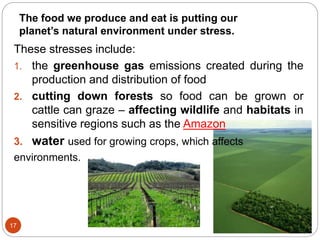
The food we produce and eat is putting our
planet’s natural environment under stress.
17
These stresses include:
1. the greenhouse gas emissions created during the
production and distribution of food
2. cutting down forests so food can be grown or
cattle can graze – affecting wildlife and habitats in
sensitive regions such as the Amazon
3. water used for growing crops, which affects
environments.
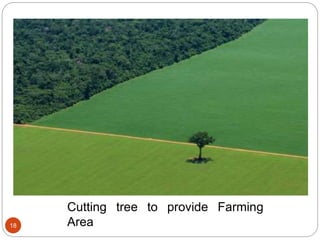
18
Cutting tree to provide Farming
Area
19
WASTE
20
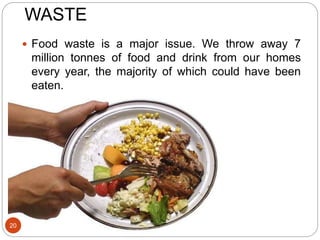
 Food waste is a major issue. We throw away 7
million tonnes of food and drink from our homes
every year, the majority of which could have been
eaten.
Solution
21
 How do I reduce my food impact on the
planet?
one of the most effective choices we can make is
to reduce our meat and dairy consumption.
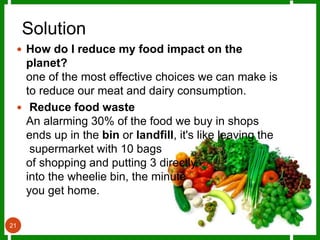
 Reduce food waste
An alarming 30% of the food we buy in shops
ends up in the bin or landfill, it's like leaving the
supermarket with 10 bags
of shopping and putting 3 directly
into the wheelie bin, the minute
you get home.
Quality of Life
22
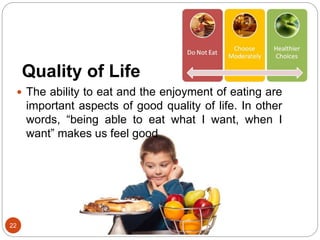
 The ability to eat and the enjoyment of eating are
important aspects of good quality of life. In other
words, “being able to eat what I want, when I
want” makes us feel good
Refrence
 http://www.wwf.org.uk/how_you_can_help/change_how_you_live/think
_about_what_you_eat/
 http://en.wikipedia.org/wiki/Food
 http://www.oley.org/lifeline/The_Importance_of_Food.html
 http://www.wfp.org/hunger/what-is
 http://en.wikipedia.org/wiki/Food_security
 http://en.wikipedia.org/wiki/Food_shortage
 http://en.wikipedia.org/wiki/Famine_food
 http://www.wfp.org/hunger/stats
 https://student.societyforscience.org/article/your-food-choices-affect-
earth%E2%80%99s-climate
 http://england.lovefoodhatewaste.com/content/about-food-waste-1
 http://www.wwf.org.uk/what_we_do/changing_the_way_we_live/food/
 http://www.oley.org/lifeline/The_Importance_of_Food.html
23
24
Thank you for
Listening
and
Don't eat Too much

Think about what you eat

  • 1.
    Prepared by Roj Mohammed Soran Faysal 1 ThirdStage 2015/05/18 University Of Salahaddin College Of Science Environmental Science Department
  • 2.
    Content  Introduction  Food The Importance Of Food In Our Lives  How Much Food Do You Need?  Food Security  Food Shortage  Famine  Hunger Statistics  Food Effect On Earth  About Food Waste  Solution  Quality Of Life2
  • 3.
    Introduction  The waywe eat has a massive impact on the planet. Food production as A huge scale cause many problem to environment and ecosystem, that changing what we consume really can help cut greenhouse gas emissions and limit damage to vulnerable species and environments. 3
  • 4.
    Food  Food isany substance consumed to provide nutritional support for the body. It is usually of plant or animal origin, and contains essential nutrients, such as fats, proteins, vitamins, or minerals. 4
  • 5.
    Eating can bedefined as the consumption of food and liquid to sustain life  Body need Food for growth, development, and function. Food have symbolic meanings : 1. Love 2. Comfort 3. Stress reduction 4. Reward 5. Power The Importance of Food in Our Lives 5
  • 6.
    How much fooddo you need? 6  The energy and protein that people need varies according to age, sex, body size, physical activity and other  On average, the body needs more than 2,100 kilocalories per day per person to allow a normal, healthy life.
  • 7.
    Food security  Foodsecurity is a condition related to the supply of food, and individuals' access to it.  Concerns over food security have existed throughout history 7
  • 8.
     Household foodsecurity exists when all members, at all times, have access to enough food for an active, healthy life.  Individuals who are food secure do not live in hunger or fear of starvation 8
  • 9.
    Problem Food shortage Food shortagemay refer to:  Famine  Economic shortage 9
  • 10.
    Famine A famine foodis any inexpensive (cheap) and readily available food used to nourish people in times of extreme starvation, as during a war 10
  • 11.
    Hunger Statistics  Some805 million people in the world do not have enough food to lead a healthy active life.  Asia is the continent with the most hungry people - two thirds of the total. The percentage in southern Asia has fallen in recent years but in western Asia it has increased slightly. 11
  • 12.
     Poor nutritioncauses nearly half (45%) of deaths in children under five - 3.1 million children each year. 12
  • 13.
    Food Effect onearth  Every action has a cost. That’s as true for driving a car as it is for growing food and delivering it to your dinner plate.  meat production are releases more climate-warming pollution that does producing fruits, vegetables. A lot more. 13
  • 14.
    Threat to the planet Pollution Water,grain, petrol, pesticide, drug http://www.chooseveg.com/environment.asp
  • 15.
    Environmental impact land destructionand extinction Rainforest destruction for grazing 1. http://www.chooseveg.com/extinction.asp
  • 16.
    Environmental impact onglobal warming Raising animals for food generates more green-house gases than all the cars and trucks worldwide 1. http://www.chooseveg.com/global-warming.asp Rearing cattle produces more greenhouse gases than driving cars. UN News Centre, 2006. Uses…!!! • Manure • Fossil fuels
  • 17.
    The food weproduce and eat is putting our planet’s natural environment under stress. 17 These stresses include: 1. the greenhouse gas emissions created during the production and distribution of food 2. cutting down forests so food can be grown or cattle can graze – affecting wildlife and habitats in sensitive regions such as the Amazon 3. water used for growing crops, which affects environments.
  • 18.
    18 Cutting tree toprovide Farming Area
  • 19.
  • 20.
    WASTE 20  Food wasteis a major issue. We throw away 7 million tonnes of food and drink from our homes every year, the majority of which could have been eaten.
  • 21.
    Solution 21  How doI reduce my food impact on the planet? one of the most effective choices we can make is to reduce our meat and dairy consumption.  Reduce food waste An alarming 30% of the food we buy in shops ends up in the bin or landfill, it's like leaving the supermarket with 10 bags of shopping and putting 3 directly into the wheelie bin, the minute you get home.
  • 22.
    Quality of Life 22 The ability to eat and the enjoyment of eating are important aspects of good quality of life. In other words, “being able to eat what I want, when I want” makes us feel good
  • 23.
    Refrence  http://www.wwf.org.uk/how_you_can_help/change_how_you_live/think _about_what_you_eat/  http://en.wikipedia.org/wiki/Food http://www.oley.org/lifeline/The_Importance_of_Food.html  http://www.wfp.org/hunger/what-is  http://en.wikipedia.org/wiki/Food_security  http://en.wikipedia.org/wiki/Food_shortage  http://en.wikipedia.org/wiki/Famine_food  http://www.wfp.org/hunger/stats  https://student.societyforscience.org/article/your-food-choices-affect- earth%E2%80%99s-climate  http://england.lovefoodhatewaste.com/content/about-food-waste-1  http://www.wwf.org.uk/what_we_do/changing_the_way_we_live/food/  http://www.oley.org/lifeline/The_Importance_of_Food.html 23
  • 24.