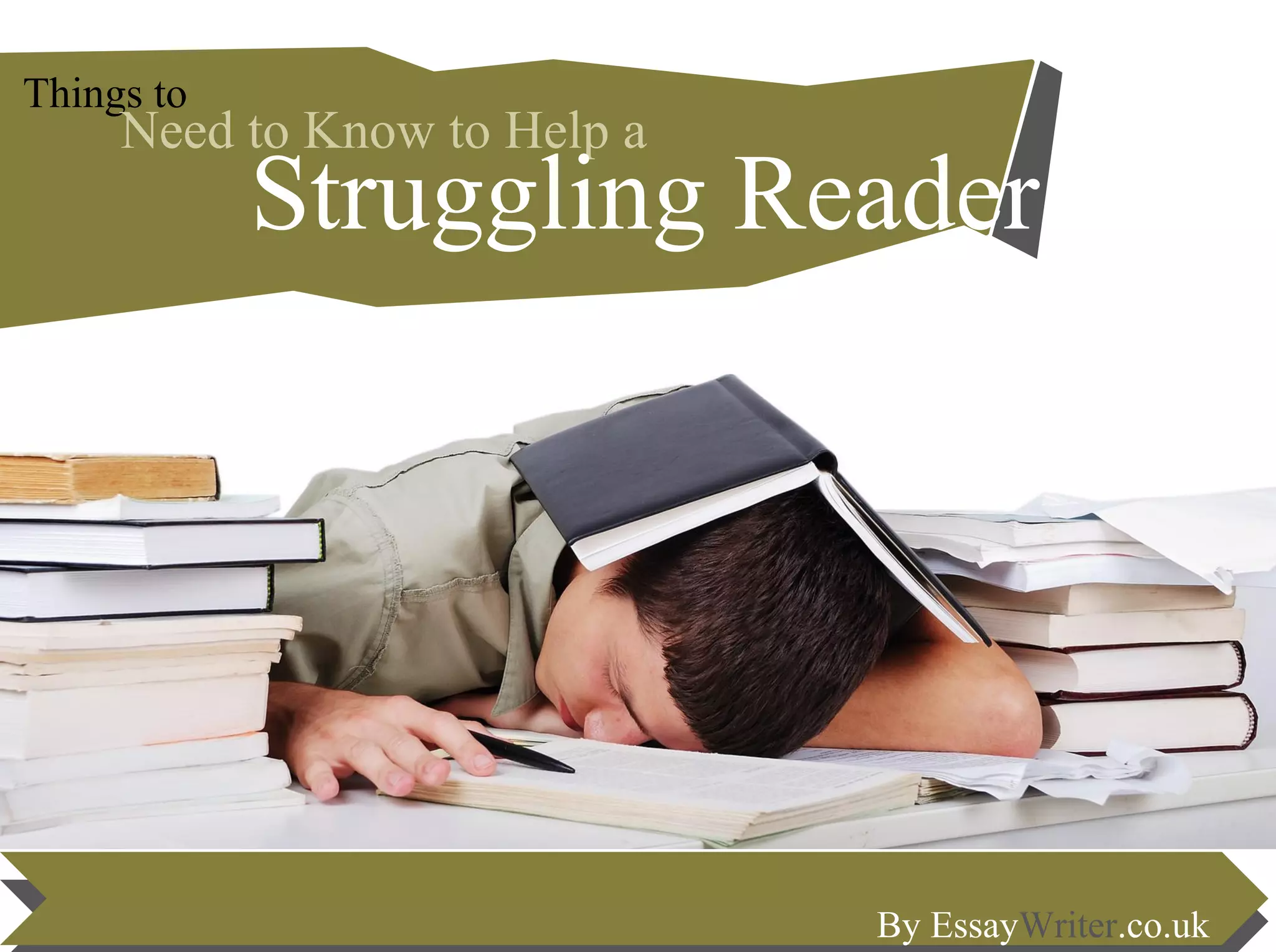
Things to
Need to Know to Help a
Struggling Reader
By EssayWriter.co.uk
Educators both in the mainstream and special variety work
hand in hand to address the concern for struggling readers.
Everybody, especially parents and guardians can and should
help their children who are struggling with reading or
specifically learning how to read.
Here are the principles educators use in helping them.
In education, reading is a fundamental foundation.
It is a primary matter to both teachers and students, and
must be to parents and guardians to. Children who are
learning how to read can encounter difficulties.
Students have different paces and levels of development. Parents and
guardians who help their children who has struggles in learning how to
read should know and bear in mind that children have different paces of
learning and development. They should not be discouraged or frustrated
with the achievement of their children.
Developments
Different
Children who are learning how to read
also need to learn how to identify
words, practice reading, know their
mistakes, correct those mistakes and
improve their overall reading.
is Not Simple
Learning to
Read
That is why the teachers and
helpers of struggling readers
should be patient.
Teachers have many goals when they teach
children how to read. It is not only reading itself
but rather with the many components involved
in it. This is the answer to the complexity of
learning how to read. Educators have goals
regarding phonemic awareness, phonics,
fluency, vocabulary and comprehension every
day they teach reading. Some teachers even use
these components and teach reading hand in
hand with developing interest in words, stories
and books in their students. Parents, guardians
and other helpers of struggling readers should
know and understand this to be able to help
more.
Teaching
GoalsNeeds
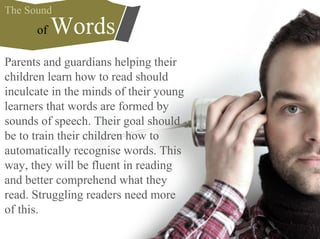
Parents and guardians helping their
children learn how to read should
inculcate in the minds of their young
learners that words are formed by
sounds of speech. Their goal should
be to train their children how to
automatically recognise words. This
way, they will be fluent in reading
and better comprehend what they
read. Struggling readers need more
of this.
of Words
The Sound
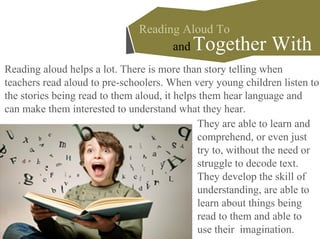
Reading aloud helps a lot. There is more than story telling when
teachers read aloud to pre-schoolers. When very young children listen to
the stories being read to them aloud, it helps them hear language and
can make them interested to understand what they hear.
and Together With
Reading Aloud To
They are able to learn and
comprehend, or even just
try to, without the need or
struggle to decode text.
They develop the skill of
understanding, are able to
learn about things being
read to them and able to
use their imagination.
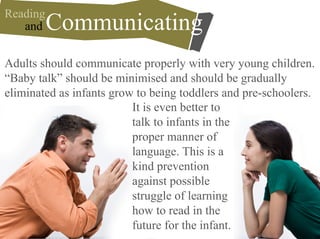
Adults should communicate properly with very young children.
“Baby talk” should be minimised and should be gradually
eliminated as infants grow to being toddlers and pre-schoolers.
and Communicating
Reading
It is even better to
talk to infants in the
proper manner of
language. This is a
kind prevention
against possible
struggle of learning
how to read in the
future for the infant.
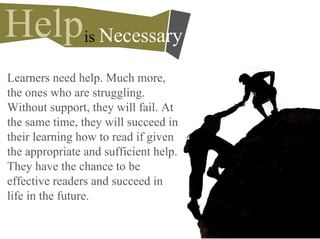
Learners need help. Much more,
the ones who are struggling.
Without support, they will fail. At
the same time, they will succeed in
their learning how to read if given
the appropriate and sufficient help.
They have the chance to be
effective readers and succeed in
life in the future.
is NecessaryHelp
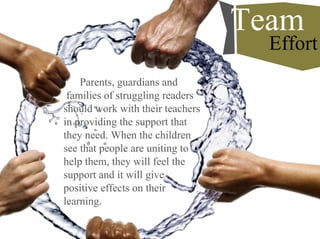
Parents, guardians and
families of struggling readers
should work with their teachers
in providing the support that
they need. When the children
see that people are uniting to
help them, they will feel the
support and it will give
positive effects on their
learning.
Team
Effort
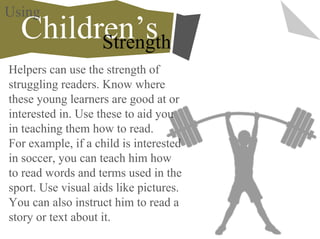
Helpers can use the strength of
struggling readers. Know where
these young learners are good at or
interested in. Use these to aid you
in teaching them how to read.
For example, if a child is interested
in soccer, you can teach him how
to read words and terms used in the
sport. Use visual aids like pictures.
You can also instruct him to read a
story or text about it.
Children’sStrength
Using
Reward
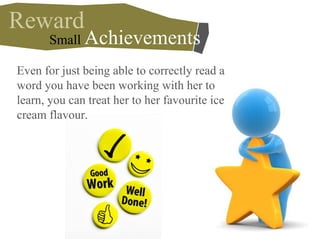
Even for just being able to correctly read a
word you have been working with her to
learn, you can treat her to her favourite ice
cream flavour.
Small Achievements
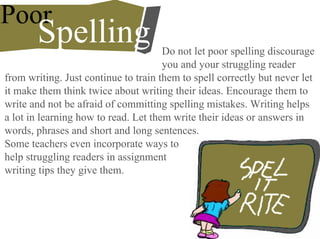
Poor
Spelling Do not let poor spelling discourage
you and your struggling reader
from writing. Just continue to train them to spell correctly but never let
it make them think twice about writing their ideas. Encourage them to
write and not be afraid of committing spelling mistakes. Writing helps
a lot in learning how to read. Let them write their ideas or answers in
words, phrases and short and long sentences.
Some teachers even incorporate ways to
help struggling readers in assignment
writing tips they give them.
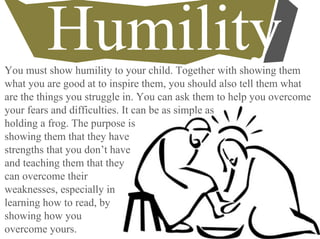
You must show humility to your child. Together with showing them
what you are good at to inspire them, you should also tell them what
are the things you struggle in. You can ask them to help you overcome
your fears and difficulties. It can be as simple as
holding a frog. The purpose is
showing them that they have
strengths that you don’t have
and teaching them that they
can overcome their
weaknesses, especially in
learning how to read, by
showing how you
overcome yours.
Humility
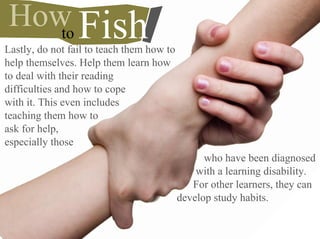
Lastly, do not fail to teach them how to
help themselves. Help them learn how
to deal with their reading
difficulties and how to cope
with it. This even includes
teaching them how to
ask for help,
especially those
to FishHow
who have been diagnosed
with a learning disability.
For other learners, they can
develop study habits.
THANK
YOUBy EssayWriter.co.uk

Things To Need To Know To Help A Struggling Reader

  • 1.
    Things to Need toKnow to Help a Struggling Reader By EssayWriter.co.uk
  • 2.
    Educators both inthe mainstream and special variety work hand in hand to address the concern for struggling readers. Everybody, especially parents and guardians can and should help their children who are struggling with reading or specifically learning how to read. Here are the principles educators use in helping them. In education, reading is a fundamental foundation. It is a primary matter to both teachers and students, and must be to parents and guardians to. Children who are learning how to read can encounter difficulties.
  • 3.
    Students have differentpaces and levels of development. Parents and guardians who help their children who has struggles in learning how to read should know and bear in mind that children have different paces of learning and development. They should not be discouraged or frustrated with the achievement of their children. Developments Different
  • 4.
    Children who arelearning how to read also need to learn how to identify words, practice reading, know their mistakes, correct those mistakes and improve their overall reading. is Not Simple Learning to Read That is why the teachers and helpers of struggling readers should be patient.
  • 5.
    Teachers have manygoals when they teach children how to read. It is not only reading itself but rather with the many components involved in it. This is the answer to the complexity of learning how to read. Educators have goals regarding phonemic awareness, phonics, fluency, vocabulary and comprehension every day they teach reading. Some teachers even use these components and teach reading hand in hand with developing interest in words, stories and books in their students. Parents, guardians and other helpers of struggling readers should know and understand this to be able to help more. Teaching GoalsNeeds
  • 6.
    Parents and guardianshelping their children learn how to read should inculcate in the minds of their young learners that words are formed by sounds of speech. Their goal should be to train their children how to automatically recognise words. This way, they will be fluent in reading and better comprehend what they read. Struggling readers need more of this. of Words The Sound
  • 7.
    Reading aloud helpsa lot. There is more than story telling when teachers read aloud to pre-schoolers. When very young children listen to the stories being read to them aloud, it helps them hear language and can make them interested to understand what they hear. and Together With Reading Aloud To They are able to learn and comprehend, or even just try to, without the need or struggle to decode text. They develop the skill of understanding, are able to learn about things being read to them and able to use their imagination.
  • 8.
    Adults should communicateproperly with very young children. “Baby talk” should be minimised and should be gradually eliminated as infants grow to being toddlers and pre-schoolers. and Communicating Reading It is even better to talk to infants in the proper manner of language. This is a kind prevention against possible struggle of learning how to read in the future for the infant.
  • 9.
    Learners need help.Much more, the ones who are struggling. Without support, they will fail. At the same time, they will succeed in their learning how to read if given the appropriate and sufficient help. They have the chance to be effective readers and succeed in life in the future. is NecessaryHelp
  • 10.
    Parents, guardians and familiesof struggling readers should work with their teachers in providing the support that they need. When the children see that people are uniting to help them, they will feel the support and it will give positive effects on their learning. Team Effort
  • 11.
    Helpers can usethe strength of struggling readers. Know where these young learners are good at or interested in. Use these to aid you in teaching them how to read. For example, if a child is interested in soccer, you can teach him how to read words and terms used in the sport. Use visual aids like pictures. You can also instruct him to read a story or text about it. Children’sStrength Using
  • 12.
    Reward Even for justbeing able to correctly read a word you have been working with her to learn, you can treat her to her favourite ice cream flavour. Small Achievements
  • 13.
    Poor Spelling Do notlet poor spelling discourage you and your struggling reader from writing. Just continue to train them to spell correctly but never let it make them think twice about writing their ideas. Encourage them to write and not be afraid of committing spelling mistakes. Writing helps a lot in learning how to read. Let them write their ideas or answers in words, phrases and short and long sentences. Some teachers even incorporate ways to help struggling readers in assignment writing tips they give them.
  • 14.
    You must showhumility to your child. Together with showing them what you are good at to inspire them, you should also tell them what are the things you struggle in. You can ask them to help you overcome your fears and difficulties. It can be as simple as holding a frog. The purpose is showing them that they have strengths that you don’t have and teaching them that they can overcome their weaknesses, especially in learning how to read, by showing how you overcome yours. Humility
  • 15.
    Lastly, do notfail to teach them how to help themselves. Help them learn how to deal with their reading difficulties and how to cope with it. This even includes teaching them how to ask for help, especially those to FishHow who have been diagnosed with a learning disability. For other learners, they can develop study habits.
  • 16.